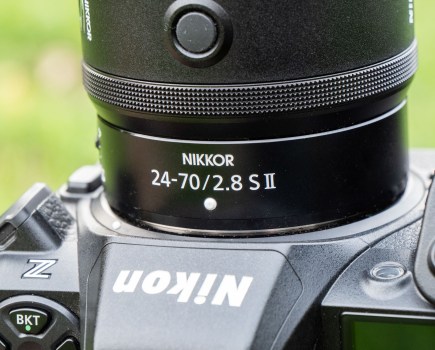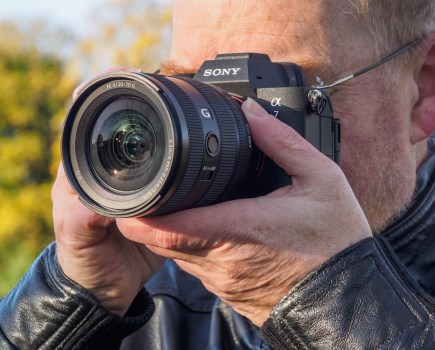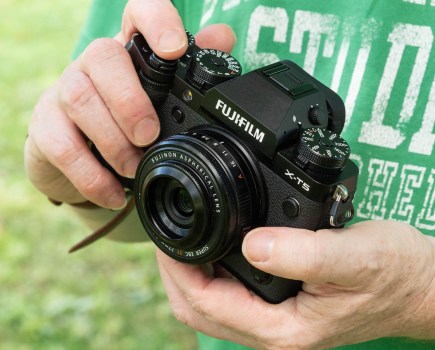
The best small mirrorless cameras are a lot more portable than a DSLR. Yes, the top-line mirrorless cameras are literally expanding to the point of negligible difference in size between the two formats; but there are still plenty of mirrorless options that are of great quality in a small package.
Smaller mirrorless cameras have practical advantages, of course. They can be used more easily one-handed, which is ideal for spontaneous street photography, for a start. We’ve drawn on the expertise of our review team to come up with a quick list of smaller mirrorless cameras that have impressed us, with options from across the major manufacturers.
Note that, in general, we’ll be looking at smaller sensor sizes as these allow for smaller bodies, though we have included full-frame options for those who want a large-sensor option.
You can scroll to the bottom of this page for a quick explainer section on how to choose a small mirrorless camera. For more affordable choices, check out our guides to the best cheap full-frame cameras, as well as the best cameras under £500 / $500. And, if you’re looking for a small camera because you’re interested in vlogging, take a look at our guide to the best cameras for vlogging and how to get started.
The best small mirrorless cameras: our quick list
Want to cut right to it? Here’s a quick list of the small mirrorless cameras we’ve included on this list, along with links to get the best prices for each one:
- Best small Fujifilm: Fujifilm X-E5 – Buy Now
- Best small Sony camera: Sony A6700 – Buy Now
- Best small full-frame camera: Sony Alpha A7C II – Buy Now
- Lightest Olympus: Olympus OM-D E-M10 Mark IV – Buy Now
- Smallest weather-sealed mirrorless: OM System OM-5 Mark II – Buy Now
- Panasonic’s smallest current camera: Panasonic Lumix G100/D – Buy Now
- Lightest Nikon mirrorless camera: Nikon Z30 – Buy Now
- Canon’s best small mirrorless camera: Canon EOS R10 – Buy Now
Read on to learn more about why we picked each of these cameras, as well as key specs and how they perform…
Why you can trust Amateur Photographer
We spend many hours testing every product we recommend, in detail, in a variety of situations and shooting scenarios, and only use experts for our reviews, so you can be sure that you’re getting the best products. Find out more about our expert writers.
Best small Fujifilm: Fujifilm X-E5
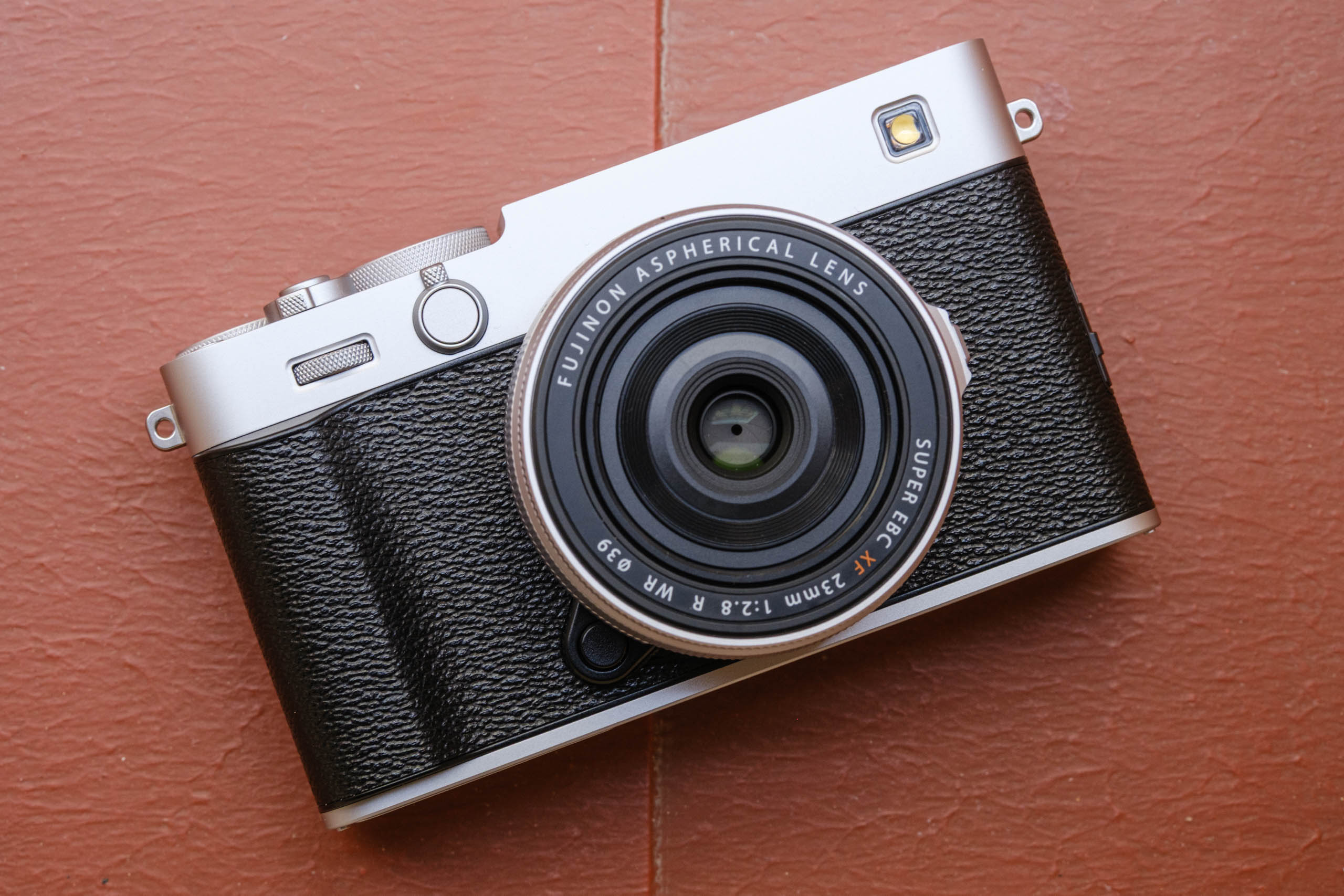
Amateur Photographer verdict
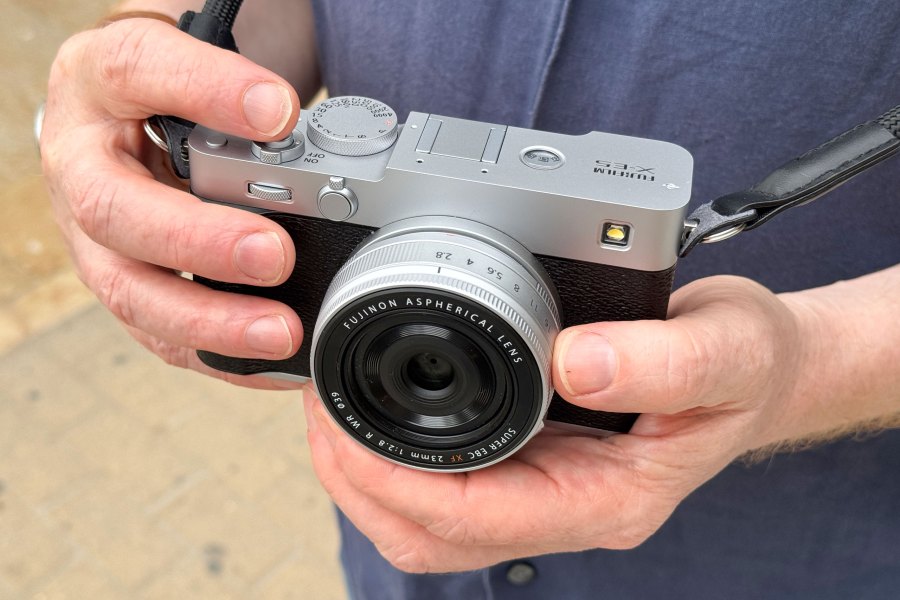
The Fujifilm X-E5 is a lovely little camera that goes a long way to meeting the promise of an ‘interchangeable lens X100VI’. It looks good, is a joy to shoot with, and delivers excellent results.- Small body, but with enthusiast-friendly design
- Engaging analogue controls
- Peerless in-camera colour processing
- Excellent raw image quality
- Easy access to three custom film simulation recipes
- Fairly small viewfinder
- No weather-sealing
- Screen only tilts up and down
| Specifications | Fujifilm X-E5 |
|---|---|
| Sensor | 40.2MP APS-C X-Trans sensor |
| Lens mount | Fujifilm X-Mount |
| ISO | ISO 125-12,800 (standard) ISO 64-51,200 (extended) |
| Video resolution | 6.2K 30p, 4K 60p, and Full HD 240p video |
| Viewfinder | 2.36m-dot, 0.62x viewfinder |
| Display | 3in, 1.04m-dot tilting touchscreen |
| Dimensions | 1125mm x 73mm x 39mm, 445g (without a lens) |
The Fujifilm X-E5 is an APS-C format compact camera suited for anyone looking to buy a ‘proper camera’ that’s fully featured yet small and lightweight. It would be a particularly fine choice for travel or street photography.
As an X-series camera, the X-E5 benefits from Fujifilm’s superb colour science and there’s an extensive collection of Film Simulation modes. The camera notably has a film simulation mode dial as previously seen on the X-T50 and entry-level X-M5. However, the big deal on the X-E5 is you can save your own favourite Film Simulation ‘recipes’ onto the dial.
Thanks to the latest X-Processor 5 it uses subject-detection autofocus seen in more expensive hybrid models, like the X-S20. The X-E5 is the first model in the X-E series to include in-body image stabilisation.
The X-M5 is capable of 6.2K 30p ‘open gate’ recording, in this mode the camera uses all the pixels in the sensor, so you can crop later to different aspect ratios. There is also a unique vertical Full HD video recording option that will appeal to content creators.
Read our full Fujifilm X-E5 review.
Best small Sony camera: Sony A6700
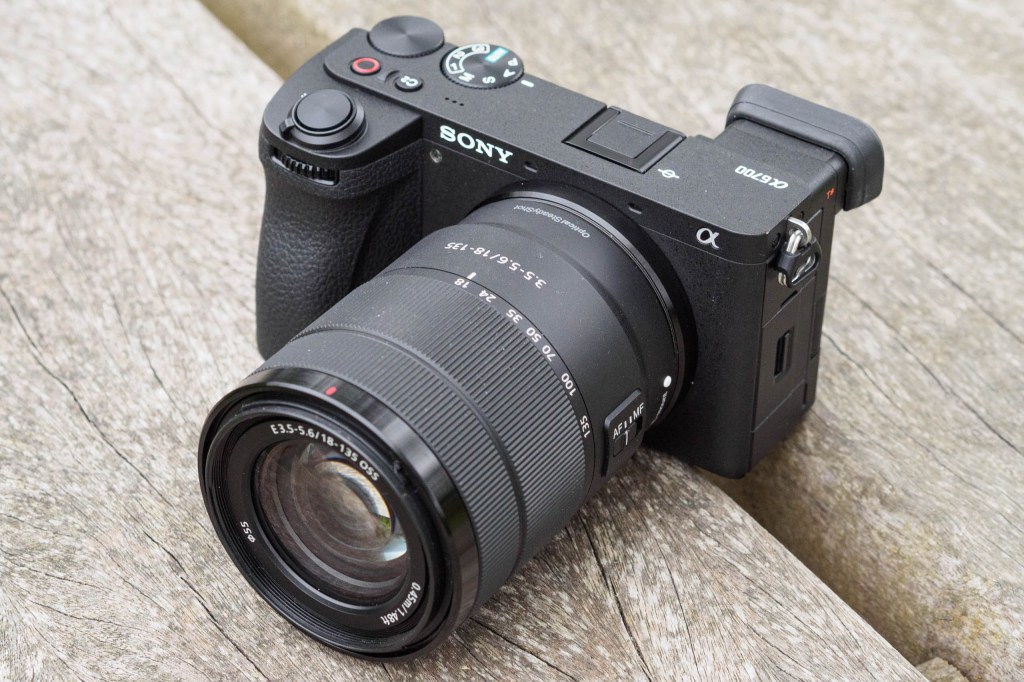
Amateur Photographer verdict
The Alpha 6700 is Sony’s best APS-C camera to date. Great image quality and features – but the user experience lags behind.- 3:2 fully articulated screen
- Improved colour output
- 4K video recording
- No dedicated AF-area controller
- Some awkward usability aspects
| Specifications | Sony A6700 |
|---|---|
| Sensor | 26MP APS-C |
| Lens mount | Sony E |
| ISO | 100-32,000 standard, 50-102,400 (extended) |
| Video resolution | 4K 120fps |
| Viewfinder | 2.36M-dot |
| Display | 3in, 1.04M-dot vari-angle LCD |
| Dimensions | 122 x 69 x 75.1mm, 493g (with battery and memory card) |
The Sony A6700 is the latest and most powerful model in the Sony APS-C mirrorless line-up. It succeeds the previous flagship A6600 and brings vastly improved video features, a new 26MP sensor first seen in the Sony FX30 cinema camera, and a slightly thicker body.
Its rectangular rangefinder-style design means that there’s no protruding viewfinder housing on the top, so it’s still a pretty compact and pocketable camera, especially when used with the Sony 16-50mm power zoom kit lens. It’s not the best optically, but for a small camera-lens combination, it’s terrific. The A6700 can, of course, take the full range of Sony E and FE lenses.
The 26MP sensor might only be a small increase over the previous model’s 24MP, but photographers do get Sony’s latest and most advanced subject recognition AI autofocus, and it even incorporates the dedicated AI processor first seen in the Sony A7R V.
The headline news with this camera, though, is its 4K 30p, 60p and 120p (cropped) video recording capability, together with improved file format and compression options. This is the ideal camera for hybrid content creators who need to shoot both stills and video, and for whom the cheaper Sony ZV-E10 or more expensive ZV-E1 are just too video-focused.
Read our full Sony A6700 review.
Best small full-frame camera: Sony A7C II
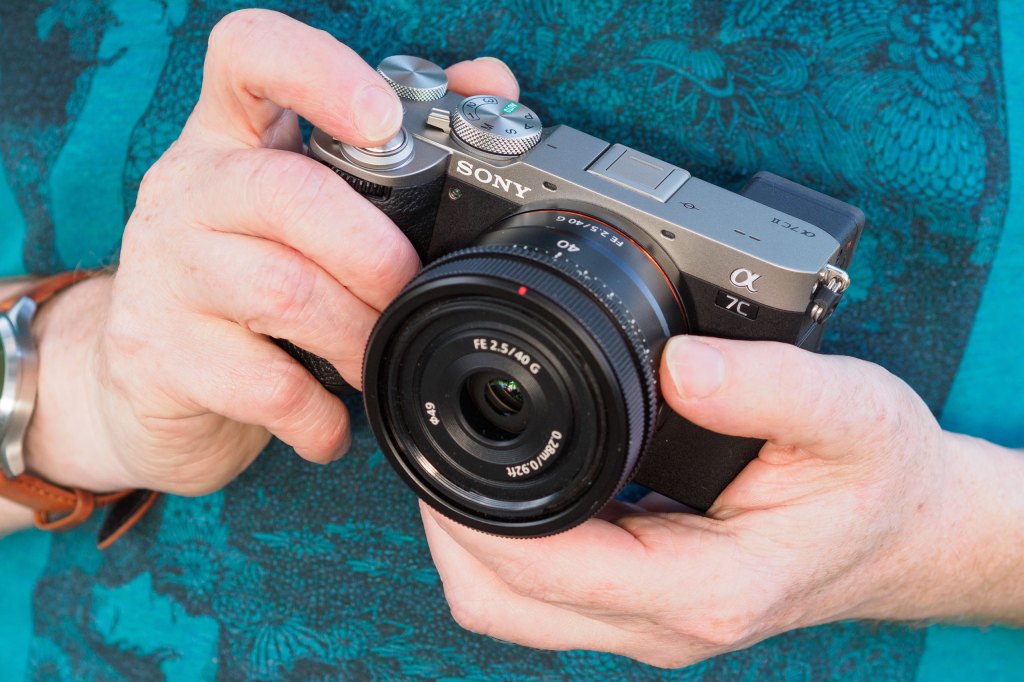
Amateur Photographer verdict
A compact full-frame mirrorless camera that performs extremely well in image quality and autofocus. Its overall value compared to the A7 IV is dubious, however.- Impressive image quality
- Excellent subject-detection autofocus
- Impressive image quality
- Highly effective image stabilisation
- Only one SD card slot
- Awkward rear control layout
- No dedicated AF point controller / joystick
- 4K 60p video requires 1.5x crop
| Specifications | Sony A7C II |
|---|---|
| Sensor | 33MP full-frame Exmor R CMOS |
| Lens mount | Sony FE |
| ISO | ISO 100-51,200 (standard), ISO 50-204,800 (extended) |
| Video resolution | 4K 30p video (4K 60p with ‘Super 35’ 1.5x crop) |
| Viewfinder | 2.36M-dot |
| Display | 3in, 1.04M-dot fully articulating LCD |
| Dimensions | 124 x 71.1 x 63.4mm, 525g (with battery and memory card) |
Sony’s penchant for making small and powerful cameras includes some attractive full-frame models for those looking for lightweight mirrorless cameras. The Sony A7C II is a refinement of the original A7C, which met some criticism from reviewers and punters alike due to its awkward handling. Does the A7C II do enough to right the ship?
It’s definitely an improvement. The Sony A7C II brings the gorgeous image quality of the A7 IV in a commendably tiny package. It also comes with the latest autofocus advancements for unparalleled focusing speed and accuracy. A new front control dial improves handling – giving the A7C II one more dial than the A6700, featured above, though the APS-C models benefit from a larger handgrip. It’s not entirely clear why – the same handgrip could have been used for both cameras – but that’s Sony!
How the Sony A7C II compares to the A7CR
Something else to note is that the A7C II was released at the same time as the A7CR, which has essentially the same camera body with an ultra-high resolution 60MP sensor packed in. We’ve picked the A7C II for this compilation, being a more affordable all-rounder that renders it a viable option for most people. But the A7CR is the one for greater resolution.
Small full-frame mirrorless cameras are a funny old thing. While the technical achievement here is undeniable, we’re less convinced by the user benefit of the A7C II, particularly as the weight of full-frame E-mount lenses is likely to negate the weight saving of the smaller camera. Still, for a small full-frame mirrorless camera, this is one of the most capable you can buy right now.
Read our full Sony A7C II review.
Lightest Olympus: Olympus OM-D E-M10 Mark IV
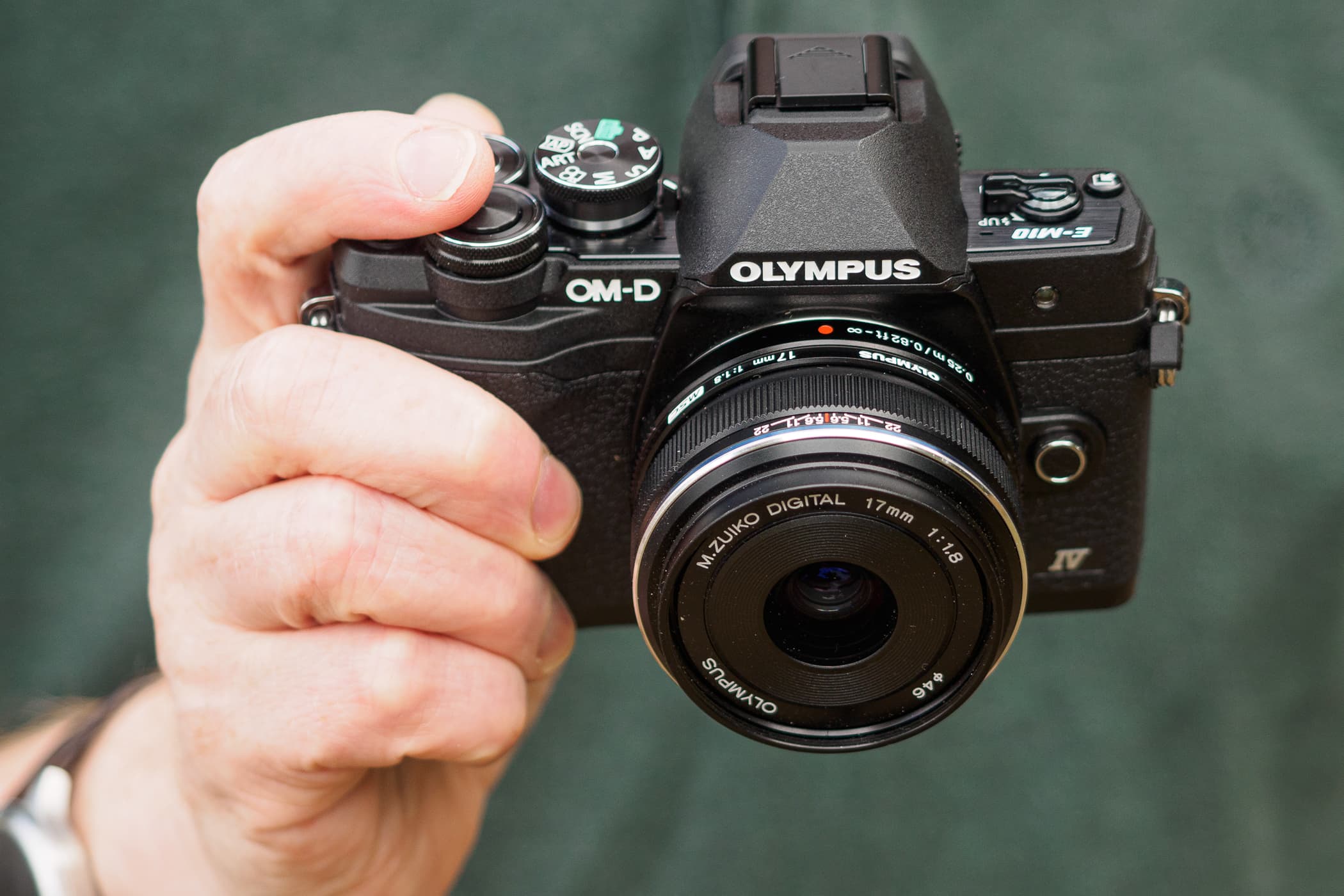
Amateur Photographer verdict
Like its predecessor, this is a lovely little camera that’s a joy to use and delivers great pictures.- Excellent JPEG image quality
- Stylish design and well laid-out, tactile controls
- Effective in-body stabilisation for sharp images
- Access to fine set of small, affordable lenses
- Raw image quality lags behind APS-C peers
- No microphone socket for video or vlogging
- Selfie screen incompatible with tripod use
| Specifications | Olympus OM-D E-M10 Mark IV |
|---|---|
| Sensor | 20.3MP Four Thirds Type Live MOS |
| Lens mount | Micro Four Thirds |
| ISO | ISO 200-6400, ISO 80-25,600 (extended) |
| Video resolution | 4K 30fps video recording |
| Viewfinder | 2.36M-dot |
| Display | 3in, 1.04M-dot two-way tilting LCD |
| Dimensions | 121.7 x 84.4 x 49mm, 383g (with battery and memory card) |
As a Micro Four Thirds camera, the Olympus OM-D E-M10 Mark IV has a smaller than APS-C format sensor, which gives it an advantage for size and weight. Indeed, with the Olympus 14-42mm f/3.5-5.6 EZ lens mounted, it could easily pass for a compact camera.
The sensor size brings a 2x focal length multiplication factor making the 14-42mm lens produce framing like a 28-84mm lens on a full-frame camera. That’s a nice everyday option.
The E-M10 Mark IV doesn’t have phase detection autofocusing and relies on contrast detection alone. This is pretty dependable for still and slow-moving subjects, but it’s not ideal for sport and action photography – though it is still surprisingly fast for its type.
Despite its entry-level status, the E-M10 IV has Olympus’s excellent Live Time and Live Composite modes, which take the sweat out of long exposure images, with Live Composite mode being especially useful for light painting, traffic trail and firework images.
There’s also a very good image stabilisation system, a long list of Art Filters, which are of use for stills and video, and a screen that can flip through 180° to be visible from in front of the camera. Best of all, it usually comes with a 14-42mm EZ pancake zoom, which is the smallest and slimmest kit lens on the market.
Read our full Olympus OM-D E-M10 Mark IV review.
Smallest weather-sealed mirrorless camera: OM System OM-5 Mark II
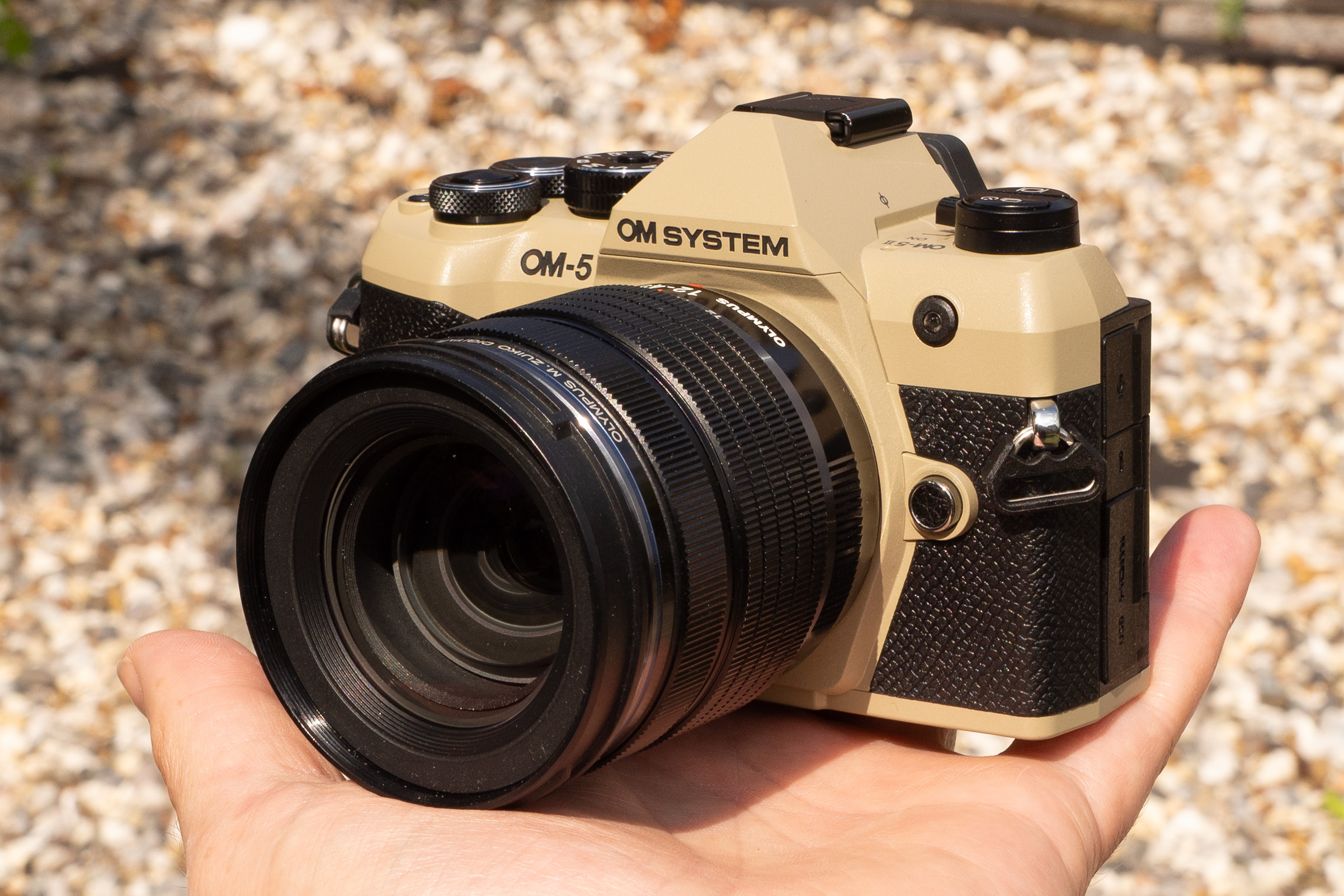
Amateur Photographer verdict
We love this versatile and impressive camera for its great quality photos at very good prices. Great lens range. Does good video too.- Advanced photo features
- Excellent lens range
- New menus, grip and USB Type-C
- Excellent JPEG output with exceptionally pleasing colour
- Weather-proof
- Short buffer for 30fps shooting
- No joystick control
| Specifications | OM System OM-5 Mark II |
|---|---|
| Sensor | 20.4MP Four Thirds sensor |
| Lens mount | Micro Four Thirds |
| ISO | ISO 200-6400 (standard); ISO 64-25600 (extended) |
| Video resolution | 4K4K 30/25/24p video, Full HD 120p |
| Viewfinder | 2.36M-dot |
| Display | 3in, 1.04M-dot vari-angle LCD |
| Dimensions | 125.3 x 85.2 x 52.0mm, 418g (with battery and memory card) |
The OM System OM-5 Mark II isn’t much heavier than the E-M10 IV shown above, yet offers a weather-sealed camera body and, when combined with a weather-sealed Micro Four Thirds lens, offers a completely weather-sealed camera system with an IP53 rating. This makes it a great choice for anyone planning on going out in challenging weather, and this new model fixes many of the complaints we had about the original.
The camera is full of advanced photo features as well, including Live ND (for slow shutter speed shots of water etc), a high-res multi-shot mode for static scenes (for up to 80MP images), and other features that you rarely get on cameras from other brands, including Starry Sky AF. In testing, we found the camera performed admirably, and gave excellent colour reproduction.
For recording video, there is a microphone socket, as well as unlimited video recording at resolutions up to CINE 4K. The camera also benefits from a 5-axis in-body image stabilisation (IBIS) that’s one of the best around. If you’re looking for a particularly compact camera, then the Olympus/OM System f/4 PRO lenses combine small size with big performance, as the 12-45mm f/4 PRO (shown above) demonstrates.
Read our full OM System OM-5 Mark II review.
Panasonic’s smallest current camera: Panasonic Lumix G100/D
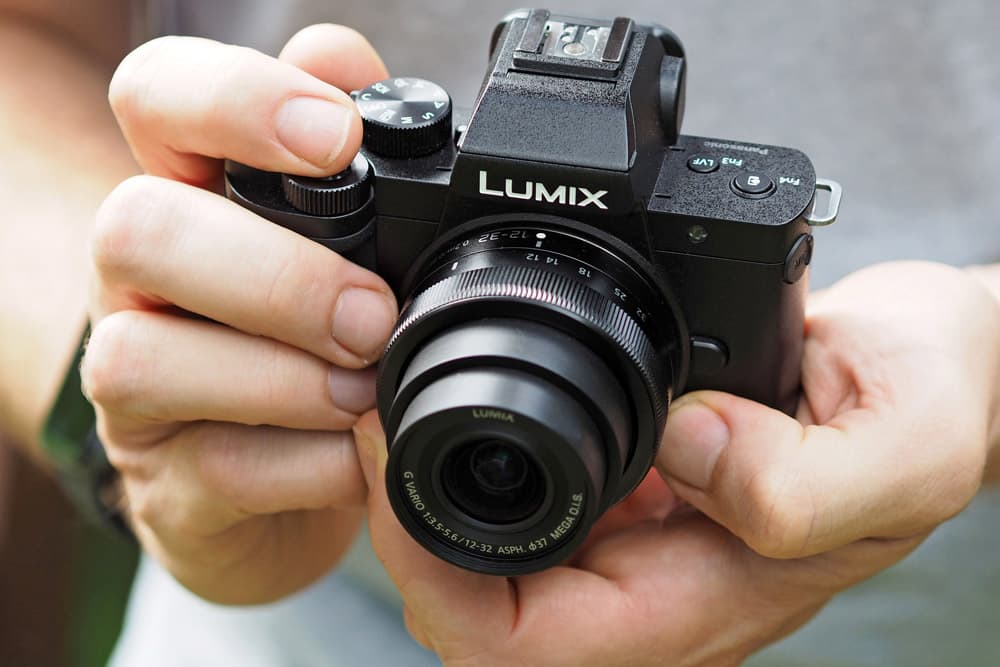
Amateur Photographer verdict
A competent camera overall; a great entry-point in to the Micro Fours Thirds system and does stills and video fairly well for all-rounders.- Impressive Audio + Vlogging Features
- Impressive EVF
- Good to hold, given its size
- Good price point
- Heavy Crop in 4K with electronic stabilisation
- Slightly more noise compared to APS-C rivals
- 10min record time when shooting 4K
| Specifications | Panasonic Lumix G100/D |
|---|---|
| Sensor | 20.3MP Four Thirds sensor |
| Lens mount | Micro Four Thirds |
| ISO | 100-25,600 (extended) |
| Video resolution | 4K video recording |
| Viewfinder | 3.68M-dot 0.73x magnification electronic viewfinder |
| Display | 3inch 1.84M-dot vari-angle touchscreen |
| Dimensions | 115.6 x 82.5 x 54.2mm, 345g (with battery and memory card) |
Designed for vlogging and video recording, the Panasonic Lumix G100 is a compact, neat little camera, that also represents excellent value for money, particularly if you can find it in-store body only, if you have a lens available. This camera is particularly lightweight, but features a high-resolution electronic viewfinder, as well as a high-resolution 3inch vari-angle touchscreen.
The Micro Four Thirds camera features a 20MP image sensor, and gives good image quality, with great looking stills images. As part of the Micro Four Thirds system, there are a wide range of Micro Four Thirds lenses to choose from, including budget options, as well as premium optics.
The camera records 4K video, and the screen can be turned forwards to use as a selfie screen for vlogging, although the crop is worth noting, particularly if video is your main focus.
The battery life is a little on the short side as well, so packing a spare battery, or a portable power bank is definitely recommended, although this could also be said for some of the other mirrorless cameras here. The tiny Panasonic 12-32mm (24-64mm equivalent) pancake zoom is the perfect lens to go with it.
Check out our Panasonic Lumix G100 review.
Lightest Nikon mirrorless camera: Nikon Z30
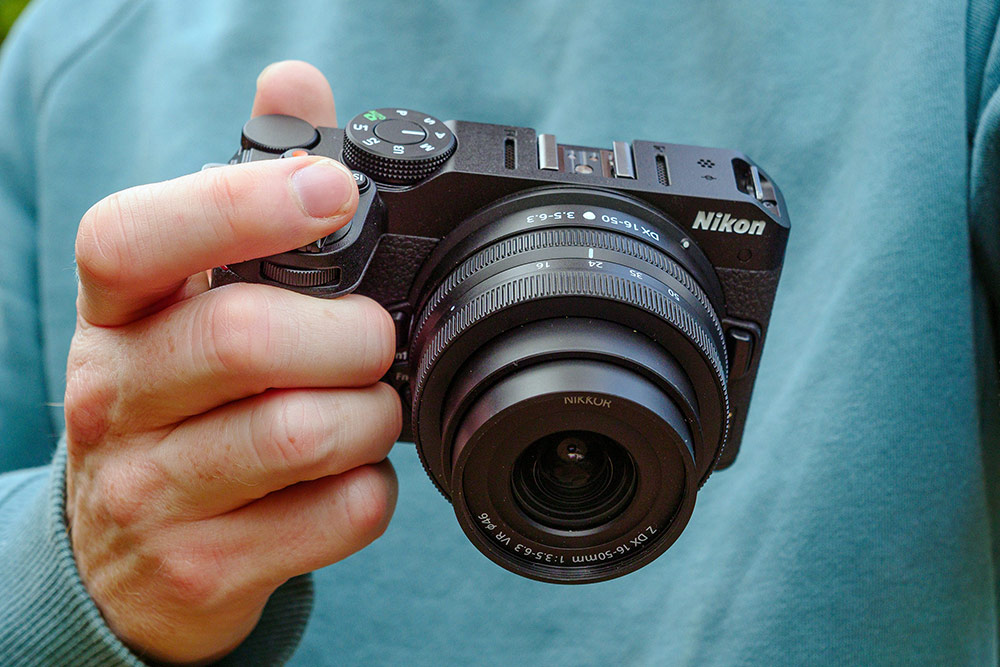
Amateur Photographer verdict
Aimed at vloggers, the Z30 brings lovely image quality at a good price. The flip touch screen, wide-area continuous AF, tally lamp, make for a good shooting experience- Comfortable grip
- USB-C connectivity
- Very effective vari-angle touch screen
- Good value
- No headphone jack
- Limited range of Nikkor Z ‘DX’ lenses
- No in-body stabilisation
- No viewfinder (or optional one)
| Specifications | Nikon Z30 |
|---|---|
| Sensor | 20.9MP APS-C CMOS |
| Lens mount | Nikon Z |
| ISO | 100-51,200 |
| Video resolution | 4K at 30fps and Full HD at 120fps |
| Viewfinder | No viewfinder |
| Display | 3–inch 1.04M-dot vari-angle touchscreen |
| Dimensions | 128 x 73.5 x 59.5mm, 405g (with battery and memory card) |
Nikon’s Z series now boasts three cameras with APS-C sensors, in addition to the full-frame flagship line-up. The Nikon Z30 is the smallest and lightest of the lot, weighing in at a slender 405g, and it’s also the cheapest at launch. While it’s comprehensively equipped for both stills and video, the Nikon Z30 has clearly been designed with vloggers in mind – it shoots uncropped 4K video, and it has a fully articulating screen that can be set to pretty much any angle.
The video focus doesn’t mean it skimps on stills. Having an ISO sensitivity range of 100-51,200 gives you real flexibility in low-light situations, especially given how good the performance is up to ISO 6400, as we found out in our testing.
Lack of viewfinder
The only thing that stills photographers are likely to take exception to is the very thing that has allowed Nikon to keep the cost and weight of the camera down – the lack of a viewfinder. This makes total sense on a vlogging camera, but if it’s a deal-breaker, then try one of the other Nikon Z APS-C cameras like the Z50 or the Z fc. Just be aware they’re a little heavier and more pricey.
It’s also worth noting that the majority of Z-Mount lenses have been designed for full-frame cameras, so finding a compact lens to go with this camera may be an issue once you grow beyond the compact zoom kit lens – though if you intend using the Z30 as a pocket camera, the retracting 16-50mm kit lens will be perfect.
Read our Nikon Z30 review.
Canon’s best small mirrorless camera: Canon EOS R10
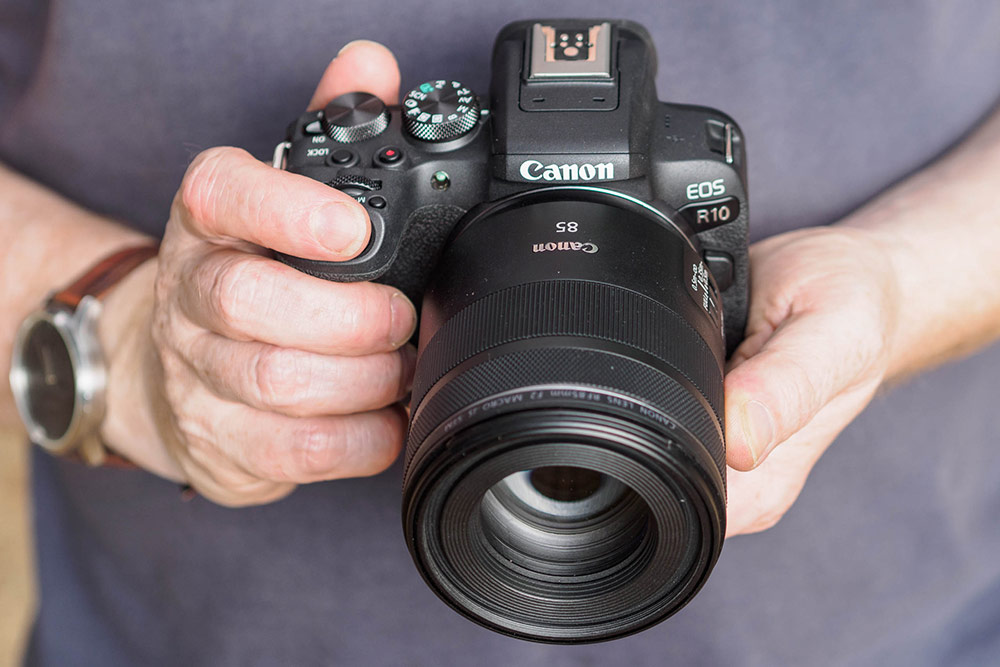
Amateur Photographer verdict
Good handling, attractive images. Autofocus system and continuous shooting speed are superior to anything that anyone (Canon included) has offered in this price range.- Compact and light
- Excellent control layout and handling
- Subject detection autofocus
- Very good image quality in both JPEG and raw
- Supports EF-mount DSLR lenses via mount adapter
- Viewfinder is rather small
- No in-body image stabilisation
- Limited native APS-C RF-S lens range
| Specifications | Canon EOS R10 |
|---|---|
| Sensor | 24.2MP Dual Pixel APS-C CMOS sensor |
| Lens mount | Canon RF (APS-C) |
| ISO | 100-32,000, expandable to 51,200 |
| Video resolution | 4K 30p, 4K 60p with crop, Full HD 120p |
| Viewfinder | 2.36M-dot EVF |
| Display | Vari-angle 3-inch, 1.04M-dot LCD |
| Dimensions | 122.5 x 87.8 x 83.4mm, 429g (including battery and memory card) |
Canon arguably sounded the death knell for its APS-C EOS M cameras when it introduced the crop-sensor EOS R7 and EOS R10. The latter is the smaller of the pair, comparable in size and weight to an EOS M camera, and bursting with plenty more features.
With sophisticated autofocus, impressive shooting speed and DSLR-style handling, the EOS R10 is a comprehensive photographic package. As we found in our full test of the camera, the subject-detection autofocus is particularly impressive, making the camera a real contender for sports and action shooting on a budget. The viewfinder is perhaps a little small in use, but some some cutbacks are going to be necessary in making a fully featured camera as small as this.
The RF-mount lens range for APS-C RF cameras is pretty restricted currently – though, unlike the EF-M range, it’s likely to expand in the future. For the moment, as we said in our review of the EOS R10, the Fujifilm X-S10 is probably a better buy simply for its greater lens options. However, this is something we can expect to change as the EOS R series matures. The EOS R10’s body is not quite as pocket-friendly as some of the other cameras here, but Canon’s 18-45mm kit lens is pretty compact.
Read our full Canon EOS R10 review.
Specifications compared:
| Specifications | Fujifilm X-E5 | Sony A6700 | Sony A7C II | Olympus OM-D E-M10 Mark IV | OM System OM-5 Mark II | Panasonic Lumix G100/D | Nikon Z30 | Canon EOS R10 |
|---|---|---|---|---|---|---|---|---|
| Sensor | 40.2MP APS-C X-Trans sensor | 26MP APS-C | 33MP full-frame Exmor R CMOS | 20.3MP Four Thirds Type Live MOS | 20.4MP Four Thirds sensor | 20.3MP Four Thirds sensor | 20.9MP APS-C CMOS | 24.2MP Dual Pixel APS-C CMOS sensor |
| Lens mount | Fujifilm X-Mount | Sony E | Sony FE | Micro Four Thirds | Micro Four Thirds | Micro Four Thirds | Nikon Z | Canon RF (APS-C) |
| ISO | ISO 125-12,800 (standard) ISO 64-51,200 (extended) | 100-32,000 standard, 50-102,400 (extended) | ISO 100-51,200 (standard), ISO 50-204,800 (extended) | ISO 200-6400, ISO 80-25,600 (extended) | ISO 200-6400 (standard); ISO 64-25600 (extended) | 100-25,600 (extended) | 100-51,200 | 100-32,000, expandable to 51,200 |
| Video resolution | 6.2K 30p, 4K 60p, and Full HD 240p video | 4K 120fps | 4K 30p video (4K 60p with ‘Super 35’ 1.5x crop) | 4K 30fps video recording | 4K4K 30/25/24p video, Full HD 120p | 4K video recording | 4K at 30fps and Full HD at 120fps | 4K 30p, 4K 60p with crop, Full HD 120p |
| Viewfinder | 2.36m-dot, 0.62x viewfinder | 2.36M-dot | 2.36M-dot | 2.36M-dot | 2.36M-dot | 3.68M-dot 0.73x magnification electronic viewfinder | No viewfinder | 2.36M-dot EVF |
| Display | 3in, 1.04m-dot tilting touchscreen | 3in, 1.04M-dot vari-angle LCD | 3in, 1.04M-dot fully articulating LCD | 3in, 1.04M-dot two-way tilting LCD | 3in, 1.04M-dot vari-angle LCD | 3inch 1.84M-dot vari-angle touchscreen | 3–inch 1.04M-dot vari-angle touchscreen | Vari-angle 3-inch, 1.04M-dot LCD |
| Dimensions | 1125mm x 73mm x 39mm, 445g (without a lens) | 122 x 69 x 75.1mm, 493g (with battery and memory card) | 124 x 71.1 x 63.4mm, 525g (with battery and memory card) | 121.7 x 84.4 x 49mm, 383g (with battery and memory card) | 125.3 x 85.2 x 52.0mm, 418g (with battery and memory card) | 115.6 x 82.5 x 54.2mm, 345g (with battery and memory card) | 128 x 73.5 x 59.5mm, 405g (with battery and memory card) | 122.5 x 87.8 x 83.4mm, 429g (including battery and memory card) |
How to choose the best small mirrorless camera
Small cameras inevitably come with compromises, so it’s worth weighing up what you can live without. Sensor size is a big factor: the small mirrorless cameras have small sensors, particularly Micro Four Thirds but APS-C too. Bigger sensors do have advantages in dynamic range and ultimate image quality. However, small sensors are still very capable and many professional photographers and content creators swear by MFT cameras; plus they give your lenses greater effective telephoto reach.
For more on sensor size, have a look at our guide to APS-C, MFT and Full-Frame sensors.
Also, do you need a viewfinder? For manufacturers, this the first thing to go when they set about making a small mirrorless cameras. Some photographers simply can’t imagine life without one, but if you’re happy composing images on the LCD screen, it’s a great way to save some weight and bulk.
Lens selection is another key consideration. The lens you fit to your camera will have a big impact on its weight and balance, not to mention image quality. Again, Micro Four Thirds is an attractive system for this, offering a huge range of slim, pancake lenses that are perfect with small cameras.
Also, with their 2x crop factor you can achieve long telephoto focal lengths without the lenses being massive. The classic example here is the OM System 300mm f/4 which gives an effect of 600mm in the full-frame format, but it comes in a very compact form.
How we test small mirrorless cameras
Testing mirrorless cameras isn’t just about lab charts and specs — it’s about seeing how they perform in the real world. Each model is put through its paces with hundreds of photos and video clips shot in a wide variety of conditions. We examine their control layout and handling as well as screen size and brightness also response time in case of touchscreens and the practicality of any articulating design. We test the electronic viewfinder with particular attention to brightness, colour accuracy and real-time exposure preview.
Autofocus performance is one of the key areas of testing. Continuous subject tracking, or special features like the Eye Control on the Canon EOS R5 Mark II or other advanced Subject Detection modes are all evaluated, whether capturing fast-moving action or more composed scenes.
Many models boast high fps continuous shooting capabilities and features like AI-assisted focus tracking, to test these features we use fast-moving subjects to reveal how well the system holds focus and how many frames truly hit the mark. We also assess their image stabilisation system and test how well they counter rolling shutter effects. Blackout-free shooting, buffer depth, and overall responsiveness at high speeds are also measured to see how each camera handles high burst rates.
Last but by no means least, we critically evaluate image quality, in both JPEG and raw, including resolution, high-ISO noise, and dynamic range – as well as video capabilities.
We then take all these factors into account, along with such things as portability and lens systems, when giving our final conclusion and score. You’ll find the full breakdown of how each mirrorless camera has performed in our full reviews.
Recent updates
- July 2026: tables updated and comparison table added.
- April 2026: Fujifilm X-M5 replaced with X-E5; Fujifilm X-T30 II and Panasonic GX880 removed.
- January 2026: Olympus OM-5 replaced by OM-5 Mark II. Have a look at the OM-5 if you want to buy second hand. Specifications tables added for additional clarity.
Further reading
- Can’t find the Fujifilm X100V? Here are some retro alternatives
- Classic compact cameras to buy
- See our latest buying guides
Follow AP on Facebook, Instagram, and YouTube.