Claire Gillo and the AP team round up the best cameras under $300 / £300, both new, used and second-hand. Read on for the best budget buys, and follow our advice on how to get the best deal.
Finding one of the best cameras under $300 or £300 can be a little tricky. This is quite a specific mid-range price – it’s enough that you can definitely get a decent camera capable of producing high-quality results, but it’s restrictive to the point where you do have to be discerning. What’s more, you will almost certainly need to be comfortable buying used, renewed or second-hand. Decent new cameras within this budget do exist, and I’ve included some in this guide, but you’ll have a lot more options if you go second-hand.
That makes it fun, though, as we get to take a trip down memory lane and revisit some absolute classic cameras that wowed the team when we reviewed them years ago – and still make for great buys today. Professional DSLRs that would have commanded four-figure price tags on launch can now be found ultra-cheap, and I’ve done the scouring of used retailers to find them (meaning you don’t have to).
You can dive straight in or go to the ” How to choose ” section, where I run through the basics of second-hand camera shopping, and list recommended second-hand retailers – or for more choices, you can check out our comprehensive guide to the best second-hand cameras.
Best cameras under $300 / £300: the quick list
Here’s a quick list of our picks for the best second-hand cameras under $300/ £300, as well as links to the best current prices:
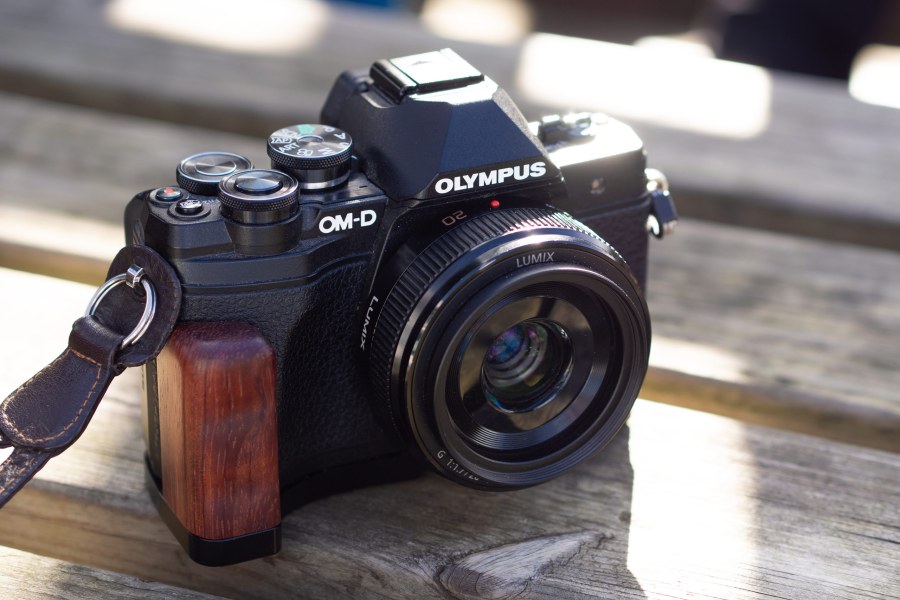
- Best camera under $300 / £300 overall: Olympus OM-D E-M10 Mark III – Buy now
- Best camera under $300 / £300 for enthusiast photographers: Sony A5100 – Buy now
- Best for camera under $300 / £300 for portrait photographers: Nikon D700 – Buy now
- Best camera under $300 / £300 for street photographers: Fujifilm X-T10 – Buy now
- Best full-frame camera under $300 / £300 : Canon EOS 6D – Buy now
- Best camera under $300 / £300 for photographers on the go: Olympus OM-D E-M5 Mark II – Buy now
- Best camera under $300 / £300 for landscape photographers: Canon EOS 5D Mark II – Buy now
- Best camera under $300 / £300 for beginners wanting to learn: Canon EOS 2000D / Rebel T7 – Buy now
- Best camera under $300 / £300 for beginners wanting to capture wildlife or sports: Panasonic Lumix DC-FZ82 / FZ80 – Buy now
- Best beginner camera under $300 / £300: Canon PowerShot SX430 IS – Buy now
Looking for the best deal on cameras under $300 / £300? Not only will you find the best second-hand cameras, but you’ll also find some of the best second-hand camera deals, as our ‘Buy now’ buttons are set to automatically take you to the best prices, from trusted retailers, plus you’ll also find a list of other retailers below each camera, so you can find the right deal for you.
Our guide includes cameras that are available in the US and the UK, with $300 / £300 as our rough guide. Bear in mind that prices and exchange rates do fluctuate in both territories and while we keep this guide regularly up to date, sometimes a camera will nudge over the $300 / £300 mark in one territory or another. In general, it won’t be too significant.
Why you can trust Amateur Photographer
We spend many hours testing every product we recommend, in detail, in a variety of situations and shooting scenarios, and only use experts for our reviews, so you can be sure that you’re getting the best products. Find out more about our expert writers.
Best cameras under $300 / £300
With all that in mind, here is our full list of the best cameras under £300 / $300, including mirrorless models, DSLRs and fixed-lens compacts.
Best overall
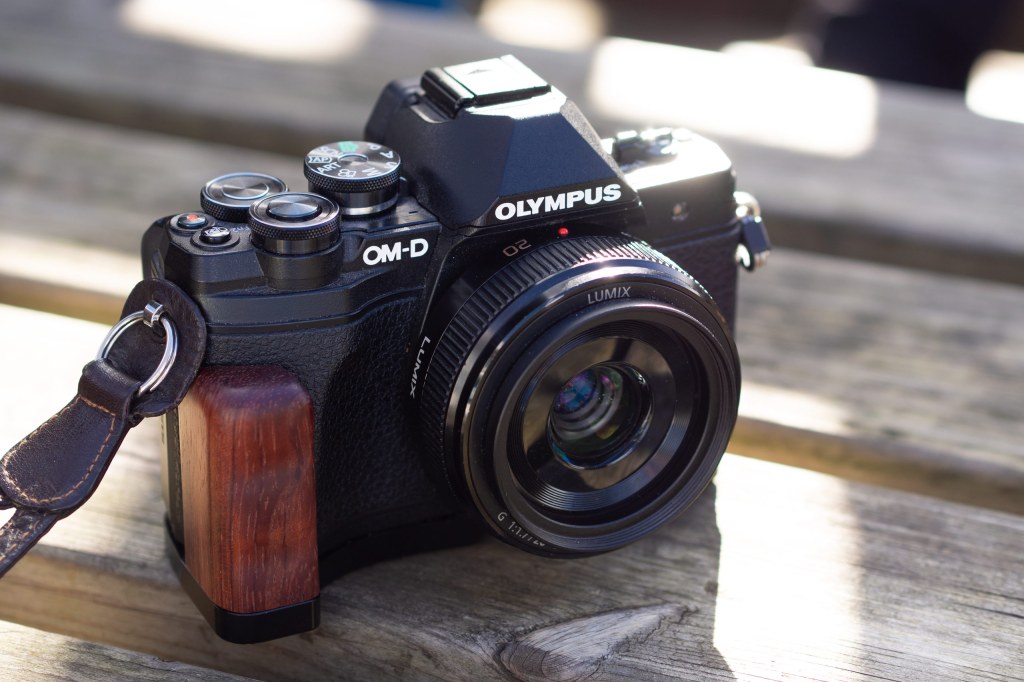
Best camera under $300 / £300 overall: Olympus OM-D E-M10 Mark III
Amateur Photographer verdict
The Mark III offers a strong feature set in a compact, charismatic body at a very keen price point. It is a great choice for smartphone photographers or keen enthusiasts looking to upgrade.- Good 4K features
- Capable autofocus
- Lots of lenses
- Mark II similar, and cheaper
| Camera type | MFT mirrorless |
| Sensor | 16MP Four Thirds sensor |
| Viewfinder | 2.36-million-dot electronic viewfinder |
| Screen | 3.0-inch tilting touch screen |
| Continuous shooting | 8.6fps |
| ISO | 200-6400 (100-25,600 extended) |
| Video | 4K |
The Olympus OM-D E-M10 Mark III is a mirrorless camera with an interchangeable lens, based on the Micro Four Thirds design. When we reviewed it a few years ago, we liked how the new menu layout made it easy for both novices shifting from smartphones and enthusiasts already familiar with settings to find their way arounf the OM-D E-M10 MIII. This is still true today, with the camera offering great images as well as Olympus’ famous colour.
The OM-D E-M10 Mark III was a small but substantial upgrade over the MK II when it launched in 2017. It gained an updated 121-point autofocus system and 4K video recording thanks to Olympus’s TruePic VIII processor. Apart from those changes, the MK III and II are pretty much identical. A range of filters helps create a unique look.
As one of the few cameras on this list that features 4K video recording, transitioning from most cameraphones wouldn’t be a downgrade. Add in the fact that the Micro Four Thirds mount gives you access to the most extensive lens ecosystem available, and the E-M10 Mark III becomes an incredibly compelling, budget-friendly package for any budding photographer.
Read our full Olympus OM-D E-M10 Mark III review
Best for enthusiasts
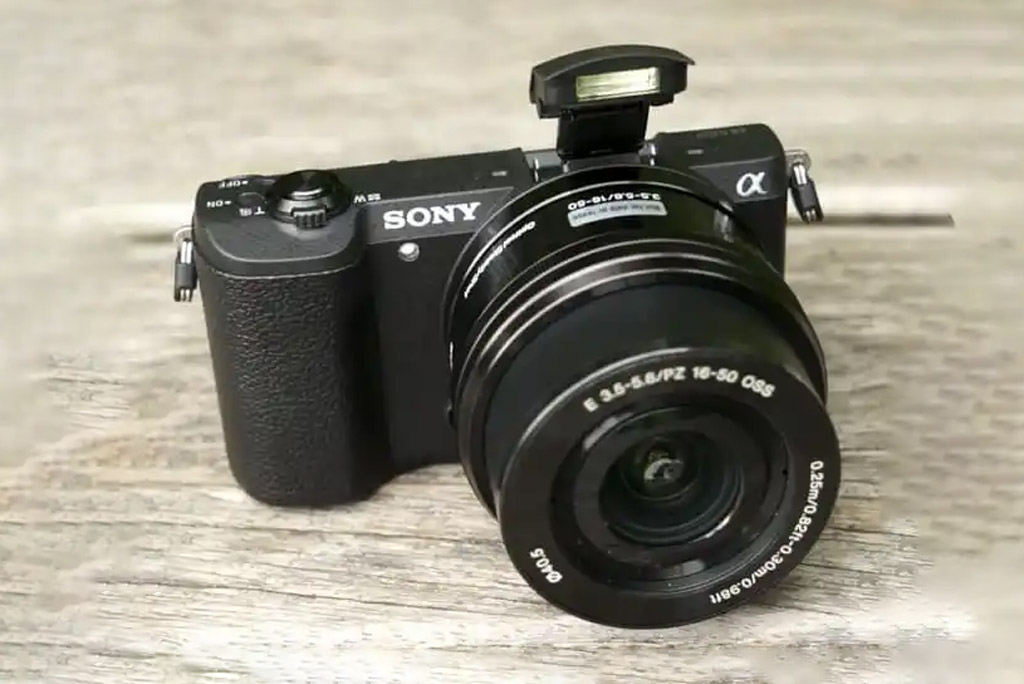
Best camera under $300 / £300 for enthusiast photographers: Sony A5100
Amateur Photographer verdict
If you need quick AF and great video, the A5100 won’t disappoint. It offers some top tech at a highly competitive price.- Small form factor
- APS-C quality
- Fast AF and burst speeds
- No viewfinder
- Limited external controls
| Camera type | Mirrorless |
| Sensor | 24.3MP, Exmor APS HD CMOS sensor |
| Viewfinder | N/A |
| Screen | 3.0-inch tilting LCD touchscreen (180˚) |
| Continuous shooting | 6fps |
| ISO | 100-25,600 |
| Video | Full HD 50p |
Sony’s APS-C cameras have always been speedy, and back in 2014, the Sony A5100 was impressing us with its 6fps burst speeds and 0.06sec AF acquisition times. It’s a capable, unfussy little camera that essentially provides a stripped-back version of the popular A6000 (which features in our guide to the best cameras under $500/£500). So, while you don’t get a viewfinder or much in the way of external control dials, the core imaging experience still shines. Your preference out of the A5100 and the A6000 is more a matter of handling than image quality.
This is still one of the smallest APS-C cameras you can buy, and is a great choice if you want to have a pocketable camera that doesn’t compromise too much on image quality. Sony’s E-mount lens range gives you plenty of choice when it comes to optics, and the easy-to-use flip-around touchscreen makes the A5100 a pleasure to operate.
Read our full Sony Alpha 5100 review
Best for portraits
Best camera under $300 / £300 for portrait photographers: Nikon D700

Amateur Photographer verdict
A sturdy full frame camera, with good image quality and long battery life.- Incredibly sturdy and robust
- Great price for full frame
- Solid image quality
- No video at all
- Only 5fps burst without grip
| Camera type | DSLR |
| Sensor | 12.1MP full-frame CMOS sensor |
| Viewfinder | Optical viewfinder |
| Screen | 3.0-inch 922,000-dot fixed LCD screen |
| Continuous shooting | 5fps |
| ISO | 100-25,600 (extended) |
| Video | N/A |
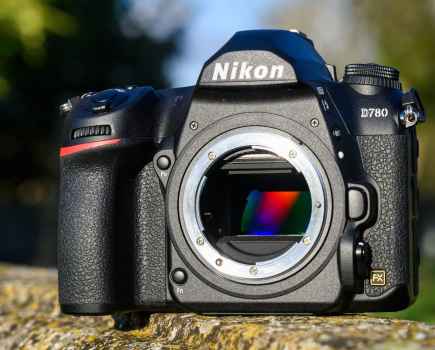
In these halcyon days of big-resolution sensors, 12.1MP may sound absurdly quaint. But there’s a lot to recommend the Nikon D700 as a second-hand buy, and if you’re not planning to print large-format images, 12.1MP could very well turn out to be all you need. The Nikon D700 was a flagship pro DSLR in its day, and hails from the era before DSLR video – as such, it doesn’t shoot video at all, just stills. It’s a simple machine, designed to do one thing – take pictures. And it does it well.
This tank of a camera isn’t the sort of thing you’ll forget about if it’s hanging around your neck all day, but it really can take a pounding, and many professional photographers used it for years in all sorts of conditions and found it just kept on going. We nominated the Nikon D700 as a second-hand classic back in 2019, and since then its used price has continued to drop, making it only a more tempting prospect. Full frame for less than £300 or $300 really is nothing to shake your head at.
Find out why we consider the Nikon D700 to be a second-hand classic.
Best for street photography
Best camera under $300 / £300 for street photographers: Fujifilm X-T10

Amateur Photographer verdict
The Fujifilm X-T10 remains a very capable and stylish camera provided you take into consideration its limitations.- Gorgeous retro-style design
- Excellent JPEG quality
- Well-engineered handling
- Sluggish autofocus
- Relatively few AF points
| Camera type | Mirrorless |
| Sensor | 16.3MP APS-C X-Trans CMOS II sensor |
| Viewfinder | 0.39-inch 2.36m-dot OLED EVF |
| Screen | 3.0-inch 920,000-dot tilting LCD |
| Continuous shooting | 8fps |
| ISO | 200-6400 (raw), 100-51,200 (JPEG) |
| Video | FullHD 60p |
The Fujifilm X-T10 was announced back in 2015 and has since been succeeded by the X-T20 and X-T30. It remains a very capable camera provided you’re aware of its limitations. Its autofocus is a bit sluggish compared to the latest X-series models, and you get far fewer AF points across the frame.
On the plus side, when paired with a tiny “pancake” lens (like the Fujinon XF 27mm f/2.8), the camera is small enough to tuck into a jacket pocket, so we’ve found it handled extremely well for street photography, given its size and tactile physical controls. The tilt-screen helps you create more candid images by letting you shoot from waist level, while the silent electronic shutter helps you avoid drawing too much attention to yourself.
Finally, don’t forget the built-in film simulations and the cinematic looking out-of-camera JPEGs with rich and vibrant colours produced by its 16.3MP APS-C X-Trans CMOS II sensor. The X-T10 has also been beautifully designed, and the classic retro body build will turn any head. Supported by a wide range of X-mount lenses suitable for street photography.
Read our second-hand review of the Fujifilm X-T10 to get our full detailed analysis.
Best full-frame
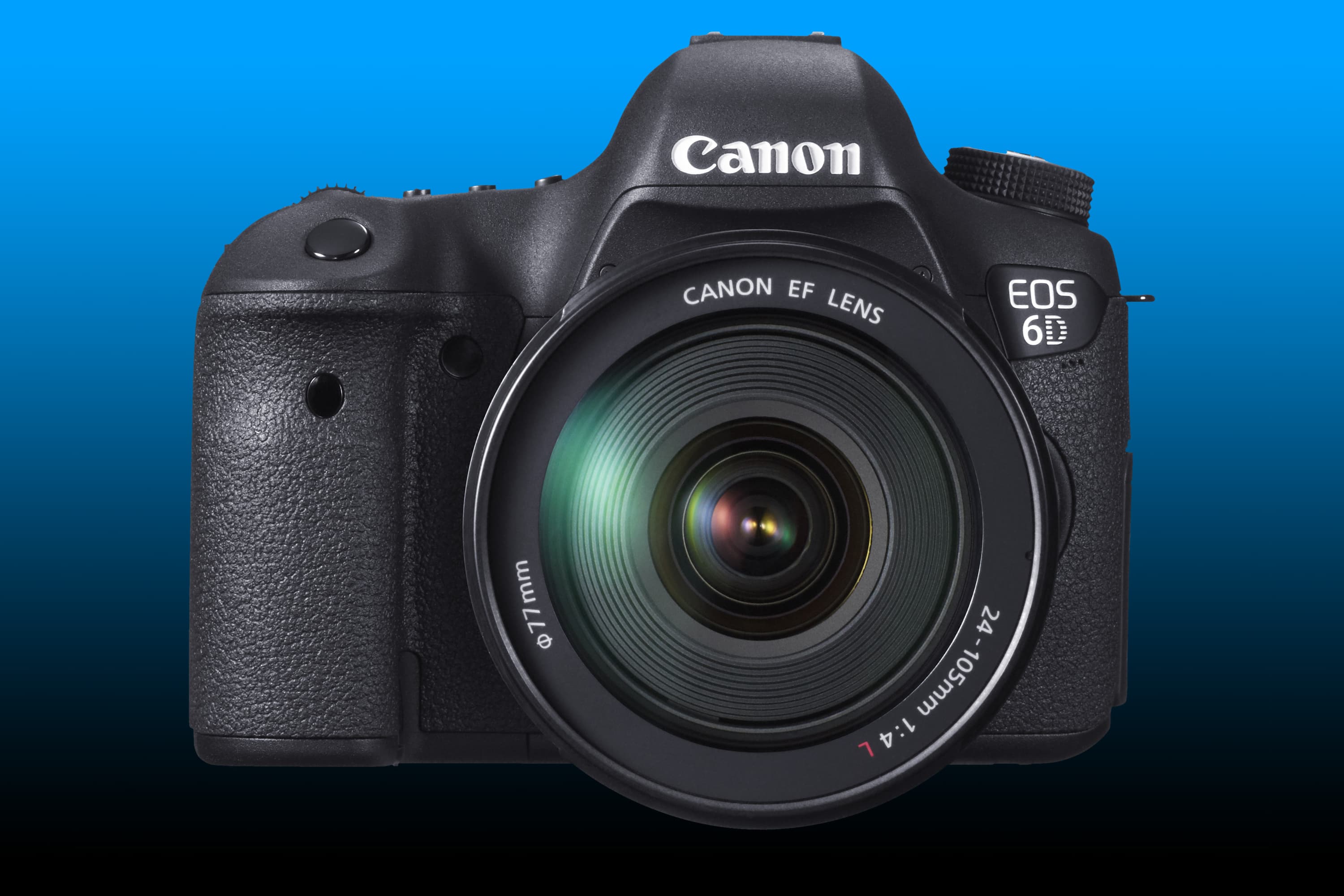
Best full-frame camera under $300 / £300: Canon EOS 6D
Amateur Photographer verdict
Intuitive to handle, and with its compact size, and light and solid build, the EOS 6D is a pleasure to use. It delivers great image quality and performs impressively in low light conditions.- Full-frame sensor
- Excellent control system
- Very good battery life
- Pushes upper end of budget
- Basic autofocus
| Camera type | DSLR |
| Sensor | 20.2MP full-frame CMOS sensor |
| Viewfinder | Optical viewfinder, 0.71 magnification |
| Screen | 3.0-in, 1.04M-dot fixed screen |
| Continuous shooting | 4.5 fps |
| ISO | 50-102,400 (extended) |
| Video | Full HD 30p |
The full-frame Canon EOS 6D is an excellent camera that comes with some impressive specs, including its full-frame 20.2MP CMOS image sensor. When it was launched thirteen years ago, it was met with great enthusiasm and was the first affordable full-frame DSLR camera. Hobbyists who previously couldn’t upgrade to full-frame camera bodies could now take advantage.
The price will be determined by the condition you pick one up in. A well-used Canon EOS 6D can be picked up for under the $300 / £300 budget. But if you want a model in good condition with a lower shutter count, you’ll have to push the budget up by another £100 – taking you over the $300 / £300 mark.
In our review of the Canon EOS 6D, we found it responds impressively to noise, comes with intuitive controls and has an excellent battery life. The basic autofocus system, single SD card slot and lack of vari-angle LCD screen are all a bit disappointing.
Read our full review of the Canon EOS 6D
Best for on the go
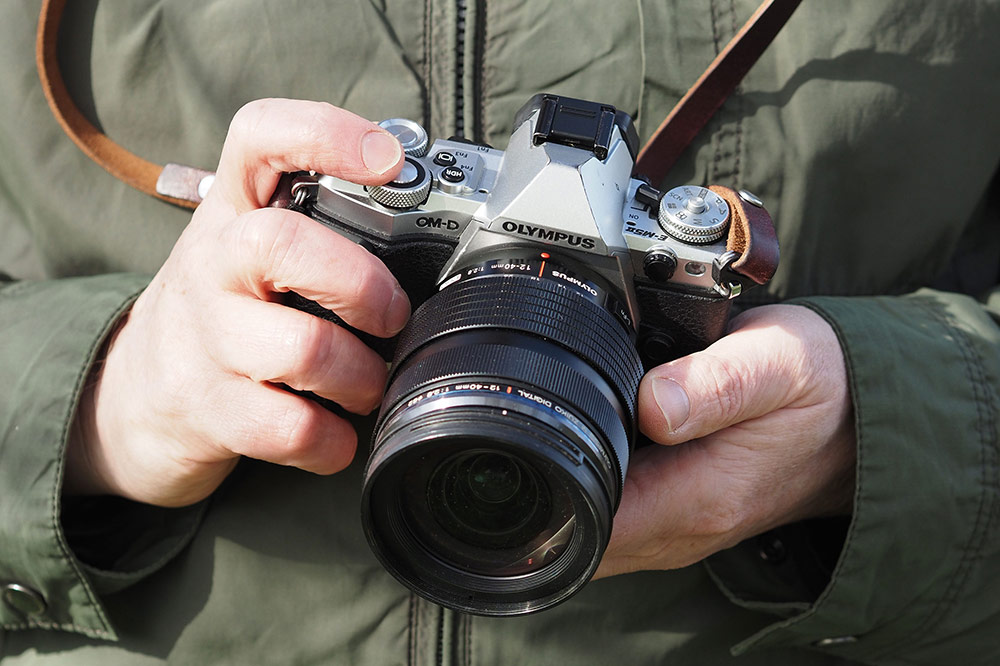
Best camera under $300 / £300 for photographers on the go: Olympus OM-D E-M5 Mark II
Amateur Photographer verdict
Hugely impressive feature set in a very portable package. It is a compelling option for SLR owners looking to take the weight off their shoulders without sacrificing much capability.- Fast, high-quality shooting
- Weather-resistant body
- Huge MFT lens range
- Menus can be tricky to navigate
| Camera type | MFT Mirrorless |
| Sensor | 16MP, Four-Thirds MOS image sensor |
| Viewfinder | 2.36M dot EVF, 0.74x equiv magnification |
| Screen | 3.0-inch, 1.04M-dot, fully articulated touch screen |
| Continuous shooting | 10fps |
| ISO | 100-25600 (extended) |
| Video | Full HD 60p |
The Olympus OM-D EM-5 Mark II succeeded the OM-D E-M5 back in 2015 and came with some excellent upgrades such as the faster burst mode rate, 40MP high-resolution multi-shot mode and more efficient AF system. The EM-5 Mark II has now been succeeded by the OM-D E-M5 Mark III, meaning there are plenty of second-hand models available on the market. These vary in price depending on quality.
When we reviewed the Olympus OM-D E-M5 Mark II back in 2015, we gave it five stars. We found the 16 megapixel Four Thirds image sensor produced excellent JPEGs straight out of camera and that it was fast and responsive to operate. The robust and weather-resistant body was also well made, and the excellent custom controls were another big tick on our list.
For those looking for a bargain, Micro Four Thirds cameras are a great choice, as there are a vast range of great Micro Four Thirds lenses available, both new and used.
Read the full review of the Olympus OM-D E-M5 Mark II
Best for landscape
Best camera under $300 / £300 for landscape photographers: Canon EOS 5D Mark II

Amateur Photographer verdict
Overall, the Canon E05D Mark II is an extremely capable camera with high pixel count and excellent image quality. Its integrated sensor-cleaning system is a great addition at this price range, too.- Superb video options
- Great price for full-frame
- Broad EF lens range
- ISO range somewhat pedestrian
- Top end of budget
| Camera type | DSLR |
| Sensor | 21.1MP full-frame CMOS sensor |
| Viewfinder | Optical viewfinder, 0.71x magnification |
| Screen | 3in, 920,000-dot LCD screen |
| Continuous shooting | 3.9fps |
| ISO | ISO 100-6400 (expandable to 25,600) |
| Video | Full HD 30p |
The Canon EOS 5D MK II comes from the legendary Canon 5D line and the model still has a great reputation even in today’s market. This camera was over £2000 when it was launched, and now, as a second-hand model, it can be picked up for around £300 (sometimes over, sometimes under), depending on the condition and shutter count. It offers incredible value given the wide selection of used EF lenses available.
The 21.1 full-frame image sensor and full HD video are impressive specs for a camera that’s now 13 years old. It will ensure that you capture intricate details of foliage and rock formations at a quality that allows for large-format printing. The ISO range is a little low compared with today’s standards, but for landscape photography, a slower, more deliberate art that requires a sturdy tripod most of the time, this really shouldn’t bother you.
Keep in mind you also get an aluminium chassis body that’s built like a tank, the weather sealing included means that you can keep shooting even in less than ideal weather, which – as we know – usually yields the most dramatic landscape shots.
Read our full review of the Canon EOS 5D Mark II
Best to learn on
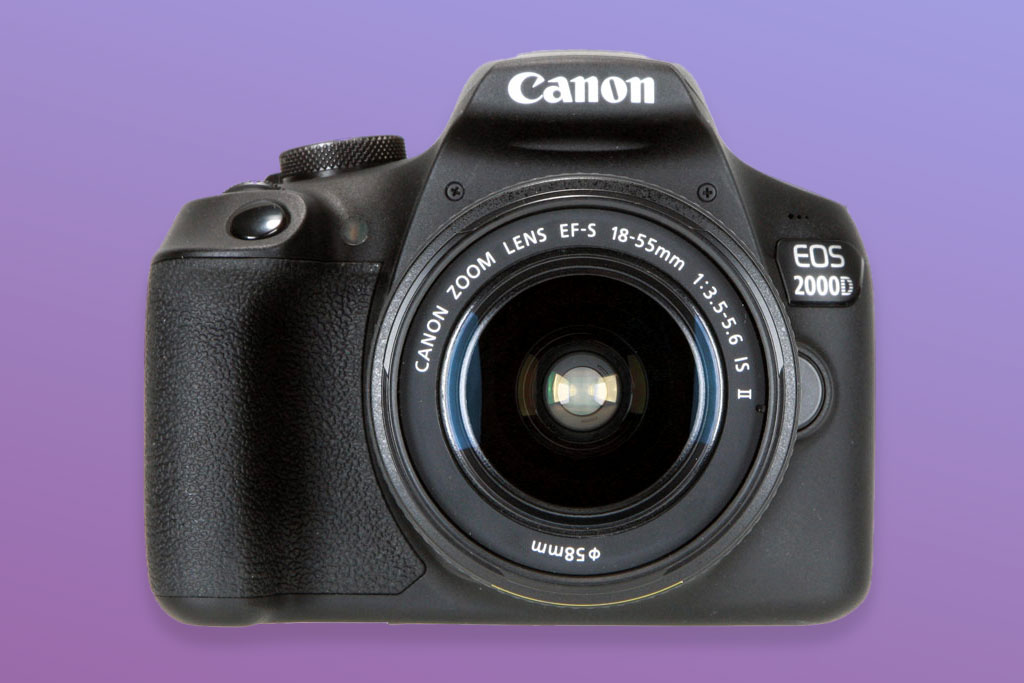
Best camera under $300 / £300 for beginners wanting to learn: Canon EOS 2000D / Rebel T7
Amateur Photographer verdict
If you are in favour of Canon and working with a tight budget, the 2000D is a solid budget choice even if its stablemates outperform it.- Very user-friendly
- APS-C sensor
- Fast NFC connectivity
- A lot of competition
- Generally solid but unexciting
| Camera type | DSLR |
| Sensor | 24.1MP APS-C CMOS sensor |
| Viewfinder | Optical viewfinder 0.8x magnification |
| Screen | 3in, 920,000-dot LCD screen |
| Continuous shooting | 3fps |
| ISO | ISO 100-12,800 |
| Video | Full HD 30p |
Canon has released quite a few entry-level DSLRs, and the EOS 2000D is neither the cheapest nor the most expensive. It offers a good balance of features, performance and price, especially if you don’t mind picking one up second-hand, which you can comfortably do for less than $300 or £300. With an APS-C sensor, it’ll produce images of markedly superior quality to a smartphone, and having the EF-S lens mount at your disposal means access to loads of lenses, Canon-made and otherwise.
It’s a pretty basic camera, as we said in our full review, but our main sticking point with the EOS 2000D originally was its price, and on the second-hand market that becomes a good deal more reasonable. You don’t get 4K video, so those interested in video would probably be better off with a sub-£300 camera from Olympus or Panasonic. However, for beginner photographers, the EOS 2000D is extremely user-friendly, and provides a superb platform on which to learn the ropes.
Read our full review of the Canon EOS 2000D
Best for wildlife & sports
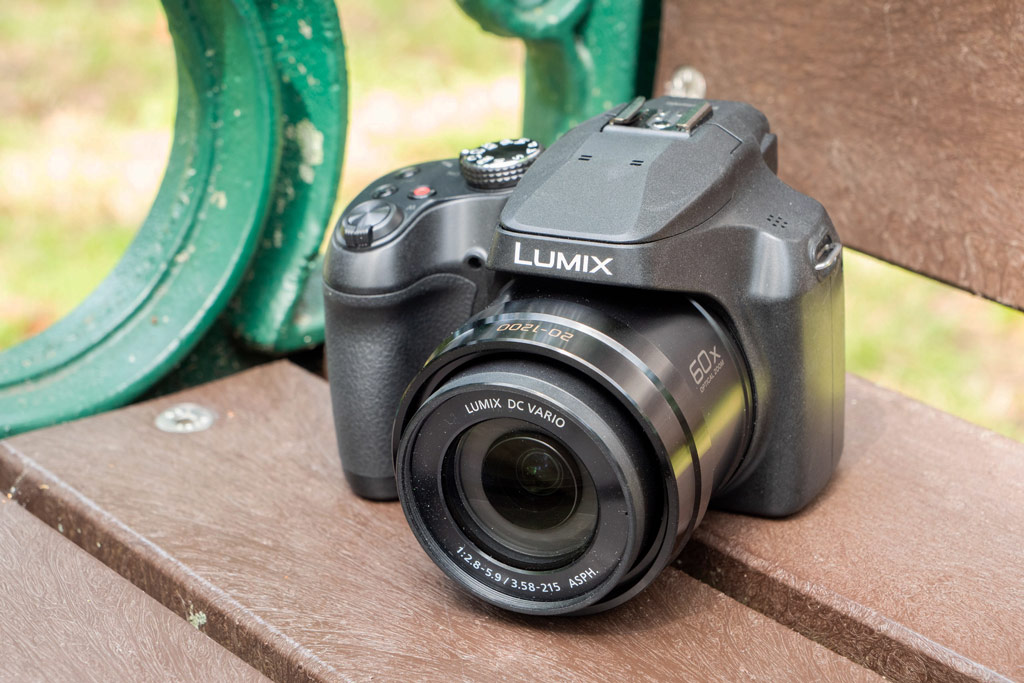
Best camera under $300 / £300 for beginners wanting to capture wildlife or sports: Panasonic Lumix DC-FZ82 / FZ80
Amateur Photographer verdict
This handy little bridge camera from Panasonic, with its impressive 20-1200mm zoom range, definitely earned the title of all-rounder.- All-in-one shooter
- Can be bought new for less than £300
- Useful scene modes for beginners
- Smaller sensor
- Limit to how advanced you can get
| Camera type | Bridge camera with 60x optical zoom |
| Sensor | 18.1MP sensor 1/2.3” inch |
| Viewfinder | 0.2-inch 1,170K-dot EVF |
| Screen | 3.0-inch 1.84M-dot LCD touch screen |
| Continuous shooting | 10fps |
| ISO | 80-6400 (extended) |
| Video | 4K30p |
The first camera to make it onto our list that isn’t second hand is the Panasonic Lumix DC-FZ82. This camera can go from ultra-wide to ultra-zoom without having to change lenses. It’s a great point-and-shoot for those who have no camera skills and are looking for an easy to operate system.
It covers an extreme focal range between 20mm-1200mm. This means you could safely fill the frame with a bird on a tree without disturbing it. While for sports photography at the 20mm end, you can capture a wide-angle shot of a whole sports stadium, then zoom in and isolate a player. With 6fps continuous shooting with autofocus tracking enabled, it will help you keep up with movement too. The catch is that the small 1/2.3 sensor requires plenty of light to shine.
The mode dial on top of the camera allows you to take full creative control by shooting in Program, Aperture priority, Shutter priority or Manual if you wish. There are also lots of scene modes to choose from. The DC-FZ82 is a great starting point for a beginner who has no photographic expertise and is unsure how far they want to take their hobby. For those who have grander aspirations, we’d recommend purchasing something more advanced.
Read our full review of the Panasonic Lumix FZ80D/FZ82D
Best for beginners
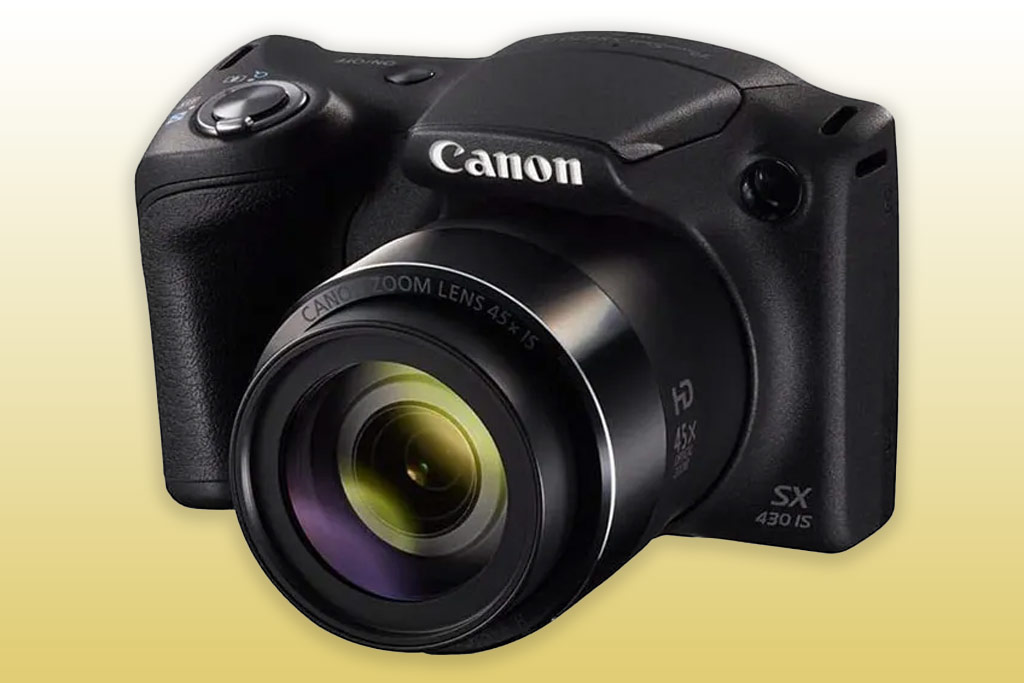
Best beginner camera under $300 / £300: Canon PowerShot SX430 IS
Amateur Photographer verdict
A mini bridge camera with 45x super zoom and HD video, it is simple and fun to use and especially ideal for beginners.- Generous optical and digital zoom
- Easy to use
- Intelligent stabilisation
- Smaller sensor
- No mode dial
| Camera type | Bridge camera with 45x optical zoom |
| Sensor | 20MP 1/2.3 type CCD sensor |
| Viewfinder | N/A |
| Screen | 3.0-inch 230,000-dots fixed LCD screen |
| Continuous shooting | 2.2fps (limited to 5MP) |
| ISO | 100-1600 |
| Video | Video (HD) 1280 x 720, 25 fps |
The Canon PowerShot SX430 IS is another bridge camera that makes it onto our list. Retailing new with a RRP of £199.99, this camera comes in under budget.
As with the Panasonic Lumix DC-FZ82 listed above, this camera has been designed with the amateur in mind. However, it doesn’t include a mode dial on top, making it very much a point and shoot aimed at beginners.
It does sport some nice features, such as the 45x optical zoom that goes from a 24mm view to 1080mm, plus intelligent IS, meaning you can shoot steady shots even in lower light or when you’re zoomed right in to your subject. Finally, the PowerShot SX430 IS also includes Wi-Fi with NFC, meaning you can instantly share images.
Specifications compared
| Specifications | Olympus OM-D E-M10 Mark III | Sony A5100 | Nikon D700 | Fujifilm X-T10 | Canon EOS 6D | Olympus OM-D E-M5 Mark II | Canon EOS 5D Mark II | Canon EOS 2000D / Rebel T7 | Panasonic Lumix DC-FZ82 / FZ80 | Canon PowerShot SX430 IS |
|---|---|---|---|---|---|---|---|---|---|---|
| Sensor | 16MP Four Thirds sensor | 24.3MP, Exmor APS HD CMOS sensor | 12.1MP full-frame CMOS sensor | 16.3MP APS-C X-Trans CMOS II sensor | 20.2MP full-frame CMOS sensor | 16MP, Four-Thirds MOS image sensor | 21.1MP full-frame CMOS sensor | 24.1MP APS-C CMOS sensor | 18.1MP sensor 1/2.3” inch | 20MP 1/2.3 type CCD sensor |
| Lens mount | Micro Four Thirds | Sony E | Nikon F | Fuji X | Canon EF | Micro Four Thirds | Canon EF | Canon EF-S / EF | N/A | N/A |
| Viewfinder | 0.39in, 2.36m-dot, EVF with 0.62x magnification | N/A | OVF with 0.72x magnification | 0.39-inch 2.36m-dot OLED EVF | OVF with 0.71 magnification | 2.36m-dot EVF, 0.74x magnification | OVF with 0.71x magnification | OVF with0.8x magnification | 0.2-inch 1.17m-dot EVF | N/A |
| Screen | 3.0-inch tilting touch screen | 3.0-inch tilting LCD touchscreen (180˚) | 3.0-inch 922,000-dot fixed LCD screen | 3.0-inch 920,000-dot tilting LCD | 3.0-in, 1.04M-dot fixed screen | 3.0-inch, 1.04M-dot, fully articulated touch screen | 3in, 920,000-dot LCD screen | 3in, 920,000-dot LCD screen | 3.0-inch 1.84M-dot LCD touch screen | 3.0-inch 230,000-dots fixed LCD screen |
| Video | 4K | Full HD 50p | N/A | FullHD 60p | Full HD 30p | Full HD 60p | Full HD 30p | Full HD 30p | 4K30p | Video (HD) 720p, 25 fps |
How to choose the best cameras under $300 / £300
Buying second-hand can be intimidating at first, but there are plenty of reputable used-camera dealers around, all of whom we have complete confidence in. They will check all used gear before selling it on to be sure it works, and offer a guarantee that it’s in good working order.
While this often won’t be as comprehensive or as long as the warranty you get with new cameras (a period between 3, 6 and 12 months is common), it’ll help assure you that you’re not about to waste your money, and gives you someone to go back to if a problem does develop. With up to 12 months warranty available, this is as good as some new warranties offered.
Our list of recommended second-hand dealers:
- Wex Photo Video – 12 month warranty*
- Park Cameras – 6 month warranty*
- Clifton Cameras – 6 month warranty*
- MPB – 12 month warranty*
- Ffordes Photographic – 6 month warranty*
- London Camera Exchange – 6 month warranty*
- CameraWorld – 6 month warranty*
- Worldwide Camera Exchange – 6 month warranty*
- Mifsuds Photographic – 3 month warranty*
- HarrisonCameras – 12 month warranty*
- Grays of Westminster (Nikon only) – 6 month warranty*
- B&H Photo Video (USA) – 90 day warranty*
- Adorama (USA) – 90 day warranty*
- KEH (USA) – 180 day warranty*
*Length of warranty correct at time of writing, but please check item and website to confirm, this does not cover items sold as faulty.
In terms of what camera you want to buy, it depends on what you plan to shoot. It’s worth working out which specs you want to prioritise. If you want to print large-scale images in pin-sharp quality, try getting a camera with a high-resolution sensor shown as mega-pixels or MP. See our guide to sensor sizes for more on this, or have a look at how much resolution do I actually need?
Alternatively, if you’re interested in capturing fast-moving subjects like wildlife, fast burst rates and good autofocus speeds may be a higher priority. It’s worth checking out the video resolution, too, if you want to shoot both movies and stills, as some older cameras offer limited video functionality or even none at all.
Different types of cameras have different strengths; check out our guide to DSLRs vs mirrorless for more on this. We’ve included multiple different types of camera in this guide; take a look through the entries and read our reviews to get a feel for which might suit you best.
Should I buy a used camera from eBay, Craigslist, Facebook Marketplace, or another online market? Buying second-hand from a private seller means you’ll have no come-back should there be any problems with the item, so for the purposes of this guide, we recommend buying from a reputable dealer so that you’re covered by the warranty.
How we test cameras
While testing each camera, we take hundreds of photos in a wide variety of conditions to assess their control layout, ergonomics and handling, as well as screen and viewfinder size, response time and brightness.
Each genre demands a unique set of features and performance standards for a camera to excel within it. So we look at autofocus performance, continuous subject tracking, and burst shooting as well as image quality, low-light performance, and take into consideration portability too.
We also assess the image stabilisation system and test how well it supports hand-held and low-light shooting. Last but by no means least, we critically evaluate image quality, in both JPEG and raw, including resolution, high-ISO noise, and dynamic range.
Finally, we take all these factors into account along with lens compatibility and overall handling when giving our final conclusion and scores. You’ll find a full breakdown of how each camera performs in our full reviews.
Recent updates
- May 2026: We have updated the descriptions of multiple cameras to better explain why we chose them for specific genres or experience levels. We’ve also added a detailed specification comparison table at the end of this article.
- February 2026: We added a How we test section to give you a better idea what criteria we take into consideration when reviewing these cameras. Furthermore, all cameras have been updated with specification tables, as well as checking their current availability and prices.
Looking for more budget round-ups and guides? Check out these other articles:
- Best classic compact cameras
- How to check a second-hand lens for faults
- Camera maintenance: how to clean your camera and equipment
If you have more money to spend, then why not have a look at the best cameras under $500/£500 or the best cameras under £1000/$1000? Alternatively, if your budget is on the lower side, we also have a guide to the best cheap cameras under $200 / £200.
Follow AP on Facebook, Instagram, YouTube and TikTok.