A list of the best Nikon cameras is going to include quite a few of the best cameras, full-stop. Nikon is at the top of its game right now, with its mirrorless Z system offering a complete range of cameras from beginner level all the way up to top-tier professional. I’ve had to be ruthless to keep this list a sensible length, and have only included the absolute best Nikon cameras at every price point.
This list mostly focuses on Nikon’s mirrorless range because this is where Nikon, like most manufacturers, is pouring the majority of its efforts. The mirrorless Z series contains all of Nikon’s flagships, and with the firm not having produced a DSLR in many years, it’s clear where the future lies in terms of Nikon cameras. With that said, I have included one superzoom bridge option – the gimmicky but enjoyable Nikon Coolpix P1100.
All the cameras on this list have been reviewed by our technical team, and have scored highly enough to merit a place in this guide. If you’re new to Nikon, I’ve put an explainer section at the bottom of this page, complete with some of the questions we most frequently get asked about mirrorless cameras and the Nikon range, to help give you a grounding in the basics.
Want more options? We also have a guide to the best Nikon DSLRs, for those who want to keep things old-school, and an explainer on the pros and cons of DSLRs vs mirrorless if you’re still on the fence about which type is right for you. For now though, let’s look at the best Nikon cameras to buy right now.
The best Nikon cameras – here is our quick list:
- Best for most people: Nikon Z5II – Buy now
- Best for beginners: Nikon Z50II – Buy now
- Best for style: Nikon Zf – Buy now
- Best hybrid: Nikon Z6III – Buy now
- Best for video: Nikon ZR – Buy now
- Best budget full-frame: Nikon Z5 – Buy now
- Best for landscapes: Nikon Z7II – Buy now
- Best for wildlife: Nikon Z8 – Buy now
- Best professional: Nikon Z9 – Buy now
- Best superzoom: Nikon Coolpix P1100 – Buy now
Looking for the best deal on Nikon cameras? Not only will you find the best Nikon cameras, but you’ll also find some of the best Nikon camera deals, as our ‘Buy now’ buttons are setup to automatically take you to the best prices, from trusted retailers, plus you’ll also find a list of other retailers below each camera, so you can find the right deal for you.
Read on to learn more about each camera’s strengths and weaknesses, based on the findings of our review team. Once you’ve chosen a Nikon mirrorless camera, you’ll want some of the best Z-mount lenses for Nikon to go with it. First, here are our best Nikon mirrorless cameras you can buy…
Why you can trust Amateur Photographer
We spend many hours testing every product we recommend, in detail, in a variety of situations and shooting scenarios, and only use experts for our reviews, so you can be sure that you’re getting the best products. Find out more about our expert writers.
Best overall
Best Nikon camera for most users: Nikon Z5II
Amateur Photographer verdict
A great spec sheet and very little to dislike, plus a tempting price point makes the Z5 II a fantastic all-rounder for a variety of different photographers.- Fantastic value
- Fully articulating touchscreen
- Proven sensor
- Multiple subject detection focusing
- No top-plate LCD for quick viewing of settings
- 4K 60fps video has a crop / no higher resolutions available
- Less portable/travel-friendly than APS-C or MFT rivals
| Specifications | Nikon Z5II |
|---|---|
| Sensor | 24.5MP full-frame (FX format) BSI CMOS sensor |
| Continuous shooting | 15fps in raw, 30fps JPEG |
| Autofocus | 273-selectable focus points |
| ISO | ISO 100-64000 |
| Image stabilisation | 7,5 stops IBIS |
| Video | 4K 60fps internal video recording (cropped), 4K 30fps uncropped |
| Viewfinder | 3.69m-dots, 0.8x, 3000nits, 60fps |
| Screen | 3.2in, 2.1m-dot fully articulated |
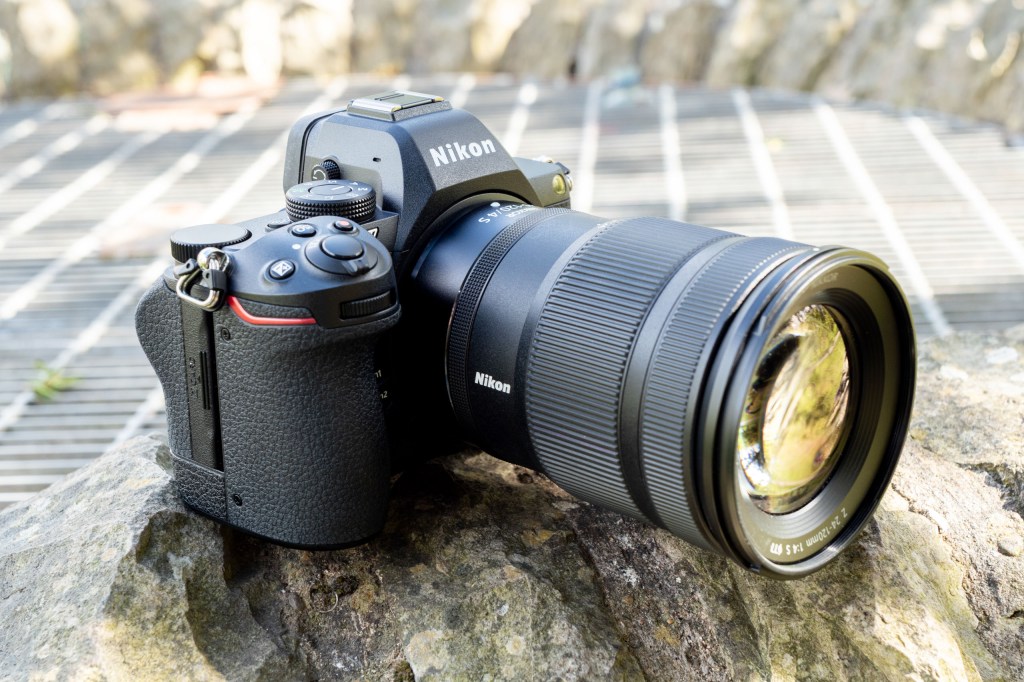
With its superb balance of features, image quality and price, the Nikon Z5II is the Nikon camera that I would recommend to most users. If you’ve got the budget for a full-frame mirrorless, it’s one of the best around, and only serious professional shooters really need to worry about the cameras that sit above it in the line-up.
Five years after the release of the original Z5, this new model stacks a number of highly anticipated updates. Even though pixel count is nearly identical with 24.5MP, the new Expeed 7 processor and the back-illuminated sensor deliver better low-light performance, with noise well-handled even at higher ISO settings.
The improved subject-detection autofocus is snappy and recognises nine different subjects compared to only two in its forerunner. Nikon’s latest 3D tracking technology is on board too, keeping focus locked on a moving subject. Together with continuous shooting up to 14fps in raw to capture fast-paced scenarios, and IBIS that allows for up to 7.5 stops of shake reduction, you can opt for handheld shots where you would need a tripod before.
Nikon also listened to customer feedback and included a fully articulating screen and dropped the crop during 4K video recording. The Z5 II is a highly capable entry-level full-frame camera that represents great value. At $1700 / £1600 you will struggle to find anything else that boasts a similarly impressive spec sheet.
Best for beginners
Best Nikon for beginners: Nikon Z50II
Amateur Photographer verdict
The Nikon Z50II is a great little camera that offers an impressive feature set for the price. It’s not the most engaging to use and Nikon’s DX lens range is very limited, but it gives great results- Excellent image quality
- Great viewfinder
- Snappy autofocus
- Fully articulated screen
- No AF-area joystick
- Mode dial is loose
- No IBIS
- Limited range of DX Z-mount lenses
| Specifications | Nikon Z50II |
|---|---|
| Sensor | 20MP DX-format CMOS sensor |
| Continuous shooting | 11fps |
| Autofocus | Eye and Face Detection AF, 209 phase detection focus points |
| ISO | ISO 100-51,200 (204,800 extended) |
| Image stabilisation | No IBIS |
| Video | 4K30p video recording; 4K60p with 1.5x crop |
| Viewfinder | 2.36m-dot EVF, 0.68x magnification, 1000-nits |
| Screen | 3.2in, 1.04m-dot fully articulated |
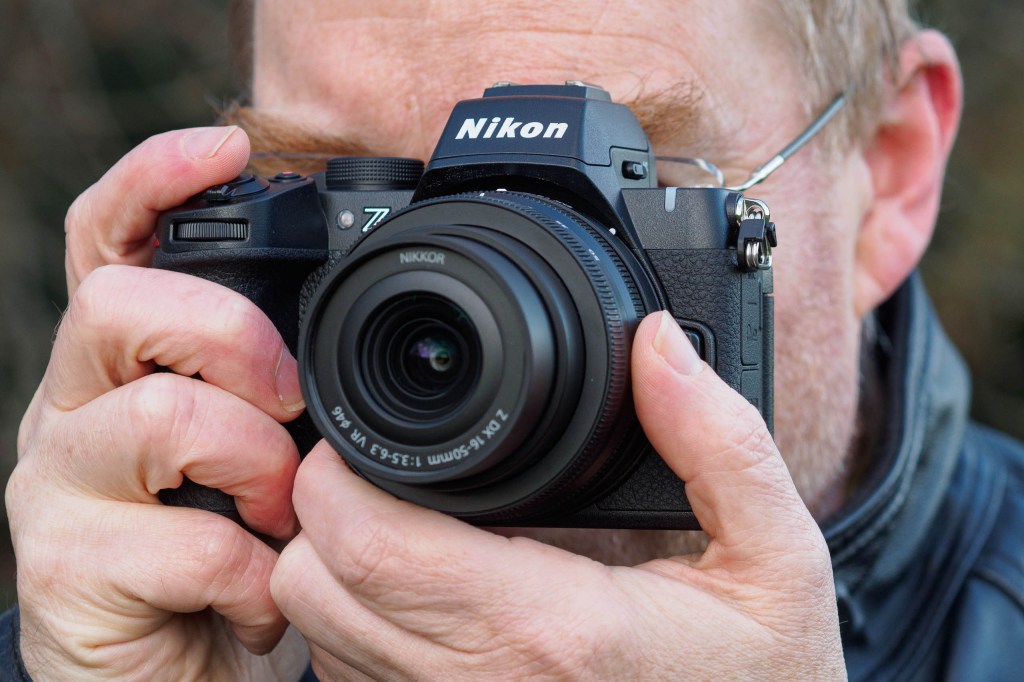
The Z50II is an update to Nikon’s first APS-C sensor (DX-format) mirrorless camera, the Nikon Z50. While it sports the same 20MP DX-format sensor, it has gained plenty of enticing new features, including sophisticated autofocus options with improved subject detection and 3D tracking, it follows your subject and keeps it in focus, so you can be at ease knowing you can avoid blurry or out of focus shots.
With 11fps burst shooting, it is quite fast, letting you freeze fast-paced scenes, and the hybrid autofocus system does a great job of keeping up with the action. There is also an option to shoot 30 fps if you are happy with the lower, JPEG-only output. It’s 209 phase detection AF points cover the vast majority of the frame, and both Eye and Face Detection AF are on board, so it is also ideal for portraits.
With a fully articulated touch screen that is able to face completely forward, it is better suited for vlogging and video use as well as taking self-portraits. Nikon also added a product review mode that focuses on a product held up to the camera, instead of the presenter’s face, so if you are looking for a camera for stills as well as video and content creation, the Z50II is a great choice. If you are a complete novice Nikon’s got you covered as well, the Intelligent Auto Mode takes care of your exposure settings, so you can focus on creating and composition without getting overwhelmed by having to learn everything at once.
As with most other DX format Nikon cameras there’s no in-body image stabilisation (IBIS) on board, so the camera relies on in-lens optical stabilisation, and can be further enhanced by electronic stabilisation during video recording. This is important if you are shooting hand-held or in low light, but you can always opt for a tripod or gimbal to further stabilise your shots.
At the time of the Nikon Z50’s release, there weren’t very many natively DX-format lenses for Z-mount, and several years later there still aren’t. The full-frame lenses will still work on the Z50II but tend to be both bulky and expensive, which sort of negates the point of buying a cheaper APS-C camera.
Best for style
Best Nikon for style: Nikon Zf
Amateur Photographer verdict
Styled after the legendary Nikon FM2, the Zf is a gorgeous camera. And under the appealing retro design, it packs Nikon’s latest Expeed 7 processor and subject-detection autofocus.- Gorgeous retro styling with dial-led controls
- Does well in low light
- Zippy burst shooting with AI-powered autofocus
- Second card slot is micro SD, which could limit speeds
- Lacks a real handgrip
| Specifications | Nikon Zf |
|---|---|
| Sensor | 24.5MP BSI CMOS full-frame sensor |
| Continuous shooting | 14fps with electronic shutter |
| Autofocus | Subject detection AF, 273 focus points |
| ISO | ISO 100-64,000, 50-204,800 (extended) |
| Image stabilisation | 8 stops IBIS |
| Video | 4K30p, 4K60p with DX crop, Full HD 120p |
| Viewfinder | 3.69m-dot, 0.8x magnification |
| Screen | 3.2-inch, 2.1m-dot, vari-angle |
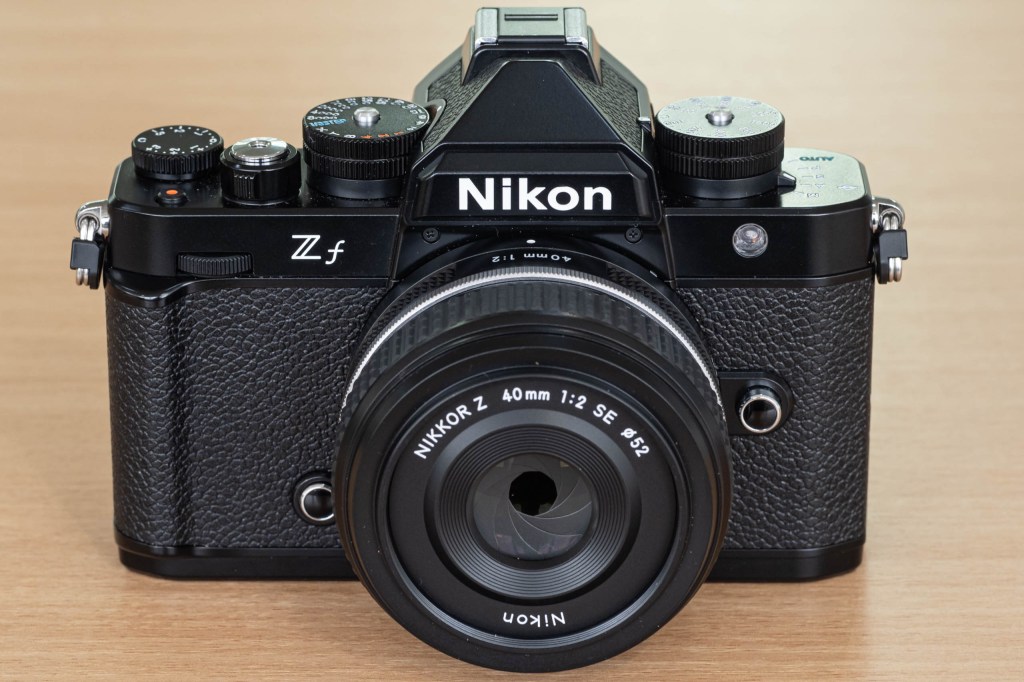
The fabulous Nikon Zf is successor to several different cameras at once. It can be seen as a bigger brother to the similarly retro-styled Nikon Z fc, which has an APS-C sensor rather than a full-frame.
However, the Zf is other things too. It’s a throwback to Nikon’s immensely admirable heritage in film SLRs, with a body styled after famous analogue cameras like the Nikon FM2. It’s also something of a re-work of the Nikon Df DSLR; a retro throwback that was rather overpriced at launch (and can be picked up more reasonably second-hand now). It was an interesting concept, but missed the mark. The Zf is much better, even if the lack of proper de-clicked aperture rings in Z-mount lenses means you don’t get quite the same throwback shooting experience as you do from, say, Fujifilm.
The Nikon Zf is more than just an aesthetic joy, though. It’s a comprehensively featured full-frame mirrorless camera. Its powerful subject-detection autofocus gives you a high hit-rate of ultra-sharp shots. The Zf offers a native ISO sensitivity up to 64,000, expandable to 204,600, and with a full-frame sensor with a lower 24.5MP resolution, it produces ultra-clean images even at higher sensitivities. Having eight stops of in-body stabilisation is helpful too, letting you use slower shutter speeds and improving the overall video quality.
Best hybrid
Best hybrid Nikon: Nikon Z6III
Amateur Photographer verdict
An impressive update over its predecessor with great video specs and the first partially stacked sensor. Handling is sublime, and Nikon’s 3D tracking technology ensures pitch-perfect autofocus.- Partially stacked CMOS sensor
- 8 stops IBIS
- Bright, big EVF
- AF powerhouse
- No bird detection AF
- A bit on the heavy side
| Specifications | Nikon Z6III |
|---|---|
| Sensor | 24.5 MP partially-stacked full-frame CMOS sensor |
| Continuous shooting | Up to 20fps |
| Autofocus | Subject recognition and eye-detection AF |
| ISO | ISO 100-64,000, 50-204,800 (extended) |
| Image stabilisation | 8-stop IBIS |
| Video | 6K 60fps N-RAW |
| Viewfinder | 5.76m-dot, 0.8x, 4000nits OLED EVF |
| Screen | 3.2in, 2.1m-dot, fully articulated |
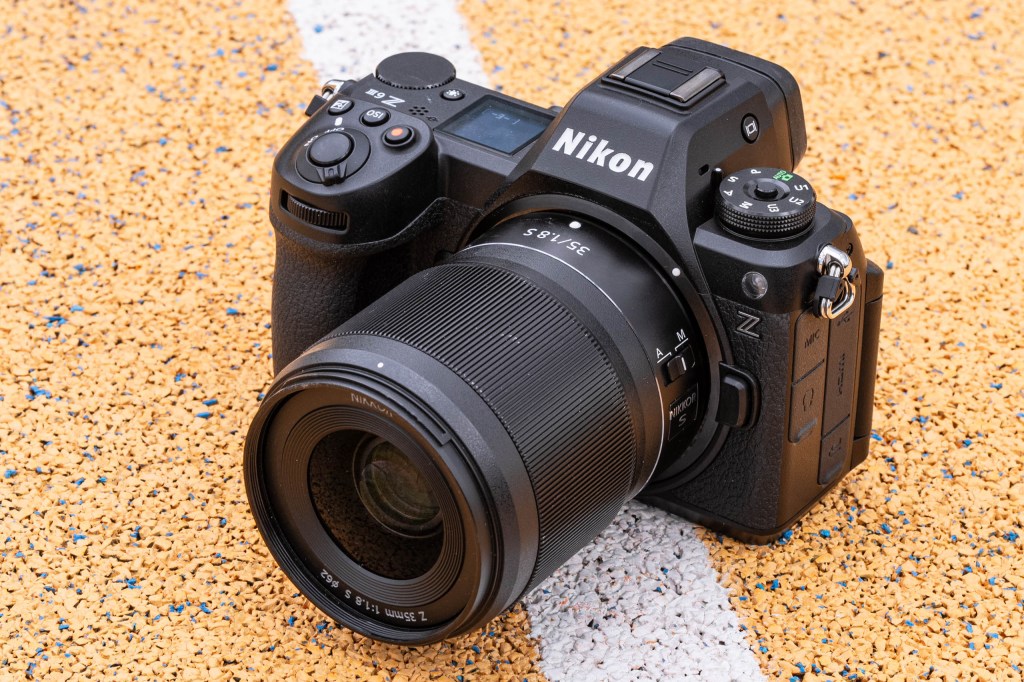
The Z6III features a first-of-its-kind partially stacked CMOS sensor that carries the same benefits as a full-stacked sensor, however at a lower cost. These advantages are faster, more responsive focusing, reduced rolling shutter distortion with the electronic shutter, faster continuous shooting, improved video specs, and a more fluid viewfinder experience.
The electronic viewfinder has been updated to an extremely bright 4000nits with an improved colour gamut. This results in a large, sharp and super-bright viewfinder that displays natural-looking colours.
Another important improvement over its predecessor is Nikon’s 3D tracking technology that keeps focus locked on a moving object. Its capable subject detection system recognises people, animals, vehicles, and planes, but eye-tracking is also onboard, and it automatically detects and focuses on your subject’s eyes. Furthermore, autofocus is specified to work in staggeringly low light of -10EV.
Featuring 8 stops in body image stabilisation and internal 12-bit RAW video recording at 60fps, in either 6K or 4K resolution, and slow-motion footage in Full HD at 240fps, complete with audio, the Z6 III is a hybrid shooter’s dream.
With the latest 2.0 firmware update, Nikon added Auto capture to the Z6 III’s stills and video repertoire. Set capture distance, motion direction and subject detection and it will automatically detect and capture photos and video. This is especially useful for content creators, as the Z6 III can be set up as a stationary camera to record B-roll footage or action, while they capture different points of view with another camera.
Best for video
Best Nikon for video: Nikon ZR

Amateur Photographer verdict
Astonishing value with 6K60p RAW video, superb autofocus and class-leading screen, designed with a gimbal friendly body. It sets a new benchmark for aspiring filmmakers and hybrid shooters on a budget- 6K 60p RAW
- 4-inch 1000 nit screen
- 32-bit float audio
- Compact
- No EVF
- Electronic Shutter
- MicroSD backup slot can’t handle 6K RAW
| Specifications | Nikon ZR |
|---|---|
| Sensor | 24.5MP CMOS sensor |
| Continuous shooting | 20fps raw, 120 fps JPEG |
| Autofocus | 299 focus points (photo mode); 253 (video mode) |
| ISO | ISO 100-51200 (standard); ISO 50-204800 (extended) |
| Image stabilisation | 7.5-stops IBIS |
| Video | 6K 60p RAW; 4K 120p; Full HD 240p |
| Viewfinder | N/A |
| Screen | 4.0in, 3.07m-dot vari-angle |
The Nikon ZR is Nikon’s first true video-first camera, developed following its acquisition of RED. Unlike most Nikon mirrorless cameras, the ZR is built specifically for filmmaking, so there’s no viewfinder or deep handgrip, but a compact gimbal-ready body and a large and exceptionally bright 4in, vari-angle touchscreen.
While it shares the same 24.5MP sensor as the Nikon Z6III, there are significant differences in its video capabilities. It can record 6K RAW in RED R3D NE 6K, N-RAW, with support for 32-bit float audio and LUT support. And for those who don’t need raw recording, there’s excellent 10-bit H.265 footage and 4K 120p and Full HD 240p recording for slow motion footage.
The Phase Detection Autofocus supported by Nikon AI is excellent in both stills and video, combined with 5-axis in-body image stabilisation, making it reliable for handheld work. The ZR delivers genuine cinema-level features at a price that makes it one of the best-value cinema cameras on the market.
Cheapest full-frame Nikon
Best budget full-frame Nikon: Nikon Z5
Amateur Photographer verdict
With a solid set of specifications, the Z5 offers a very affordable entry point to the full-frame Nikon Z mirrorless lineup.- Excellent build quality
- Dual card slots
- Good entry point for full frame
- 1.7x crop on 4K
- Only 4.5fps burst
| Specifications | Nikon Z5 |
|---|---|
| Sensor | 24.3 MP full-frame CMOS sensor |
| Continuous shooting | 4.5fps |
| Autofocus | Eye detection AF, 273 focus points |
| ISO | 160-51200 (50-102400 extended) |
| Image stabilisation | 5-stops IBIS |
| Video | 4K UHD 30p, Full HD 60p |
| Viewfinder | 0.5in, 3.6m-dot 0.8x EVF |
| Screen | 3.2in, 1.04m-dot tilting touch-screen |
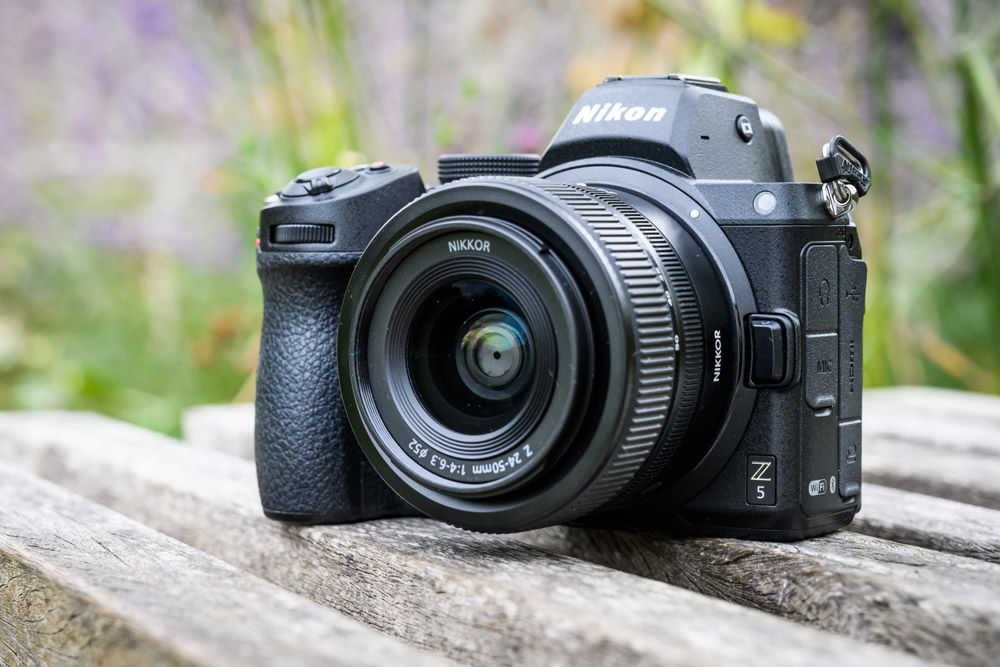
The Nikon Z5 was originally billed as the comparatively affordable gateway into full-frame – and now that the Z5II has arrived, this is only more true. First released in 2020, the Nikon Z5 is not the fastest camera on the block, with a burst rate of 4.5fps and none of the ultra-intelligent autofocus features that have become commonplace on more recent cameras. You probably wouldn’t (or shouldn’t) choose it as your primary driver for sports or wildlife.
With that said, the Nikon Z5 still offers very solid fundamentals, with impressive full-frame image quality that holds up even as you push the ISO up to 12,800 or so. It’s a well-designed camera with solid ergonomics, and features like weather-sealing, dual card slots and in-body stabilisation do a lot to make it feel like you’re using something designed for professionals. The electronic viewfinder is also a class act – Nikon always does well here, and the EVF on the Z5 is a pleasure to shoot and compose with. I’d say if you predominantly shoot landscapes and still-life, you’re not losing out on a lot by going for the Z5 as opposed to more recent full-frame models like the Z5II or Z6III. The main thing you might miss is resolution, as you’ve only got 24MP here – if this is a priority for you, you’re best off looking at a Z7 camera.
As long as you’re not pushing too hard on trying to shoot moving subjects, the Nikon Z5 gives you access to the full-frame system without spending a fortune – which makes it ideal for beginners and those upgrading to full-frame for the first time.
Best for landscapes
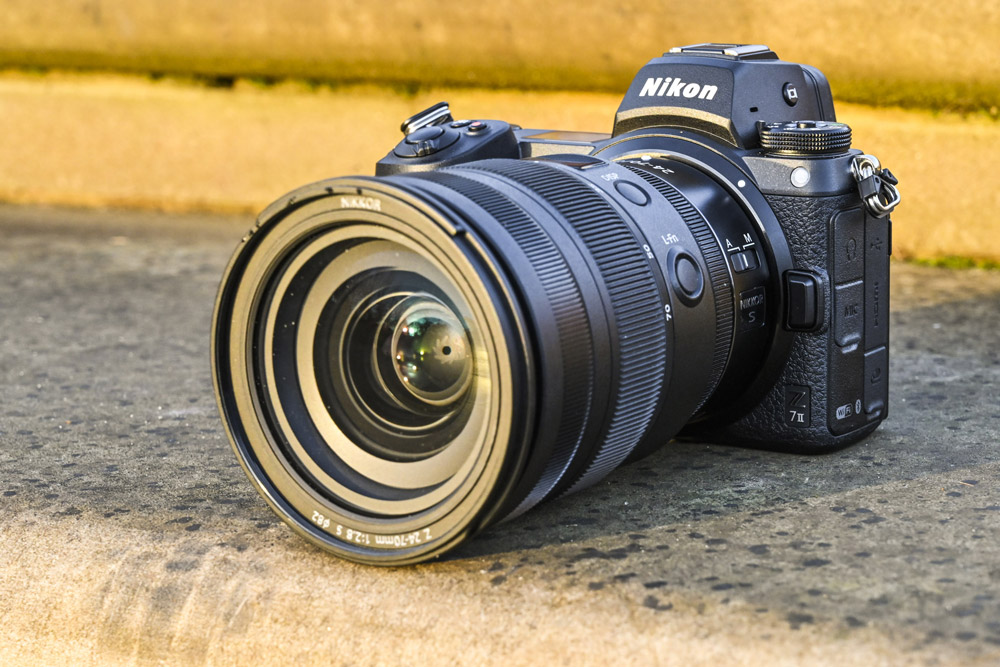
Best Nikon for landscapes: Nikon Z7II
Amateur Photographer verdict
Offering the same high resolution as the Z8 and Z9, but in a lighter and cheaper body, the Z7II is the best choice for landscapes. It offers magnificent latitude when processing Raw files.- Dual fast card slots
- Deep shooting buffer
- Excellent handling
- Nasty crop on 4K video
- Viewfinder lower-res than rivals
| Specifications | Nikon Z7 II |
|---|---|
| Sensor | 45.7 MP full-frame CMOS sensor |
| Continuous shooting | Up to 10fps |
| Autofocus | Face and eye detection AF; 493 AF points |
| ISO | ISO 64-25,600 (32-102,400 extended) |
| Image stabilisation | 5-stops IBIS |
| Video | 4K UHD 60p |
| Viewfinder | 0.5in, 3.69m-dot, 0.8x EVF |
| Screen | 3.2in, 2.1m-dot tilting touchscreen |
A high-resolution full-frame model for serious enthusiasts and professionals, the Nikon Z7 II delivers a comprehensive shooting experience while fixing some of the flaws of the first version. It’s got two card slots now, with a second UHS-II SD slot in addition to the CFExpress B/XQD slot from the original Z7.
In testing, we found the Nikon Z7II to deliver exactly the kind of sublime quality we’ve come to expect from the series, thanks to its 45.7MP back-illuminated full-frame sensor. The camera performs beautifully at all its standard ISO settings, and while noise starts to creep in at ISO 12,800 and 25,600, results are still perfectly acceptable. That resolution is the same as the top-end Z8 and Z9, though this camera doesn’t quite achieve those dizzying shooting speeds. It’s therefore your best bet for landscapes, as you’ll get that same stunning image quality in a lighter body at a more affordable price.
The electronic viewfinder is big and beautiful enough to give pause to even the most die-hard DSLR enthusiast (though its raw resolution lags behind that of rivals from the likes of Canon and Sony). Plus, the Z7II can achieve a decent burst speed of 10fps, with a deep shot buffer.
It’s not the biggest upgrade over the original Z7, and isn’t supposed to be; the original camera is still on sale as a compelling, cheaper alternative. In either case, you get an exceptional mirrorless camera, with perfectly pitched handling, and the ability to produce superb images. It’s hard to ask for more than that.
Best for wildlife
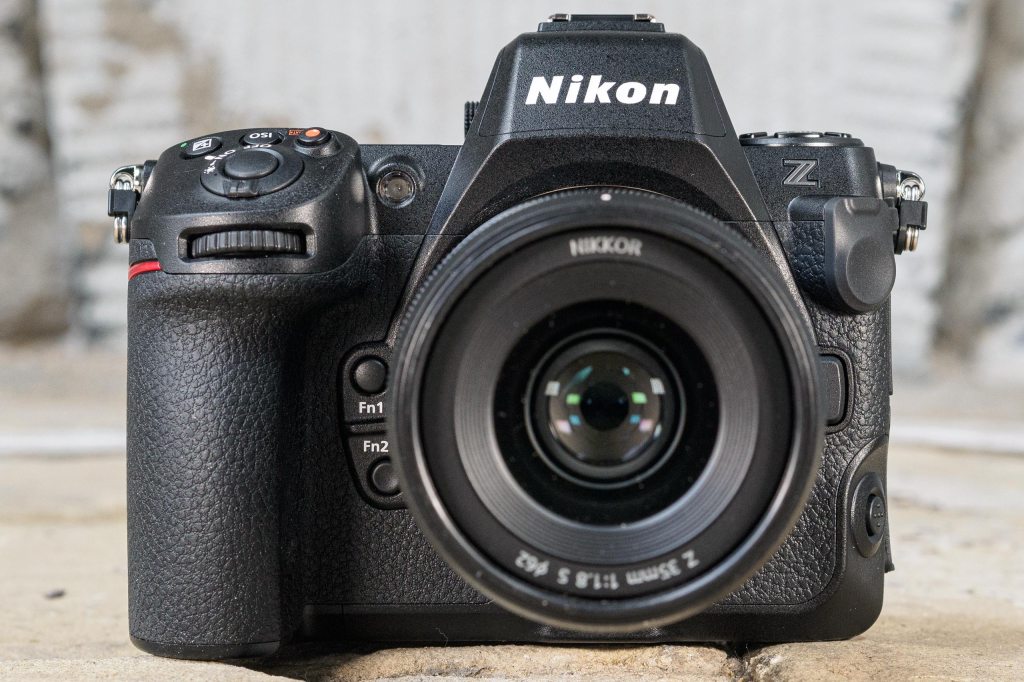
Best Nikon for wildlife: Nikon Z8
Amateur Photographer verdict
A solid built all-rounder for professionals with sufficient customisability lightning fast AI autofocus and excellent image quality. Its speed makes it king for wildlife photography in particular.- Almost all the power of the Nikon Z9 in a regular size body
- 45.7MP resolution
- 8K video capability but also 4K up to 120p
- Handling and build quality
- Two different card types (though that can be useful)
- More expensive than the 45.7MP Z7 II
| Specifications | Nikon Z8 |
|---|---|
| Sensor | 45.7 MP full-frame sensor |
| Continuous shooting | 20fps shooting (120fps at 11 megapixels) |
| Autofocus | AI subject-detect autofocus |
| ISO | ISO 64-25,600; 32-102,400 (extended) |
| Image stabilisation | 6-stops IBIS |
| Video | 8K 30p, 4K 120p |
| Viewfinder | 3.69m-dot, 0.8x, 3000nits OLED EVF |
| Screen | 3.2in, 2.1m-dot 3-way tilting LCD |
The Nikon Z8 is a serious camera for serious shooters. On its release, Nikon explicitly drew comparisons with the Nikon D850, one of the most popular DSLRs of all time. The D850’s combination of high resolution and high-speed shooting made it a particular hit with wildlife photographers – the Nikon Z8 is a continuation of that tradition.
Of course, the Nikon Z9 already did that, so in practice, the Nikon Z8 is basically a slimmed-down, cheaper version. This is no bad thing; the Z9 is spectacular, but expensive and bulky, so the Z8 makes more sense for a lot of users. You still get to shoot 45.7MP images at high frame rates, and take advantage of Nikon’s AI-powered subject-detection autofocus. The fastest shutter speed is a lightning-fast 1/32,000sec, and you even get the Z9’s 11MP 120fps shooting mode for those times you need to be faster than fast. 8K video is on board, too.
There is little to criticise about this camera, as we discovered in our in-depth Nikon Z8 review. It’s pricier than the Z7 II, which sports the same resolution, so is only really worth the money if you really need the speed. Some photographers may prefer two UHS-II SD slots rather than one SD and one CFexpress (or XQD) as this necessitates a more expensive card – but that’s to nitpick. If the Z8 fits your budget, and you want the speed it offers, there’s every reason to snap one up.
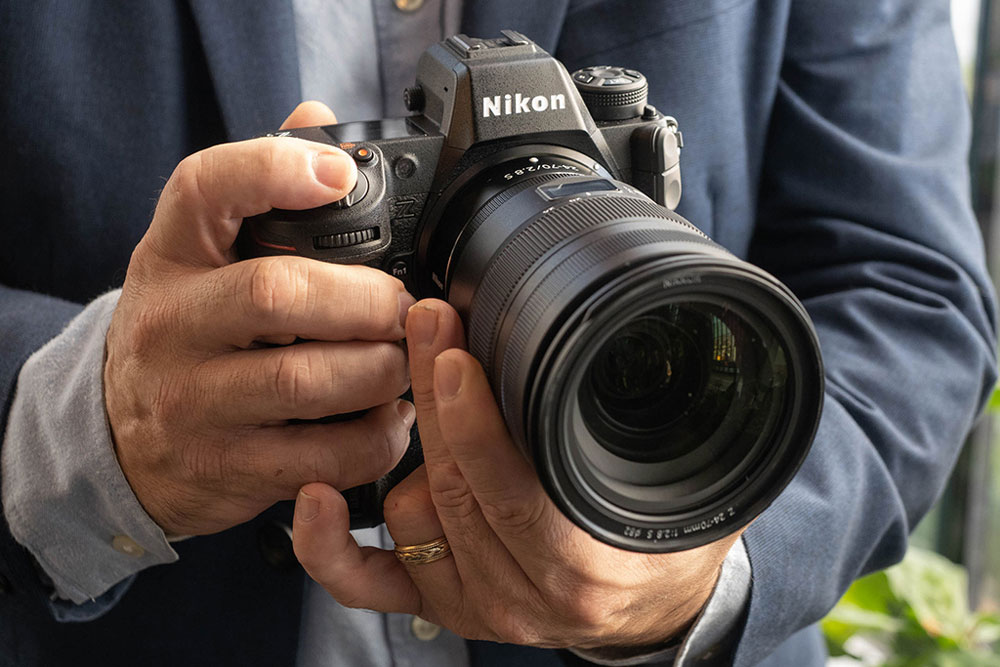
Best professional Nikon: Nikon Z9
Amateur Photographer verdict
One of the best cameras we have ever tested, the Z9 offers a complete replacement for professional DSLR shooters, with high resolution and breathtaking speed in a solidly built body.- Best-in-class autofocus
- Super-fast burst rate
- High resolution sesnor
- Hugely expensive, obviously
| Specifications | Product 1 |
|---|---|
| Sensor | 45.7 MP full-frame sensor |
| Continuous shooting | 30fps shooting (120fps at 11 megapixels) |
| Autofocus | AI subject-detect autofocus |
| ISO | ISO 64 to 25,600 (32 to 102,400 extended) |
| Video | 8K 30p, 4K 120p, Full HD 120p |
| Image stabilisation | 6-stop IBIS |
| Viewfinder | 3.69m-dot OLED, 3000nits, 0.8x magnification |
| Screen | 3.2in, 2.1m-dot 3-way tilt LCD touchscreen |
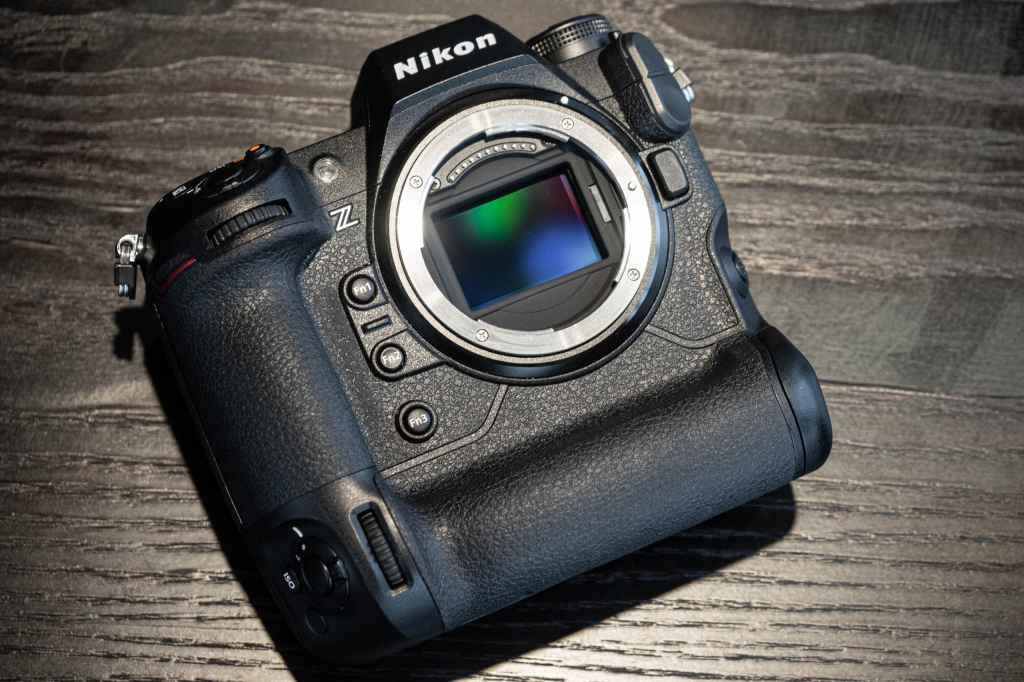
What a camera this is. The Nikon Z9 is the firm’s mirrorless professional flagship, a spiritual successor to its single-digit DSLRs like the D5 and D6. For years, these cameras were a mainstay of professional sports shooters, and the incredible speedster that is the Z9 continues in that grand tradition.
First, the headline specs. The Nikon Z9 is capable of shooting 45.7MP full-resolution raw images at 20 frames per second, and can do so for more than 1,000 frames. Switch to JPEGs and it’ll manage 30 fps – drop the resolution down to a still-useable 11MP, and it’ll shoot at a staggering 120fps, absolutely freezing sports, action or wildlife scenes and letting you capture fast-moving animals, cars or people without missing a beat.
This is all paired with an intelligent, class-leading subject-detection autofocus system that’s capable of recognising such specific things as faces, animals, cars, birds and more. What’s more, unlike Canon and Sony systems, there’s no need to specify in advance what it is to look for. Whether the subject is moving or in the corner of the frame, this system hits it with almost unerring accuracy.
We speak from experience here, having put the Nikon Z9 through an extensive testing procedure. It is an incredible camera that just works.
It powers up in seconds and keeps going for ages on a single battery charge. It can shoot completely silently, and has a high-efficiency raw format that keeps file sizes down with no noticeable impact on image quality – incredibly useful for those fast burst speeds! On occasion, but not often, the autofocus landed on the wrong subject, or saw a face where there wasn’t one.
Of course, it all comes at a cost. The Nikon Z9 is a high-end pro camera and is priced as such. For many users it will simply be out of reach. If it’s within your budget, however, it is quite simply one of the best cameras we’ve ever tested.
Best superzoom
Best Nikon superzoom bridge camera: Nikon Coolpix P1100

Amateur Photographer verdict
Arguably more of a gimmick than a serious camera, but still, the Nikon Coolpix P1100 offers an incredible 125x optical zoom – powerful enough to produce detailed images of the moon.- Massive 125x optical zoom
- Fully articulating screen
- Reasonably good electronic viewfinder
- Absolutely enormous / clunky handling
- High price
- Screen not touch-sensitive
| Specifications | Nikon Coolpix P1100 |
|---|---|
| Sensor | 16MP 1/2.3-inch CMOS |
| Continuous shooting | 7fps |
| Autofocus | Contrast-detection |
| Video | 4K 30p |
| Viewfinder | 0.39-inch, 2359k-dot EVF |
| Screen | 3.2-inch articulating, 921k dots |
| Lens | 125x optical zoom, 24-3000mm f/2.8-8 |
Finally, we’ve mostly concerned ourselves with mirrorless cameras in this guide, since they are the best of the best in the Nikon stable right now. However, Nikon does also offer a range of all-in-one superzoom bridge cameras – the Coolpix P series, the latest of which is the Nikon Coolpix P1100. It’s an absolutely ridiculous camera, an SLR-style body with a small 1/2.3-inch sensor inside and an absolutely enormous 24-3000mm equivalent lens bolted on the front. Does it offer the same kind of image quality and versatility as the mirrorless Z cameras? Absolutely not. Is it a fun and unique camera to use? Well, yes.
I reviewed this one myself, and while it was undeniably a weighty and cumbersome piece of kit, I can’t pretend that I didn’t enjoy being able to radically transform my field of view with a turn of the wrist. It’s a shame that the tech in the camera is a bit old hat – this was quite clearly a hasty repackage of an update, designed to conform to EU regulations about standardised charging ports, and so beyond the addition of USB-C, there isn’t much new here compared to the previous Coolpix P1100.
Autofocus is contrast-detect based. The small sensor means the camera struggles in low light, and this is exacerbated by the fact that the maximum aperture drops to f/8 when you zoom all the way in. Exposures are generally on-point, and the colours are fine, if a little dull. It’s essentially a camera built entirely around its one key gimmick – that enormous zoom lens. Which either interests you, or doesn’t.
Read my Nikon Coolpix P1100 review.
Specifications compared
| Specifications | NIkon Z5 II | Nikon Z50II | Nikon Zf | Nikon Z6III | Nikon ZR | Nikon Z5 | Nikon Z7II | Nikon Z8 | Nikon Z9 | Coolpix P1100 |
|---|---|---|---|---|---|---|---|---|---|---|
| Sensor | 24.5MP FX | 20MP DX | 24.5MP FX | 24.5 MP FX | 24.5MP FX | 24.3MP FX | 45.7MP FX | 45.7MP FX | 45.7MP FX | 16MP 1/2.3-inch |
| Lens mount | Nikon Z | Nikon Z DX | Nikon Z | Nikon Z | Nikon Z | Nikon Z | Nikon Z | Nikon Z | Nikon Z | – |
| Viewfinder | 3.69m-dots, 0.8x | 2.36m-dot, 0.68x | 3.69m-dot, 0.8x | 5.76m-dot, 0.8x | – | 3.6m-dot, 0.8x | 3.69m-dot, 0.8x | 3.69m-dot, 0.8x | 3.69m-dot, 0.8x | 0.39-inch, 2359k-dot EVF |
| Screen | 3.2in, 2.1m-dot fully articulated | 3.2in, 1.04m-dot fully articulated | 3.2-inch, 2.1m-dot, vari-angle | 3.2in, 2.1m-dot, fully articulated | 4.0in, 3.07m-dot vari-angle | 3.2in, 1.04m-dot tilting touch-screen | 3.2in, 2.1m-dot tilting touchscreen | 3.2in, 2.1m-dot 3-way tilting LCD | 3.2in, 2.1m-dot 3-way tilt LCD touchscreen | 3.2-inch articulating, 921k dots |
| Video | 4K 60fps | 4K30p, 4k60p with 1.5x crop | 4K30p, 4k60p with 1.5x crop | 6K 60fps N-RAW | 6K 60p RAW; 4K 120p; Full HD 240p | 4K30p | 4K60p | 8K30p, 4K120p | 8K 30p, 4K 120p, Full HD 120p | 4K30p |
| Price | £1,599 | £799 | £1,899 | £1,799 | £1,999 | £789 | £1,799 | £2,999 | £4,149 | £999 |
How to choose a Nikon mirrorless camera – key specs explained
What is a mirrorless camera anyway? As the name implies, it lacks a mirror in the camera body, unlike a DSLR, which uses a reflex mirror system to reflect an image into an optical viewfinder. There are plenty of other camera types that don’t use mirrors, like compacts and action cameras, but the term ‘mirrorless’ has come to refer specifically to interchangeable-lens cameras. See our piece on DSLR vs mirrorless for a more detailed explanation.
Focusing specifically on Nikon mirrorless cameras, here are the key specs you’ll want to pay attention to when choosing the right model for you.
Sensor: Sensor size is an important consideration when choosing any camera. In the Nikon mirrorless system, you have two choices: full-frame, or a smaller APS-C sensor (Nikon calls them FX and DX, respectively). The larger full-frame sensors are better for image quality, especially in low light. However, APS-C cameras are not only more affordable but also lighter weight and good to travel with. We have a full outline of the key pros and cons of sensor sizes in our guide to full-frame vs APS-C.
Resolution: This refers to how many pixels the sensor has, expressed in megapixels (MP). The more megapixels, the more detail in images. This is great for printing, but demands more storage space and does increase the cost of the camera.
Screen & viewfinder: Almost all of Nikon’s mirrorless cameras have electronic viewfinders – only the vlogger-focused Z30 leaves it off. Size and resolution are the key specs to pay attention to here; the bigger the EVF, the better the shooting experience. Screen-wise, all Nikon mirrorless cameras have LCD screens that offer some kind of movement, either tilting or fully articulating. The latter is useful for video, especially recording pieces to camera, though photographers can also make use of it to explore unusual shooting angles.
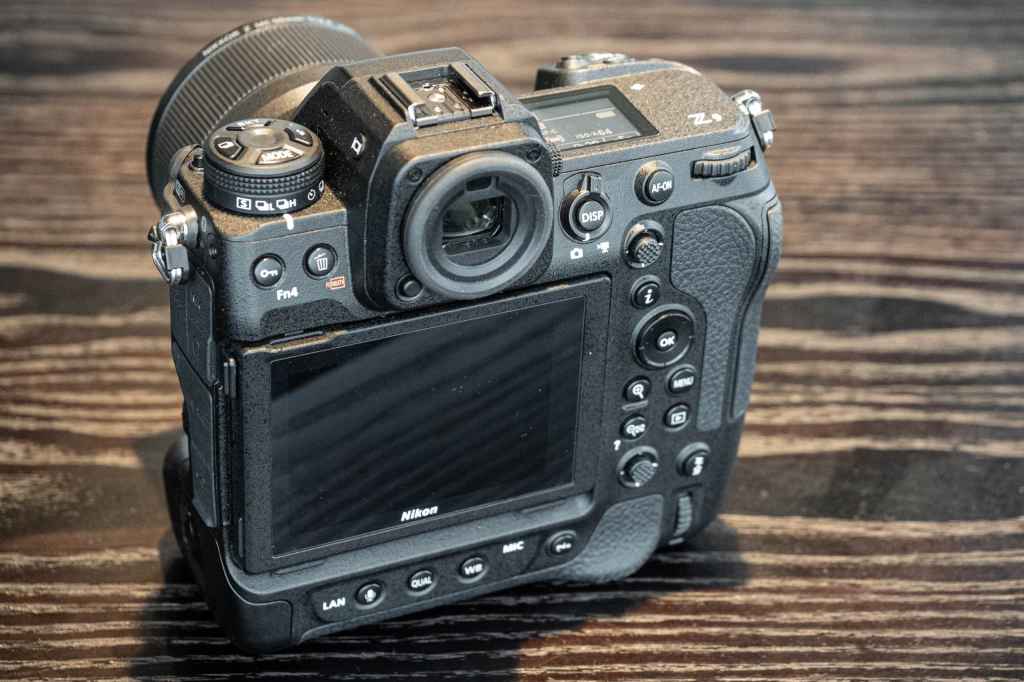
Image stabilisation: All of Nikon’s full-frame cameras include in-body image stabilisation (IBIS). None of Nikon’s APS-C models offer it, which is something to think about – particularly if you’re likely to be using them with long lenses or in low light with slow shutter speeds. That said, you can mitigate for the lack of IBIS by always using lenses with stabilisation (Nikon calls it VR, or ‘Vibration Reduction’), or by using a tripod.
Frame rate: Also referred to as burst speed or continuous shooting speed, this is how fast the camera can fire off shots sequentially. A high burst rate is useful for capturing fast action – though it’s also worth checking a camera’s buffer depth, i.e. how many shots it can capture in a burst before it has to slow down and catch up.
Video: All Nikon mirrorless cameras can shoot 4K video, and the flagship Z9 and Z8 even offer 8K for high-end users.
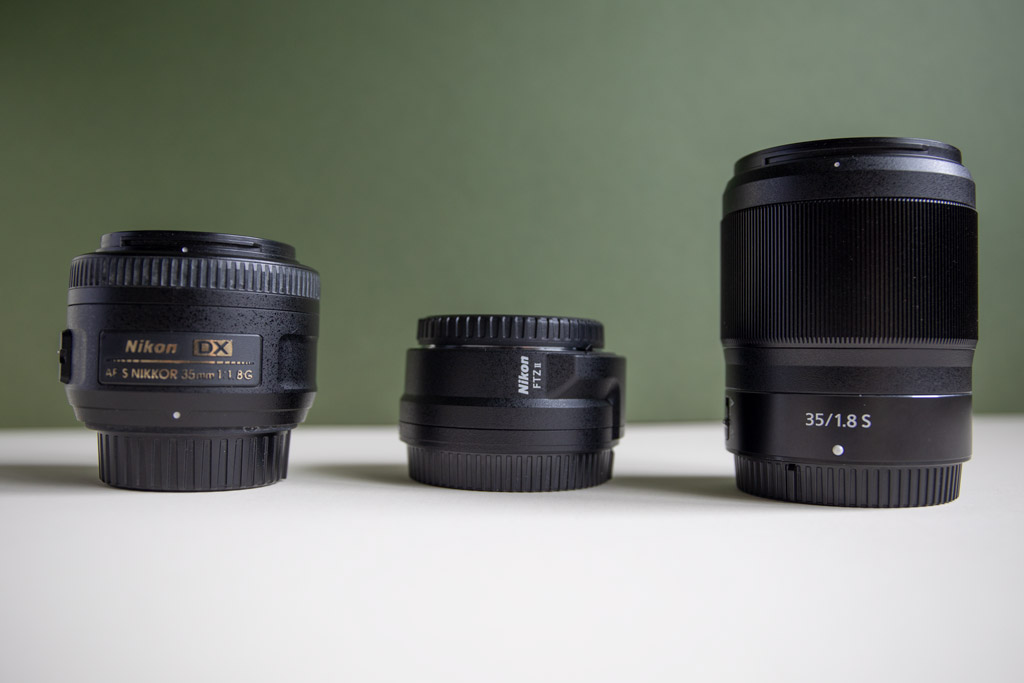
Lens options: You might be thinking this is a redundant category, given that all the cameras on this list use the Z mount. However, things work slightly different with the APS-C DX-format models in the series (currently the Z50, the Z30 and the Z fc), as their smaller sensor incurs a 1.5x crop factor on the focal length of the lens.
This means, for example, a lens that provides a 35mm focal length on the Nikon Z7 II will provide a 52mm equivalent focal length when mounted to the Z50. There are a few Z-mount lenses specifically designed for DX-format cameras, though admittedly not very many so far.
Frequently asked questions (FAQ)
The best Nikon mirrorless camera for wildlife is the Nikon Z9. Out-of-this-world burst shooting capabilities, intelligent subject-detect autofocus that can lock onto animals and birds, and sublime 45.7MP image quality, but with a price tag of $5,200 / £4,700 body only, it isn’t a realistic option for most. The Z8 is essentially a slimmed-down version with similar internals, but at $3,800 / £3,700 it’s still not exactly budget-friendly.
For a more modestly priced option, the Nikon Z6 II is a good choice for wildlife. Its focusing system is reliable and accurate, and it keeps on going when the light gets low. The full-frame sensor produces great-looking 24.5MP images, and wildlife photographers can take advantage of the 14fps burst mode. It costs around $1,400 / £1,599.
You’ll be looking at APS-C models like the Nikon Z50, which ticks a lot of boxes for wildlife photographers, with a compact, portable body and 11fps burst shooting. It’s a reliable all-rounder with a street price of around $860 / £750. Plus, the small sensor size can be immensely useful for wildlife as it extends the effective focal length of your lenses by 1.5x – so, for example, a 50mm lens will behave like a 75mm lens.
Yes, you can mount Nikon F-mount lenses to your Nikon Z-mount camera, and in many cases, still enjoy full functionality of features like autofocus and stabilisation. All you need is a Nikon FTZ or FTZ II adapter. Adapters are easy to find; you can get the FTZ adapter from MPB for around $179 / £170. Be aware that this process only works in one direction – you can’t adapt mirrorless Z lenses onto F-mount DSLRs. This is because DSLRs have a thicker body to allow room for the mirror, so any Nikon Z lens would be mounted too far from the sensor to focus.
The Nikon Z6 III, Nikon Z5 II, Nikon Zf and the Nikon Z fc have fully articulating screens, as does the vlogging-focused Nikon Z30. The Nikon Z9 and Z8 receive half points here, as they have two-way tilting screens that are pretty close to fully articulating. Other Nikon mirrorless cameras, including the Z5, Z50, Z6 II, Z7 II, Z6 and Z7, use various types of tilting screens, rather than fully articulating.
‘FX’ and ‘DX’ are the terms Nikon uses to denote sensor size. Its full-frame cameras are ‘FX’ cameras, while its APS-C models are labelled ‘DX’. This also applies to lenses; a DX lens is one that only fits APS-C cameras, while an FX lens will work with both. For more on the difference between sensor sizes, check out our rundown of full-frame vs APS-C.
The answer to this question will vary from user to user – but if you have to ask, then chances are good that you don’t need that many. The Nikon Z50 offers 20.9MP of resolution, which has historically been considered fine for the average photo taker, though some now consider it a little meagre. If you are planning to make prints of your images, or want the flexibility of being able to losslessly crop into your images in editing, then a camera with more resolution will be beneficial – just be aware that with more pixels comes the need for more storage on cards and hard drives.
Emphatically yes. Nikon has long been and continues to be a highly used brand among professional photographers, alongside Canon and Sony. While mirrorless is increasingly dominant in the professional space, there is also still a contingent of pros who stick with their beloved Nikon D850 DSLR (hence Nikon’s attempt to woo them over by branding the Z8 as a ‘new D850’). Our list of the best professional cameras includes lots and lots of Nikon-made models, and if you show up to a professional shoot toting Nikon gear, nobody is going to have a thing to say about it.

How we test Nikon cameras
Testing Nikon mirrorless cameras isn’t just about lab charts and specs — it’s about seeing how they perform in the real world. Each model is put through its paces with hundreds of photos and video clips shot in a wide variety of conditions. We examine their control layout and handling as well as screen size and brightness, also response time in case of touchscreens and the practicality of any articulating design. We test the electronic viewfinder with particular attention to brightness, colour accuracy and real-time exposure preview.
Autofocus performance is one of the key areas of testing. Continuous subject tracking, or special features like the AI Subject Detect Autofocus on the Nikon Z9 or other advanced Subject Detection modes, are all evaluated, whether capturing fast-moving action or more composed scenes.
Many models boast high fps continuous shooting capabilities and features, and focus tracking, to test these feature,s we use fast-moving subjects to reveal how well the system holds focus and how many frames truly hit the mark. We also assess their image stabilisation system and test how well they counter rolling shutter effects. Blackout-free shooting, buffer depth, and overall responsiveness at high speeds are also measured to see how each camera handles high burst rates.
Last but by no means least, we critically evaluate image quality, in both JPEG and raw, including resolution, high-ISO noise, and dynamic range – as well as video capabilities. We then take all these factors into account, along with such things as portability and lens systems, when giving our final conclusion and score. You’ll find the full breakdown of how each Nikon mirrorless camera has performed in our full reviews.
Recent updates
- May 2026: Comparison table added, no new camera entries.
- April 2026: Specifications tables and frequently asked questions updated, prices checked.
- January 2026: Nikon Coolpix P1100 added as the best superzoom bridge, and the Nikon Z5II moved to the top as the best option for most users.
- December 2025: Nikon ZR added as the best Nikon for video, and Nikon Z7 removed to keep the list concise.
- November 2025: New ‘Auto capture’ function added to the Nikon Z6III.
- October 2025: Several cameras removed that were judged to no longer merit inclusion, including the Nikon Z30 and Nikon Z fc. Some cameras’ ‘best’ use-cases revised, including the Z7 II as best for landscapes and the Zf as best for style.
Text by Amy Davies, with contributions from Jon Stapley.
Once you’ve found the perfect camera for you, have a look at some of the best Nikon Z-mount lenses. Or have a look at more buying guides, and our latest reviews.
Related reading:
- The 12 best Nikon DSLR cameras ever
- Best full-frame mirrorless cameras
- The best mirrorless cameras you can buy right now
- Nikon invites you to the cloud for firmware updates, free colour profiles
Follow AP on Facebook, Instagram, YouTube and TikTok.