The Ferrania Astor is one of many similar cameras made in the 1950s, now a true vintage camera. These roll film cameras were the workhorses of family photography in the post-war decades. This style of camera was gradually superseded by 35mm models, until by the end of the 1970s virtually all snapshots were taken on 35mm film or 126 cartridge film.
Hailing from Italy, the Astor’s specifications are at the upper end for this class of camera. A three-element anastigmat Cassar lens with a 75mm f/4.5 lens houses a Prontor-S shutter with a full range of speeds from 1 sec to 1/300th. Both the lens and the shutter are German, and were used by a number of different European camera makers. In order to make the camera more compact, the lens is on a tube which can be pushed back into the body when not in use, a cheap but effective alternative to bellows.
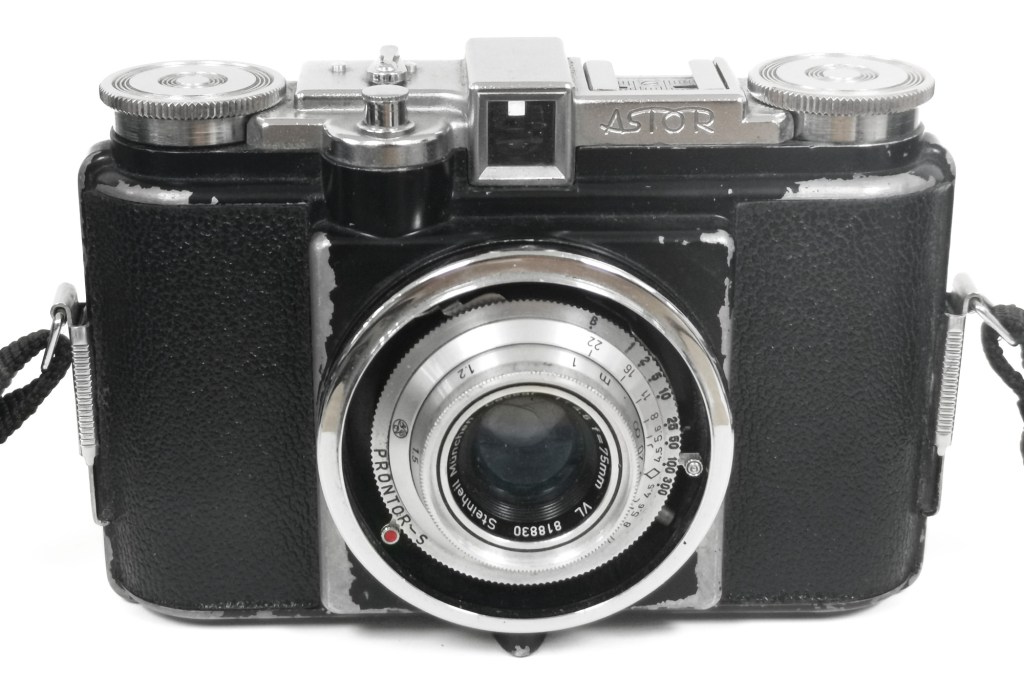
Originally there would have been a large shallow cup of a lens cover to protect it when the lens was retracted. I’ve never actually seen one of these, and like so many untethered accessories, mine was missing in action. But photos show that it had a stylish Art Deco inspired logo made up from the letters in the word Ferrania.
Camera nerds will know that Milan was the home of the Bencini range of cheap, cheerful and stylish metal bodied cameras that took many a family snapshot in the 1960s and ‘70s. They were often sold under “own brand” names, notably by Boots the Chemist. So common were they, that even today, 50 years on, you don’t have to look far to find one. But Bencini weren’t the only game in town. Despite an early history in the Ligurian town of Ferrania, the company subsequently made their cameras in Milan, while film production remained 100 miles away in Ferrania.
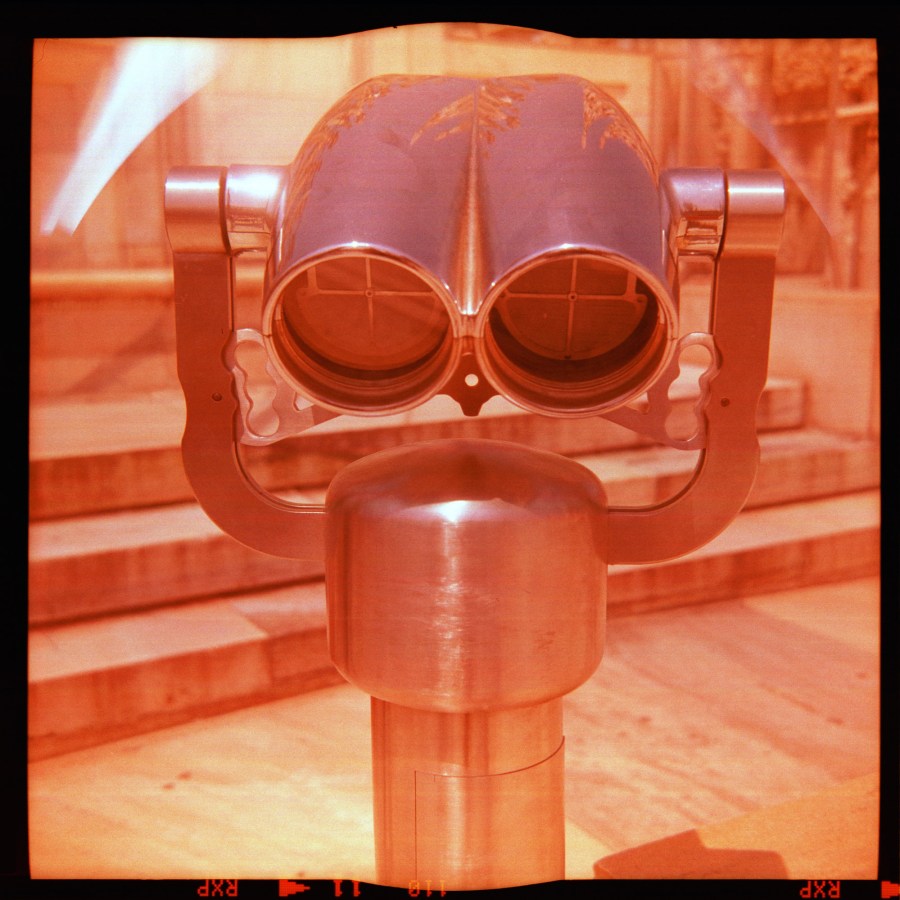
It seemed appropriate to pack my Astor when we had a city break in Milan, and I ended up shooting three rolls of film there. Having previously only used it in the subdued light of a Sheffield spring, it must have come as a shock to its system to be blinking in the dazzling June sunlight of Milan. This shock was made manifest by a semicircular light leak visible near the top left of this and other frames. The tubular lens mount has no flocking to act as a light trap, so it relies on being a tight fit to exclude stray light, and clearly it wasn’t quite up to this midsummer onslaught.
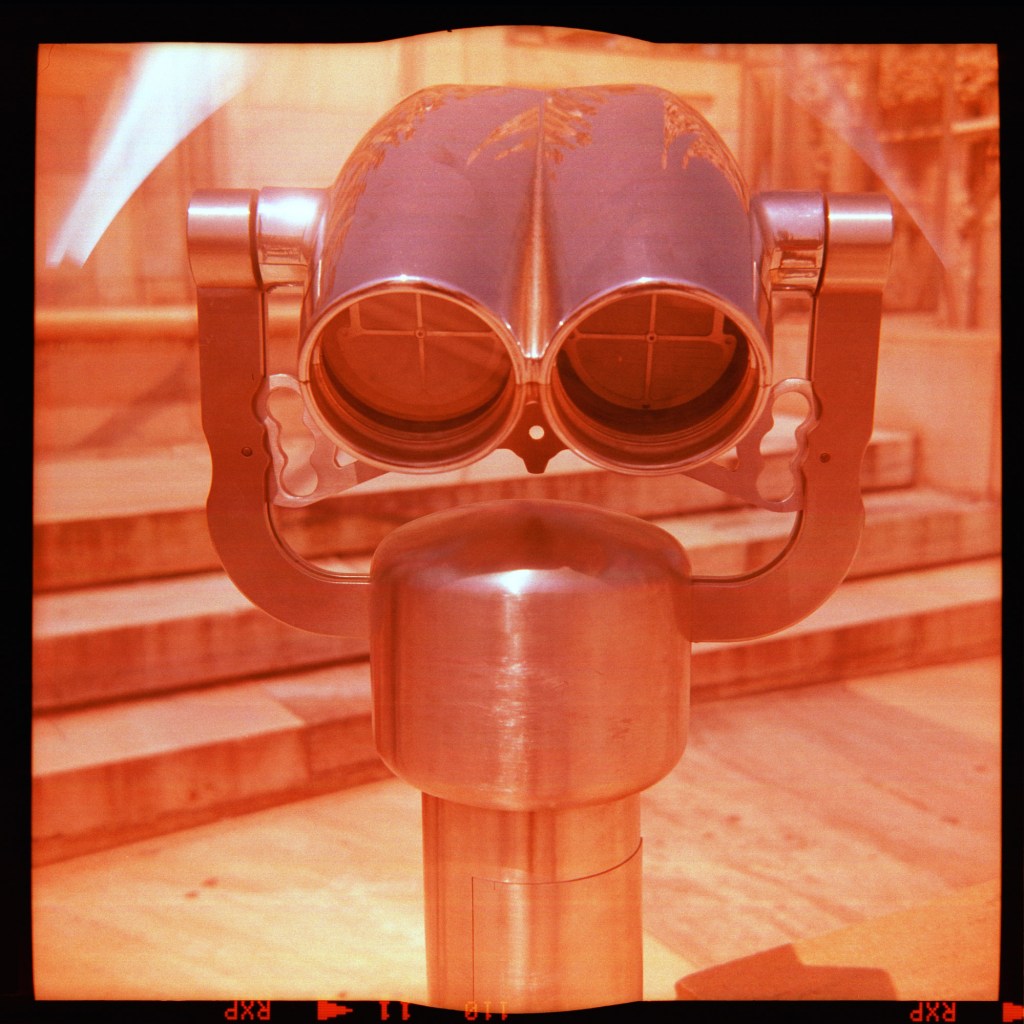
This is one of several shots that I took from the roof of the world-famous Duomo. The odd colour cast is due to using expired cross-processed slide film, but there’s no denying that even the coin-in-the-slot binoculars in Italy are pretty stylish. As an added bonus to my Milanese trip, I came away with a Bencini variant that I hadn’t already got, picked up at a flea market for the princely sum of just 5 Euros.
See more of Tony’s photos on Instagram @tonykemplen or search on Flickr
Related reading:
- These are the most important cameras of all time – 200 years of photography from 1826 to 2026
- The classic Boltavit I – a tiny German film camera
- Classic film cameras the Pentacon FM was built like a tank
Do you want to win some great prizes for your photography? Enter your photos in our International Amateur Photographer of the Year competition. Free entry for photographers aged 13-21.
Follow AP on Facebook, Instagram, YouTube, TikTok and Irys.