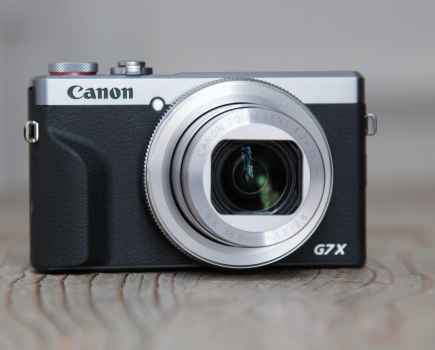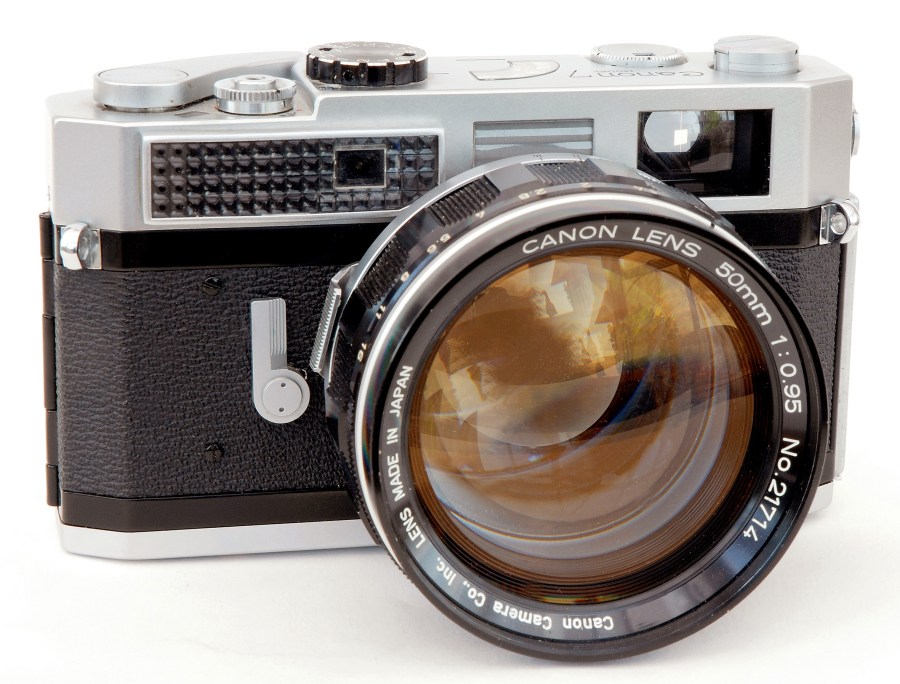
It began with a totally impractical photographic process. It ended with digital wizardry that would have seemed like magic two centuries ago. John Wade charts what happened in between.
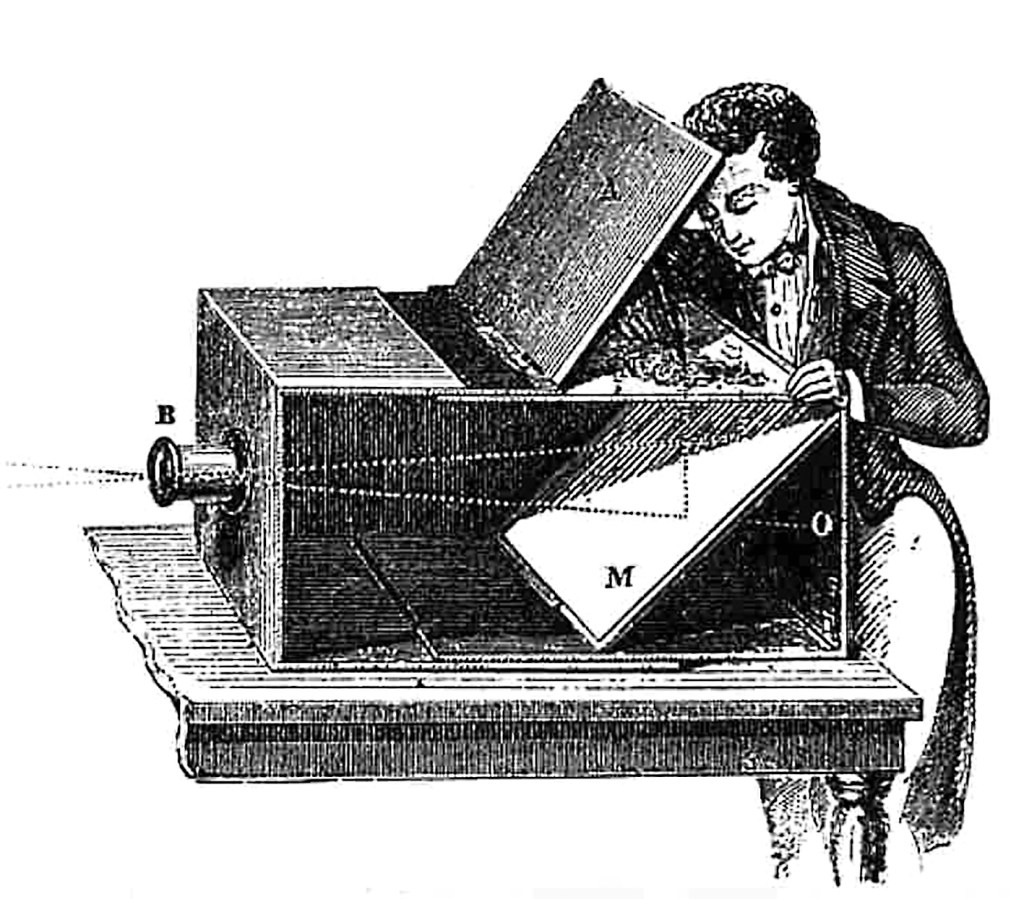
Strange as it might seem, cameras were invented before photography. They were called camera obscuras, used by artists as aids to sketching and an understanding of perspective. A typical example took the form of a box with a lens at the front which reflected its image via a mirror onto a screen on the top. The artist placed a piece of thin paper on the screen, viewed the image through it and traced its outline. The thing that occupied the minds of inventors and scientists during the 18th and early 19th centuries was how to capture and permanently store the camera obscura’s image. One man finally made it happen 200 years ago in 1826.
THE FIRST CAMERAS
1826-1840: Niépce, Daguerre and Talbot
Frenchman Joseph Nicéphore Niépce produced what is now accepted as the world’s first photograph. His camera comprised a box with a lens at one end and a place to hold a sensitised plate at the other. His process, which he called heliography, involved a pewter plate coated with bitumen of Judea, an exposure of eight hours (and maybe more), then the application of lavender oil and treatment with iodine vapour to produce a positive image. It was impractical, but the apparatus Niépce used can be considered as the first photographic camera.
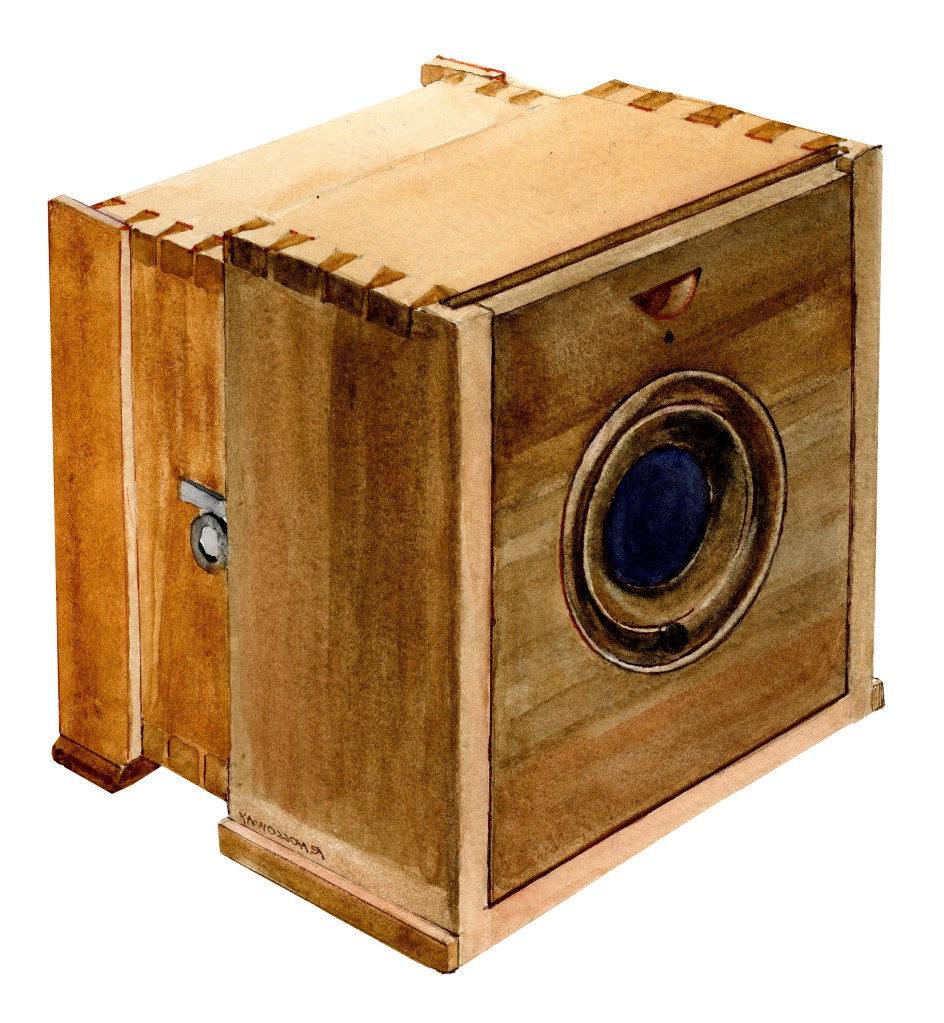
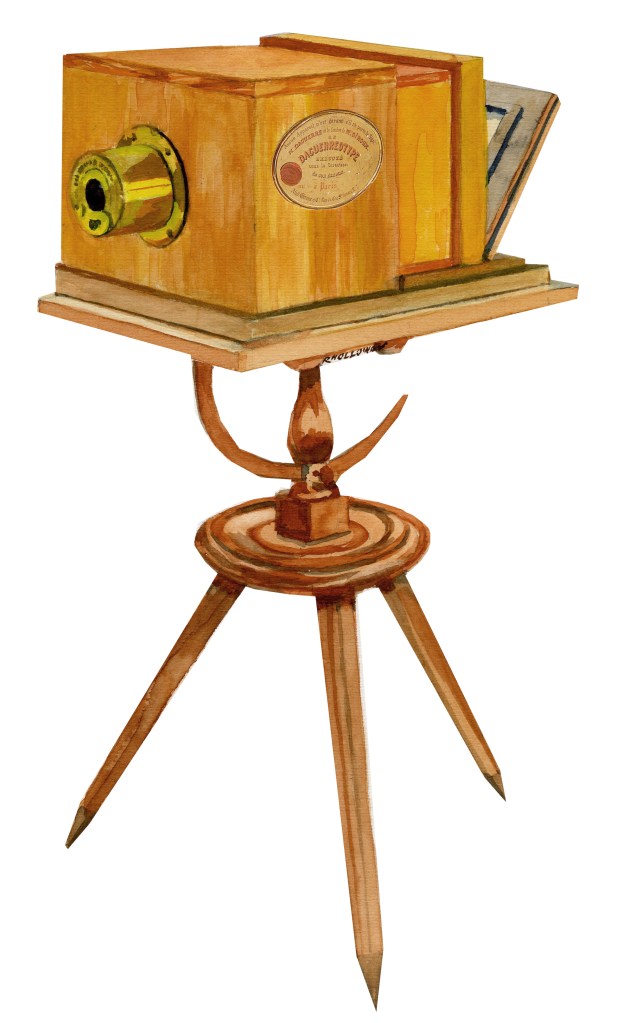
The first commercially successful camera came with the announcement of the daguerreotype process in 1839. Behind that was another Frenchman, Louis Jacques Mandé Daguerre. His camera comprised two boxes, one of which slid inside the other for focusing. The plates on which direct positive images were produced measured 6½x8½in, which would become known as whole plate. The daguerreotype process was long, complicated and somewhat dangerous, involving iodine, bromine and mercury fumes to prepare and develop an image on a silver-plated copper sheet. Nevertheless, many daguerreotype cameras were produced from makers around the world, including Charles Chevalier in France, Voigtländer in Germany and Richard Beard in the UK.
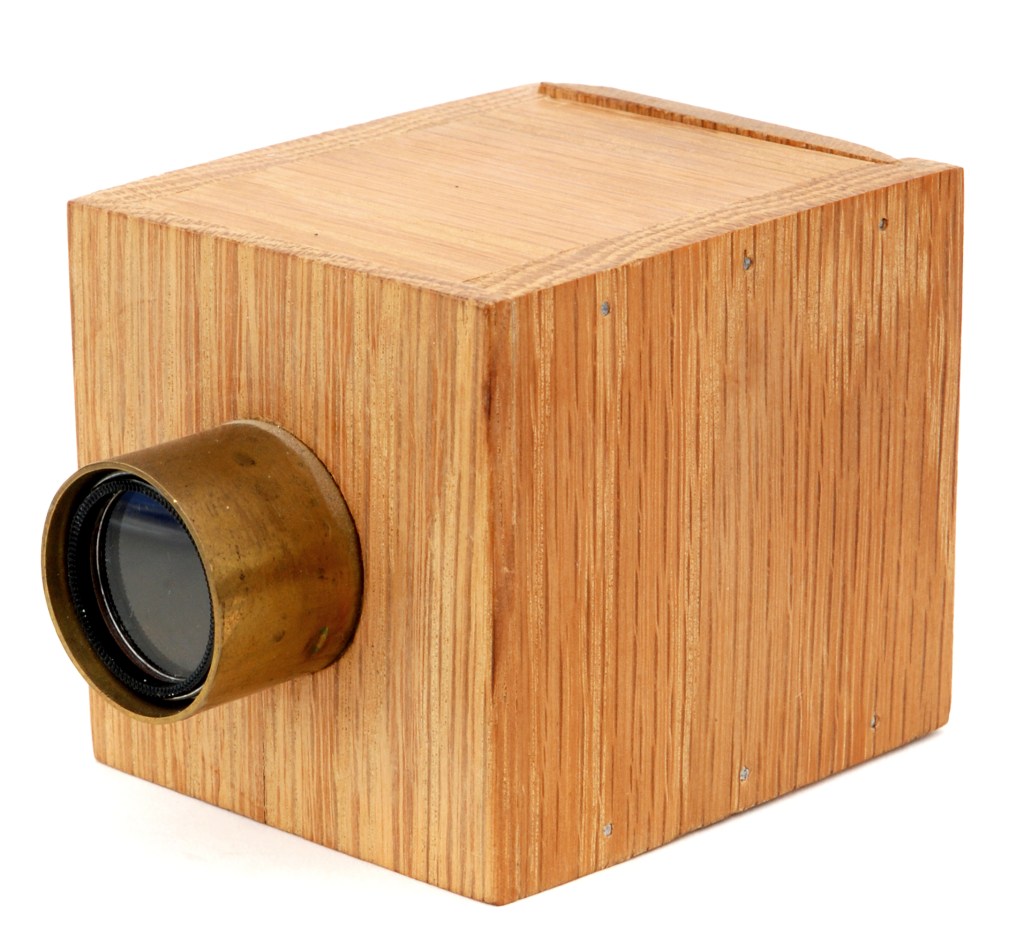
Meanwhile in Britain, William Henry Fox Talbot, Squire of the Manor at Lacock in Wiltshire and amateur scientist, was experimenting with sensitised paper to produce photogenic drawings, with which an image was exposed until it began to physically appear on the sensitive paper, necessitating very long exposures. To counteract this, Talbot used smaller cameras, in which the lens’s light was concentrated on smaller areas and was therefore brighter. The tiny cameras were built by a local carpenter in Lacock and Talbot used one to produce the world’s first negative in 1835. It was only when he discovered that a latent image – one that remained invisible until activated by chemicals – needed much less exposure that it became practical to build larger cameras. In 1840, this resulted in Talbot introducing his Calotype process which produced paper negatives, contact printed onto sensitised paper to creative positive images. And then a new generation of cameras grew up.
1851-1871: Wet and dry plates
Talbot’s work was important for introducing the concept of a negative from which multiple prints could be made. The next step was to move from paper negatives to glass plates.
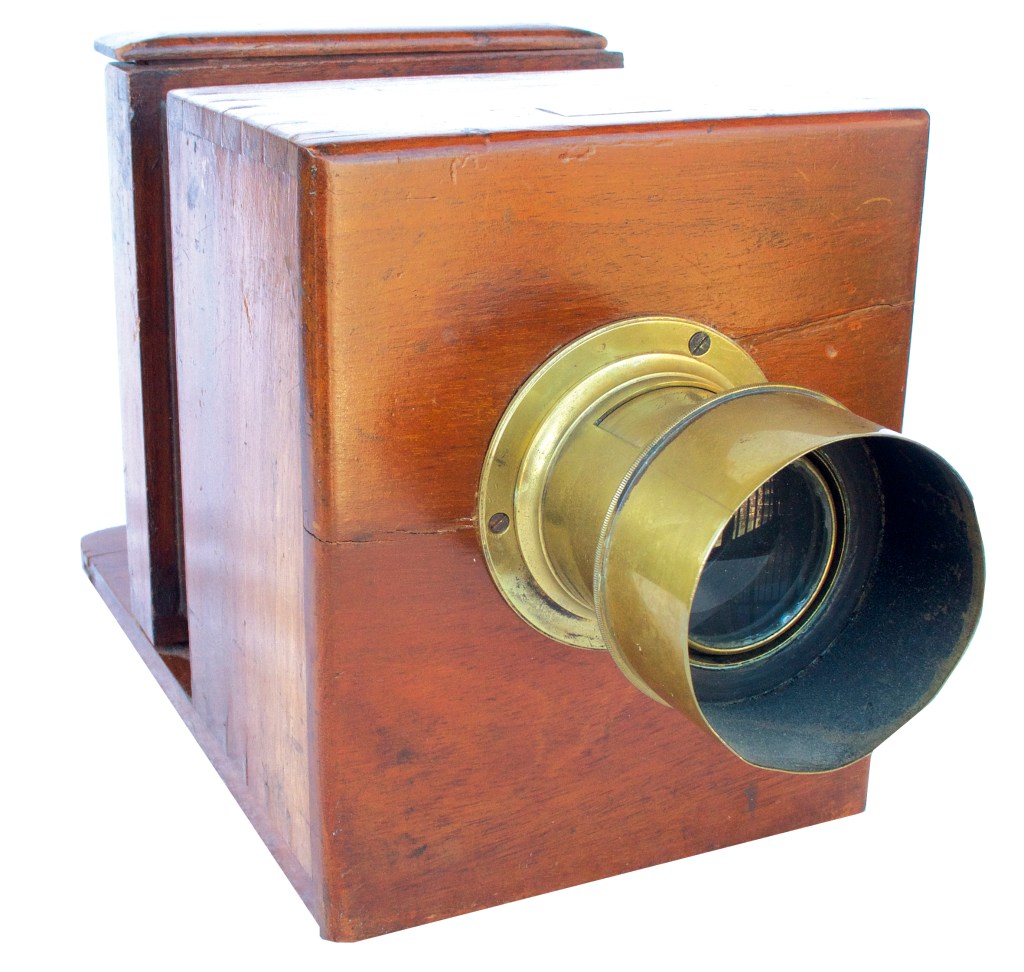
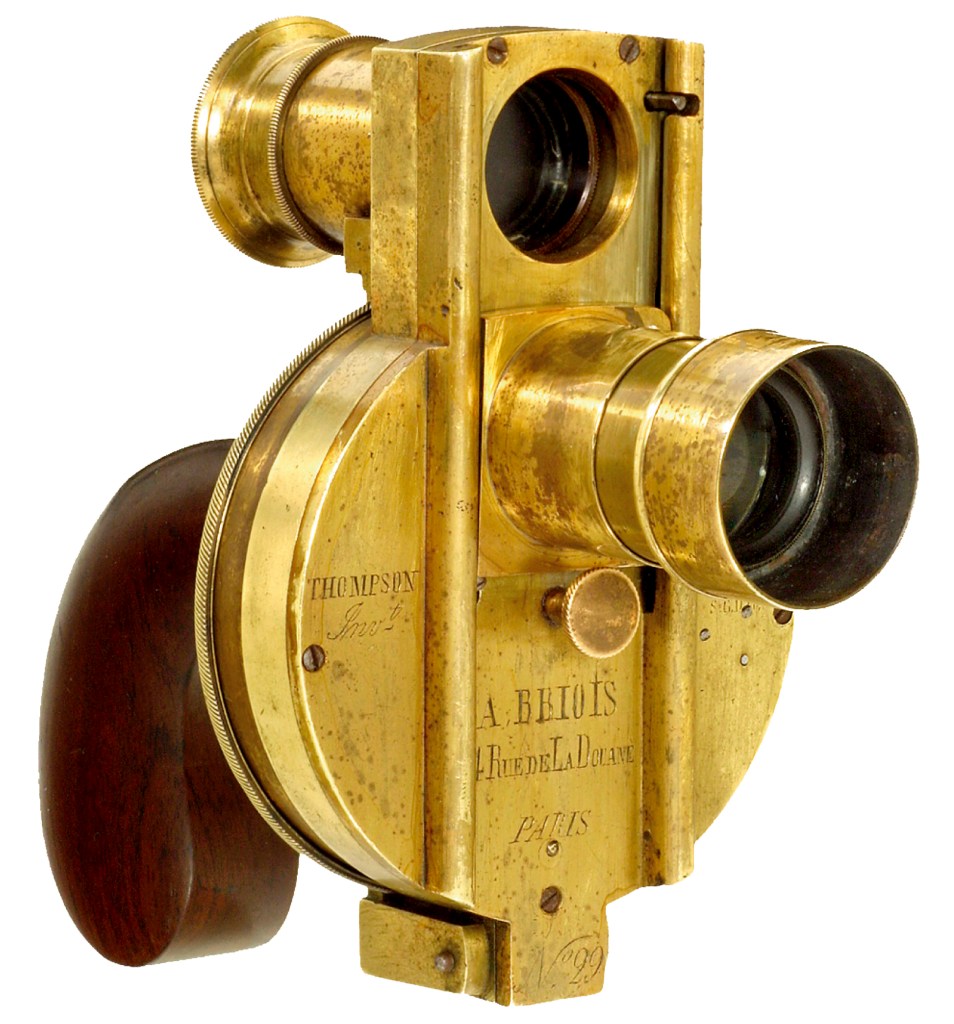
That became a reality with the wet collodion process announced by English chemist and photographer Frederick Scott Archer, whose process cut exposure times down to seconds. The downside was that plates needed to be prepared in a darkroom immediately prior to exposure, used in the camera while still wet, and developed immediately after. Nevertheless, the wet plate process became very popular and a great many cameras were made for it.
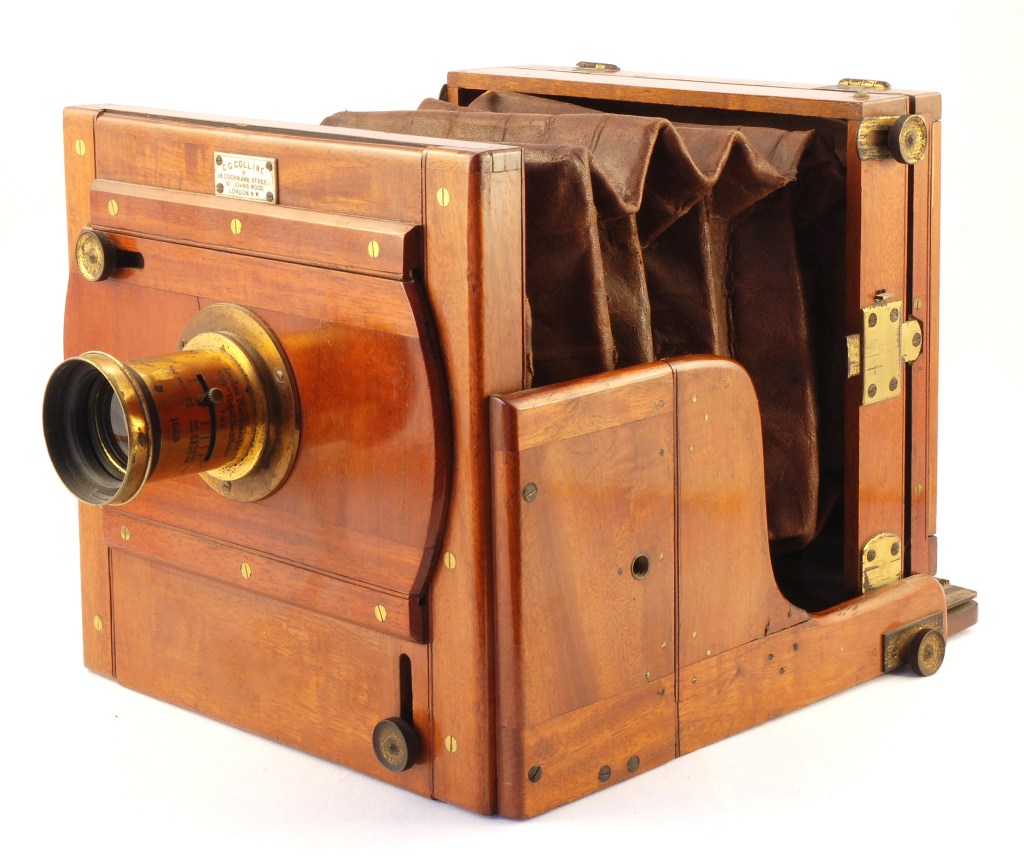
In 1855, French chemist J.M. Taupenot demonstrated a dry collodion process, followed in 1871 by English physician Richard Leach Maddox introducing a method of coating a glass plate with gelatine. For the first time, photographic plates could be bought in advance, kept until required for exposure and developed when convenient.
1888: Introduction of roll film
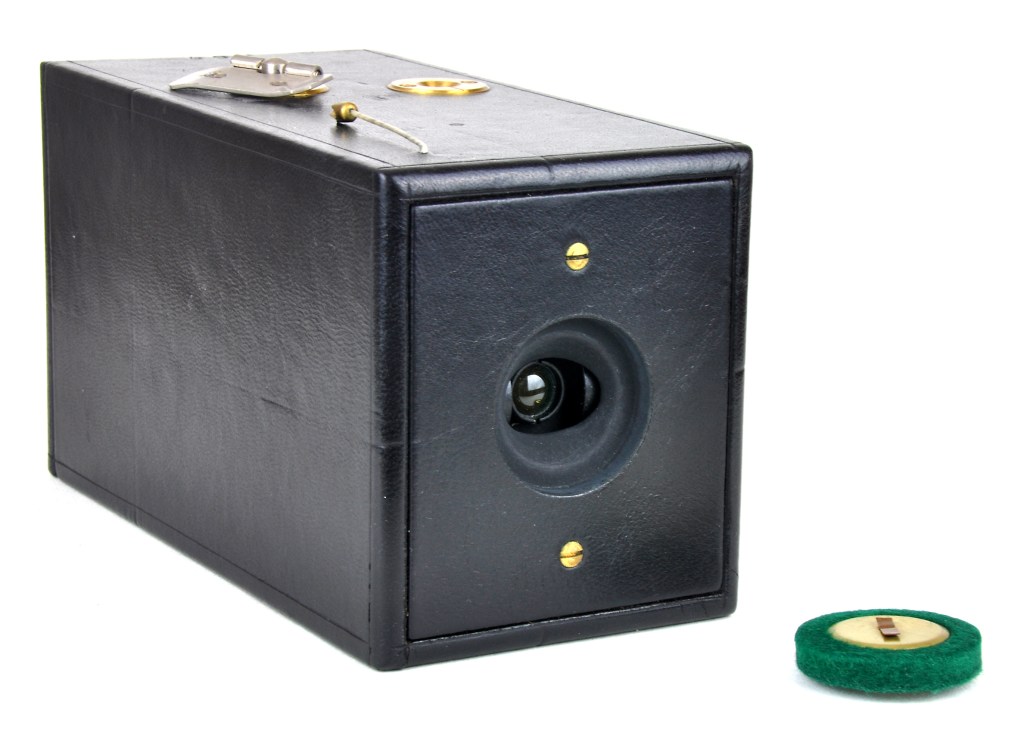
American inventor and entrepreneur George Eastman introduced the first roll film camera in 1888. It was box shaped with a fixed focus and fixed aperture lens. Every camera came pre-loaded with enough film for 100 exposures, after which it was returned to the Eastman works to be unloaded, the film processed and prints made. Everything was then returned to the owner complete with a camera preloaded with another film. Eastman called his camera The Kodak, the first time that name had been used. He explained that the letter ‘K’ was a favourite, and wrote: ‘This is not a foreign name or word. It was constructed by me to serve a definite purpose. It has the following merits as a trademark. It is short. It is not capable of mispronunciation. It does not resemble anything in the art and cannot be associated with anything else in the art.’ The Kodak was introduced with the slogan ‘You press the button, we do the rest.’ And with that, snapshot photography was born.
WHAT CAME NEXT
1900-1920: A new world of camera design
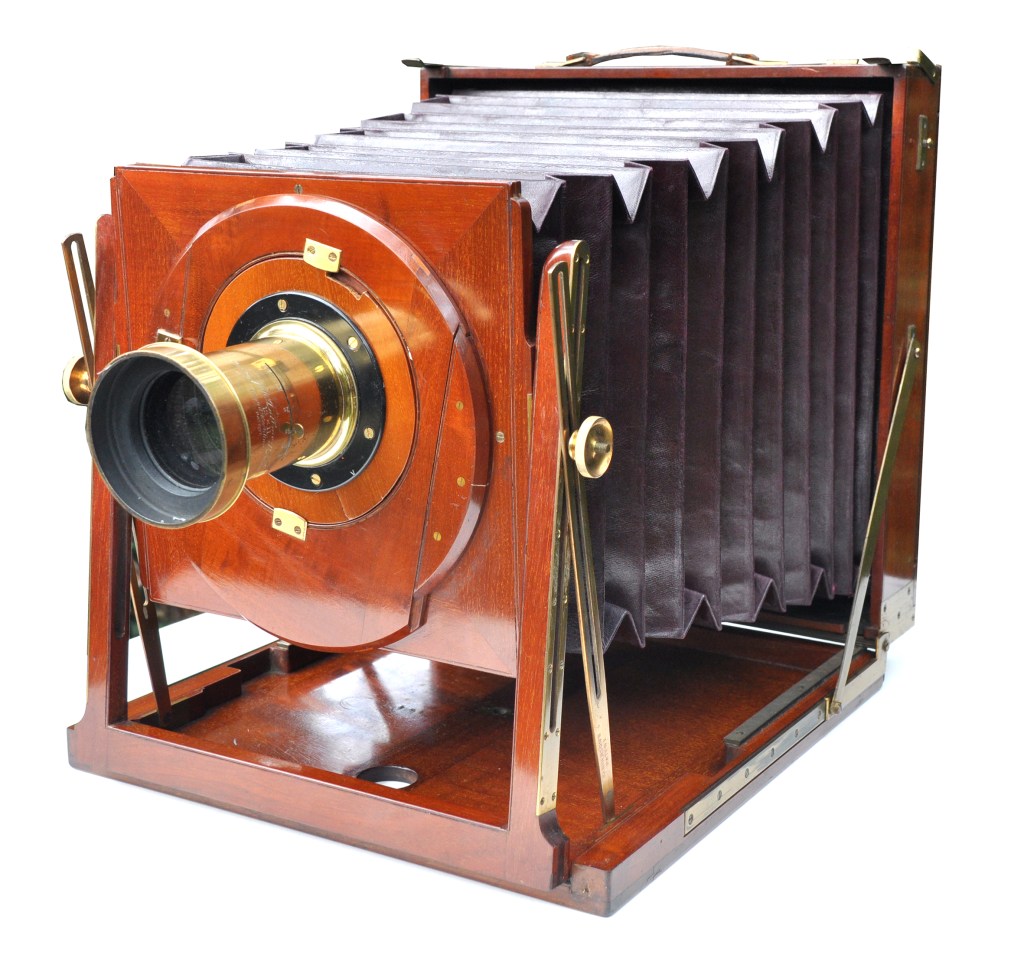
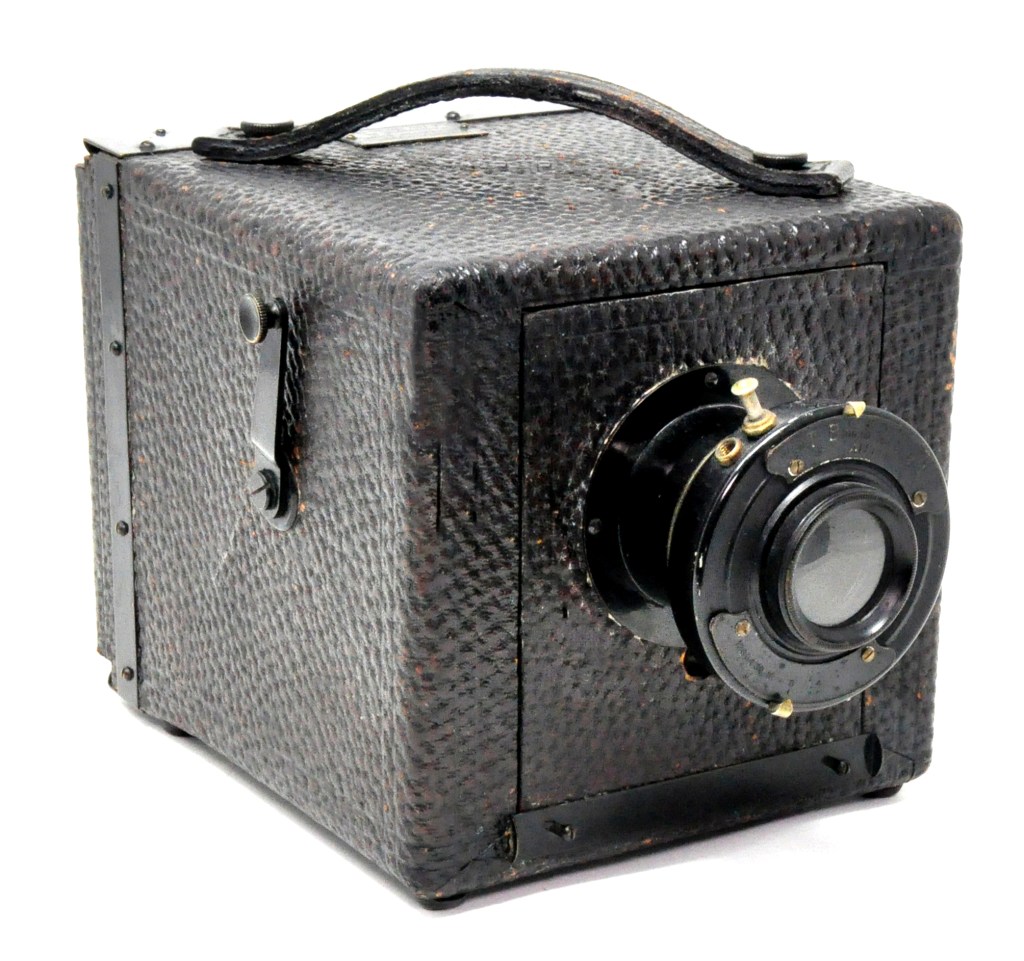
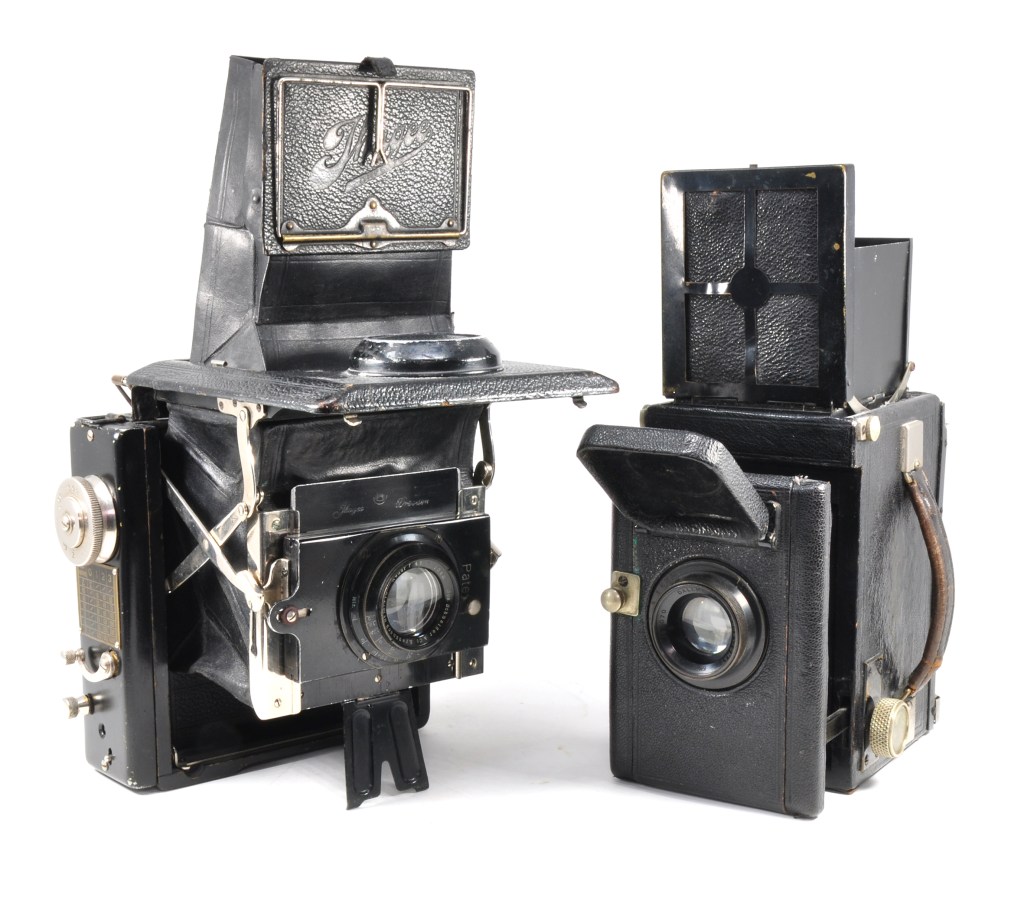
As camera production approached and entered the 20th century, manufacturing took a new turn. Until then cameras had been essentially designed to accommodate the different processes used to form an image. But now, with glass plates and flexible roll film established, camera design could develop in new and innovative directions. It did so, prior to 1900, with the arrival of cameras like the English Sanderson, innovative for its introduction of new kinds of camera movements, and even a French camera with built-in motor drive.
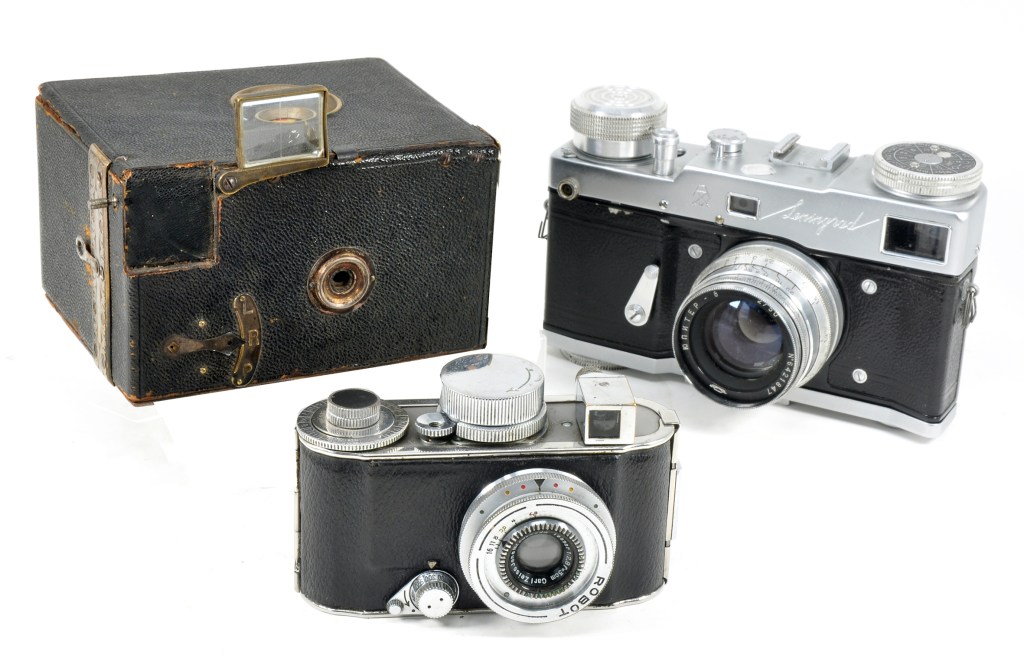
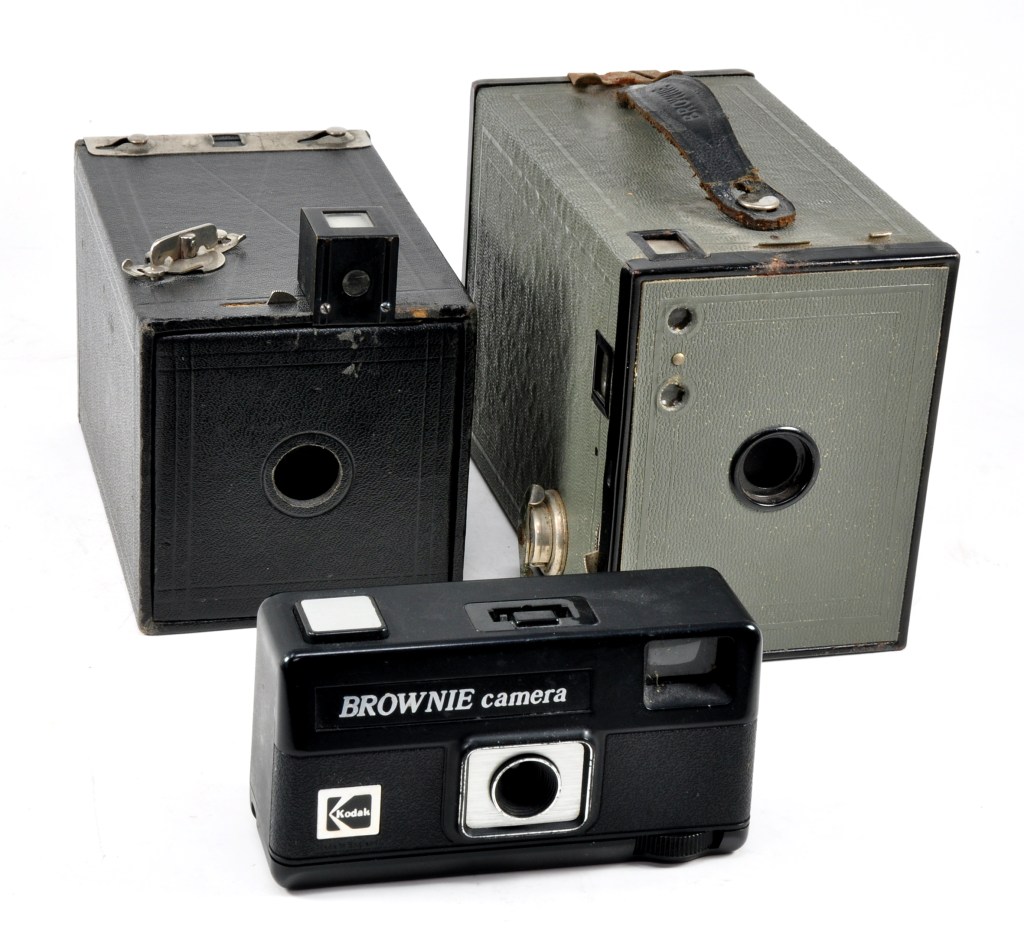
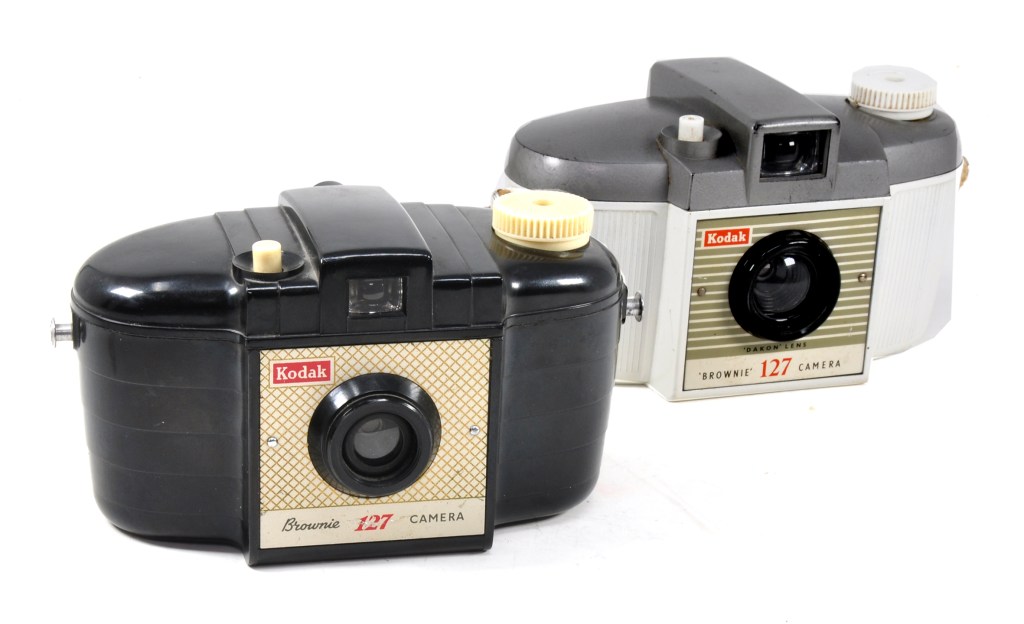
The century began, however, with a name that would resonate throughout the best part of the next 100 years: the Kodak Brownie. In 1901, the camera evolved into the No.2 Brownie, and the term ‘Box Brownie’ inevitably became incorrectly applied to just about any box camera irrespective of its maker.
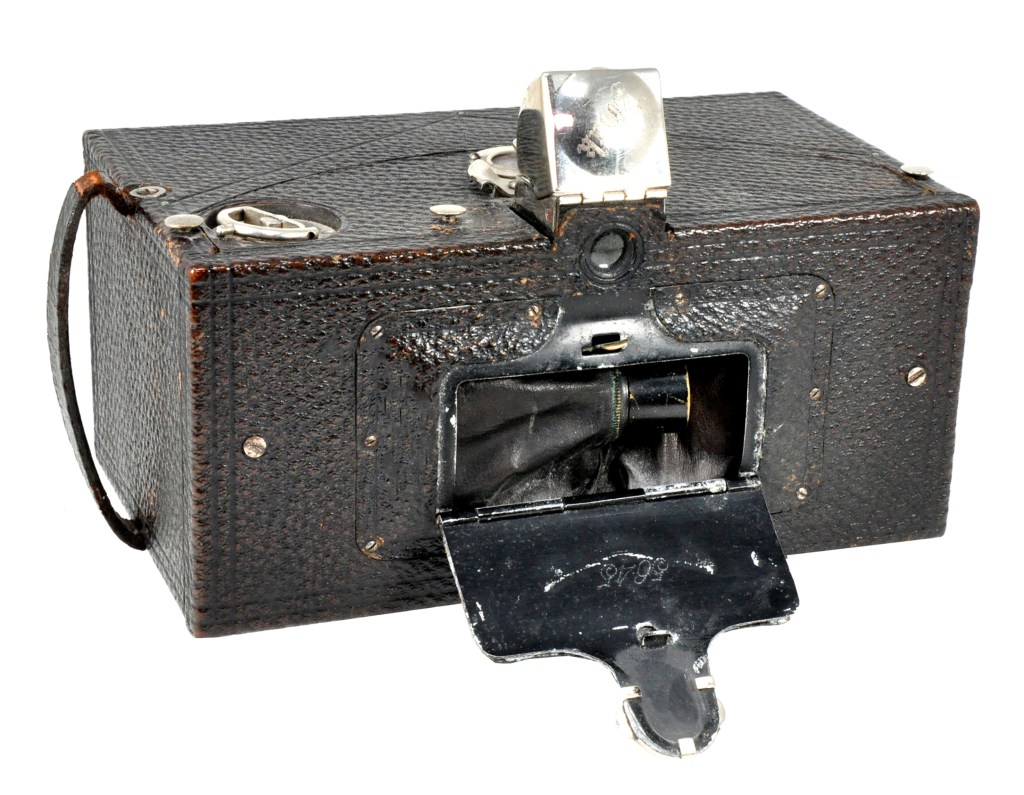
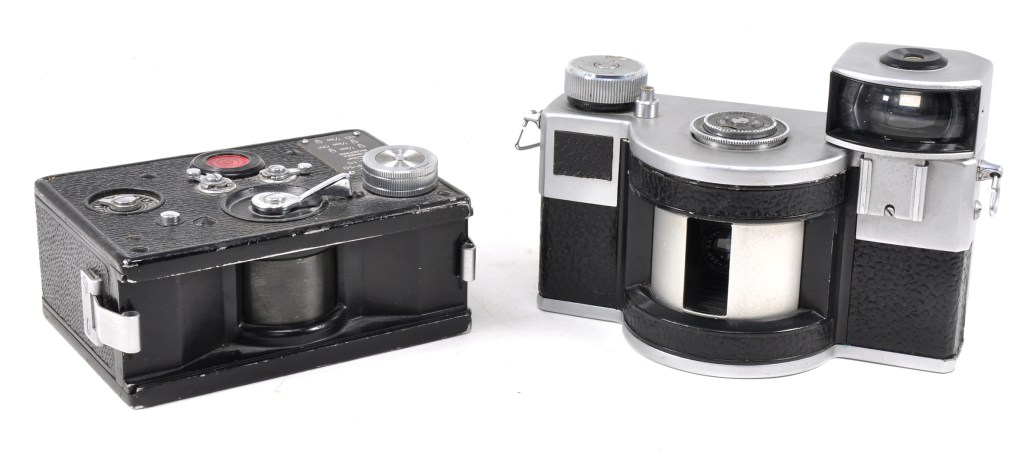
Panoramic photography, which had been around since the daguerreotype days, became popular in 1900 with the introduction of the Kodak No.1 Panoram camera with an unusual lens that swung from side to side during exposure. It initiated a style of camera that would come and go for more than a century.
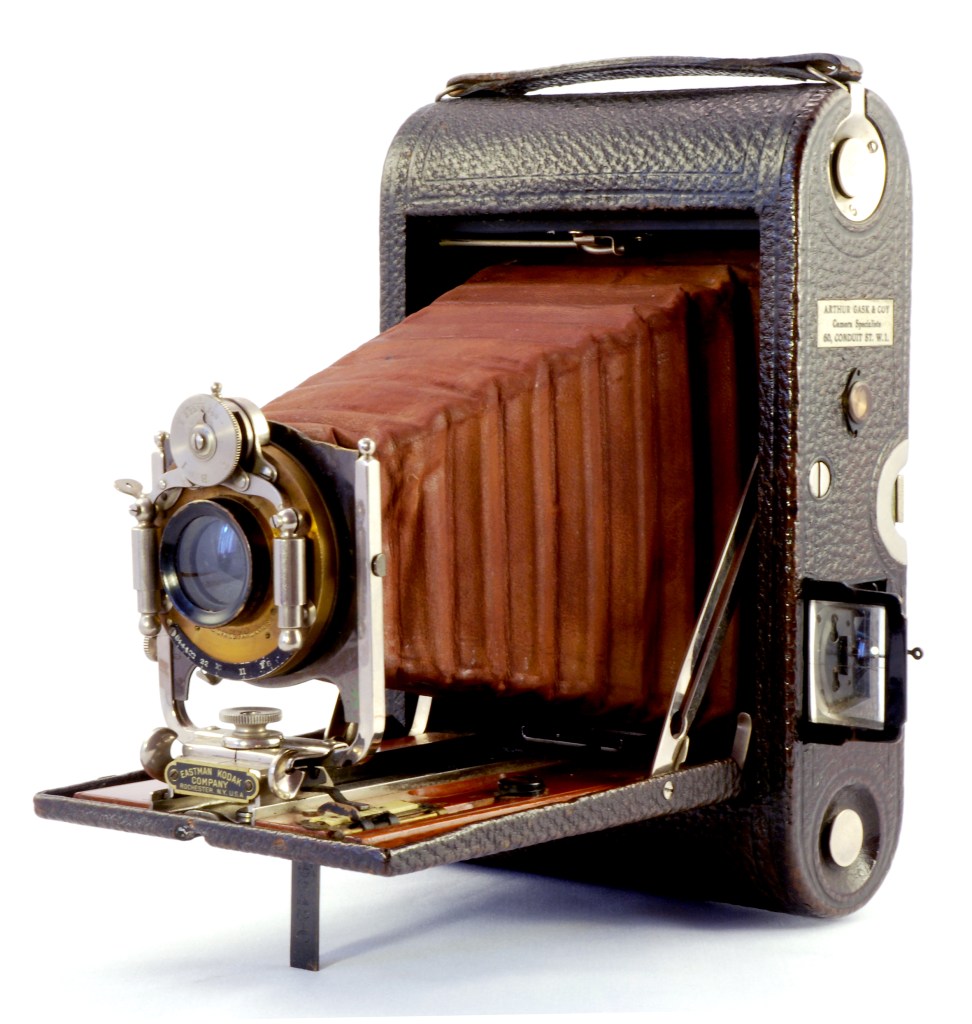
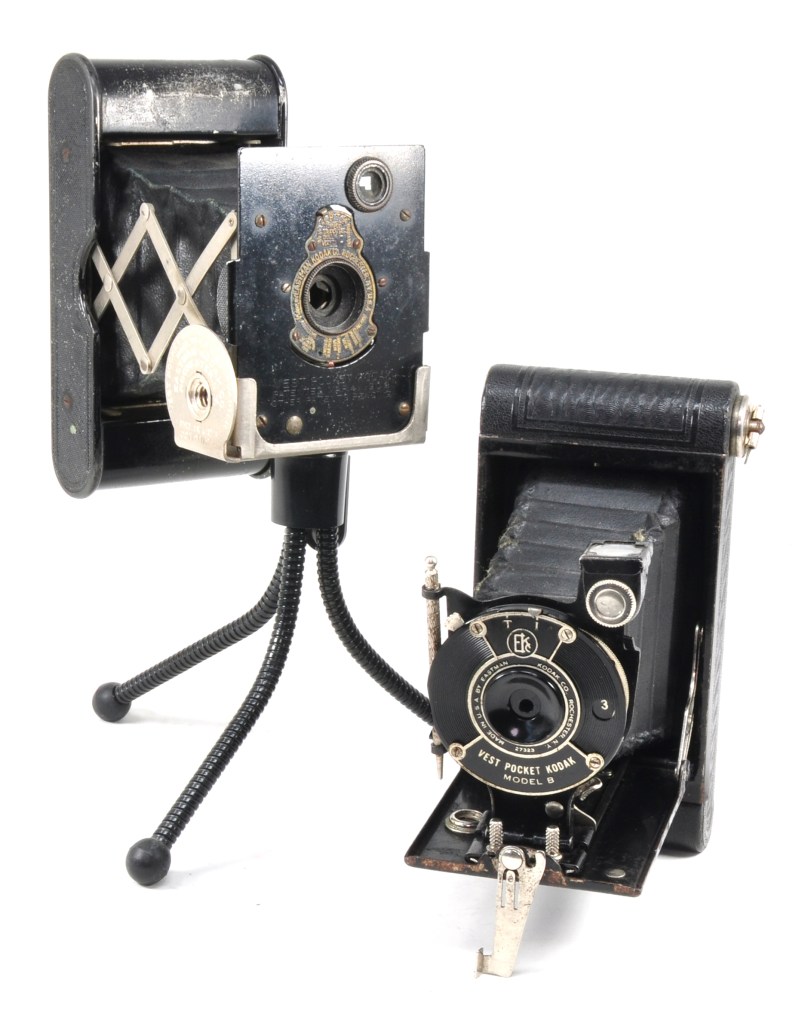
In 1912, everyone’s favourite photographic manufacturer introduced the Vest Pocket Kodak. It was the first camera to use 127 roll film in a folding design, with a lens panel that pulled out from the body on scissor struts supported by a fold-down leg. The VPK, as it was popularly known, was advertised as the soldier’s camera, referring to the fact that soldiers of World War I were reputed to have illegally carried them when they went into battle.
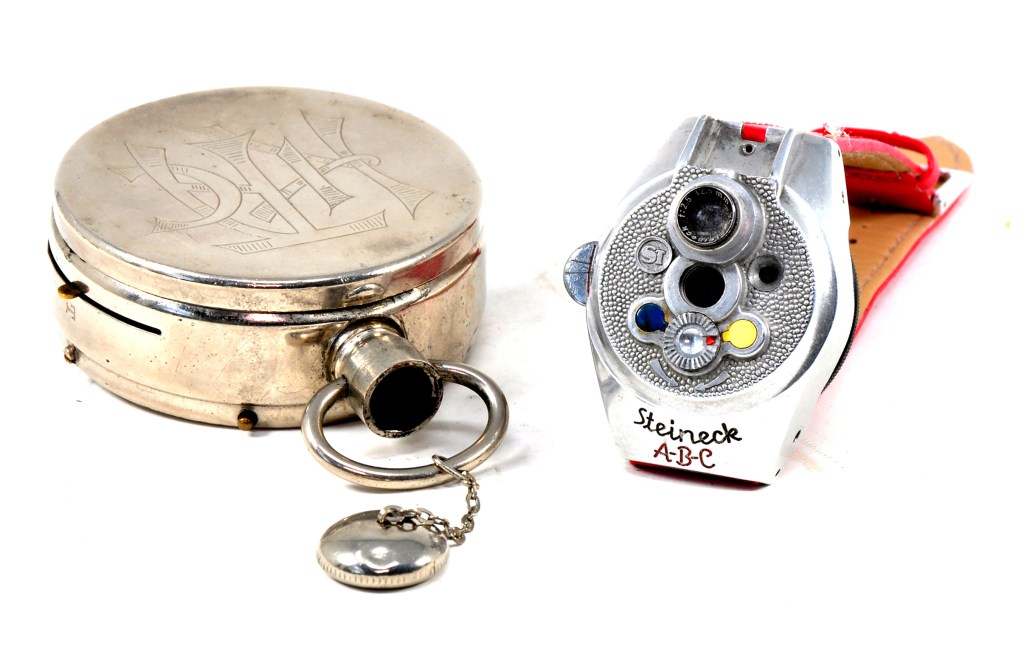
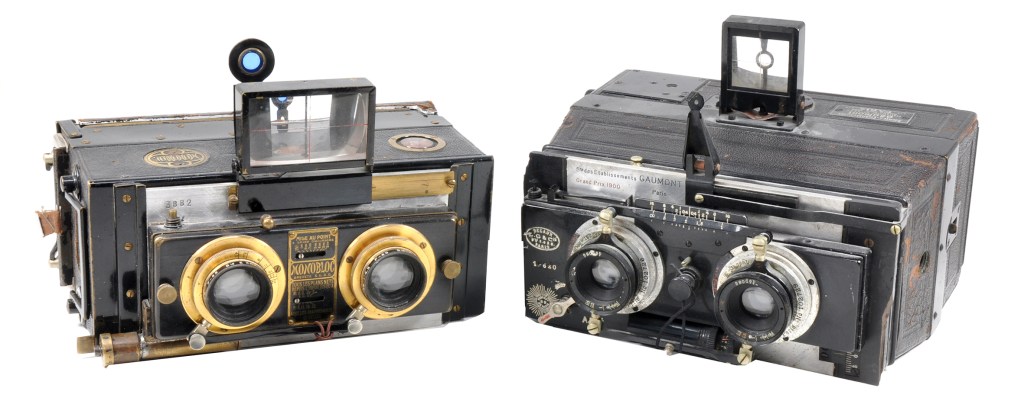
Stereo photography became very popular at this time. It was carried out by use of a camera with two lenses to shoot two pictures side by side. When the result was placed in a suitable viewer so that the left eye saw only the view taken by the left lens and right eye only the view from the right lens, the brain combined the two to give the impression of a three-dimensional, stereoscopic scene.
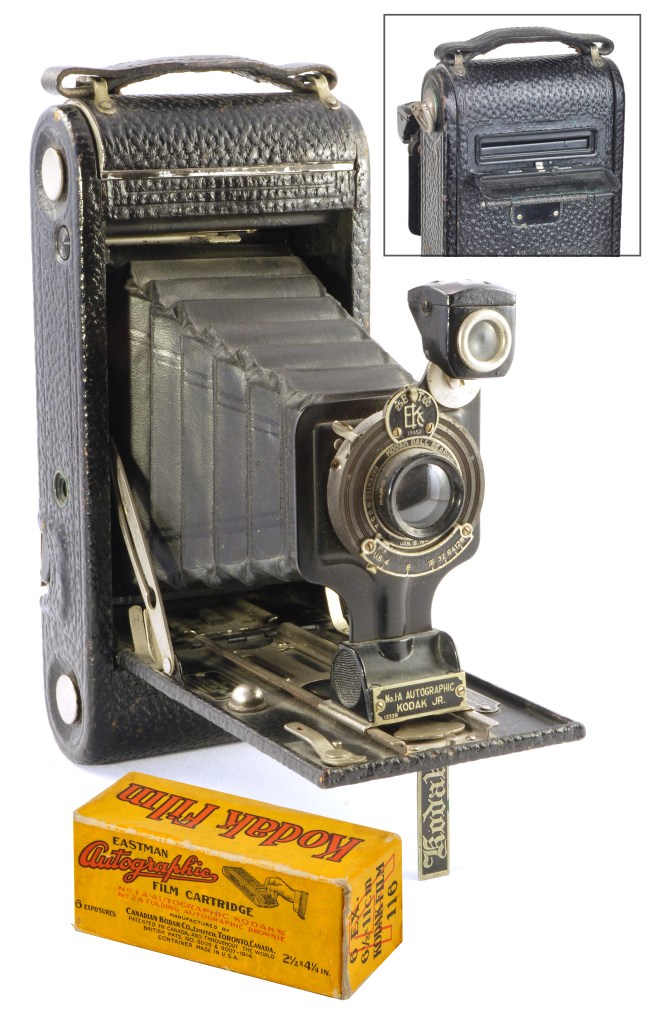
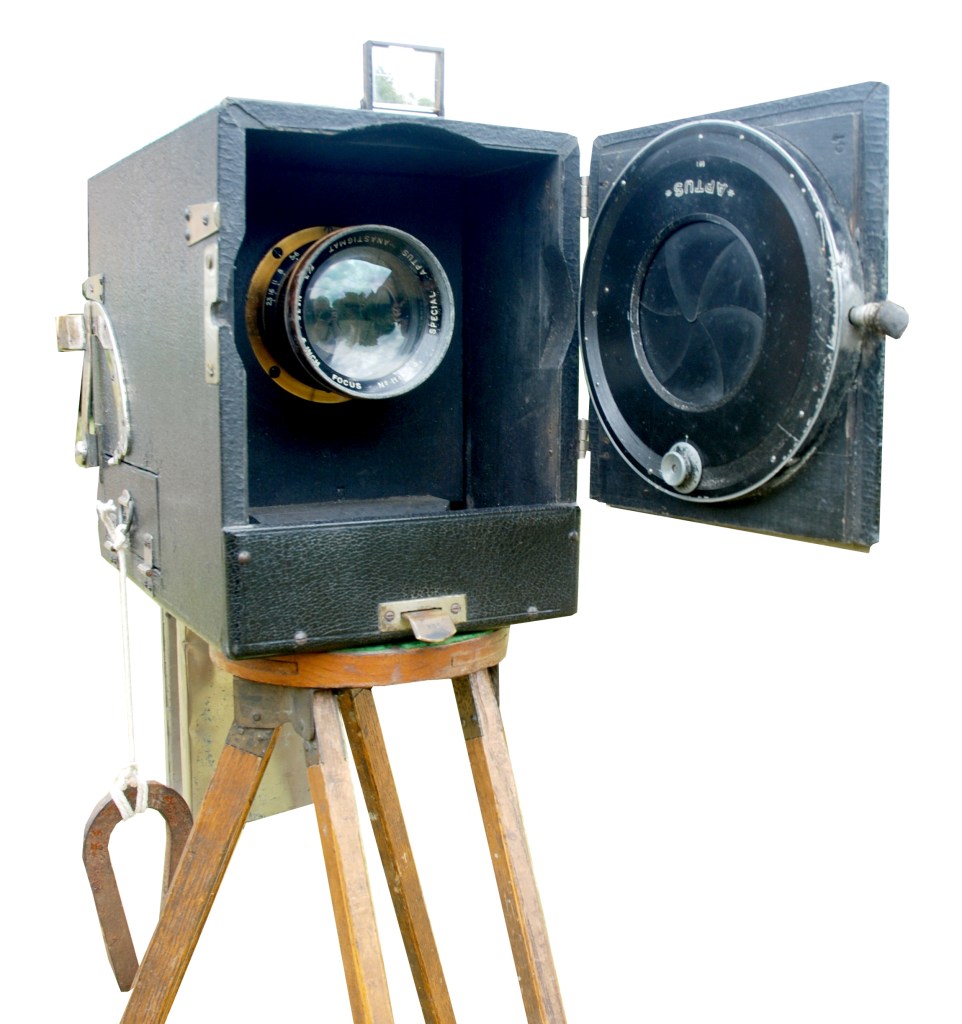
Also of note: The 1913 Aptus was a while-you-wait camera that incorporated a method of developing and fixing a picture in a special tank attached to the base. With a certain amount of dexterity, a photographer could use this to shoot, develop and fix a picture in about five minutes. The Thornton Pickard Mark III Hythe Machine Gun Camera from 1915 was another rarity. Shaped exactly like a machine gun, it shot pictures instead of bullets and was used to help train pilots in air-to-air combat. The Hicro camera, from the same year, shot three monochrome images at once, each through a red, green or blue filter. After processing, these were combined with similar filtration in a special viewer or complicated projection apparatus to show the subject in full colour.
1920-1940: Birth of major landmarks
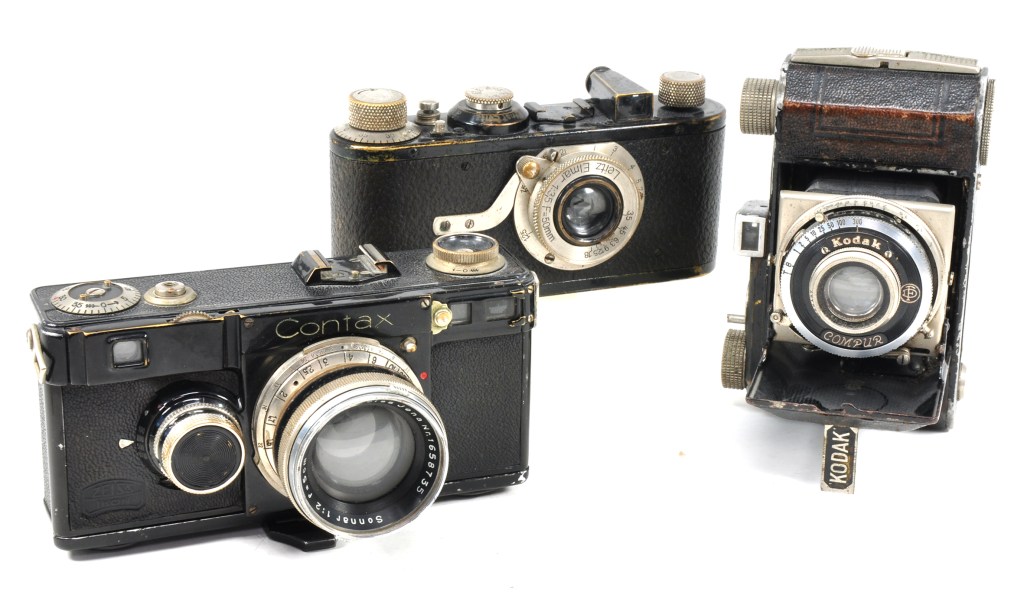
Three cameras from this era played huge roles in the shape of things to come. The Leica arrived in 1925, for the first time making 35mm film truly viable. Those who initially shunned the camera, believing such a small negative was incapable of producing professional quality images, were soon proven wrong, and 35mm went on to become legendary.
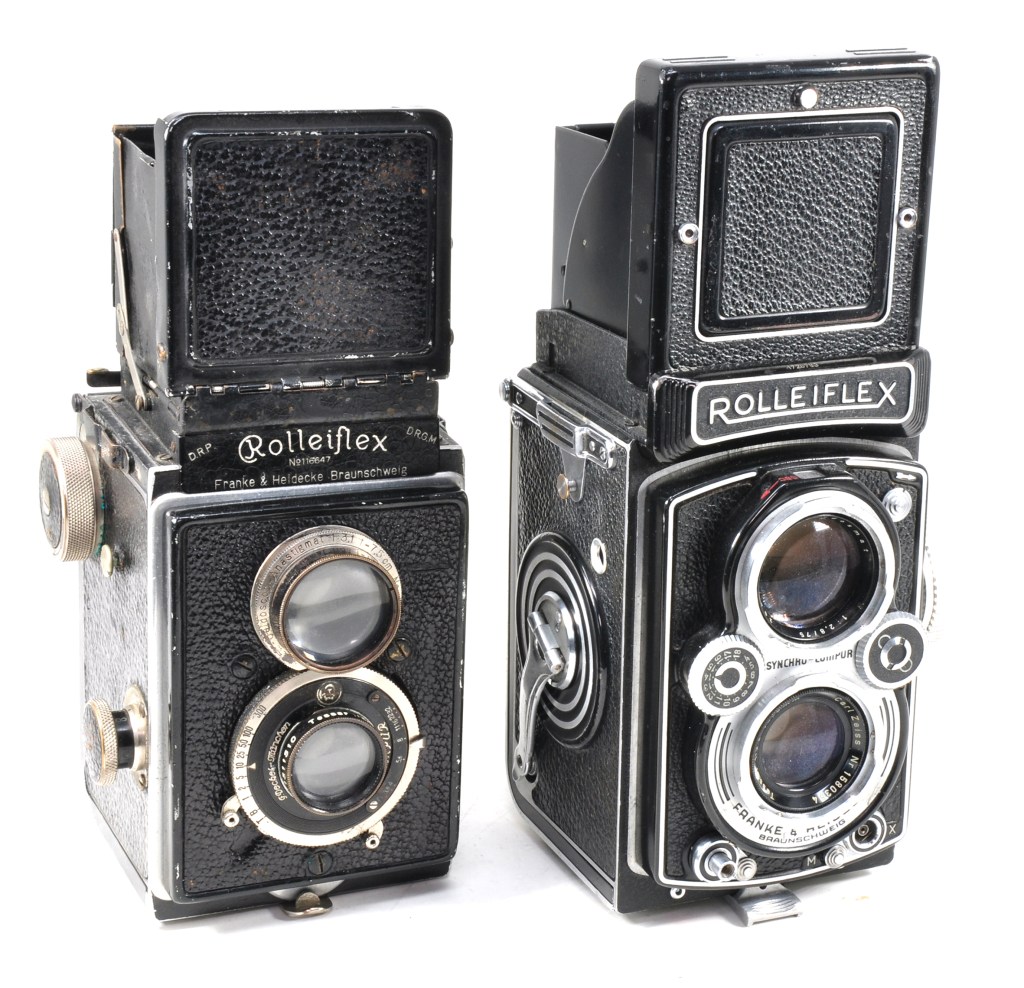
Next up was the 1928 Rolleiflex. Until then, twin lens reflexes (TLRs) had been big and made for shooting on glass plates. The Rolleiflex was the first compact, roll film TLR with its twin lenses focused in tandem on a moving panel. It shot six exposures 5.5x6cm on 117 size film, but some were converted to accept 120 roll film, which soon became the norm for this and the multitude of Rolleiflex clones that went on to be produced around the world.
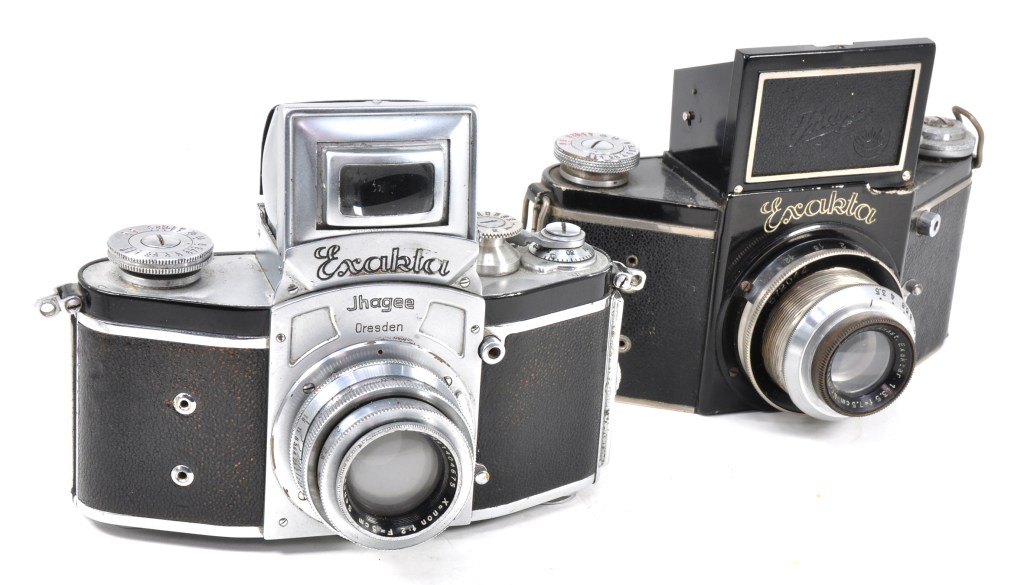
The third landmark was the 1936 Kine Exakta, the world’s first 35mm single lens reflex (SLR). The camera evolved from the 127 film VP Exakta introduced three years before. The two had similar specifications with shutter speeds down to 12 full seconds and up to 1/1,000sec. The Exakta used a waist-level viewfinder, and it would be another 13 years before a 35mm SLR with an eye-level viewfinder would be available in the shape of the Contax S.
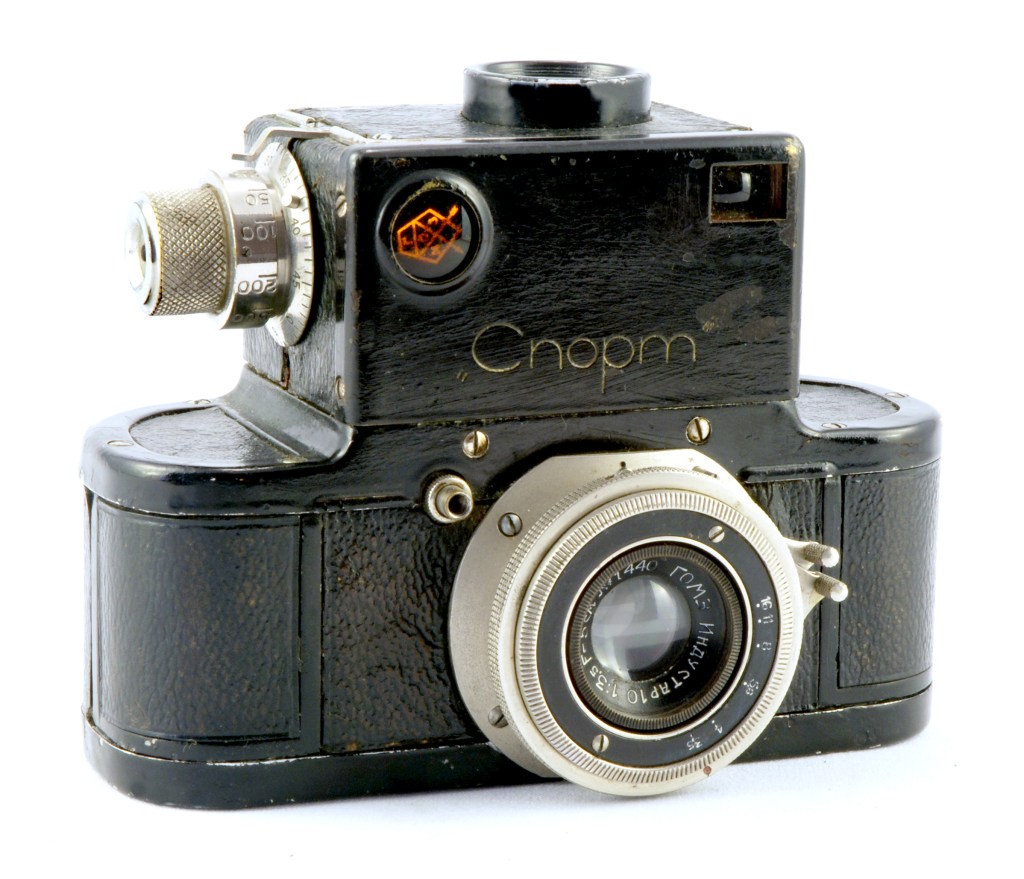
As important as these cameras were, they must not overshadow other major arrivals from this era. The Contax I made its debut in 1932, not so much a rival to the Leica, but more a camera that took a different look at 35mm design and made it its own. In 1934, the first Kodak Retina brought lower cost 35mm photography to those who couldn’t afford a Leica or Contax. At the same time, the Robot I was launched to popularise clockwork motor drives in cameras, and many more models of the camera were subsequently produced.
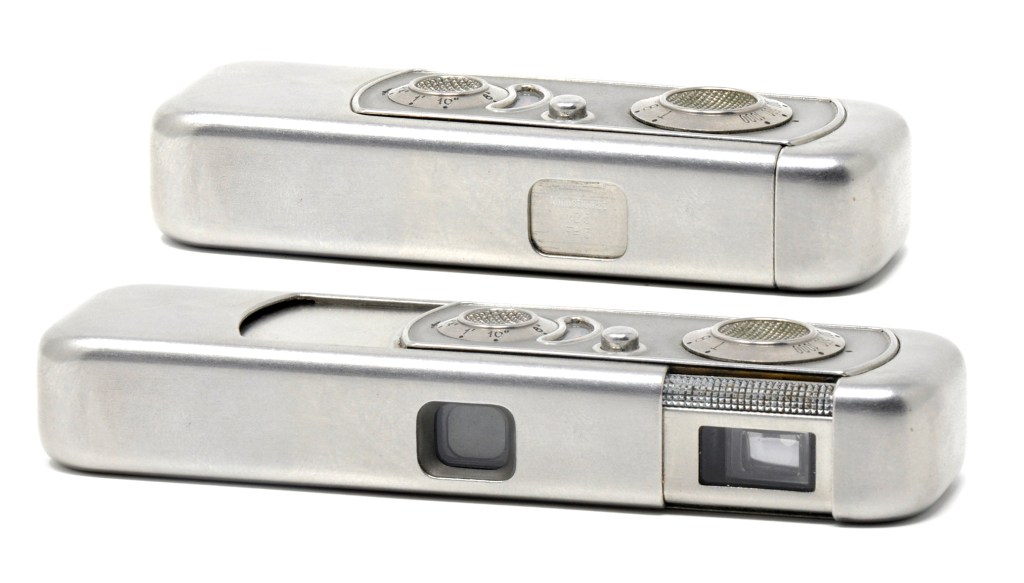
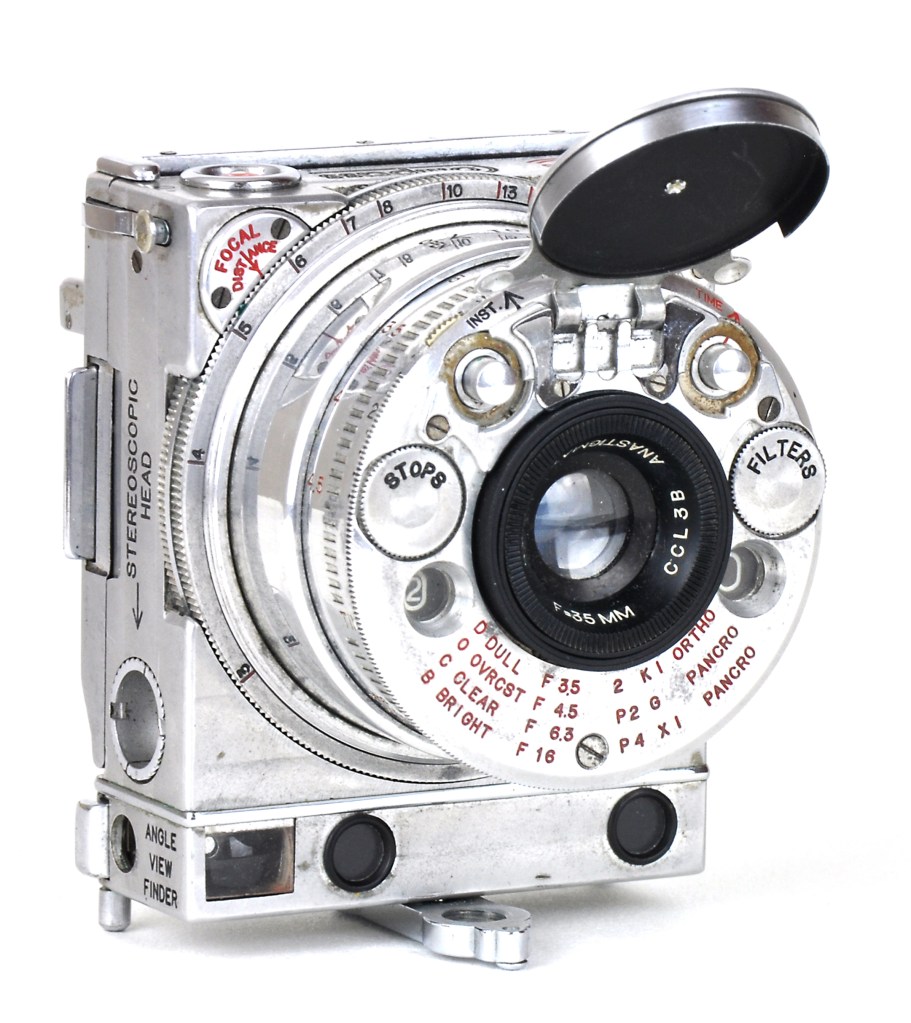
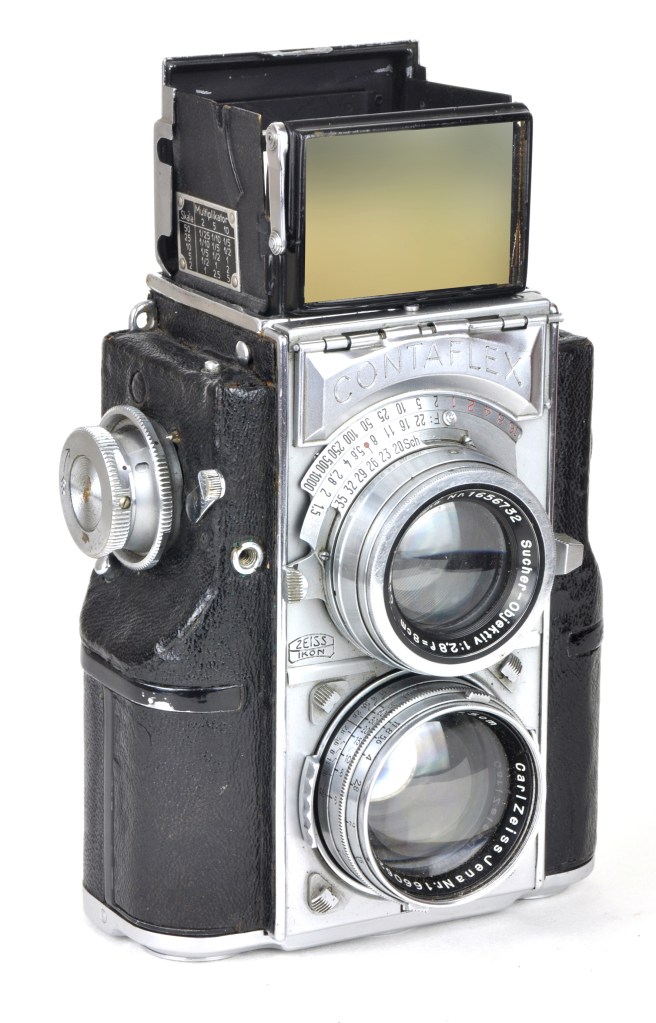
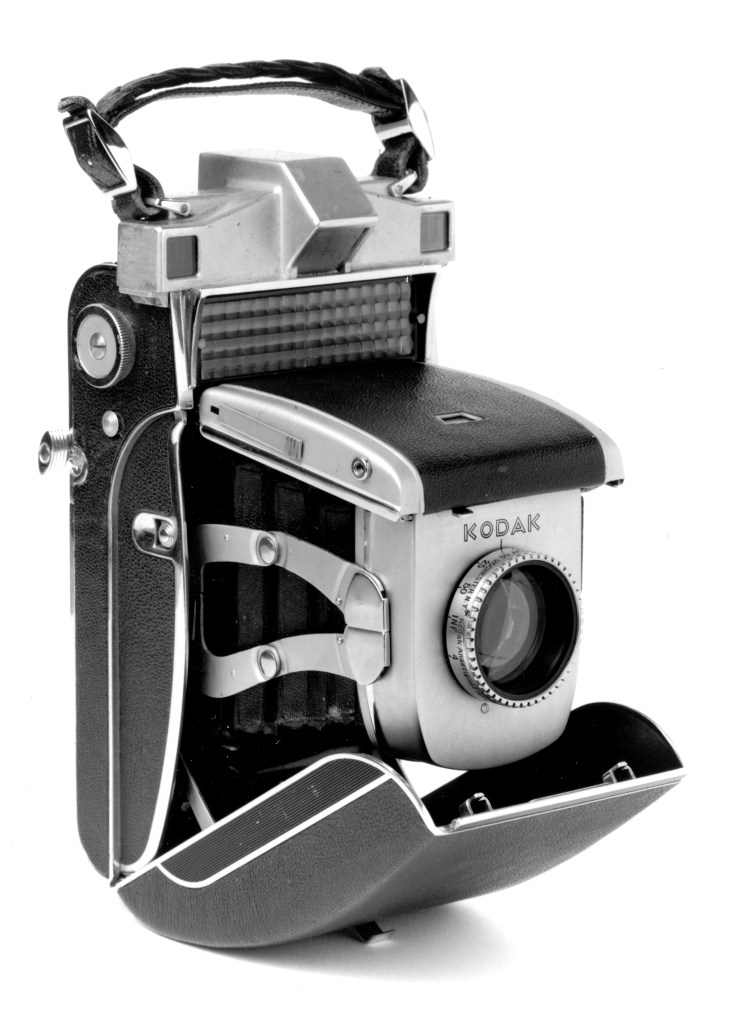
In 1935, the Contaflex represented a masterpiece of 35mm TLR engineering, followed in 1936 by the Compass, a miniature camera designed in England but built by a Swiss watch maker, and probably the most complicated camera ever made. The following year the first Minox arrived and went down in cinematic history as every spy’s favourite camera. Then there was the Super Kodak Six-20 which, in 1938, was the first camera with automatic exposure control. All this and more was put on hold by the outbreak of World War II in 1939.
1940-1960: Professional systems and instant photography
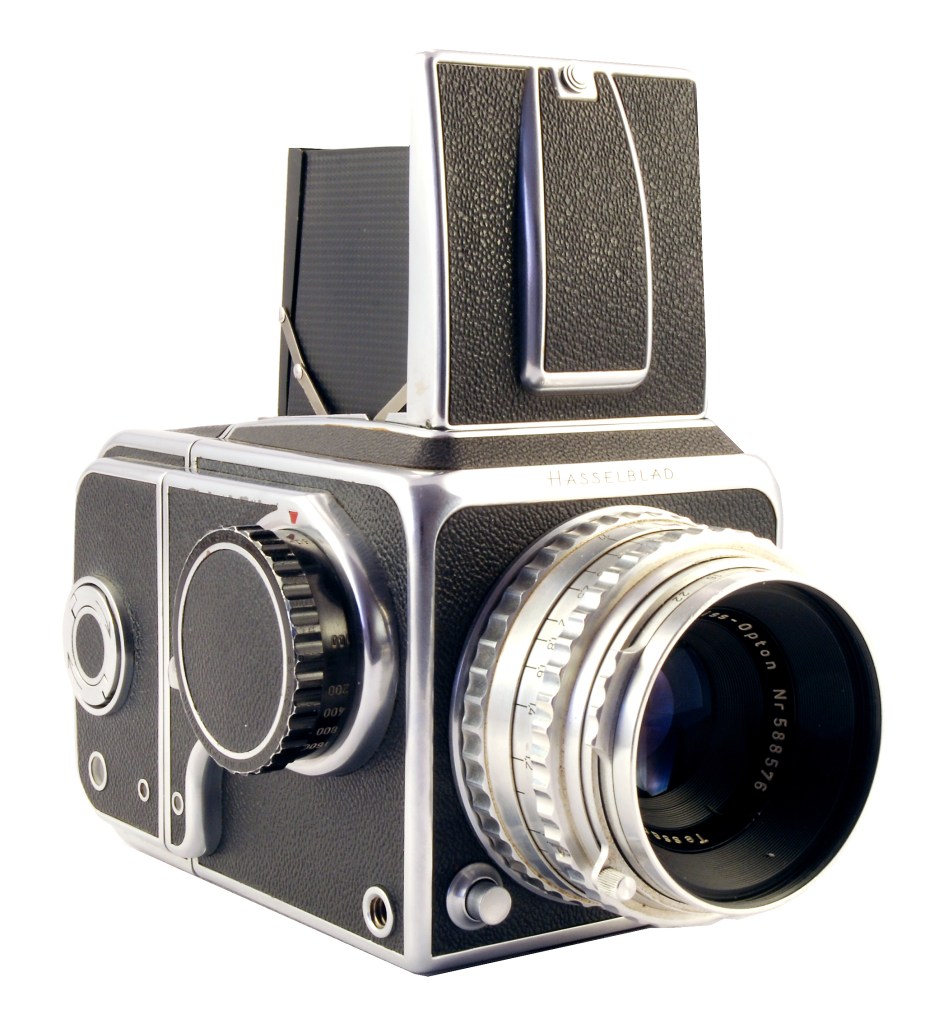
When the war ended in 1945, camera manufacturers took a while to get back on their feet. But once production began again, the landmarks just kept coming. In 1947, the first Hasselblad arrived from Sweden. It was the 1600F, named after its highest shutter speed. The camera’s modular design comprised a body to which could be attached interchangeable lenses, film backs and a wide variety of viewing systems.
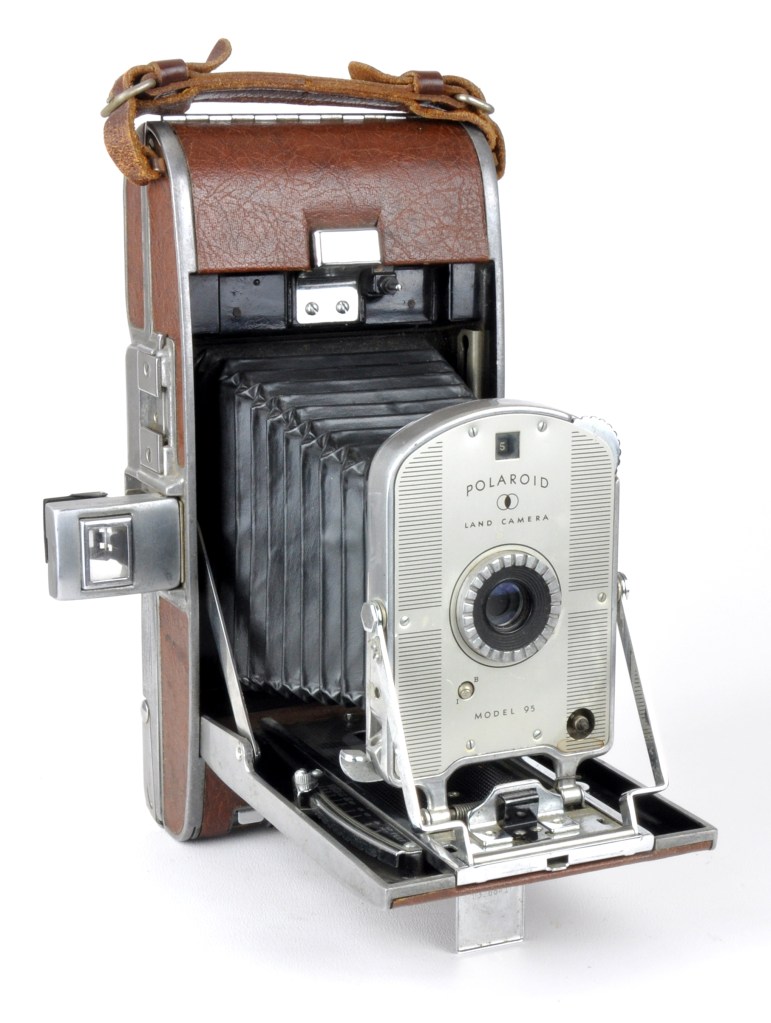
The following year, the Polaroid Model 95 became the world’s first truly viable, easy-to-use instant picture camera. Twin rolls of sensitised paper, connected by a paper leader were used. After exposure, as a tab was pulled, the rolls were sandwiched together along with in-built pods of chemicals that burst and processed a monochrome print for removal from the camera back after 60 seconds.
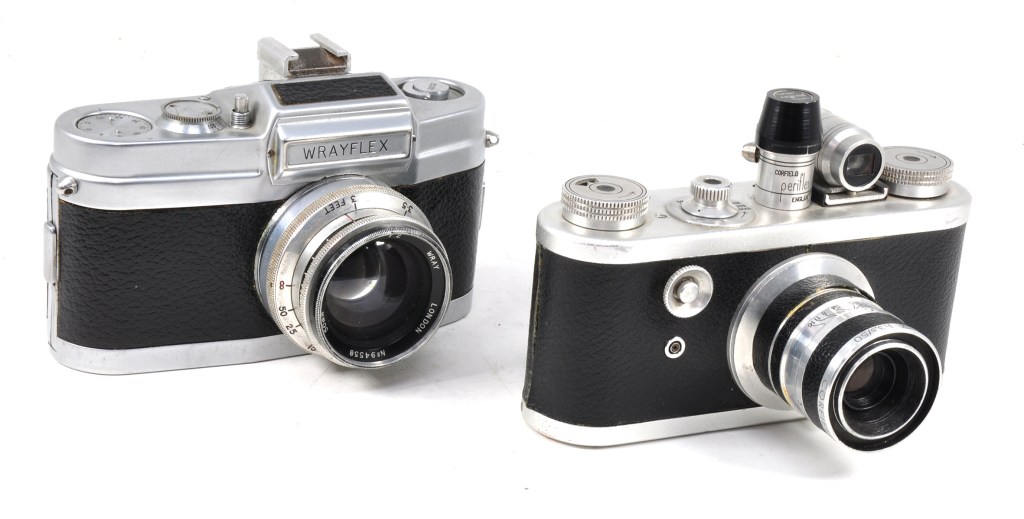
The 1950s saw a couple of interesting English ventures from the Wray and Corfield companies. Wray introduced Britain’s first and only attempt at producing a 35mm SLR. The 1951 Wrayflex I and 1953 Ia used mirrors in place of a prism viewfinder, resulting in a laterally reversed landscape view and an upside down portrait image. A pentaprism was added with the Wrayflex II in 1959, but the camera never achieved the success its manufacturer had anticipated. Less than 3,000 cameras across the three models were produced.
The 1953 Periflex from Corfield developed the unusual idea of a small periscope that was manually pushed down into the film plane to magnify part of the image by a factor of eight for focusing, then withdrawn and a normal eye-level viewfinder used for shooting. Despite the unusual design, variations continued to be made until 1961.
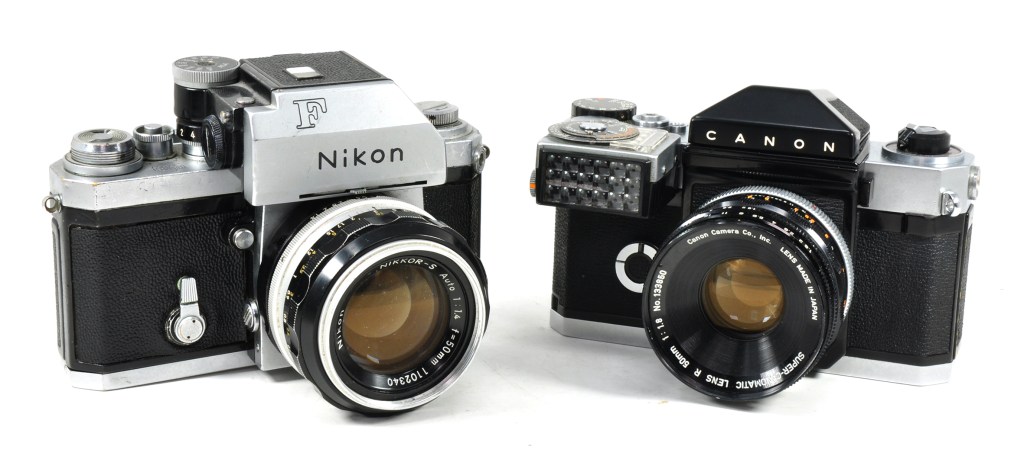
Although the East German Praktina FX, launched in 1953, stood at the heart of a large system of lenses and accessories, it became overshadowed by the arrival of the Japanese Nikon F in 1959. The Nikon was built to be the centre of a system comprising lenses from 21mm to 1,000mm, electric motor drives, a choice of viewfinders and focusing screens, plus many other accessories. For 35mm SLRs, it soon became the first choice for professional photographers world-wide.
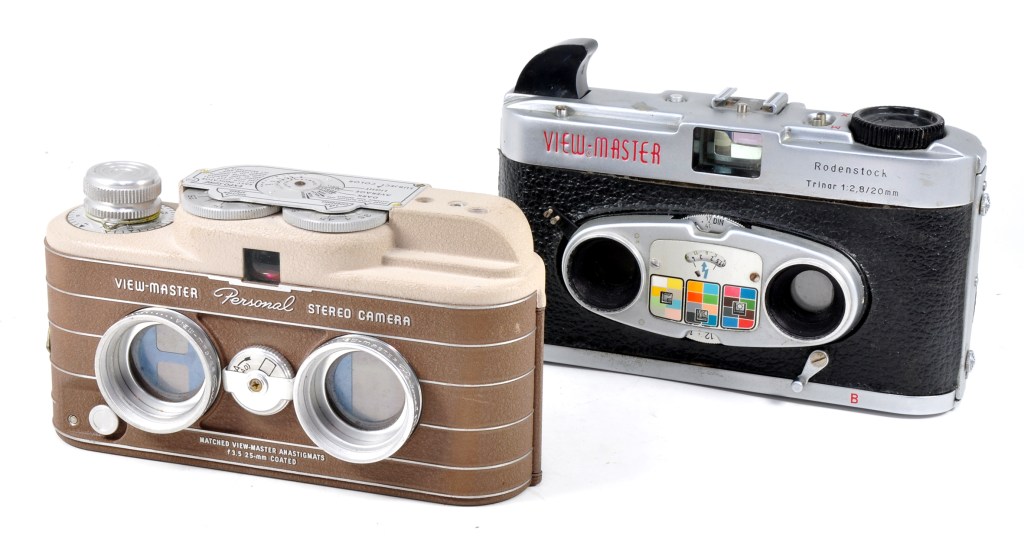
Stereo photography, which had previously risen and fallen in popularity, rose again in the 1950s with cameras that used 120, 127 or 35mm film, rather than the glass plates of old. The View-Master system that had been providing stereo pairs of pictures on reels for use in special viewers since the 1930s was enhanced in 1952 and 1961 with the introduction of View-Master cameras that enabled photographers to make and view their own stereo reels.
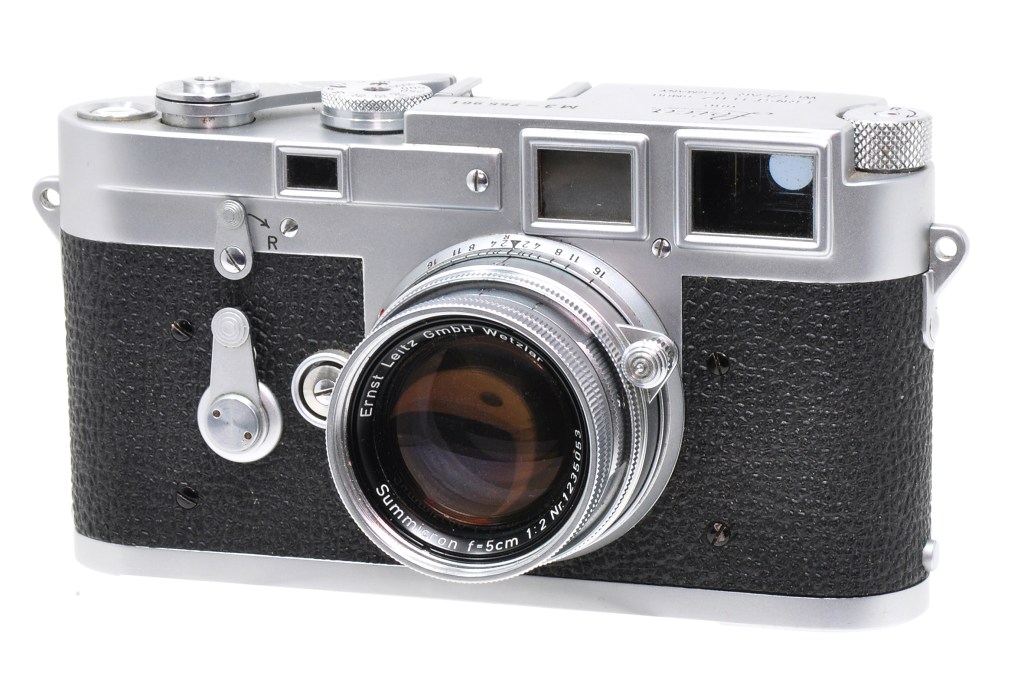
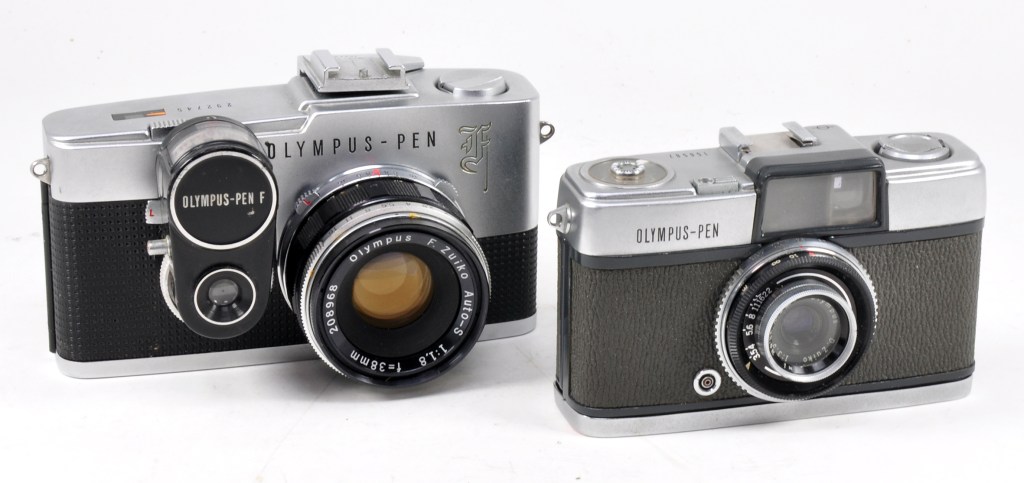
Also significant from this era: Gamma Duflex, the first 35mm SLR with instant return mirror; Mecaflex, a miniature 35mm SLR for 24×24 images; Leica M3, the first bayonet lens Leica and the start of a hugely successful series; FT-2 35mm panoramic; and the Olympus Pen, Japan’s first half-frame camera.
1960-1980: The Japanese arrival
Between the end of World War II and the latter years of the 1950s, Board of Trade restrictions in the UK prevented certain luxury goods from being imported, and that included cameras. As the 1950s morphed into the 1960s, restrictions were lifted – and in came the Japanese. With them, came good quality and newly affordable 35mm SLRs, and suddenly, everyone wanted a reflex camera, amateurs and professionals alike.
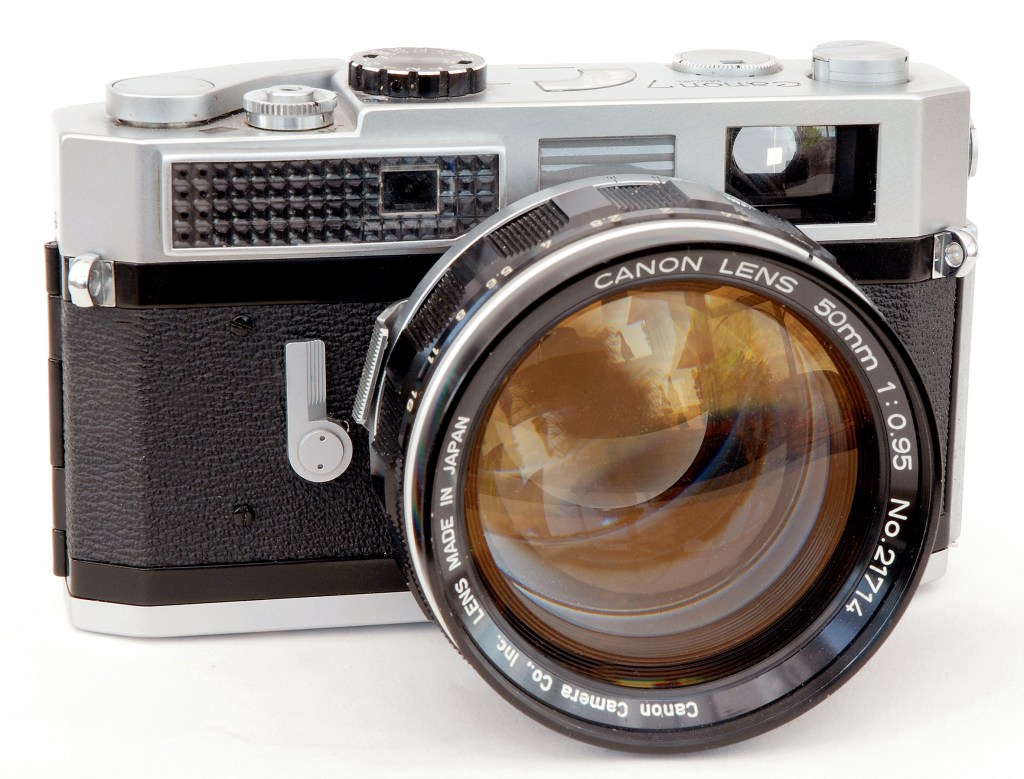
The Nikon F started it, but hot on its heels came cameras like the Pentax S2, Minolta SR-1 and, most notably, the Canonflex. Unlike its rivals, the Canon offered a selenium cell exposure meter which mated with the shutter speed dial as an aid to measuring exposure. It also accepted a wide range of Canomatic lenses in breach lock mounts, similar to but not the same as the Canon FL and FD mounts that followed later.
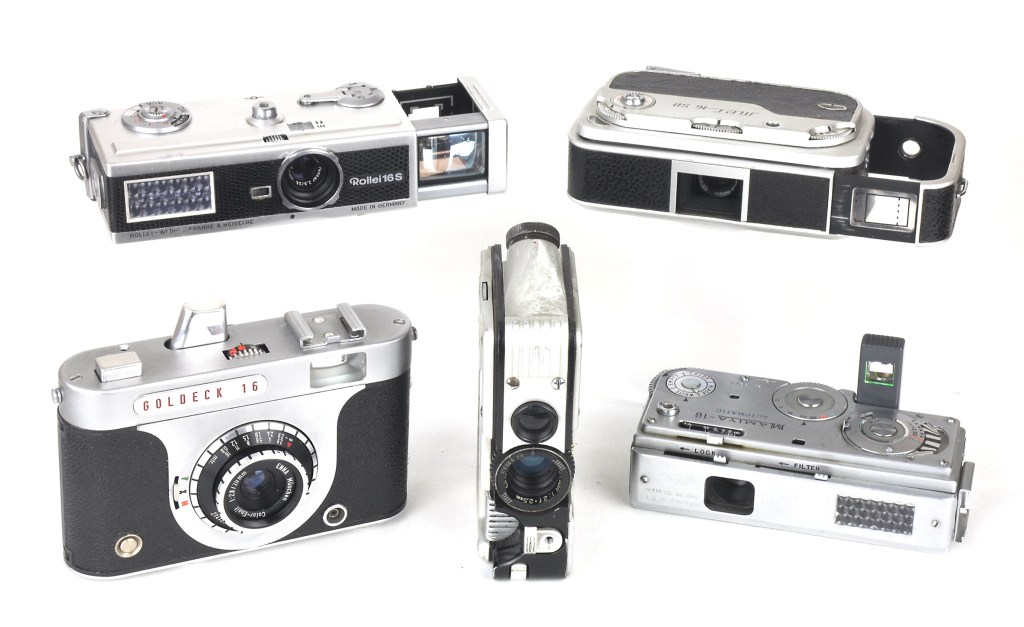
This era also saw a growing interest in subminiature cameras. Although the Mini-Fex, the first camera for 16mm film, appeared in 1932, the trend really took off in the 1950s and continued into the 1960s. For a while it looked like 16mm would take over from 35mm, but it never happened.
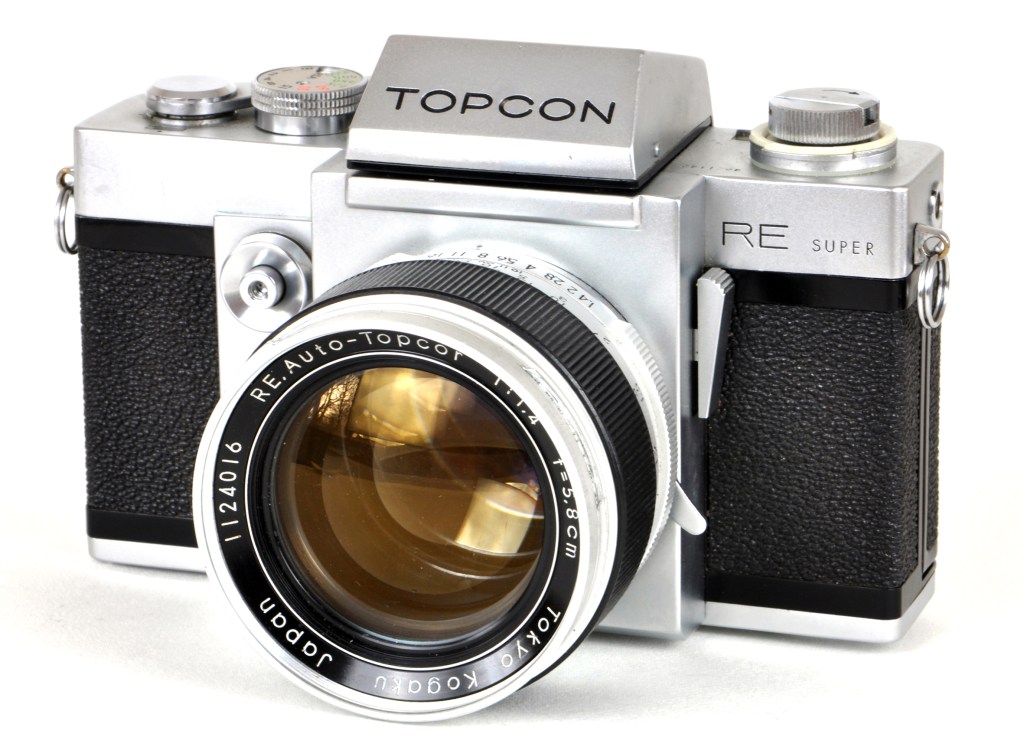
Two important landmarks landed in 1963. The Topcon RE Super was the first 35mm SLR with through-the-lens (TTL) metering. It worked by using a special reflex mirror with a pattern of transparent lines etched into it, allowing some light to pass through the mirror to a CdS meter cell at the rear. (Note for pedants: the first camera to use TTL metering was actually the Mec 16SB in 1961, but that was a 16mm subminature, not an SLR.)
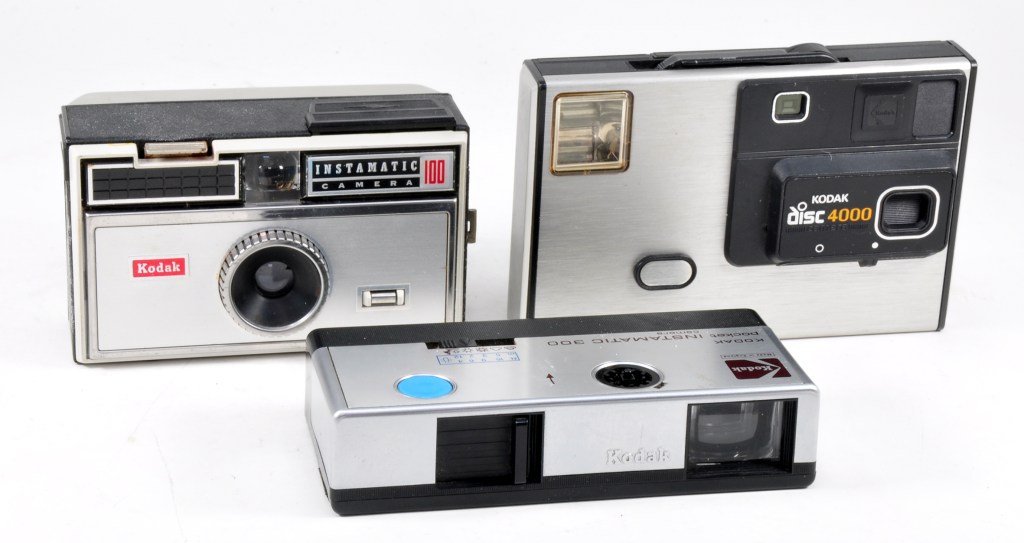
The other major landmark of 1963 was the introduction of Kodak’s Instamatic cameras, whose unique selling point was the Kodapak cartridge containing film that was simply dropped into the back of the camera, doing away with the complications of loading that plagued snapshot photographers. The basic design was taken up by other manufacturers around the world before being overtaken by Kodak’s Pocket Instamatics for 110 film in 1972. Again popularity for the design spread around the world until Kodak’s introduction of Disc cameras ten years later.
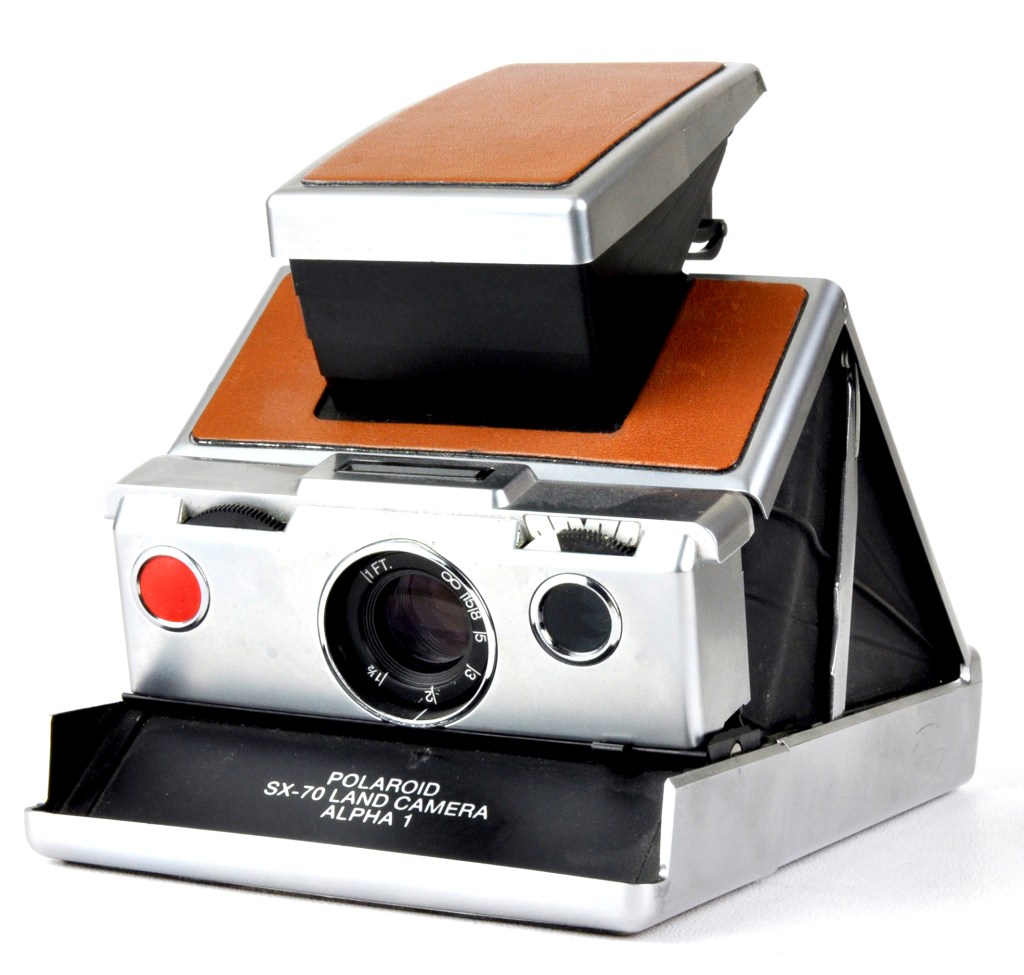
Polaroid was again to the fore in 1972 with the introduction of the SX-70 camera. Following the first instant picture camera back in 1948, Polaroid had gone through many incarnations of the peel-apart film process. But SX-70 saw a completely different approach, with pictures which were automatically ejected from the camera immediately after exposure to develop in full colour, in normal lighting, in around one minute.
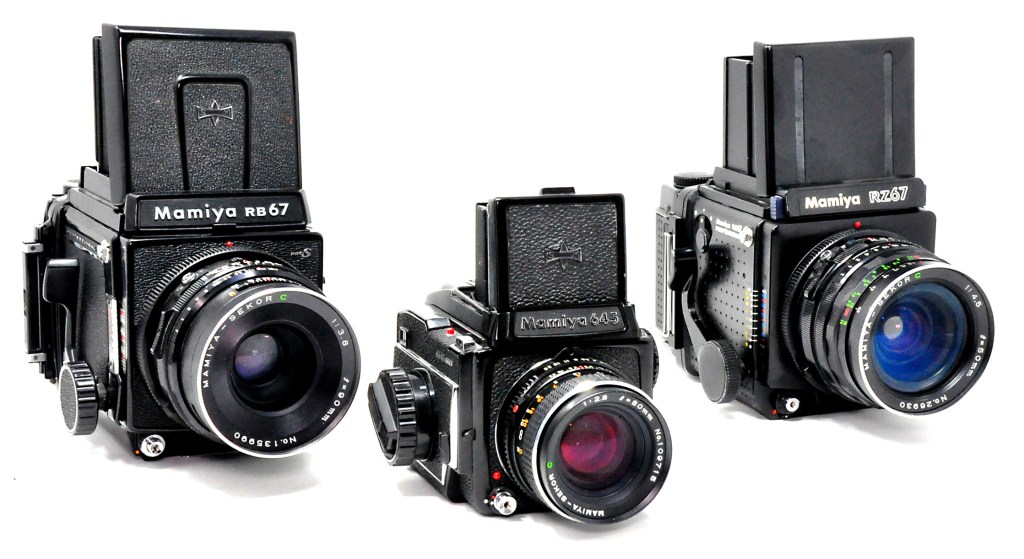
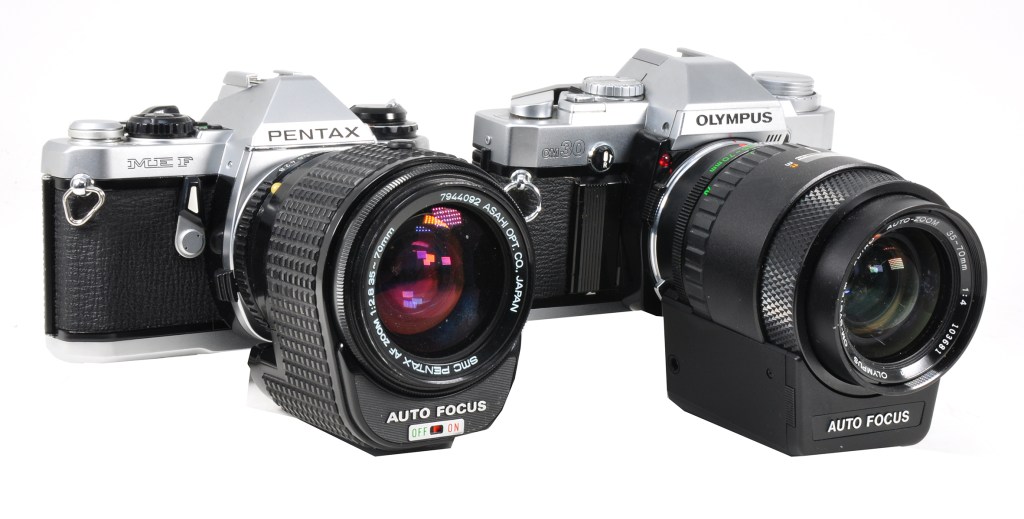
The same year saw Olympus introduce the OM-1, a new breed of ultra-compact 35mm SLRs, which went on to influence rivals like Pentax and Nikon. The camera began life as the Olympus M-1, but following objections from Leitz who had a Leica with a similar nomenclature, Olympus agreed to change the name. The OM-1 was followed by the OM-2, the first SLR with off-the-film metering with which the shutter speed was measured and set during the actual exposure. Following on came the OM-3 and OM-4, then the simplified OM10, OM20, OM30 and OM40.
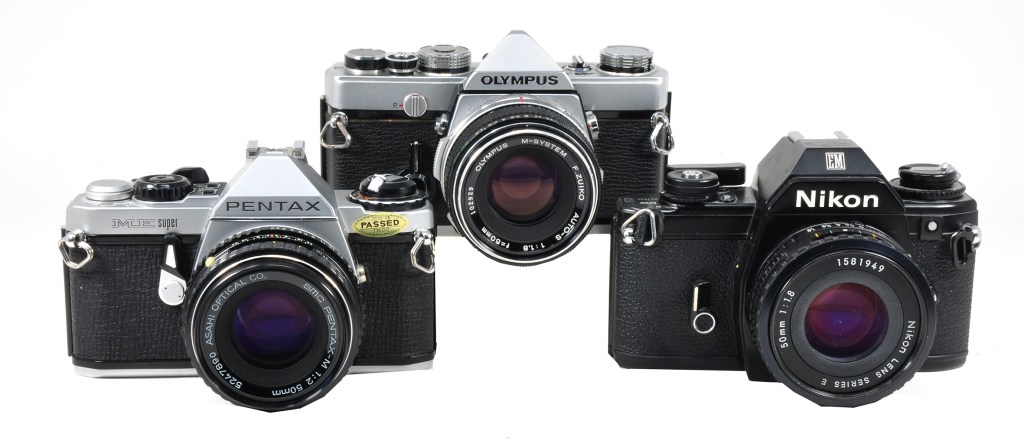
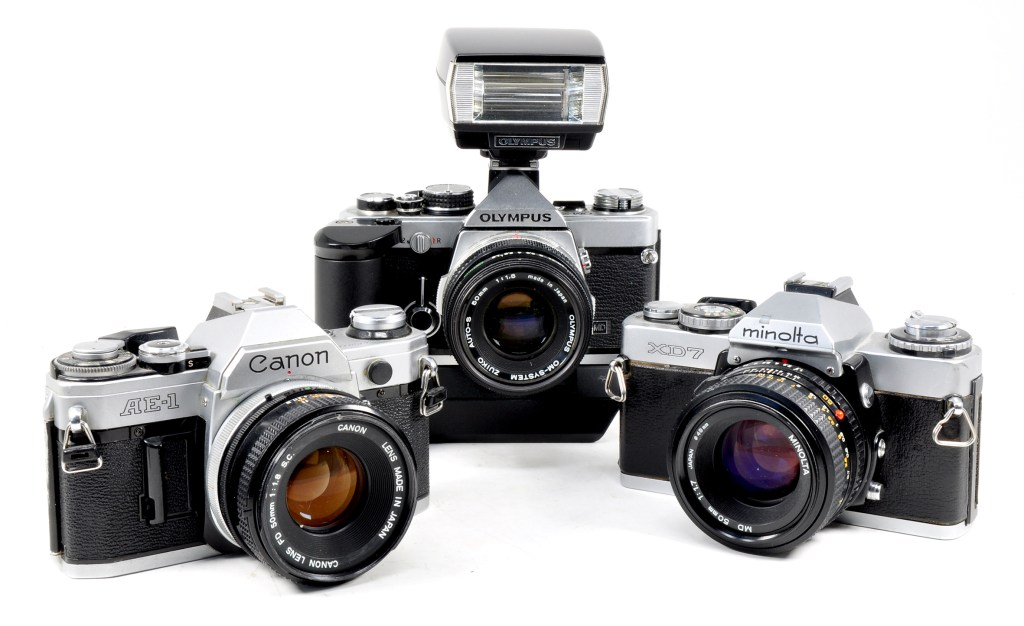
The 1970s were when auto-exposure really took off with aperture priority metering in the 1975 Olympus OM-2, shutter priority in the 1976 Canon AE-1, shutter and aperture priority combined in the 1977 Minolta XD7 and no less than five exposure modes in the 1978 Canon A-1.
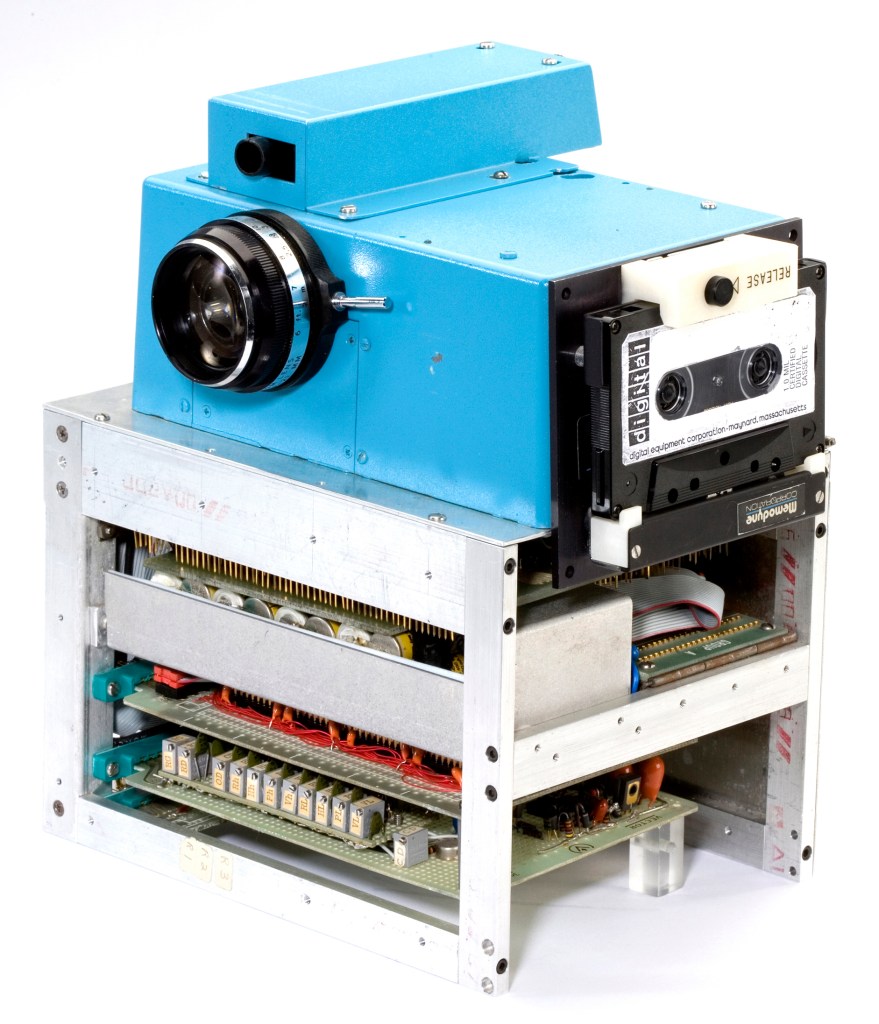
The most significant advance of the 1970s, although you wouldn’t have known it at the time, was when, in 1975, Kodak electrical engineer Steven Sasson invented and demonstrated the first digital camera, only to have Kodak patent it and try their best to forget it. Presumably in light of the fact that Kodak made most of its money from film and processing, the company’s accountants were hoping digital photography might go away. How wrong they were.
1980-2000: New technologies
The 20 years leading up to the millennium saw the introduction of new digital technology fighting against what, with hindsight, now looks like desperate attempts to reinvent and hold on to the film camera market.
Things kicked off in 1981 with a glimpse of the future in the shape of the Sony Mavica, a digital single lens reflex (DSLR) with interchangeable lenses. Images were captured and up to 50 colour pictures stored on interchangeable magnetic discs called Mavipaks. The resolution of the images was 570×490 pixels, equivalent to a little under 0.3 megapixels. The camera didn’t get beyond the prototype stage.
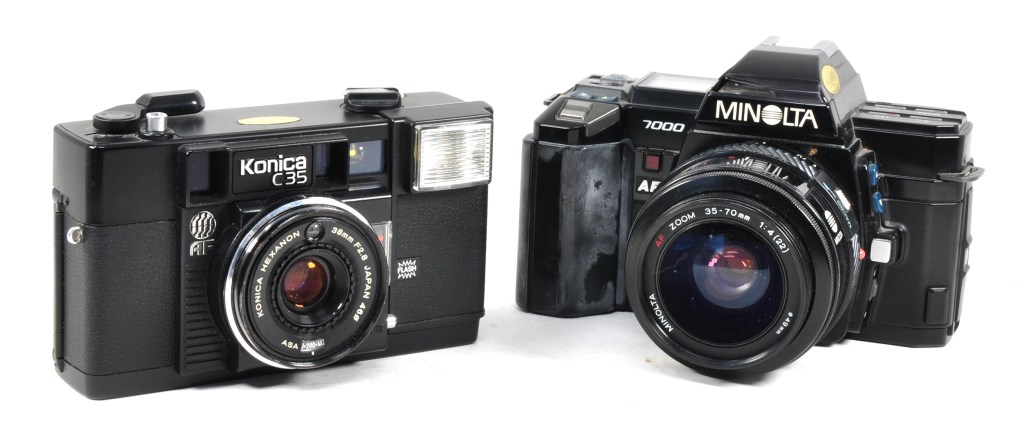
Unperturbed by the coming digital revolution, the Minolta 7000 film SLR was launched in 1985. Autofocus was already possible in compact cameras or in SLRs with special lenses. But the Minolta was the first to integrate the autofocus mechanism into the camera body and so set the style for autofocus SLRs, both film and digital, for many years to come.
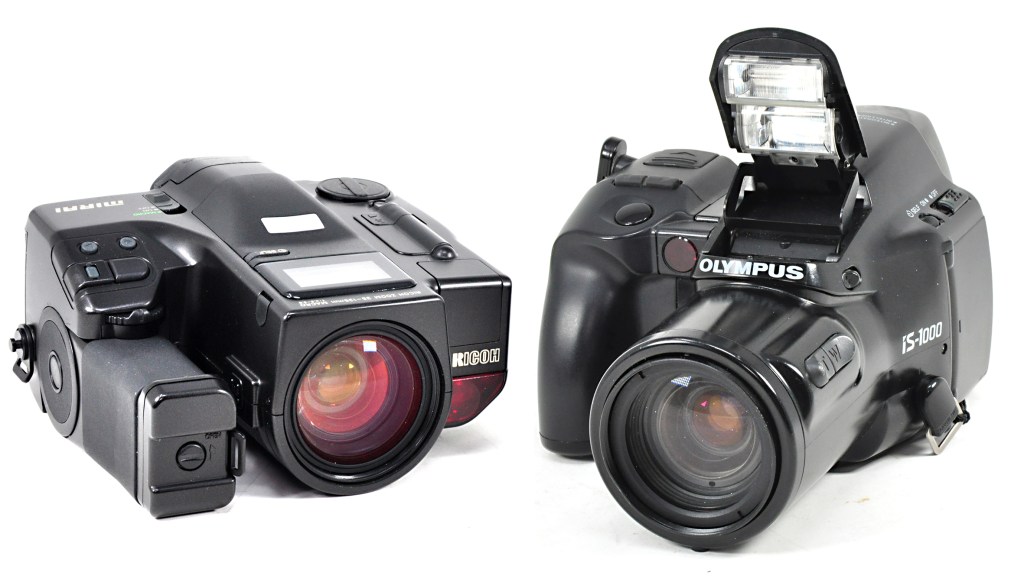
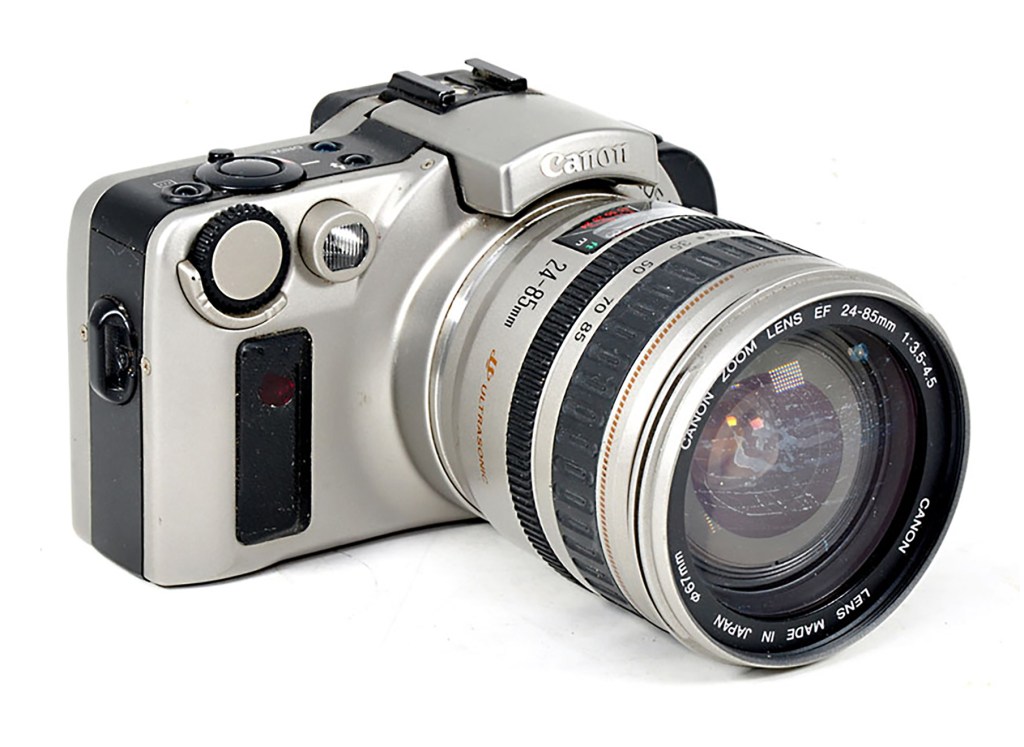
By 1987, film camera sales had begun to dwindle. Manufacturers countered this by producing a series of 35mm bridge cameras that offered much of the SLR’s versatility, albeit with fixed zoom lenses, coupled with the compact camera’s auto-everything ease of use. Yashica began the craze with the Samurai, which looked more like a camcorder than a still camera, but the shape settled down to the more traditional bridge camera styling with cameras from Olympus, Chinon, Ricoh, Canon, Minolta and Fujifilm, all the way through to 1991.
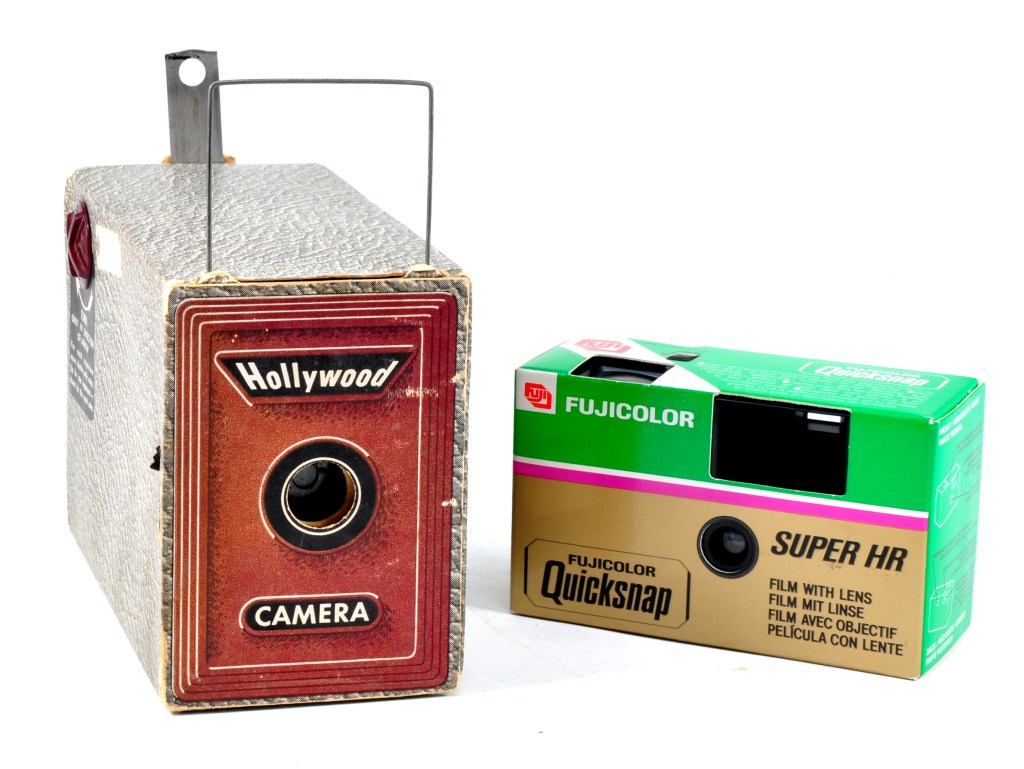
Disposable cameras began in America back in the 1940s and 1950s, but the arrival in 1967 of the Fujifilm Quicksnap marked the start of what would become a huge craze for disposable cameras that still lasts today.
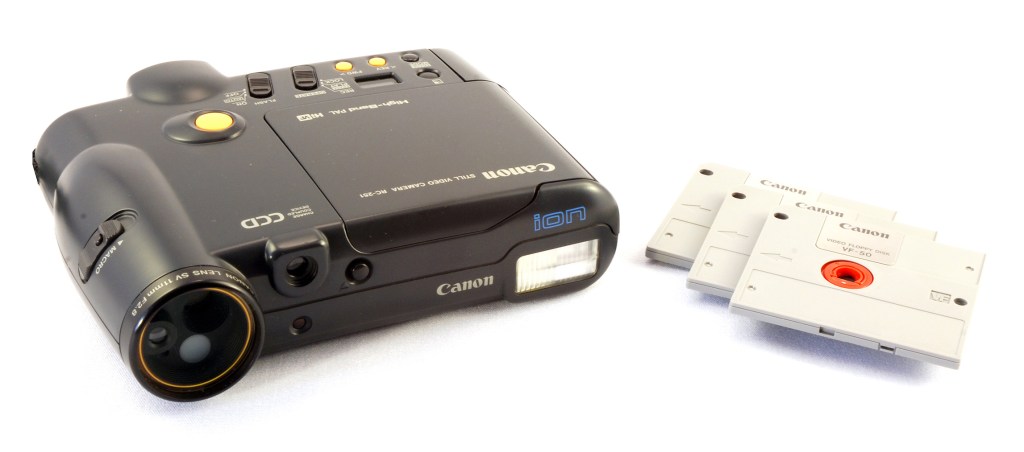
Then, in 1988, Canon launched the iON (standing for Image Online Network). Known as the Xap Shot in America and Q Pic in Japan, this was one of the earliest commercially available digital cameras. The iON used a flat body with an f/2.8 lens at one end of the narrow side and a built-in flashgun at the other. Using small spinning discs for storage, it shot 50 pictures, viewed by connecting the camera to a normal television. It wasn’t a digital camera as we know it today, but more like a still video camera. Nevertheless, it marked the start of what was about to come big time.
Not that you’d have known it if you were listening to some of the world’s biggest photographic manufacturers, who got together in 1996 to launch the Advanced Photo System (APS). With this came a new type of film for a new kind of camera that combined simplicity of use with revolutionary hi-tech ways of shooting and processing. Kodak, Agfa, Fujifilm and Konica made the film; Kodak, Nikon, Canon, Minolta, Olympus and others came on board with cameras that ranged from simple point-and-shoot compacts to top-notch interchangeable lens SLRs. Predictions were that APS would replace 35mm and change photography for ever. It lasted less than ten years.
INTO THE DIGITAL ERA
2000-2026: How we got where we are
As film camera manufacturers hung on by their fingertips to the old ways, by 2000, the digital revolution had already insinuated itself and soon it totally took over.
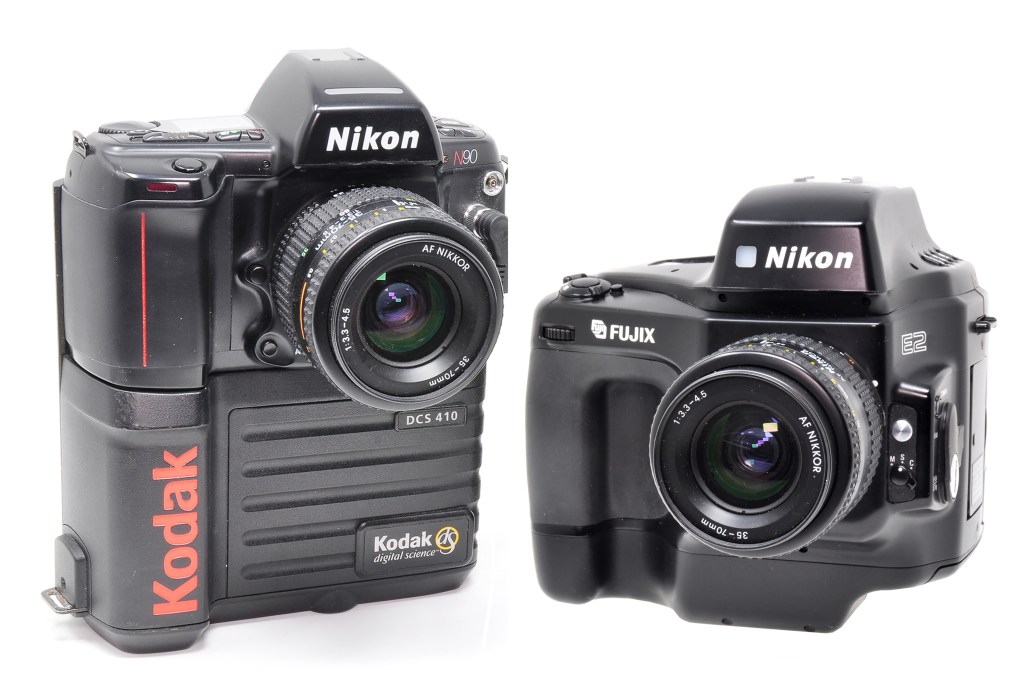
From 1990 onwards, Nikon had already joined forces with Kodak to produce the DCS series of DSLRs, that were essentially Nikon film cameras like the F3 with Kodak image sensors bolted to the back and base. Kodak also went on to couple its digital backs and bases to Canon EOS cameras. In 1996, Nikon collaborated with Fujifilm to produce the strangely shaped and extremely cumbersome Nikon E2, which tackled the way small sensors took a bite out of the centre of an image. This meant that, for example, a 50mm lens which would be a standard on a 35mm film camera became more like an 80mm medium telephoto on a digital camera. The E2 solved that with inbuilt reduction optics technology that shrunk the image to fit the size of the sensor.
Around this same time, other non-reflex manufacturers were joining the digital revolution, freed from the previously dictated confines of having to place a lens in the centre of a body with a film behind it. Now cameras could be any shape, and lenses could be placed anywhere. The Casio QV-10 in 1995 was the first with an LCD screen on the back; Pentax’s first digital camera, the EI-C90 in 1996, was shaped like a flat box, part of which formed a detachable camera and the other part housing a monitor with a pop-up screen; Minolta came up with the Dimage V in 1998 whose 8-13mm zoom lens could be detached from the body and waved about on the end of a long cable. And there were more, far too numerous to mention.
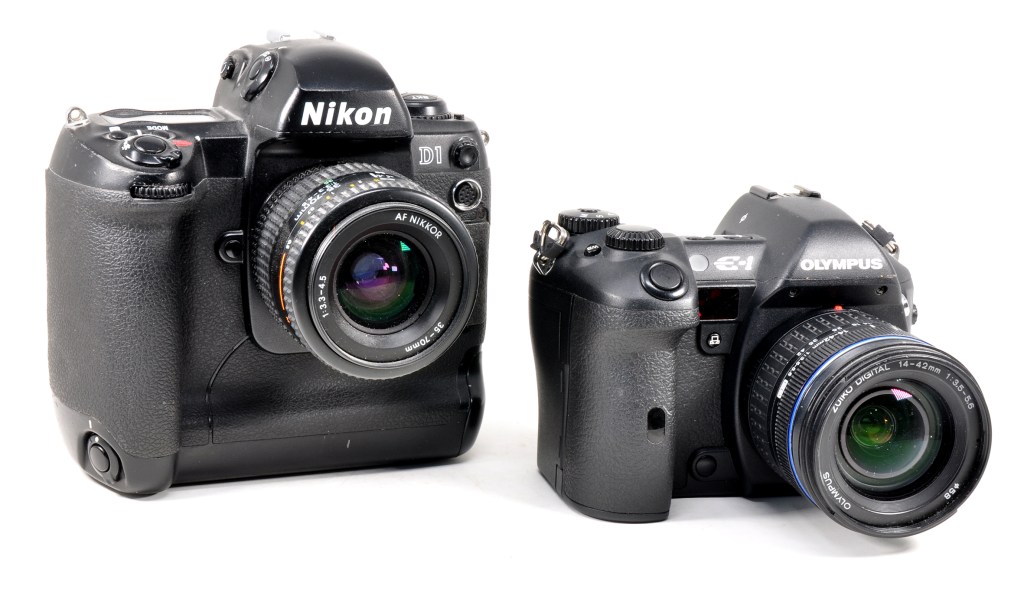
Then, in 1999, Nikon introduced the first DSLR to be built from the ground up by a single manufacturer, and brought it in under $5000 / £4,000 (RRP). The camera was the Nikon D1. It might only have had a 2.7MP sensor, but it marked the start of a new era of reflex cameras
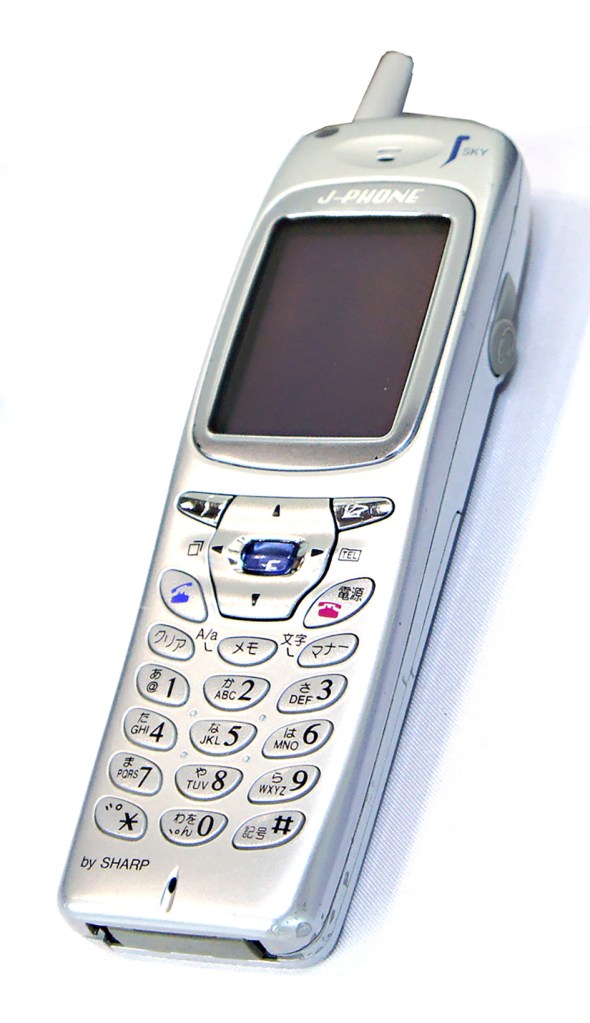
The following year saw the beginnings of a new kind of digital photography when Sharp Electronics in Japan introduced the J-SH04 J-Phone, the first mobile phone with a built-in 0.11MP camera. The real phone revolution, however, began in 2007 when Apple launched the iPhone, and the rest of that particular story is history.
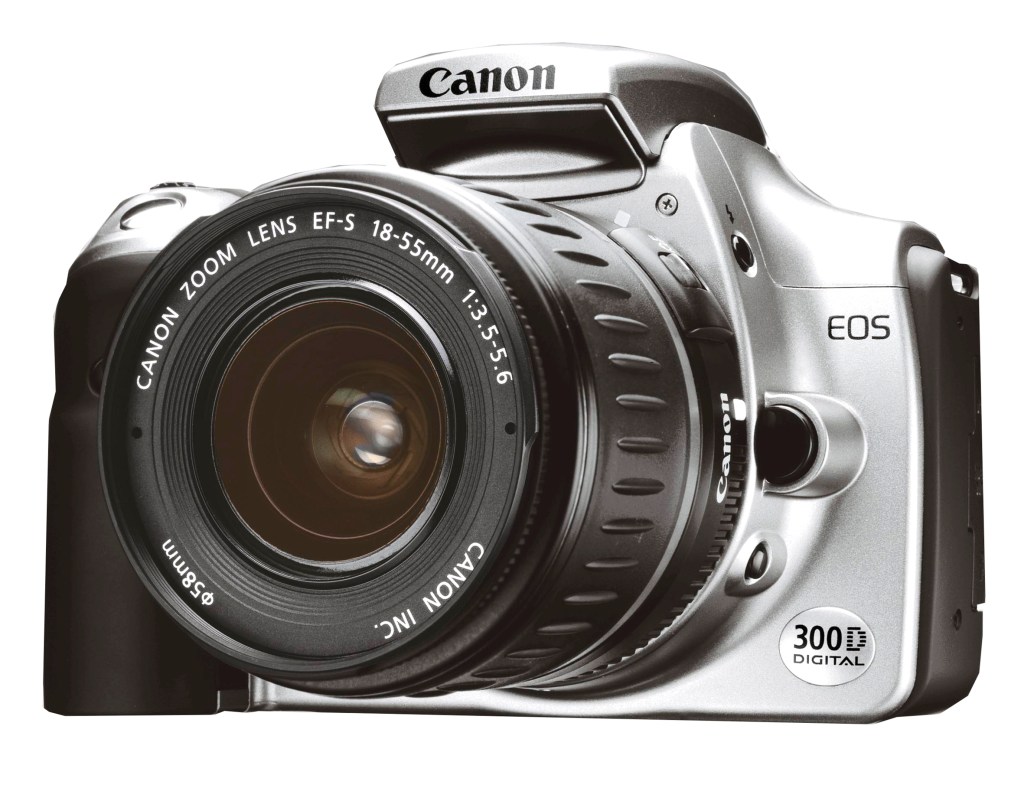
Meanwhile, back with cameras, 2003 saw the launch by Canon of the EOS 300D for under $1,000/£1,000, a price that really opened up the affordable amateur DSLR market. Nikon countered that with its D70 for a similar price. At the same time, Olympus launched the E-1, whose Four Thirds technology was offered to other manufacturers, giving them access to design specifications and technologies to produce cameras and lenses all with the same mount. Olympus went big on the system, while Panasonic made two Four Thirds cameras and Leica made one.
For professional use, however, full-frame, meaning the 24x36mm format that harks back to 35mm film, soon became king. Surprisingly perhaps, that goes all the way back to 2002, when the first full-frame DSLR was the Contax N Digital. However it was the Canon EOS-1Ds from the following year that is considered as the first major step towards full-frame digital photography.
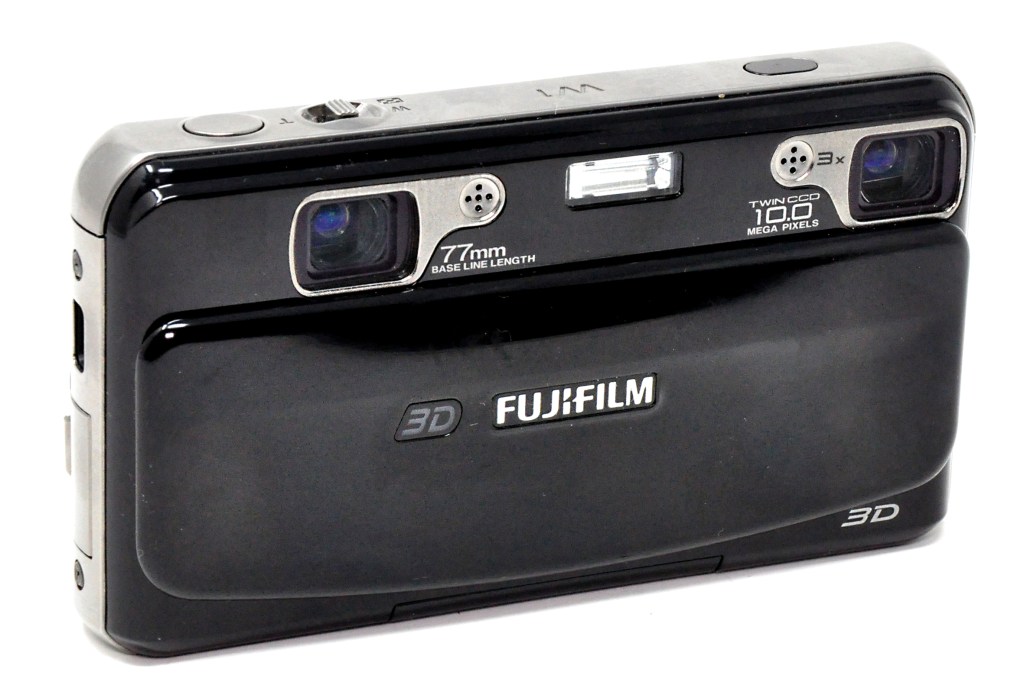
Stereo photography once again surfaced in 2010, this time in the digital world with the introduction of the Fujifilm FinePix Real 3D W1 and W3 cameras. As of old, they used two lenses to shoot two images. Processed with the appropriate software, these could be reproduced as twin images for viewers similar to those in years before, or as anaglyphs, designed to be viewed through red and blue/green 3D spectacles.
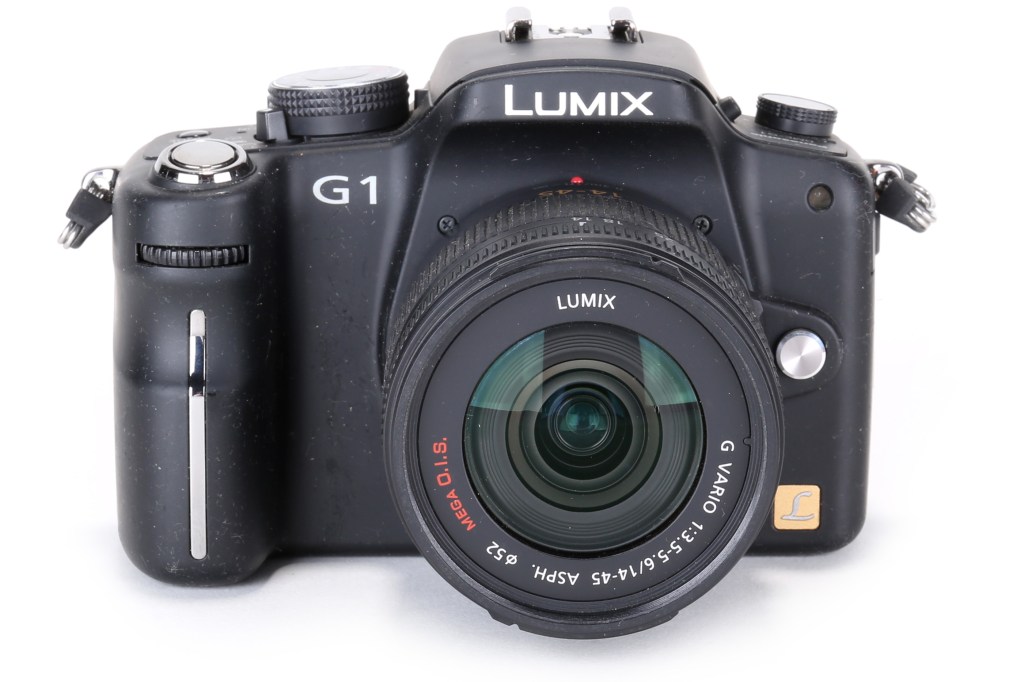
The real revolution, though, came in 2008, when Panasonic introduced the Lumix G1. This was a distinctly unrevolutionary looking DSLR-like camera which removed the mirror box and pentaprism and replaced them with an electronic viewfinder, with the promise of more compact bodies and lenses. It was the first mirrorless camera, a type that would eventually made the SLR obsolete. Today, mirrorless represents the ultimate combination of power and portability through such all-singing, all-dancing cameras as the Canon EOS R5 Mark II and its counterparts from the likes of Nikon and Sony.
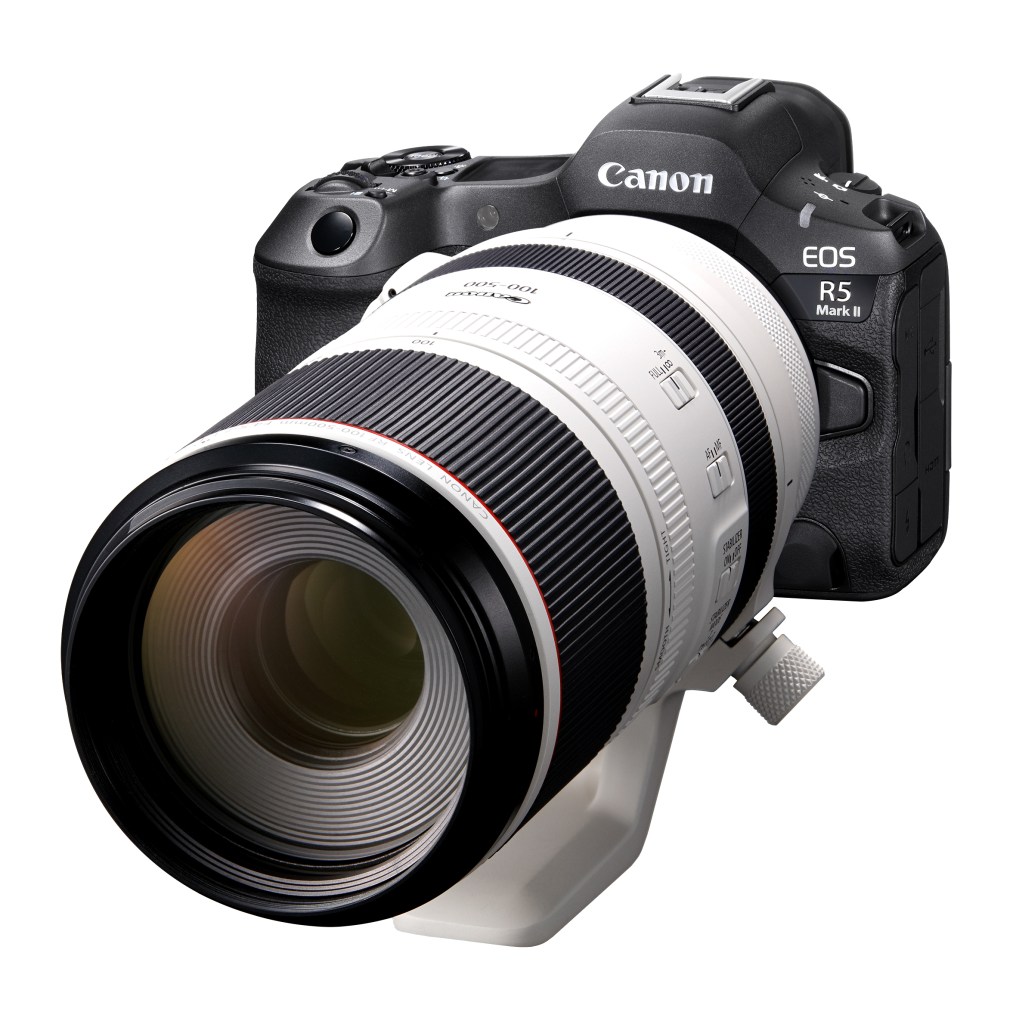
Since the dawn of digital, the technology has developed at speeds hitherto unheard of. Sensor sizes, megapixel counts, multiple autofocus points, facial recognition, touch screen operation, numerous shooting modes, time-lapse control, voice recording, Wi-Fi connectivity, text tagging, best shot selectors, 4K video… all these and more besides can be found in today’s cameras. It is worth remembering, however, that no matter how complicated or technologically advanced your latest digital camera might be, at its heart there lies no more than a box with a lens, some kind of sensitised material and controls to adjust focus, apertures and shutter speeds. And you know what? They knew all about those basics 200 years ago.
Related reading
Follow AP on Facebook, Instagram, YouTube and TikTok