Zeiss Ikon was formed in 1926 from the amalgamation of four German camera companies: Contessa-Nettel, Ernemann, Goerz and Ica. In 1932, they produced the Contax I 35mm coupled rangefinder camera, followed by the Contax II and Contax III. Then World War II broke out.
- Launched: 1957, Price at launch: £65 10s (£65.50), Guide price now: £40-75
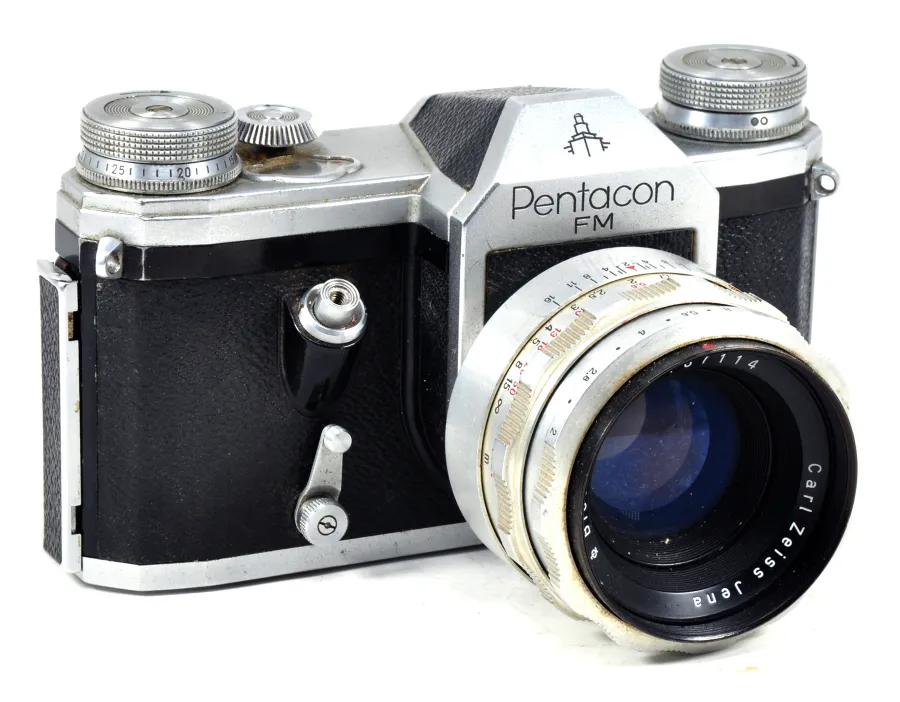
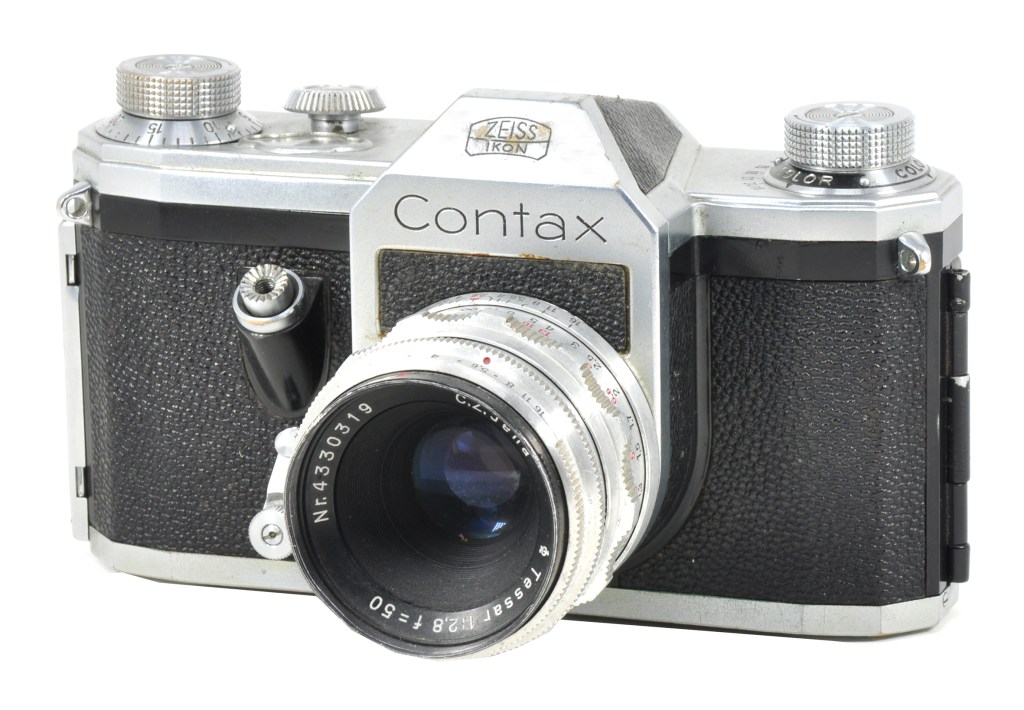
After the war, parts of Zeiss Icon relocated to West Germany, where they improved on the Contax designs, calling them the Contax IIa and IIIa. Back in Dresden, now under Soviet-controlled East Germany, the Russians took all the rangefinder cameras and technology back to Russia, where they remade Contax cameras and called them Kievs. Meanwhile in Dresden, the factory became part of VEB Pentacon, where they began making 35mm single lens reflexes (SLRs) under the Contax name. Which was when Zeiss Ikon in the West threw up objections. After a bit of wrangling, the Contax name was relinquished by the East Germans who used Pentacon instead. And out of this tangled web of who made what, when and where, eventually came the magnificent Pentacon FM.
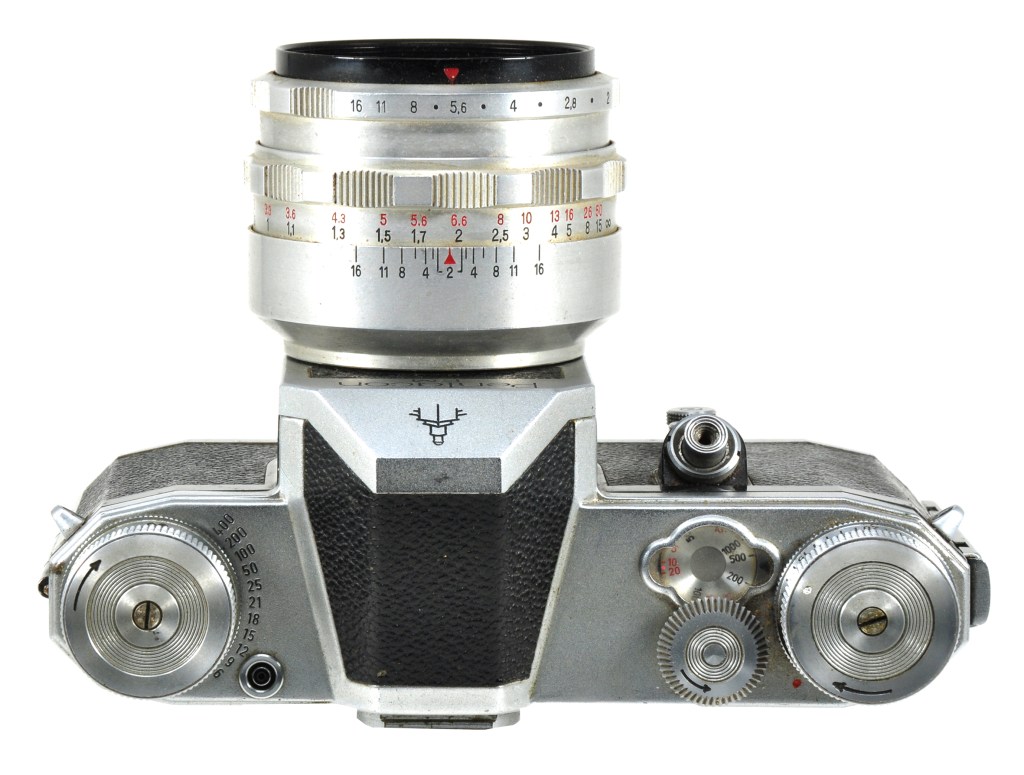
It offers a couple of surprises for the unwary. First is the aperture setting. The control ring is pulled back towards the camera body to set the f-stop. Then, allowing the ring to spring back into position, it is turned again to its widest setting to focus. The aperture then remains wide open until the shutter release is pressed, when it snaps back to the required f-stop. The other peculiarity is the shutter setting. On the top plate, there is a dial with fast speeds in black on the right and slow speeds in red on the left. Fast or slow is first selected using a slider on the back of the body, which introduces an arrow into either the left or the right side of the dial. Then a knob behind the dial is depressed and turned to select the required speed.
Completing the spec is a 58mm f/2 Biotar lens, front-mounted angled shutter release, delayed action lever and split-image rangefinder.
What’s good
- The popular 42mm screw mount allows use of a vast range of lenses.
What’s bad
- Non-instant return mirror, rather dim viewfinder, big and heavy.
Follow AP on Facebook, Instagram, YouTube and TikTok.