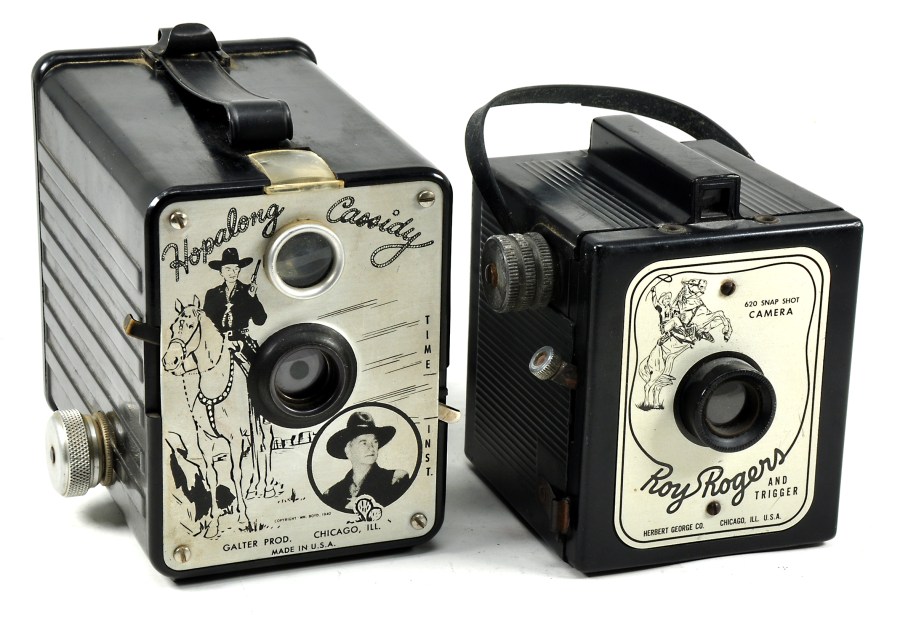
Back in the 1950s, cowboys were a big favourite when it came to films and television. Remember High Noon, Shane, The Searchers, Gunfight at the OK Corral, 3:10 to Yuma, Rio Bravo, Gunsmoke, The Lone Ranger, Have Gun Will Travel, Wagon Train, Cheyenne, Hopalong Cassidy… and many more? With cowboys being a favourite with children it was inevitable that at least two of their heroes would be used to help camera manufacturers persuade parents to buy snapshot cameras for their kids.
- Launched: 1949 and 1950, Price at launch: about £1 (both), Guide price now: Roy Rogers, £25-30; Hopalong Cassidy, £60-80
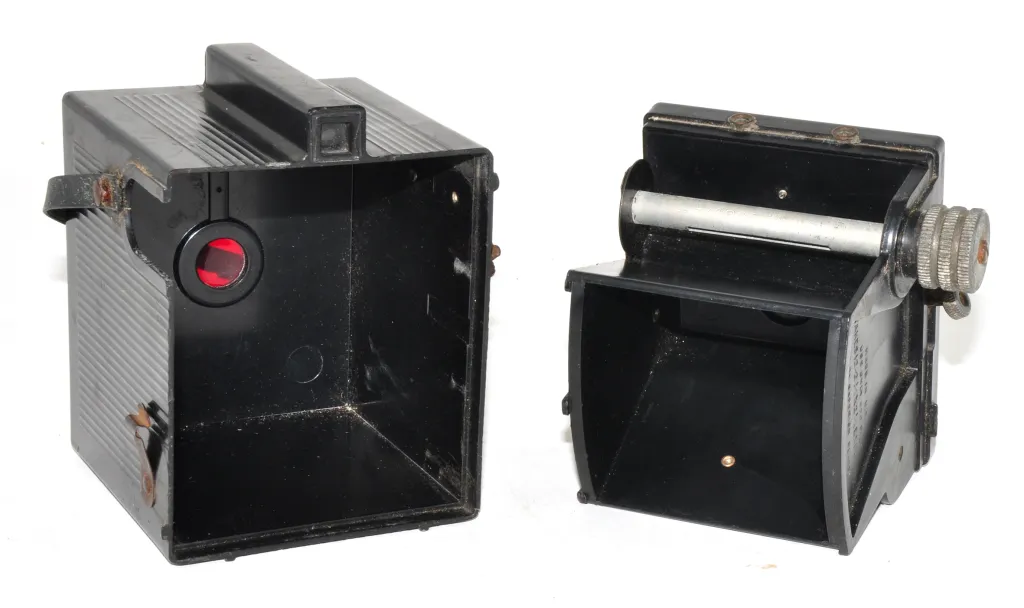
Roy Rogers, also known as ‘the singing cowboy’, appeared along with his horse Trigger, on the metal faceplate of a small box camera made by the Herbert George Company in Chicago. The rest of the body is made of Bakelite with fixed shutter speed, aperture and focus. It has a small eye-level viewfinder on the top of the body and shoots 12 6x6cm pictures on 620 roll film. The same company made a Davy Crocket camera, but these are rarely seen and now very rare.
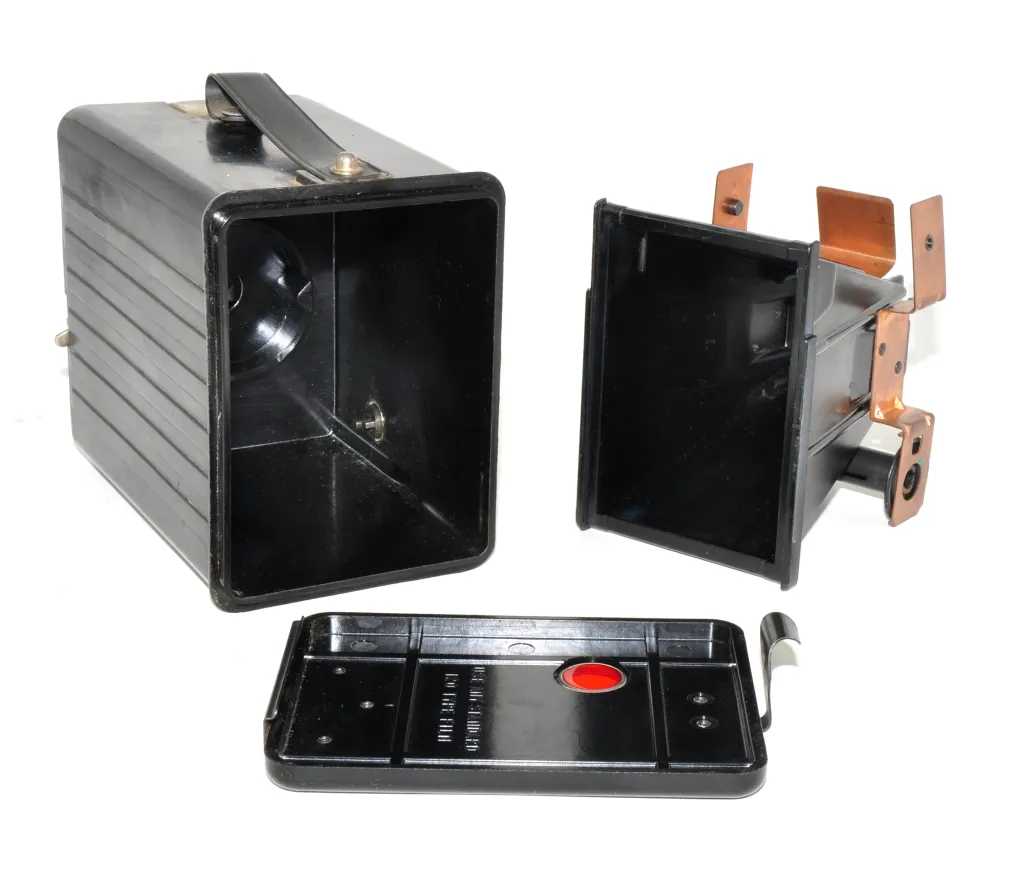
A year after Roy Rogers galloped onto the front of his camera, rival Chicago company Galter Products produced the now rarer and more valuable Hopalong Cassidy camera, again with a Bakelite body and metal faceplate. Resplendent on this is not only Hopalong on his horse, but also a portrait of William Boyd, the actor who played the cowboy. A small waist-level viewfinder sits on top of the body. A choice of time or instantaneous exposures can be selected, otherwise shutter, aperture and focus are all fixed. The camera shoots eight 6x9cm exposures on 120 roll film. A flashgun depicting the cowboy hero was also available.
From day one, these were little more than cheap snapshot cameras. But today, certain types of collectors clamour for them. If you doubt that, look at the launch and current quoted prices above.
What’s good
- Interesting illustrations that show cultural aspects of social history.
What’s bad
- Basic lack of controls means they are of little use to the user.
Related reading:
- The classic Boltavit I – a tiny German film camera
- The world’s first paparazzi camera and other photo rarities are up for sale at this very special Leica auction
- Best keychain toy camera? I try four cheap digital toy cameras, so you don’t have to!
Follow AP on Facebook, Instagram, YouTube, TikTok and Irys.