With its global presence, Samsung needs no introduction. In my house alone we have a Samsung TV, tablet and mobile phones. I also have an empty box to house a misplaced Samsung Galaxy Camera 2. Yes, at one time, the South Korean electronics giant offered an acclaimed, forward-thinking digicam range.
So why have I forgotten Samsung ever made cameras?
Maybe it’s because time speeds up when you first have a child. Coinciding with that period in my life, Samsung introduced the Galaxy Camera. We had one at home and, with its Android operating system and phone-like access to social media, it was the camera my wife most often borrowed to take and share photos and videos of our daughter.
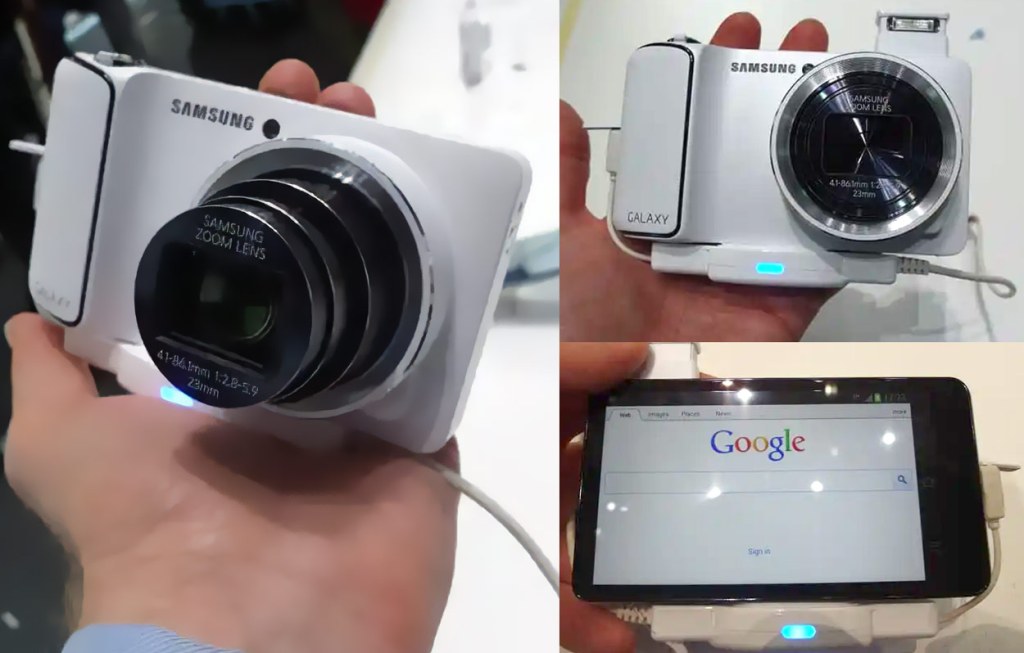
Quickly superseded by a second iteration, the device, with its compelling 21x optical zoom lens and 4.8-inch LCD screen swallowing up the entire back, now feels like a bleedingly obvious proposition yet somewhat ahead of its time.
So, what subsequently went so wrong that Samsung ditched any intention to continue with its camera line up?
With its enviable R&D and marketing power, the South Korean giant certainly gave it a good try – and there were many developmental successes.
From DSLR to Mirrorless
In the mid 2000s, if you were serious about photography then you needed a digital SLR. Coinciding with us buying our first house was the 2006 launch of Samsung’s first DSLR, the GX-1S. It offered a standard-for-the-time six megapixels.
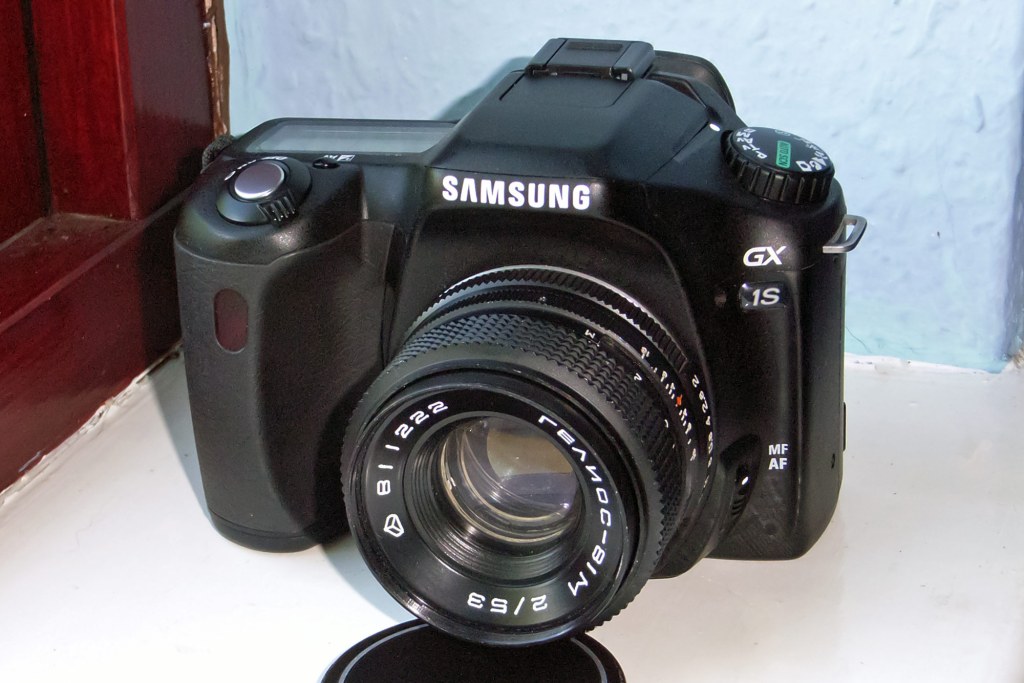
As reported by AP, the camera was born out of a Pentax partnership. Incorporating that company’s KAF-mount, it was based on the Pentax *ist DS2. Attendant features including a 23.5×15.7mm CCD sensor, 11-point AF system, maximum ISO3200, 2.8fps continuous shooting, plus 2.5-inch, 210K dot LCD seem quaint 20 years on. A 10MP Samsung GX-10 followed later that year, this time based on the Pentax K10D.
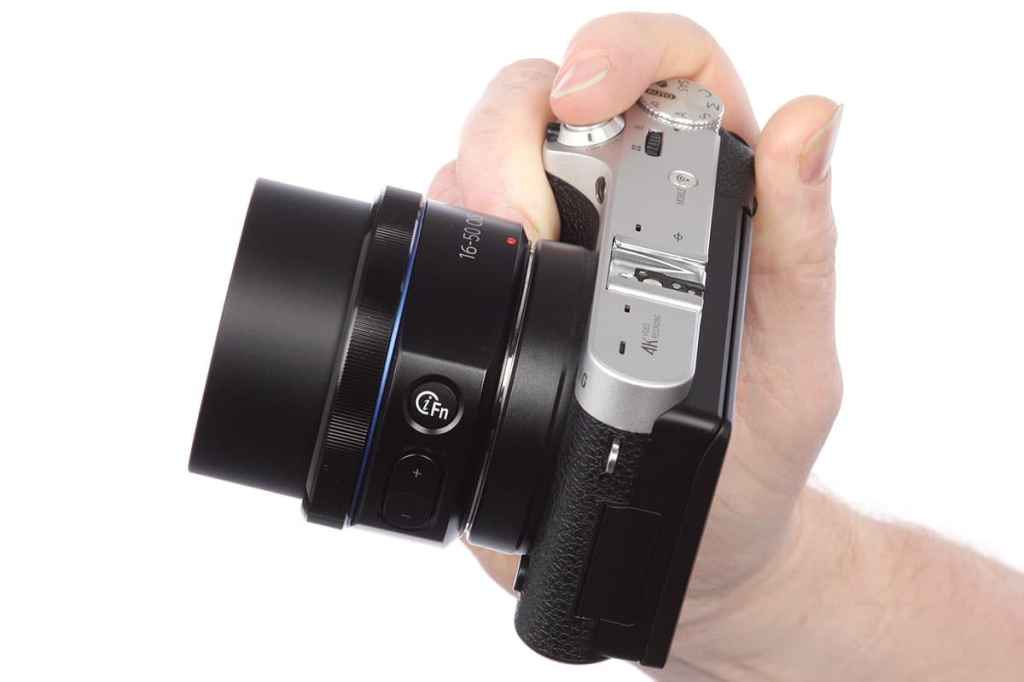
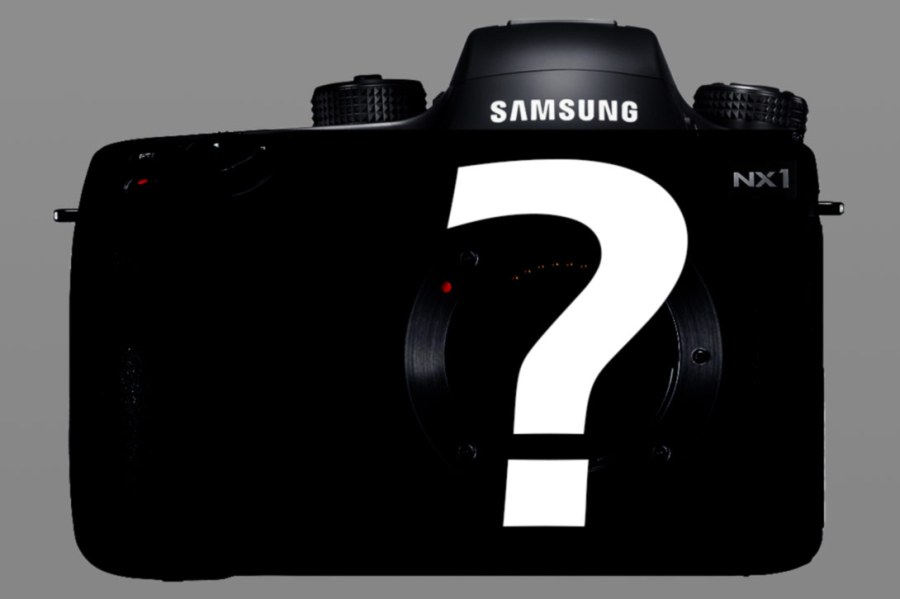
However, rather than the future being DSLR, it quickly transpired that instead it was mirrorless. Thus, Samsung APS-C sensor incorporating NX10 debuted in 2010. This series introduced Samsung’s proprietary NX mount, which continued through to 2015’s last-gasp launch of the compact NX500, not forgetting the previous year’s NX1, from which the NX500 borrowed a sensor.
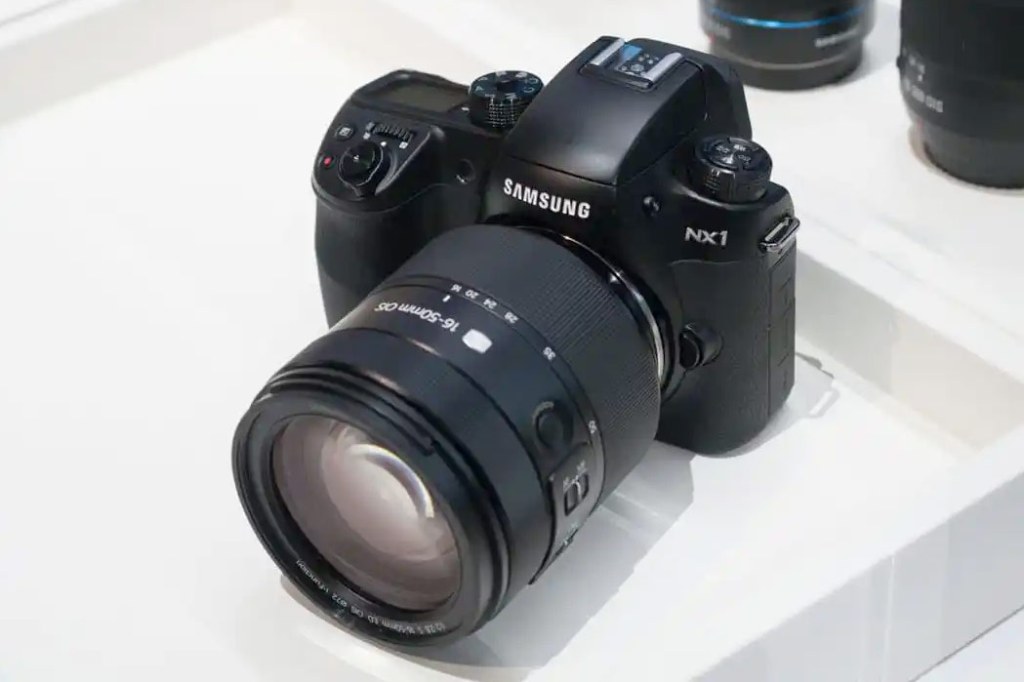
The pro-grade NX1 flagship featured a generous 28MP APS-C BSI CMOS sensor, 4K resolution video recording, plus top plate LCD display. The more affordable NX300 similarly got with the times, in featuring a high-res tilting touch screen.
Point and shoot cameras
But if you want to engage with the mass market, you really need a point-and-shoot camera line-up; something offering an alternative to smartphones. The Samsung Galaxy Camera appeared in 2012.
Placing 16 megapixels from a 1/2.3-inch sensor in our pockets, this simple-to-use yet ‘connected’ camera appealed. It couldn’t make calls, but otherwise operated like a phone, offering a huge touchscreen in lieu of conventional camera controls, plus with the advantage of a generous zoom lens. It was the ‘camera reborn’, boasted its maker.
Though it seemed then that the concept of an Android operating system powered camera had come out of nowhere, Samsung had previous experience with hybrid devices. As early as the year 2000, its SCH-V200 was the world’s first phone with a built-in camera, and there were various compacts with features built-in like voice-recording, MP3 playback, and even “PMP” – personal media player.
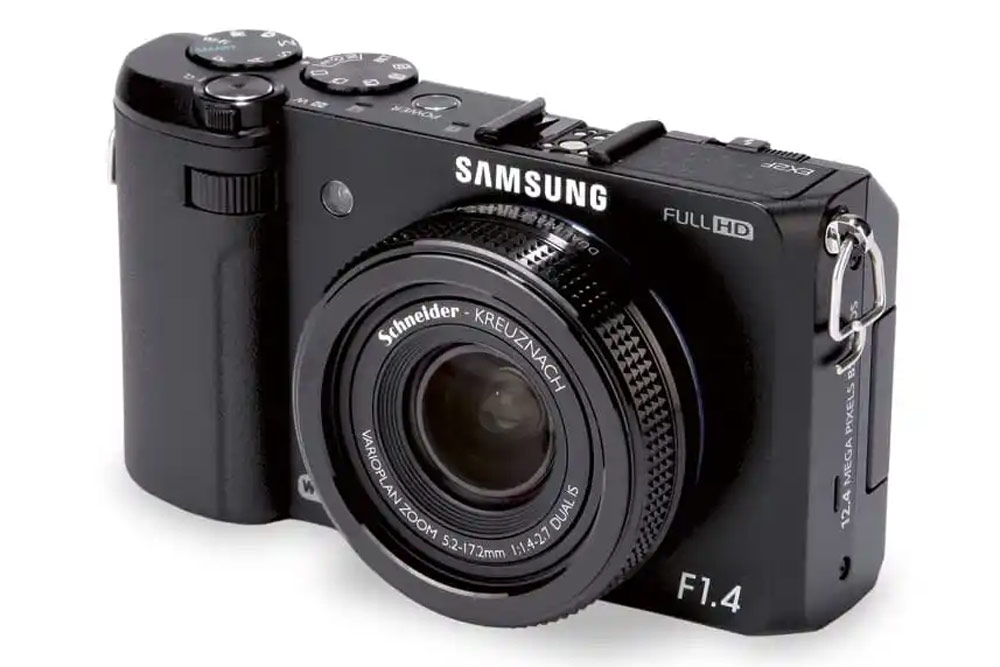
Samsung also had numerous standalone point and shoot cameras, including the long zoom ‘WB’ compact series, which debuted in 2009 and included the WB250F/WB200F, which combined a 14.2MP resolution with 18x optical zoom (some F models included built-in Wi-Fi and some even let you upload directly to Facebook). While these were portable snapshots, enthusiast photographers were catered for by 2012’s premium Samsung EX2F compact with fast f/1.4 lens.
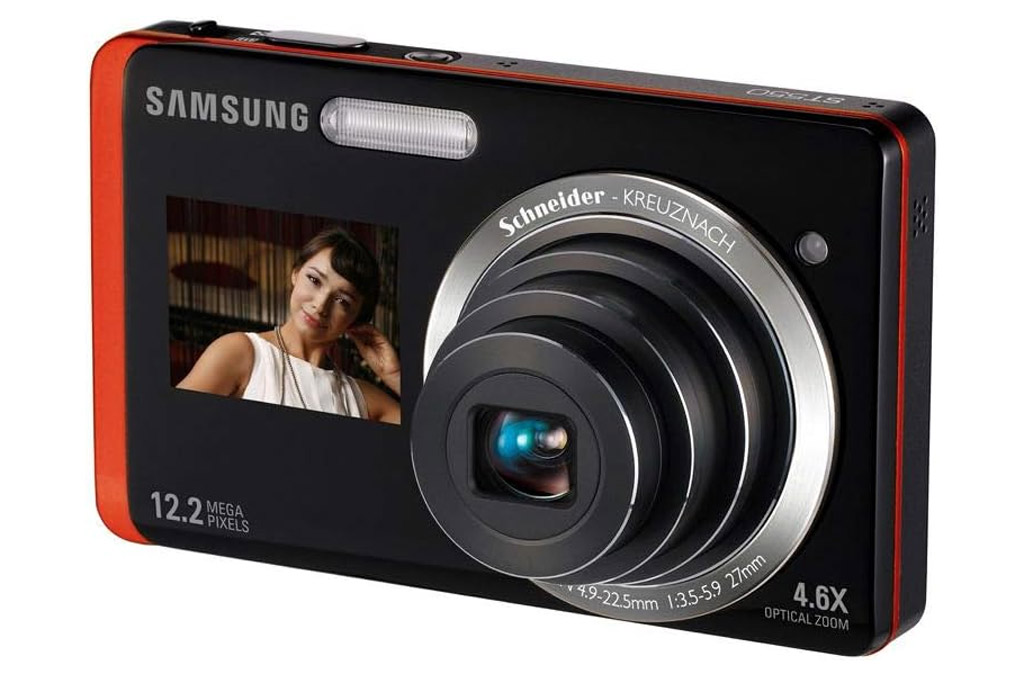
Other notable compact point and shoot cameras include the World’s first digital camera with a front selfie screen – the ST500/ST550 – before screens could face forwards like modern cameras, Samsung decided to add a small selfie-screen on the front. Back when this was introduced it was designed to entertain kids and for group shots, long before everyone became obsessed by taking selfies.
Samsung Galaxy / Android cameras
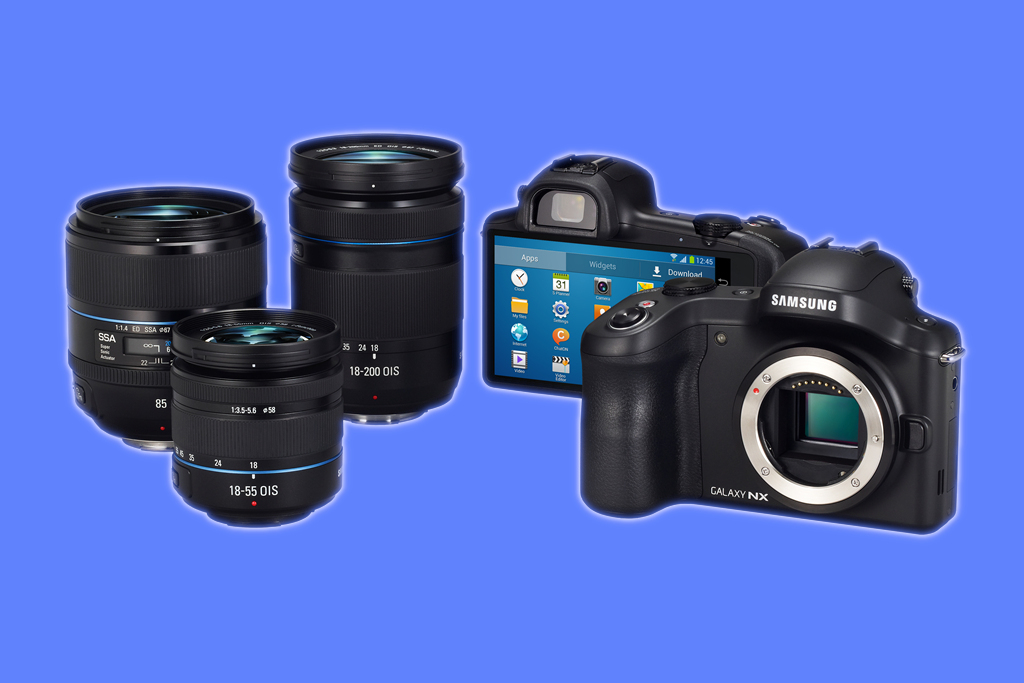
Though on release the Galaxy Camera seemed like an exciting extension of Samsung’s successful Galaxy mobile and tablet range, it petered out after the Galaxy Camera 2 update and, to be fair, attention at this point was already taken up with Samsung’s mirrorless ‘NX’ series. Especially when the brand introduced the world’s first Android operating system incorporating mirrorless in 2013’s Galaxy NX, following the ‘smart camera’ likes of 2012’s NX1000 and 2013’s NX2000, which themselves offered Wi-Fi.
In the final years
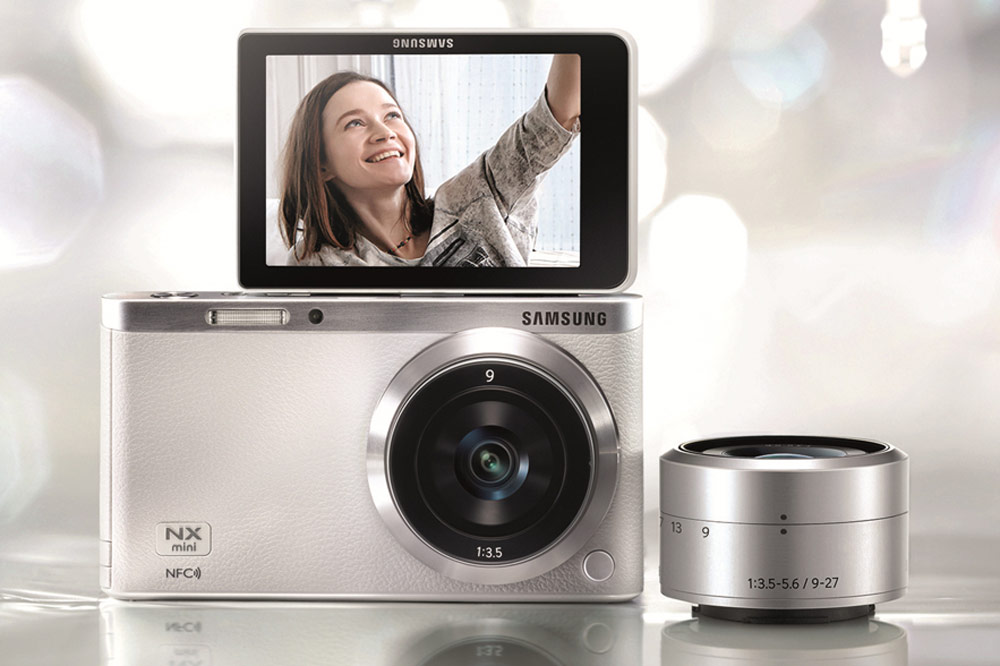
Equally short lived yet enticing, 2014’s Samsung NX mini was claimed as the world’s smallest and lightest interchangeable lens camera with flip-up selfie touchscreen (albeit with only 2 lenses available), and featured a 1inch sensor, like Nikon’s 1 series.
Having developed and launched these interesting products, Samsung’s announcement in late 2015 that it was to gradually phase out its cameras therefore felt abrupt. Especially given it was less than a decade since its first ever DSLR, plus the company had stated in 2008 that it aimed to be one of the top three brands for DSLR within two years.
Still, the official word to AP was: “we quickly adapt to market needs and demands. In the UK we have seen a gradual and sustained decline for standalone digital cameras and camcorders.” That decline was also to be seen globally.
TIMELINE
- 1996: Samsung SSC-410N – VGA (0.3MP) digital camera – Samsung’s first digital compact camera. Before this Samsung made a range of 35mm film cameras.
- 1999: Samsung Digimax 800K – one of the earliest Samsung digital cameras, with 0.8megapixels.
- 2005: Samsung Digimax Pro815 introduced, a “prosumer” camera designed to compete with Sony, Canon, Olympus and Konica Minolta with 15x optical zoom lens, and huge (for the time) 3.5inch screen.
- 2006: Samsung’s first DSLR released, the GX-1S – a rebadged Pentax
- 2008: Samsung’s last DSLR released, the GX-20 – a rebadged Pentax.
- 2009: Samsung release the first compact digicam with a front “selfie” screen – the TL220 and TL225 (ST500/ST550). Other (later) models started the model name with DV – which stands for dual-view.
- 2010: Samsung’s first mirrorless camera released – the NX mirrorless and with aims to ‘out sell’ Canon and Nikon by 2015
- 2012: Samsung Galaxy Camera (GC100) released (August 4G/3G versions available). EX2F released with f1.4 aperture lens.
- 2013: Samsung Galaxy NX released (June) – a mirrorless camera running Android (without the ability to make phone calls).
- 2014: Samsung NX-mini released (March), a mirrorless camera with 1inch sensor, new lens mount and 2 lenses. Samsung NX1 released (September), Samsung Galaxy K Zoom (April, a working smartphone), Samsung Galaxy Camera 2 (January).
- 2015 – February: Samsung’s last mirrorless camera, and last digital camera, the Samsung NX500 announced with 28MP sensor
- 2015 – November: Samsung to axe digital cameras and camcorders in UK (update3)
- 2016: Samsung has stopped making cameras altogether, official tweet suggests
In conclusion
Given we had plenty of shiny new photographic tools from rivals to play with at the time, the end of Samsung digital cameras didn’t feel like the end of the world for camera enthusiasts, or even casual snappers. Plus, there were rumours flying around back in late 2015 – that never came to anything – suggesting Nikon was acquiring Samsung’s NX tech to bolster its own mirrorless offerings; something they later denied to AP back then.
Fast forward to the present, and with snapshot cameras popular with present-day TikTok-ers, should this be the era in which we see the Samsung Galaxy Camera in particular reborn? Second-hand G100 and GC200 originals currently average $110/£100 on eBay.
A decade on, it’s debatable whether anything other than a revisit of Samsung’s Galaxy Camera concept, with bigger sensor and better across the board performance, would gain much traction today.
But with seemingly no end to the number of pictures and video we take and share – and with the concept of content creation having monetised volume – the re-appearance of a truly ‘connected’ Samsung camera doesn’t seem a completely crazy idea, or wish. Especially as there are many people out there, particularly younger people, who don’t want to shoot with a smartphone.
Related reading:
- Samsung NX1 field test – The camera that could have changed the World
- Samsung Galaxy NX – Android mirrorless camera review
- Samsung Galaxy S26 Ultra Review: a minor upgrade, but still class-leading
- 25 years of Panasonic Lumix
Article: Gavin Stoker, with contributions from Joshua Waller.
Follow AP on Facebook, Instagram, YouTube and TikTok.