A major Tate Modern retrospective celebrates Ana Mendieta’s groundbreaking exploration of identity, exile and the natural world. For photographers, it also reveals how the camera transformed fleeting performances into some of the most enduring and influential images of contemporary art.
Amanda Mendieta was exploring questions of identity migration, belonging, ecology and the female body in the 1970s. Over 40 years later, her clarity and originality has rarely been matched. Her work continues to feel astonishingly contemporary and is now the subject of a major retrospective at Tate Modern. Bringing together her celebrated Silueta Series alongside newly restored films, early paintings, drawings and rarely exhibited sculptures makes it the first comprehensive UK exhibition in more than a decade.
For photographers, the Cuban-born American artist occupies a unique place in art history. While often described as a performance or land artist, photography was crucial in how her ideas survived. The camera transformed her interventions into enduring images before wind, rain or tides reclaimed them. They remain some of the most haunting photographs of the late twentieth century.
Earth, identity and exile
When Fidel Castro rose to power in Cuba, Mendieta left, arriving in the United States after being separated from her family during Operation Peter Pan, the mass exodus of over 14,000 unaccompanied Cuban minors to the United States between 1960 and 1962. Born in Havana in 1948, throughout her artistic career, she searched for ways to reconnect. That experience of exile shaped her exploration of lost histories, ancestral cultures and the landscape from which she had been displaced.
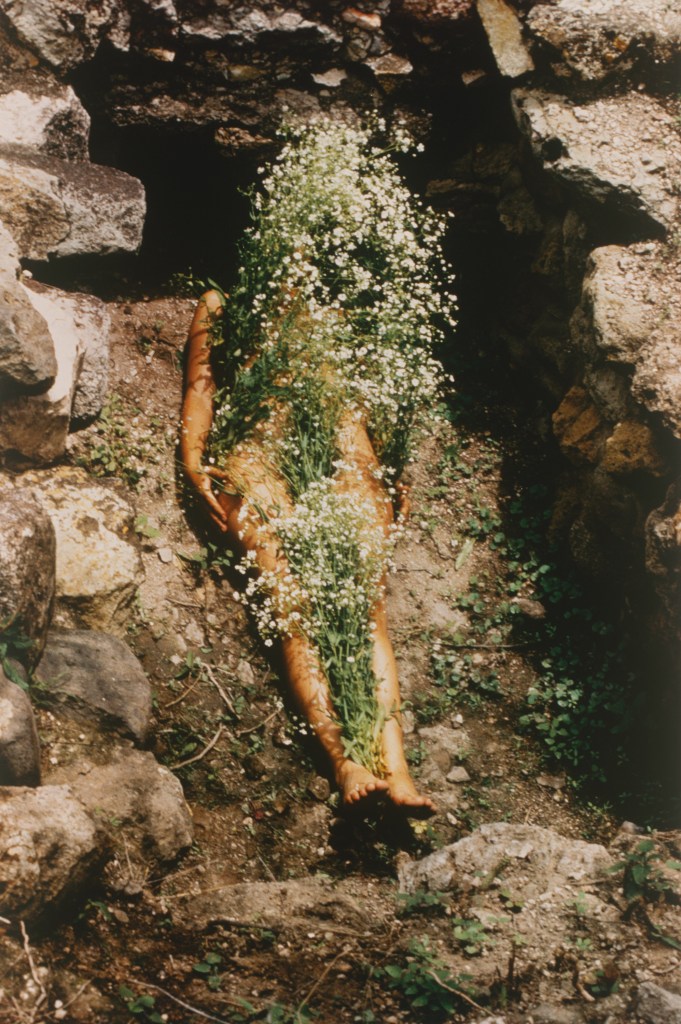
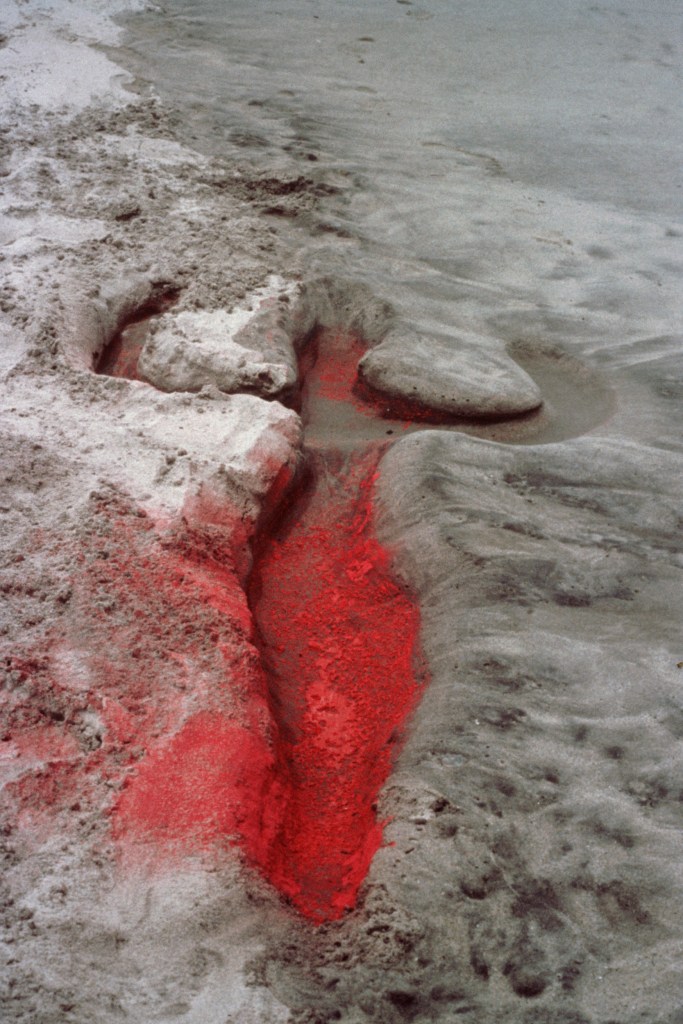
Her Silueta series, begun in 1973 after a visit to the archaeological site of Yagul in Oaxaca, Mexico is the perfect example. Mendieta lay down naked at the site inside an ancient Zapotec tomb. Flowers were studiously arranged around her body until it looked like they had grown straight from the earth. The work, which she later described as “covered by time and history,” became the conceptual foundation for hundreds of related pieces for years to come.
![Ana Mendieta, Untitled (Guanaroca [First Woman]) 1981. © The Estate of Ana Mendieta Collection, LLC. Licensed by Artist Rights Society (ARS), New York / DACS, 2026 / Courtesy Marian Goodman Gallery and Alison Jacques, London](https://amateurphotographer.com/wp-content/uploads/sites/7/2026/07/Ana-Mendieta-Untitled-Guanaroca-First-Woman-19811994.-©-The-Estate-of-Ana-Mendieta-Collection-LLC.-Licensed-by-DACS.jpg?w=751)
A significant part of her recurring visual language was the silhouette. As well as outlining her body with flowers, she used stones, leaves, mud or sand. It blazed with fire or dissolved beneath flowing water. The figure was frequently absent, only the imprint was left within the landscape. This approach prompted viewers to question what defines identity? When presence and absence become inseparable, is it the body itself or the traces it leaves behind?
Reassurting ties with the past
These images Mendieta created are immediately memorable but resist easy categorisation. Their simplicity is deceptive and possesses an almost mythical quality. Ritual, sculpture and landscape align in careful compositions.

Before Mendieta turned to landscape, her early works grappled with questions of confinement, identity and self-image. For example, De película (1969), depicts a female figure compressed within the frame of a strip of photographic film, suggesting both physical and psychological displacement. The comprehensive catalogue that accompanies the show, suggests the painting foreshadows many of the themes that would define her mature practice. It also helps broaden the understanding of Mendieta’s craft beyond her more recognised silhouettes.
She wrote that her repeated return to the earth represented “my thirst for being.” In the early 1980s, for her Esculturas Rupestres series, she visited Cuba to carve female forms directly into limestone caves, drawing on Taíno mythology while reconnecting with the island from which she had been exiled. The landscape became a repository of memory, mythology and belonging through her sculptural interventions. They reveal how her artistic thinking evolved and her attempt to reassert ties that history had fractured.

Rome studio
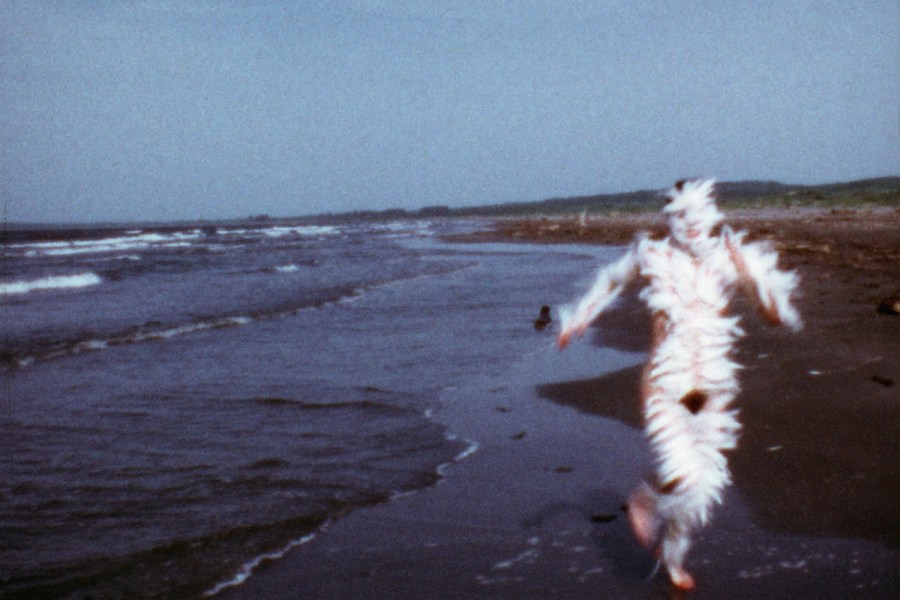
Impermanence underpins Mendieta’s vision rather than being an unfortunate consequence of working outdoors. Tate recognises this and includes recently remastered films of flickering flames, carefully shaped forms eroded by rivers and smoke dispersing into the air. The individual photographs may have become iconic but the films reveal the passage of time that the still photograph necessarily freezes.
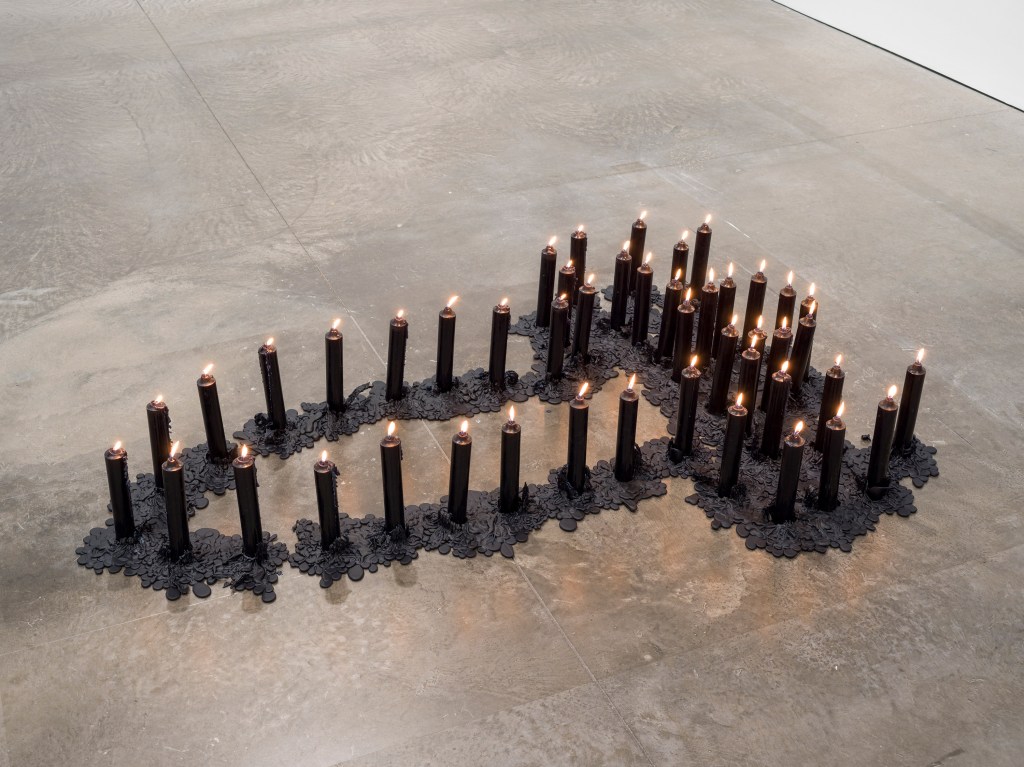
Mendieta expanded on rather than abandoned the themes that defined her earthworks. From her permanent studio in Rome, she experimented with more durable sculptural forms made from earth. She hoped to preserve what she called the “spirit of the work” using sand and natural binders while creating objects that could survive indoors.
Photography as preservation
Mendieta understood that photography could be used for more than documentation. Preserving ephemeral gestures without diminishing their mystery meant the photograph became an artwork in its own right. Her explorations in female identity, indigenous histories, environmental fragility and cultural displacement continue to resonate with artists using photography. Mendieta’s influence now stretches far beyond art today.
On September 8, 1985, at the age of just 36, Mendieta died after falling from the 34th-floor window of her New York apartment. Neighbours reported hearing shouting and a violent argument just before she fell. Her husband, sculptor Carl Andre, was tried for her murder and acquitted. Tate wisely refused to view her life through this tragic lens, choosing instead to represent her as an artist of extraordinary ambition whose ideas continue to have a seismic effect on contemporary practice.
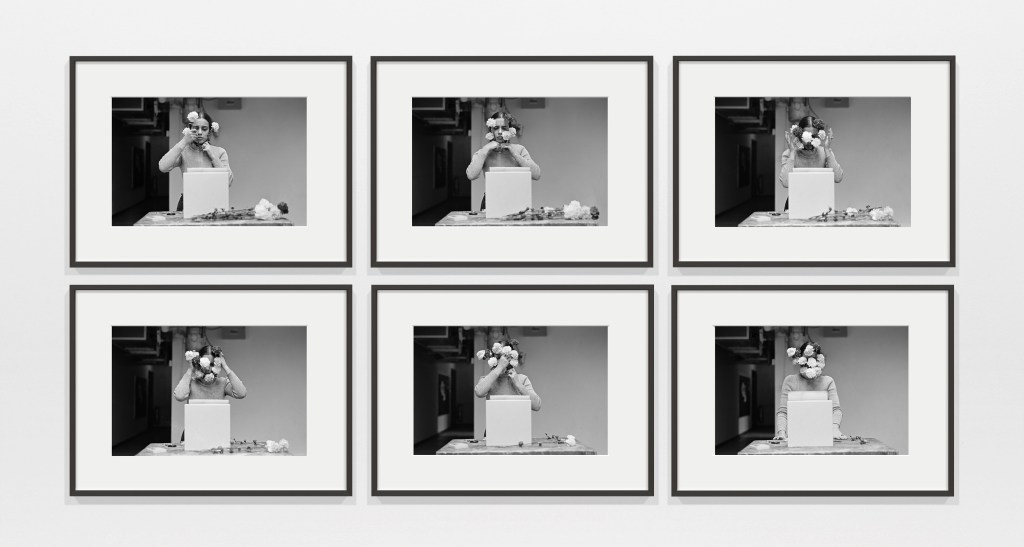
Within the retrospective is a reminder that some of the most enduring photographs are those that record things destined to disappear. Mendieta understood that the earth reclaimed her artworks. Photography ensured they never vanished.
Ana Mendieta at Tate Modern 15 July 2026 – 17 January 2027.
Related reading:
- Best photography exhibitions to see in 2026
- Some of these photographs changed the world – how many do you recognise?
- Only one thing is important in photography, and it’s not the camera – says award-winning photojournalist Giles Duley
Do you want to win some great prizes for your photography? Enter your photos in our International Amateur Photographer of the Year competition. Free entry for photographers aged 13-21.
Follow AP on Facebook, Instagram, YouTube, TikTok and Irys.