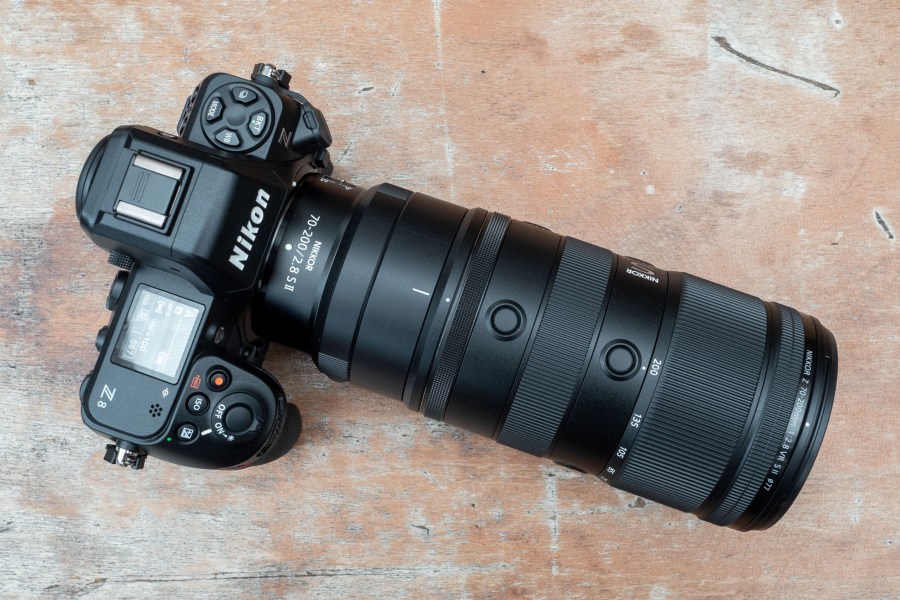
Amateur Photographer verdict
An optically superb lens which truly shows off the capabilities of modern lens design. The lightest in its class yet super fast and super sharp, I’d recommend this lens to most full-frame Nikon users…- Super sharp
- Fast focusing
- Internal zoom mechanism
- Lighter / smaller than before
- Attractive bokeh
- Very expensive
A 70-200mm is a classic lens that usually complements a 24-70mm in many photographer’s kit bags. The newest Nikon 70-200mm f/2.8 VR S II follows on from the original which was released all the way back in 2020. It includes some notable improvements to speed and performance, as well as a reduction in size and weight.
This is a lens aimed squarely at professional photographers – and it has a price tag to match – but for anyone who craves high performance, it’s well worth looking at. Let’s examine further to find out if it will end up on our list of the best Nikon lenses.
Nikon Z 70-200mm f/2.8 VR S II at a glance
- $3196/£2999
- f/2.8 constant aperture
- 70-200mm focal length
- 0.38-0.8m minimum focus distance
- 998g (excluding tripod collar ring)
- Nikon Z Mount
Nikon Z 70-200mm f/2.8 VR S II – Features
A 70-200mm telephoto lens is a favoured choice by many for a fairly wide range of different genres and subjects. They are popular for weddings, events and portraits, but also have use for things like sports and wildlife – particularly if you can get reasonably close to the action – and make for an excellent pairing with a 24-70mm standard zoom lens like the Nikon Nikkor Z 24-70mm f/2.8 S II.
This 70-200mm follows on from Nikon’s first 70-200mm Z lens, which was released back in 2020. Since then, some reasonably big improvements have been made which could make upgrading to the new version fairly appealing, even if you already own the old one.
For this lens, Nikon says that the moving components of both the optics and the internal mechanisms have been completely revamped, giving a 26% weight reduction and a smaller size too. This should make it easier to use handheld, as well as giving it greater flexibility for video work using a gimbal.
Performance wise, the lens now uses Silky Swift Voice Coil Motors (SSVCM) which promise to deliver 3.5x faster autofocus, which is also 50% quieter. It’s also claimed to have a 45% reduction in scan time at the telephoto end of the lens, as well as 40% more accurate focus tracking when zooming. This should make it better suited to tracking moving subjects, such as athletes and so on.

There’s an all-new optical formula for this lens. The number of lens elements has been reduced to 18 (in 16 groups), to include 1 ED glass, 1 Super ED glass, 2 aspherical lenses, 1 aspherical ED glass, 1 fluorite lens and 1 SR lens element. This combination is designed to be lightweight while also producing excellent results, including effectively correcting chromatic aberration.
An 11-bladed aperture is also upgraded. It promises to deliver softer-looking bokeh and attractive out of focus areas – something we’ll take a closer look at in our sample images.
Up to six stops of in-lens Vibration Reduction are included in the lens, and if you mount it on a compatible camera (essentially all of Nikon’s newer full-frame models – Z9, Z8, Z6II, Z5II, Zf or ZR) then you can also make use of Synchro VR for even greater stabilisation at the centre and edges of the frame.
There’s now a shorter minimum focus distance of 0.38m at 70mm, up to 0.8m at 200mm, helping you to get closer to the subject for frame-filling shots. It’s not a macro lens, but maximum magnification is 0.3x at 70mm and 0.25x at 200mm so you can still get some nicely enlarged shots.

Several different coatings are used on the lens, including a Meso Amorphous Coat for anti-reflective qualities and ARNEO and SI coatings to reduce ghosting and flare. It’s also sealed against dust and moisture, with a fluorine front coating to keep the front element clean.
The lens is compatible with Z teleconverters, giving you the opportunity to reach up to 280mm with the TC-1.4x, or 400mm with the TC-2.0x converter, which could make it an even more flexible choice for those shooting events and action.
Nikon Z 70-200mm f/2.8 VR S II – Build and Handling
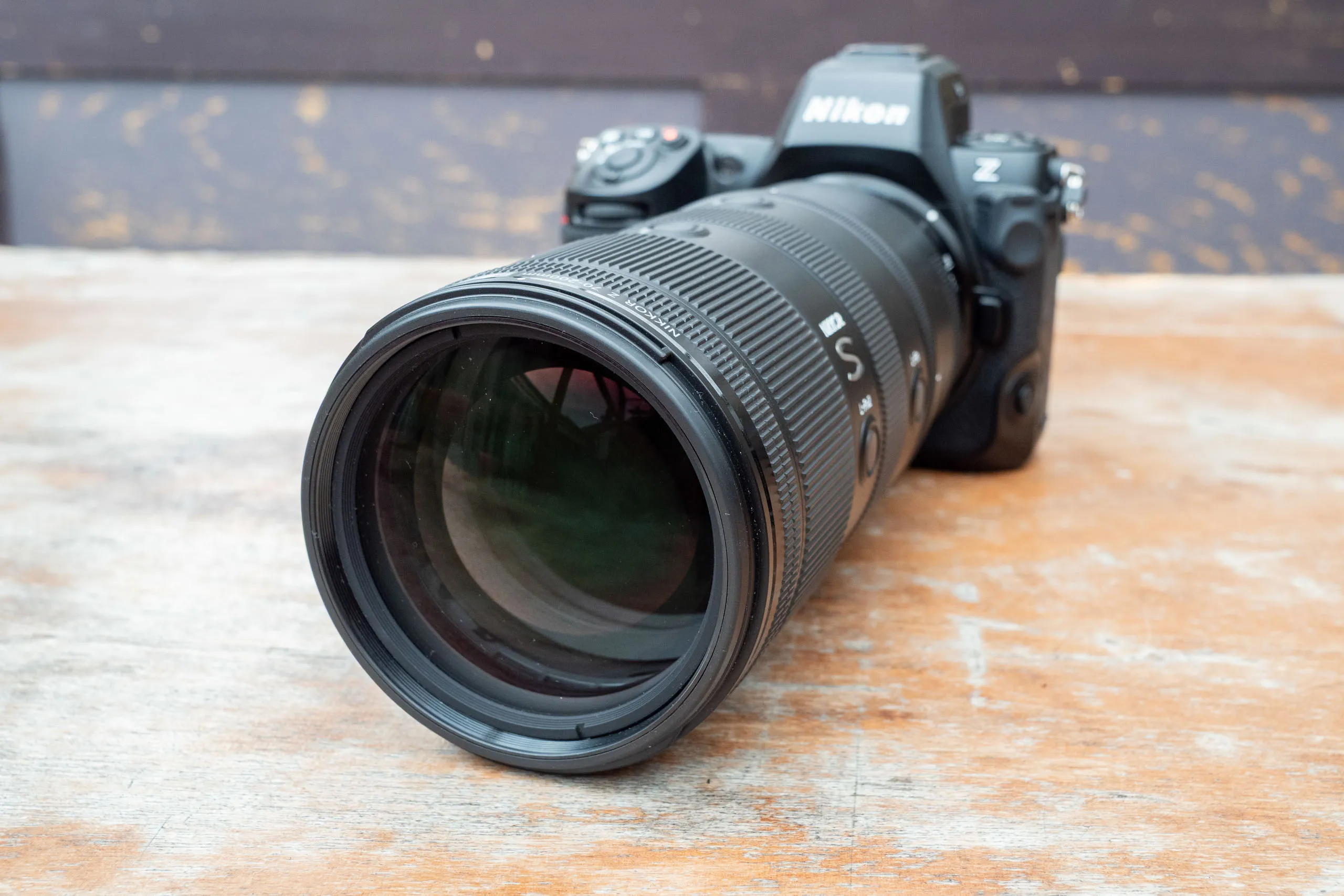
At 998g, the 70-200mm f/2.8 S II lens is 26% lighter than its predecessor. It’s also 12mm shorter, being 90mm x 208mm. Don’t get me wrong, this is not a “lightweight” lens, and it’s probably not something that you’ll want to pop in your bag “just in case”, but it is nevertheless more weight and size efficient than ever before. I’ve been happy to walk around with the Nikon Z8 and the 70-200mm attached to it using a cross-body strap, where previously I’d have likely found that to be a bit burdensome and likely put the camera/lens back in a bag between uses.
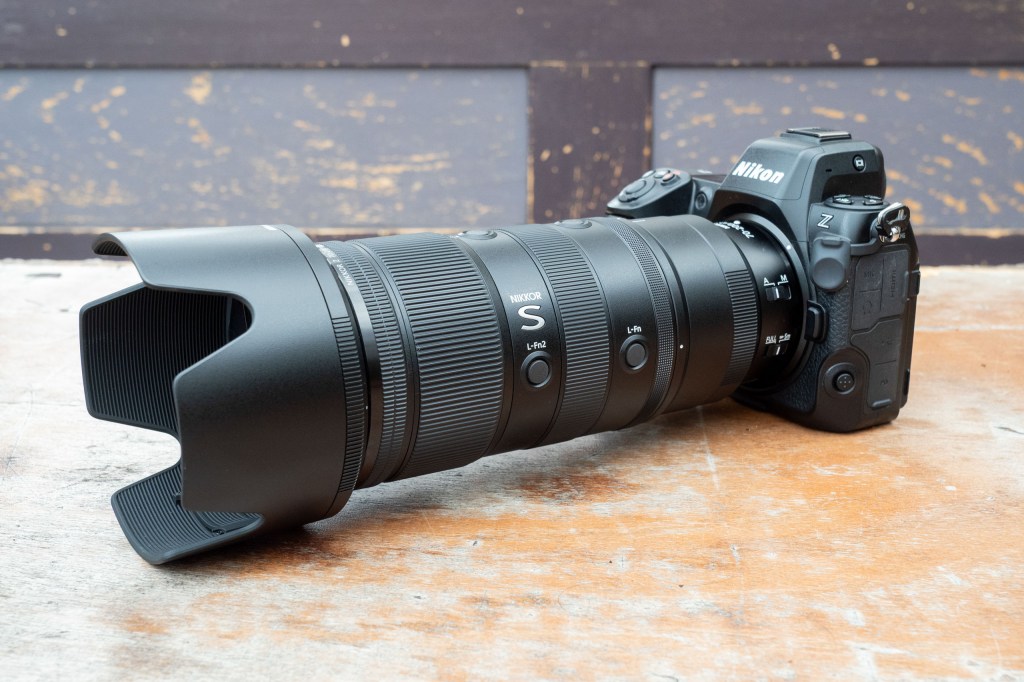
That said, a focal length like this is not really a typical “walkaround lens”. What’s probably more likely is that you’d pair the 70-200mm with at least one other lens, such as a classic 24-70mm, and having both with you to cover most bases would make for a good set-up – not exactly super lightweight, but light enough to be manageable / tolerable at least.
The outer design of the lens is fairly straightforward and simple. One thing which is missing from the previous incarnation is the LCD window displaying the lens settings. I used the previous version and can honestly say I barely looked at that screen, so not having it here doesn’t feel like any kind of omission. Now, of course there may be others who feel differently, but I’d say jettisoning it in favour of weight and size reduction feels like a smart move.
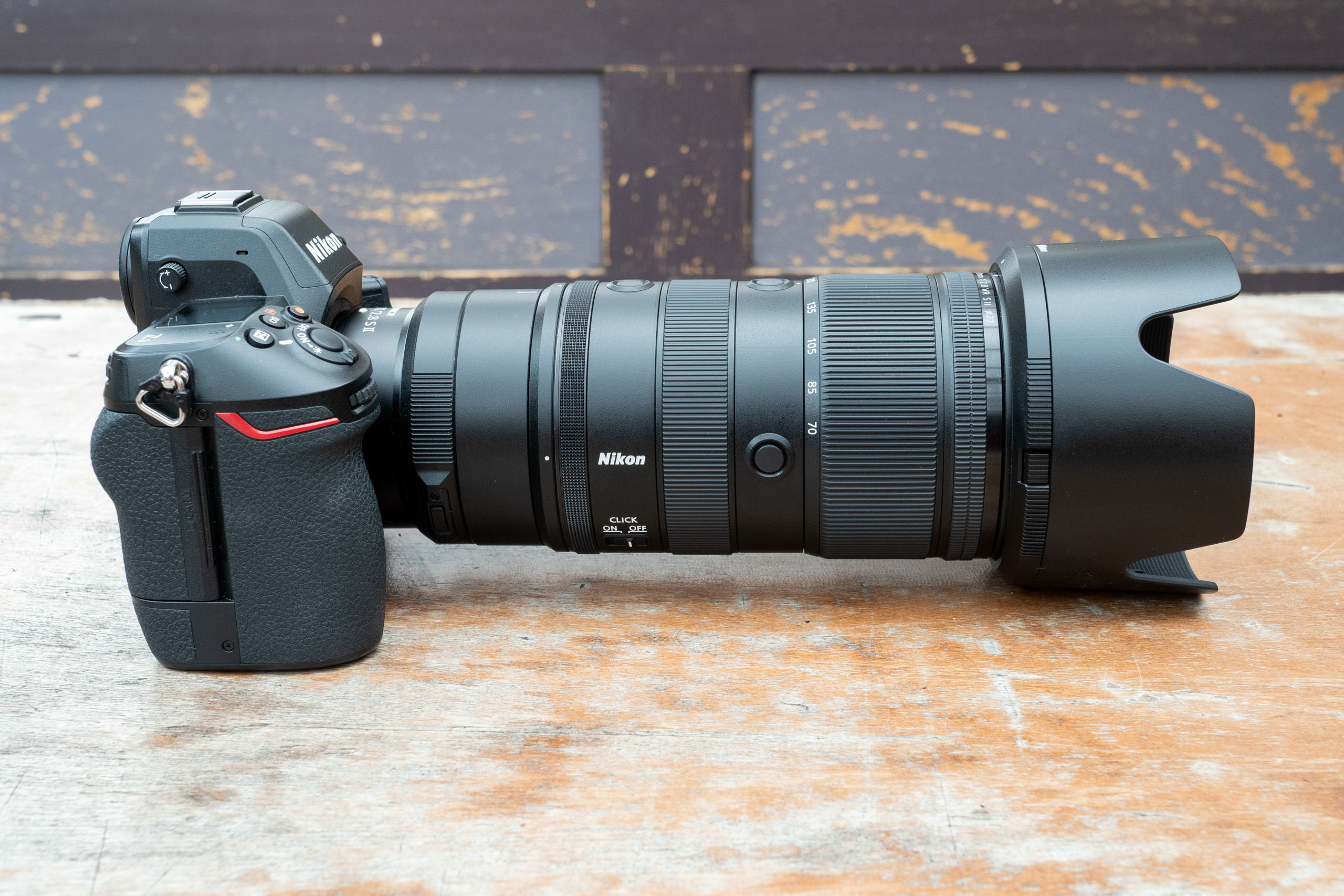
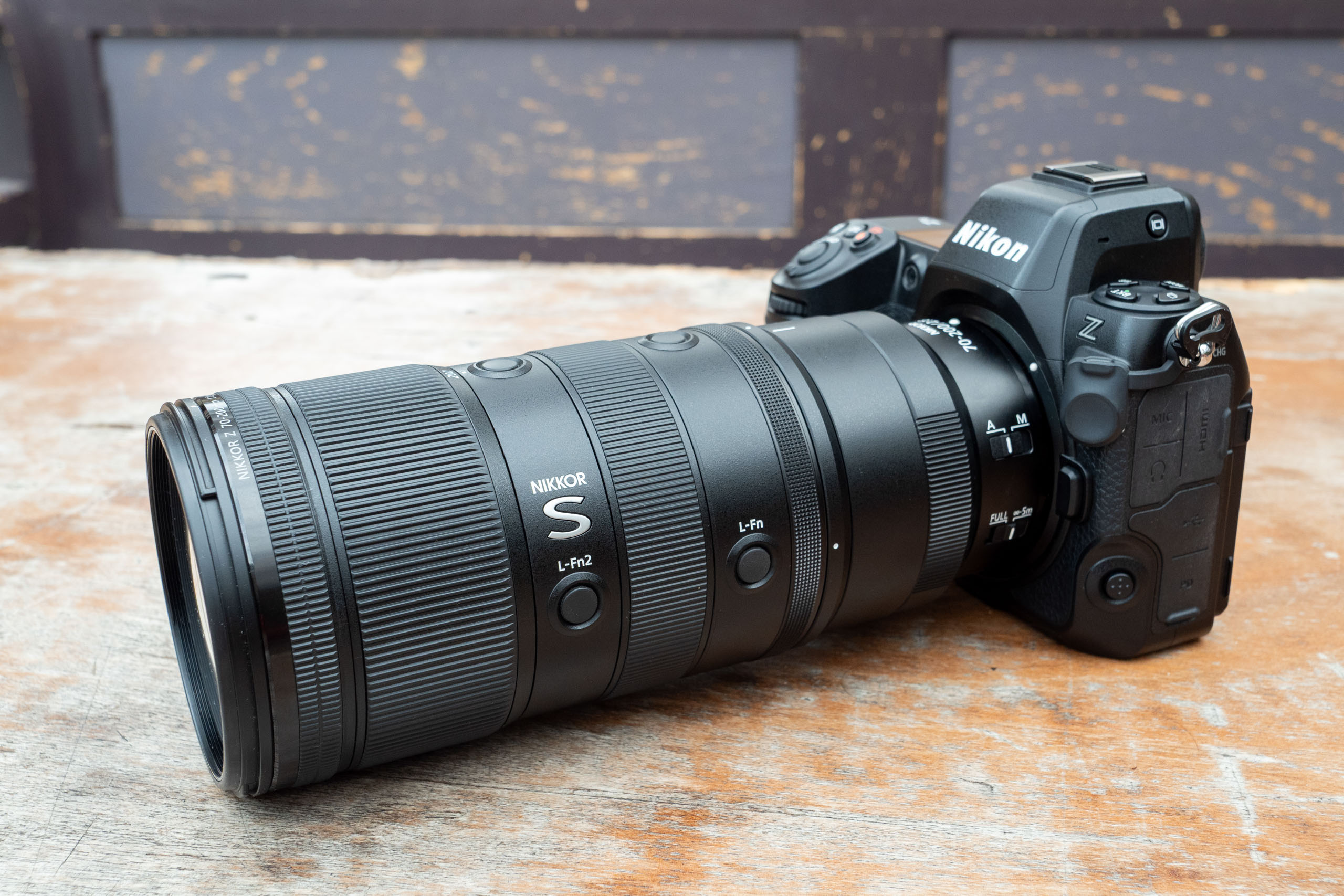
There are three rings, increasing in size as you get further towards the front of the lens. The first, smallest ring is a control ring which can be set to a wide variety of functions from within the camera’s menu. You might want to set it to control aperture for example. You can set the control ring to either click or not – more traditional photographers might prefer the former, while video shooters or those who want to be a bit more discreet might prefer the silence. The second ring, the second largest, is used for manual focusing. It has no hard stops at either end, but it moves with just the right amount of give to make manual focusing easy enough.
Finally, the last and largest ring is the zoom ring. The zoom is internal so the lens stays the same size regardless of which focal length you’re using. That’s also great news for using certain types of filters, but is also handy for keeping the size down and making it slightly less obtrusive. The lens is marked in 70, 85, 105, 135mm and 200mm markers for quickly jumping to the length you want to use.
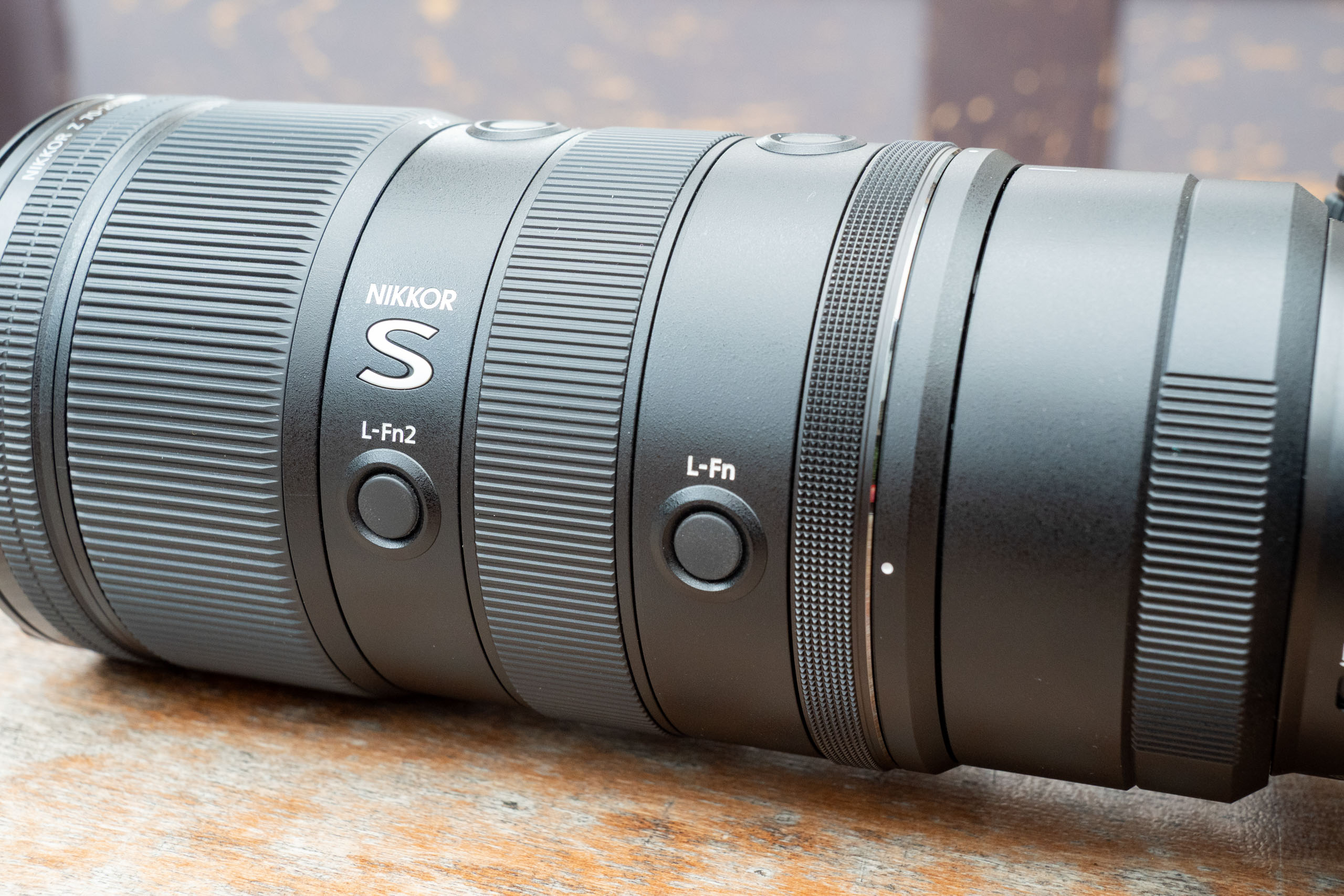
There are two sets of two customisable function buttons on the lens. These can be set to control dozens of different functions. Having two sets means you can use the same button to set the same function regardless of whether you’re shooting in portrait or landscape format and they will do the same job. You could argue that it would be good to have the option to set all four to do different things, but that’s arguably being a bit picky.
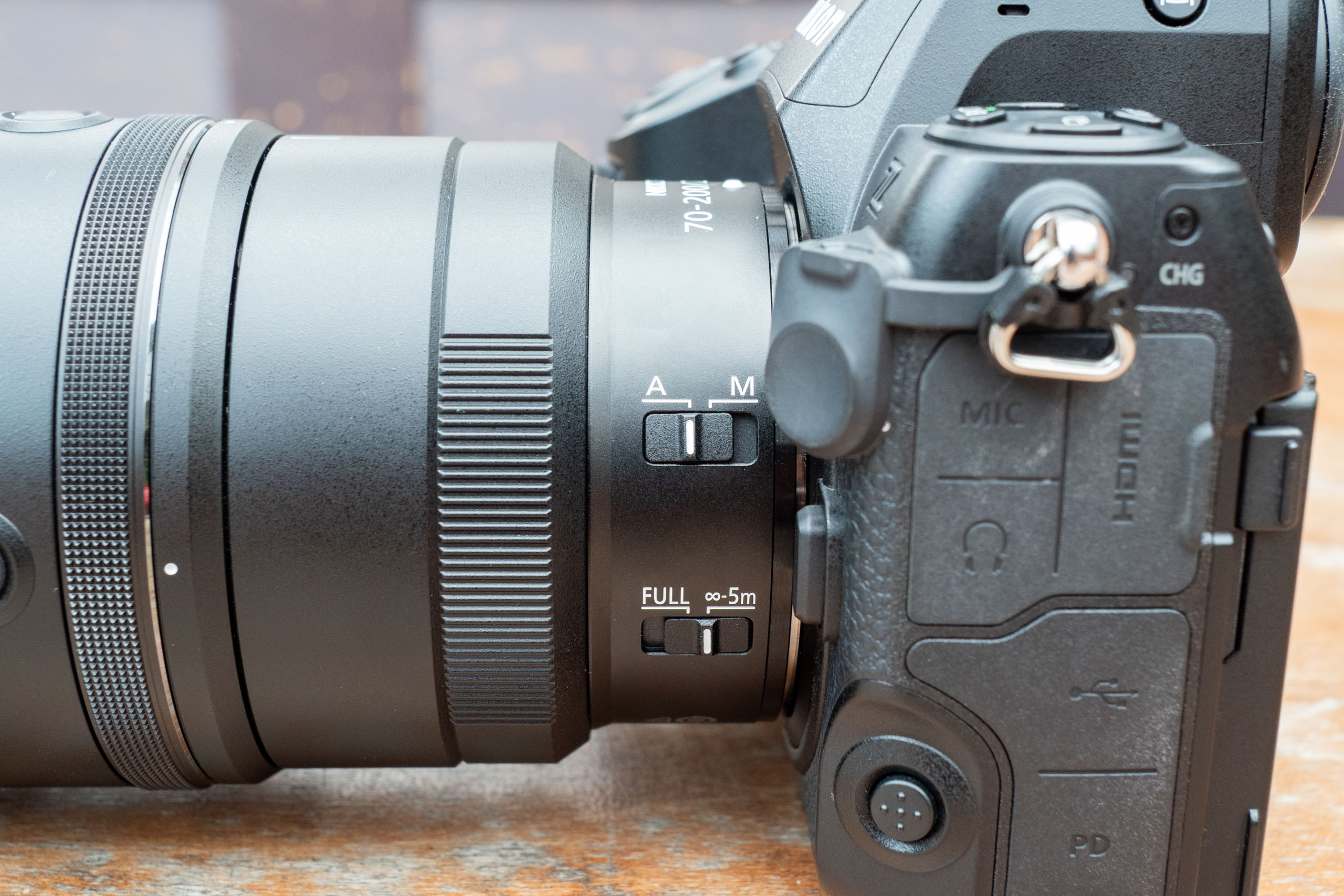
Two switches are found towards the base of the lens. One enables moving between autofocus and manual focus, while the other is the focus limiter, allowing you to choose between FULL and infinity-5m. This can be useful if you’re trying to avoid the lens focusing on subjects which might be close to the lens (in the foreground) of a shot, especially when photographing fast moving subjects.
Included in the box is a tripod foot, which you can use to attach the lens to a tripod for better stability than attaching it to the camera instead. The foot is detachable, so if like me, you’re primarily using it handheld, you can remove it and not have a cumbersome foot in the way. You can hold the foot to help you keep the lens steady when handheld shooting if you like, but I find it’s not really necessary in the modern world of vibration reduction and so on.
If you remove the tripod foot, a “decorative ring” can take its place. It serves no function, but means that the lens looks more “complete” and therefore more aesthetically pleasing.

Also included in the box is a HB-119 lens hood, which can be reversed when not in use to make the overall size smaller and more manageable for packing into a bag. The lens hood comes with a filter window, meaning you don’t need to remove the hood if you’re working with rotating filters, such as variable ND filters for video work.
Nikon Z 70-200mm f/2.8 VR S II – Autofocus
The promised improvement in autofocus seems to be borne out in real-world shooting. Now it’s important to remember that when the original lens was launched, cameras with superb autofocusing capability such as the Nikon Z8 that I’ve been using it with didn’t exist. However I’m pretty confident that if you were to mount the old and new lens models both to a Z8 you’d see a difference in lock-on speeds and tracking capability, which might make the difference between getting the shot and not.
In many situations, I tend to leave the Z8 on wide-area AF and keep eye-focus detect on. That works really well for many of the subjects I’ve been photographing, including portraits and wildlife. However, I did occasionally switch to single point AF if the detection wasn’t quite working as I wanted it to.

Either way, focus acquisition was very quick and impressively quiet. It’s almost impossible to hear even in a quiet room, so in normal shooting scenarios it’s not going to be intrusive at all. With AF-C and tracking focus switched on, I found it kept up with wildlife fairly well, though admittedly I mostly shot fairly placid bird subjects in this test. However, I also photographed my daughter who is anything but, and it also managed to keep up well with her, too.
The minimum focus distance enables fairly close focusing, making it a good choice for things like flower photography, where you can fill the frame fairly well, especially if shooting at the furthest reach of the lens.
Nikon Z 70-200mm f/2.8 VR S II – Image Quality
When a lens has such a high asking price, of course I have very high hopes that it can really deliver the goods.

Happily, the Nikon 70-200mm f/2.8 VR S II lens really can perform exceptionally well, with beautifully sharp and crisp results, and it’s incredibly versatile too. I’ve been using it to shoot portraits, wildlife, flowers, still life and even landscape subjects and it’s done a great job.

The level of fine detail is particularly evident if you zoom in closely to something like one of the bird photographs, where you can see feathers in extreme beautiful detail. Edge to edge sharpness is also maintained very well both across the different focal lengths and across the aperture range.

Turning off lens profile corrections in Adobe Camera Raw reveals that there is a small amount of vignetting in the corners when shooting wide open at f/2.8 in some scenarios. It’s not particularly obtrusive or unappealing to look at though, and is easily removed in ACR. There’s also a very small amount of barrel distortion at the wider angle end of the lens, and some pincushion at the telephoto end, if you turn off the corrections too.

Bokeh is beautifully rendered by this lens, with the 11-bladed aperture producing very attractive results. If you have catch lights then you get nicely rounded bokeh shapes, while otherwise the blur is smooth and creamy. The older lens only had a 9-bladed aperture, so again this is a marked improvement that should be noticeable to most.

The advanced coatings on the lens do an excellent job of delivering the results they promise. I’ve not been able to find any examples of chromatic aberration in my sample images, while ghosting and flare are also extremely well controlled, even when shooting in the direction of strong light sources.
Nikon Z 70-200mm f/2.8 VR S II – Verdict
At over $3000, this needs to be a lens that performs exceptionally well, something that you can rely on to produce great shots time and time again, and one which is also incredibly versatile to give you better value for money.
I’m happy to report that the lens delivers on all three fronts. Sharpness is exquisite, and the focusing speed of the lens also helps you to get those shots that something cheaper would struggle to achieve – that’s especially true if you want to photograph moving subjects with any frequency.

I also surprised myself by just how many different subjects you can photograph with a lens like this. I used it for a lot of portraits, which is a classic choice for the focal lengths mentioned, but it was also great for wildlife, flowers, still life and picking out areas of a landscape. I’d never thought to only take out a 70-200mm as my only lens before, but that’s exactly what I did for the purposes of this review and it was more versatile than I imagined it would be.
Most people will likely pair it with a 24-70mm, and you could also add a 14-24mm for the “ultimate trinity” to cover pretty much most scenarios if you like. If you’ve got the kit bag and the budget to stretch to that kind of setup, then you’re truly living the dream.

If you’ve already got Nikon’s original Z 70-200mm lens, there are some improvements here to think about. The original was a great lens (and it still is), but if you’re a professional who wants the best of the best, the speedier autofocus, the better bokeh and the reduction in weight might just tip you over into being ready for an upgrade – I’d recommend selling or trading in your old one to take the sting out of the upgrade price.
Overall, this is a superb lens and while it might be expensive, sometimes you get what you pay for – this is one such example of that. Try to consider the value here too of being able to cover off a number of different subjects with one lens – it’s not a niche lens and you may find you use it often enough to justify the outlay (at least that’s what I’d be telling myself if I was buying it anyway).

Nikon Z 70-200mm f/2.8 VR S II – Full Specifications
| Specifications | Nikon Z 70-200mm f/2.8 VR S II |
|---|---|
| Price | $3196/£2999 |
| Filter Diameter | 77mm |
| Lens Elements | 18 |
| Groups | 16 |
| Diaphragm blades | 11 |
| Aperture | f/2.8-f/22 |
| Min focus | 0.38m (wide), 0.8m (tele) |
| Length | 8.2 in. / 208mm |
| Diameter | 3.6 in / 90mm |
| Weight | 2 lb 3.2 oz / 998 g (without tripod collar ring) |
| Lens Mount | Nikon Z |
| Included accessories | Caps, hood, case |
Related reading:
- Nikon Nikkor Z 24-70mm f/2.8 S II review – Is this the best everyday zoom lens on the market?
- Nikon Nikkor Z 35mm f/1.4 Review – Brighter is not always better
- Sigma 24-70mm F2.8 DG DN II Art Review – Perfect zoom lens
- New Nikon Nikkor Z 85mm f/1.8 S lens for Z series mirrorless
Do you want to win some great prizes for your photography? Enter your photos in our International Amateur Photographer of the Year competition. Free entry for photographers aged 13-21.
Follow AP on Facebook, Instagram, YouTube, TikTok and Irys.