Amateur Photographer verdict
An excellent first drone that’s small, easy to fly and stays stable in a breeze. Features like Active Track and auto shooting provide further help novices.- Excellent 4K video quality
- Effective obstacle sensing and subject tracking
- Useful 42GB internal storage
- Fine detail is slightly soft in 48MP raw images
- JPEGs can look over-processed
- ND filters cost extra
The DJI Lito X1 is the more advanced of the two models in DJI’s beginner-focused Lito range, sitting above the less expensive Lito 1. However, although it is aimed at first-time drone users, its specifications are far from basic. It has a 1/1.3-inch 48MP sensor, omnidirectional obstacle sensing, forward-facing LiDAR and ActiveTrack subject tracking, while its standard takeoff weight is approximately 249g. Impressively small and affordable, it might even make it into our guide as one of the best budget drones for photography, so let’s take a closer look.
DJI Lito X1 review at a glance:
- Price: $379 / £369
- 1/1.3-inch 48MP CMOS sensor
- 24mm equivalent f/1.7 lens
- 4K video at up to 100fps
- Omnidirectional sensing with forward-facing LiDAR
- Up to 36-minute flight time
- 42GB internal storage
- Website: dji.com
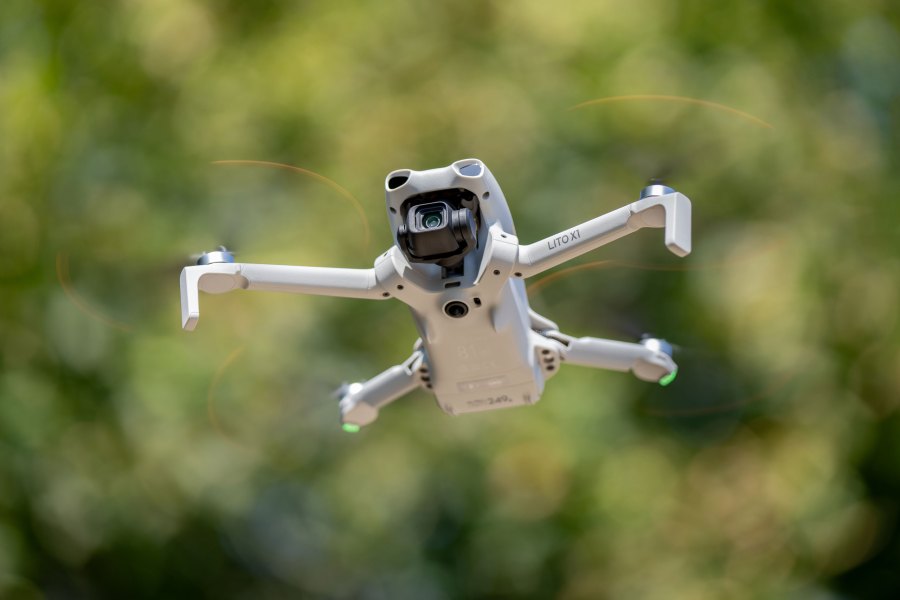
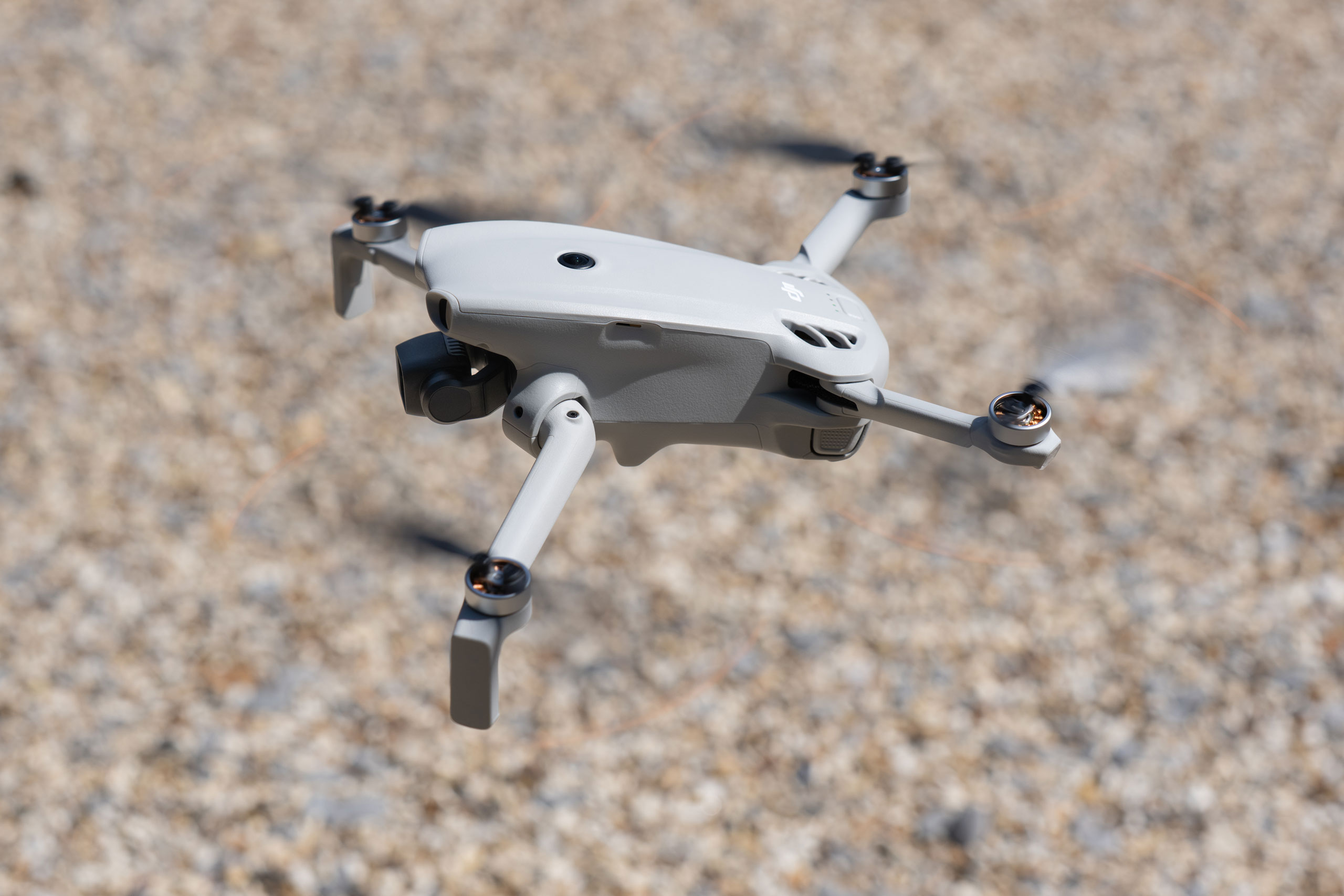
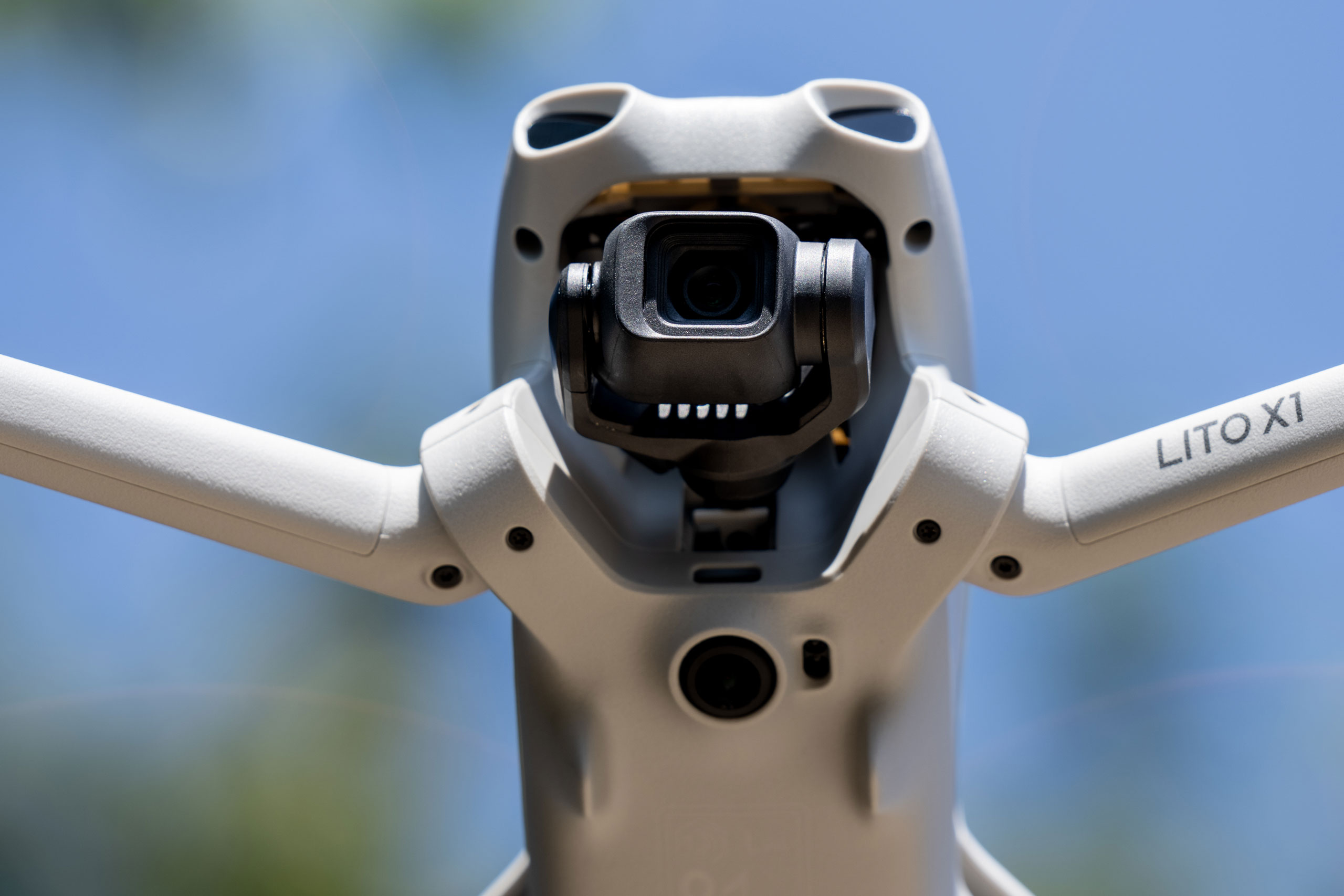
The Lito X1 is compact and easy to transport. Its four arms fold against the body, so it slips easily into a bag without taking up much space.
The Standard Kit comes with DJI’s RC-N3 controller, which uses a connected smartphone to display the camera feed and give access to the settings. Meanwhile, the £599 Fly More Combo comes with the RC 2 controller, which has its own screen, making life a bit easier, but adding cost.
DJI Lito X1 – Key Features
- Safer flying: Omnidirectional sensing and forward-facing LiDAR help the drone detect obstacles.
- Large images: The 48MP sensor produces 8064 x 6048-pixel JPEG and DNG files.
- Smooth tracking: ActiveTrack can follow a moving subject at up to 12m/s.
- Useful storage: There’s 42GB of internal memory as well as a microSD card slot.
- Automated flying: There’s a collection of automatic flying options to make it easy to get great footage.
DJI Lito X1 – Easy to fly
DJI is very good at making its drones easy to fly, and the Lito X1 is no exception. The controls are responsive without feeling too sensitive, and despite its low weight, the Lito X1 also copes remarkably well with a breeze. You may see the aircraft being buffeted around, but the gimbal does a good job of compensating, and the footage is smooth.
The omnidirectional vision system helps the drone detect obstacles around it, while the forward-facing LiDAR improves its ability to assess what lies ahead. It’s reassuring when flying towards trees, walls or other potential hazards, but it doesn’t reliably avoid objects immediately above the drone, so you need to take particular care around overhanging branches. As ever, the obstacle-sensing system shouldn’t be regarded as a replacement for careful flying.
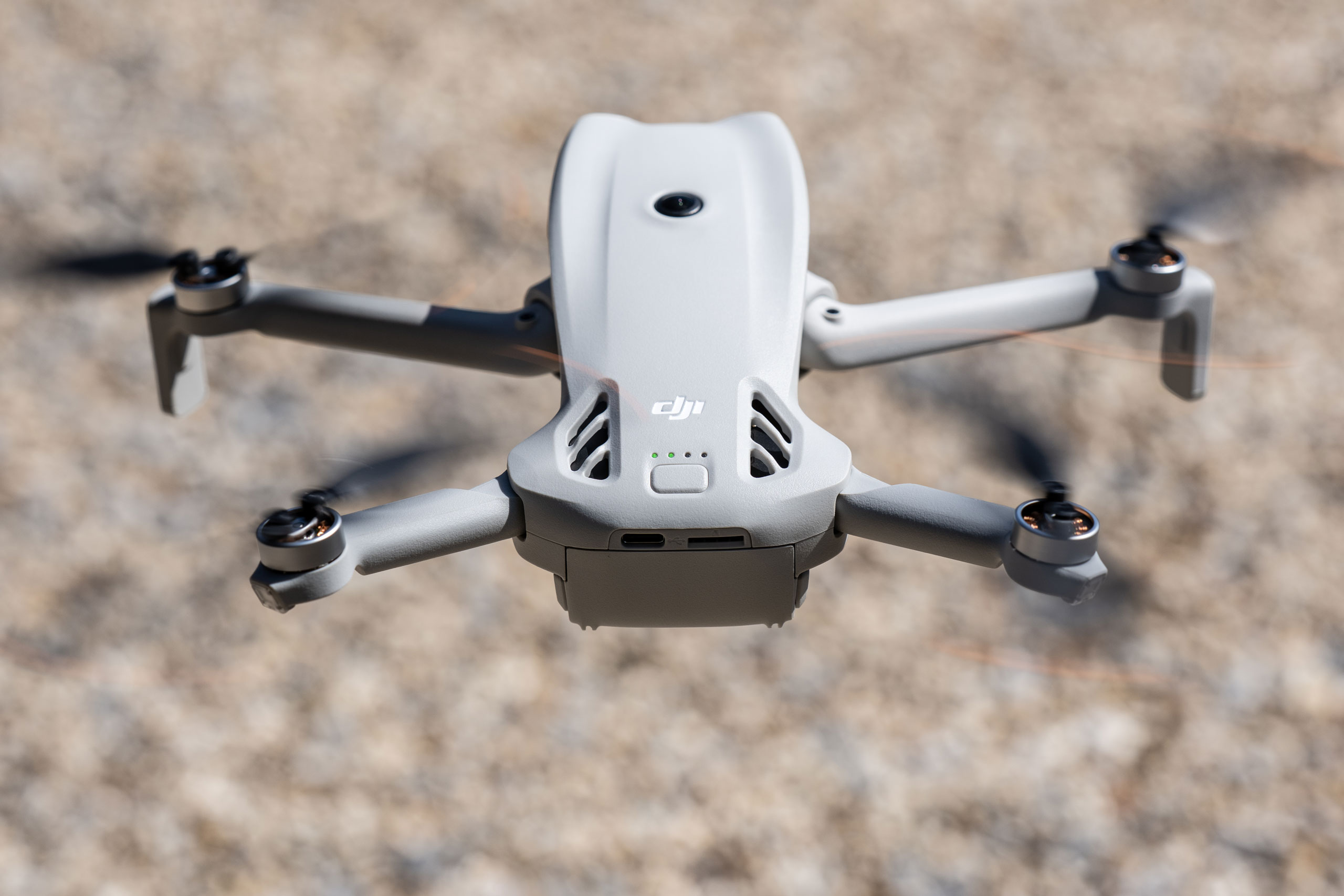
The drone’s small size means it is very easy to lose against a bright or overcast sky at around the maximum permitted flying height of 400ft. Consequently, you need to pay close attention to maintain unaided visual contact.
ActiveTrack is useful when you want the drone to follow a person or vehicle, while QuickShots and MasterShots perform a selection of automated camera movements. They’re fun to use and make it easy to produce polished-looking clips, although the resulting footage can seem rather brief. Panorama and Hyperlapse modes are also available for creating more ambitious results without requiring advanced flying skills.
DJI Lito X1 – Image quality
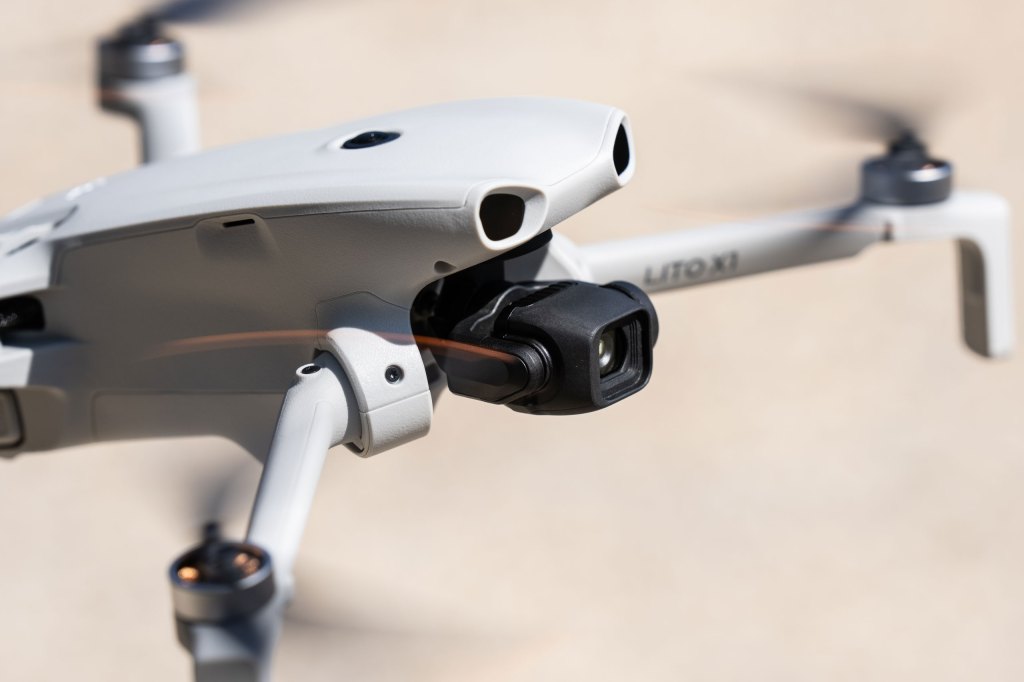
The Lito X1’s camera has a 1/1.3-inch CMOS sensor with 48 million effective pixels and a 24mm equivalent f/1.7 lens. It can capture 12MP or 48MP still images in JPEG and DNG raw format, while video can be recorded at up to 4K/100fps. There’s also 10-bit D-Log M recording for anyone who wants greater flexibility for colour grading.
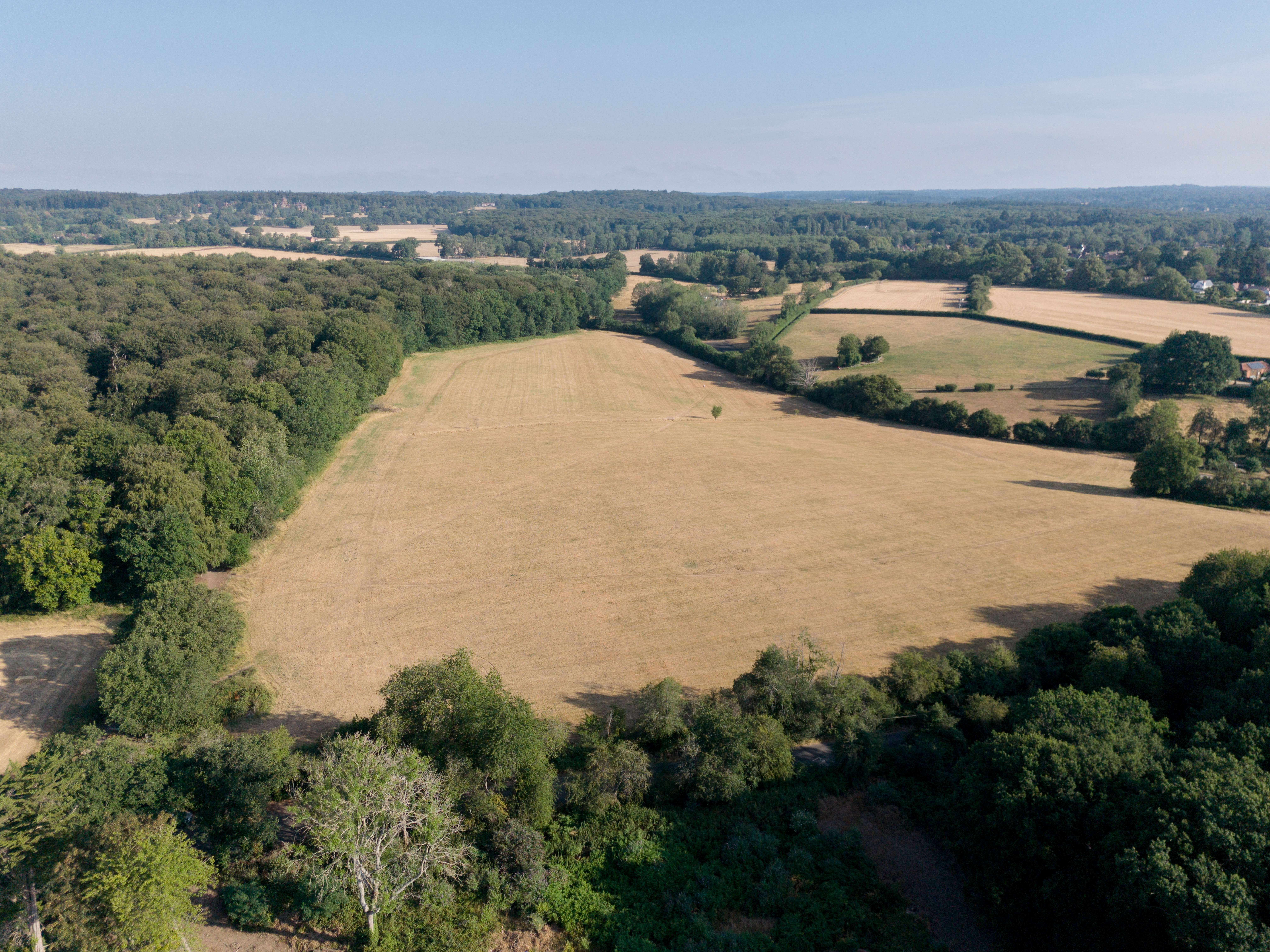
I found the 4K footage excellent, with plenty of detail, attractive colour and no major issues to report. Movement looks smooth and the gimbal keeps the horizon steady, even when the drone is being pushed around by the wind.
However, the lens aperture is fixed at f/1.7, so ND filters are essential if you want to use suitably slow shutter speeds when shooting video on a bright day. DJI sells a set separately, but it would be good to see at least one included with the standard kit.
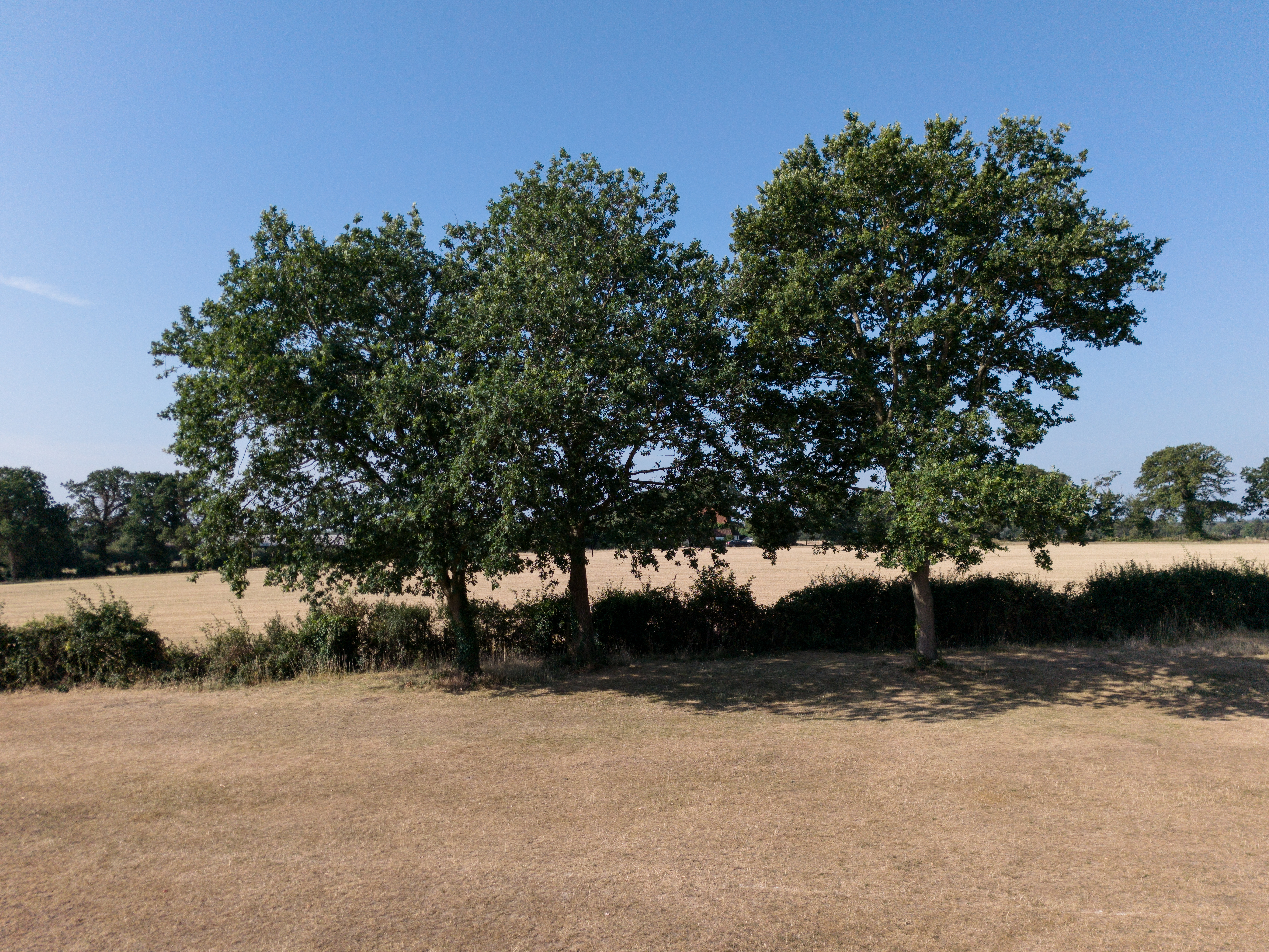
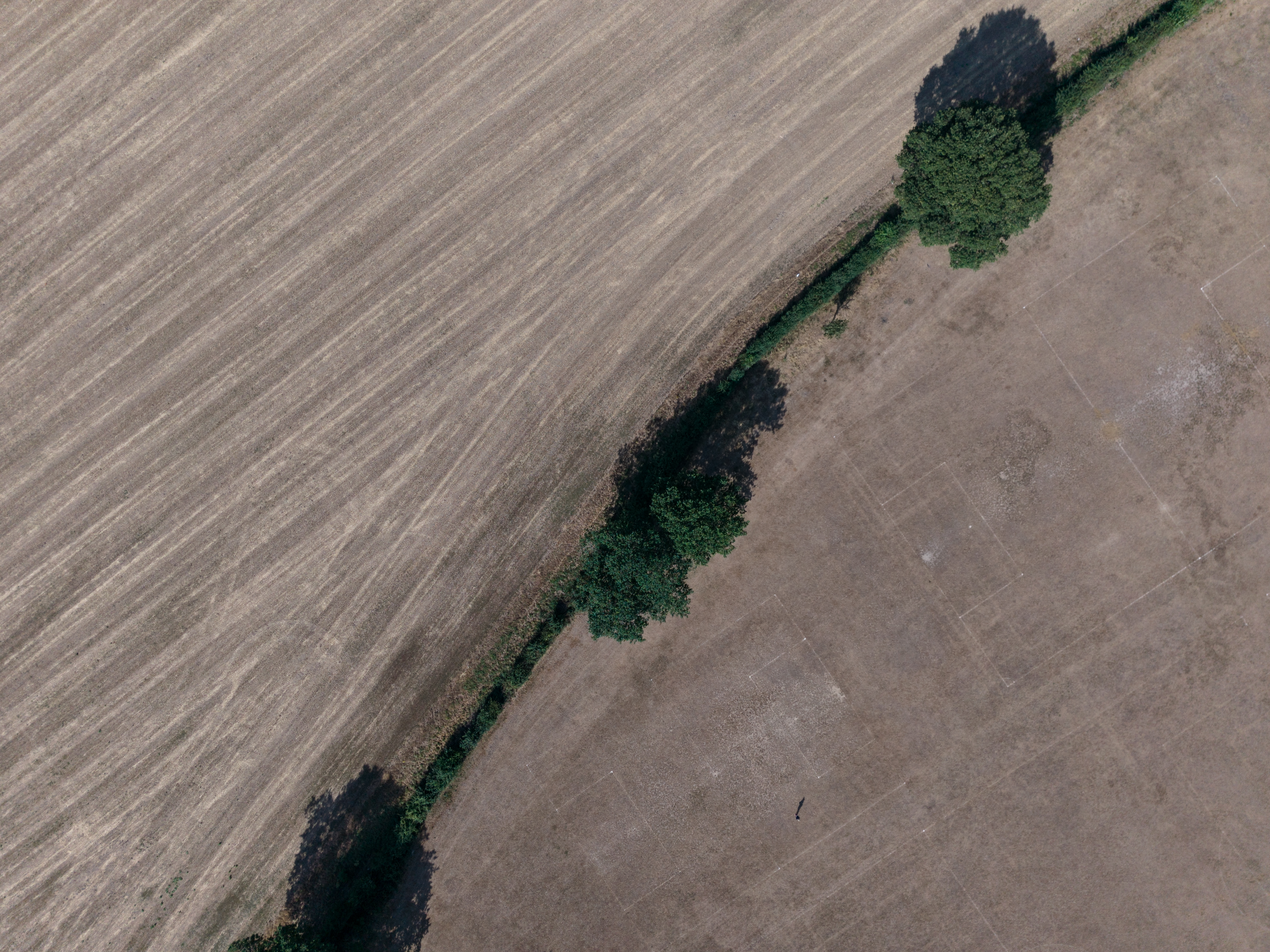
The 48MP still images look good at sensible viewing and printing sizes, although some fine details appear a bit soft when raw files are inspected at 100% on screen. The JPEGs are crisp and vibrant, but can look over-processed close-up. Conversely, the simultaneously captured raw files are flatter, but respond well to a little gentle sharpening and tonal adjustment.
DJI Lito X1 – Flight time and storage
DJI quotes a maximum flight time of 36 minutes with the standard Intelligent Flight Battery, although I found around 25 minutes a more realistic typical figure. I was able to fly for around 28 minutes by ignoring the low-battery warnings for a short while before landing.
The 42GB of internal storage is another welcome feature. It means you can record a significant number of images and plenty of video without a microSD card. Files can also be transferred over Wi-Fi 6 or by connecting the drone directly to a computer via USB-C.
DJI Lito X1 – Verdict
The DJI Lito X1 is an excellent first drone, but it has enough features and imaging capability to keep users happy once they have mastered the basics. It’s easy to fly and stable in a breeze, while ActiveTrack, the automated shooting modes and the reassuring safety features are likely to be of enormous value to its target audience of first-time flyers. The 4K video is excellent and the 48MP raw files respond well to processing, although fine detail can look slightly soft straight from the camera.
Overall, it’s a capable and enjoyable compact drone at an attractive price.

DJI Lito 1
At £299, the DJI Lito 1 is the more affordable model in the Lito range. It has the same folding design, approximate 249g take-off weight, omnidirectional obstacle sensing and claimed 36-minute maximum flight time as the X1. However, its 48MP sensor is a smaller 1/2-inch type, while its 26.2mm equivalent f/1.8 lens gives a slightly narrower field of view. It also lacks the X1’s forward-facing LiDAR, D-Log M recording and 42GB internal storage. The £429 Fly More Combo adds two extra batteries and a three-battery charging hub, both of which are very useful.
DJI Lito X1 – Full Specifications
| Specifications | DJI Lito X1 |
|---|---|
| Sensor | 48MP 1/1.3-inch CMOS |
| Lens | 24mm (equiv.) F1.7 (82.1˚) |
| Focus | 1 m to ∞ |
| ISO range | Photo: 100-3200; Video: 100-12800 |
| Shutter speed | 1/16000 – 2s |
| Image size | 8064 x 6048 |
| Internal storage | 42GB |
| Maximum flight distance | 21 km (DJI Lito X1 Intelligent Flight Battery) 32 km (DJI Lito Series Intelligent Flight Battery Plus) |
| Maximum flight time | 36 minutes (DJI Lito X1 Intelligent Flight Battery) 52 minutes (DJI Lito Series Intelligent Flight Battery Plus) |
| Maximum takeoff altitude | 4500 m (using DJI Lito X1 Intelligent Flight Battery) |
| Maximum horizontal speed | 18 m/s (Sport mode, using DJI Lito X1 Intelligent Flight Battery) |
| Maximum ascent and decent speed | 7 m/s (Sport mode) |
| Dimensions | Folded (without propellers): 144×94×62 mm (L×W×H) Unfolded (without propellers): 183×251×79 mm (L×W×H) |
| Standard takeoff weight | 249g |
Related reading:
- DJI Neo review – this budget drone kicks ass!
- DJI Mini 5 Pro review – a huge leap forward for the mini drone
- The sky’s no limit for photographers with the Ruko F11PRO 2 drone
Do you want to win some great prizes for your photography? Enter your photos in our International Amateur Photographer of the Year competition. Free entry for photographers aged 13-21.
Follow AP on Facebook, Instagram, YouTube, TikTok and Irys.