I’m as excited by shiny new cameras as the next AP reader and have been writing about them for over 25 years. And yet, like everyone else, I find myself using my phone more for everyday snaps and video than my interchangeable lens mirrorless.
While the latest raft of point-and-shoot compacts likewise look like fun, my handset still takes pictures I prefer the look of.
So why, unless I’m particularly interested in turning dials, flicking switches and pressing buttons to create a photograph, should I invest in a dedicated digital camera?
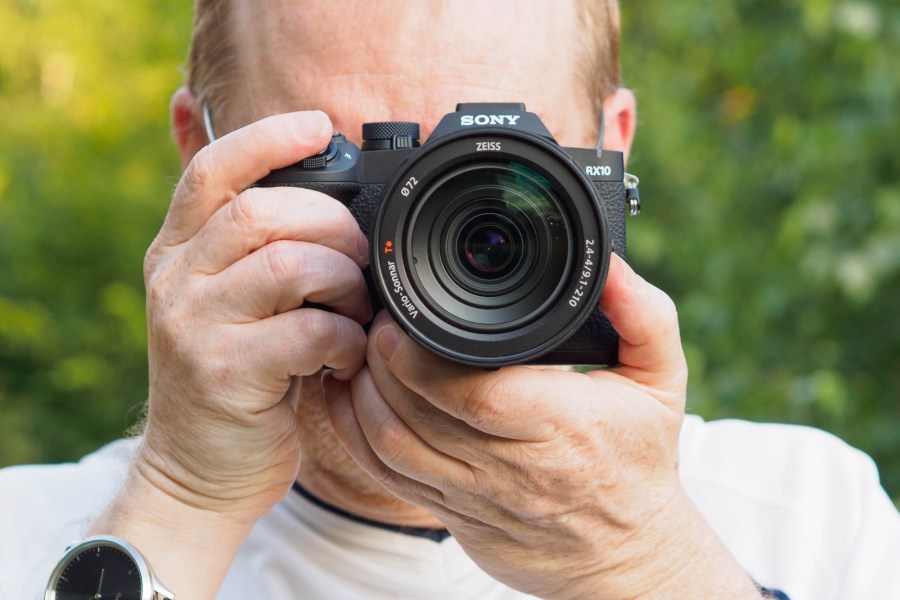
Example one: the Sony RX10 V.
Brave, bonkers, or simply brilliant?
Bridge cameras like this one have traditionally offered the strongest case for swapping a smartphone for a dedicated digital capture device. But still, most major manufactures abandoned superzooms. The result being, barring a handful of either budget or bonkers exceptions, until now it’s been difficult to buy a bridge camera new.
Time will tell whether the new RX10 V is brave, bonkers, proves to be the right camera at the right time… all three… or none. Say what you like about it – and that price tag still smarts – but, as a photographic proposition, it’s certainly exceptional.
With AP already lauding it ‘king of the bridge cameras’, this unit most obviously puts itself ahead of an iPhone’s capabilities by virtue of its 24-600mm equivalent optical zoom. Smartphone alternatives mean fixed lenses, digital zooms and image cropping. The Sony further couples its mega zoom with a 20.1 megapixel 1.0-type stacked image sensor, bettering the 1/2.3-inch chips we usually see in such devices. And that’s before we get to the RX10 V’s AI enhanced subject recognising auto focus, as found in its Alpha camera series, plus ergonomic and robust physical controls.
Bridge cameras like this one also provide a definitive answer to the perennial question: ‘does gear really matter?’
In most cases no, but here yes: that zoom is going to enable me to achieve a picture I wouldn’t even attempt without it. And without the need to crop the image to appear as if I’d zoomed in on my subject with precision and artistry in the first place.

Plus, the RX10 V isn’t just about stills, in offering 4K resolution clips up to 120fps, with the ability to add a microphone for better audio via its multi-interface shoe. Unlike my smartphone, where the screen is difficult to see in strong sunlight, the RX10 V features an eye-level viewfinder with 3.68 million dot resolution. Naturally there’s still a tilting touch screen at the back for those wanting it.
Yes, the RX10 V is more substantial and weightier than my smartphone, which means I wouldn’t dream of it as my primary option for everyday shooting, where convenience comes first.
But for wildlife, action and sports photography – or just about any scenario where I can’t physically get close enough to achieve the framing I want – it rings true as a device to kick any iPhone into touch.
Are AP readers considering putting down their smartphones and picking up the Sony RX10 V bridge camera instead? Get in touch and share your reasoning.
The views expressed in this column are not necessarily those of Amateur Photographer magazine or Kelsey Media Limited. If you have an opinion you’d like to share on this topic, or any other photography related subject, email: [email protected]
Related reading:
- With a new Sony RX10 imminent, bridge cameras are back. Here’s why that’s big news for photographers
- Why haven’t bridge cameras been revived and re-embraced in the same way compacts have?
- The best bridge camera – maximum zoom in one camera
Do you want to win some great prizes for your photography? Enter your photos in our International Amateur Photographer of the Year competition. Free entry for photographers aged 13-21.
Follow AP on Facebook, Instagram, YouTube, TikTok and Irys