Just last month I wrote a piece for AP on why, when it comes to digital photography, bridge cameras haven’t been re-embraced and revived, when other fixed lens cameras, chiefly compacts, have.
I suggested one reason for the lack of clamour for their return was the tiny 1/2.3-inch sensors most bridge cameras (or ‘superzooms’) used. Most photo enthusiasts would seek something better than a bog-standard chip more typically found in humble point-and-shoots.
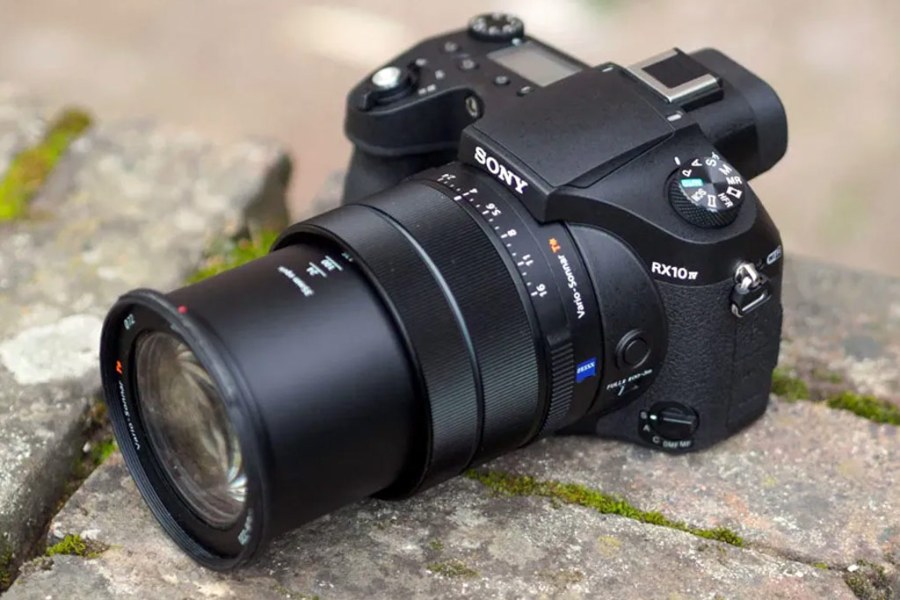
At the same time, I noted the exception to the rule was Sony’s RX10 bridge camera series, incorporating a larger 1.0-type (13.2×8.8mm) Exmor R CMOS sensor. But considering it had been almost a decade since the most recent ‘RX’ iteration, 2017’s discontinued 20.1-megapixel RX10 IV, I thought it fair to assume that product line had been forever shelved.
It’s a welcome surprise, therefore, to find Sony officially teasing the RX10 is coming back, with an unveiling earmarked for this very week. Logically, the follow-up should be named the RX10 V, but it doesn’t always work like that.
A bigger question for me is… ‘why now’?
While I’ve explored in detail previously why simple snapshot cameras I thought had disappeared for good 15 years ago have returned with a vengeance and now have a younger crowd discovering them via social media, I can’t really imagine a new RX10 – or any other bridge camera for that matter – is going to be embraced by a teen audience in the same way. For one, I expect a Sony bridge camera in 2026 will be priced not just out their reach, but out of anyone’s who isn’t already passionate about the possibilities of this chunky camera format.
I’m not privy to what improvements if any a ‘new’ RX10 will bring to the party at the time of writing – a better battery life, more megapixels (not an essential for me), improved AF very possibly – but potentially there may be very little difference from the previous ‘classic’ iteration. Otherwise, why keep the existing RX10 nomenclature?
Niche but nice
The bridge camera was always a niche, specialist camera format compared to say, a compact snapshot at one end of the scale, and a DSLR or mirrorless model at the other – and I’d be very surprised if any new iteration of the RX10 series changed or expanded on that audience.
However, put it together with the 1/2.3-inch chipped 60x Panasonic FZ82D / FZ80D from 2024 and the madness that is the 125x Nikon Coolpix P1100 from 2025 – also with 1/2.3-inch sensor – and could we have the seeds for a wider bridge/superzoom camera comeback? Particularly if Canon joins the party with an update of its 1.0-type sensor PowerShot G3 X from 2015.
Time will tell, but I don’t think photographers ever really stopped having the need for a long focal length, yet decent image quality – and from a camera that was neither as bulky, expensive or simply impractical as a DSLR or mirrorless camera and lens might be with anywhere near the equivalent zoom capability.
More shire horse than stallion, I don’t think a bridge camera can ever be as sexy as a slender pocket compact, or as covetable as a retro styled mirrorless with a physically larger sensor. But sometimes we simply need a workhorse to get the job done. It will be interesting to see what new the latest RX10 (the RX10 V?) brings to the party, to make it worthy of serious consideration for those who take their photography equally seriously.
Are AP readers excited to see bridge cameras coming back, or do you consider the option such an essential part of your photographic set up that they never went away? Get in touch and let us know your thoughts.
The views expressed in this column are not necessarily those of Amateur Photographer magazine or Kelsey Media Limited. If you have an opinion you’d like to share on this topic, or any other photography related subject, email: [email protected]
Related reading:
- Why haven’t bridge cameras been revived and re-embraced in the same way compacts have?
- Kodak Pixpro AZ405 review – big 40x lens, compact body
- Best used bridge cameras
Follow AP on Facebook, Instagram, YouTube, TikTok and Irys.