Amateur Photographer verdict
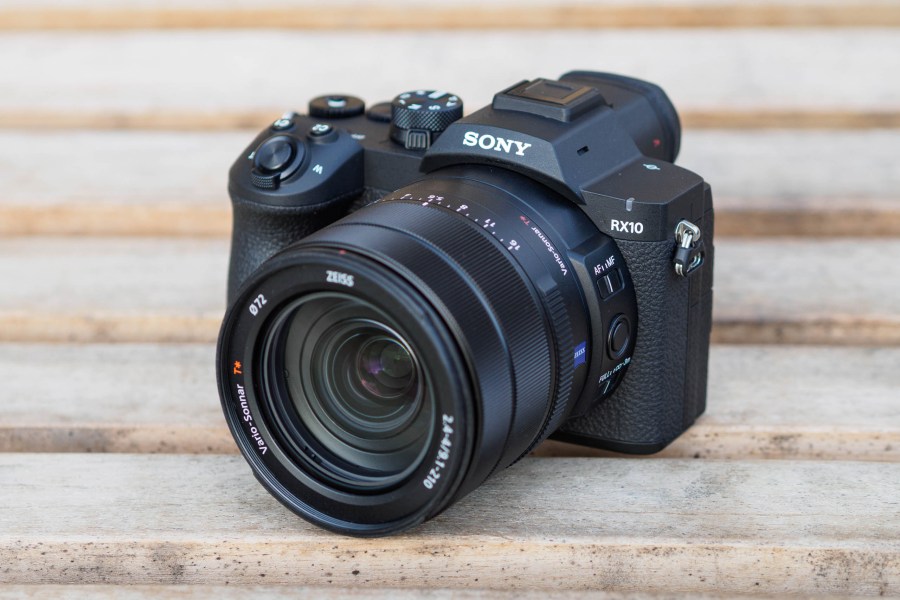
With its huge zoom lens, the Sony RX10 V can tackle almost any subject. It handles well, its autofocus is excellent, and it’s very fast, too. It’s expensive, but there’s nothing else quite like it.- Extraordinarily versatile lens covers almost any imaginable subject
- Very effective subject detection autofocus
- Super-fast shooting with massive buffer
- Familiar, A7-like control layout and handling
- Excellent viewfinder
- Weather-sealed construction
- Takes at least a couple of seconds to turn on and be ready to shoot
- LCD screen only tilts up or down
- Image quality inevitably can’t quite match cameras with larger sensors
Compact cameras with built-in lenses are currently showing a real resurgence, so it was probably only a matter of time before all-in-one long-zoom bridge cameras followed suit. The new Sony RX10 V follows on where the RX10 IV left off nine years before, with much the same core imaging hardware. As before, it places a massive 24-600mm equivalent zoom lens in front a 20MP, 1in-type stacked CMOS sensor that’s unusually large for this kind of camera. Based on these specs alone, it might be tempting to dismiss the new model as no sort of update at all – but that would be to miss the point entirely.
Sony RX10 V at a glance:
- $2300 / £2200
- 20.1MP 1in-type stacked CMOS sensor (13.2 x 8.8mm)
- ISO 100-12,800
- Up to 30fps continuous shooting
- 3.68m-dot, 0.78x electronic viewfinder
- 3in, 1.62m-dot tilting touchscreen 4K 60p video recording
While the lens and sensor are the same as before, everything else about the RX10 V has been revised and reworked. Externally, it has a substantially improved control layout that’s now a close match to the firm’s popular Alpha 7-series mirrorless models. Inside, it gains an AI co-processor that supports Sony’s latest intelligent subject recognition autofocus. Together, these turn out to be transformative in terms of how well the camera works.
One thing that’s sure to raise eyebrows, though, is the price. At $2300 / £2200, the RX10 V is the most expensive camera of its type ever made. But here’s the thing: there really is nothing else quite like it. In particular, there’s no other way to get a new camera setup with a 24-600mm equivalent range and up to date autofocus, without spending rather more money and carrying a lot more weight. So how well does it work?
PSA: Yes, it really is the same lens
Sony is absolutely clear that the RX10 V uses the same lens and sensor as the RX10 IV. However, this appears to be contradicted by the fact that the lens is now marked as 9.1-210mm, rather than 8.8-220mm before. From this, you might reasonably be concerned that you’re getting a restricted zoom range, with a narrower wideangle and a shorter telephoto. But this isn’t in fact the case, and the equivalent focal lengths listed in the images’ EXIF data still range from 24 to 600mm, just like the IV.

In reality, the Sony RX10 V uses the same lens to give exactly the same results. All that’s changed is the way that the industry standards body CIPA requires focal lengths to be reported. In practice, this appears to mean that on the RX10 V, 9.1-210mm represents the ‘real’ optical focal length.

In contrast, 8.8-220mm corresponds to the images that are produced by the camera after processing. Crucially, this includes software distortion correction: pincushion correction at telephoto brings a slight zooming-in effect, while barrel distortion correction at wideangle does the opposite. This is what results in that wider-and-longer 8.8-220mm label, which then translates directly to 24-600mm equivalent using the 2.7x crop factor for the 1in sensor.
Features
Let’s take a look at the RX10 V’s features in more detail. Firstly, that Zeiss Vario-Sonnar T* 24-600mm equivalent zoom means the camera is capable of tackling pretty much any kind of subject, from landscapes and cityscapes at wideangle, through to sports and wildlife at telephoto. Its close-up capability is impressive too, giving the equivalent of half-life-size magnification at the long end of the zoom.
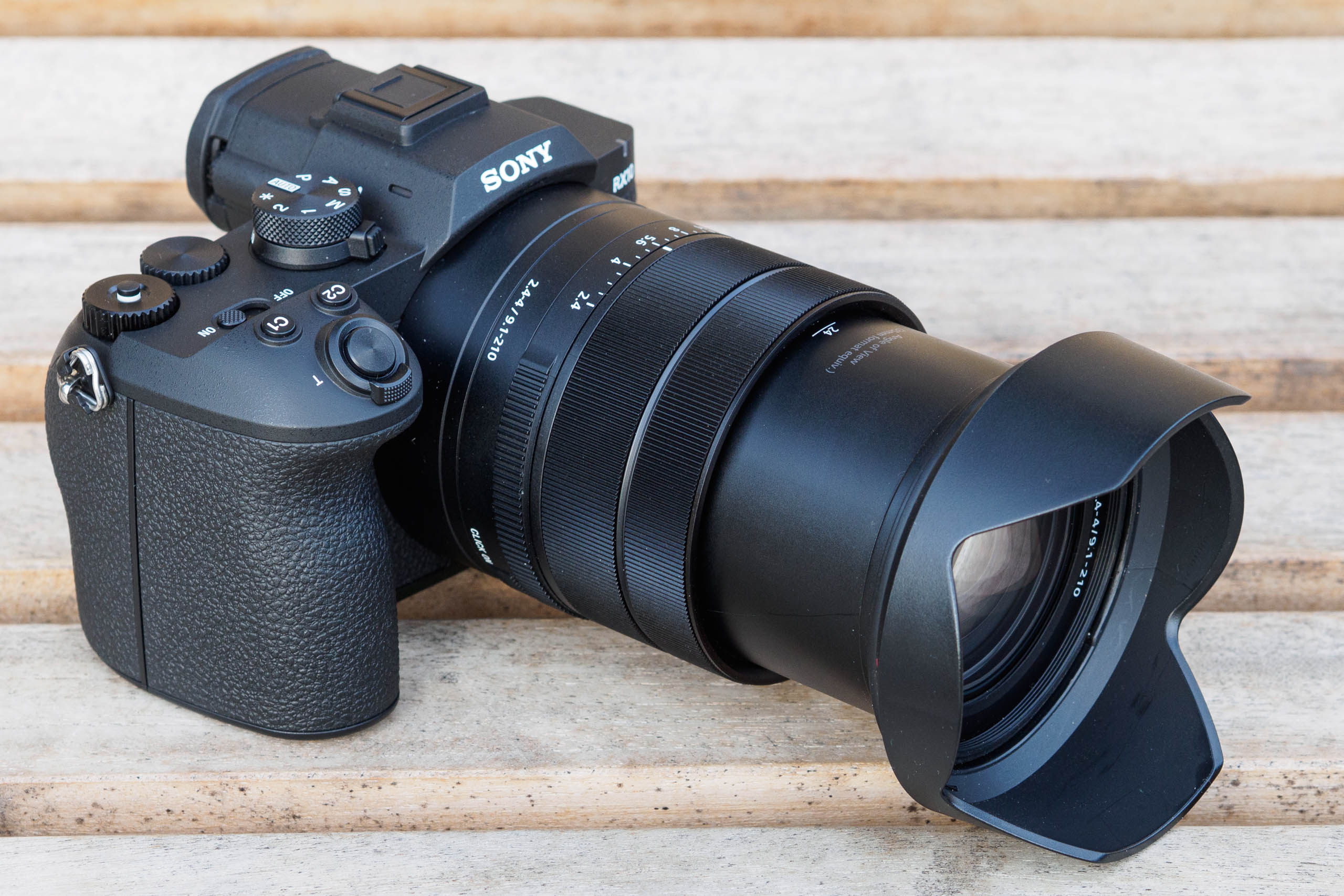
While the f/2.4-4 maximum aperture looks impressively large, the 2.7x crop factor means that it’ll provide similar results to f/6.5-11 on full-frame, in terms of depth-of-field and background blur. The drop-off through the zoom range is also quite abrupt: it hits f/2.8 at 28mm equivalent, f/3.2 at 35mm, f/3.5 at 60mm, and then holds f/4 from 100mm onwards.
The 20MP, 1in-type sensor measures 13.2 x 8.8mm and employs a stacked design for rapid readout speeds. As a result, the camera can shoot at up to 30 frames per second using its electronic shutter, or 10fps with the mechanical shutter. What’s more, it can record 4K video at 60fps using the full sensor width, and 120fps using a crop of approximately 1.4x. The sensitivity range covers ISO 100-12,800.
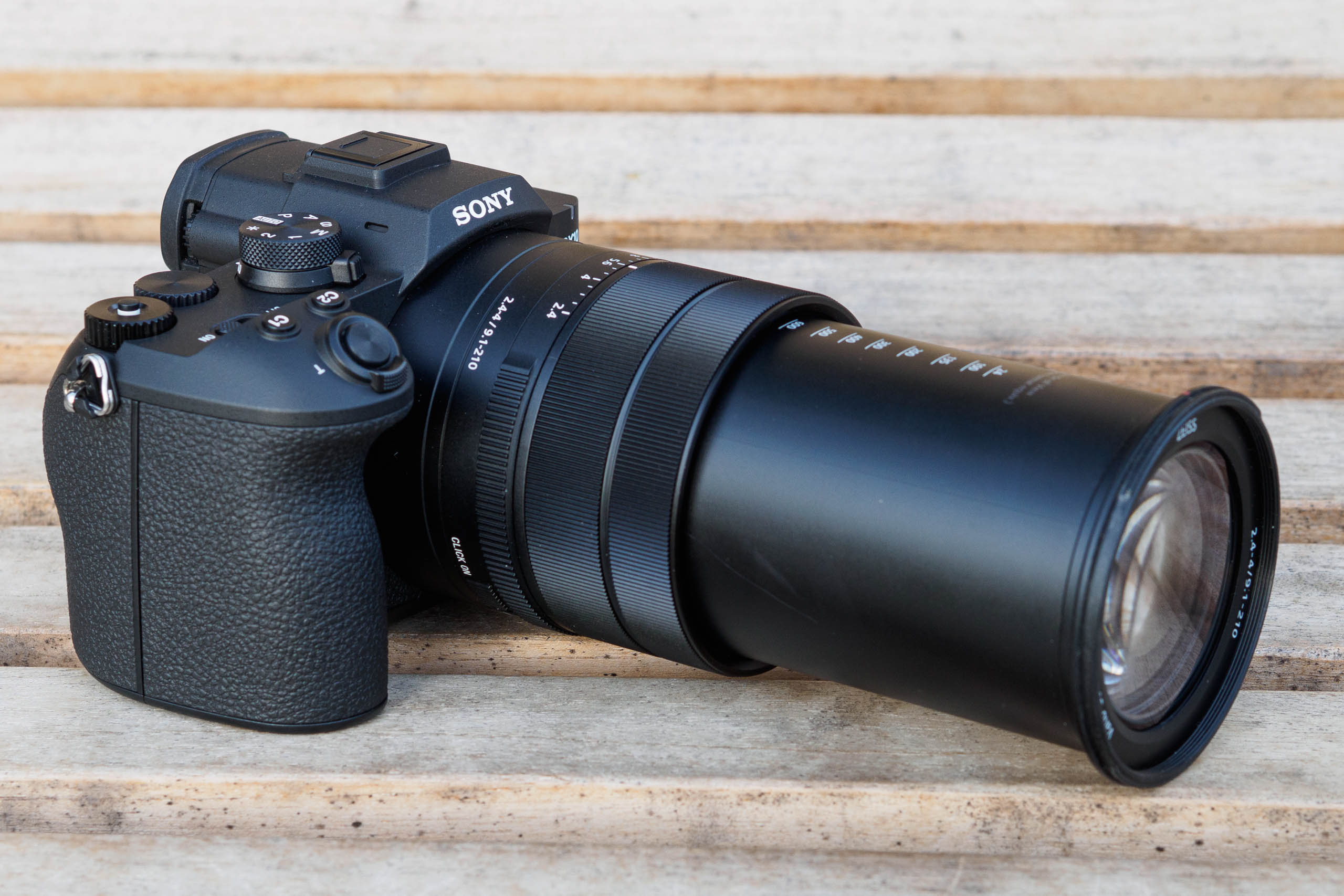
While the RX10 V doesn’t have Sony’s latest processor with integrated AI, it does include the previous generation Bionz XR processor and AI processing unit. This supports intelligent subject recognition that can track focus on people, animals, and vehicles. You can either specify a subject type manually, or let the camera select between them automatically.
Sony has also added many of the latest features you’ll find in its A7-series full-frame cameras. For example, there’s now a much wider range of focus area sizes, including user-specified custom zones. Continuous shooting speed boost is also on board, which allows you to temporarily increase the drive speed at the touch of a button. Sony says the colour reproduction has been improved over the previous model, too.
You also get a couple of new file formats compared to the RX10 IV. It’s possible to output images in either JPEG or HEIF format, although the latter still isn’t supported all that widely by display devices or image-editing software. More usefully, there’s now a lossless compressed raw option, which in principle should deliver the best possible image quality when making large tonal adjustments in raw processing.
The RX10 V also boasts plenty of features to keep videographers happy. This includes an Active image stabilisation mode for steadier hand-held footage, plus a tally lamp on the front to indicate when the camera is recording. It also supports Sony’s S-Cinetone colour mode, LUT support for custom colour modes, and Slog3 for colour grading in post-production.
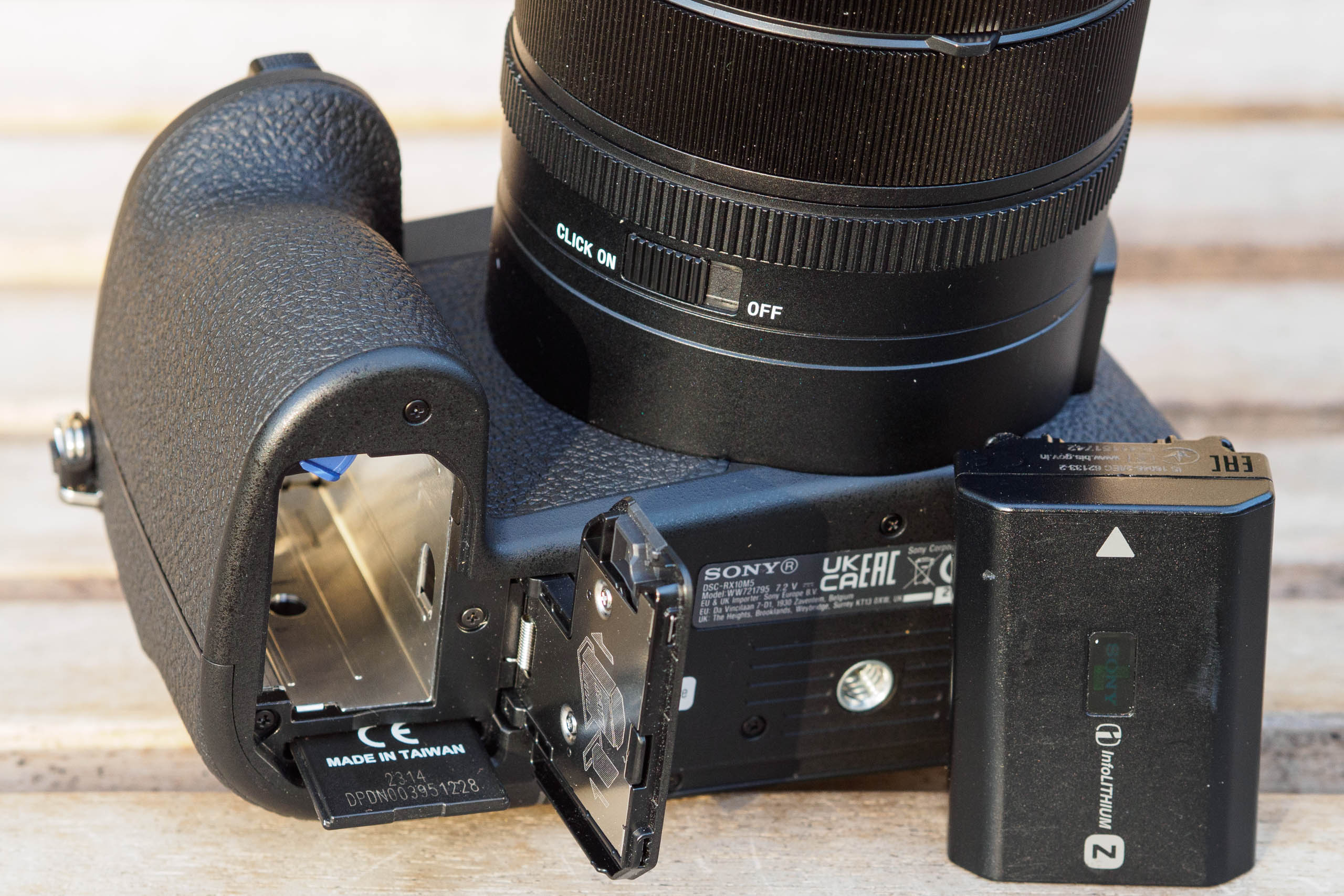
Files are stored to a single SD card, which now lives in the battery compartment, rather than having its own door on the side of the handgrip. Some might consider this a step back, but it never bothered me. It’s also worth noting that unlike its A7 siblings, the RX10 V doesn’t accept CFexpress Type A cards. To get the best performance, you’ll need to use a UHS-II SD card with fast write speeds.
Smartphone connectivity is provided via built-in Wi-Fi and Bluetooth, using Sony’s well-established Creators’ App. This allows you to control the camera remotely using your phone, and to copy images across for sharing on social media.
Sony RX10 V: Key Features
- Multi-interface shoe: There’s no built-in flash, but you can use an external unit on the hot shoe. That shoe can also accept Sony’s on-camera mics without needing an additional wire.
- Power: Sony has used its familiar NP-FZ100 battery which is rated for 630 shots using the LCD, and 570 with the EVF, and charges via USB-C.
- Storage: There’s a single UHS-II SD card slot, which now lives in the battery compartment rather than having its own separate door.
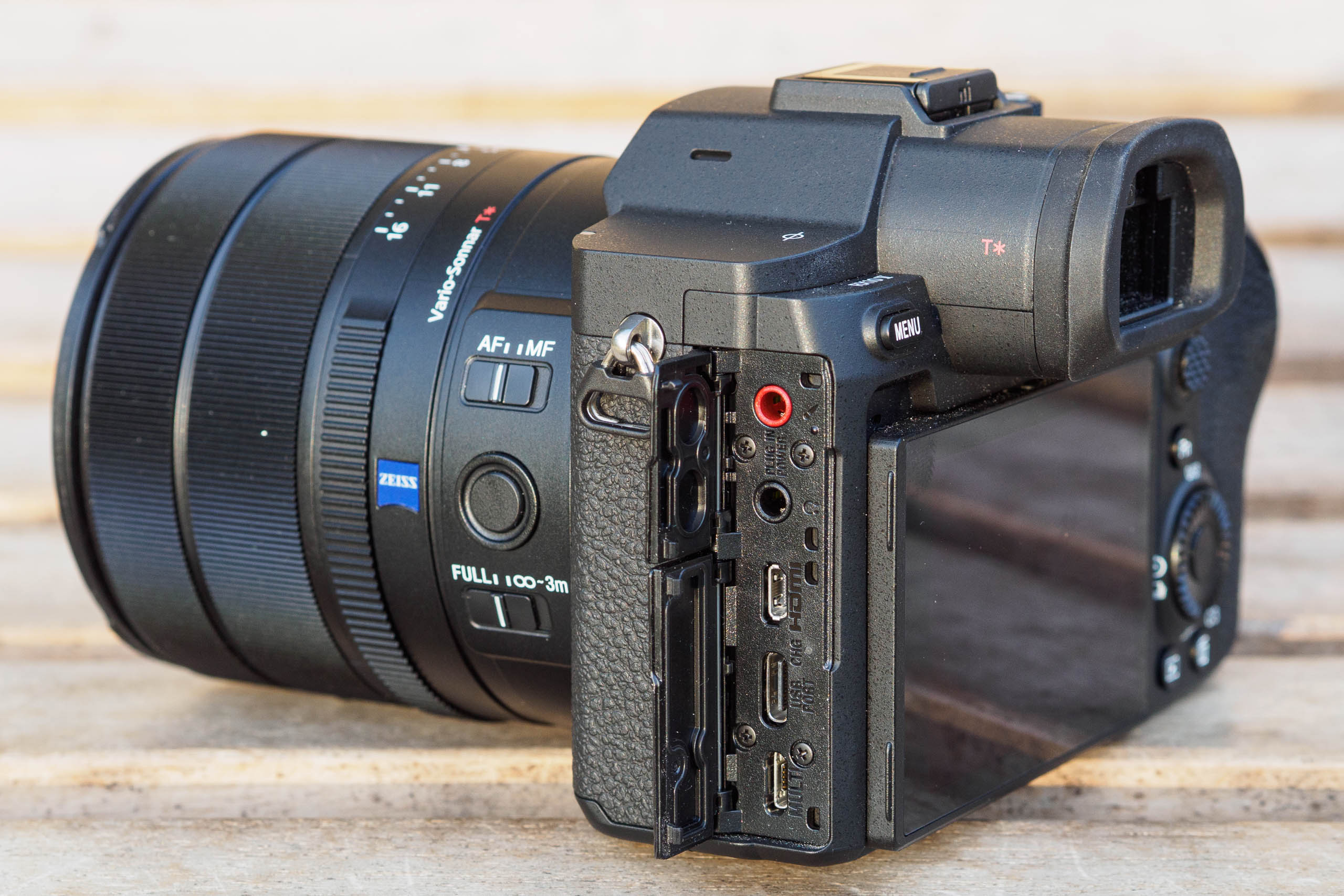
- Connectors: Behind hinged doors on the side, you’ll find microphone, headphone, mini-HDMI, USB-C, and micro-USB/multi-connector ports.
- Lens accessories: The lens is threaded to accept 72mm filters. A hood is supplied in the box and reverses neatly when not in use.
- Sensor: The 20.1MP stacked-CMOS sensor measures 13.2 x 8.8mm, making it about half the area of Four Thirds, a quarter that of APS-C, and an eighth of Full Frame.
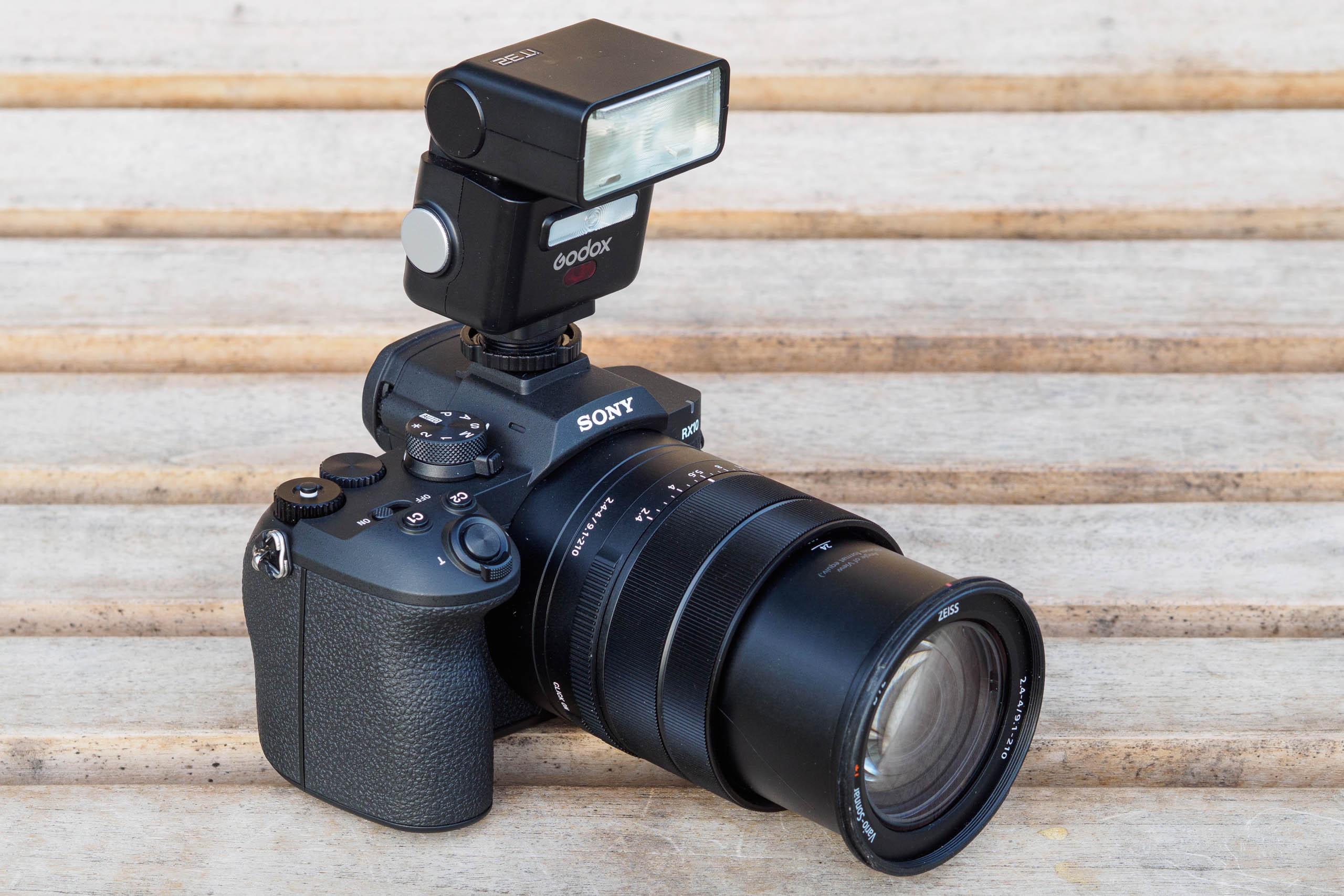
Build and Handling
Having shot with the RX10 V for a couple of weeks, I’d say that one of its most important aspects is the redesigned body. Essentially, it behaves very much like a current Alpha 7 camera fitted with a recent Sony lens, with a very similar control layout. To me, this means it now feels much more like a serious camera that could be a genuine complement to an A7, rather than a simpler alternative for less ambitious photographers. That’s something you can’t really gauge from product shots or spec sheets – you have to use the camera for yourself.
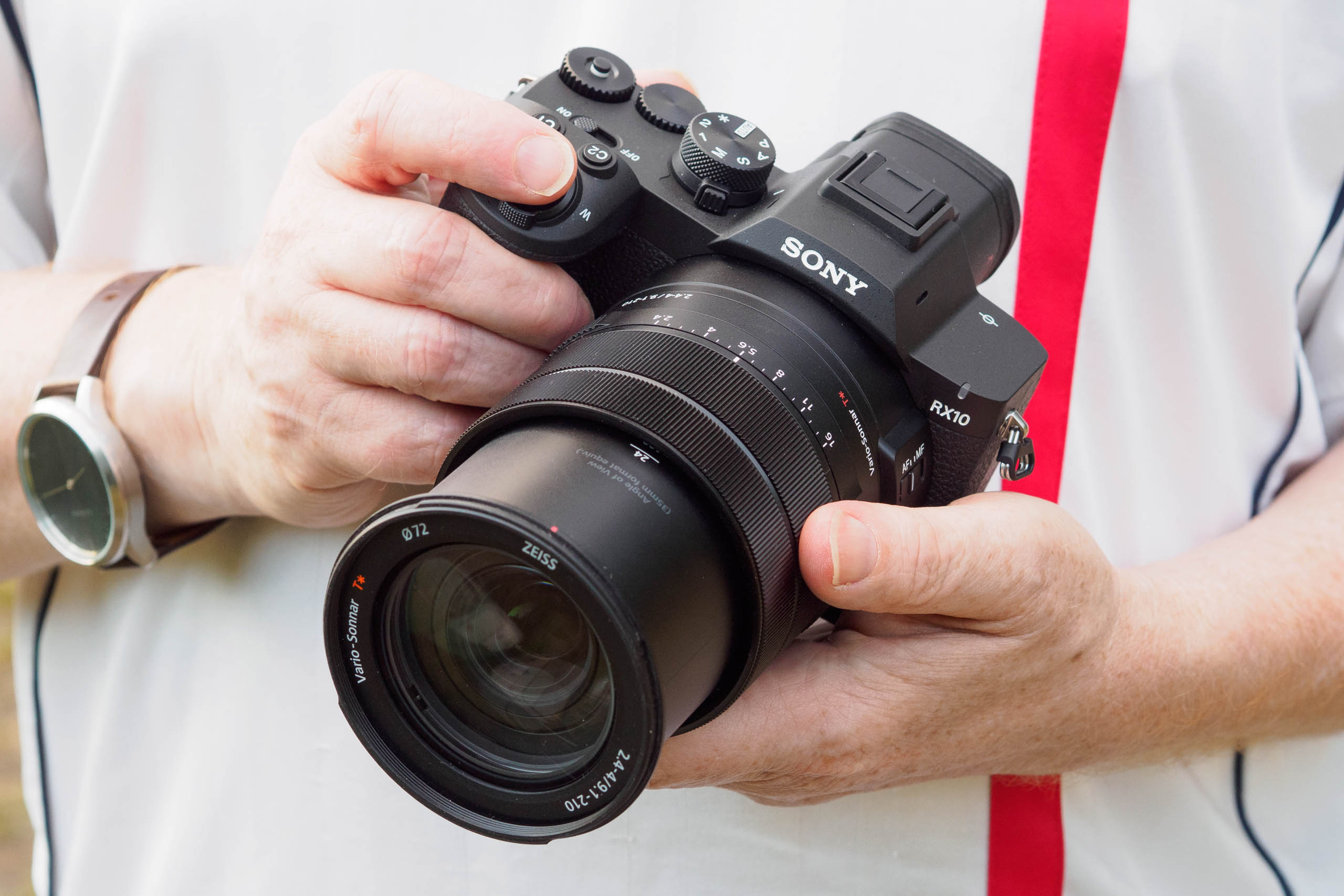
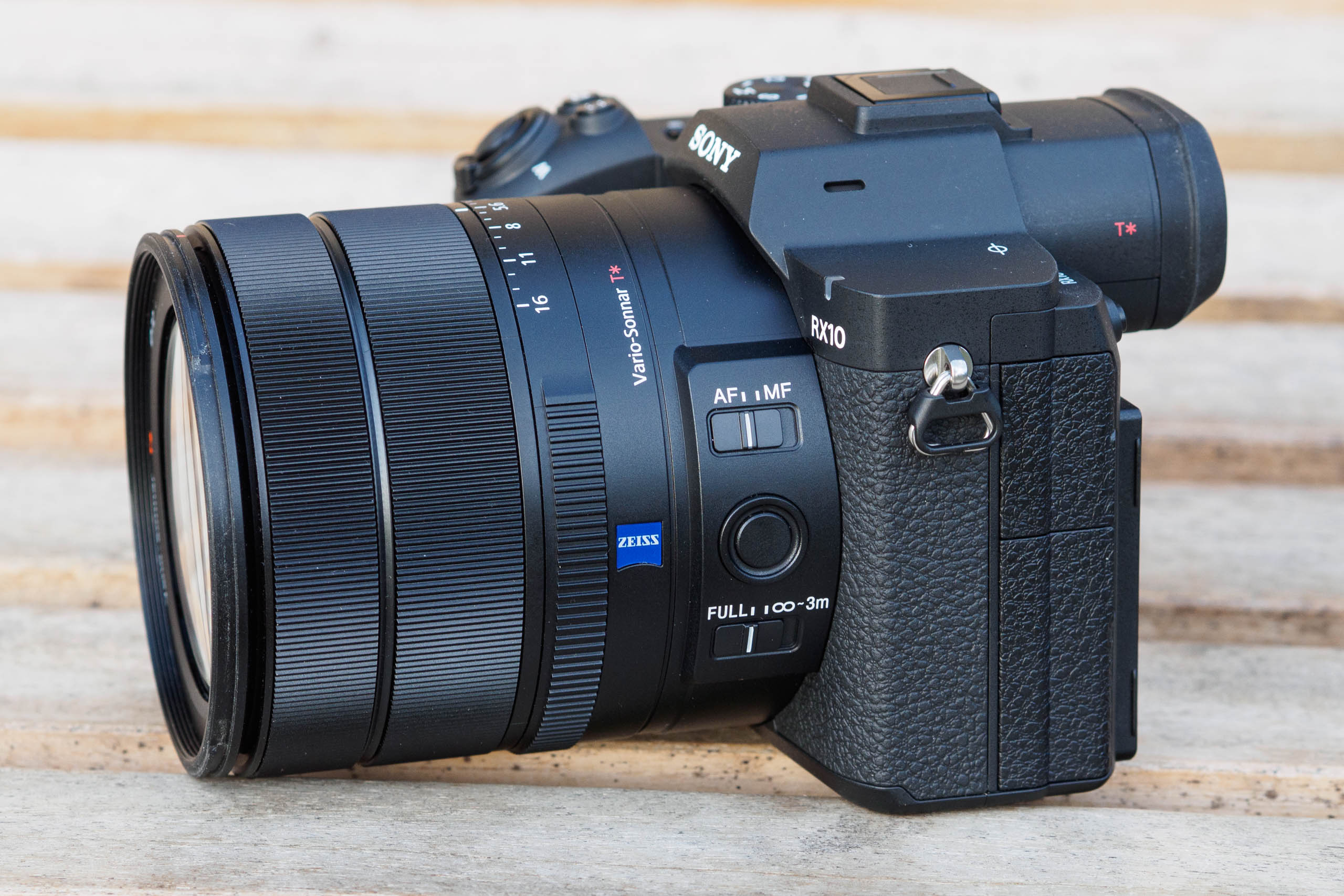
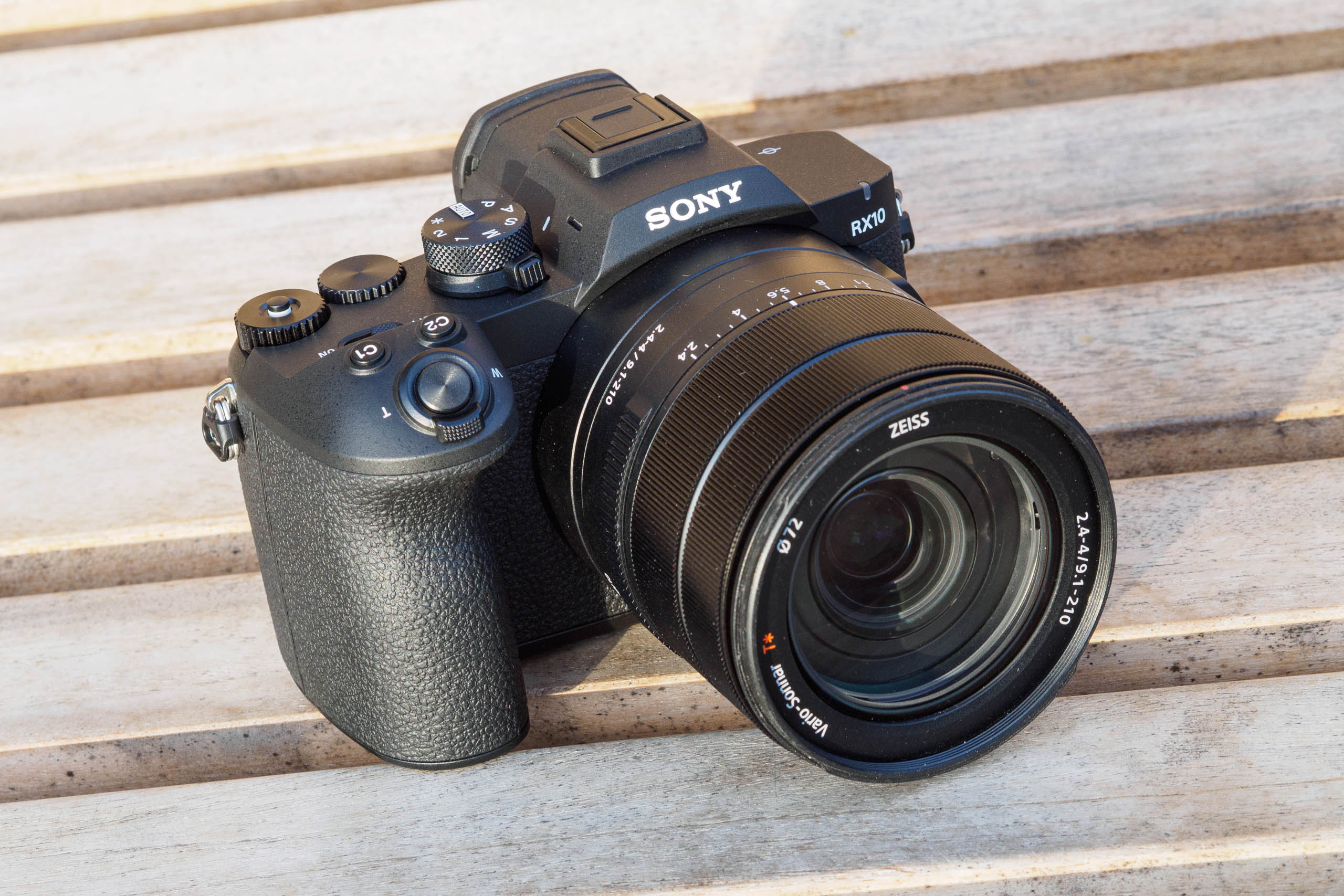
You still get all the main controls that were on the RX10 IV, so existing users should feel at home. This includes three rings around the lens for aperture, zoom and manual focus, plus a zoom lever around the shutter button. Three additional dials are used for the other exposure settings, two on the top and one on the back.
Crucially, though, the RX10 V gains a joystick for rapidly repositioning the autofocus area, along with a dedicated AF-ON button. This helps you make best use of the new AF system and exploit that long zoom lens to its fullest. You also get the considerably longer-lasting FZ100 battery, which is housed within a large and very comfortable handgrip that feels similar to the one on the recent Sony A7R VI. Indeed I was happy to carry it around one-handed for hours, which has rarely been the case with Sony cameras.
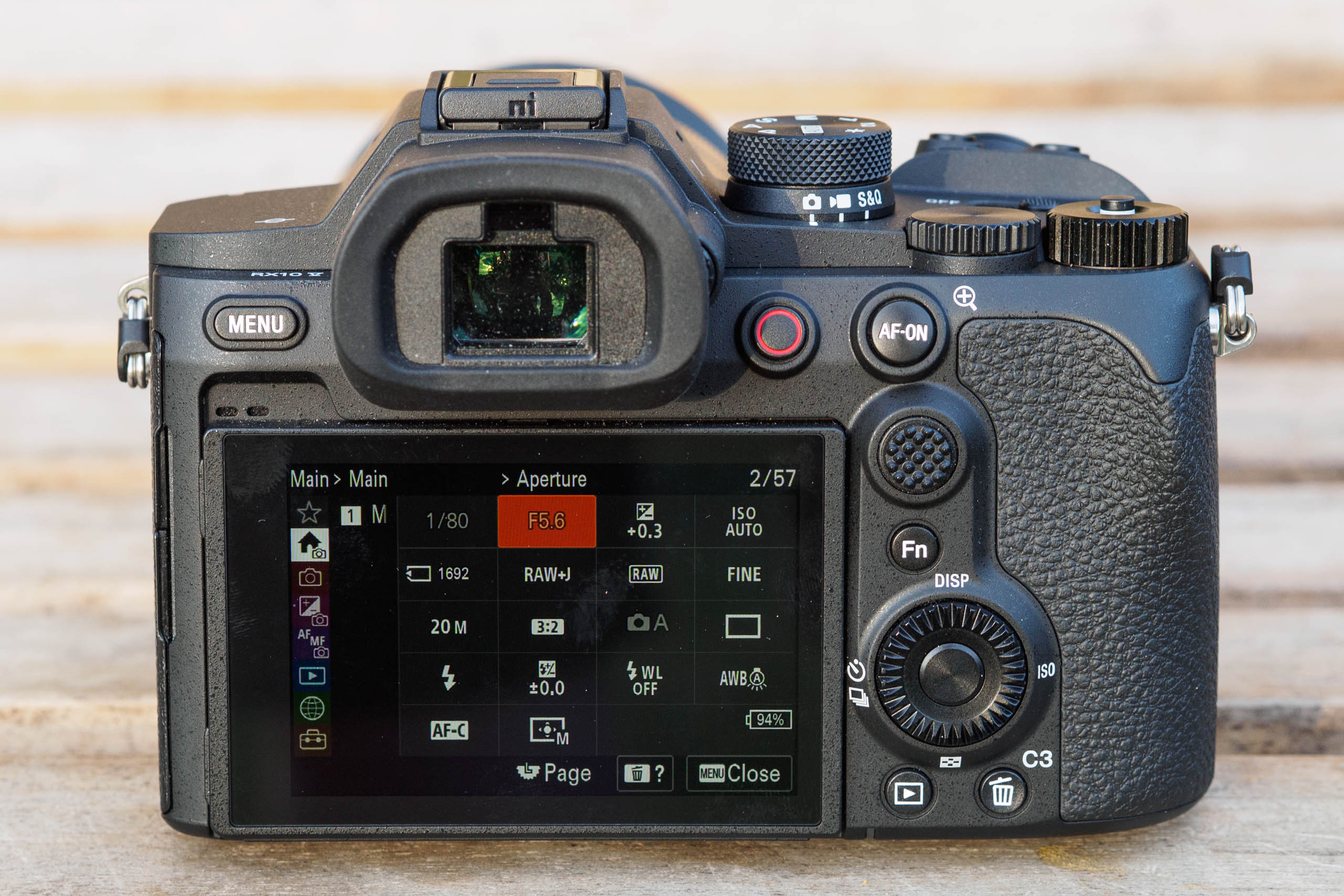
It may seem odd to have two controls to operate the zoom, but in practice, it does make sense to me. The zoom lever is two-stage, racking the lens rapidly through its range when you push or pull it fully to the left or right, but operating more slowly with a smaller movement. Then the zoom ring allows fine adjustment. I found that the two controls complemented each other really well, allowing rapid initial shifts of the zoom and then fine-tuning of composition when I needed it.
Sony has also included a Zoom Assist function for shooting at the long end of the lens, where it’s easy to lose track of moving subjects. This allows you to temporarily zoom out at the touch of a button, reacquire your subject, and then zoom back in again. That could be particularly handy for photographing such things as sports and wildlife.
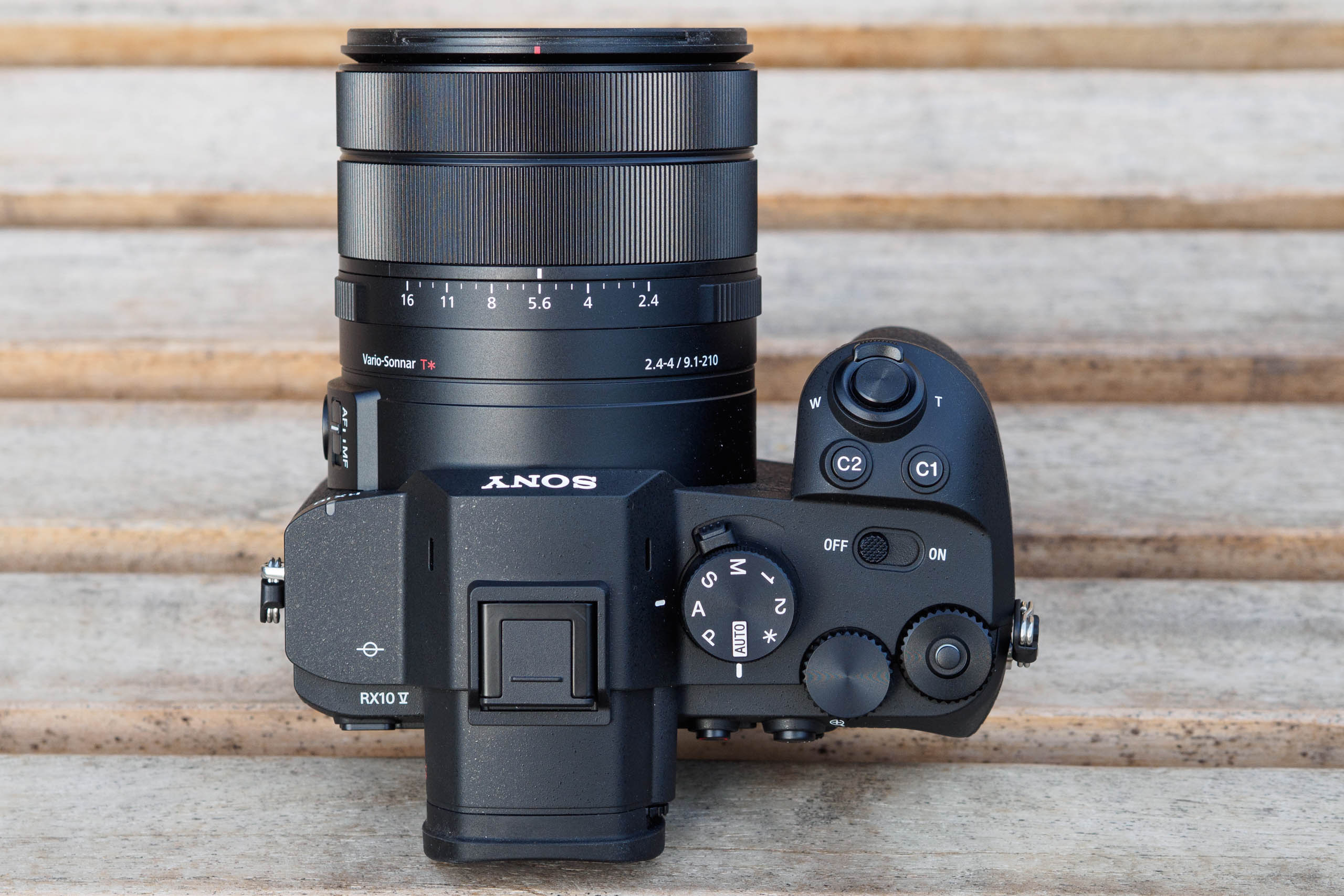
A large button on the side of the lens is set to AF Hold, which matches Sony’s mirrorless cameras. It’s not a function I use much, personally, and I’d be inclined to change this to something like Zoom Assist or Continuous Shooting Speed Burst.
As with all of Sony’s recent cameras, the exposure compensation dial is now unmarked and customisable. Unlike A7 cameras, there’s no front dial on the handgrip, as the aperture ring makes it unnecessary. Initially, I was worried that the repositioned on/off switch looked awkward to use, but I found it to be really well-placed in practice.
Almost all the buttons are customisable, and one really handy feature is the ability to assign user-defined groups of functions to them. For example, I reprogrammed the AF-ON button to also activate C-AF with subject tracking and continuous shooting. I found this particularly useful for shooting moving subjects when I had the camera set up for static ones.
One notable change is that the RX10 V now has a conventional AF/MF switch on the side of the lens, in place of the IV’s rotary selector that also had positions for AF-S, AF-C and DMF. At first, I saw this as a step backwards, especially as there’s no button assigned to selecting between these options. However, the silver lining is that this means the AF mode can now be included in Custom setup memories, and overall, I found this more useful.
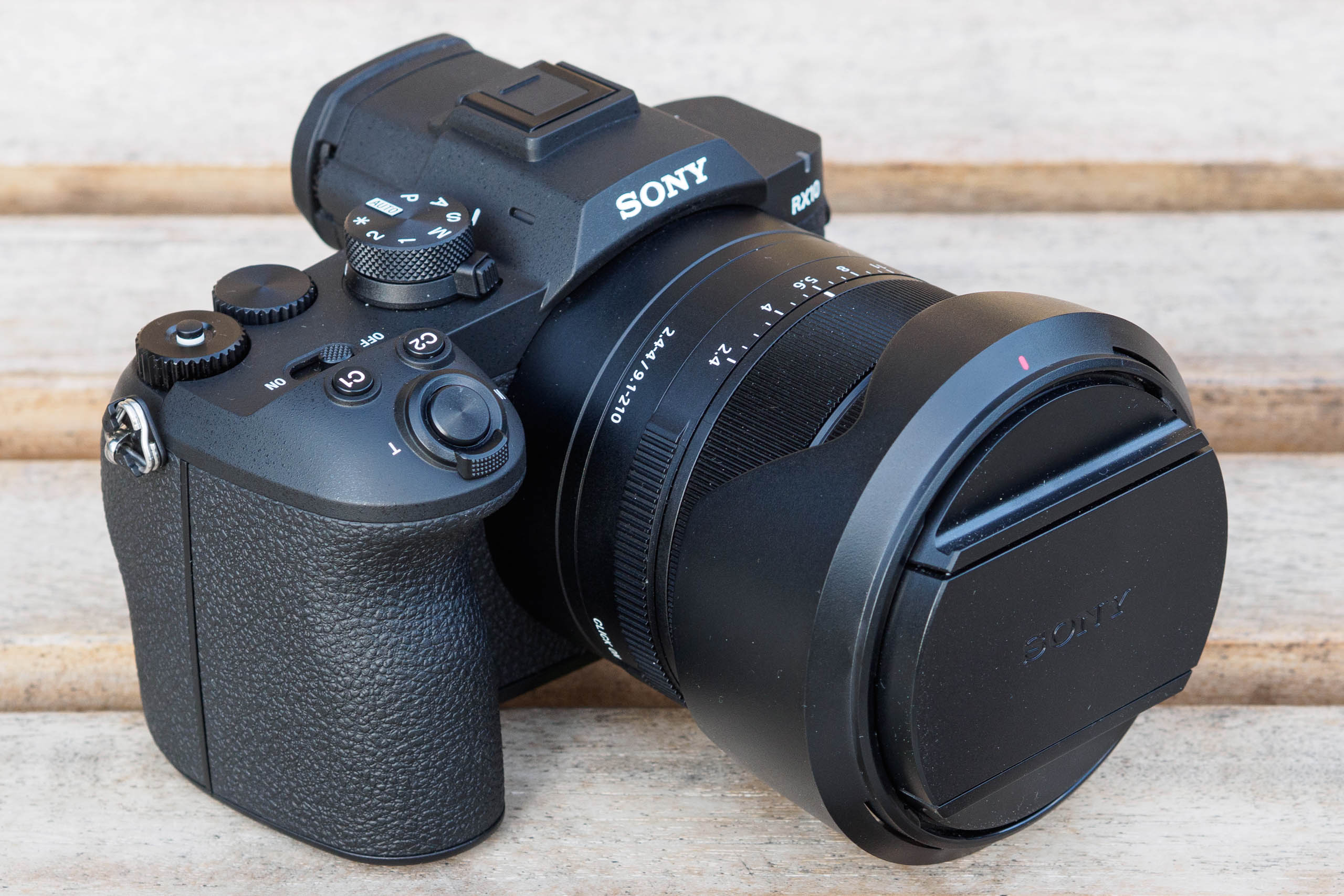
On this note, custom settings memories have gained the same makeover as on the A7R VI. They can now be given useful names, although these are only shown onscreen when the mode dial is set to its new ‘Star’ mode, and not when you select a custom position on the mode dial. When using a custom mode, the camera will retain any settings changes you’ve made when you turn it off and on again, but not when you change to another exposure mode and back.
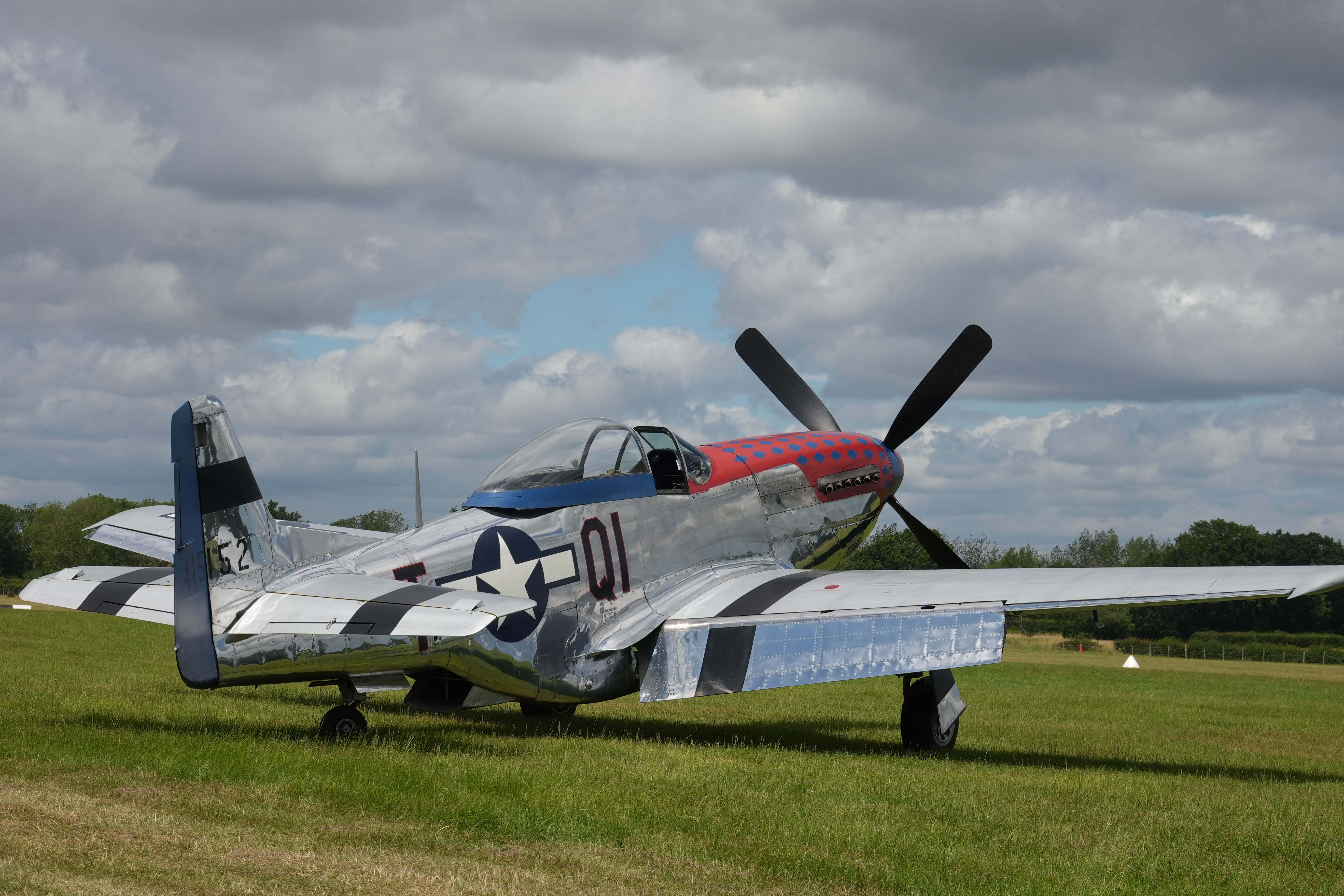
I found custom setups really useful on the RX10 V, particularly for shooting moving subjects such as wildlife and aircraft. Usefully, they can save the shutter mode, raw format, and even the zoom position, as well as more obvious options like drive speed, AF mode and subject recognition target. But slightly annoyingly, they can’t be used to reconfigure custom button functions to suit different shooting situations.
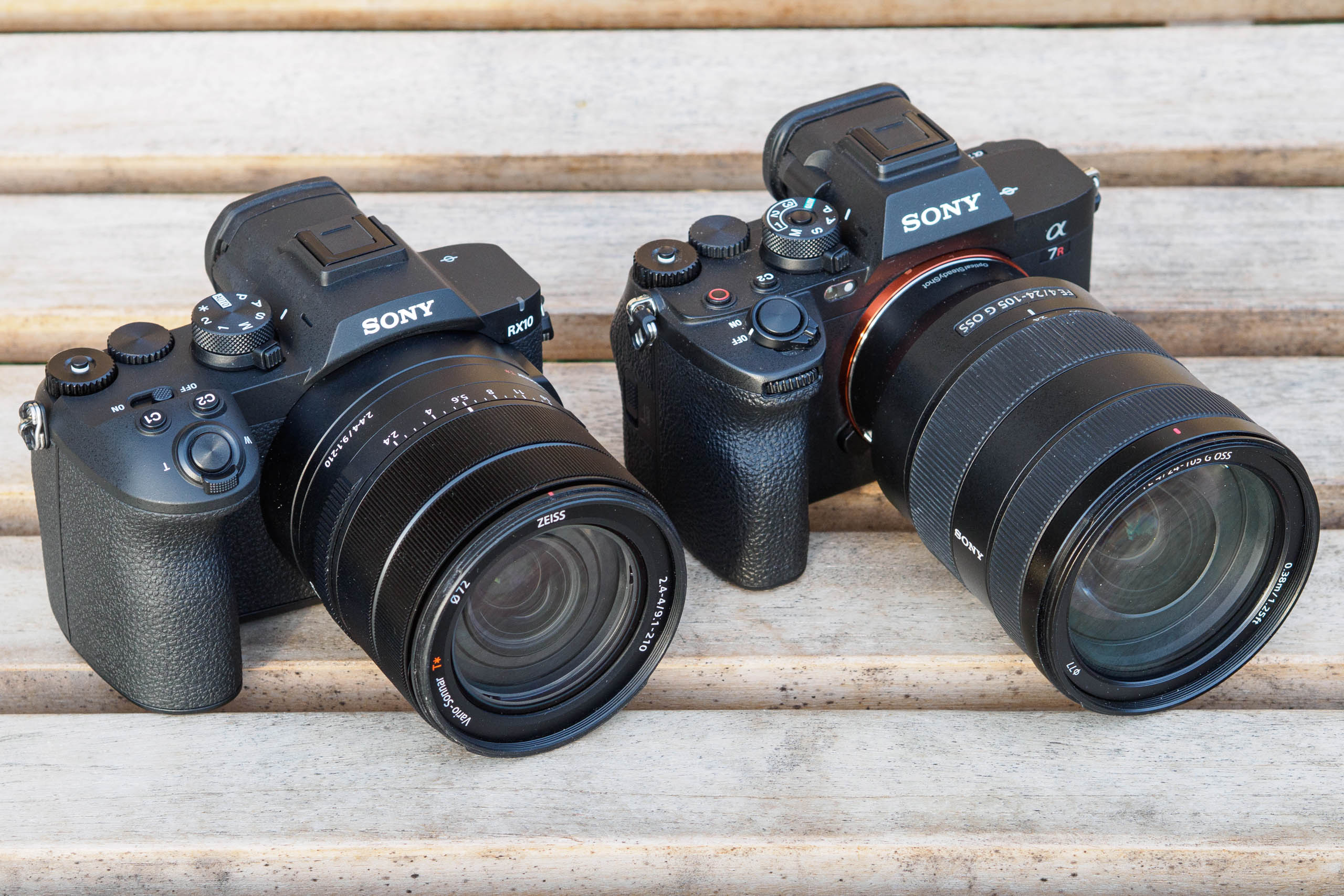
Of course, that large built-in zoom means that this really isn’t a small camera. But in context, it’s similar in size and weight to an SLR-style mirrorless camera with a small standard zoom fitted, at 136.4 x 94.5 x 151.3mm and 1111g. Sony says it includes dust and moisture resistant construction, which isn’t actually that common on bridge cameras. It certainly feels pretty solid and robust in your hand.
Viewfinder and screen
Not surprisingly, after nine years both the viewfinder and rear screen have received significant updates. Sony has fitted a larger, higher-resolution 3.68m-dot EVF with approximately 0.78x magnification, which appears to be the same as that on the Sony A7 V. The viewfinder eyepiece sticks out a long way too, so you don’t have to squeeze your face against the back of the camera to see into it clearly.
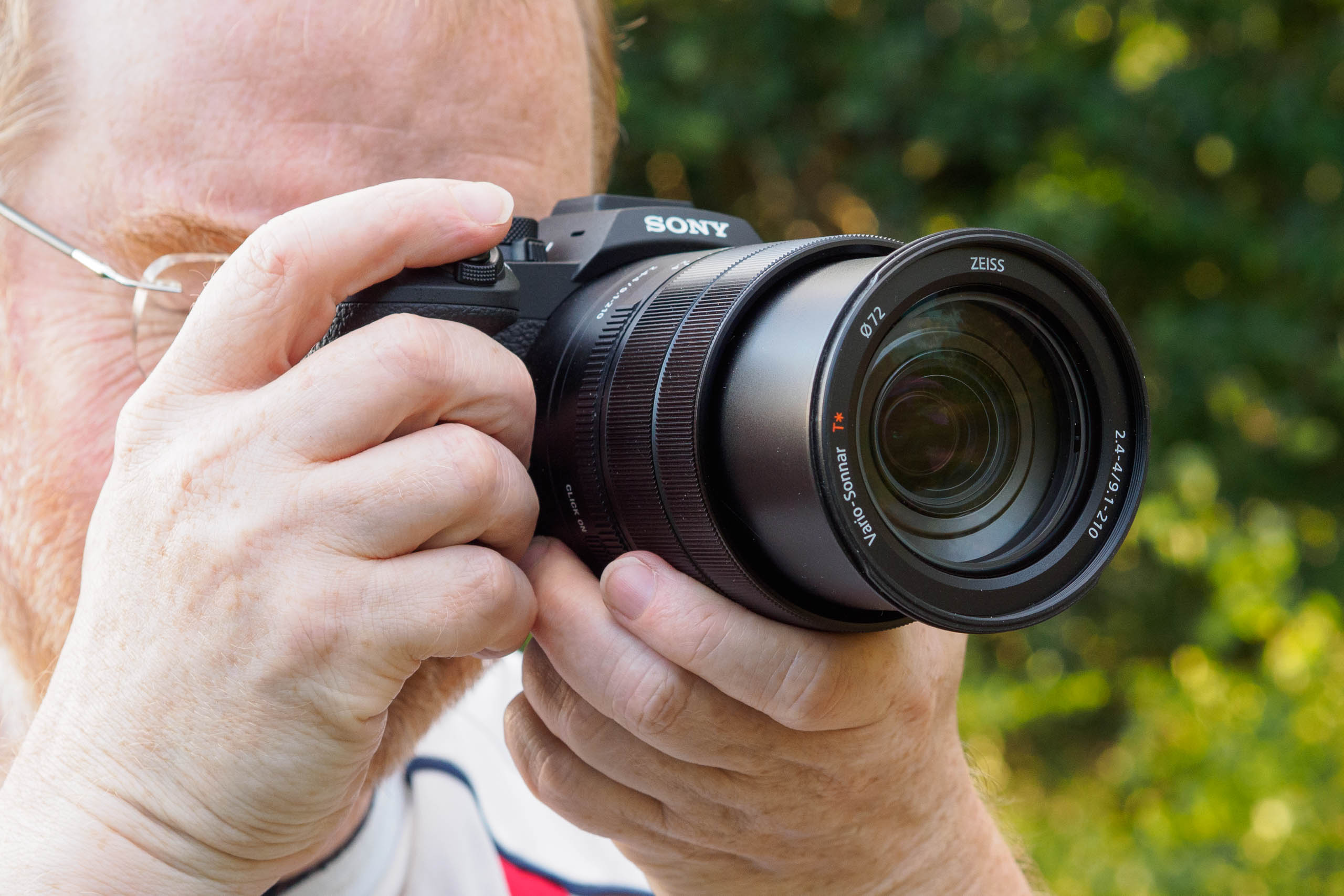
That viewfinder is very good indeed, previewing colour, exposure, and depth-of-field. It has additional view mode options, too, giving more control over what information is displayed. For example, it can now show an electronic level display and live histogram at the same time, which is a surprisingly recent addition to Sony cameras. There’s also an alternative small, unobtrusive level indicator that doesn’t overlay the preview image. The entire onscreen interface rotates when you turn the camera to portrait orientation, which makes it easier to see what’s going on.
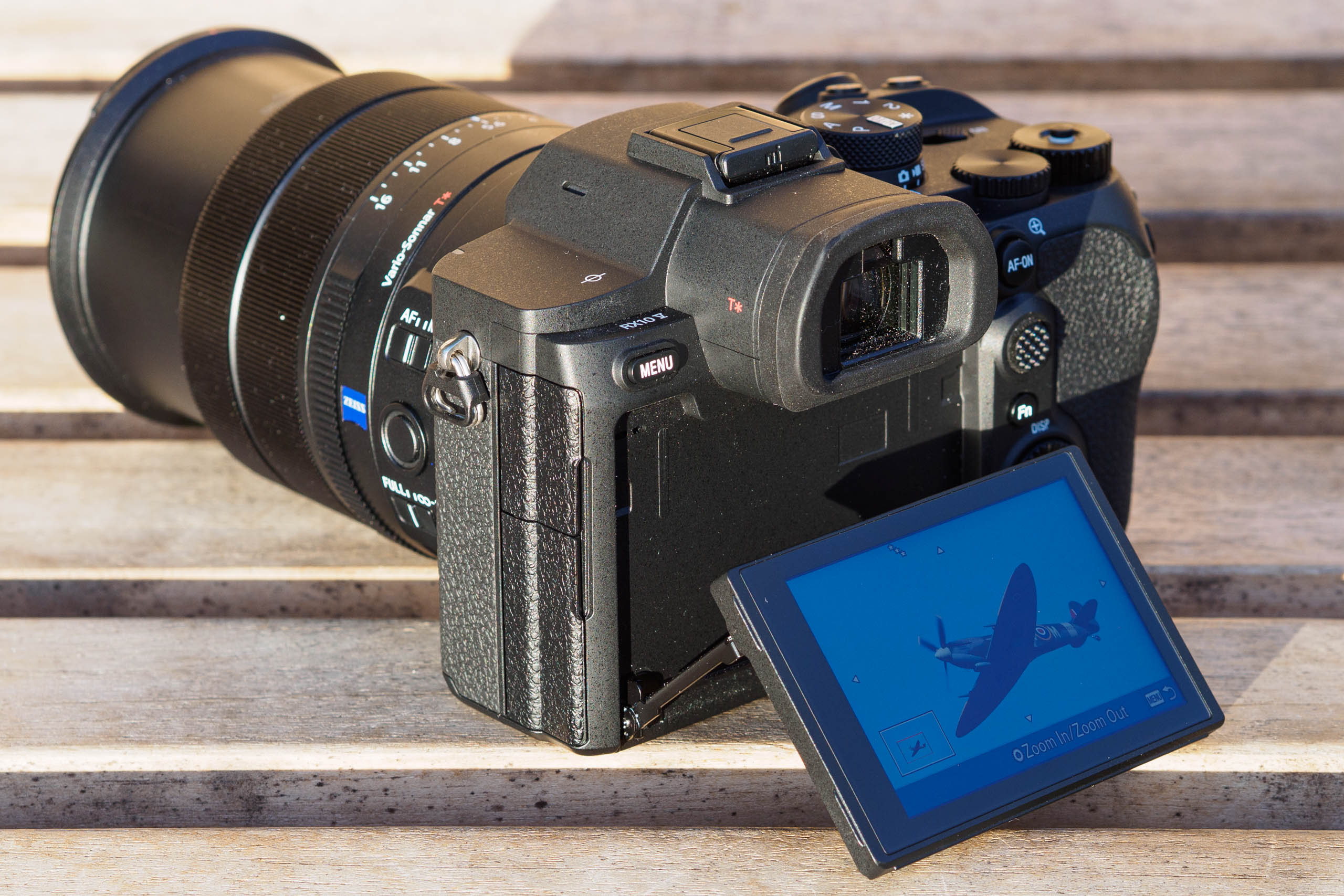
The LCD screen has received an update too. It’s now a 3in, 1.62m-dot unit that gains significantly expanded touch functionality compared to its predecessor. However, it’s disappointing that the screen still only tilts up and down, which means it doesn’t help when you’re using the camera in vertical orientation.
It’s a shame Sony didn’t use the same excellent articulation as on cameras like the A7 V, but I guess that would have made the RX10 V even more expensive. On a more positive note, though, the screen pulls a long way back to clear the viewfinder when you’re looking down on it from above.
Autofocus
Another area where the new camera gains a massive advance over its predecessor lies with its autofocus system. Firstly, by the adoption of intelligent subject recognition, and secondly though the addition of A7-like autofocus controls. Together, this makes a significant difference for almost everything that you might shoot with that 24-600mm lens.

Click on any image to see the full-resolution version. The images in this review are out-of-camera JPEGs, with minor adjustments for sch things as brightness, colour and cropping.
Intelligent subject detection has transformed AF technology since the RX10 IV appeared, and the Sony RX10 V can recognise and track focus on humans, animals, birds, insects, cars/trains, and airplanes, wherever they move within the frame. This means you can let the camera look after the focusing and concentrate on composition instead.

Operationally, the RX10 V is set up much better, too. On the IV, you had to use the rear dial/d-pad to position the autofocus area, but now you can use the joystick, which is considerably quicker. Likewise, the addition of the large, well-positioned AF-ON button is a boon for photographers who prefer to use back-button focusing. I requested both these changes in my RX10 IV review, so it’s nice to see Sony providing them.
When shooting static subjects, the RX10 V’s autofocus is pretty much flawless. It’s fast, quiet and accurate, with the only, very slight limitation being that you can’t position a focus point right at the edge of the frame. When using subject detection, the camera will outline and lock onto subjects even when they are small within the frame, and then track them accurately as they move around.

About the only caveat is that the system can get confused by small, distant subjects with busy surroundings or backgrounds, and misfocus even when it’s detected and outlined the subject you’re aiming for. But you can often see this in the viewfinder, and either attempt to get the camera to refocus, or switch to manual.
However, it’s with moving subjects that the RX10 V really comes into its own. I tested it by photographing fast-flying aircraft at airshows, and local wildlife. I shot well over four thousand frames during my time with the camera, mostly at 10fps using both the mechanical and electronic shutters, and the overwhelming majority were in perfectly acceptable focus – including those of a Eurofighter Typhoon incoming at 600 miles per hour.
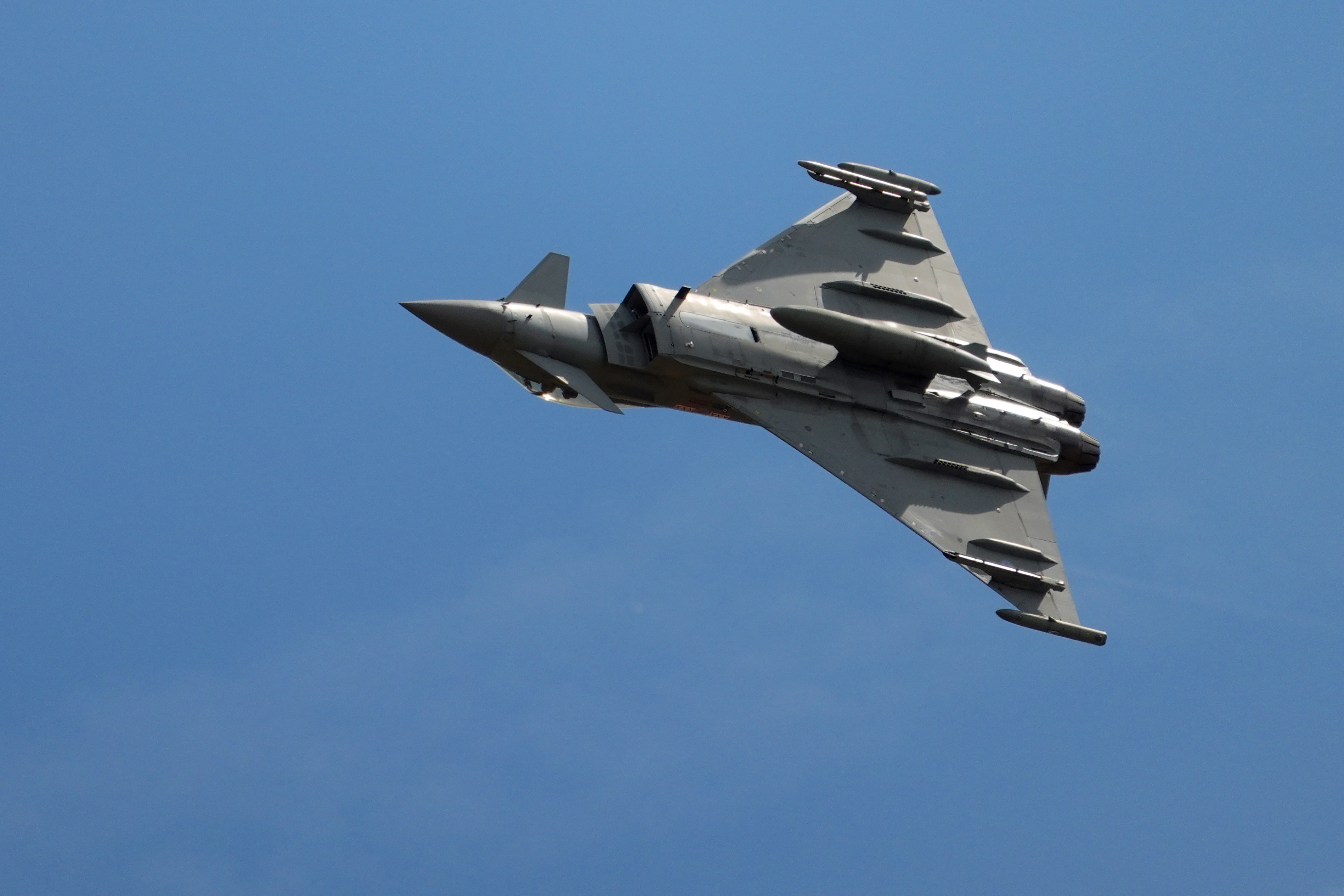
I should note, though, that Sony’s JPEG processing can make it difficult to see exactly how sharp the images are at the pixel level, and Adobe raw support wasn’t available at the time of writing.
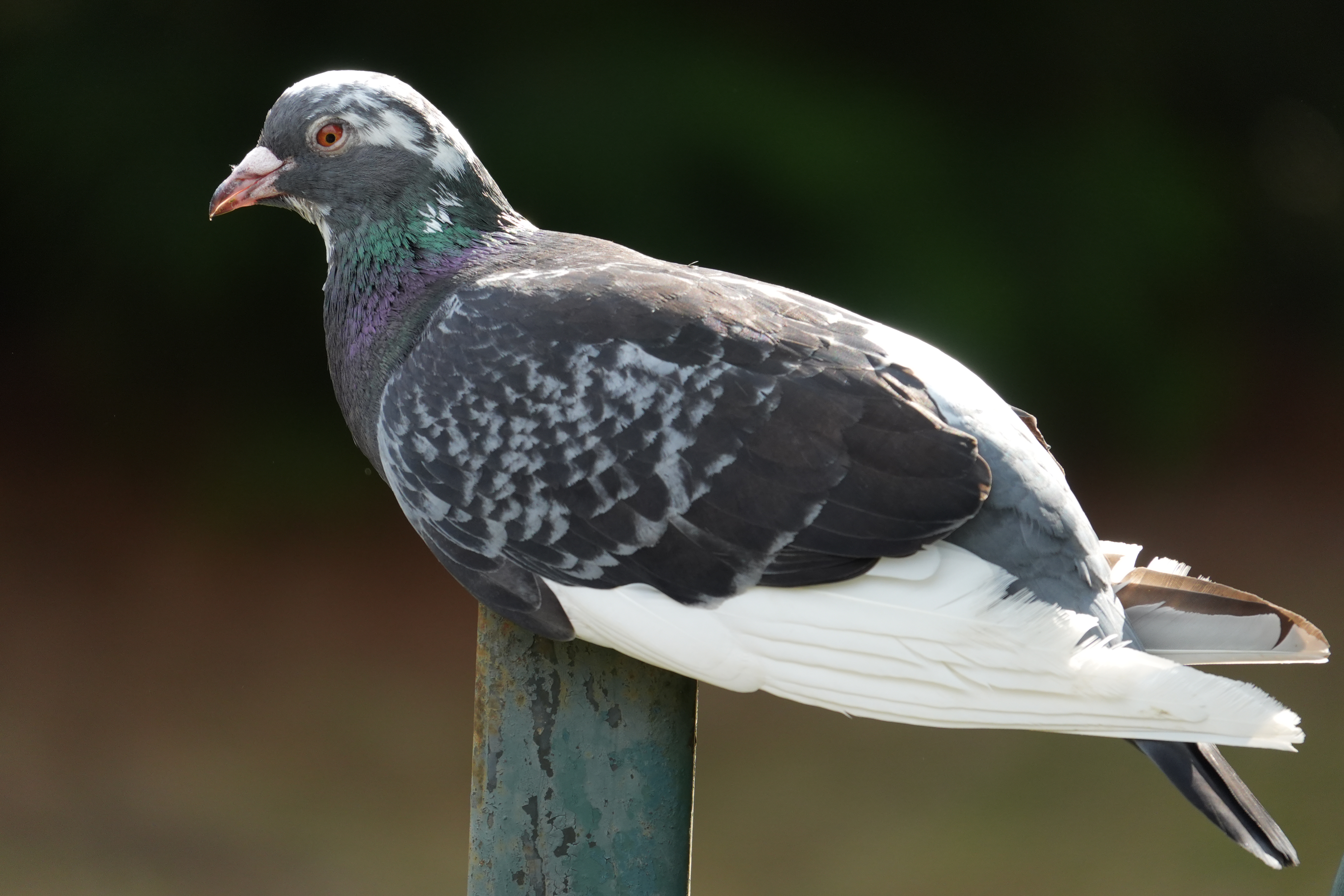
Unsurprisingly, the camera struggled a bit more with birds in flight, which are notoriously unpredictable. In my experience, it found them less easy both to pick up, and then to track focus on perfectly. Even so, I still got plenty of entirely usable shots.

Overall, while the previous RX10 IV was absolutely no slouch with regards to autofocus, the RX10 V is a big step forward. In fact, it’s really not far off Sony’s latest mirrorless models such as the A7 V. Without doubt, it’s the best bridge camera I’ve ever tested in this regard.
Performance
Operationally, the RX10 V’s biggest drawback is its power-on time. It takes about 2 seconds to start up when the lens is set to 24mm, and almost 5 seconds if you set it zoom to 600mm immediately, as I did in a couple of custom setups. This means that if you see an opportunity developing on front of you, there’s a real possibility it will have gone by the time the camera is ready – in fact, this happened to me on several occasions. The camera takes similar times to turn off, too, as it’s all about that big motorised lens extending and retracting.

Once it’s ready to go, though, I found the RX10 V is a very solid performer that never got in the way of my shooting. It’s quiet too; the mechanical shutter fires with an unobtrusive snick, while the electronic shutter can be totally silent. Personally, though, I left the ‘fake’ electronic shutter sound enabled, as I find it can give useful feedback.
On this note, I was also irrationally delighted that the electronic shutter sound seems to be a direct recording of the actual mechanical shutter, rather than an artificial electronic tone. What’s more, if you engage the Hi or Hi+ shooting speeds, it changes to a higher-pitched sound. This is a really useful audio cue when you’re shooting at super-high speeds.
In my hands, the battery life was very impressive indeed. When shooting single frames at a time, the CIPA-rated stamina of about 600 shots per charge looks perfectly realistic. I took several hundred in a day while barely making a dent in the battery level indicator. And as usual, you’ll get many more than that when shooting bursts.
I shot 2000 frames in one afternoon using predominantly the mechanical shutter, while with the electronic shutter, I took even more and the battery still showed almost 50% remaining. What’s more, spare FZ100s are plentiful and easy to find. The camera shows an ominous warning message if you use third-party clones, but it still appears to work absolutely fine.

As for the camera’s continuous shooting performance, it’s pretty spectacular. However, it does come with some operational caveats and catches. In my tests, it matched its specified maximum shooting speeds of 30fps with the electronic shutter, and 10fps with the mechanical shutter.
The buffer is vast, too, although you’ll need to use a UHS-II SD card with fast write speeds for best performance. Using a PNY EliteX-PRO90 128GB card rated for 300MB/s read and 280 MB/sec write, I got it to record 145 frames at 10fps in lossless compressed raw + JPEG without slowing down. In compressed raw + JPEG, it kept going for 400 frames at 10fps, or 150 frames at 30fps. That should be easily enough for almost any purpose.

So what are the catches? Firstly, you’ll often want to use fast shutter speeds for the kinds of subjects you’re likely to shoot with the long zoom. But when you’re using the mechanical shutter, the aperture is limited to f/8 at speeds faster than 1/1000sec. This in turn often forces high ISOs, that really aren’t the forte of this 1in-type sensor. The mechanical shutter maxes out at 1/2000sec, too, whereas the electronic shutter goes up to 1/16,000sec.
Secondly, if you wish to use the Continuous Shooting Speed Boost function, you’ll find that it has the same limitation as the A7V and A7R VI. If you start shooting with the mechanical shutter, it can’t switch over to the electronic one in the middle of a burst, so the camera just keeps shooting at the same speed when you try to boost it up. Instead, you have to lift your finger off the shutter button, engage speed boost, and then fire off a new burst, which rather negates the point of this feature. With the electronic shutter, you can change the shooting speed up and down during a burst without having to pause.

Because of this, I’d recommend always using the electronic shutter for high-speed shooting, especially when you need fast shutter speeds. I found that there’s little visible rolling shutter distortion, even with propellor blades, which tend to be very prone to being rendered as curved. There’s zero blackout in the viewfinder too, meaning you can follow fast subjects more easily, while a flickering frame gives visual feedback when the camera is shooting.
Using the electronic shutter does, however, require you to use the compressed raw format, with lossless compressed unavailable. This may sound like a bad thing, but in my experience it’s rarely a problem in practice. Lossless compressed only brings benefits when making extreme tonal adjustments to low-ISO raw files, and this rarely overlaps with continuous shooting.

Like most cameras with built-in zooms, the RX10 V relies on in-lens optical image stabilisation. I’ve found this to be extremely effective in stabilising the viewfinder image with that very long lens. Without it, accurate composition would be pretty much impossible hand-held. You can also safely drop the shutter speed considerably slower than would otherwise be possible, which allows you to keep the ISO relatively low when shooting static or slow-moving subjects.
I’ve also been impressed by the system’s ability to stabilise very slow speeds towards the long end of the zoom. Shooting at around 35mm equivalent, I was able to get consistently sharp images at shutter speeds as low as ½ second, and occasionally even slower. That’s perhaps not quite as good as the very best in-body systems around, but it’s not far off.

Exposure and auto white balance are both generally well-judged, too. The camera perhaps has a slight tendency to clip bright highlights in some situations, but not excessively. Looking back through the sample images I shot years ago with the RX10 IV, I think Sony’s claims of improved colour reproduction are merited. But equally, you can almost invariably tweak the RX10 V’s JPEGs to get better-looking colour.
Image quality
Judging the RX10 V’s image quality is a little hampered by the fact that raw support wasn’t available at the time of writing. However, Sony says the 20MP, 1in stacked-CMOS sensor is the same as that in the IV, so it’s very much a known quantity. This means that, compared ISO-for-ISO, it can’t match the larger sensors used in interchangeable lens cameras for dynamic range and image noise. But that doesn’t mean you can’t get some perfectly nice images.
Pixel-level detail is excellent at low ISOs, but you don’t have to boost the sensitivity much for noise and noise reduction to have an obvious impact. You’ll still get decent levels of fine detail up to ISO 800 or so, too. But once you go beyond ISO 1600, you’ll need to stop looking at pixel-level detail and consider the image as a whole – which to be honest is how you should primarily be assessing your photos all the time, anyway.

I still got some usable images at settings as high as ISO 6400, but I wouldn’t want to go beyond that if relying on Sony’s JPEG processing. I’d expect to get much better results from raw, though, and here it’s worth noting that noise reduction algorithms have improved dramatically since the RX10 IV’s day. Software such as DxO PureRAW and Adobe Denoise should allow you to get better results from the RX10 V now, compared to the IV when it was new.

Indeed, while writing this review, I revisited a few of my old RX10 IV raw files and reprocessed them in the latest version of Adobe Camera Raw. With an ISO 100 landscape, it did a fine job of balancing bright highlights in the sky with some deep shadows. It also worked wonders cleaning up an ISO 2500 file, eliminating visible noise and revealing extra detail. In principle, it’ll do just the same for the RX10 V.
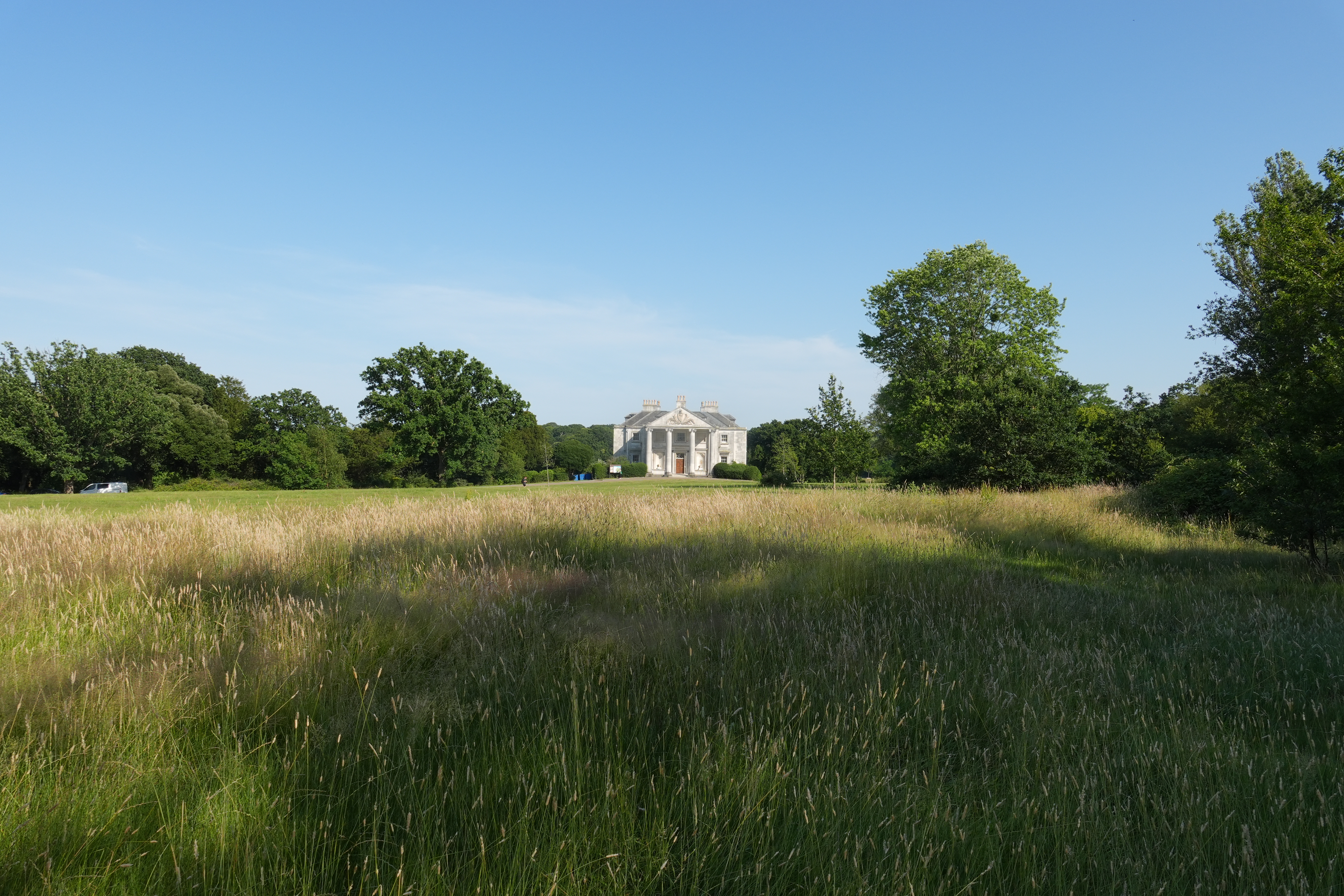


As for the lens, it’s remarkably good, especially considering the zoom range. It gives impressively sharp images at pretty much every focal length, even wide open at the telephoto end. This is especially important as it helps to keep ISOs reasonably low when you’re using fast shutter speeds to freeze subject movement.
I would, however, caution against stopping down much further than f/5.6, as diffraction blurring becomes clearly visible. It’s also important to be aware that factors other than the lens will often limit the sharpness you can attain. In particular, atmospheric distortion and heat haze often become a serious problem when shooting distant subjects with that long zoom lens.

Impressively, the lens maintains its fine performance at macro distances. While you can get physically closer to the subject at the wide end, I generally preferred shooting close-ups at the long end due to its comfortable working distance and lovely clean backgrounds.

Sony RX10 V: Our Verdict
When I reviewed the RX10 IV back in 2017, I declared it to be the best camera of its type yet made. Little did I think at the time that it would retain that crown for so long. But now, it’s been well and truly surpassed by the RX10 V. I’ve had a chance to use the new model extensively in advance of its launch, and it’s a remarkably capable camera. In particular, the updated design and autofocus system significantly boost its credentials as a serious option for wildlife or action photography. But it can still do everything else too – cityscapes, landscapes, and even close-ups.
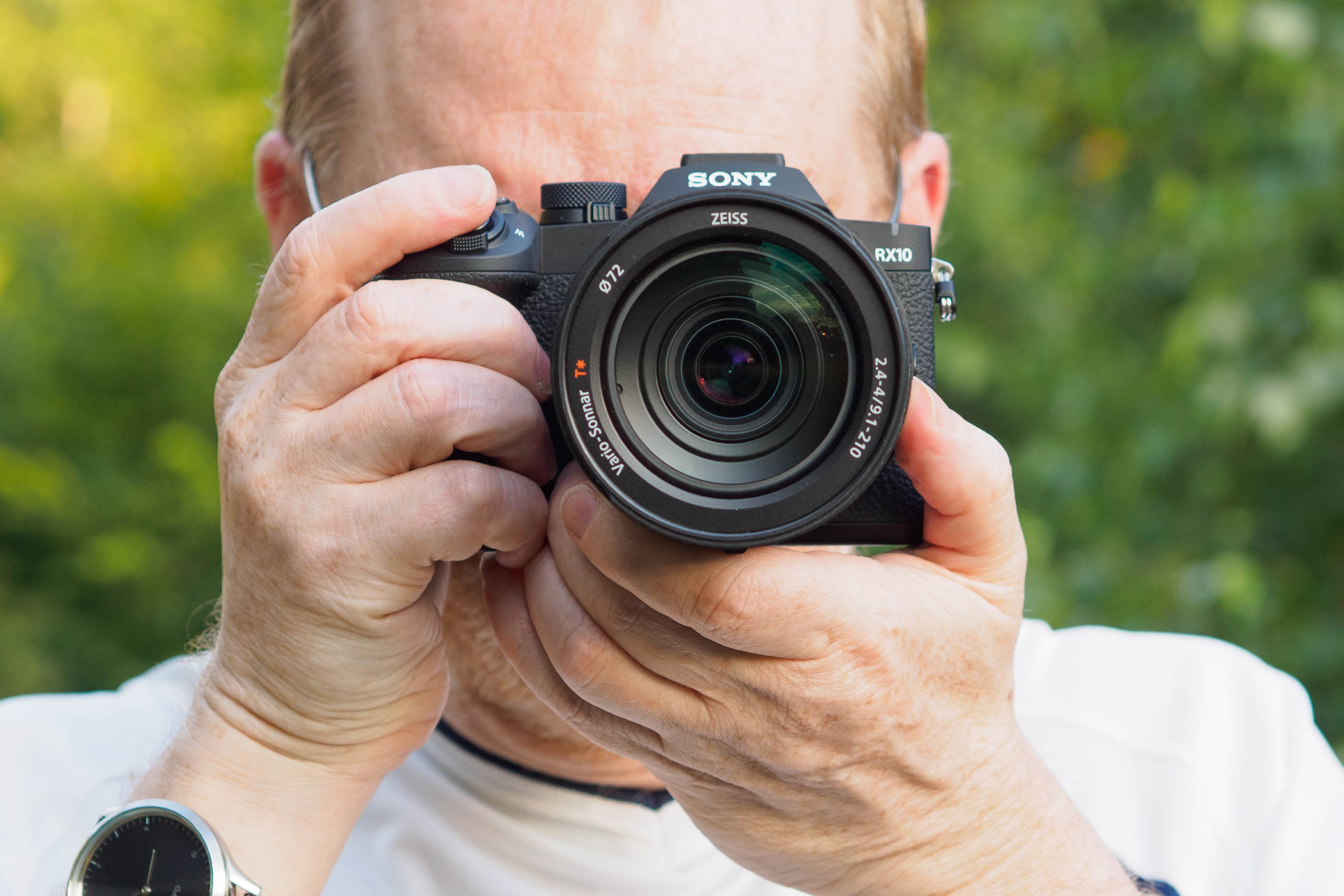
Crucially, the RX10 V is a dramatically better camera than its predecessor in real-world use, despite using the same lens and sensor. And I say this as someone who really liked the RX10 IV and gave it a very positive review. The A7-like body is a real step forwards, with its joystick, AF-On button, and large, comfortable handgrip. Likewise, the addition of subject detection transforms how well it works for almost any kind of subject you’ll shoot at the long end of the zoom. And the larger battery means you don’t really have to worry about running out of juice.
I’m sure there’ll be plenty of people declaring that the RX10 V is too large and expensive for a camera with a 1-in type sensor. I can sympathise with the latter – that $2300 / £2200 is a lot of money. But if you wanted to put together any kind of interchangeable-lens setup to cover the same 24-600mm range, you’d need to carry at least two lenses, which would weigh (and cost) considerably more. Meanwhile, all the other bridge cameras currently on the market use much smaller sensors, so won’t be able to match the RX10 V for image quality.

There are some caveats, of course. The power-on time can feel glacial when you’re in a hurry to grab a shot, and the tilt-only screen is outdated. With its relatively small sensor, this is also a camera that’s very much happier on bright, sunny days than on cloudy ones, or in low light. Even so, if you’re interested in an all-in-one long-zoom camera that can do pretty much everything, without having to carry multiple lenses, the Sony RX10 V is now the standout option, by far.

Sony RX10 V full specifications
| Specifications | Sony RX10 V |
|---|---|
| Sensor | 20.1MP stacked CMOS, 13.2 x 8.8mm |
| Output size | 5472 x 3648 |
| Focal length magnification | 2.7x |
| Lens | 9.1-210mm f/2.4-4 (24-600mm equivalent) |
| Shutter speeds | 30sec – 1/2000sec (mechanical), 30sec – 1/16000sec (electronic) |
| Sensitivity | ISO 100-12,800 |
| Exposure modes | PASM, Auto, scene |
| Metering | Multi, Centre, Spot, Average, Highlight |
| Exposure compensation | +/-5 in 0.3 EV steps |
| Continuous shooting | 10fps (mechanical shutter), 30fps (electronic shutter) |
| Screen | 3in, 1.62m-dot tilting touchscreen |
| Viewfinder | 3.68m-dot, 0.78x magnification |
| AF points | 575 (71% coverage) |
| Video | 4K 60p, 4K 120p cropped, Full HD 240p |
| External mic | 3.5mm stereo, multi-interface shoe |
| Memory card | UHS-II SD |
| Power | NP-FZ100 rechargeable Li-ion |
| Battery life | LCD 630, EVF 570 |
| Dimensions | 136.4 x 94.5 x 151.3 mm |
| Weight | 1111g |
Related reading:
- Panasonic Lumix FZ80D FZ82D Review – a 1200mm bridge camera
- Nikon Coolpix P1100 Review – 125x zoom in a bridge camera – but is it any good?
- Panasonic Lumix TZ300 review – this should have been the perfect travel compact, but there is one big problem
Do you want to win some great prizes for your photography? Enter your photos in our International Amateur Photographer of the Year competition. Free entry for photographers aged 13-21.
Follow AP on Facebook, Instagram, YouTube, TikTok and Irys.