We’ve invited three photographers working in boudoir photography to share one image they consider among their best. From split-second decisions to carefully crafted compositions, they reveal the thinking, technique and experience behind the shot, offering insight into not just how the image was made, but why it matters.
Alexandra Vince
Alexandra Vince is a British boudoir photographer and founder of FYEO Portraits, specialising in elegant black-and-white portraiture that celebrates confidence, individuality and beauty. A pioneer of boudoir photography in the UK, she has spent more than 20 years creating flattering, empowering portraits for women. Her work has been featured by the BBC, Reuters and national newspapers, and she has appeared on television alongside celebrities including Alesha Dixon and Gok Wan.
Instagram @fyeoportraits
Tell us about this image. What are we looking at, and why did you choose it?
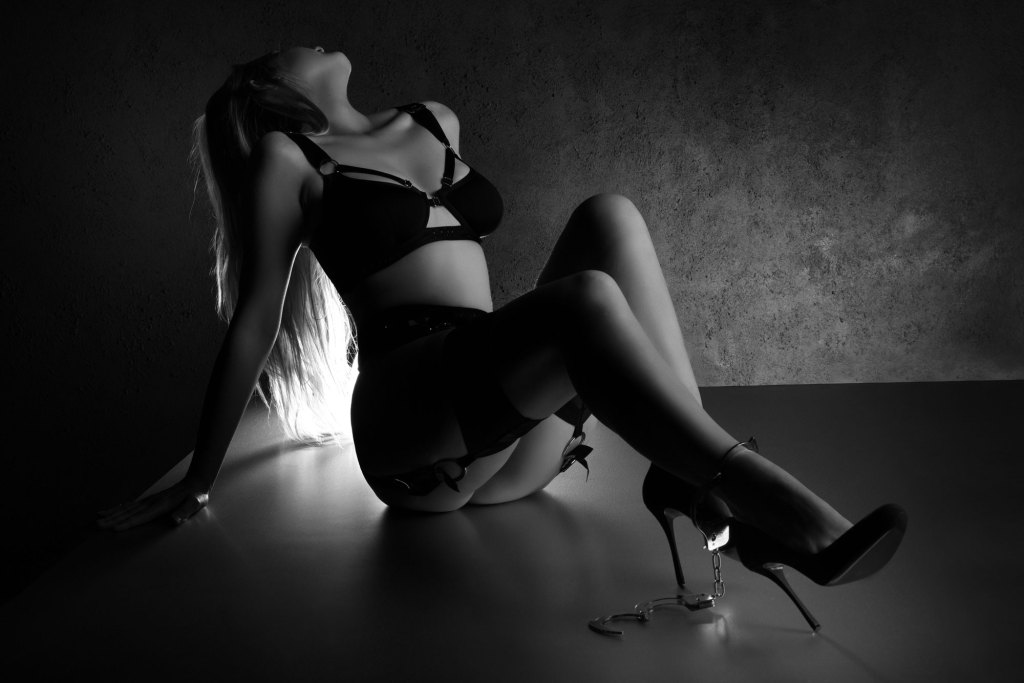
I picked this image because it sums up what I do and what my studio is known for. It’s a black-and-white portrait I created for a media campaign, and it really shows my signature style, using the female body to create elegant shapes with dramatic studio lighting.
The model is Kirsty, photographed in a full-length seated pose. The angle, lighting and overall feel all come together to create an image that people instantly recognise as my work. It’s become one of the defining photographs in my portfolio.
What was happening just before and after this frame?
Before we shot it, I demonstrated the pose so Kirsty knew exactly what I was looking for. I set up my posing platform and adjusted the lighting to create a strip of light across her body, with a backlight behind her. As soon as we’d captured it, we moved on to the next pose- one of 30 or so, which is typical for a shoot.
What were the key creative decisions you made when making this photograph?
Everything was planned. I used my signature posing platform because I never ask clients to pose on the floor — I don’t think it’s respectful to ask anyone to lay on the floor in a state of undress and it shocks me that other boudoir photographers do.
The lighting was designed to sculpt the body, with a soft side light and a beauty dish behind Kirsty creating a subtle glow around her lower back. She wore her favourite black lingerie and heels, and I added handcuffs around one ankle to introduce a hint of bondage. The aim wasn’t to be explicit, it was to create something elegant, suggestive and empowering.
Can you share the technical details and how they shaped the outcome?
I shot this with my trusty Bowens studio lights, which I’ve owned for years. A beauty dish behind Kirsty was set to full power for the backlight, while a softbox to one side was around three-quarter power to shape the light across her body. The camera was a Nikon D810 with a 50mm lens. My settings were f/11, ISO 160 and 1/125 sec. Those settings gave me plenty of sharpness while letting the lighting do the work.
What was the biggest challenge in making this photograph?
Every detail was directed, the hands, supporting arm positions, leg position, head angle, lift of the rib cage and tilt of the pelvis to create the curve through the back. None of it happened by accident. That’s where experience comes in. My job is to guide clients clearly while making them feel relaxed and confident throughout the shoot.
What does this photograph mean to you, and what would you like readers to take from it?
This image has become one of my studio’s signature photographs, and it represents everything I love about boudoir photography. It’s about creating beautiful shapes and helping ordinary women see themselves differently. It’s one of my favourite poses, I even had it printed on a T-shirt. I’ve been refining versions of this image for over 24 years. I originally used a black posing platform before switching to silver because it reflects light back onto the body so much better.
What makes a photograph boudoir? Is it defined by the photographer’s intent, the subject, the viewer, or something else altogether?
This something I write about in my book The Queen of Boudoir, for me, boudoir is about confidence, self-expression and celebrating who we are as women. It’s a female empowerment movement. I hope people see that boudoir is about artistry, confidence and empowerment, not simply photographing someone in lingerie. Anyone can photograph someone in underwear, but that doesn’t automatically make it boudoir. The experience is what matters. It’s about helping everyday women see themselves in a completely different light. To me, boudoir is simply personal portrait photography created for confidence and self-celebration.
Was it luck or judgement?
Definitely judgement. Every part of this photograph was carefully planned, from the pose and lighting to creating an hourglass shape through body positioning. Nothing was left to chance.
What did this image teach you?
This image taught me about ‘body-sculpted poses.’ This photograph is the result of years of refining ideas, posing, lighting and learning how to work with people. When all those elements come together, you create photographs that people remember.
What advice would you give someone trying to make a similar shot?
You need a controlled studio atmosphere, good lighting and, ideally, a black box studio.
The real skill is directing people. If you can communicate clearly, build trust and understand how light shapes the body, you’re well on your way to creating photographs like this.
fyeoboudoirphotography.com and https://stan.store/TheQueenOfBoudoir
Johanna Elizabeth
Johanna Elizabeth is a Hampshire-based portrait photographer specialising in empowering beauty and boudoir photography for women. Over the past 12 years she has photographed more than 8,000 clients, creating a supportive, confidence-building studio experience designed to help women see themselves in a new light. Working with an all-female team, Johanna guides clients through every stage of the process, with a focus on celebrating individuality, self-esteem and body confidence.
Instagram @johannaelizabethuk and @je_loveyouagain
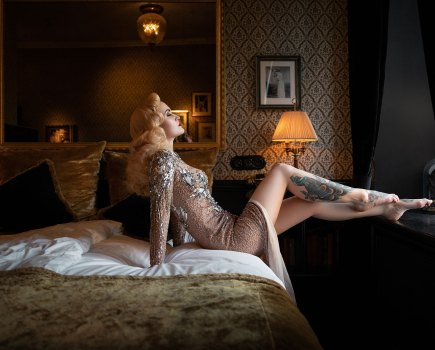
Tell us about this image. What are we looking at, and why did you choose it?
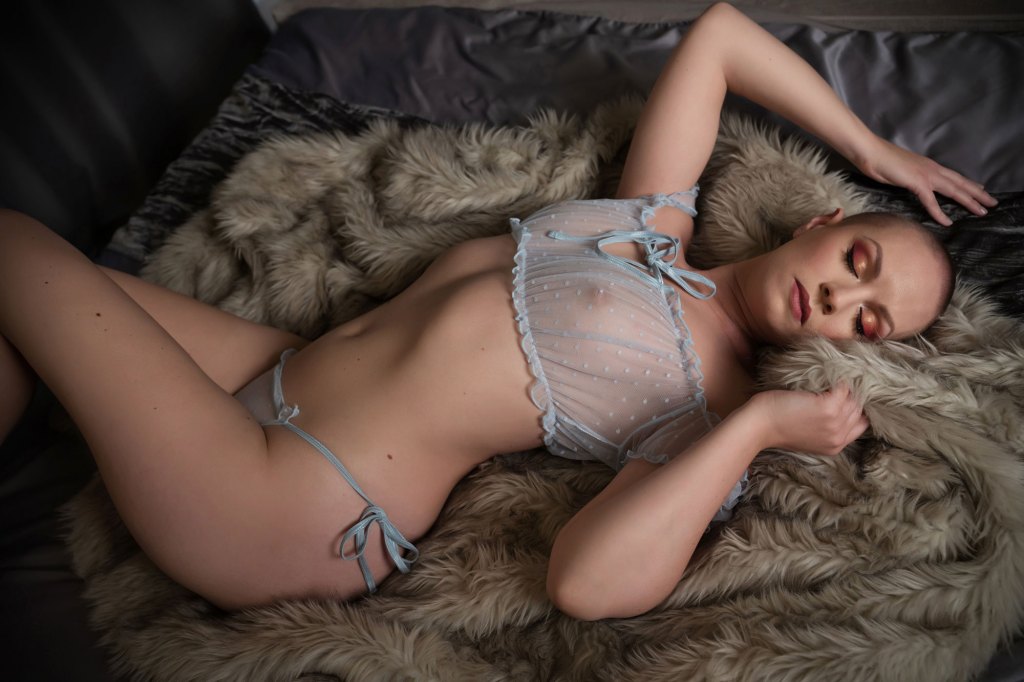
One of my clients, photographed in my private studio. My shoots are full of laughter and encouragement. I direct every element, down to the position of a little finger. I chose it because it does what I want all my images to do, show a woman completely at ease in her own skin. A single light source, closed eyes. Intimate without feeling exposed. It’s not trying too hard.
What was happening just before and after this frame?
Every pose is fully directed, a reassurance my clients need.
What were the key creative decisions you made?
This pose celebrates all women regardless of body type. The fur adds extra texture and softness. The outfit was her own choice, discussed beforehand on a Zoom call so nothing on the day was a surprise and she chose it with my guidance. That sense of control shapes how she feels in front of the camera.
Can you share the technical details?
Sony A7R3, 31mm, f/4, 1/125s, ISO 640. I stick to 30–50mm to avoid distortion. f/4 gives me the depth of field I love. 1/125s is plenty as my clients aren’t moving. Lighting here is continuous through an 80cm gridded octobox. Temperature is warm (3200k) allowing me to shoot with extra ambient lighting in the set. I shot this with my Photoflex Starlite, used throughout my entire career before it was discontinued. I’ll genuinely miss it. My Godox continuous light is a recent switch and I’m loving and still getting to grips with having choices in colour temperature.
What was the biggest challenge?
I’m pernickety to the point of obsession, making constant small adjustments, chasing a version of the image until I’m happy and clients love that. What I’m always doing is what I call ‘chasing the S’. I think the female form needs to flow across the frame in a sensual shape that carries the eye through the image. Posing, angles and lighting matters enormously, particularly with different body types and much of how I see a frame comes from time in museums and galleries studying the masters. I discovered later in life that I’m neurodivergent, and it explains a lot. It doesn’t mean clinical or detached, I actually have huge empathy and notice everything, including how someone’s feeling.
What does this photograph mean to you?
It means everything to me. How women look and how they think they look are rarely the same thing. A lot of this is in the mind and it’s where most of my work happens. I get to show them something true about themselves they couldn’t see before.
What makes a photograph boudoir? Is it defined by the photographer’s intent, the subject, the viewer, or something else altogether?
It’s a harder question to answer than it looks. Boudoir is a spectrum that means something different to every woman who walks through the door. What I can tell you is what it means to me, empowerment. I believe some photographers often get that wrong, as I’ve met women mentally damaged by previous shoots, in how they felt about themselves during and afterwards. Some have even arrived at a shoot not realising the photographer was male and went ahead despite being deeply uncomfortable. That’s a consent issue the industry doesn’t discuss enough. However, it isn’t only about gender, it’s about any photographer who doesn’t understand the emotional layers, can’t pose a woman in a way that makes her feel good, or lets their own lack of confidence show in the room. A client is so vulnerable and a photograph is permanent. The responsibility doesn’t end when the shoot does.
Was it luck or judgement?
Before every shoot we build a mood board. She chooses what she loves, so we both know where we’re headed. I adapt on the day to suit the individual woman and very little is left to chance.
What did this image teach you?
It didn’t teach me anything new, it reassured me. After eighteen years everything comes together and the result is images that can’t be resisted in the reveal session. This is my business, this is how I earn my living.
What advice would you give someone trying to make a similar shot?
Understand why the woman is there and what she needs to feel safe. Know your lighting and learn to pose the female form properly. Before booking real clients, take a confident friend and practice, a lot. Your clients will absorb whatever energy you bring into the room, so stay reassuring, chatty, and make it all about her.
Kate Kirkman
Kate Kirkman is a UK photographer and filmmaker whose MUSE project focuses on elegant, fine art-inspired boudoir portraiture. Blending natural emotion with creative storytelling, she creates images that celebrate confidence, individuality and human connection. A Sony Europe Imaging Ambassador for nine years, Kirkman has more than 17 years’ professional experience and has also written for several of the UK’s leading photography magazines.
Instagram @katehopewellsmith and @muse_boudoir_uk
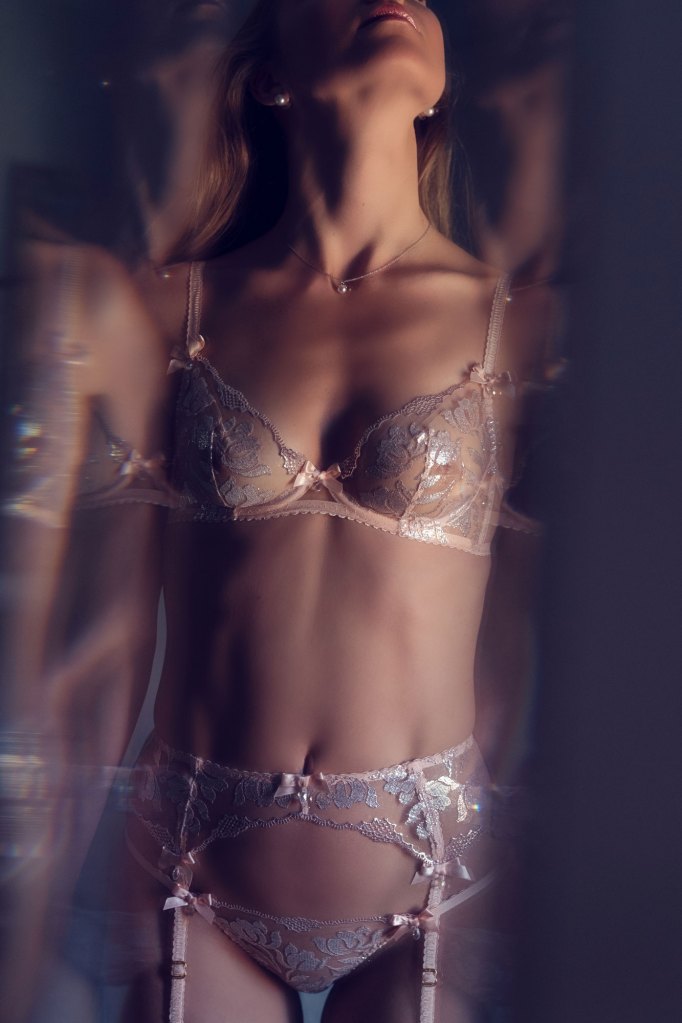
Tell us about this image. What are we looking at, and why did you choose it?
Asking me to pick one image from the whole of my boudoir work is pretty much impossible — every shoot is different, and I have a different experience with each woman in front of the lens. What I’ve tried to do instead is choose an image that sums up my style and how I choose to shoot boudoir. This image shows the way I most enjoy using light, and how flattering it is for women. It also shows the use of reflections — shooting into a bevelled mirror so I get more than one version of the client in a single frame. And finally, I think it’s very feminine. It’s subtle, but strong. It’s just the kind of image I like to shoot.
What was happening just before and after this frame?
There isn’t really a moment before or after with this shot, in the sense that it wasn’t caught candidly. Every shot is quite heavily considered and set up. Having said that, this mirror is on the wall in the bedroom I shoot in — it’s not something I plan. It’s something I’d notice while shooting, and I will have moved her into the right place and posed her according to the light.
What were the key creative decisions you made in making this photograph?
The two most important decisions were exactly where and how to pose her in relation to the light source, which was window light, and the posing itself, which was very specific. I would have asked her to lift her chin and turn her face until the lip gloss picked up the light. For exposure, what some would call underexposing is, for me, just exposing for the highlights. If you were shooting in an auto mode, you’d be looking at around minus -1.5 to minus -2 stops of exposure compensation.
Can you share the technical details and how they shaped the outcome?
This isn’t a technically difficult image. I shot at the maximum aperture of f2.8 – both to drop the background away and because of the low light levels – and then it came down to finding a safe shutter speed without pushing the ISO too far and compromising quality. Just to reiterate the point above: the overall exposure looks moody because I’m exposing for the highlights rather than the midtones, which ‘on paper’ might read as underexposed.
What was the biggest challenge in making this photograph?
As with so much boudoir, the real challenge is posing the woman’s body as well as you possibly can while keeping the image looking natural — it needs to look like a woman would stand like this, not like she’s doing it for the camera. This is really important to me on every shoot. And making sure the light’s hitting and shadows are falling in the most flattering way.
What does this photograph mean to you, and what would you like readers to take from it?
I remember every one of my boudoir clients because it’s such an intimate shooting space — I know the story behind each shoot, and that’s what makes it special to me. This image also sums up what I’m trying to achieve on every boudoir shoot; it’s very much MUSE’s signature style. I’d want readers to take away that MUSE boudoir is sensual, strong and beautiful — there’s nothing cheap or overtly sexual about it.
What makes a photograph boudoir? Is it defined by the photographer’s intent, the subject, the viewer, or something else altogether?
Good question. Boudoir can mean many different things to many different people — it’s one of the things I’ve struggled with about the label. But it’s now well understood as an intimate shoot for women that generally involves lingerie. For me, it’s about producing beautiful images of a woman that shows how gorgeous she is, and that reflects how her partner sees her. What the final image actually looks like is deeply dependent on the woman — her taste in lingerie, her body, and so on. So no, it’s not one single thing — it’s a combination of the photographer’s style and intent and the subject. In terms of the viewer I would say that MUSE definitely shoots boudoir with a woman’s eye, not a man’s eye. We are not objectifying women at all — we are celebrating them.
Was it luck or judgement?
Judgement.
What did this image teach you?
To stay open-minded, on many of my boudoir shoots I walk around and look from various angles for reflections or things to shoot through. I don’t come at it as a studio photographer — I come at it as a location photographer, where the environment is just as important to me as the woman. In this particular image there isn’t much environment to speak of, but in many of my boudoir photographs the environment plays a big role.
What advice would you give someone trying to make a similar shot?
I’ve always loved using bevelled mirrors or frames, whether I’m shooting boudoir or getting-ready shots at a wedding. It’s lovely to get something a bit more abstract, with more than one version of your subject in the frame. I know there’s software that can do this afterwards, but I always want to get it in camera. It can feel slightly strange for the subject, because you’re obviously not pointing the camera at them — you’re pointing it at the mirror or the frame. I keep talking to the subject throughout. Sometimes it’s important to explain what you’re doing, and it certainly is in boudoir — whereas at a wedding, I wouldn’t explain. It’s also worth knowing these shots work much better with a wider focal length lens than the more traditional portrait lengths.
museboudoir.co.uk and katehopewellsmith.com
If you are ready to start your own journey in boudoir photography, have a look at our Complete Guide to Boudoir Photography and Essential Guide to Lighting and Studio Setup for Boudoir Photography.
Related reading:
- Posing for these beautiful and sensual boudoir photographs helped cancer survivors to find their strength again [NSFW]
- Why an all-female team for boudoir photography is an absolute must for making women feel beautiful and confident [NSFW]
- 9 boudoir photographers you should follow on Instagram right now [NSFW]
Do you want to win some great prizes for your photography? Enter your photos in our International Amateur Photographer of the Year competition. Free entry for photographers aged 13-21.
Follow AP on Facebook, Instagram, YouTube, TikTok and Irys.