Amateur Photographer verdict
Its exceptional sharpness, fast autofocus, and an unbeatable price makes up for a lack of stabilisation. A perfect option for for casual shooters to finally buy a dedicated macro lens- Very good image quality
- Fast autofocus
- Competitive price
- No optical image stabilisation
- No aperture or control ring
- No AF/MF switch
Tamron 90mm F/2.8 Di III Macro VXD at a glance
- $699 / £549
- 23 cm minimum focus distance
- 12 bladed aperture
- 22.6oz/640g (Nikon Z); 22.2oz/530g (Sony E mount)
- Sony E and Nikon Z Mount
Tamron has a very strong track record in short telephoto macro lenses having produced multiple 90mm versions, first f/2.5 models from the late 1970s, before moving to f/2.8 iterations from the mid 90s. This culminated in 2004’s legendary SP AF 90mm F/2.8 Di which, if you had a DSLR and a yearning to shoot closeups at the time, was likely to be near the top of your wish list. It was produced for all major mounts. A new internal-focus, optically-stabilised design appeared in in 2012, which was further updated and improved in 2016.
This latest model was announced in late 2024 and is specifically designed for full-frame mirrorless cameras. At $699 / £549, it’s notably more affordable than other similar lenses such as the Sigma 105mm F2.8 DG DN Macro, let alone the camera makers’ own macro lenses. It’s available for both Sony E and Nikon Z mount bodies; I tested it on a Nikon Z8.
Tamron 90mm F/2.8 Di III Macro VXD – Features
At 90mm, the lens sits in the middle of the traditional range of options, this focal length being preferred by many as it gives a decent working distance, meaning you’re less likely to disturb the subject and can more easily fit light in between it and the lens. The longer focal length also means it’s easier to isolate the subject. But most importantly, while many lenses have the m-word in their name, this is a true macro model, capable of 1:1 reproduction, which is to say the subject is projected at life size on the sensor. Many optics only achieve a 1:2 or 1:4 reproduction by comparison.
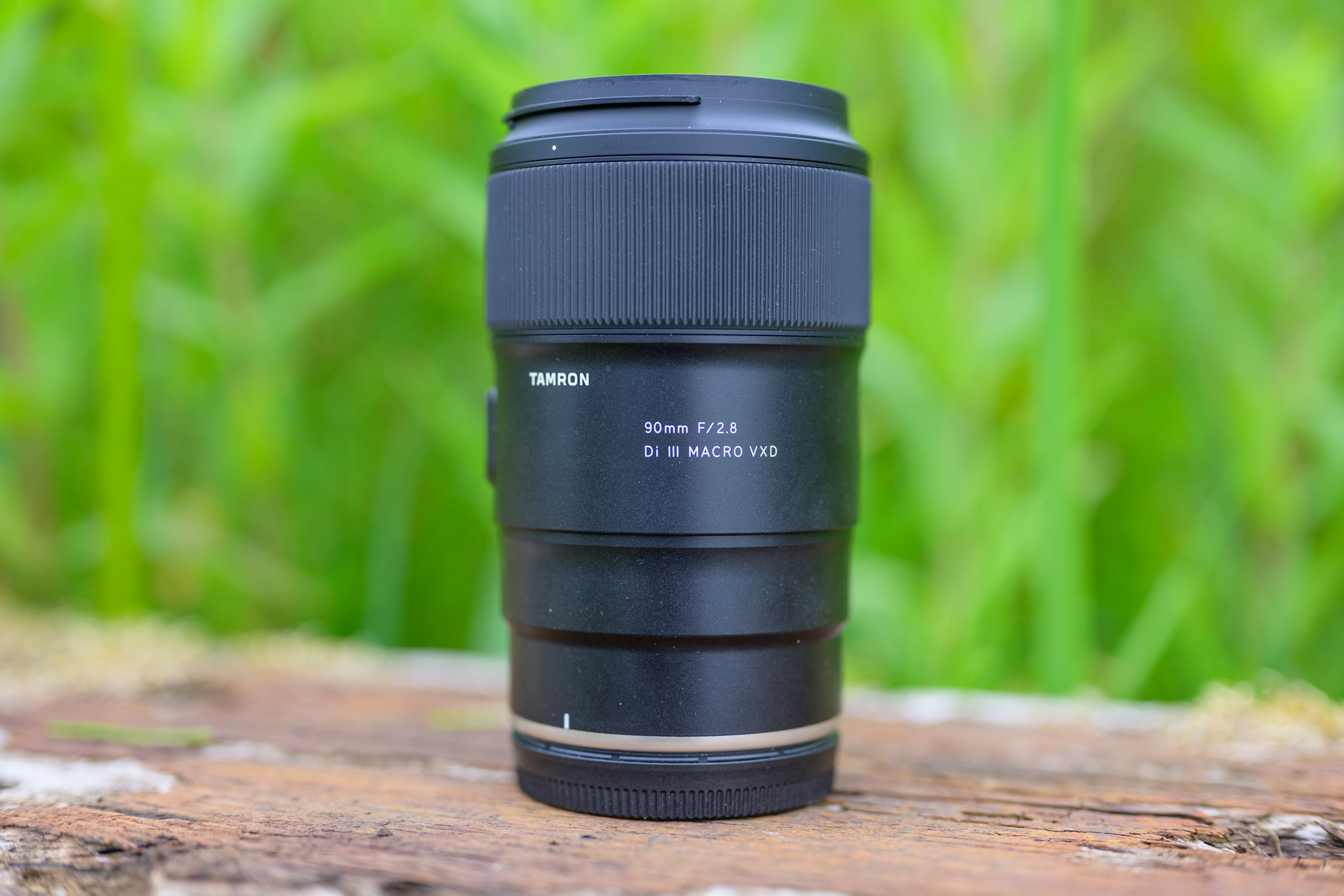
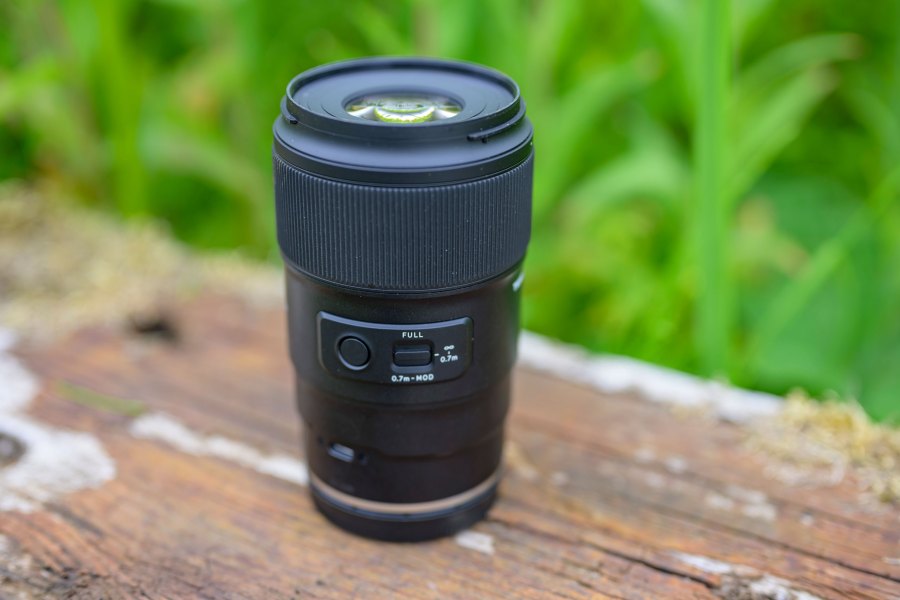
The lens has a construction of 15 elements in 12 groups, four of which are Low Dispersion lenses to suppress aberrations, as well as Tamron’s Broad-Band Anti-Reflection Generation 2 (BBAR-G2) coating to fight off ghosting and flare. There’s also an unusual 12-bladed aperture, which should give more circular and soft bokeh when shooting wide open, while also creating 6-pointed sunstars at the smallest apertures.
It uses Tamron’s ‘VXD’ autofocus system, a frictionless, electromagnetic drive that replaces traditional mechanical gears, so should be near-silent and highly responsive. The minimum distance is 23cm, and there the greatest magnification is achieved.
Unlike its predecessor, the lens has no optical stabilisation, which is likely a decision made due to the prevalence of in-body image stabilisation in modern mirrorless cameras, though a few models do still lack it. This is worth bearing in mind, as along with subject movement, camera shake is massively exaggerated in macro frames.
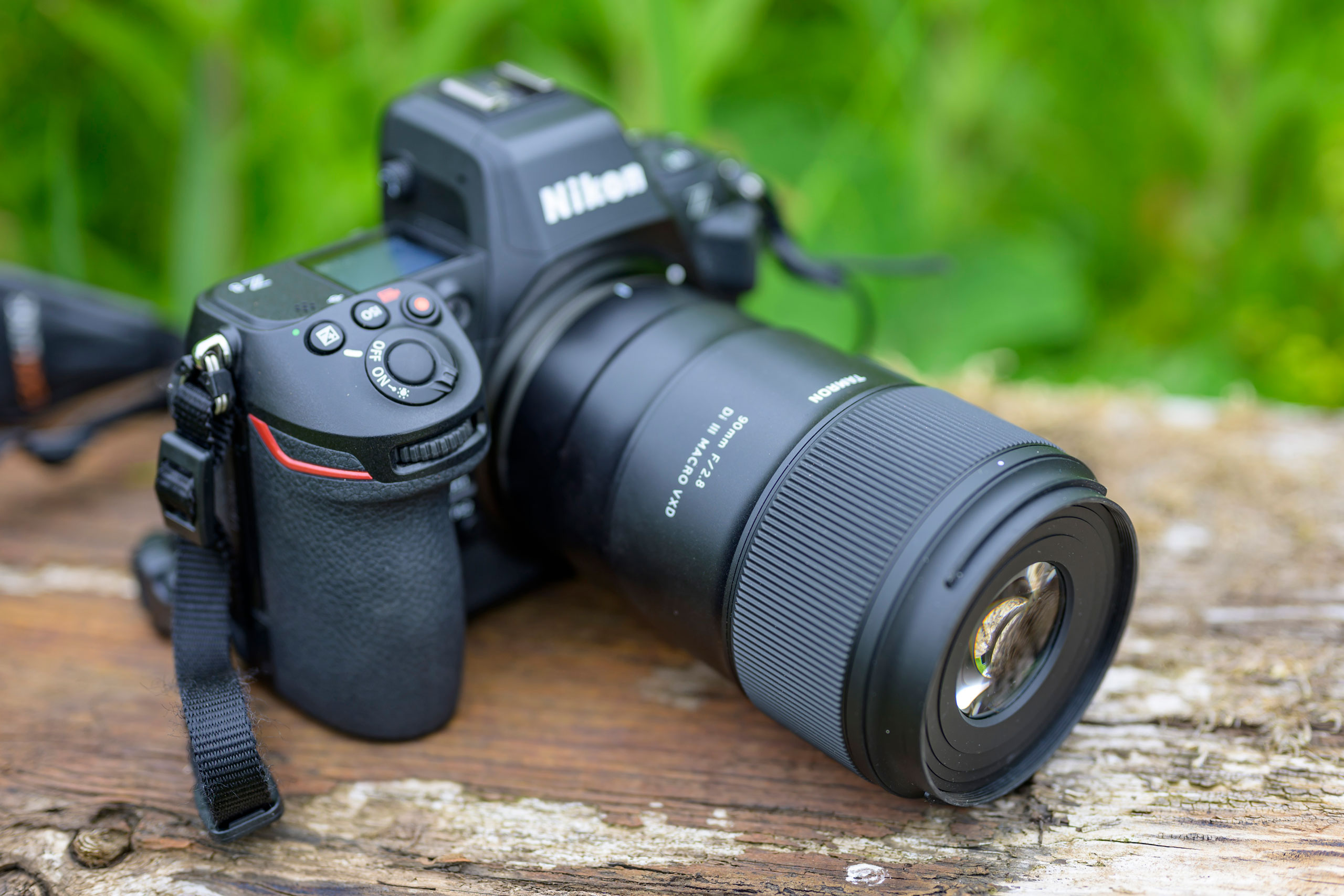
It has an f/2.8 maximum aperture, giving a decent amount of light gathering power. However, in exposure terms, this falls to an effective f/5.6 at the 1:1 magnification setting, something that happens in all regular macro models.
The lens has a three-stage focus limiter and a customisable focus button. However, there’s no physical aperture ring, AF/MF switch or separate control dial on the barrel. The lens claims weather sealing and there’s an obvious rubber grommet around the rear element, while it takes 67mm filters and comes with a large lens hood including a port for controlling filter position.
Tamron 90mm F/2.8 Di III Macro VXD – Build & handling
The Tamron 90mm F/2.8 Di III Macro VXD performed very nicely in terms of handling. At 640g in weight and 127mm long, it’s not an unusually small or light lens, but it balanced nicely with my Z8 body and didn’t feel front heavy on a tripod either. A third-party lens collar can be added fairly cheaply if you’re going to add a ring light or similar. But this is the preserve of macro enthusiasts and product photography professionals, and unlikely to concern everyday still-life and nature fans like me.
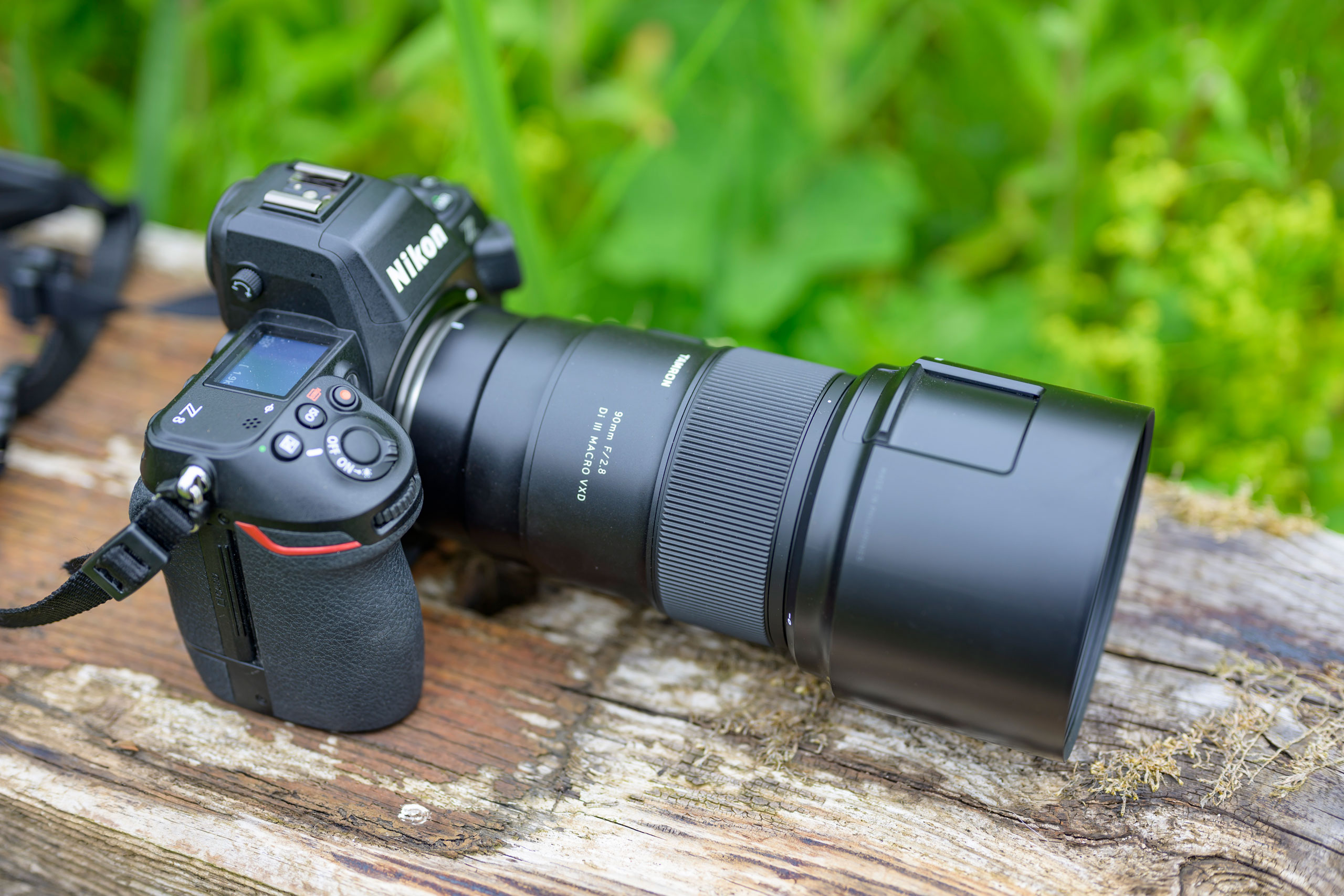
The minimum focus of 23cm, which is measured from the camera’s sensor. This means that the subject can be as little as 9cm in front of the lens, so working distance isn’t huge, and practically, when the hood is fitted, this falls to about 1.5cm, close enough to shade or startle the subject. But in real world macro situations you are not always seeking the minimum focus, and the lens does not physically extend when focusing, so there is no additional risk there.
The use of a sliding port in the hood is welcome, though the one time I could have used a polariser I’d left it at home! I did test the ease of use however and rotating a bezel was fuss-free. The hood reverses neatly over the body when not in use without adding much width, though it’s worth noting the manual focus ring is rendered inaccessible that way.
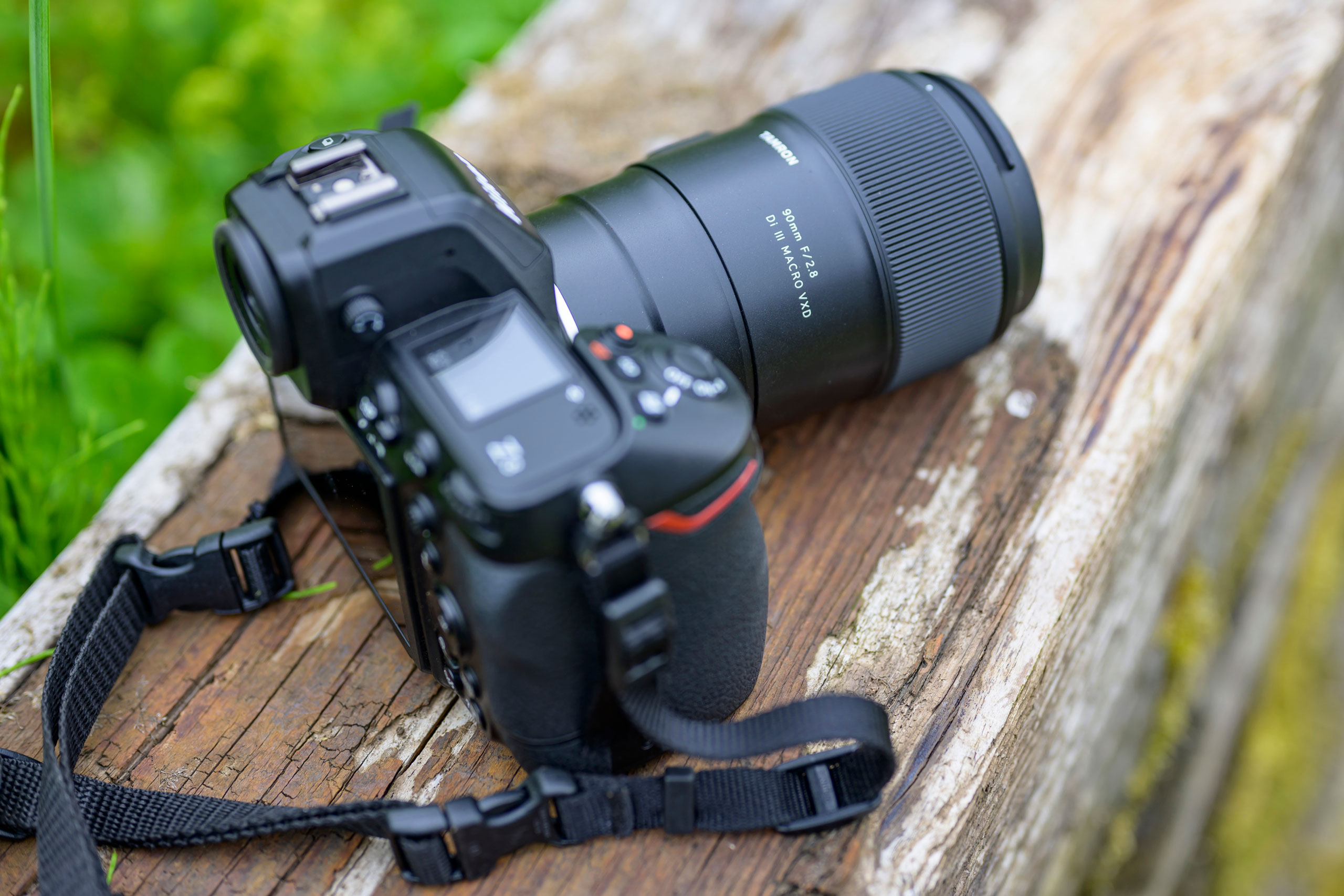
The f/2.8 maximum does help freeze subject movement and camera shake, offsetting somewhat the lack of image stabilisation. More stability would be welcome, but thanks to the camera’s IBIS, at no point did I believe I lost shots to camera shake. Blur is more likely due to low shutter speed or poor handling, or distance changes leading to missed focus.
I never got the lens wet enough to test its weather sealing. But I did feel the need to add a cheap rubber cover to the USB-C port cover, mainly to stop the ingress of husky fluff, which is the bane of many of my electronic devices.
Tamron 90mm F/2.8 Di III Macro VXD – Focusing
The VXD mechanism gave sprightly results in testing and if the correct focus point wasn’t picked up immediately, the manual focus ring can be used to override it and bring roughly the right range into play. While it didn’t feel quite as snappy as the Tamron 35-100mm I recently tested, it was still fast, going from near to far in under half a second. In conjunction with the focus limiter, it’s an easy lens to lock on.
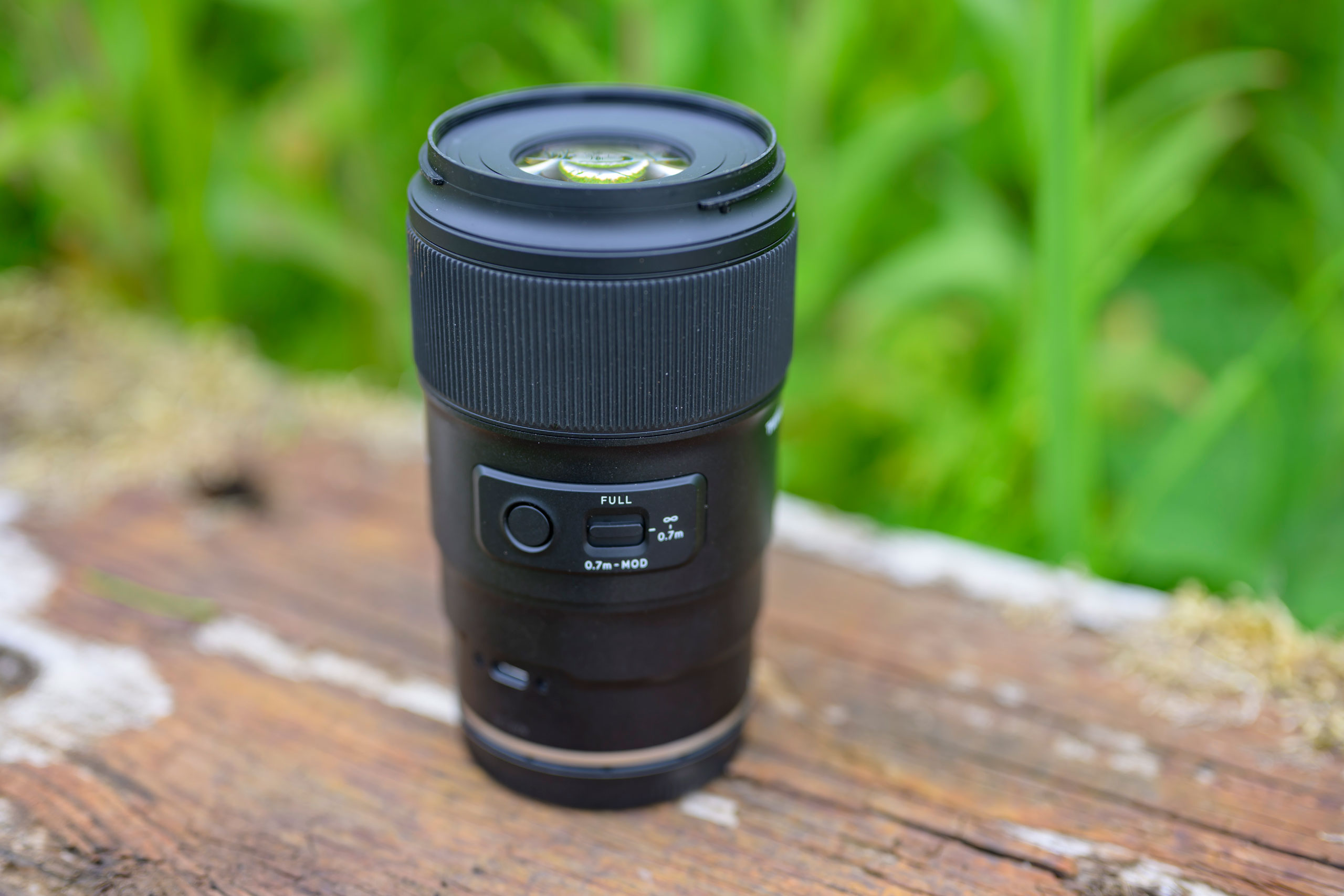
Throughout my testing, I used several methods of focusing, from on-the-hoof methods like using Continuous AF and keeping the AF point on the subject, to fastidious manual focusing from a tripod with enlarged previews. All worked excellently, and though there’s the slightest audible grunt when the VXD motor engaged, it was by no means alarming.
Focus breathing can be important for more serious macro fans who use stacking techniques, as the frames can then need cropping. Although it was noticeable across large distances, it didn’t seem to be a problem when stacking a centimetre or so, which is how most people will use it.
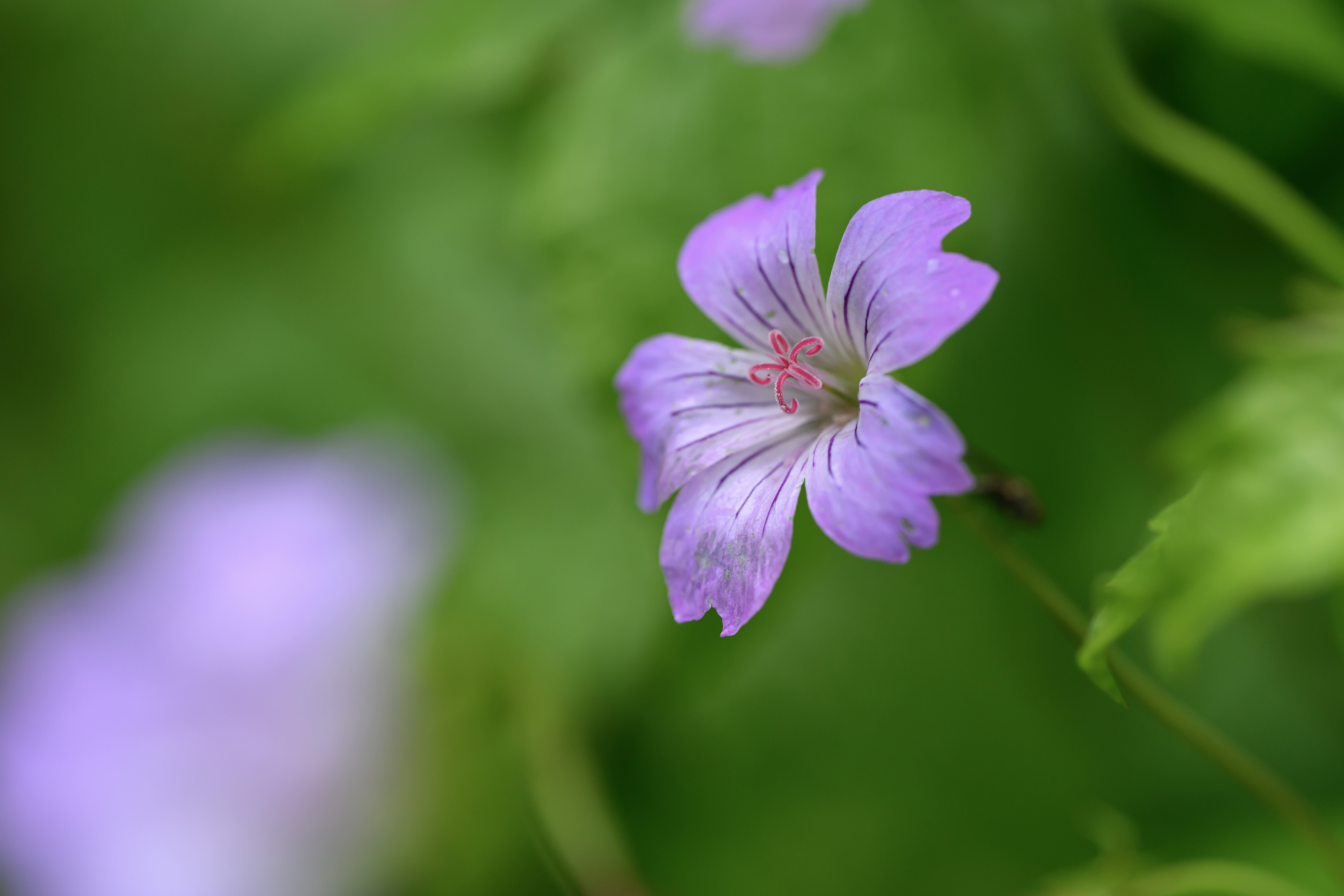
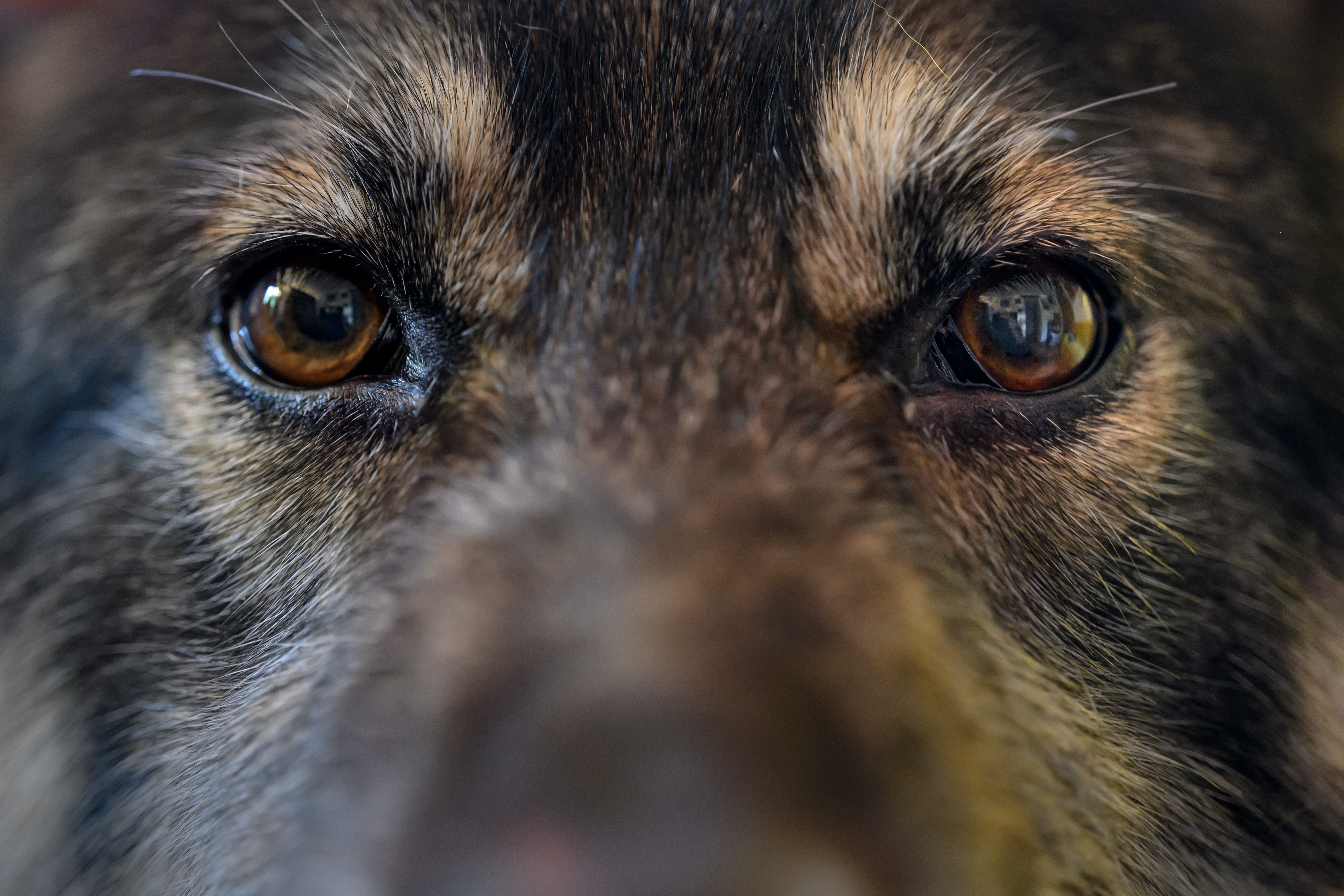
If you’ve read a 90mm macro lens review before, you’ll know that this is the point I’m contractually obliged to say that this is also a good portrait option. And it is, albeit slower to focus and with less ability to blur backgrounds than larger-aperture 85mm primes. But it had no problem with eye-AF on the Z8.
When manual focusing, the ring’s resistance is on the lighter side, but not so much that it’s inaccurate. Out of the box it was set up as non-linear, so it’s more precise, with slower turns meaning the distance shifts more gradually. This and the focus button can be customised with the Tamron Lens Utility.
Tamron 90mm F/2.8 Di III Macro VXD – Image quality
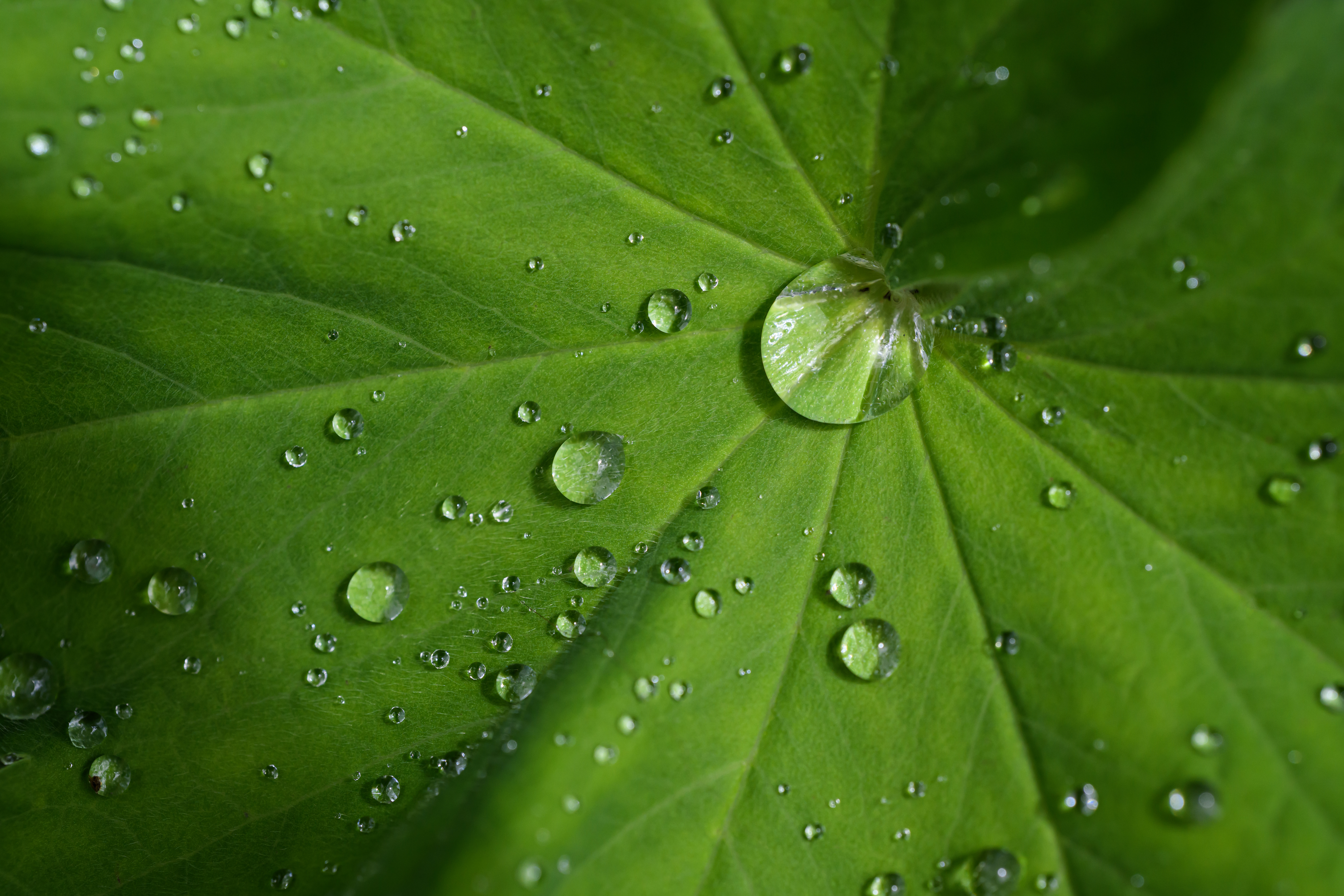
Even at f/2.8, the lens is very sharp, improving through to f/3.5, while corner-to-corner resolution was best around f/4 through to f/5.6, I thought. Results in my testing were slightly crisper away from the very minimum focus, but I wouldn’t hesitate to use the lens there, as it’s still very impressive. There is also very little fringing, even when shooting against high-contrast subjects, while flare is exceptionally well handled if you can’t shoot in the shade, as is usually better for macro.

Bokeh was good too. Points of light are round and fairly flat until the frame edges, and while backgrounds are possibly a little fussy when focusing further off, they are beautifully smooth close up. Vignetting is noticeable wide open, but seemed to be more prevalent focusing towards infinity, so isn’t an issue for most subjects, and it only extended to around a stop with the profile switched on. Curvature distortion seemed to be very low, so it’s a winner for flat subjects.
Tamron 90mm F/2.8 Di III Macro VXD – Verdict
I am by no means a regular macro shooter – or a particularly good one! – but l do take great enjoyment from using such lenses. They provide a tremendous sense of discovery and the challenges macro photography brings in terms of technique can make results even more satisfying. That said, I’ve never been moved to actually buy a dedicated macro lens, but the Tamron 90mm F/2.8 Di III Macro VXD is well placed to change that. It has impressive sharpness with very few optical flaws, handles nicely, focuses quickly and is significantly cheaper than its competitors. Only the lack of stabilisation really lets it down, but of course this only accounts for camera shake, not subject movement.
Some of the benefits of this lens are aided by it being native to mirrorless bodies. For instance, the speed of focusing from the camera and lens means you can comfortably use modes like continuous, tracking or subject-detection AF and expect to keep the critical point in focus even working handheld, which was a lot tougher with a DSLR. Using a body with IBIS is also important, but most now offer it. These may not be facets unique to the Tamron 90mm F/2.8 Di III Macro VXD, but when combined with the lens’s various strengths they do make the process easier and results better, all at a reasonable price.

Tamron 90mm F/2.8 Di III Macro VXD – Full Specifications

| Specifications | Tamron 90mm F/2.8 Di III Macro VXD |
|---|---|
| Price | £549 |
| Filter Diameter | 67mm |
| Lens Elements | 15 |
| Groups | 12 |
| Diaphragm blades | 12 |
| Aperture | F2.8 – F16 |
| Min focus | 9.1" / 23cm |
| Length | 4.98" / 12,65cm |
| Diameter | 3.12" / 7,92cm |
| Weight | 22.6oz/640g (Nikon Z); 22.2oz/530g (Sony E mount) |
| Lens Mount | Nikon Z, Sony E |
| Included accessories | Caps, hood |
Related reading:
- Complete guide to Macro Photography – create great macro photos
- Best smartphones for macro photography – capture close-up detail
- The best value macro lenses
Do you want to win some great prizes for your photography? Enter your photos in our International Amateur Photographer of the Year competition. Free entry for photographers aged 13-21.
Follow AP on Facebook, Instagram, YouTube, TikTok and Irys.