Our emerging photographer series aims to shed a light on up-and-coming talent. Photographers are offered a platform to share their work with a wider audience through the AP channels, with the scope of furthering their careers. We also get an insight into their inspirations, the camera gear used and future aspirations, as well as the journey taken into photography – which doesn’t have to be the most traditional route!
Si Jubb and Ethan Parker, who won our Emerging Photographer of the Year award at this year’s AP Awards, recently spoke at our Festival of Photography: Documentary event. Previous emerging photographer award winners include Aliz Kovacs-Zoldi and Tariq Sadu. We’ll regularly be sharing the work of photographers on our website and social media – and even in the magazine – so if you are an someone who has recently started their photography journey or are a student/graduate, share your work with us at [email protected]
Safa ‘Saf’ Basharat Malik speaks with Peter Dench for this week’s feature.
When and why did you start taking photographs?
I started taking photographs in Year 9 in school. My mum bought me my own compact digital camera. That was the first ever time using a camera that wasn’t a phone. Around the time I finished my GCSEs a few years later in 2015, I went through a difficult period — I was hospitalised and left in critical condition and lost my sense of direction, not just in terms of a career but in life in general. A couple of years after that through recovery, I re-discovered photography and found myself interested in the professional side of it in 2017-18. I’ve always been a curious person by nature, and even in school I gravitated towards the creative and technical side of things — especially editing and visual work. Photography became a space where I could explore freely without pressure, and over time it grew into something I felt deeply connected to.
What genre do you tend to mostly work in?
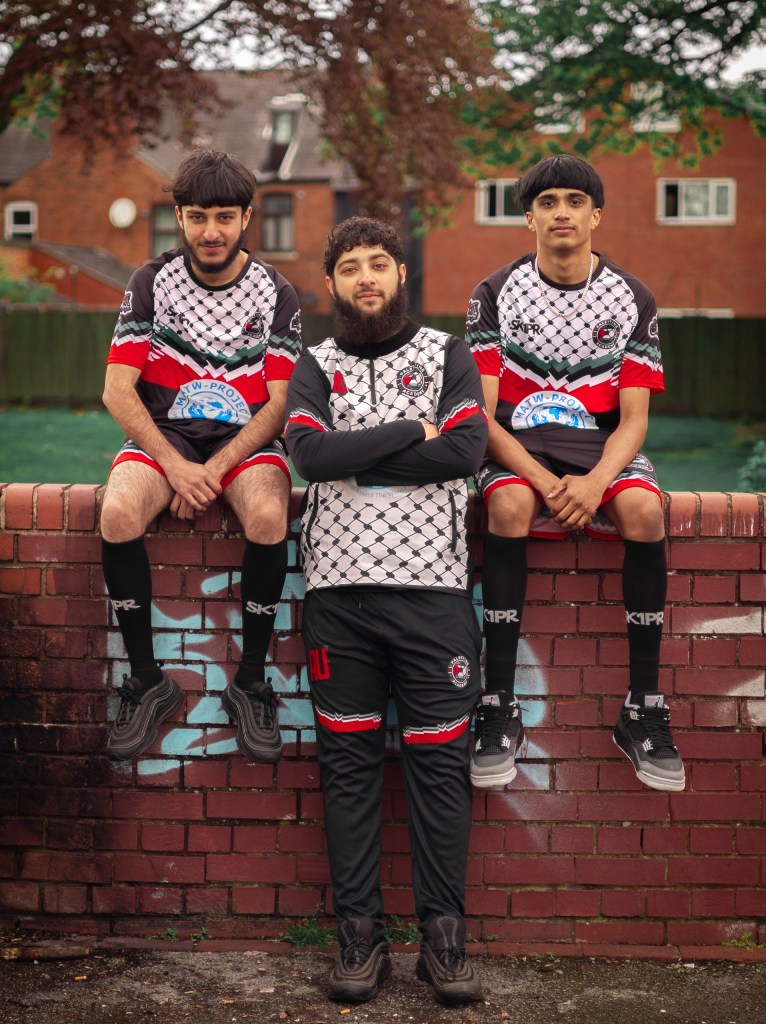
I tend to work mostly in social documentary and portrait photography. My focus is often on capturing underrepresented stories — particularly around identity, resistance, belonging, and the lived realities of diaspora and marginalised communities. Much of my work is rooted in narrative: not just documenting moments, but giving visual shape to experiences that are often overlooked or misrepresented. That blend of documentary awareness and portrait-led sensitivity is where my practice feels most alive.
What draws you towards these genres?
It’s the weight that portraiture and social documentary can carry. I’ve always been drawn to stories that don’t get platformed enough — especially from people of colour, women, migrants, and diasporic communities. Photography became a way for me to hold space for these narratives with care and intent. It’s not just about aesthetics — it’s about the dignity, memory, and resistance each image can carry.
There’s something powerful about the way a single frame can hold space for someone’s truth, history, and presence without needing them to perform or explain. Portraiture allows me to slow down, to listen, and to create images that truly represent the people I’m photographing on their own terms.
Tell us a little bit more about your photographic training – what does/did your course entail etc? Why did you want to study on this particular course?
I studied BA (Hons) Photography at Birmingham City University. The course was very practice-led and gave me the freedom to explore my identity and ideas through both self-directed and collaborative projects. I was able to work across studio, on-location, and explore different genres and themes of photography, while also learning the full technical side — from using different camera equipment to lighting setups and editing workflows to book/zine making and exhibitions. What really drew me to the course was that it wasn’t rigid — it allowed space for experimentation and encouraged personal storytelling, which mattered to me.
Even before applying to study on this course, I always knew that they offered endless opportunities and for me, it was all about building my confidence. I was able to submit and participate in more group exhibitions (Women in Photo Birmingham and the annual Free Range exhibition in London at Truman Brewery, to name a couple) and gained assisting opportunities with my lecturers. That played a huge role in building my confidence and finding belief in my practice.

What has been your biggest photographic obstacle to date?
Honestly, I’d say lack of confidence — especially early on. It took time to believe that my work had value, that it could be seen, recognised, or that it belonged in the same spaces as others. There were moments where I second-guessed myself a lot, worried whether my work was “good enough” or worth it or whether people would even connect with it.
Coming from a working-class background, it wasn’t always easy to access the same networks or resources that others might have. Even now, a lot of the opportunities I’m drawn to — the ones I know would really help me grow — are often based in London or other major cities. It’s just that navigating this industry from a distance can be difficult at times, especially when those opportunities often favour those who are already local. That lack of proximity can quietly limit access, even when the work and drive are there.
Who are your biggest influences?
Outside of photography in general, my mum is my biggest inspiration. Her strength, resilience, and the way she’s held onto her values has shaped how I view the world and that translates in my work. There’s been times where I’d feel like giving up and she’s always encouraged me to keep going and to me that’s the most important thing.
Within photography, I’ve been drawn to photographers like Rania Matar, for how she captures women in personal yet expansive ways, Alys Tomlinson, for her quiet, reflective portraits, and Yumna Al-Arashi, whose Face series impacted how I see the power of authentic portraiture, especially for women of colour.
During my time in university at BCU, my lecturers’ guidance and their work helped shape my approach to portraiture. They’ve been a very positive influence as they gave me the confidence to trust my instincts and step out of my comfort zone.
What equipment do you use?
Digitally, I use the Canon R6 Mark II as my go-to camera, paired with the 50mm RF lens and at times the Sigma 85mm Art lens for most of my portraiture work. I also own a 17–70mm Sigma Contemporary and the 18–200mm Sigma Contemporary — which I tend to use more for events and documentational work. For film photography which I’m starting to get more into, I’ve found real confidence in using the Canon AV-1.
What would be your dream equipment to work with?
I’d really love to explore Fujifilm’s medium format digital cameras — something like the GFX series. I think there’s something really compelling about how they render portraits, especially with the kind of softness and depth I’m always drawn to. On the film side, I’d love to use more advanced 35mm cameras, but also push myself with 120 format — medium format film — and experiment with cameras like the Mamiya 7 or Pentax 645. I think there’s a real slowness and intention that comes with working on medium format, both digital and film, and I’d love to develop more projects that allow me the time and space to work like that.
What has been the highlight of your photography career so far?
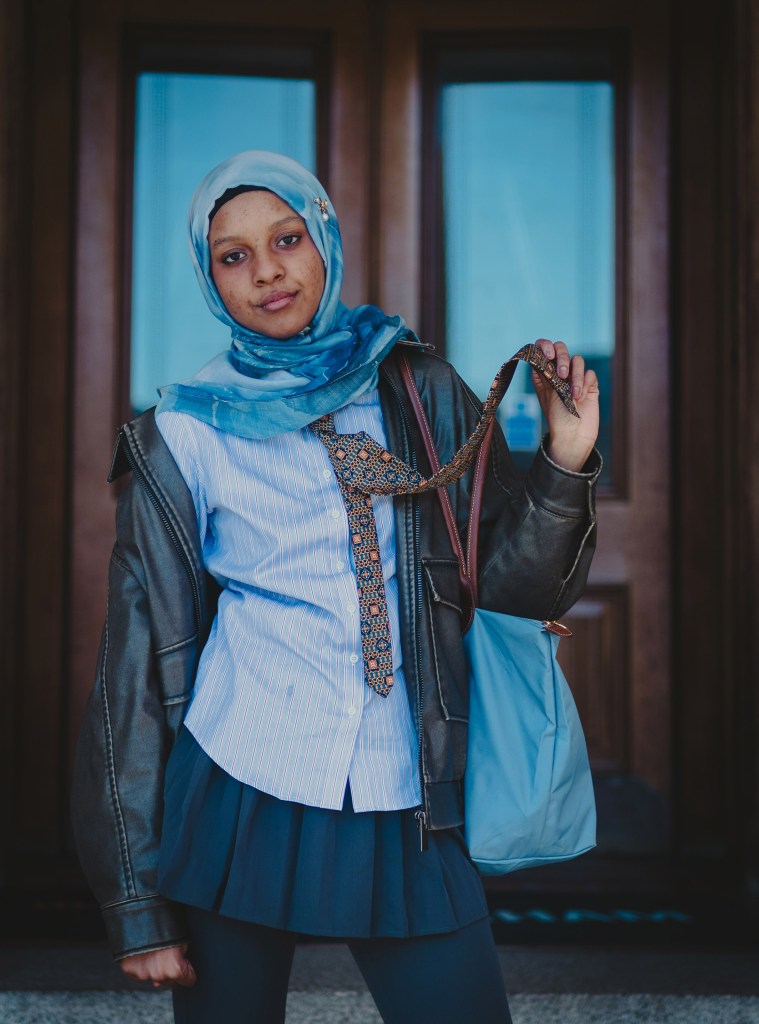
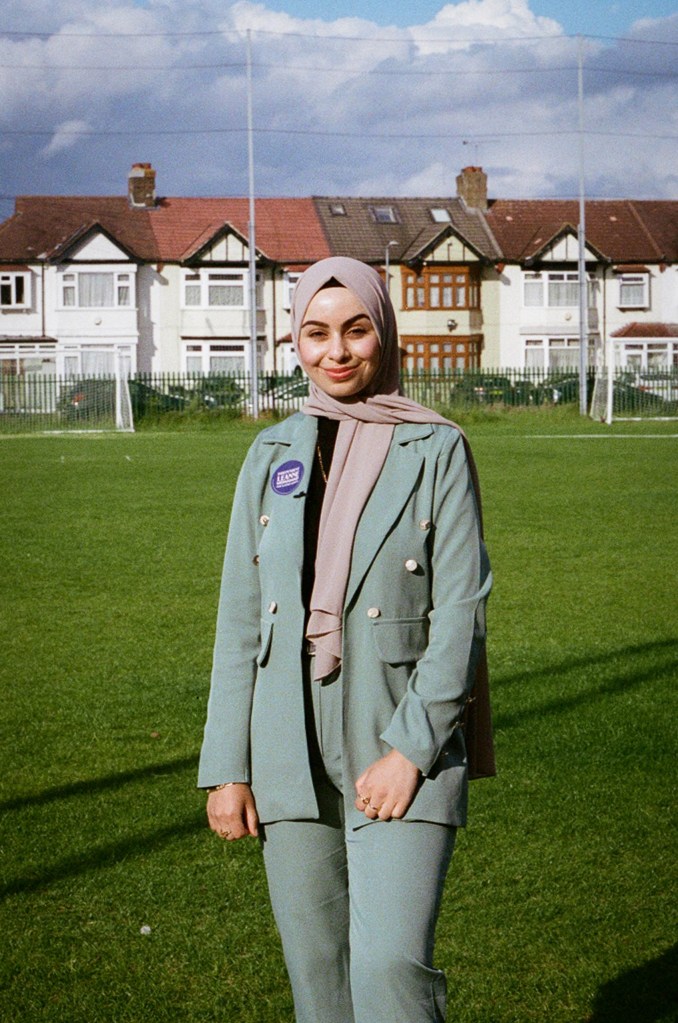
The biggest highlights so far have definitely been being shortlisted for Portrait of Britain with the British Journal of Photography — twice in a row. My portrait of Leanne Mohamad for Volume. 7 in 2024 was actually the first time I ever submitted to the open call, and I ended up being not just shortlisted but named 1 of the 100 winning photographers. Seeing a portrait I captured myself on advertisement screens all across the country — that was a surreal and unforgettable moment.
I also recently won joint-Silver in the Association of Photographers (AOP) Emerging Talent Award, which again was something I genuinely didn’t expect. Suddenly my work has been published in three hugely acknowledged professional photo books in a year alongside other photographers who are right up there in the photographic industry and I think that’s pretty epic.
What are your hopes for your photography career in the future?
Creatively, I really want to explore more editorial projects and eventually branch into the commercial route too. I’m also keen to build on what I’ve already started, working on commissions, expanding my portraiture and deepening the kinds of stories I tell through imagery.
In terms of goals, I’d love to gain more publications, be represented by an agency, and participate in more exhibitions, no matter what form they take. But the biggest thing for me is to always stay grounded and humble through it all. I hope my interest in photography never fades, because it’s one of the few things that’s truly given me a sense of purpose, direction, and a way of connecting with people and the world around me.
Do you have a dream assignment?
A dream assignment for me would be one that allows me to travel with purpose — working on location with individuals and communities whose stories deserve to be seen and remembered. Publications like Dazed, i-D, and Vogue (especially through PhotoVogue) have been commissioning work that leans into this — work that’s not only visually strong but rich with cultural context so I’d love to do work for any of them. I’d also love to collaborate with editors and platforms who prioritise nuanced, diasporic narratives — ones that explore belonging, resistance, and creativity across borders. To me, the best kind of assignment is one that allows photography to serve as both witness and dialogue — where I can bring my perspective as a British-Pakistani woman into the process and help craft images that carry both meaning and memory.
What piece of advice would you give to other aspiring photographers, particularly those currently embarking, or about to embark, on a photographic course?
One of the most valuable things you can do–university degree or not is research, both primary and secondary. Allow yourself to be inspired by the work of others even physically around you, not to copy, but to understand how different stories are told through photography, and how you might approach and shape your own.
Don’t be afraid to submit into as many competitions, open calls, and opportunities as you can. Even if you don’t get selected, the process of applying teaches you how to talk about your work, present it, and keep refining it. Don’t overthink everything — just go for it. And most importantly, stay grounded. Growth takes time, but if you keep showing up for yourself and your work, it’ll all count in the long run.
Tell us more about your Portfolio / Project / Exhibition?
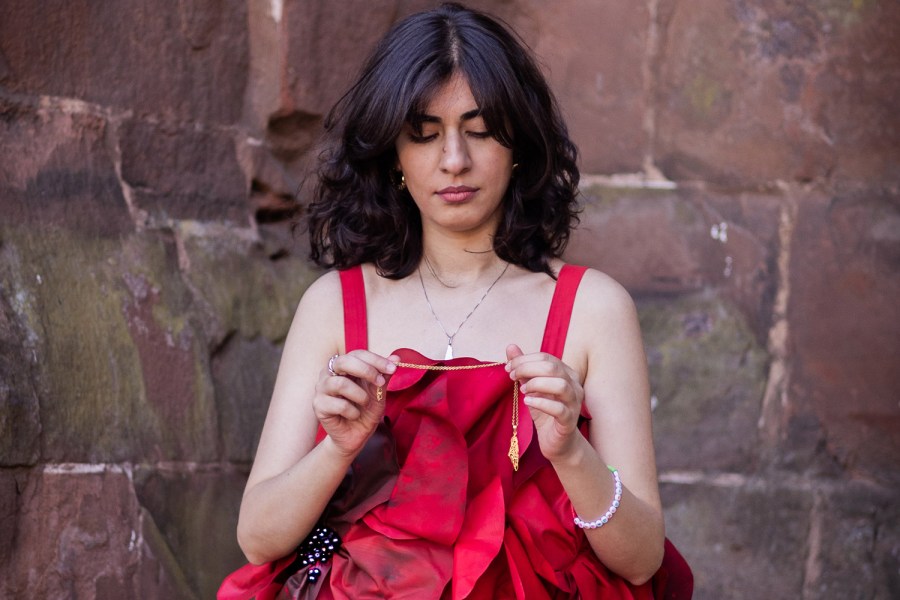
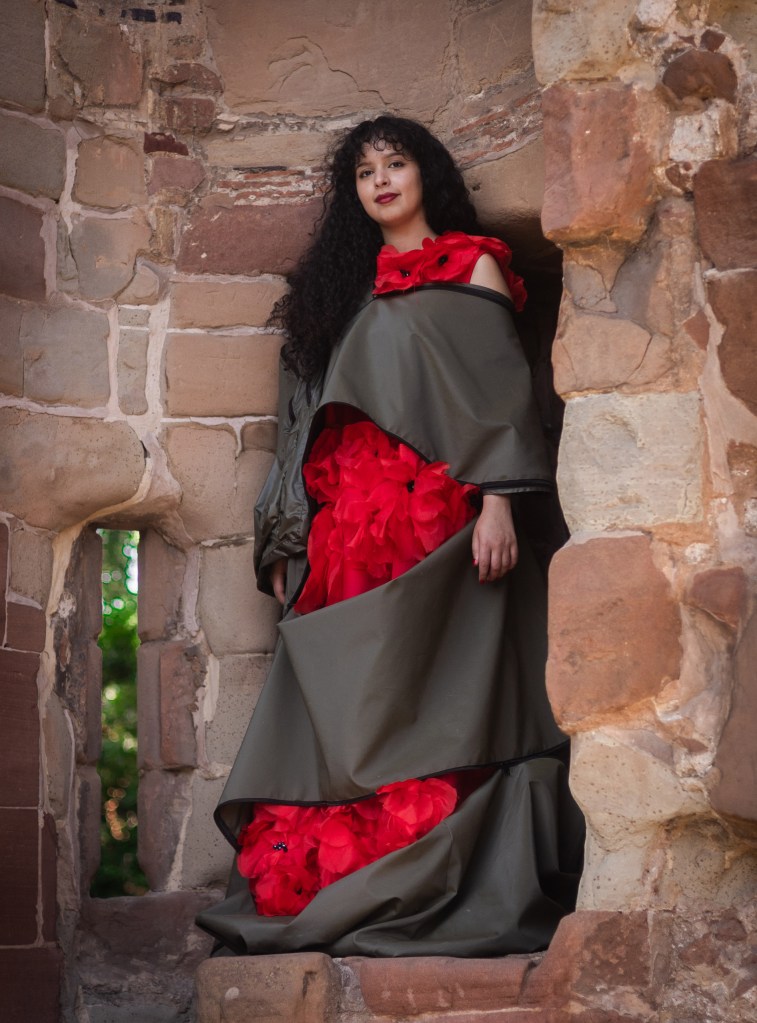
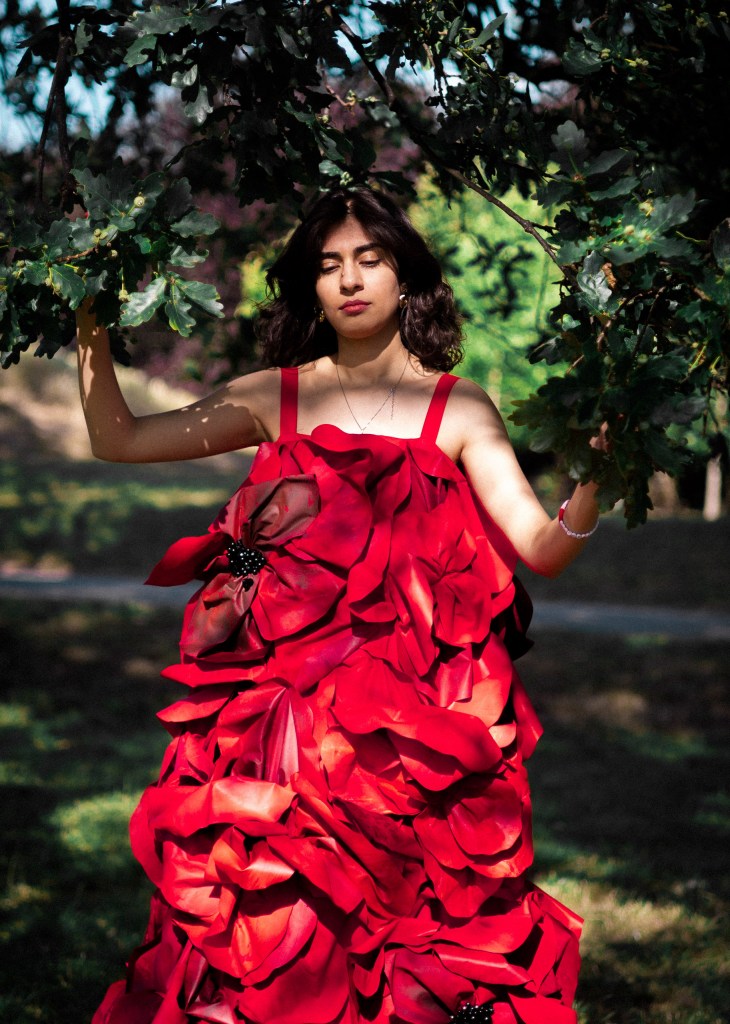
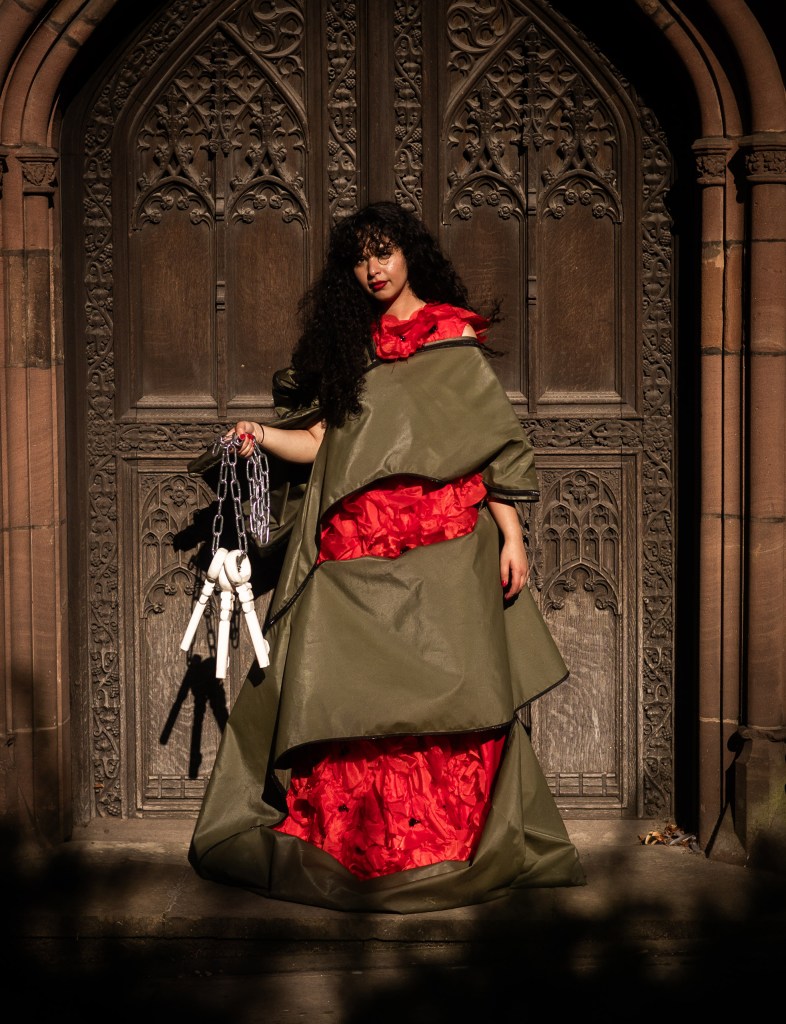
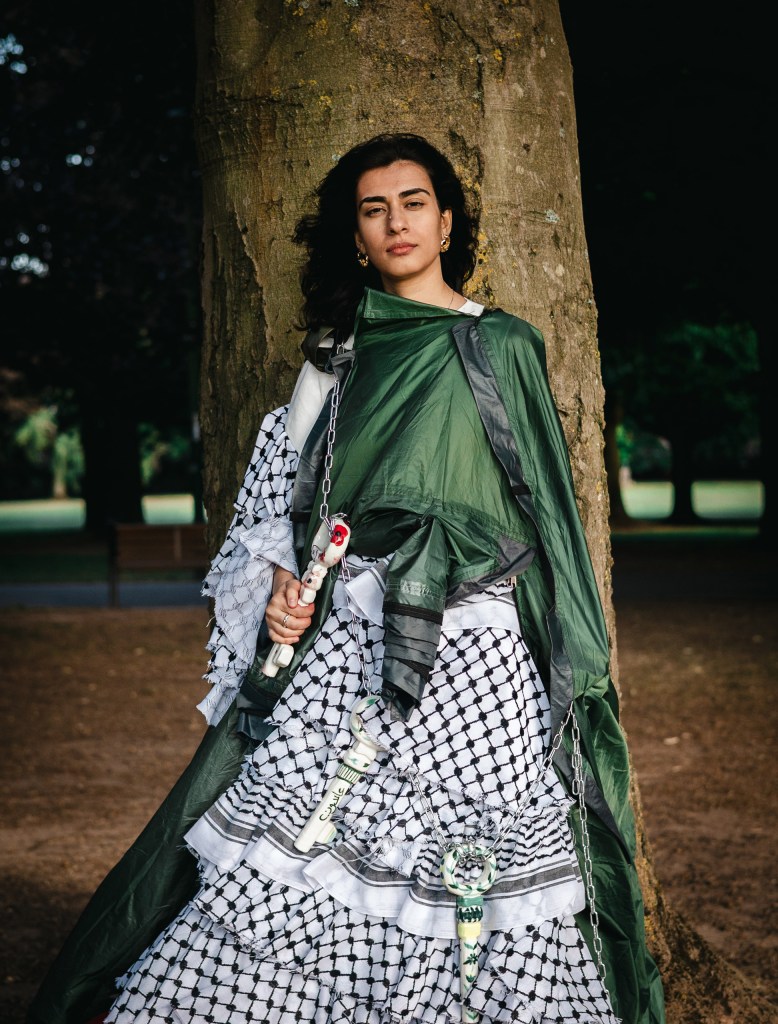
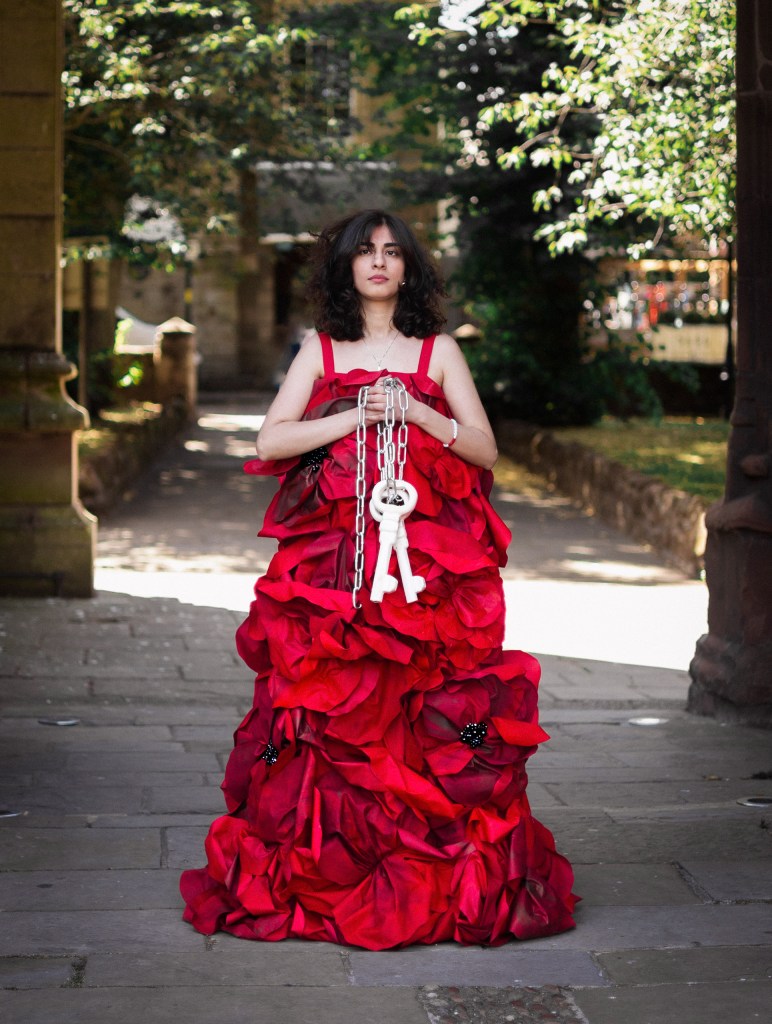
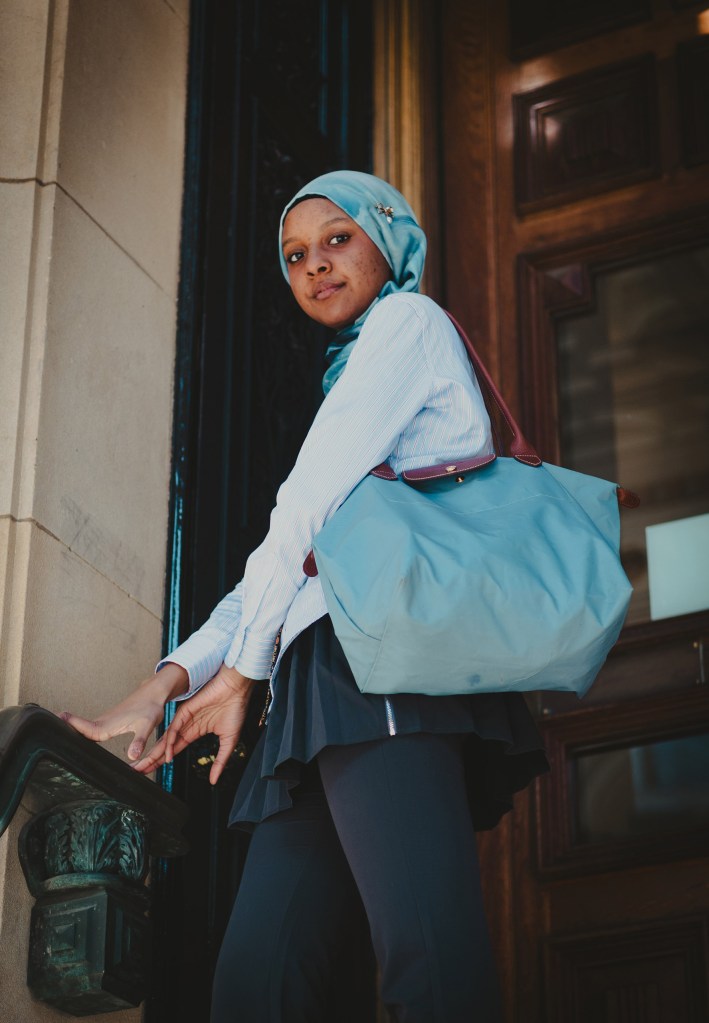
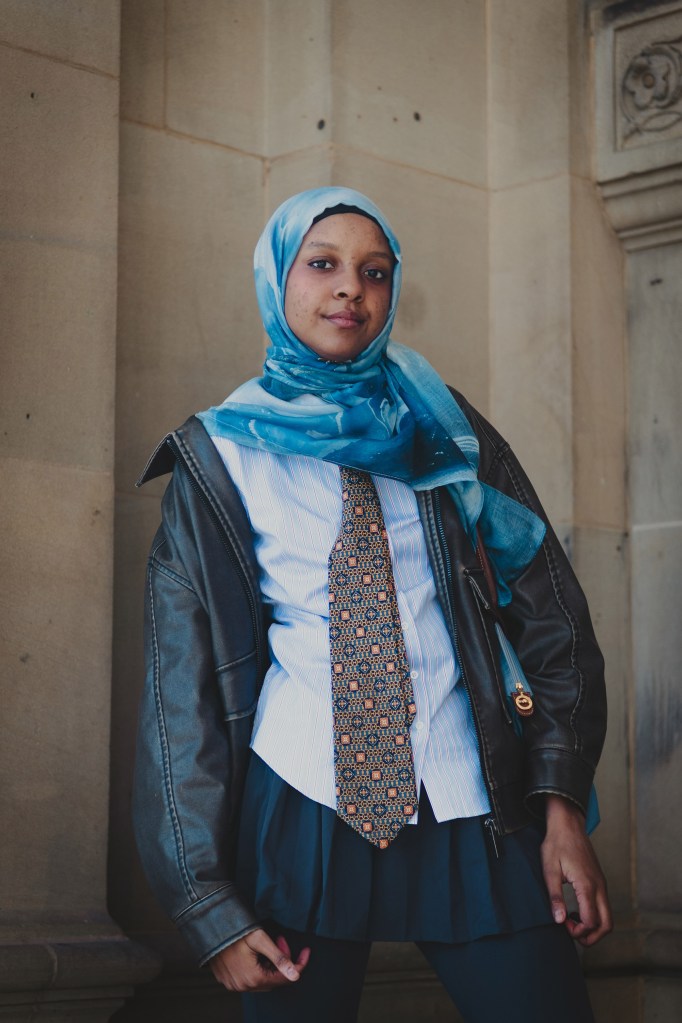
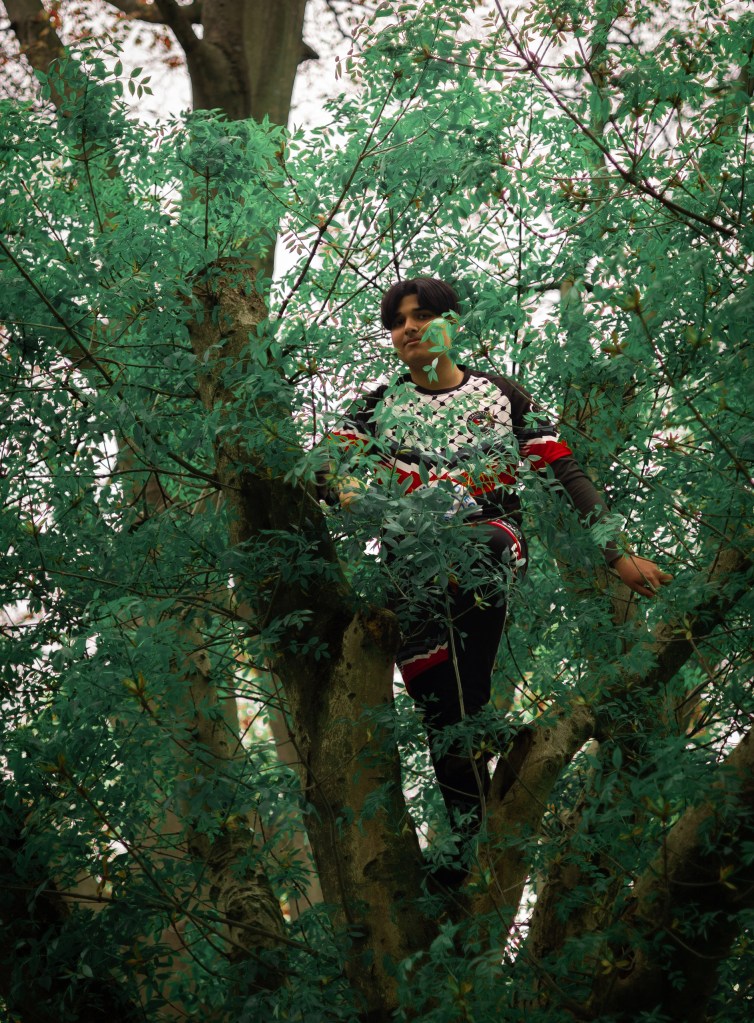
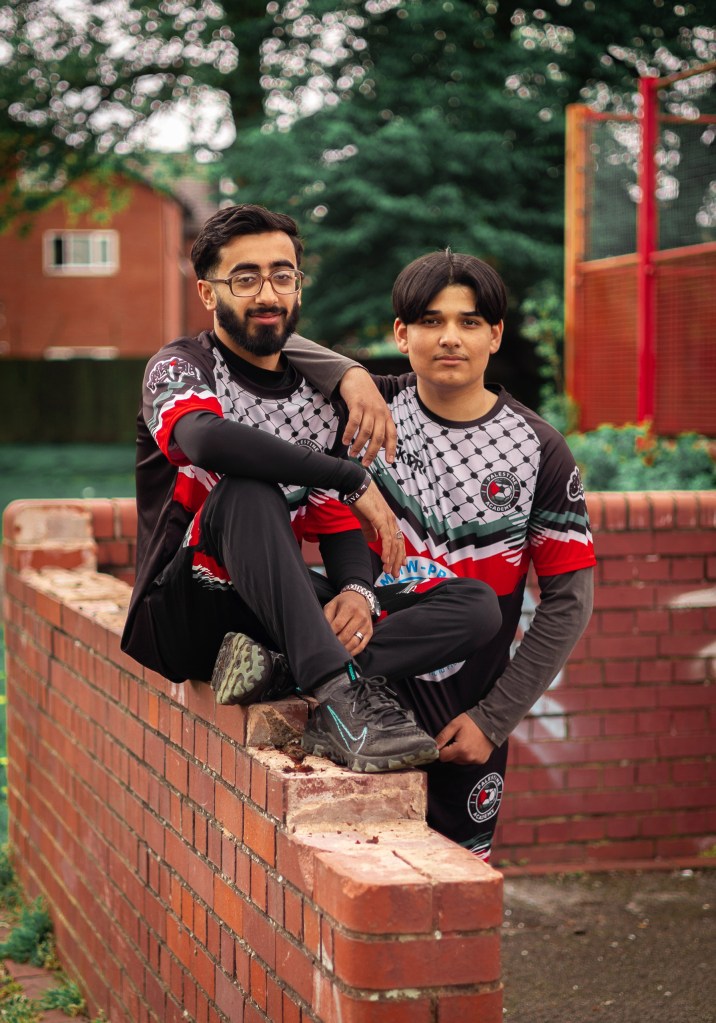
One of my projects I’m working on is ‘Draped in Resistance, a collective created in collaboration with Tala Lulu, an emerging recent graduate fashion designer. It started as an approved idea between creatives — casual at first, but quickly grew into a deeply thought-out series of on-location shoots that were emotionally and creatively charged. Each shoot is carefully planned around meaningful locations: war memorial locations, amongst cathedral ruins, church doors, stone and brick wall structures as backdrops and natural landscapes across Coventry — all places that hold their own historic weight here in the UK. These sites echo themes present in Palestinian heritage, and that resonance was something we both felt strongly about. The imagery drew on this link, showing how space, resistance, and belonging can cross borders. Fashion wasn’t just styled here, it became a way of storytelling.
What’s the reaction been?
A portrait from the series is shortlisted for Portrait of Britain for Volume. 8, and some of the shots were also awarded joint-Silver for the AOP Emerging Talent Award — it was exhibited in front of so many professional photography giants in the industry during the 40th AOP Awards in London. It shows that stories like this, rooted in culture and collaboration, can still reach far and wide.
Instagram: @safabmalik
Website: www.safabmalik.com