Our emerging photographer series aims to shed a light on up-and-coming talent. Photographers are offered a platform to share their work with a wider audience through the AP channels, with the scope of furthering their careers. We also get an insight into their inspirations, the camera gear used and future aspirations, as well as the journey taken into photography – which doesn’t have to be the most traditional route!
Si Jubb and Ethan Parker, who won our Emerging Photographer of the Year award at this year’s AP Awards, recently spoke at our Festival of Photography: Documentary event. Previous emerging photographer award winners include Aliz Kovacs-Zoldi and Tariq Sadu. We’ll regularly be sharing the work of photographers on our website and social media – and even in the magazine – so if you are an someone who has recently started their photography journey or are a student / graduate, share your work with us at [email protected]
For this chapter, Rob Kirman speaks with Peter Dench
When and why did you start taking photographs?
My earliest memory of photography is my dad’s film camera – the weight, the smell, and the thrill of pressing the shutter on holiday. It felt like magic. Fast-forward forty years: lockdown pushed me to try an online photography course. That spark became a fire. I bought a Canon EOS 77D, started photographing everything, and later studied at university where I discovered documentary’s power to connect people. I realised I wasn’t just taking pictures; I was learning to listen and tell stories responsibly.
Which genre do you tend to work mostly in?
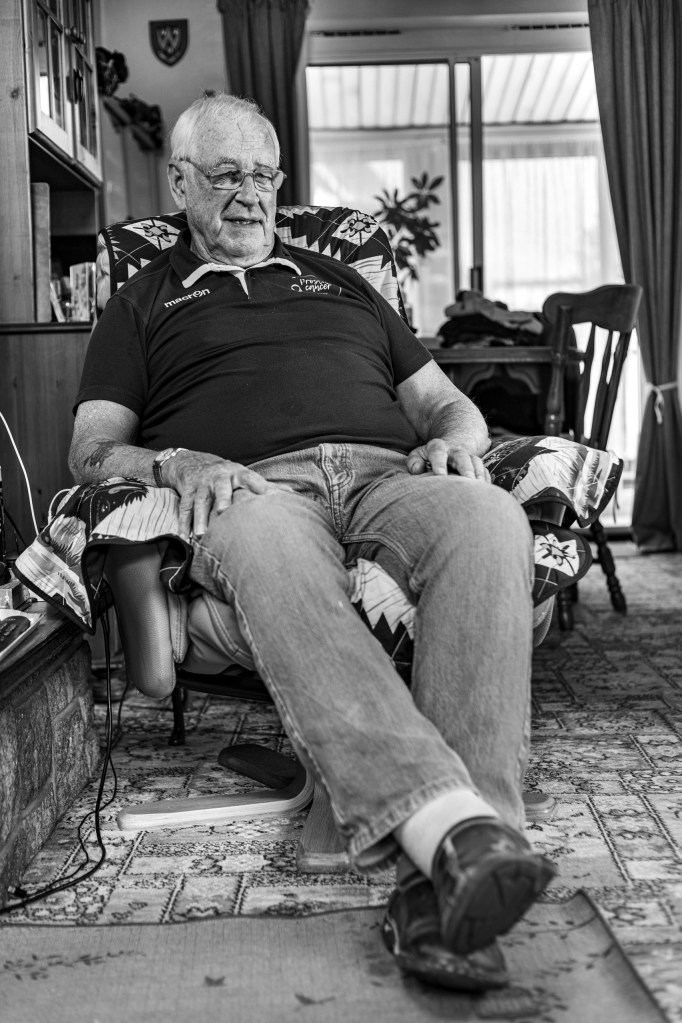
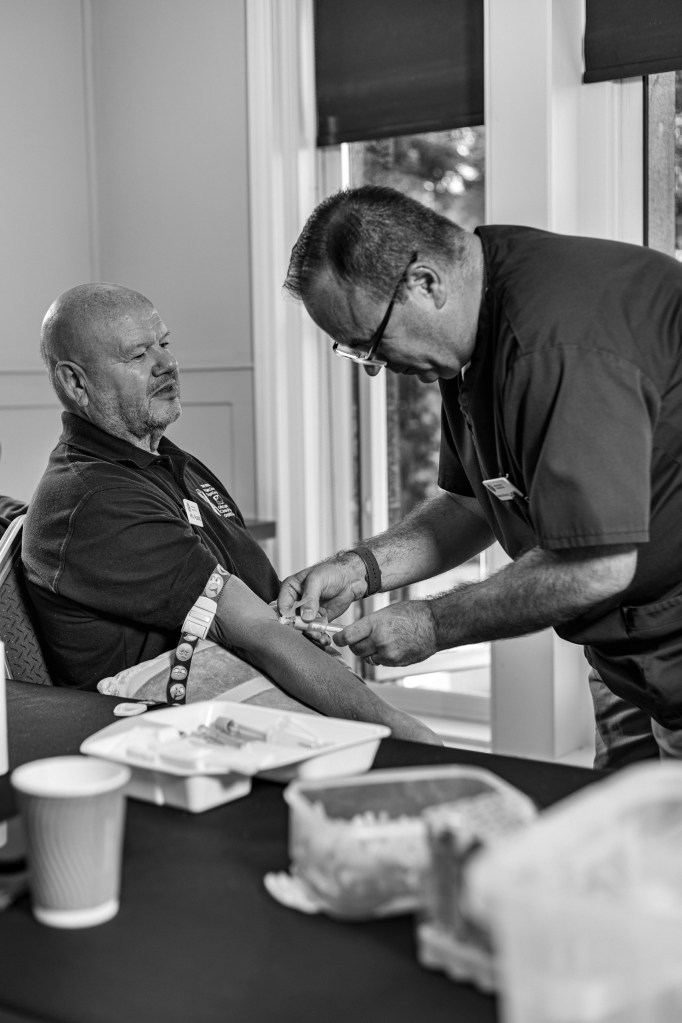
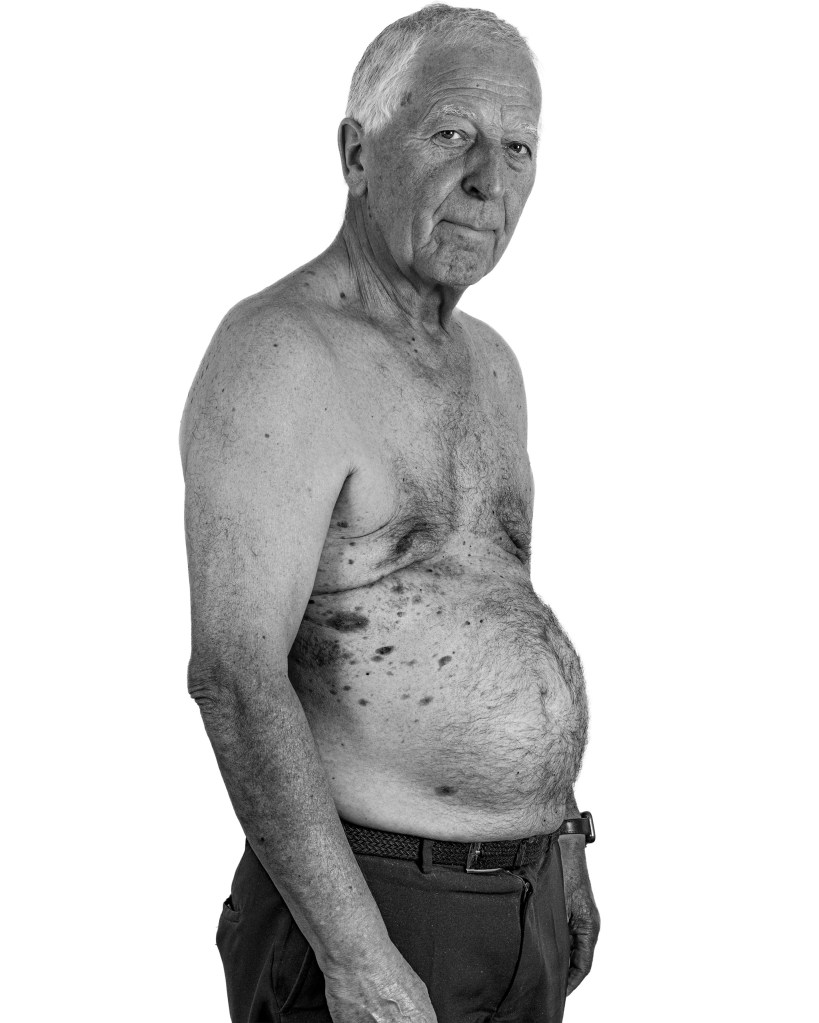
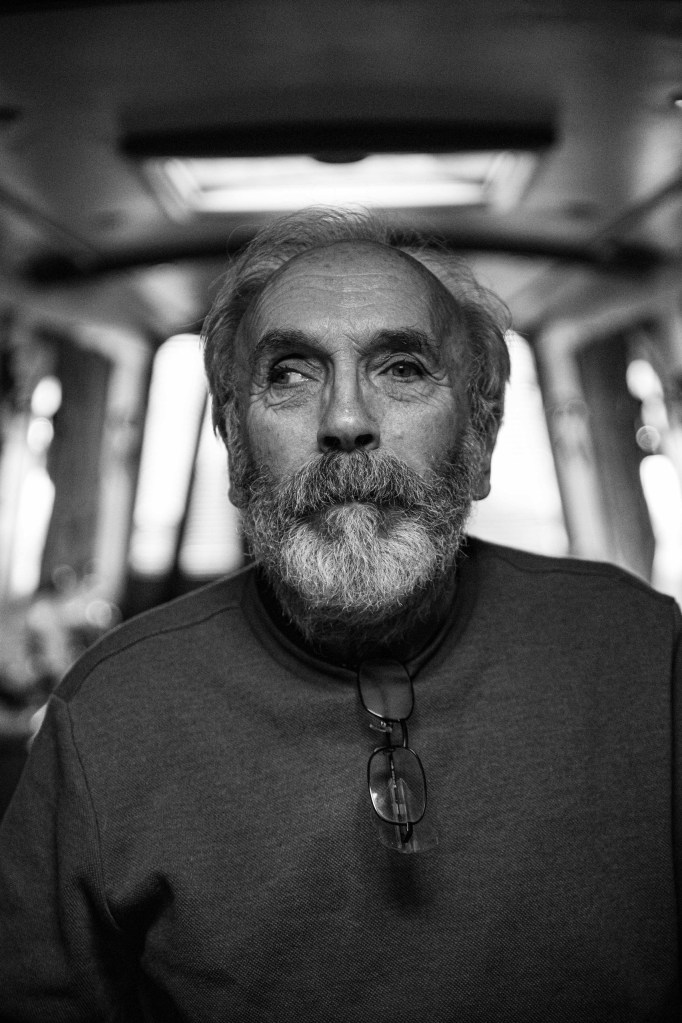
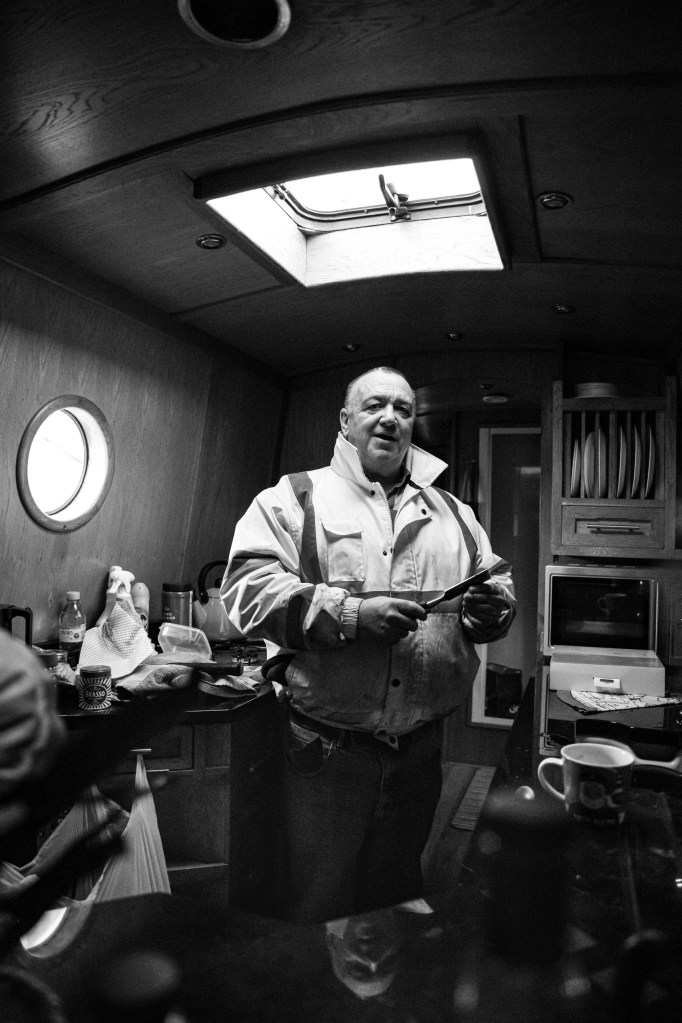
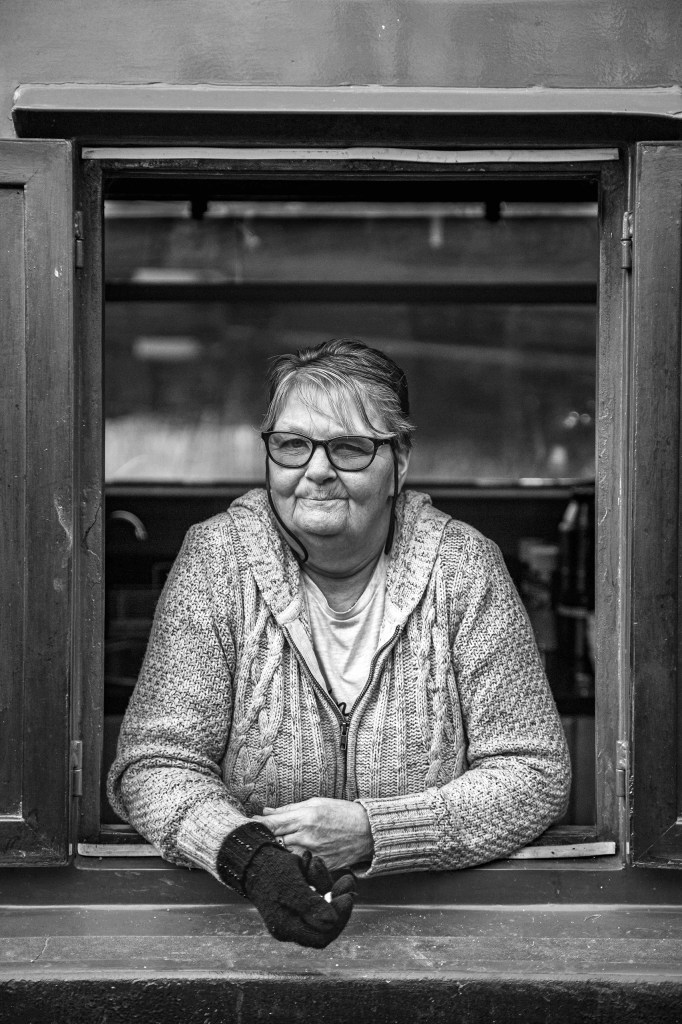
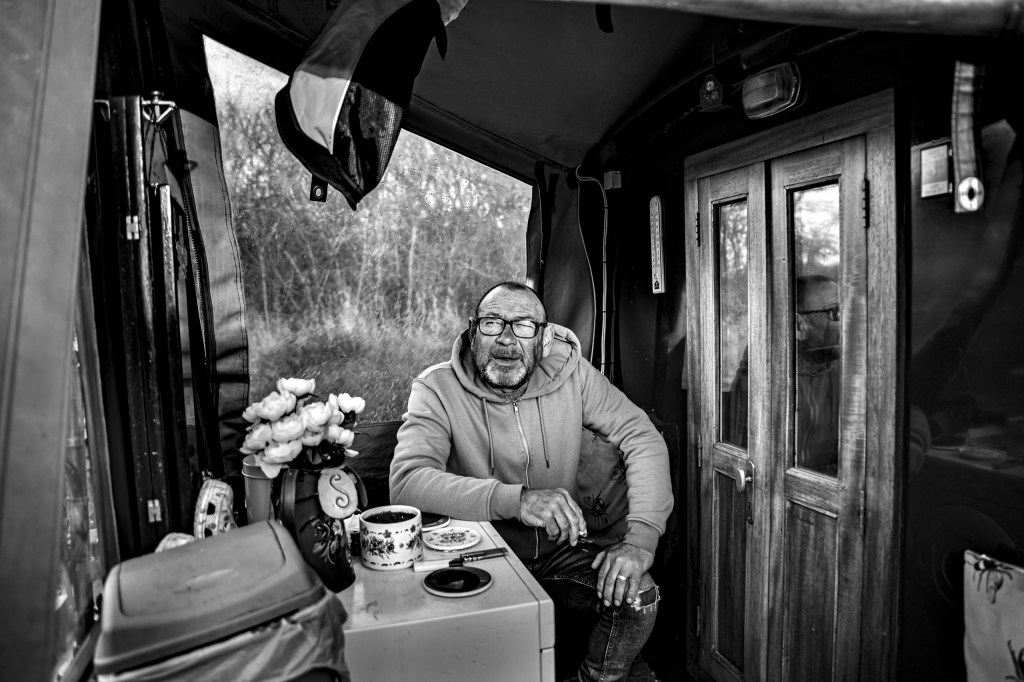
Documentary photography, socially engaged, portrait-led work in high-contrast black and white that blends staged portraits with candid moments.
What draws you towards your favoured genre?
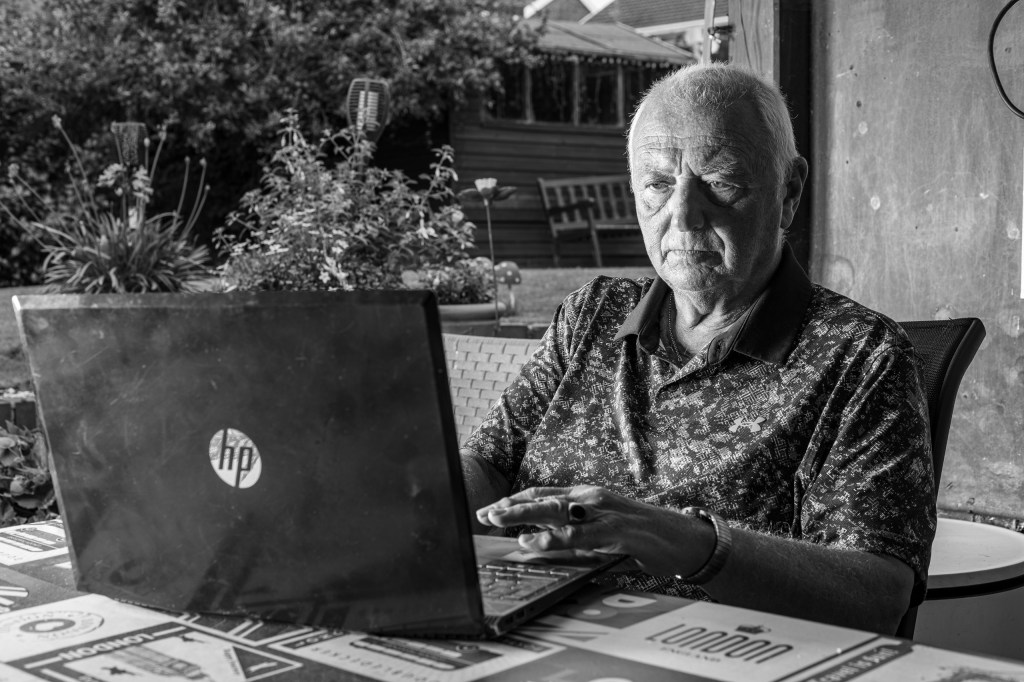
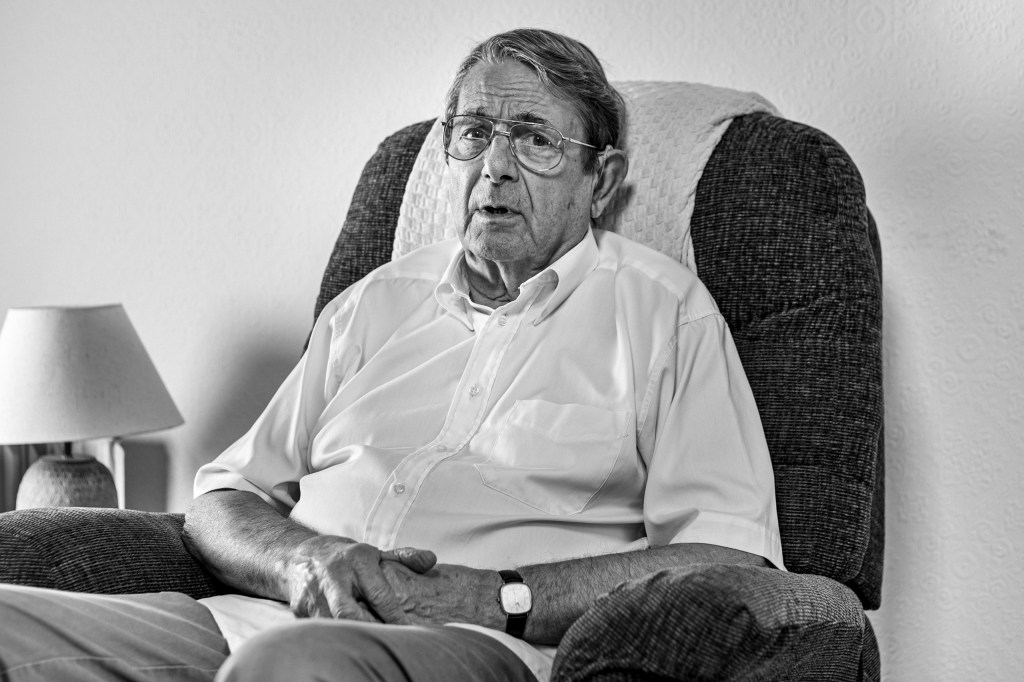
I’m drawn to documentary photography because it lets me stand alongside people and turn lived experience into shared understanding. My background in community work makes me value honesty, consent and collaboration; I prefer to co-author images rather than take them. Working mainly in black and white, I seek moments where resilience, humour and vulnerability coexist. Whether with prostate cancer survivors, people living with disabilities, or local communities, the camera becomes a bridge, witnessing, listening and giving space. I’m compelled by stories that challenge stigma, dignify everyday lives and move audiences to care.
Tell us a little bit more about your photographic training.
I studied at Wrexham University, completing a BA (Hons) Film & Photography in 2024 and an MA Photography in 2025. The courses combined rigorous theory, ethics, authorship and visual culture, with intensive practice: documentary fieldwork, editing and sequencing, lighting, digital workflows, bookmaking, and exhibition design. I learned to work collaboratively with participants, refine a high-contrast black-and-white aesthetic, and build projects from research through to public outcomes. I chose Wrexham for its community focus, supportive mentorship, and blend of filmic and photographic thinking. The environment encouraged socially engaged storytelling, critical reflection and professional readiness, exactly what I needed to shape a responsible documentary voice.
What has been your biggest photographic obstacle to date?
Access! My biggest obstacle has been earning the trust required for men to share intimate, often frightening experiences around prostate cancer. Stigma, fear and fatigue make “yes” a heavy lift. I overcame it slowly, showing up without a camera, listening first, being transparent about intent and consent, offering image vetoes, and inviting co-authorship. Practically, coordinating shoots across North Wales while studying added pressure, but once a few courageous participants stepped forward, momentum grew. That process taught me patience, ethics over speed, and that the real work of documentary begins long before the shutter clicks.
Who are your biggest influences?
Dorothea Lange, Don McCullin and Mary Ellen Mark for compassionate, unflinching documentary; Richard Avedon and David Bailey for stripped-back, high-contrast portraiture; Wendy Ewald and Ariella Azoulay for participatory ethics and the “civil contract” between photographer, subject and viewer; and contemporary UK voices like John Bolloten, Marc Davenant and Jim Mortram for long-form, community-embedded practice.
What equipment do you use?
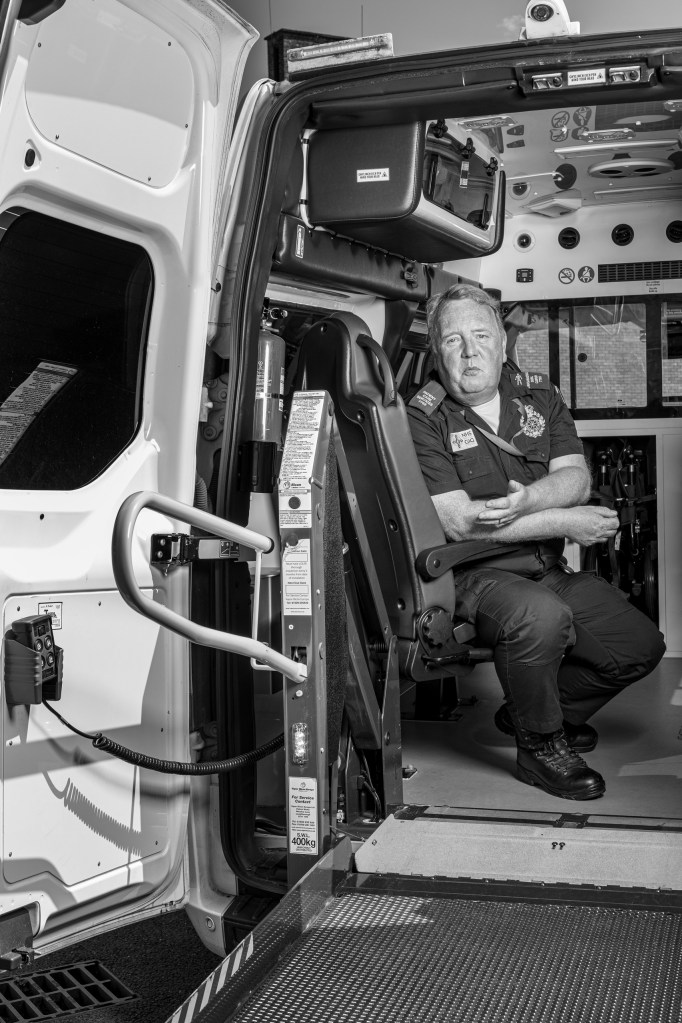
I shoot on a Canon R6 Mark II with a 50mm prime as my default. The 50mm’s natural field of view feels honest, close to how we see, so it keeps distortion down, encourages proximity and conversation, and its wide aperture gives me sharpness with controlled depth and low-light flexibility. Limiting myself to one focal length also adds creative discipline and consistency across a project. For my high-contrast black-and-white look, I use a pair of Godox AD300 Pro off-camera flashes. They’re compact, battery powered and reliable, letting me shape light precisely and if required, overpower ambient, so I can carve separation, emphasise texture, and stay respectful and fast on location. The result is clean, punchy, story-first images.
What would be your dream equipment to work with?
A rugged, fast Canon R1/R3-class body paired with the RF 50mm f/1.2L as my “honest” default, plus a 35mm f/1.4 for tight spaces. I’d add a Leica M11 Monochrom with a 50mm Summilux for those pure black-and-white sessions where tonality matters most. Lighting stays portable: two Godox AD300 Pros with small octa/strip boxes and grids, plus an AD200 in reserve. Round it out with a Zoom H5 for interviews, a calibrated Eizo monitor, and a Canon PRO-1000 printing to Hahnemühle Photo Rag, so the whole story is controlled from shutter to print.
What has the been the highlight of your photography career so far?
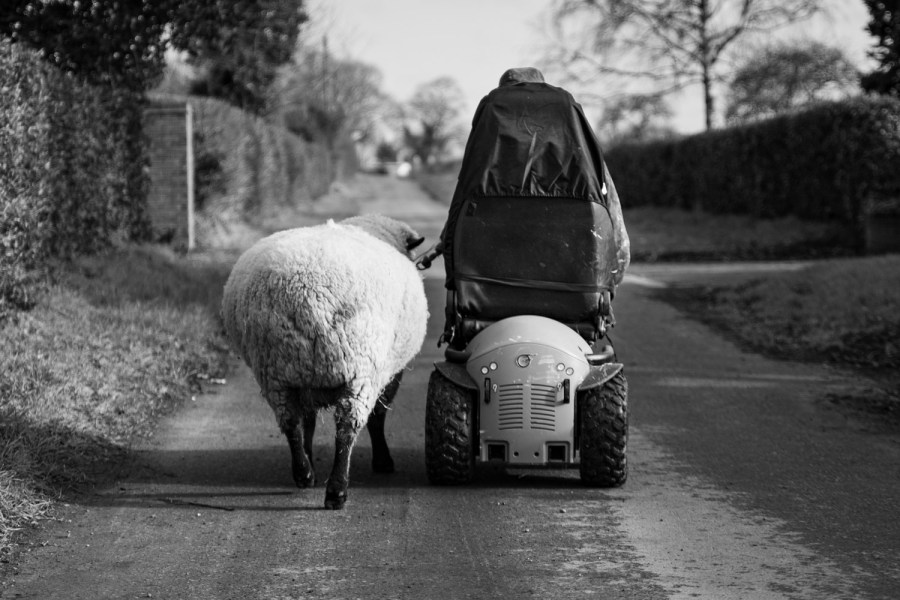
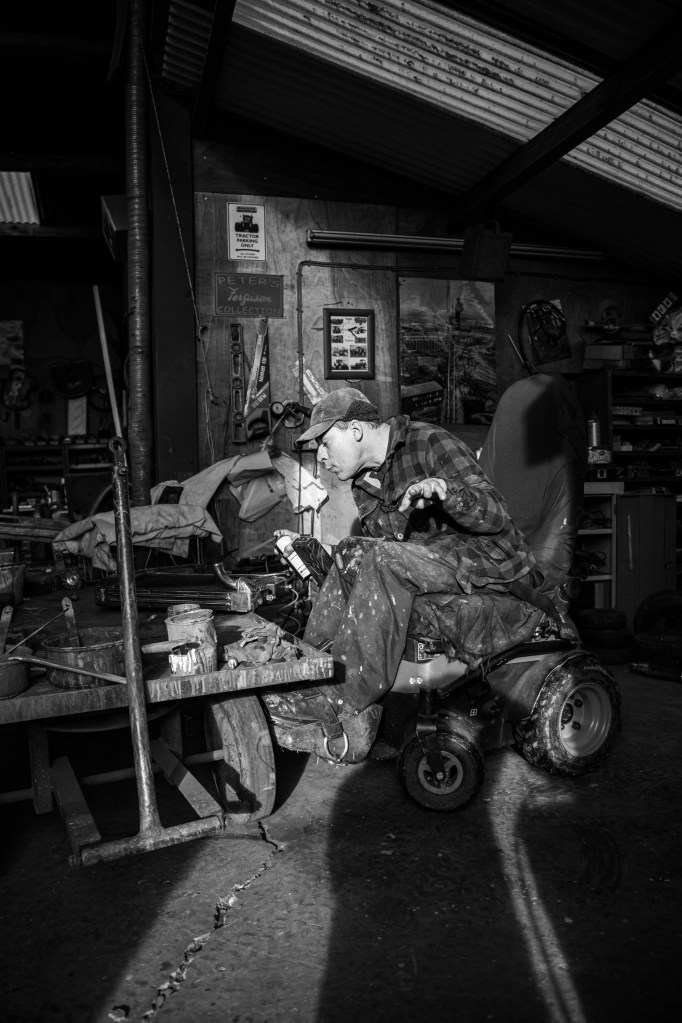
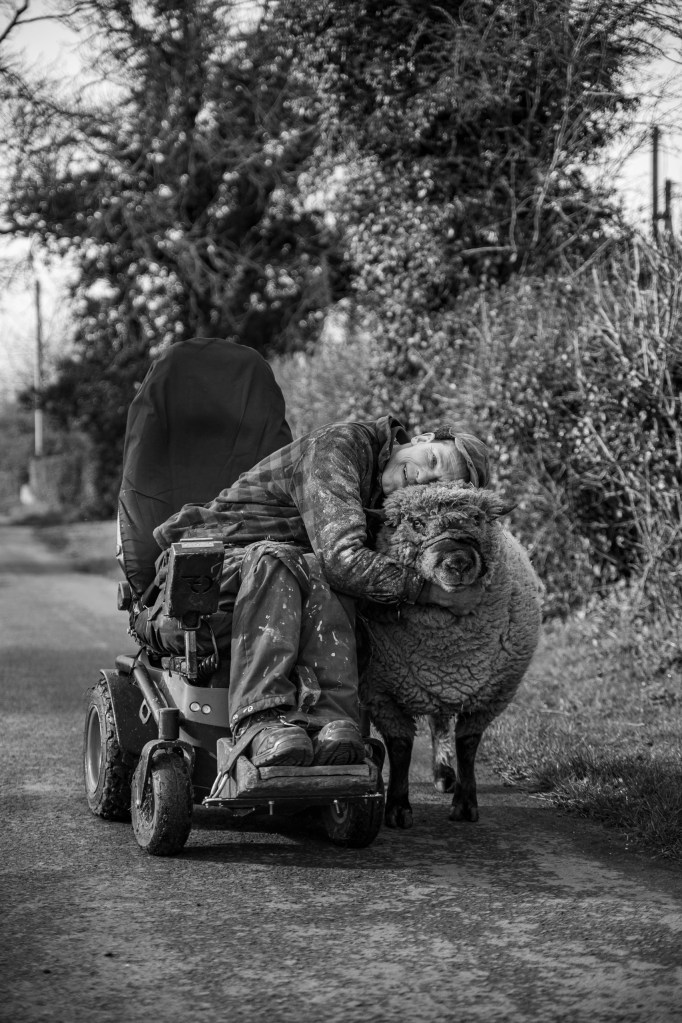
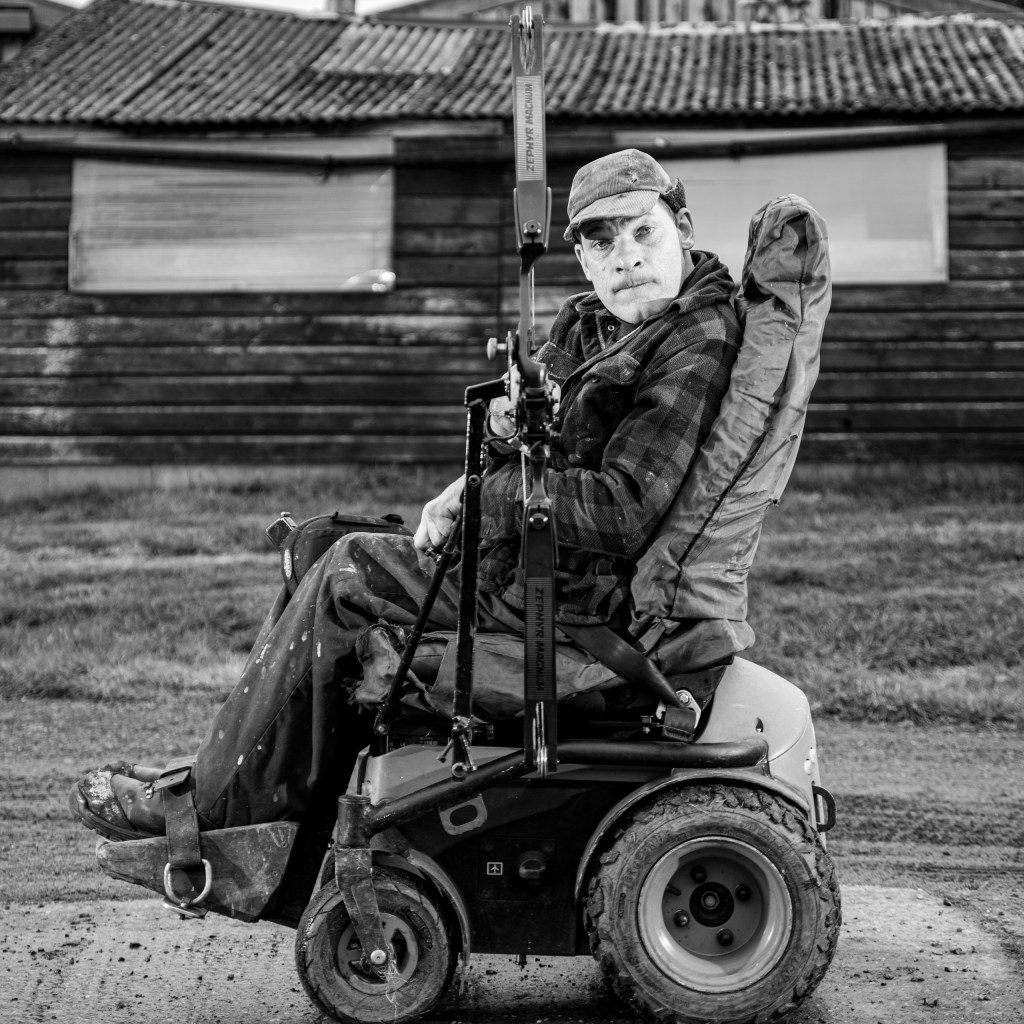
The highlight has been my final-year degree show for “Pete.” Watching Pete, a wheelchair user, come into the gallery and follow the sequence, from restoring vintage tractors to farm work, archery and his prize Shropshire sheep, was unforgettable. He was moved to tears, then broke into a huge smile. A packed room, thoughtful conversations, and the photobook in people’s hands confirmed that collaborative, ethically grounded storytelling can shift how we see one another. That night crystallised my voice: high-contrast, participant-led documentary made with care. It set the course for my subsequent projects and exhibitions, and reminded me why this work matters, because the people in front of the lens feel seen.
What are your hopes for your photography career in the future?
I want to keep making socially engaged work that gives people a voice and changes how we talk about men’s health and everyday resilience. I’m aiming for touring exhibitions and photobooks, built from long-term collaborations, expanding projects like Don’t Die of Embarrassment, “Pete,” Working Hands and Bargees. I hope to partner with charities and community groups to reach new audiences, and secure funding that keeps the work accessible. Ultimately, I want a sustainable practice, rooted in North Wales but outward-looking, that produces meaningful images, builds public understanding, and leaves a useful archive.
Do you have a dream assignment?
A multi-year, fully funded, participatory commission continuing my men’s-health focus, particularly prostate cancer, embedded with NHS urology teams, relevant charities, and voluntary support groups like those I worked with in North Wales. I’d photograph men and their families through diagnosis, treatment and recovery, combining high-contrast portraits with candid moments and recorded testimony. The work would be co-authored with participants, clinicians and charity partners to ensure accuracy, dignity and shared ownership. A touring exhibition and photobook would travel alongside pop-up PSA testing run by partners, so impact is tangible in conversations started and checks booked, leaving an accessible public archive for communities and libraries.
What piece of advice would you give to aspiring photographers?
Keep a reflective journal from day one, after every shoot, seminar, and critique. It turns experience into learning, sharpens your eye, clarifies ethics and intent, fuels your essays, and, over time, reveals the project you actually care about.
Tell us more about your project/exhibition.
Don’t Die of Embarrassment is my documentary project about men’s health, centred on prostate cancer. I pair high-contrast black-and-white portraits with candid moments and first-person testimony to surface resilience, humour and fear without sensationalism. Made in collaboration with participants, clinicians and voluntary support groups across North Wales. The work is built on informed consent, transparency and image vetoes. The aim is simple: challenge stigma, normalise conversations, and nudge men, and families, towards testing. The project lives as exhibitions, a photobook and community engagement.
What kind of reaction has it had?
The response has been deeply human and practical. Viewers linger with the portraits, share their own stories, and families have thanked me for the care and honesty. Clinicians and voluntary support groups say the work helps open conversations that are often avoided. Most importantly, after seeing the exhibition, a number of men booked PSA tests, a measurable outcome that feels like the project doing its job. The reaction has reinforced my belief that respectful, participant-led documentary can move people from empathy to action.
Instagram: @treasuredmemoriesphotographyuk
More reading:
- I’m a portrait photographer and love my Nikon DSLR
- Love cars? I think you should take a look at these awesome photos!
- How photography has helped me as a veteran
- The role of the photographer is not just to take photos
- How personal projects shape great photographers
- This Nikon gear is ideal for wildlife photography
- Accidental discovery leads to award winning photography
Follow AP on Facebook, Instagram, YouTube and TikTok.