One genre. Three photographers. Three standout images, each revealing how vision, timing and technique come together in a single frame. We invited three Getty Images photographers working at the FIFA World Cup to share one image they consider among their best shot at the tournament. From split-second decisions to carefully crafted compositions, they reveal the thinking, technique and experience behind the shot, offering insight into not just how the image was made, but why it matters.
Follow @gettyimages on Instagram for more breaking news and sports shots.
Richard Pelham
Richard Pelham is a veteran sports photographer and 7 times Sports Photographer of the Year winner with a carrier spanning over thirty years. He photographed Olympic Games, FIFA World Cups and covered news, celebrities and even photographed the royal family on official engagements.
Instagram @dickiepelham
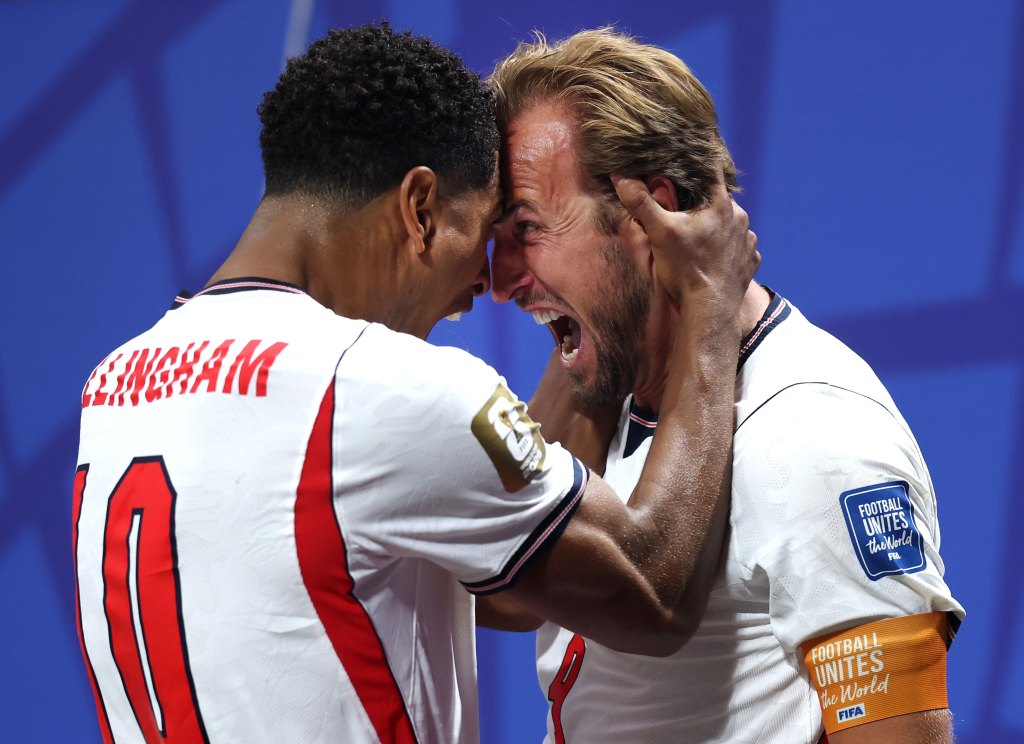
Tell us about this image. What are we looking at, and why did you choose it?
You’re looking at England captain Harry Kane and Jude Bellingham celebrating. I caught this right after Kane scored England’s first goal against Congo DR at the 2026 World Cup in Atlanta. I chose it because it shows the raw pressure, passion, and relief of a major knockout match in a single, intense moment.
What was happening just before and after this frame?
- Before: Kane had just scored the opening goal to break the deadlock. He ran towards the corner flag to celebrate, and Bellingham sprinted over to meet him.
- After: A split second later, the rest of the team piled on top of them. This exact head-to-head moment lasted only a second before turning into a massive group huddle. Kane and Bellingham shared that moment for a split second that produces such an amazing moment
What were the key creative decisions you made making this photograph?
- Tight Framing: I cropped out the pitch and the crowd to focus purely on their faces and the grip of Bellingham’s hand on Kane’s head.
- Clean Background: I tracked them until they lined up against a plain blue stadium banner so the players would stand out without distractions.
Can you share the technical details and how they shaped the outcome?
- The Lens: I used – Canon 70.200 2.8 USM lens, which is my primary goal mouth lens to keep the focus entirely on the players.
- Shutter Speed: I shot at high speed to freeze the motion, 2000 sec to capture the flying sweat, and their expressions instantly.
What was the biggest challenge in making this photograph?
Anticipating where they would run to. When a goal is scored, you have seconds to react. Other players, refs, or substitutes can easily block your view, so keeping my focus sharp through a crowded pitch while managing my own adrenaline was the hardest part.
What does this photograph mean to you and what would you like readers to take from it?
To me, it represents teamwork and shared pressure, the veteran captain and the young star carrying the weight of the country. I want readers to feel the sheer human emotion and relief that comes with scoring on the world stage.
Was it luck or judgement?
A bit of both, but mostly judgement.
The luck was that they celebrated facing my corner of the pitch. The judgement was having my settings ready, tracking their fast movement, and keeping my finger on the shutter to catch the exact millisecond their foreheads touched.
What did this image teach you?
The real story of the match is always found in the human emotion of the celebration. Not just getting the goal picture telling the story at 2000 of a second.
Steph Chambers
Steph Chambers is a Seattle-based Getty Images staff photographer known for covering major sports events, including the Olympic and Paralympic Games. She is a Pulitzer Prize-winning journalist, and an internationally recognized sports photographer and the first woman named Pictures of the Year International Sports Photographer of the Year.
Instagram @stephchambersphoto
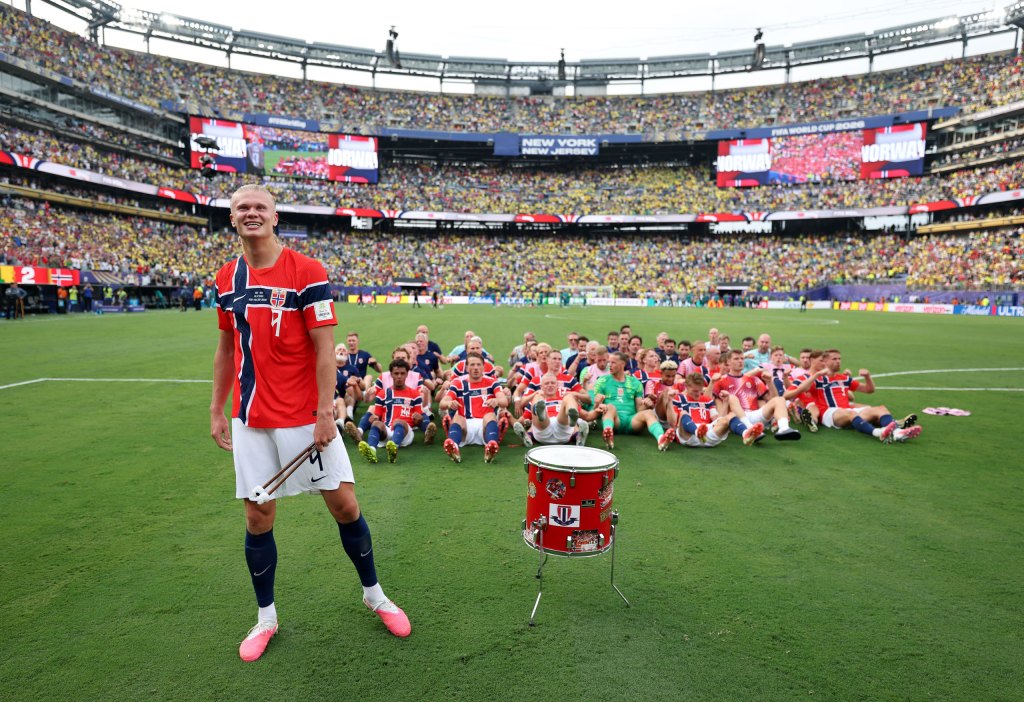
Tell us about this image. What are we looking at, and why did you choose it?
When Norway wins, they lead their fans in their epic row chant. This time, superstar Erling Haaland lead the drum beat before the crowd in unison yelled “ro!”It starts gradually with deafening silence in between each beat before building up to an intimidating crescendo. We picked this image because this has been one of the highlight traditions of the tournament taken from an exclusive position on the pitch.
What was happening just before and after this frame?
In this specific frame, we can see Erling’s genuine excitement from the chant. With each beat of his drum, he smiles like a kid amazed at the crowd’s reaction in choreographed response. Other frames did not show this boyish smile.
What were the key creative decisions you made making this photograph?
For this moment, I chose to shoot with a 16-35mm to show the team inside the humongous stadium. Because we had exclusive access on the pitch next to broadcast’s steadicam, I could manoeuvre to show the expansive landscape of the scene.
Can you share the technical details and how they shaped the outcome?
Besides the wide lens choice, I shot this frame with a narrow depth of field to highlight Erling’s trademark size and broad smile. Because the broadcast’s steadicam orbits around the players, oftentimes very close, I chose to shoot wide enough, so I was forced to physically get in close.
What was the biggest challenge in making this photograph?
One of the biggest challenges of working alongside the broadcast Steadicam is moving in unison with the operator. It is essential to stay close enough to capture the key moments while ensuring you never obstruct or appear in the live broadcast.
Unlike still photographers, who instinctively look for a single decisive frame, the Steadicam operator is constantly moving to create fluid video sequences. Predicting where they will move—particularly during the emotion and chaos of celebrations—is exceptionally difficult.
Success comes from anticipating their movement, matching their pace and positioning yourself to capture those split-second moments of celebration or dejection without compromising the broadcast. It is a demanding role that requires awareness, communication and constant adaptation, but when executed well it produces some of the tournament’s most powerful and iconic images.
What does this photograph mean to you and what would you like readers to take from it?
Norway has never advanced this far in the World Cup so this image has significance for the team, the fans and the country’s history. Because it was photographed while standing feet away from Erling, it helps the reader feel like they’re sharing in the proud moment with them. You can chant along!
Was it luck or judgement?
For this particular photograph, it was judgement. We knew ahead of this moment that Norway would lead in this cheer if they won. This frame was made by combining anticipation of the moment, choosing a lens wide enough to show the scope, physically positioning myself next to steadicam as they continually moved, and capturing the right reaction on Erling’s face that mirrored the entire nation of Norway.
Alex Pantling
Alex Pantling is a Getty Images sports staff photographer specializing in football and major international sporting events. Since joining Getty Images in 2016, he has covered some of the world’s biggest competitions, earning recognition for his dynamic storytelling and striking imagery. A photography graduate from Nottingham Trent University, Pantling combines a lifelong passion for sport with a creative eye to capture defining moments.
Instagram @alexpantling
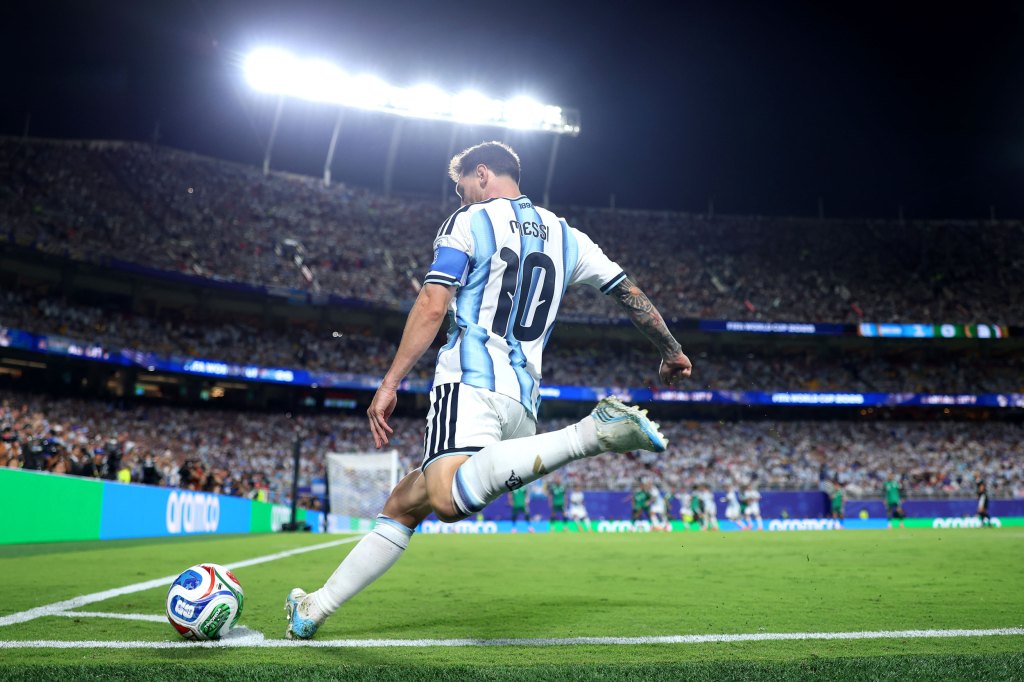
Tell us about this image. What are we looking at, and why did you choose it?
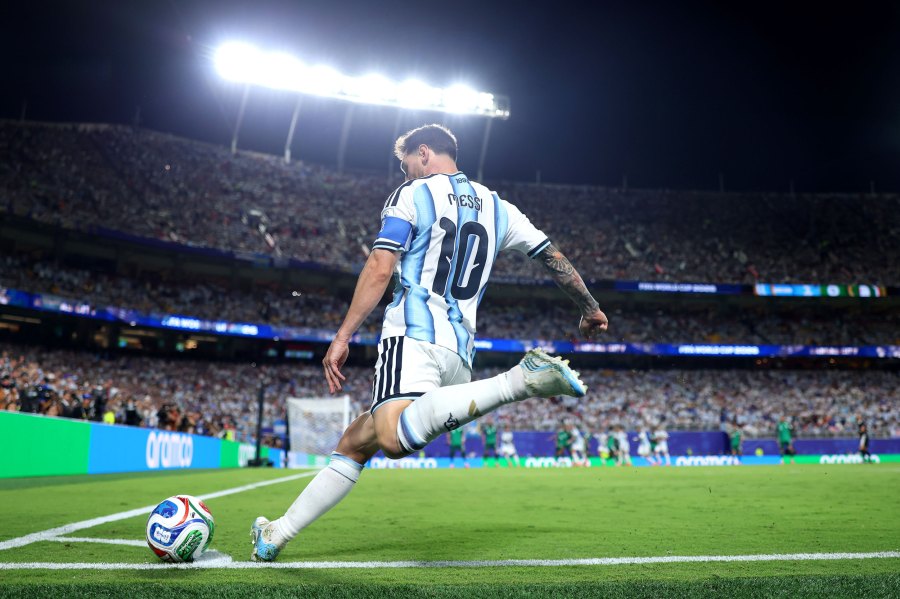
Lionel Messi take a corner kick against Algeria in Argentina’s opening game of the FIFA World Cup.
What was happening just before and after this frame?
Just before the picture was taken Argentina were awarded a corner kick, as soon as that happened I put my 400 and 70-200 down onto the ground in preparation as Messi was walking over to take the corner. I managed to get myself into a position tucked against the wall before I put the corner into the box.
What were the key creative decisions you made making this photograph?
One of the main creative decisions when taking this image was where to position myself and how low to the ground to put the camera. The lower the camera the more impactful the image would be, making Messi look more powerful.
Can you share the technical details and how they shaped the outcome?
I used the Canon 28-70 lens on the R1 body to take this image. It was shot at 2000th of a second, at F2. The reason for shooting at F2 was to ensure that he stood out from the background enough to really emphasise the focus on Messi himself. If I had shot this at F4, of F5.6 I don’t think it would have had the same outcome.
What was the biggest challenge in making this photograph?
This biggest challenge really was to get myself into the position to take the image in the first place. Once the corner was awarded, I didn’t have much time to get myself into the correct position. That combined with trying to find a gap between the stadium security and the Stedicam operator without getting in the way.
What does this photograph mean to you and what would you like readers to take from it?
Growing up a huge football fan I vividly remember being sat on the sofa with my Dad watching Messi player for Argentina and Barcelona and being amazed by everything he did. Then over a decade later when I started working in sports photography, I always wanted to create an image of who for me was the greatest football player I’ve ever seen that would be timeless and I hope I managed to do that with this image.
Was it luck or judgement?
I think any sports photograph has elements of luck and judgement, I had the idea for this image before the game had kicked off due to our exclusive FIFA Photography working positions, however I was positioned in one corner of the stadium, I had to hope that Argentina won a corner on my side of the pitch and that Messi took it, which of course has elements of luck involved.
What advice would you give someone trying to make a similar shot?
The advice I would give is when photographing spot, it’s really important to think about the positioning and shape that the athlete makes when they are competing. The reason I think this image works so well is it shows the athleticism of Messi with his left foot stretched out behind him. I have frames later on in the sequence where he makes contact with the ball and after that also, but the images are nowhere near as dynamic.
Related reading:
- Three leading close-up macro photographers share their best shots – how they took them and why
- Three leading wildlife photographers share their best shots – how they took them and why
- Three leading boudoir photographers share their best shots – how they took them and why [NSFW]
- Three leading street photographers share their best shots – how they took them and why
- Three leading landscape photographers share their top secret locations to help you shoot something different
Do you want to win some great prizes for your photography? Enter your photos in our International Amateur Photographer of the Year competition. Free entry for photographers aged 13-21.
Follow AP on Facebook, Instagram, YouTube, TikTok and Irys.