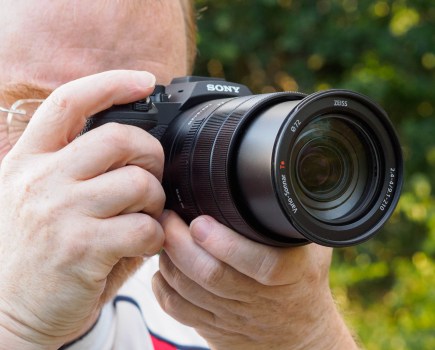
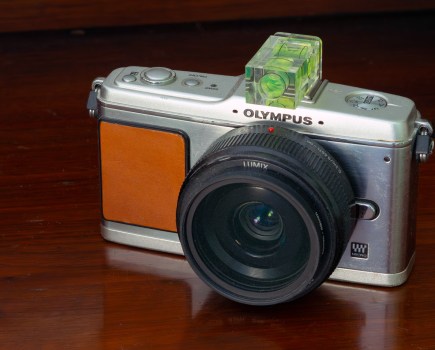
It’s been half a decade since Canon released its last ever DSLR – the Canon EOS 850D for general photography. I was an early adopter of the original EOS R – Canon’s first foray into full-frame mirrorless cameras which was at the time much needed and well overdue, to compete with Sony who pioneered the move to full-frame mirrorless with its A7 back in October 2013. They weren’t the only ones late to the party however, as Nikon also took until 2018 to release its full-frame mirrorless camera, the Z7, though Canon users like myself had to hold on for a further two weeks to see the full-frame EOS R.
This isn’t to say Canon and Nikon hadn’t had a go at mirrorless before though, in fact Canon had a whole other mount with the EOS M line-up designed around smaller APS-C chips. This turned out to not be futureproof enough to accommodate the full-frame chips that Canon would end up using with its full-frame mirrorless RF mount. The EOS M line was therefore known for its great image quality but limited lens range and has sadly been a bit left for dead when the company put all of its mirrorless efforts into the RF mount. This does however mean you can pick up some bargains if you’re after a quality APS-C camera and don’t mind the lack of support and limited lenses for EOS M cameras.
Nikon also took some missteps in the world of mirrorless
Nikon also took some missteps in the world of mirrorless before finding its feet with the Nikon Z series. Nikon’s initial approach to mirrorless was with the 1 J1 which released in 2011. This series of cameras was built around tiny CX sensors for a small and compact form and less data to handle for faster speeds and higher burst rates instead of the image quality you’d get from a larger APS-C or full-frame chip.
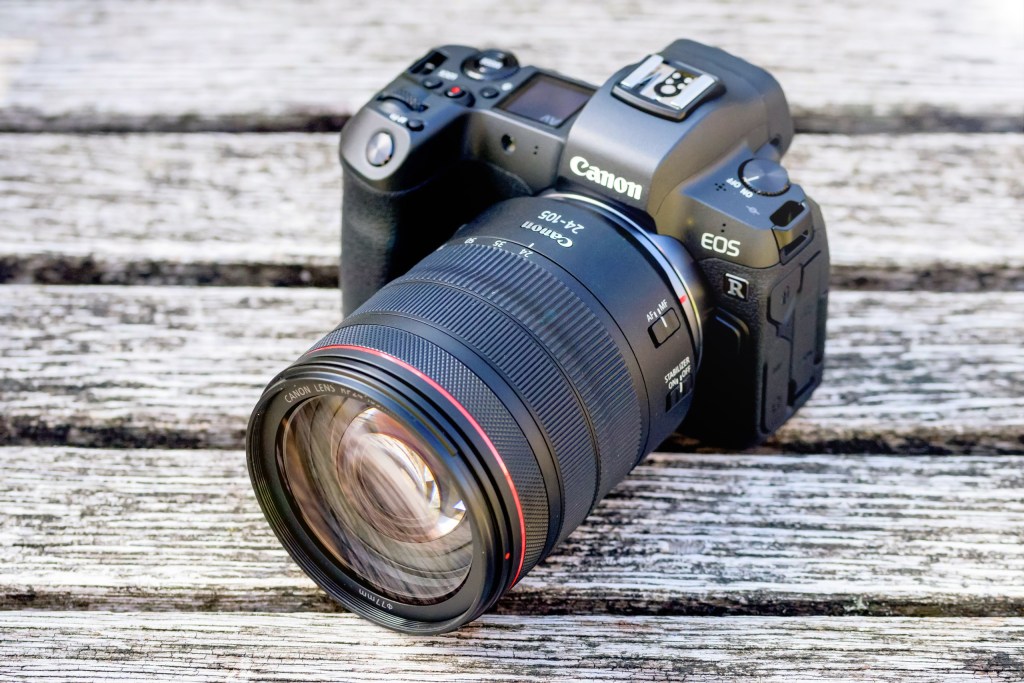
I was an early adopter of the Canon EOS R, though as the company’s first camera to use its brand new RF full-frame mirrorless lens mount it wasn’t without teething problems. The RF lens range was limited at the launch of the RF mount as to be expected and this was accelerated further by the lack of support from third-party lens manufacturers – a problem that still persists to this very day, though is mitigated somewhat with Canon’s improved output of more affordable lenses to plug the gaps usually filled by the likes of Tamron and Sigma.
With my EOS R the face detection and subject tracking wasn’t quite perfect yet and it also had a strange touch function bar – the helpful rear joystick for quickly moving the active AF point hadn’t been implemented yet, thankfully Canon never went back to the Fn touch bar design.
However, the original EOS R showed signs of promise with solid build and image quality as well as fantastic sensor based image stabilisation, a very respectable 30MP resolution and the Canon menu system I’ve come to love over the years. Not to mention, support for Canon ‘s older EF lenses for DSLRs were well supported via not one, but three adapters to help Canon shooters transition to mirrorless and extend the longevity of their kit without forking out for pricey RF lenses straight out of the gate.
Five years on – I could never go back to shooting with DSLRs
Five years on I’m now using more recent models with the EOS R5 and R6 Mark II which I’m happy to report fix many of the issues I found with the EOS R and I don’t think I could ever go back to shooting with DSLRs now.
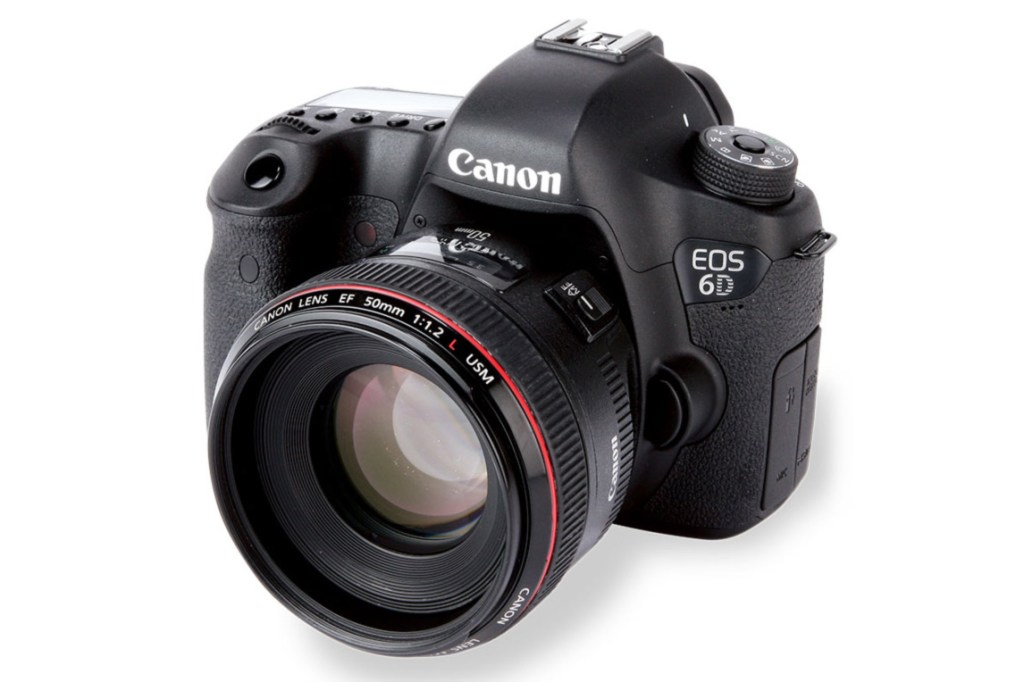
In fact, on a recent trip to the beach I thought I’d take my older DSLR that I’m less precious about getting sandy – however reverting back to the old sluggish AF and without any face detection meant I was missing the moment on more than one occasion.
Because my older DSLRs don’t have the same niceties and advancements we’ve seen with touchscreens and face detection it’s also much more confusing when asking a friend or family member to take my picture because it’s not as simple as saying tap on the screen like you would with a smartphone – something we’ve all come accustomed to.
What’s more, there’s the obvious lack of firmware updates and support for these older models, we also see no new lenses being made for them. Although there were rumours at one point that third-party manufacturers would continue to make lenses for Canon EF mount as it’s been difficult for them to get any sort of full-frame glass with AF into Canon’s RF mount.
The problems with DSLR live view
When camera manufacturers transitioned from film to digital sensors many adopted the SLR design which means there is a mirror and prism system allowing you to see through the lens via an optical viewfinder to compose your frames – the mirror is then able to flip up and out of the way of the film when the shutter is fired.
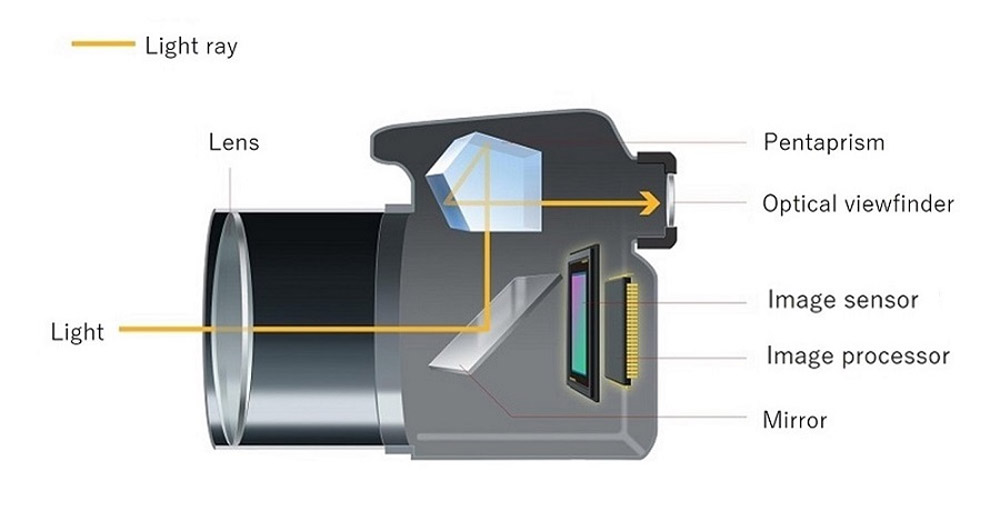
When we transitioned to digital we adopted the name D-SLR with the D standing for digital using a digital sensor. While many film SLRs relied on manual focus, advancements in autofocus technology had come on leaps and bounds, with many using phase detection type AF points for fast and accurate autofocusing.
However, when using ‘live view’ to see exactly what the sensor sees the mirror is flipped up and these fast-AF sensors cannot be used (instead the camera uses on-sensor contrast detection AF) – this often meant that early DSLRs were sluggish and slow to autofocus in this mode and it can be a painful affair returning to them.
Are camera phones also mirrorless cameras?
As a final thought, smartphones also have no mirror so they could technically be considered mirrorless cameras too, albeit without the interchangeable lens element. This means they also use direct on-sensor autofocusing that allows for better face and subject tracking, as well as making them better for video too.
That being said, with photographers moving on to mirrorless cameras en masse, there’s a treasure trove of perfectly good second-hand DSLRs with expansive lens ranges for them that can be picked up for a bit of a bargain. Read why I still think DSLRs could be the best option for cash-strapped students.
Related reading
- Best used DSLRs to buy
- Second-hand DSLR lenses: ultimate buying guide
- Why I chose a Canon mirrorless camera rather than a compact
The views expressed in this column are not necessarily those of Amateur Photographer magazine or Kelsey Media Limited. If you have an opinion you’d like to share on this topic, or any other photography related subject, email: [email protected]
Follow AP on Facebook, Instagram, YouTube and TikTok.