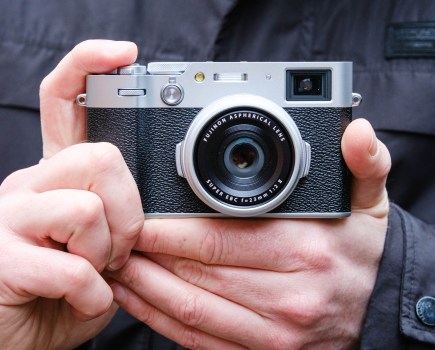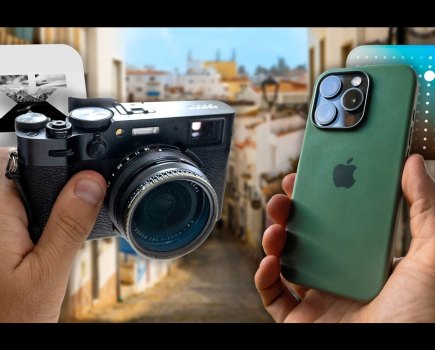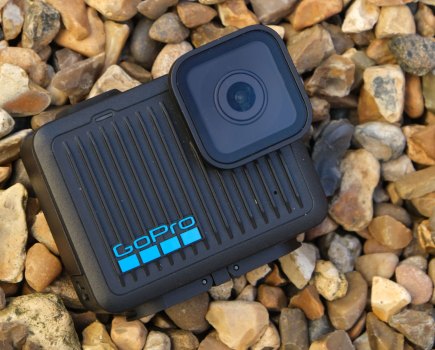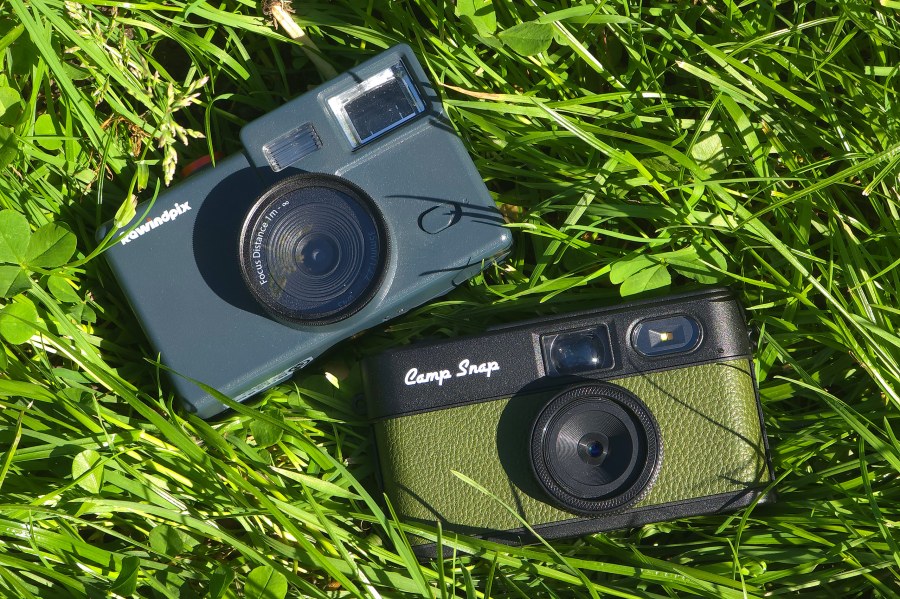
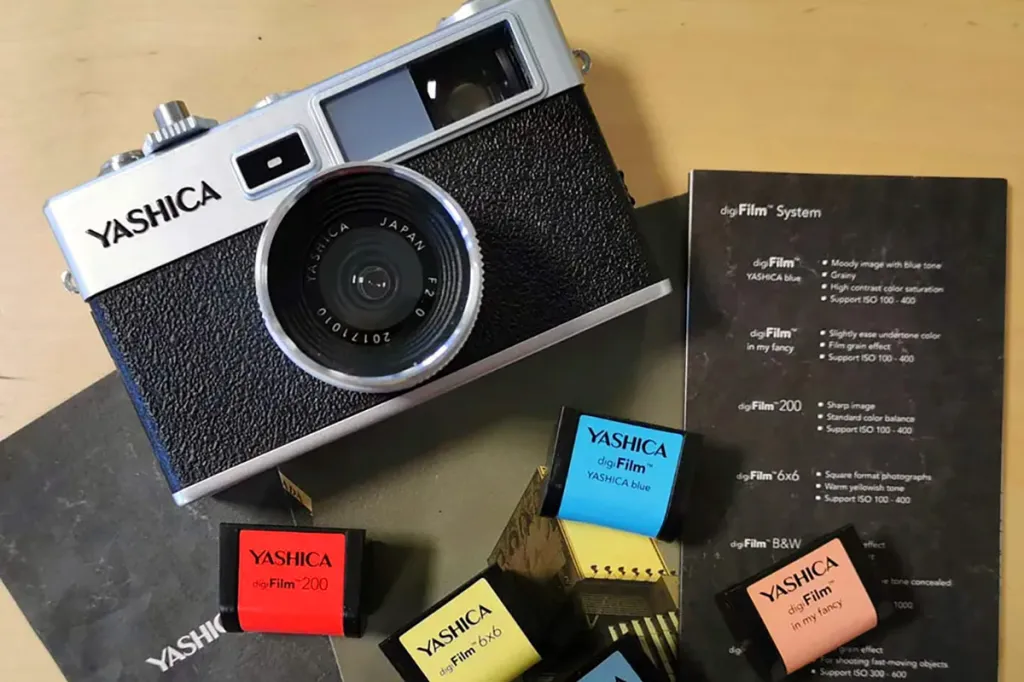
If you want a digital camera that ‘shoots like film’, there’s no shortage of people willing to sell you one. ‘Check out this cool retro-styled compact camera, or this novelty digital camera with a fake wind-on lever, or this disposable-style compact with no screen. All available for a reasonable price through the affiliate link in my bio!’
Look, many of these are great cameras. But you can ignore the hype, because the simple truth is this: no digital camera shoots like film. The mythical digital camera that perfectly replicates the film look simply does not exist.
And that’s fine!
First off, film and digital photography are fundamentally different processes. A digital sensor is a piece of silicon covered in millions of receptors that convert light energy into an electrical charge. A frame of film is a piece of plastic coated in light-sensitive silver halide crystals, which form a latent image when exposed to light – an image that is later revealed through chemical development. Film has a very distinct character, with soft tonal transitions and unpredictable grain caused by the inherent randomness of organic processes.
It’s true that if you really know what you’re doing, you can get pretty close. Attach a vintage lens to a decent digital camera (spoilers: it doesn’t really matter which), spend a lot of time in Lightroom with your image post-capture, and you can produce a digital shot that could fool a non-trivial number of people into thinking you shot it on film. But that’s not a ‘digital camera that shoots like film’, is it?
And this, I think, gets to the key difference between digital photography and film photography. Digital photography, done properly, is all about the choices you make after the capture. A high-quality digital camera and a pin-sharp modern lens will provide you with incredible amounts of raw data, which powerful post-processing software allows you to transform into an image.
Whereas with film photography, you make your choices before you shoot, and bake them in. Your film stock and the look of your lens are things you have to commit to in advance. Technological limitations also mean you will have fewer images to choose from – if a subject passes in front of your digital camera, you can spray at it with 30fps and fast AF tracking, and end up with 100 shots to choose from. There does not exist a film camera that could do the same, and even if there were, you wouldn’t want to use it (have you seen Kodak prices lately?!).
Film images are fundamentally different to digital ones, because the entire process of shooting film is just different to digital – and that’s okay! They’re tools for different purposes. I wouldn’t use my Pentax ME Super to capture product photos for AP reviews. But I also won’t use my digital cameras when I want the slower, more tactile process of shooting film – and when I want the inimitable and distinctive look that a film image gives me.
So remember that next time a YouTuber or a TikToker promises you that, no, for real bro, this digital camera shoots images that look exactly like film, effortlessly. Because it won’t! It can’t.
Related reading:
- Do you want a digital camera that shoots like film? This is what I’ve found
- Best 35mm film: these are my favourite colour and B&W 35mm film stocks
- Here’s what I’ve learned from shooting over 150 rolls of film in the 2020s
Follow AP on Facebook, Instagram, YouTube and TikTok.