An exceptionally rare collectable Leica with black paint, a Gun RIFLE camera and one of the first cameras capable of recording motion pictures are among the lots sold at the 48th Leitz Photographica Auction. The lavish event featuring the most unique entries will take place on the 13th June 2026 in the home of everything Leica, the Leitz Park in Wetzlar, Germany.
For the first time, the firm also introduces an online-only version alongside the main auction to handle the sheer volume of submissions. The Leitz ON will be open from the 13th of May to the 14th of June.
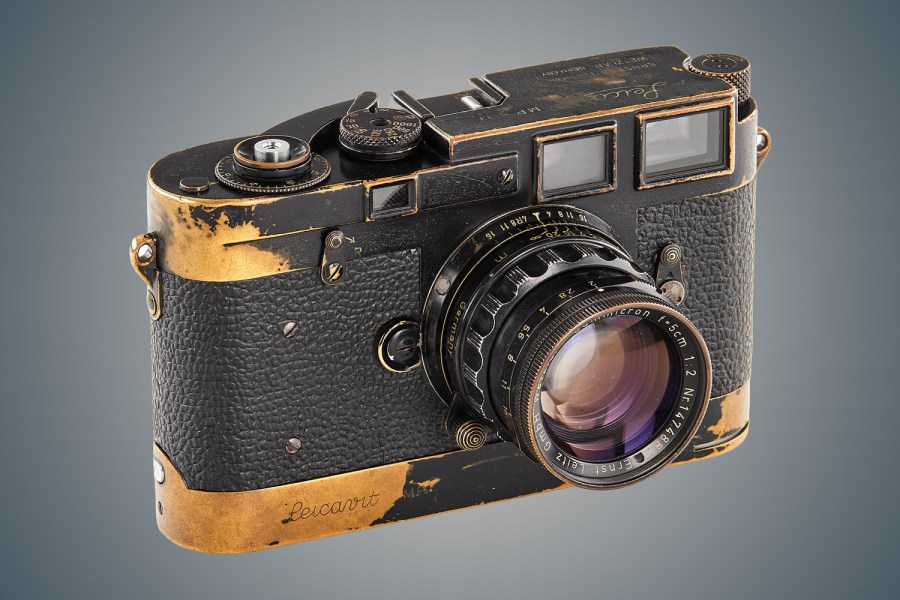
Black Leicas are popular collector’s items as they were produced in particularly small batches. From the 1957 Leica MP-33, going on sale, there were only 141 ever made. Another interesting feature is that the black paint on the metal parts develops a distinctive brassy patina over time, making MP cameras even more alluring.
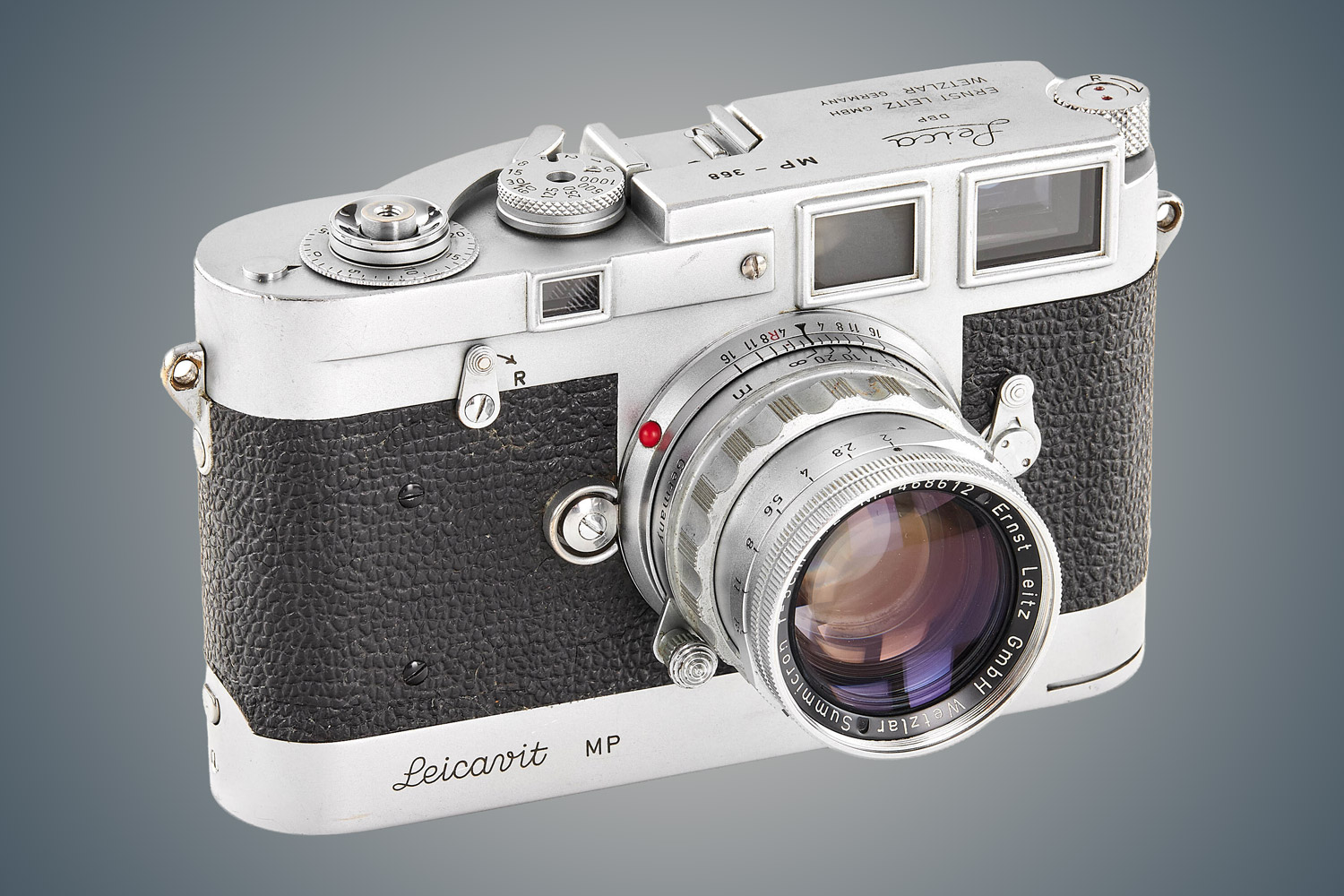
Another listing, a chrome finished Leica MP from 1958 was the personal camera of the Italian photographer Tazio Secchiaroli. He became known as the inspiration for the “Paparazzo” in the cult Fellini film, La Dolce Vita. Ironically, by the time the term paparazzi took hold, Secchiaroli pivoted into more informal portraits of stars and became a respected figure in the film industry, leaving behind the intrusive paparazzi style.
The E. Leitz New York Leica Gun RIFLE is an intriguing piece, inspired by wildlife photographer Attilio Gatti who wanted a camera that can help reduce camera shake when handling telephoto lenses; an estimated 12-14 of these were ever produced.
A landmark piece of cinematic history from 1895, the Lumière Cinématographe no. 207 led to what is widely known as the birth of commercial cinema. The Lumière brothers, among the first moving-picture pioneers, invented this compact hand-cranked camera capable of recording, developing, and projecting motion pictures in a single unit.
From Leica, 13th of May 2026 (edited)
Rarity in black paint
One of the standout rarities is the Leica MP-33 black paint. Only 402 units were ever produced, and of those, just 141 of them in black paint, which makes the “M Professional” (MP) among the rarest Leica cameras ever made. The concept originated from requests by prominent American press photographers such as Alfred Eisenstaedt and David Douglas Duncan who sought to combine their Mseries cameras with the advantages of the Leicavit rapid winder, then available only for the Leica IIIf. The example offered now, MP no. 33, was originally delivered to Brandt, Sweden, on the 29th of July 1957 and is accompanied by a matching black paint Leicavit and a black paint / brass-mount Summicron 2/5cm lens no. 1474885.
The camera of the first Paparazzo
With only 261 units produced, chrome-finished MPs are also hugely popular with collectors. A particularly interesting chrome MP – due to its distinguished provenance – will be offered at Leitz Photographica Auction 48. Delivered on the 1st of January 1958, the Leica MP no. 368 was documented as the personal camera of Tazio Secchiaroli, whose dynamic and candid photographs of celebrities along Rome’s Via Veneto in the late 1950s profoundly influenced modern photojournalism and even inspired a now iconic character in Federico Fellini’s La Dolce Vita (1960). Said character was called “Paparazzo” and would eventually go down in history by lending its name to a new phenomenon in photography culture.
A pioneer in reducing camera shake
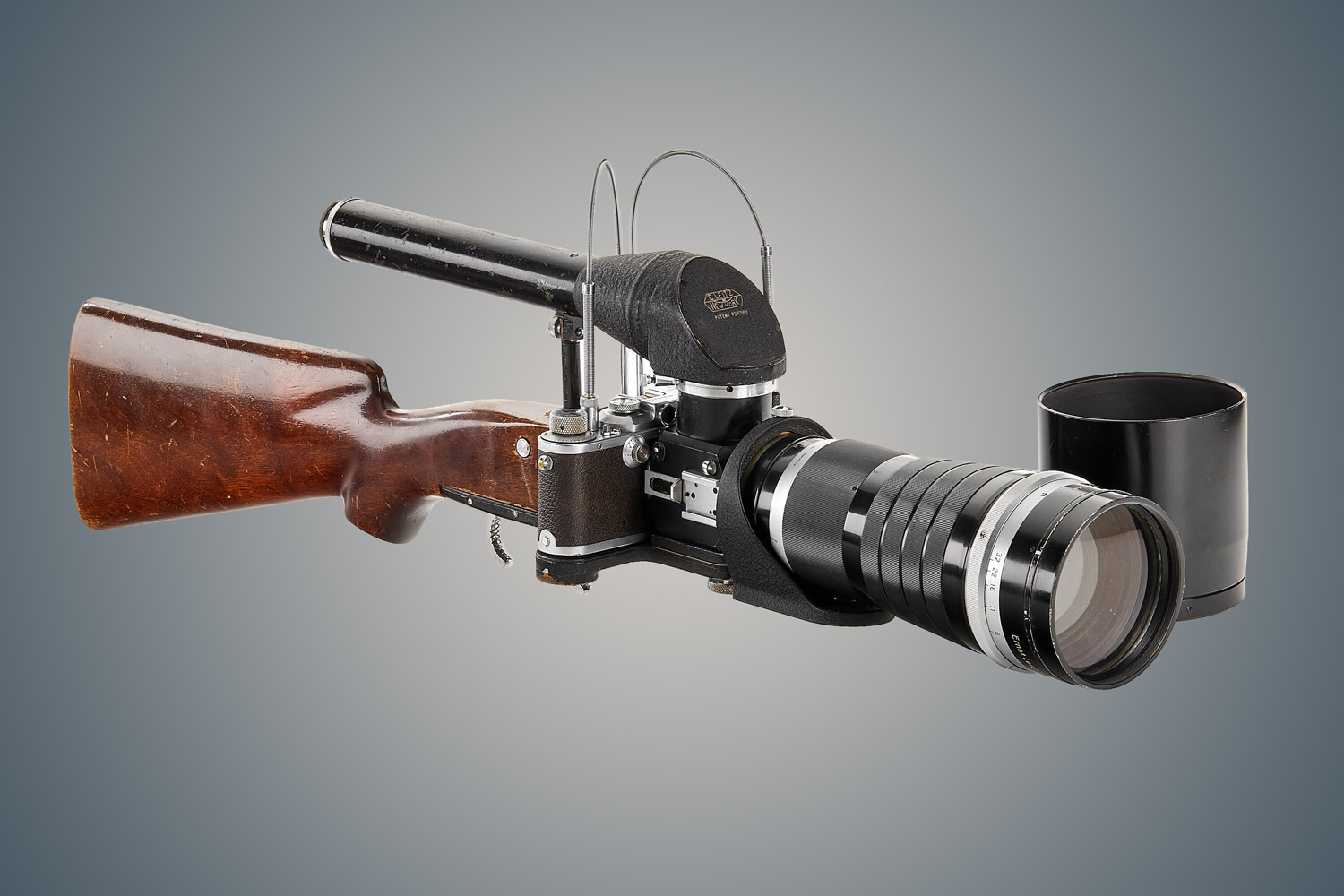
Historically significant camera accessories are likewise in focus at Leitz Photographica Auction 48. Of these accessories, the E. Leitz New York Leica Gun RIFLE, is one of the rarest and most unusual. Inspired by Commander Attilio Gatti, a renowned wildlife photographer, the RIFLE was designed to reduce camera shake while handling telephoto lenses and was therefore often used to cover sports events. Estimates of the total production vary, but it appears realistic that a mere total of 12–14 E. Leitz New York Gun RIFLES were produced. A distinctive feature is the specialised viewfinder bearing the engraving “Patent Pending.”
Lumière Cinématographe Set
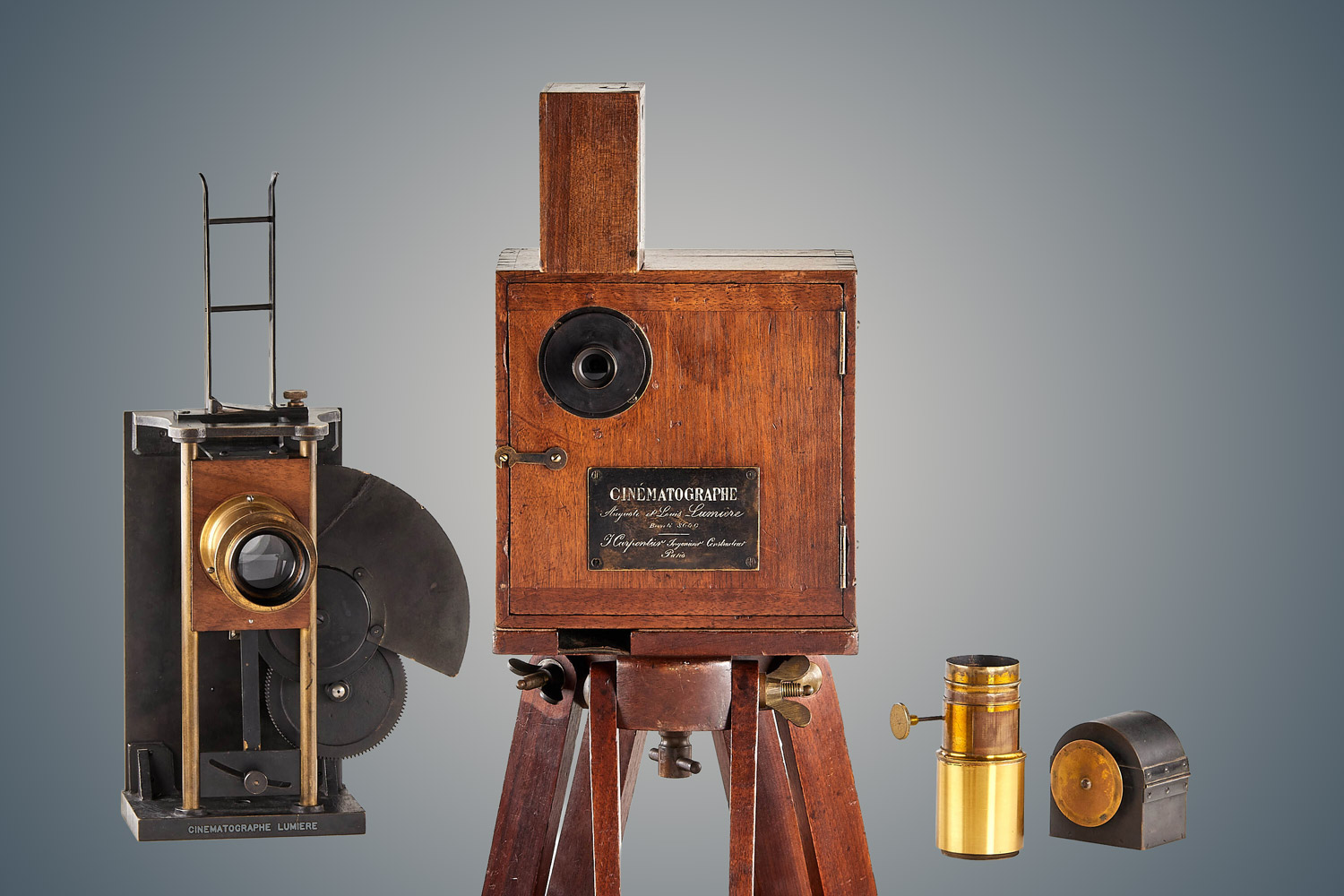
A landmark piece of cinematic history will be offered in the form of Lumière Cinématographe no. 207. Patented by Auguste and Louis Lumière, the Cinématographe was the first practical and commercially viable apparatus capable of recording, printing and projecting motion pictures within a single compact, hand-cranked mechanism. Its public debut on the 28th of December 1895 at the Salon Indien du Grand Café in Paris — the first ticketed public film screening in history — is widely regarded as the birth of commercial cinema. It remains unknown which Cinématographe unit was used at said screening; however, the Lumière system, lightweight and mechanically sophisticated, rapidly spread across Europe and internationally, establishing motion picture exhibition as a new industry.
Live on site, in written form, online or by telephone Leitz Photographica Auction 48 will take place on the 13th of June, starting at 11 a.m. CET, at Leica Welt in Wetzlar, Germany. Bids can be submitted in advance online (www.leitz-auction.com), in written form, or by telephone. Live bidding during the auction will be available via www.leitz-auction.com and www.liveauctioneers.com. In autumn, Leitz Photographica Auction will host two additional sales. On the 9th of October, the photographs auction “Perspectives” will take place at Leica Galerie Vienna, followed by the Leitz Photographica Auction 49 on the 28th of November, once again at Leica Welt in Wetzlar.
Related reading:
Follow AP on Facebook, Instagram, YouTube and TikTok.