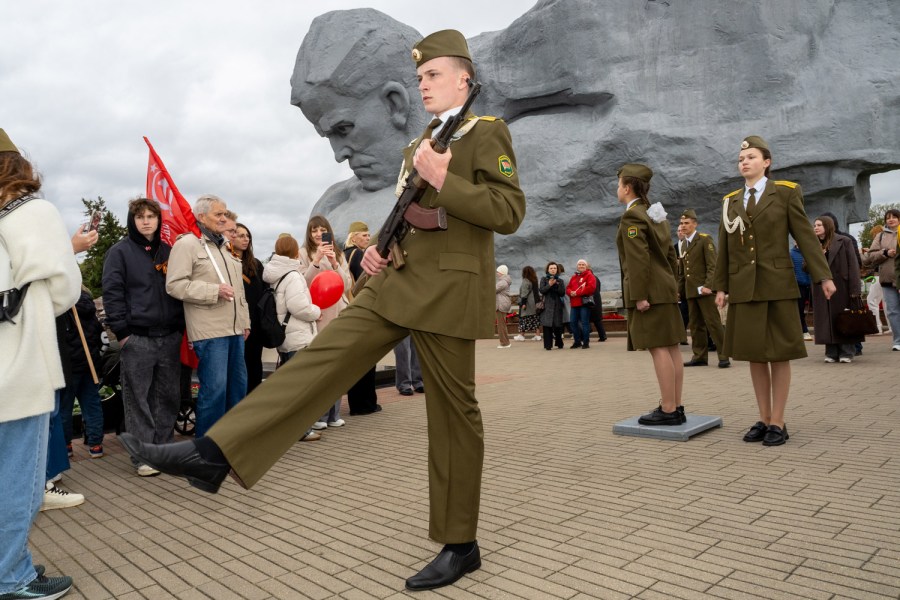
Against Foreign Office advice and under the scrutiny of Europe’s last dictatorship, photographer and writer Peter Dench crossed into Belarus for Victory Day celebrations to see what life inside Alexander Lukashenko’s Soviet-style state really looks like, beyond the fear, headlines and propaganda.
The last Soviet frontier
I first visited Belarus in 2002 on assignment for Men’s Health magazine. Belarusian men were dying, on average, 12 years earlier than women and a journalist and I had been sent to investigate why. The previous week we’d been on the sun-bleached Caribbean island of Martinique, the one country in the world where men were reportedly outliving women. In hindsight, we should probably have reversed the trips. Standing in the lobby of our Minsk hotel, we were the healthiest, and darkest-looking men in Belarus. I can’t remember whether we entered as accredited journalists, but I do remember wanting to return. I didn’t expect it to be twenty-four years later.
In a Europe obsessed with reinvention, Belarus has doubled down on itself and remained defiantly Soviet. But the backdrop now feels darker. Its southern border with Ukraine is effectively sealed. Joint military and nuclear exercises have taken place with Russia. Often described as “Europe’s last dictatorship”, Belarus exists as a geopolitical buffer between Russia and NATO, a country where Lenin statues still point the way, colossal war memorials dominate public spaces and military parades provide both spectacle and nostalgia.
Finding courage
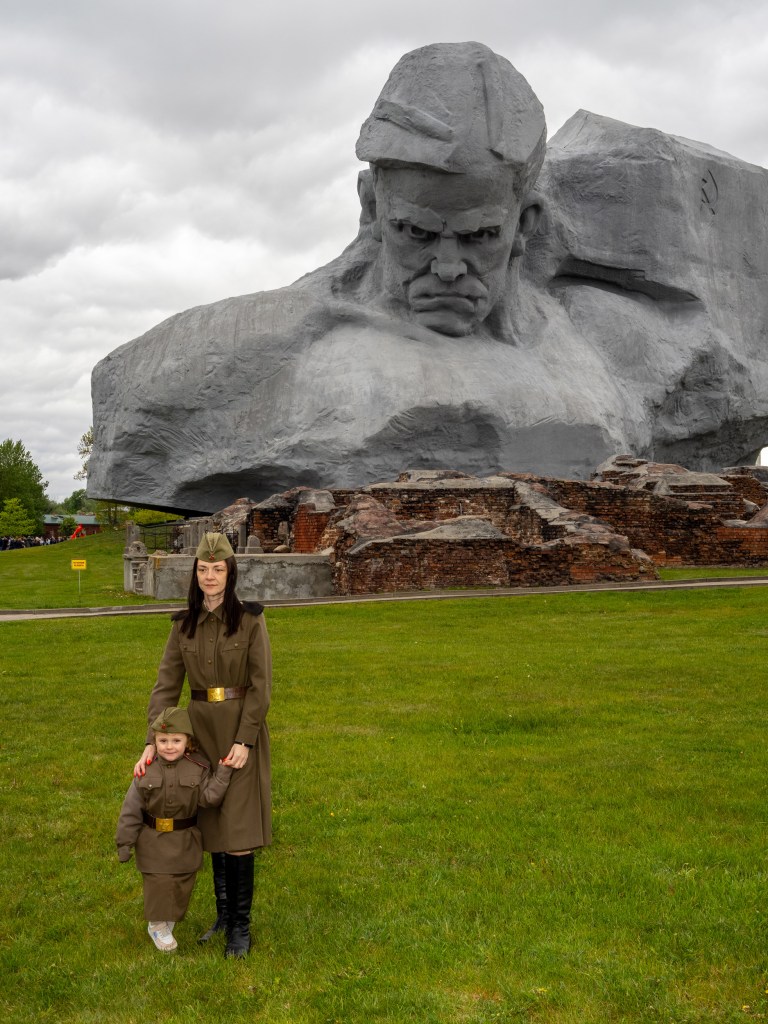
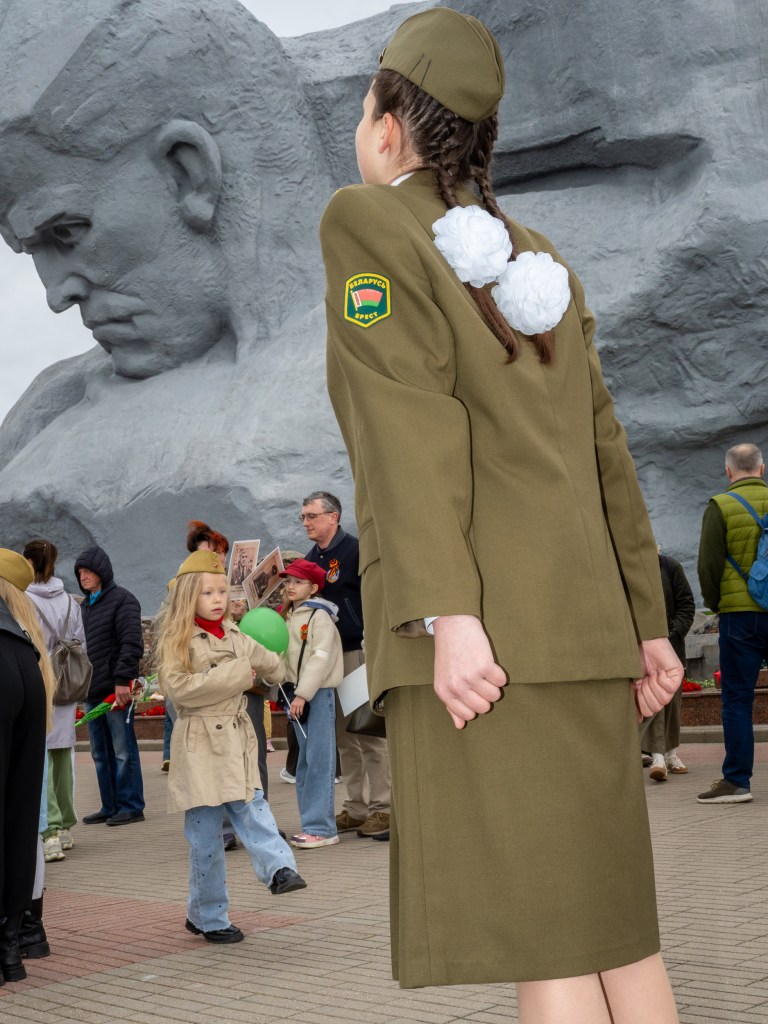
I decided to experience the May 9 Victory Day commemorations at the Brest Hero-Fortress, just across the border with Poland. For years, I’d been obsessed with the fortress’s 33.5-metre-tall concrete Courage monument. Built in 1971, it perfectly embodies Belarus’s relationship with conflict, sacrifice and national identity.
The fortress itself occupies mythic status in Soviet history: the site of a doomed but heroic resistance to the Nazi invasion of June 1941. The more photographs I saw of the monument (encouragingly, there weren’t many good ones), the more I wanted to photograph it myself. It encapsulated the Belarusian mood: stoic, monumental and defiant. If Victory Day is Belarus at its most theatrical, Brest Fortress felt like the ultimate stage.
The UK Foreign Office currently advises against all travel to Belarus, warning of a significant risk of arrest and detention, limited consular support and the possibility of the war in neighbouring Ukraine spilling across the border. Bank cards may or may not function due to sanctions. Insurance can become invalid. It is also illegal to photograph military installations, personnel in uniform or strategic infrastructure in Belarus, even from public streets or parks. Sharing such photographs online can also constitute an offence punishable by detention, fines or criminal charges. For Victory Day, this presented obvious complications.
A tourist in a security state
There were no direct flights from the UK, so I opted for a land-border crossing via Warsaw. Preparation would be key. In January, I visited the Belarusian Embassy in west London. According to official guidance, visitors must provide proof of accommodation at the border and I was struggling to find anywhere to stay in Brest. I’d also read that British citizens could enter visa-free for up to 30 days but wanted verbal, eye-to-eye confirmation before committing myself.
Bounding into the basement consular office, I asked about both. The visa-free arrangement was confirmed. “Check Expedia,” came the accommodation advice. I explained that Expedia listed only two hotels in Brest and both were already fully booked for Victory Day weekend. No alternative suggestions were offered. The overall feeling was that Belarus was theoretically open to tourists, but not especially enthusiastic about helping them arrive.
Before leaving, I scooped up the available brochures: Military-Historical Tourism in Belarus, Find Your Belarus, 50 Things To Do in Belarus and Industrial Tourism in Belarus, which proudly advertised the opportunity to have your photograph taken beside a 450-ton quarry dump truck, apparently a record breaker.
Be prepared
At 8am on May 7 2026, I waved my 60-euro ticket at the driver and boarded the Ecolines double-decker bus from Warsaw to Brest. Back in 2002, I’d flown into Minsk carrying a Domke bag stuffed with two medium-format Mamiyas, a couple of lenses, a Metz flashgun, a light meter and around 50 rolls of film. Times had changed and this trip felt very different.
Inside my Wizz Air-compatible backpack was the same OM-5 with a 12–45mm lens that had helped save me from a night in a Transnistrian gulag. As backup, I carried an Olympus OM-D E-M5 Mark II with a 17mm lens, the same camera I’d used to shoot my book, Dench Does Dallas.
I’d agonised over whether to bring a laptop. The ability to upload RAW files to the cloud would be useful, but the extra weight and the possibility it might make me look too professional ultimately decided it. I had a ‘clean’ passport without Ukrainian stamps and was entering Belarus as a military-history tourist.
Border interrogation
I’ve had some hairy border crossings in my career. Poland into Belarus was expected to be another level. As the bus trundled to a stop, I took deep breaths and stared at the drizzle out of the window. I’d done what I could. It was showtime.
As a ‘person of concern’ I was separated from the other passengers (along with two other non-nationals) and marched into a private room. I’d stop short of calling it an interrogation, more a hard questioning. My hosts were two border guards in olive-green uniforms. They removed their furazhkas – green-topped peaked caps and went to work via a translation app.
Why are you travelling to Belarus?
Where are you staying?
How did you find where you’re staying?
What do you do for a living?
Are you working with a journalist?
What does your wife do for a living?
How old is your daughter?
Hidden content
Between questions, the guard opposite me with hands bigger than my face, repeatedly unlocked my phone using Face ID and scrolled through my apps. I didn’t know there was a Hidden Apps section on my iPhone. He did. Before travelling, I’d archived Instagram posts from my 2023 trip to Ukraine and temporarily taken sections of my website offline. The image that caused the most concern was a photograph of a scratched camera LCD screen I’d taken before sending it away for repair.
“Do you have a camera?” I pulled the OM-5 from my bag.
“Have you got a second camera?” Out came the E-M5, a Godox iT30 Pro and Olympus FL-600R flashguns.
“Do you have memory cards?” I had four. “Show me what’s on them.”
Whilst in Warsaw, I’d wandered around photographing monuments, flowers, river views, anything safe, bland and politically anaemic. I showed those images. The other cards were empty.
Judgement day
After around 30 minutes, I found myself squeaking nervously in the chair. Looking at my kit spread across the table under the forensic light, things didn’t feel promising. I produced the brochures collected from the Belarusian Embassy in London, complete with Post-it notes marking places I intended to visit, alongside an email explaining visa-free entry requirements. Accommodation documents. Insurance documents. I had literally laid everything out there. Then came the question that mattered.
“What are you going to do with the photographs afterwards?”
“Publish them in Amateur Photographer, post them on social media and syndicate them through Getty Images,” didn’t feel like the correct answer.
“Put them in an album and show them to my mum,” I replied.
Then something unexpected happened. Giant Hands cracked a smile. The pendulum had swung. After a brief discussion in Belarusian with his colleague, he looked at me and said: “Welcome to Belarus.” I instinctively thrust out my hand to shake his. He ignored it completely. It didn’t matter. I was in.
Boarding the bus again came with enormous relief, the frustration of the delayed passengers was tangible. After finally arriving in Brest, I paid 1,650 Belarusian rubles (about £440) for my apartment, only to discover it involved an eight-mile taxi ride out of town. The driver dropped me at the wrong entrance and I spent a tense few minutes trying door codes on neighbouring brutalist apartment blocks until one finally clicked open. Once inside, I flopped onto the bed, exhausted. I was within striking distance of Victory Day.
Victory Day
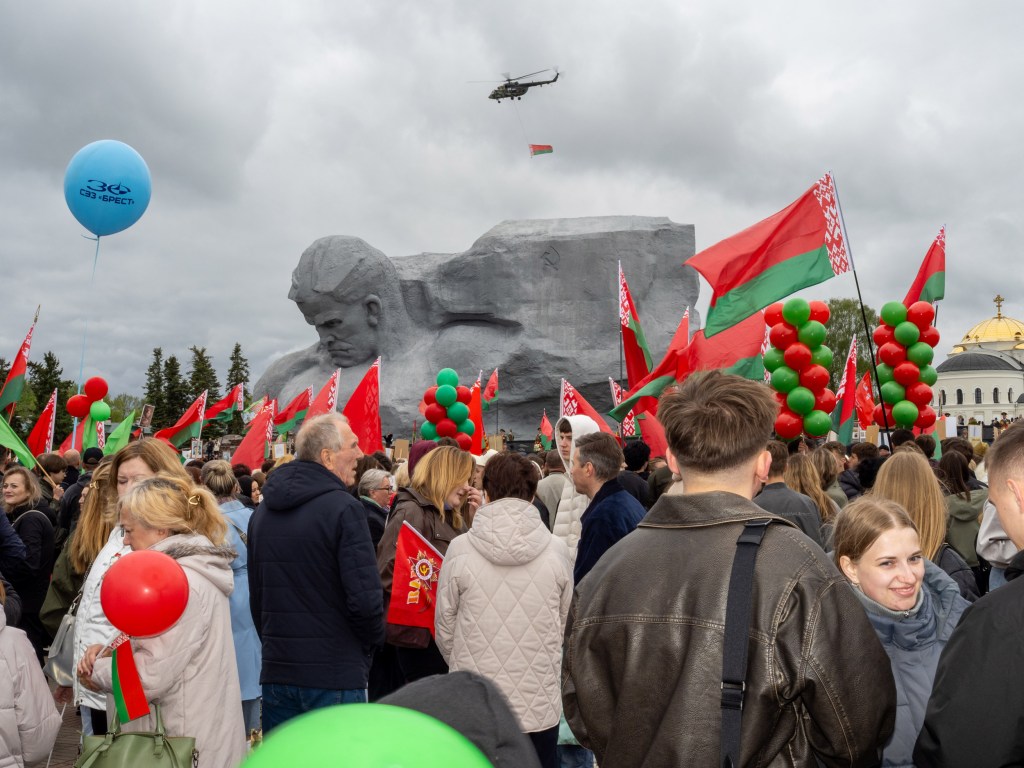
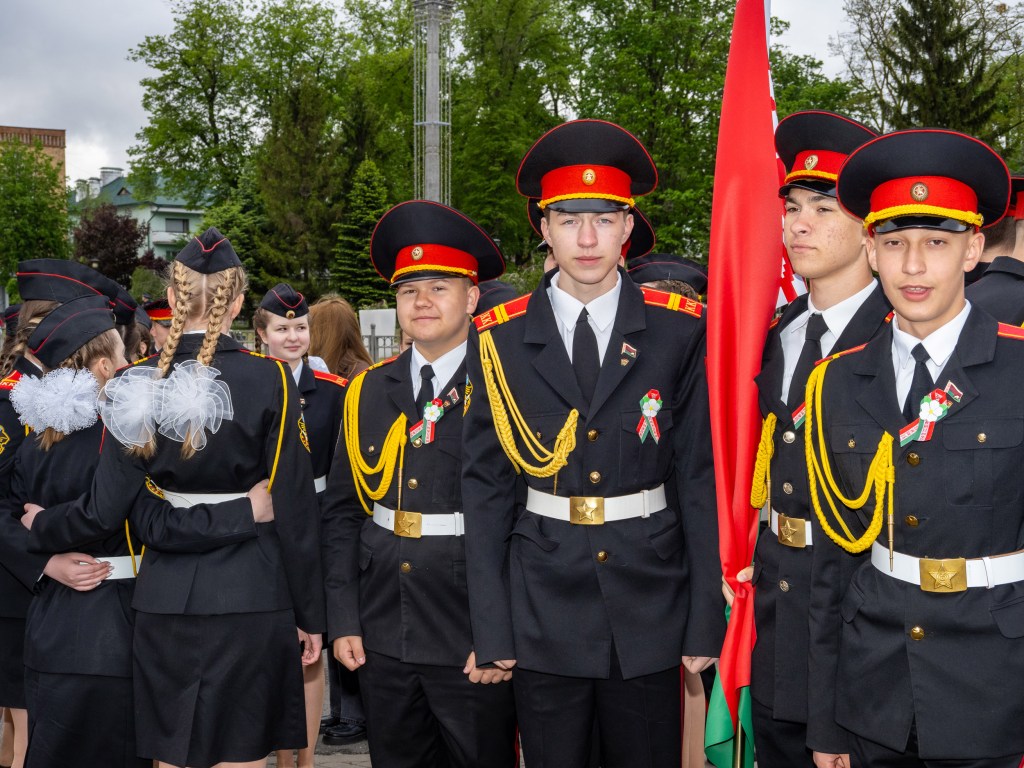
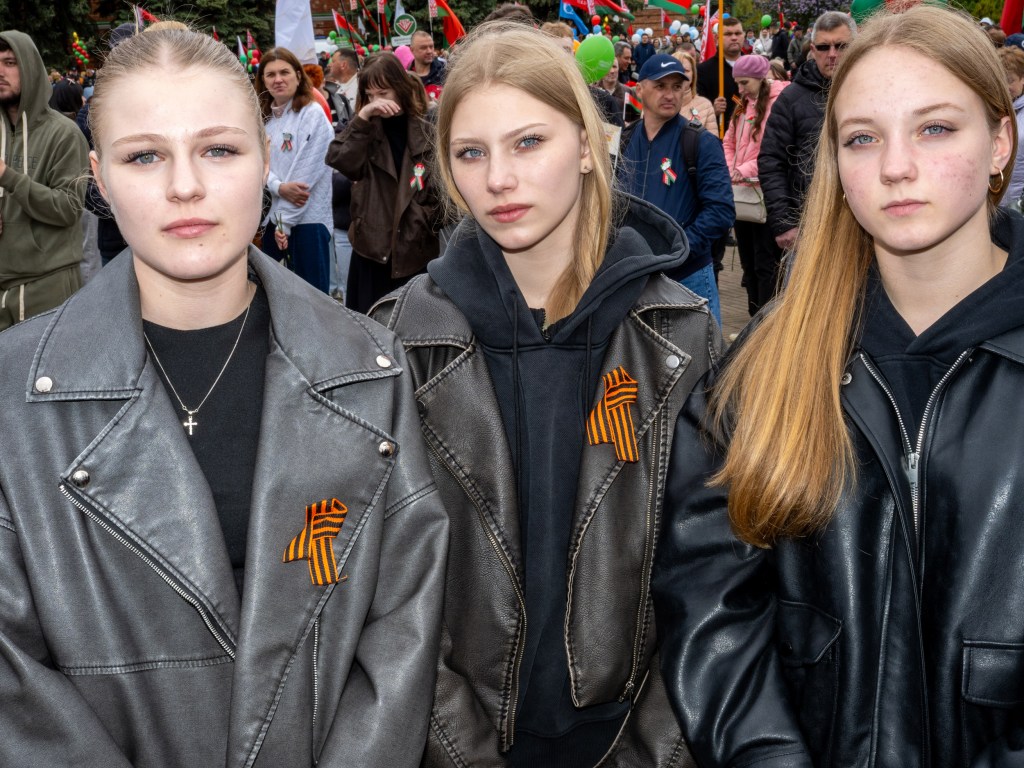
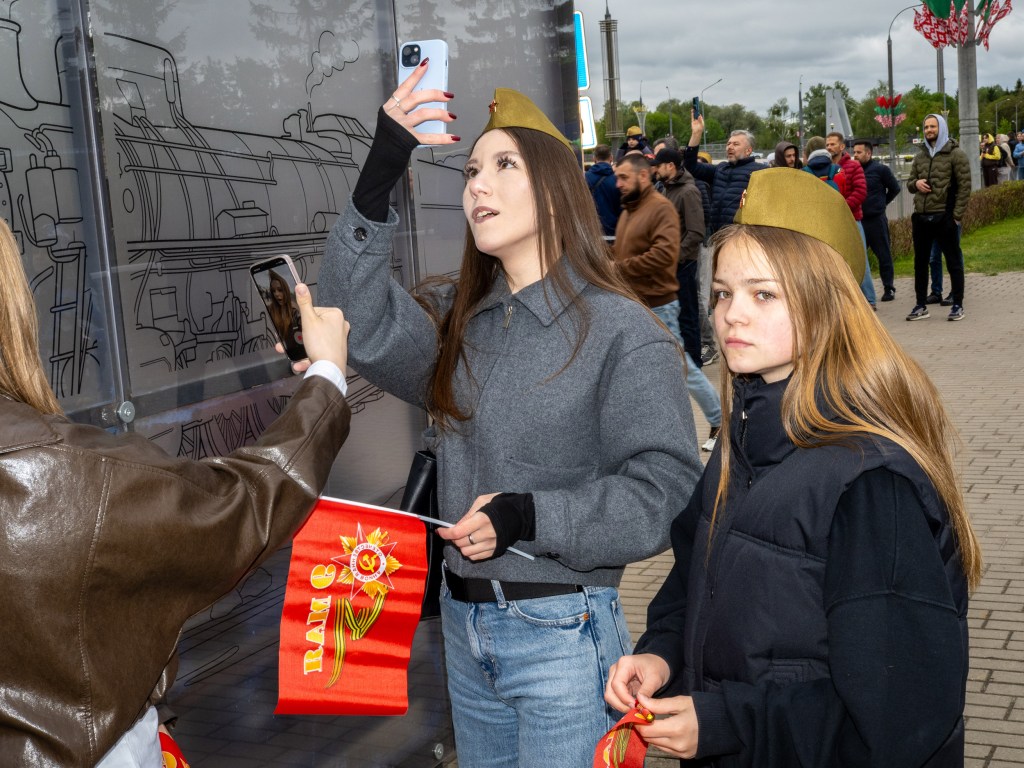
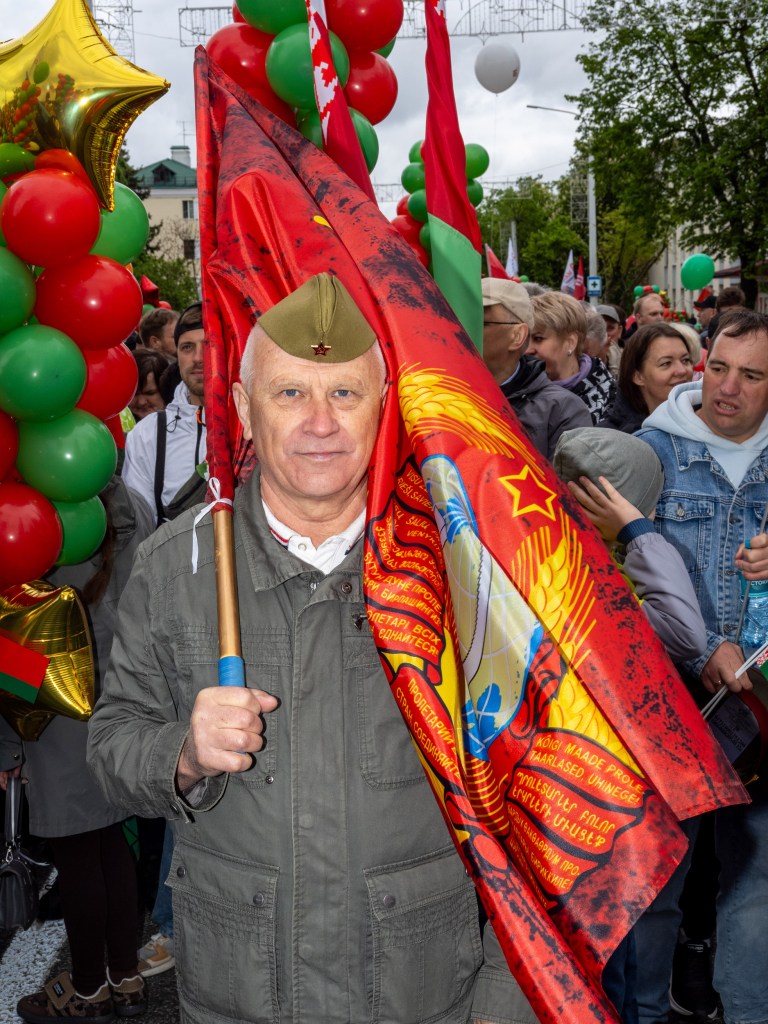
Sliding on my trainers that morning, I couldn’t help thinking I should perhaps have chosen something less German. I boarded the trolleybus into central Brest alongside the rest of my neighbourhood. Teenagers wore the black-and-orange St George’s Ribbon, banned in several Eastern and Northern European countries because of its association with Russian militarism and the war in Ukraine. Patriotic Soviet-era songs, martial marches and emotional wartime ballads blasted across streets and parks.
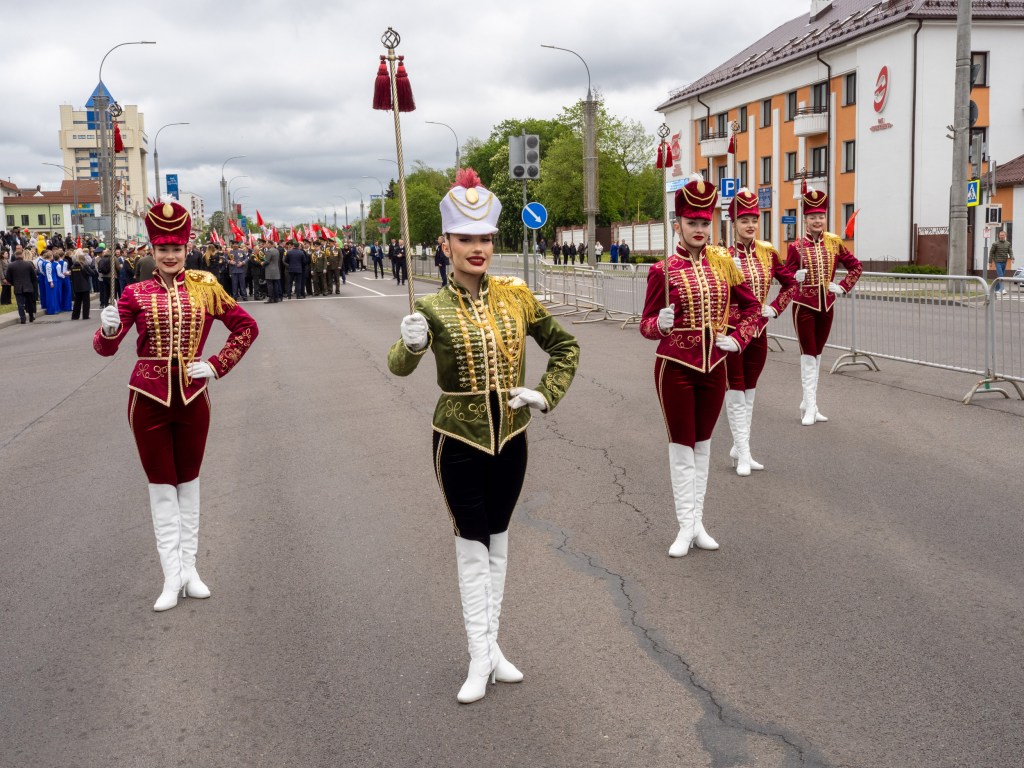
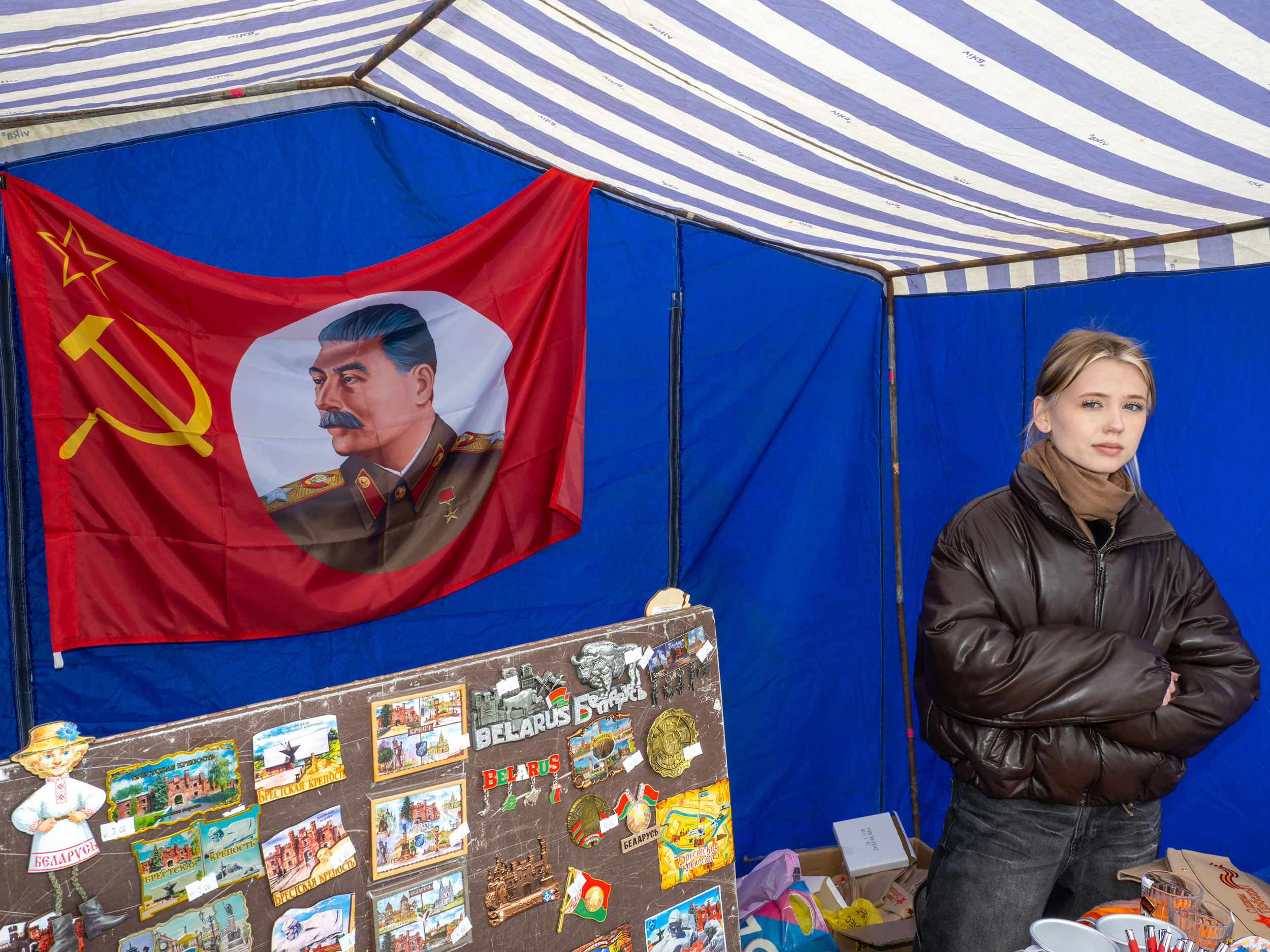
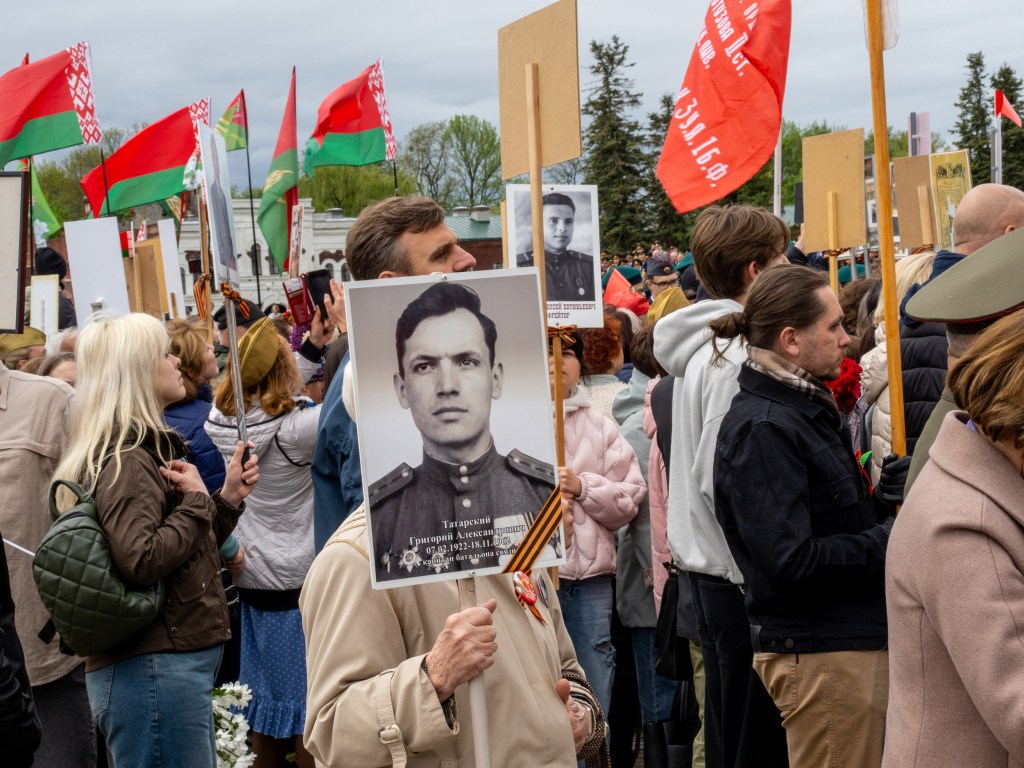
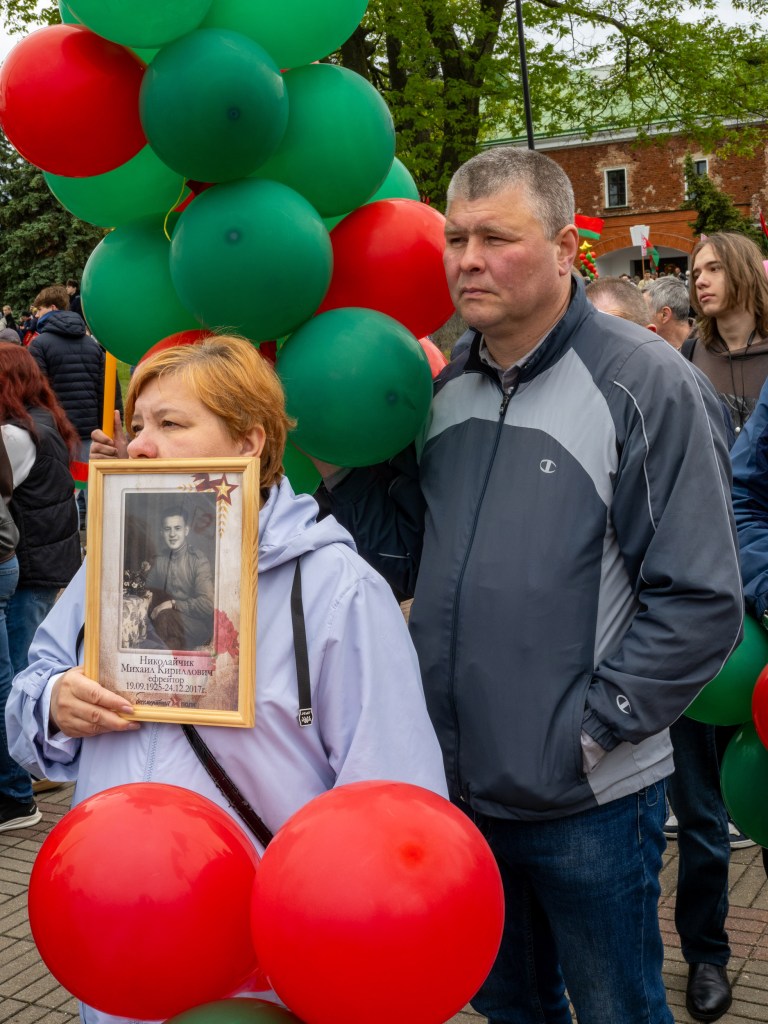
The military parade was also very much a people parade. Crowds carried portraits of relatives who had served, disappeared or died in what is still referred to here as the Great Patriotic War. Entire families walked together beneath red banners featuring Stalin or the Hammer and Sickle. There was also the finest troupe of majorettes I’ve ever seen and, growing up in Weymouth during the 1980s, I’ve seen a lot. I spotted three other photographers being gently but firmly cajoled into taking the ‘right’ pictures, or at least that’s how it looked, and kept my head down and mouth shut while shooting mine.
People’s parade
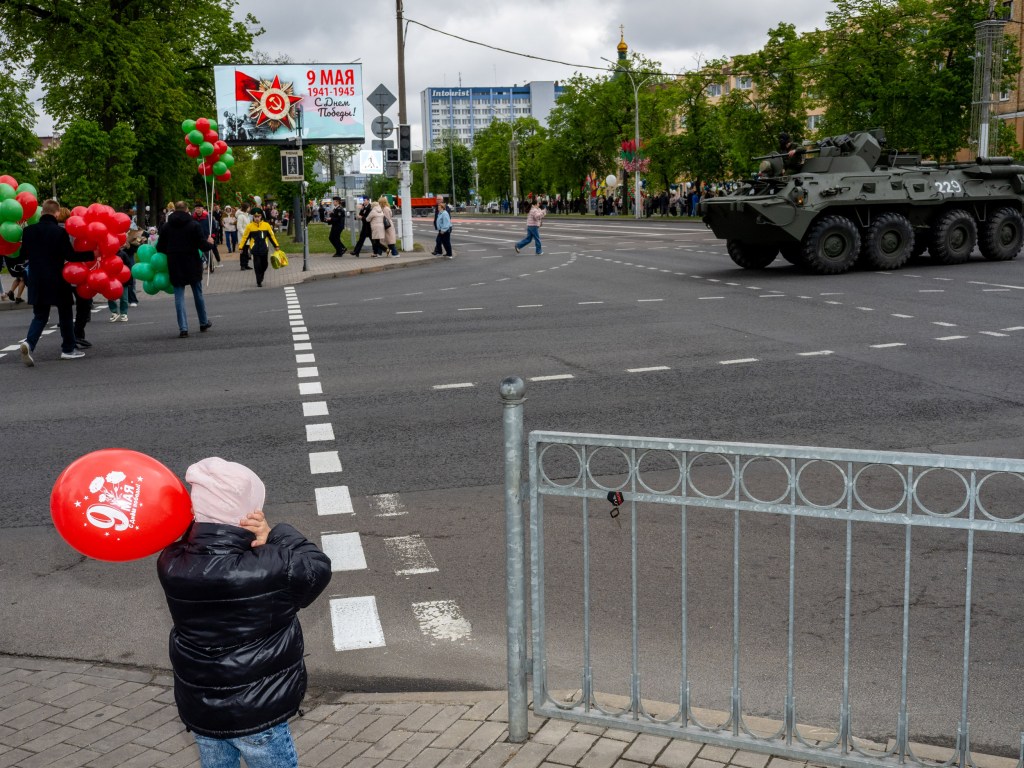
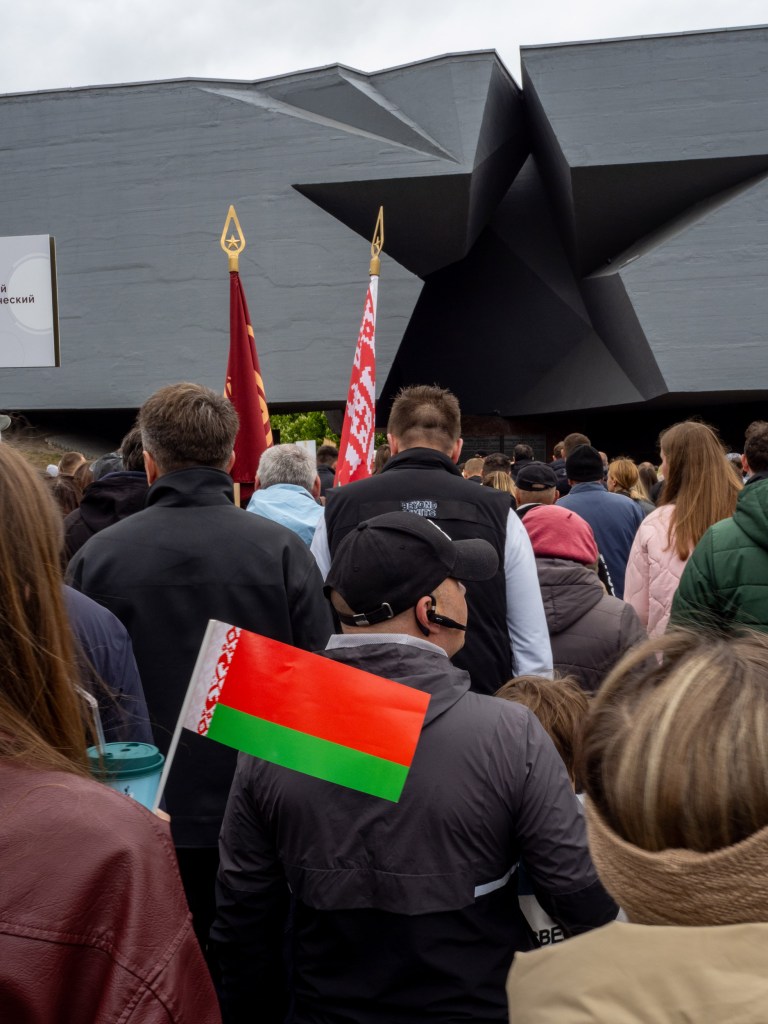
The parade was led by what to my eyes resembled a Soviet-designed BTR-series armoured personnel carrier, followed overhead by a helicopter dragging the Belarusian national flag through the grey morning sky. As the civilian procession moved on, I slipped into the human current behind a group of children wearing pilotkas (traditional foldable military caps) and followed them towards the Brest Hero-Fortress.
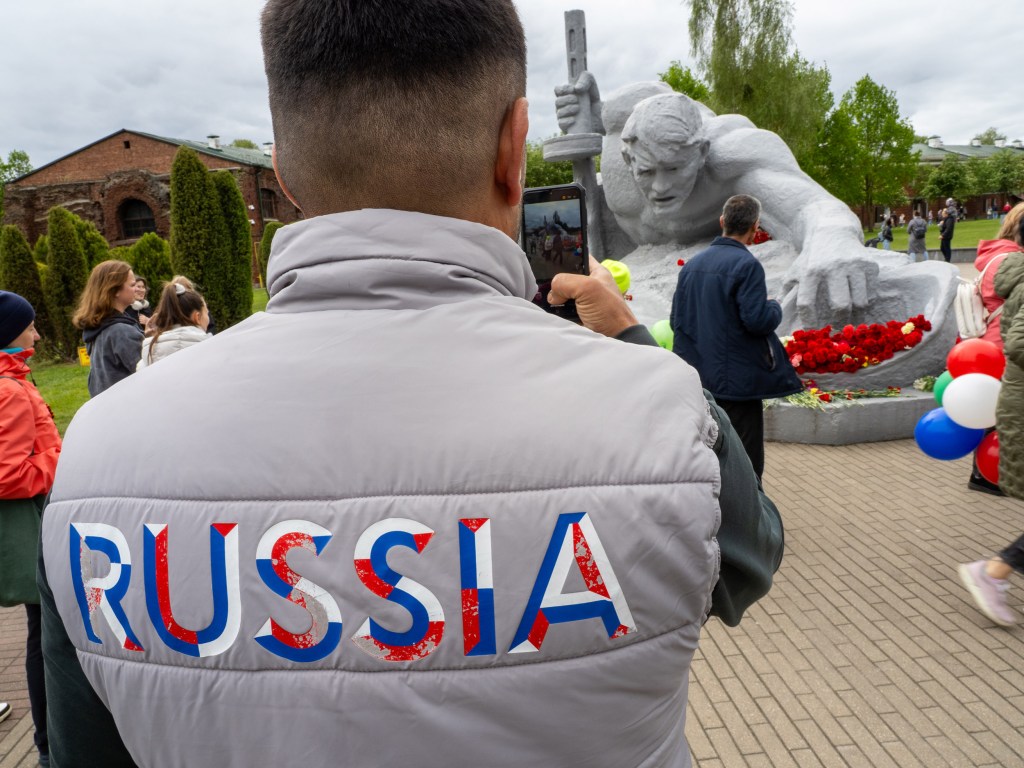
Then came the entrance. Visitors pass through a gigantic rectangular concrete block carved through the middle with an enormous five-pointed Soviet star. Emerging through the dark passageway, I caught my first proper glimpse of the Courage monument looming in the distance. Whether it was relief at finally making it there, exhaustion from the journey or simply the solemnity of the occasion, I nearly wept.
I felt comfortable enough in Belarus to extend my stay and head onwards to Minsk. As the four-hour mini-van journey neared its end, the man beside me finally stopped sniffing long enough to attempt conversation. When I failed to respond, pointing instead at my English crossword puzzle book, he looked faintly offended.
Stalin, memory and militarism
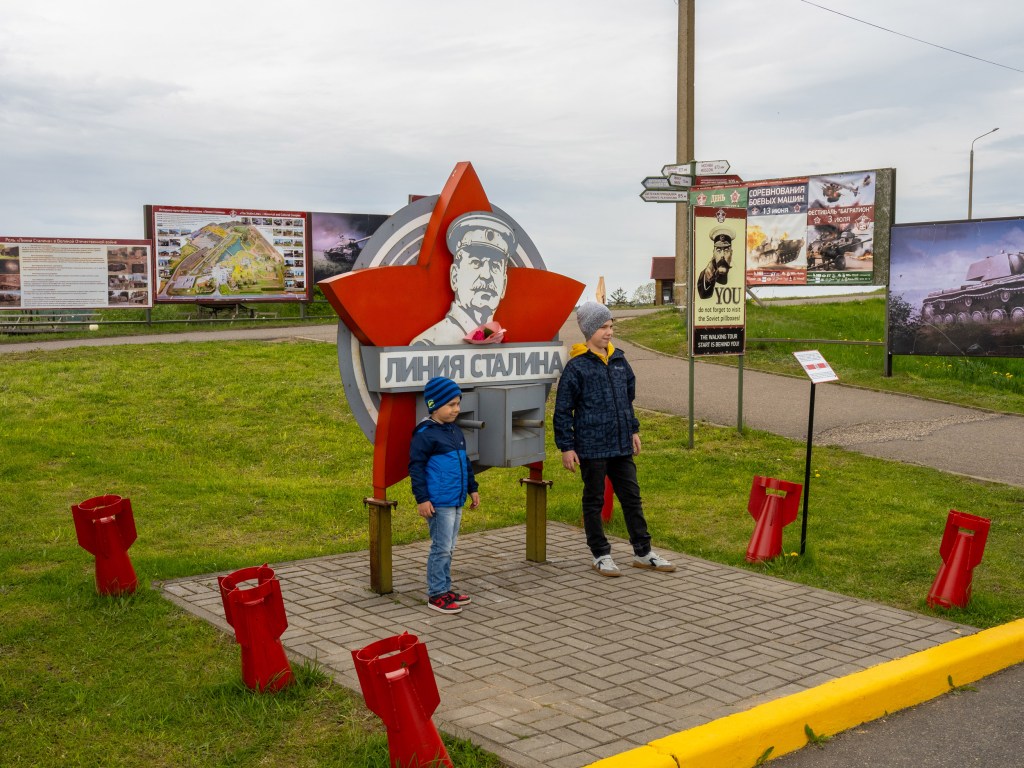
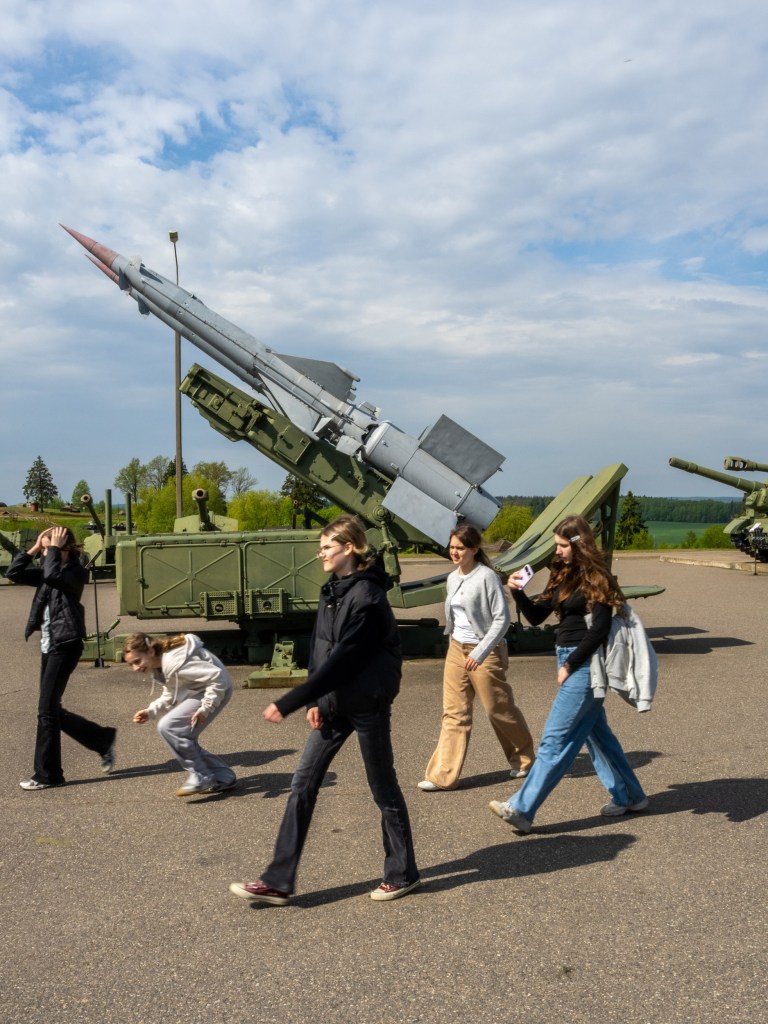
Outside the capital, I visited the Stalin Line historical complex: an open-air military museum and defensive fortification network based on sections of the vast Soviet defence system constructed along the western border of the USSR during the 1930s.
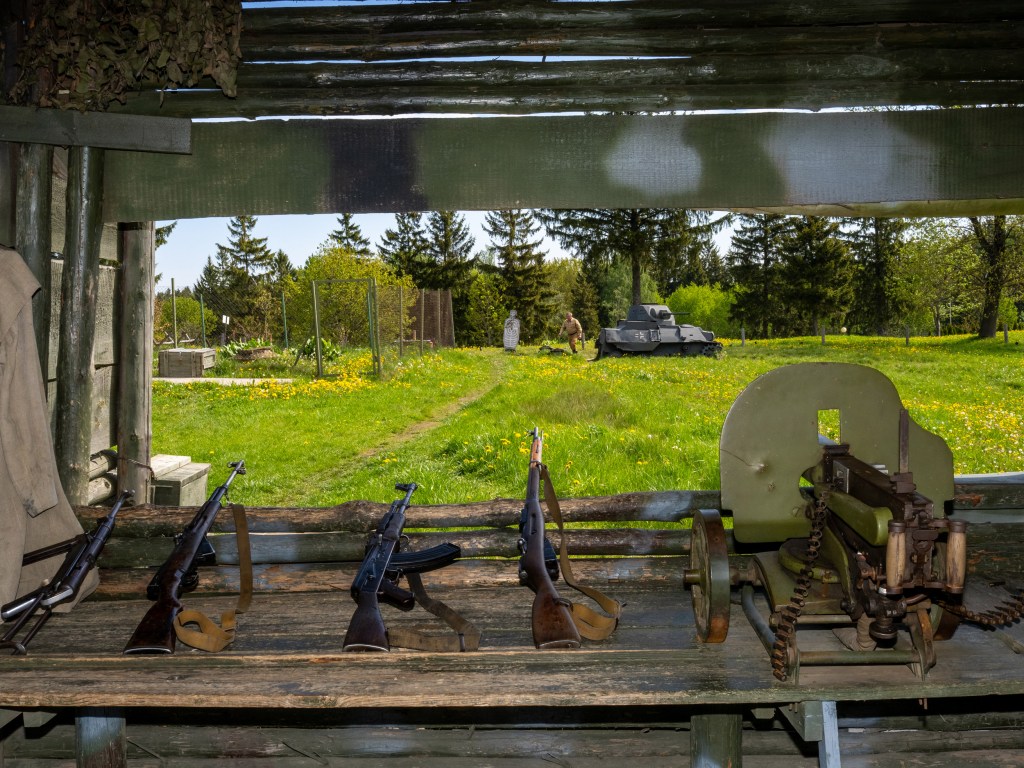
Families wandered casually among tanks, artillery pieces and missile systems. Children climbed over military hardware while eating ice creams. For a few extra Belarusian rubles, visitors can fire a pistol, automatic rifle, machine gun, heavy machine gun, anti-tank weapon or anti-aircraft gun. My own school trips had largely involved buying dinosaur-themed pencil cases and tea coasters.
Back in Minsk, the Belarusian State Museum of the History of the Great Patriotic War pulled no punches. Photographs of executed resistance fighters hung from nooses. Images of murdered women and children from Nazi death camps sat beside giant screens looping footage of burning villages and collapsing buildings. The scale of sacrifice presented here is overwhelming. So too is the determination that it should never be forgotten.
The sky above
Later, sipping a beer in the DoubleTree by Hilton Hotel Sky Bar looking out across Minsk, something felt visually absent. The sky was almost entirely free of aircraft contrails after the European Union, UK and US banned their airlines from Belarusian airspace following the forced diversion of Ryanair Flight 4978 in 2021. Even the sky above Belarus now feels politically isolated. After a week in the country, I boarded the Moscow–Minsk–Brest sleeper train to connect with a bus back to Warsaw.
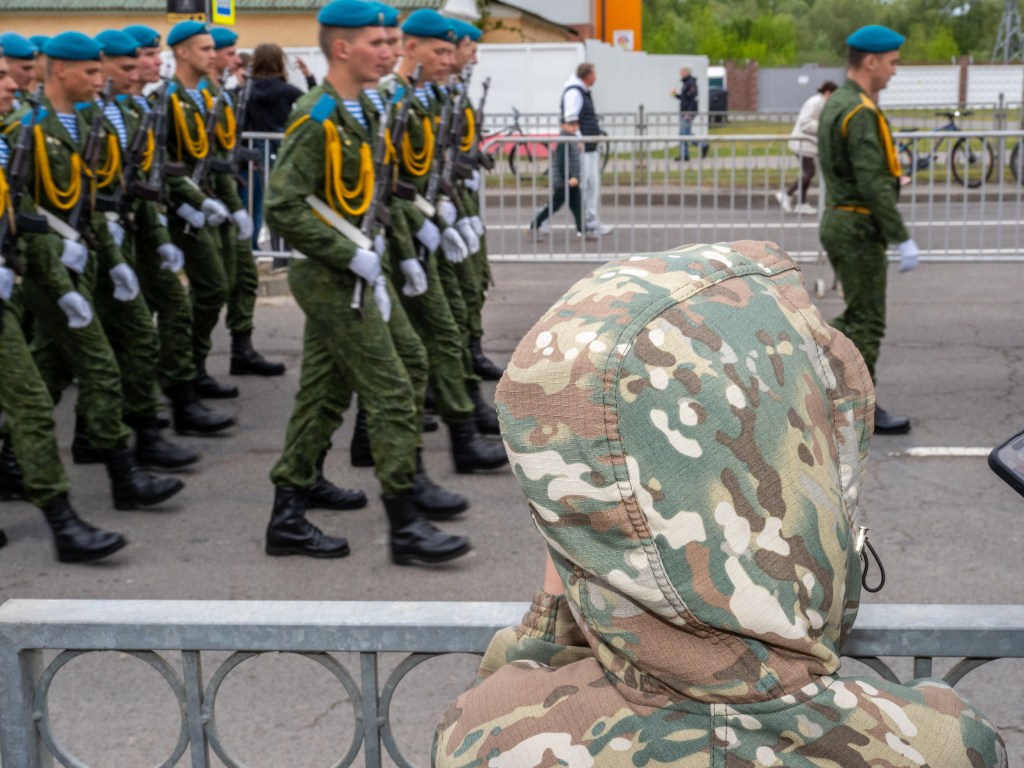
When I first visited Belarus in 2002, male life expectancy hovered in the low sixties. Today it has risen to around 69 years. On paper at least, things have improved. But travelling through a country where military symbolism permeates daily life, from anti-aircraft guns beside souvenir kiosks to children wearing the pilotka, it is difficult not to wonder what direction Belarus is really heading in, and what sort of future those young people marching through Brest might inherit.
Related reading:
- I’m a pro street photographer and these are the Instagram accounts I follow
- Are these photos Russia or America? You’ll probably guess wrong!
- How my camera saved me from a night in the Russian gulag
Follow AP on Facebook, Instagram, YouTube and TikTok.