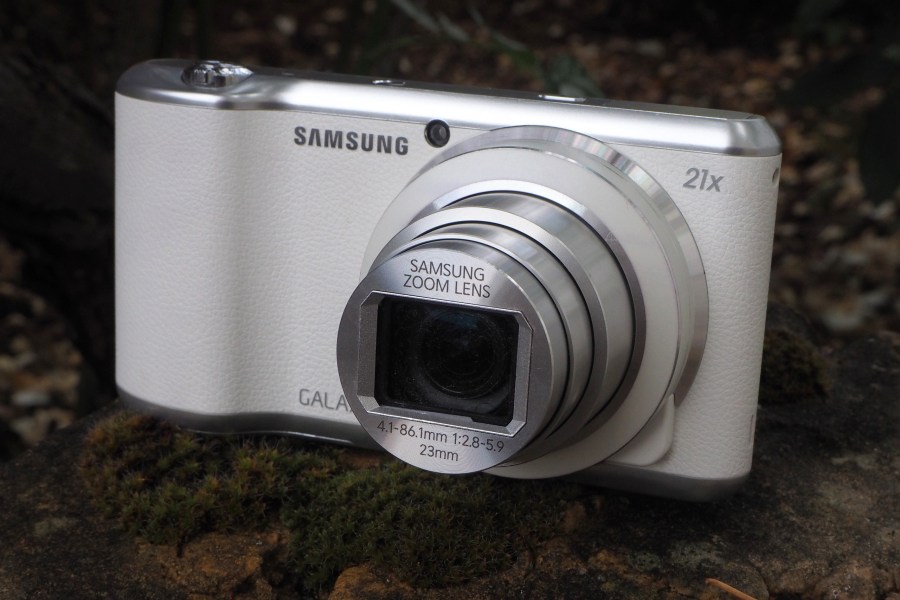
When Samsung first unveiled its Galaxy Camera series in 2012, it seemed like a no brainer extension of an already triumphant smartphone and tablet series – and a way for the electronics manufacturer to make a decisive mark in an already established digicam market. Most importantly, because of a generous 21x optical zoom, the inaugural Galaxy Camera and its almost immediate successor offered a compelling reason for phone users to pick up a dedicated camera. Plus, in utilising the common Android operating system, it didn’t scare off anyone trading up from a smartphone.
The Samsung Galaxy Cameras can’t make or receive phone calls, but their snapshot-quality captured images can conveniently be shared to friends, family or social media direct from the device itself, with no need to connect it directly to a PC or shove the microSD card it utilises to expand on an integral memory cache into a card reader. Although this can be done too, of course.
Samsung Galaxy Camera 2 at a glance:
- 16.2-megapixel 1/2.3-inch BSI CMOS sensor
- 21x optical zoom, f/2.8-5.9, 23-483mm equivalent
- Android 4.3 ‘Jelly Bean’ OS
- ISO 100-3200 light sensitivity
- Up to 4fps continuous shooting
- 1920×1080 pixels video recording at 30fps
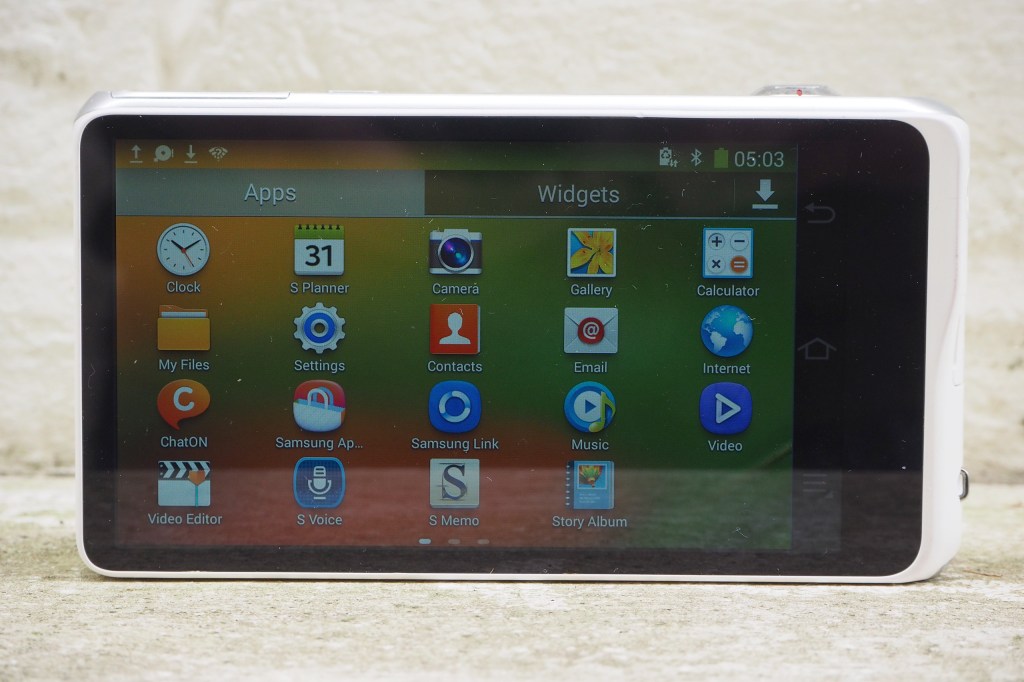
- Fixed 4.8-inch, 1,036,800 dots touch screen
- 71.2×132.5×19.3mm dimensions, weighing 283g without battery/card
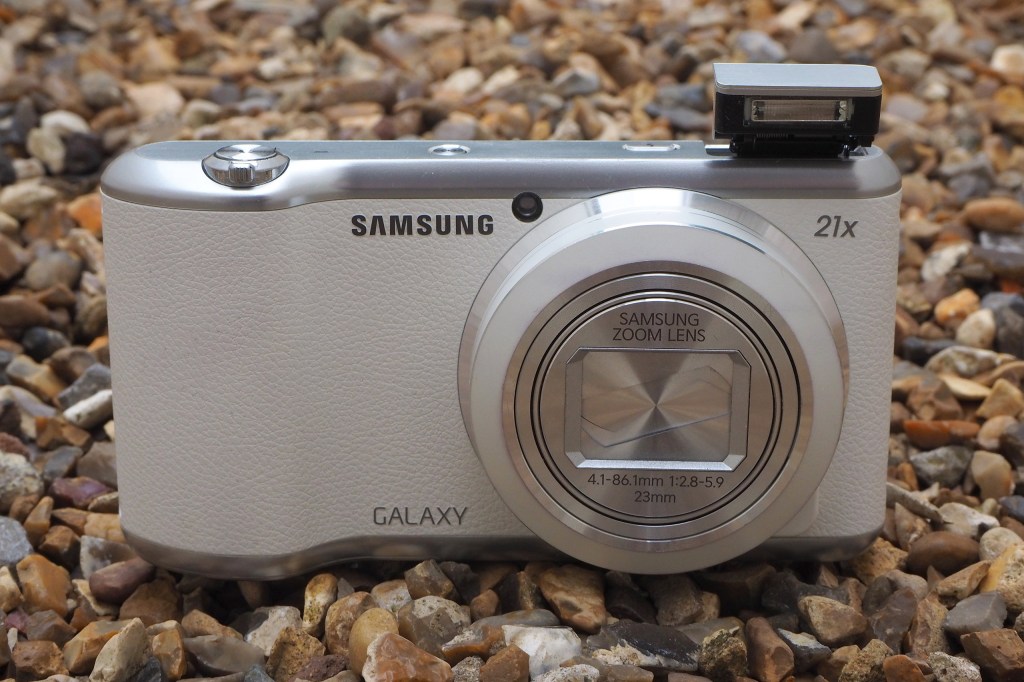
Having owned an original Samsung Galaxy Camera and subsequently its Galaxy Camera 2, aka the GC200, the 2014 model I’m re-assessing here, my impression upon release was that the unit held wide appeal, in being both family and photographer friendly.
We had a toddler at the time, and my wife was especially fond of the camera for recording precious moments. She loved the GC200’s large screen, the phone-like operation, plus the fact that it wasn’t too bulky. Considering all the other items you need to carry when you have a small child (bottles, nappies, wet wipes, snacks, the child themselves), portability was high up our priority list.
I’ve used and reviewed tens, possibly hundreds of cameras since, however, and that same child is now a teenager. So how does the Samsung Galaxy Camera 2 hold up – and is it still as worthy of our time and consideration in 2026? After all, we’ve arrived at a time in which such ‘vintage’ point-and-shoots are enjoying a second life, thanks to TikTok fuelling interest and second-hand sales.
What made this camera special?
While the core camera essentials here aren’t bad – namely 16 megapixels from a bog standard 1/2.3-inch CMOS sensor and the ability to capture JPEG-only stills plus Full HD 1920×1080 pixels videos at up to 30fps – they’re nothing to write home about by present standards.
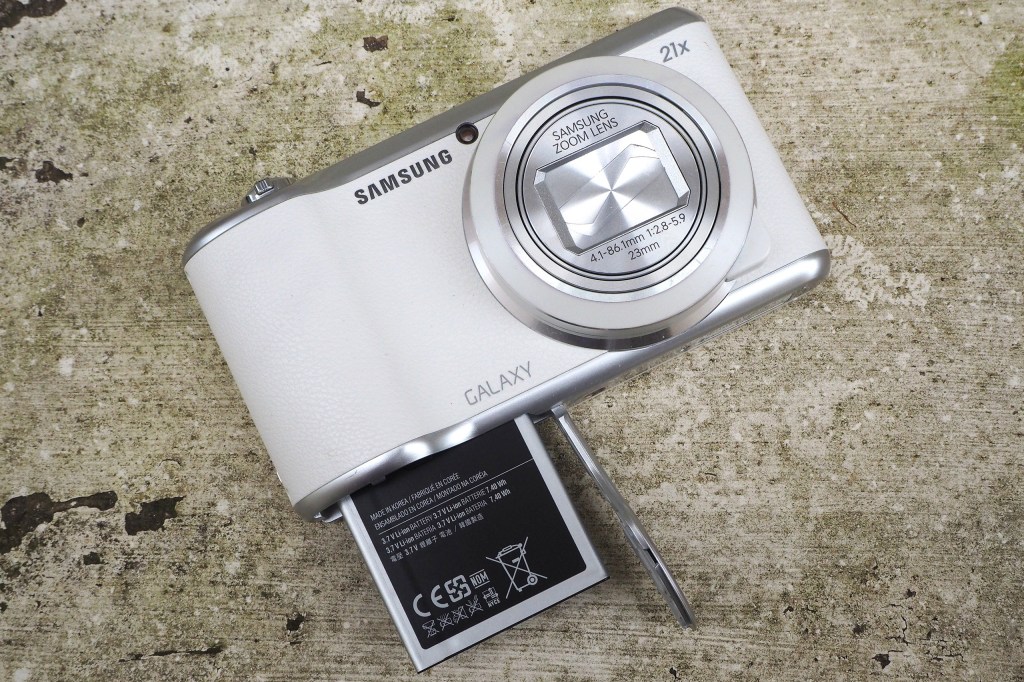
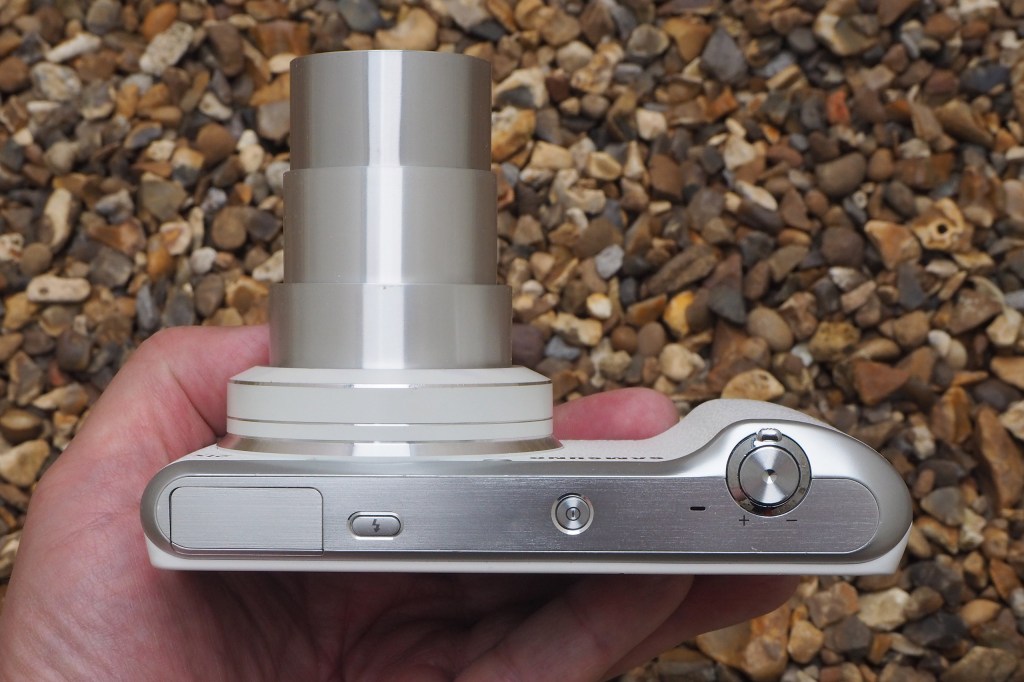
But what really stands out, literally, is that 21x optical zoom, plus the 4.8-inch capacitive touch screen swallowing up the entire backplate. What few physical buttons there are – for power, shutter release and spring-loaded flash – are limited to the top plate. This is because of course, courtesy of the Android 4.3 ‘Jellybean’ operating system, accessible via the screen itself we have a whole ‘galaxy’ – forgive the pun – of phone-like apps and even ‘expert’ level virtual camera controls, allowing manual tweaking of exposure with the flick of a finger.
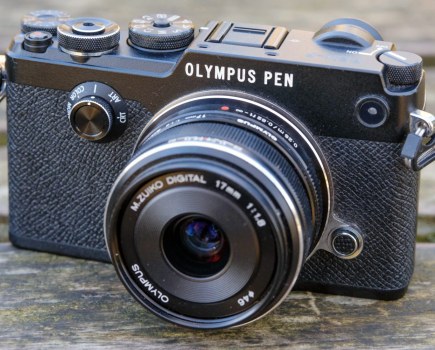
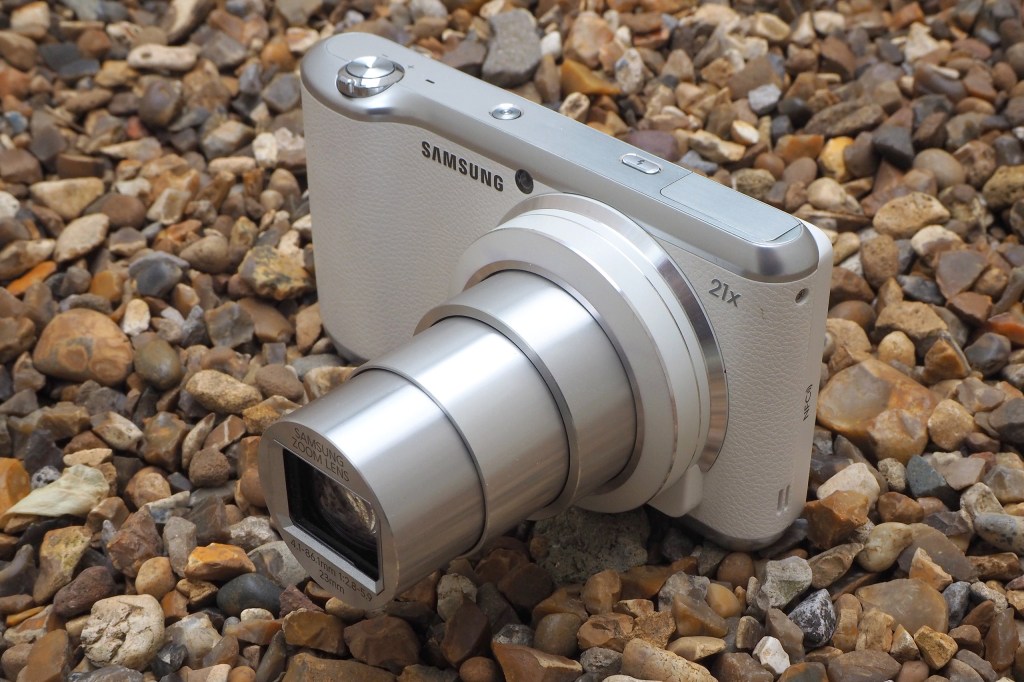
In terms of how it sits in the hand and fits the pocket, the length of the Samsung Galaxy Camera 2 still falls within that of most contemporary phone handsets. It is however at least twice their depth, due to shoehorning in its retractable/ propelling zoom, and closer in that respect to the feel of pocket point-and-shoot. Overall, it’s still smaller than, say, a compact Olympus PEN Lite E-PL7 mirrorless model with 14-42mm kit zoom – yet the Samsung’s screen is twice the size.
However, operational speed is where the Galaxy Camera 2 feels slow and clunky, in comparison to current camera and phones. I need to hold my finger down on the power button for 2-3 seconds before it starts to power up, and it’s almost a full 30 seconds in all before I’m ready to take a picture. The device is essentially booting up from cold each time, unlike a smartphone that I’d leave permanently switched on. This would frustrate me now if I was using the Samsung regularly.
The zoom lens is likewise leisurely, in taking around five seconds to glide from extreme wide angle to max telephoto setting. This is a camera for which I need to plan my shots – and have it already switched on and ready to go – rather than operate spur of the moment. It’s most suited therefore to taking videos of planned celebrations, or posed group portraits, whereupon action can be anticipated – and the large wide aspect ratio screen comes in handy.

Is this the ‘droid you’re looking for?
The Samsung Galaxy 2 is powered by a 1.6 GHZ quad-core processor, with 2GB of RAM, running the Android 4.3 ‘Jelly Bean’ operating system; the latest and greatest example back in 2014, but replaced that same year by Android 4.4 ‘KitKat’. The original Galaxy Camera had a slightly slower chip and 1GB of RAM, but in terms of looks and handling was largely identical. See our Samsung Galaxy Camera 2 (GC200) review published at the time for more differences and similarities.
While there wasn’t a further Galaxy Camera beyond the second faster yet still lethargic iteration I own, the Samsung Galaxy NX, an Android powered interchangeable lens mirrorless camera, provided something of a step up.

It is also worth noting that alongside the Galaxy Cameras, Samsung marketed an Android powered Galaxy S4 Zoom smartphone cut from very similar ‘cloth’. It featured a 16-megapixel sensor, yet more modest 10x optical zoom. This was superseded by a more svelte S5 Zoom, boasting identical zoom range but higher-resolution 20MP sensor.
Samsung was clearly testing the water with photographers and phone users, to see whether a camera that operated like a mobile, or a phone that had a zoom lens like a pocket camera, was something consumers wanted.

Since both relatively quickly disappeared, the answer at the time was no. Yet these are still features that either dedicated camera or phone users might wish they had now.
Slow in operation, but a fast favourite on TikTok
Though I found the operation of the Samsung Galaxy 2 a little sluggish and glitchy, what did hold up well for me was the design and build quality; it still looks elegant some 12 years on. I imagine that if Apple had entered the digicam market, its own efforts would have looked not too dissimilar. The rear screen display is still sharp and crisp. And, with the most ‘recent’ pictures dating back to 2019 when I turned in on again in 2026, it’s clear we were happy to use it continually for a good five years after its original release. That’s not bad going for any point-and-shoot camera, or, indeed, smartphone.
I also still admire the clearly forward thinking, yet near 15- year-old-concept, of a fully ‘connected’ camera. One that, with Android phone (of the time) like intuitive tap and swipe operation, can log on to Wi-Fi, in theory enabling direct uploads to Dropbox, email attachments and generally doing more than just transmitting pictures to recognised devices via Bluetooth.

Yes, we can perform those tasks with our humble smartphone, which is why point and shoot digicams gradually died out in the first place. But adding the large 21x optical zoom still feels like something that would appeal today.
Ultimately the Samsung Galaxy 2 feels both of its time – and yet slightly ahead of its time, in that I do wonder why there isn’t something as potentially all-encompassing for both photographers and phone users around today. I believe that’s why it’s still being discovered by a younger generation raised on, and influenced by, TikTok in 2026.
This is a blast from the past that still feels very ‘present’ – in every sense of the word. Therefore, the obvious questions to ask are: why did production of this camera cease, what is its legacy – and why has no one, not least Samsung, done something similar since?

Ultimately production ceased because its maker pivoted away from standalone cameras altogether in 2015, in the face of fierce competition, to focus on its far more profitable phones. Almost as soon as it arrived, the Galaxy Camera was gone. With criticism, even at the time, that it was bulky and slow compared to the average smartphone, it seemed that having had its fingers burnt once, Samsung was reluctant to revisit the smart camera concept, especially given the decline in the standalone camera market broadly.
I feel that’s a shame and opportunity missed, as the world might finally be ready for a similar device with bigger sensor, faster processor and latest OS.
Related reading:
- Best compact camera – the perfect point-and-shoots for photos and video
- Samsung makes the world’s most popular smartphones – but what went wrong with the cameras?
- Is the most exciting new camera of the year, or does it miss the whole point of a compact camera
Follow AP on Facebook, Instagram, YouTube and TikTok.