We’ve invited three photographers working in MACRO photography to share one image they consider among their best. From split-second decisions to carefully crafted compositions, they reveal the thinking, technique and experience behind the shot, offering insight into not just how the image was made, but why it matters.
Levon Biss – Microsculpture
Levon Biss is a British photographer best known for his extraordinary high-magnification studies of insects and natural history specimens. His acclaimed Microsculpture series combines thousands of microscopic images into astonishingly detailed portraits, exhibited internationally in museums and galleries. Originally working in sports and portrait photography, Biss has become one of the leading contemporary figures in macro photography.
Instagram @levonbiss
Tell us about this image. What are we looking at, and why did you choose it?
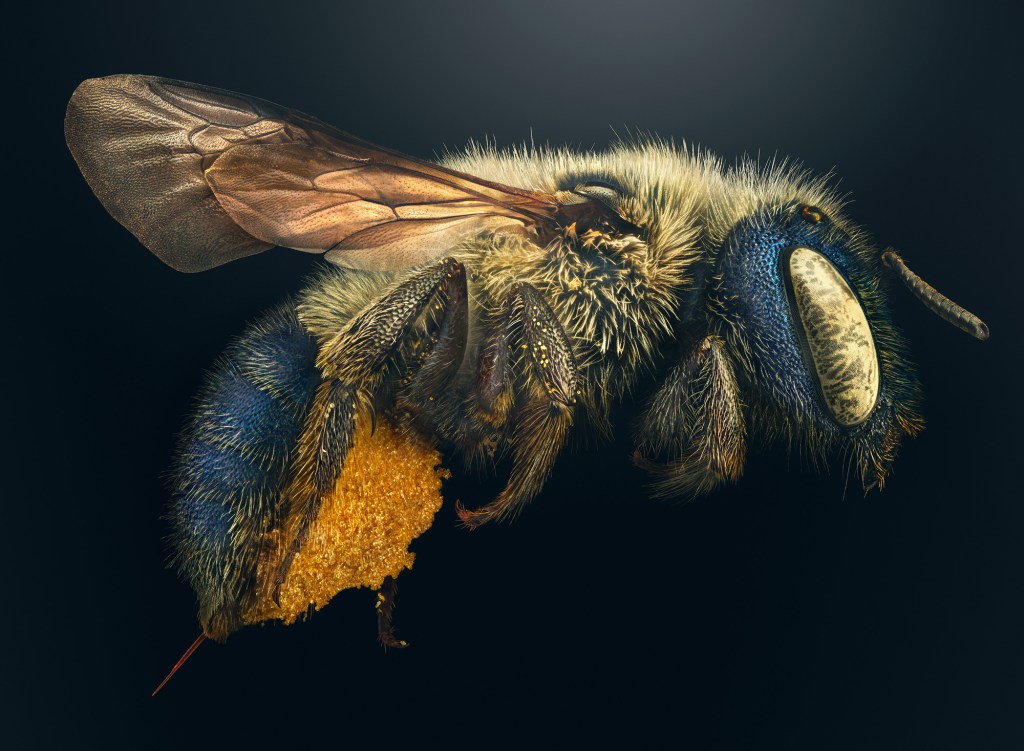
The image shows a Blue Calamintha Bee that was shot for my last project, Extinct & Endangered: Insects in Peril. The specimen is from the collections of American Museum of Natural History in New York and it was chosen for the project as populations are in decline and the species is under threat of extinction.
What was happening just before and after this frame?
This is not a single frame shot, the image is created from over 10,000 individual photographs using a photo-stacking technique on a bespoke rig with microscope objectives. The final print size in the touring exhibition is 3x2m.
What were the key creative decisions you made making this photograph?
One of the key factors in the image was to highlight the pollen attached to the underside of the bee. It is quite rare to find a museum specimen still holding pollen as it is extremely delicate and is easily knocked off. A slow and methodical approach was required to ensure the specimen finished the shoot in the same condition it started.
Can you share the technical details and how they shaped the outcome?
As I mentioned, the image is created from over 10,000 shots, with each shot being taken with 7 micron increments. The depth of field whilst shooting with microscope objectives is extremely narrow and so many images are required to produce a final picture with full focus. The insect is also photographed in multiple sections, with each section requiring 500+ images, this is why the shot count stacks up so dramatically. The final image contains huge amounts of microscopic detail though that can be studied on the large prints. The detail can also be seen online at the project website where the viewer can zoom into the full resolution image: www.extinctandendangered.com
What was the biggest challenge in making this photograph?
Vibration is the enemy, the tiniest movement can ruin a stack of images. Concrete floors and a solid rig is required to overcome this, plus patience and a slow approach. Handling the specimens is also a challenge, particularly when they are extinct, if you break a leg of antennae you cannot just source a new specimen. There is a certain amount of pressure when handling specimens of this type.
What does this photograph mean to you and what would you like readers to take from it?
I’d like readers to appreciate the beauty of these tiny creatures, they are engineering marvels and provide essential services to all ecosystems, both terrestrial and aquatic. Without insects, humans simply could not survive. By allowing the viewer to study insects at a microscopic level, the aim is to generate more appreciation of these tiny creatures we share the planet with and awareness of the harm we are doing to populations across the globe.
What advice would you give someone trying to make a similar shot?
Be slow, be patient and don’t give up when an image goes wrong. Persistence is the key.
Pete Burford
Peter Burford is a British award-winning macro photographer celebrated for his striking close-up studies of insects and spiders. Burford combines focus-stacking techniques with an ethical approach to photographing live subjects in their natural environment. An OM System ambassador, his vivid images have gained a huge following online and helped introduce macro photography to a wider audience.
Instagram @pbmacro
Tell us about this image. What are we looking at, and why did you choose it?
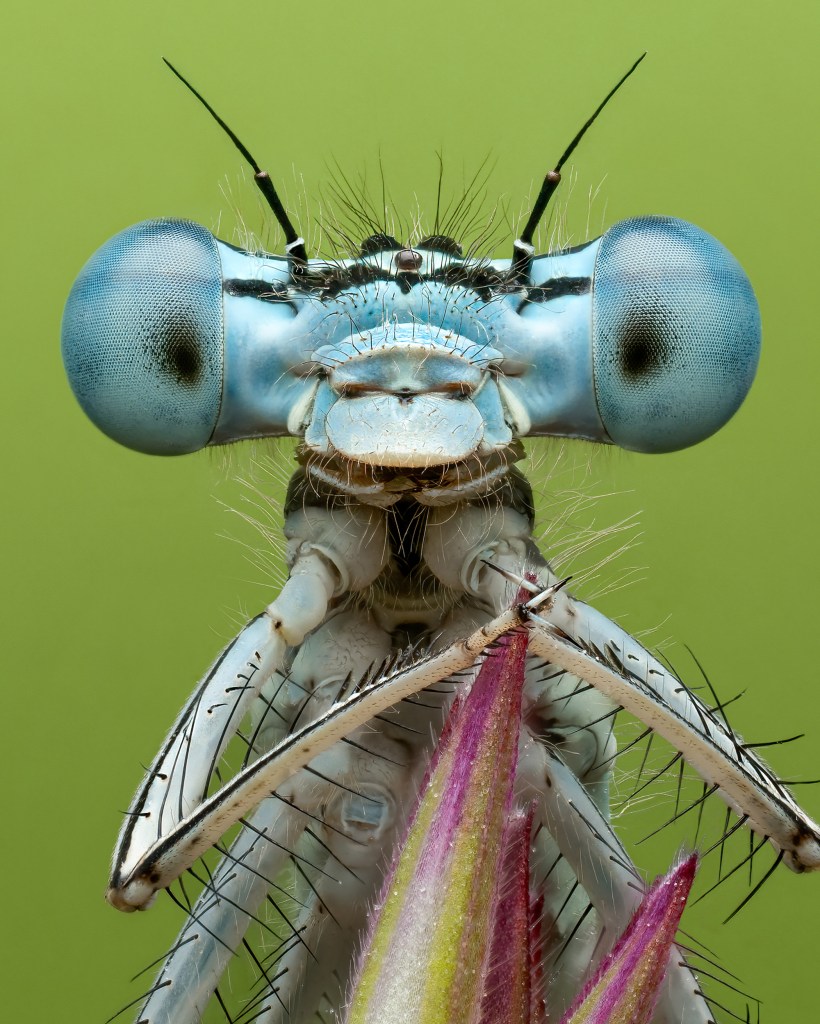
This is a portrait of a white legged Damselfly. I decided to choose this image because it was a type of insect that I have been wanting to photograph for a long time but haven’t had the fortune of finding one.
What was happening just before and after this frame?
Before this focus stacked image, I was setting up my clamps and a background card. Once I did that I was able to clip the stem that the damselfly was sitting on to allow for extra stability. I was then able to move the background card behind it to create this image. After the shot I carefully unclipped the stem and put the plant back to its normal posting to leave the damselfly to roost overnight.
What were the key creative decisions you made making this photograph?
Being able to focus stack live insects or locate them is no easy task. I had to figure out exactly where these damselflies would be, constantly looking around ponds and rivers, but also when they are most docile. As insects are cold blooded they need the sun light and warmth to move. So being able to go in the late evening / nighttime, means they can’t move or flyaway as much due to the colder temperatures. This gives me the perfect opportunity to focus stack them. Also using my clamps to be able to clip the stem of the plant stops the wind disturbing and moving the plant whilst focus stacking, by adding another layer of stability.
Can you share the technical details and how they shaped the outcome?
For this image I had to focus stack the Damselfly due to such thin depth of field and this magnification of 2:1. This means I use the focus bracketing feature on my OM System OM-1 MKII to capture an amount of frames from the front to the back of the insect and then merge them all together in post processing to create a fully detailed image. This is all done handheld out in the field with live subjects with a flash and Cygnustech diffuser. Technical details are 1/100 | F8 | ISO 200.
What was the biggest challenge in making this photograph?
The biggest challenge was making sure the stack worked. Because the damselfly would occasionally move to the left or start moving its head or arms, I had to take multiple focus brackets until the damselfly sat still through the full bracket. Also being able to keep myself still for the stacking process by keeping my arms locked to my body and holding my breath to minimise my movement.
What does this photograph mean to you and what would you like readers to take from it?
To me this photo shows determination and perseverance. I have been wanting to photograph one of these damselflies for five years now and every year I would go out searching for them, till I was able to find one. I want readers to take from this image that with determination, patience and persistence you’ll be able to get the image that you want, it could be tomorrow or it could be in a few years. But keeping at it and not giving up will give you the success.
Was it luck or judgement?
To me it was luck that I found a white legged damselfly at the particular spot as I have never seen one there before. But it was also my judgement to know when to go back to be able to setup and get a detailed, focus stacked image like this. Learning about your subjects in macro photography is one of the most important things when it comes to photographing them. I know more about insects and spiders through macro photography because of this.
What advice would you give someone trying to make a similar shot?
To approach insects carefully and with respect. Moving slowly around insects gives you more of a chance of photographing them as they won’t be as startled, especially if they are already interested in gathering pollen from a flower. For this shot it’s great to research the type of subjects that you want to photograph. I knew that these types of damselflies were best found around rivers and more docile at night when the temperatures dropped. This gave me the right environmental knowledge on where to look and find these insects.
David Hamilton – weemadbeasties
David Hamilton is a Scottish macro photographer and educator best known through his online persona, ‘weemadbeasties.’ Specialising in extreme close-up images of insects and tiny creatures, he combines technical precision often with an accessible, humorous style that has attracted a large social media following. His work and workshops have inspired a new generation of photographers to explore the world of macro photography.
Instagram @weemadbeasties
Tell us about this image. What are we looking at, and why did you choose it?
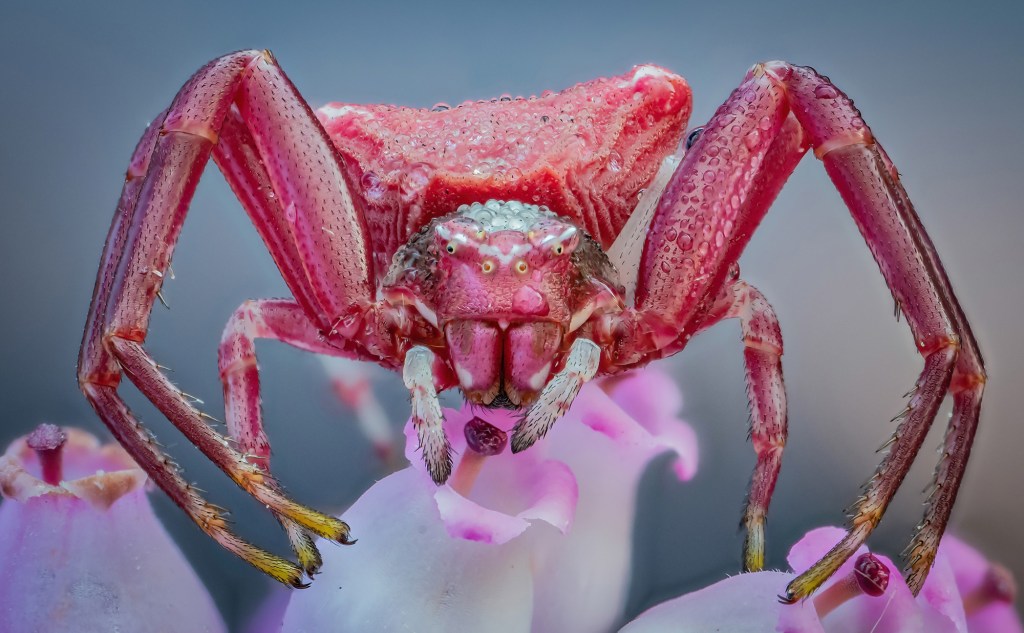
This is the fantastic looking Pink heather crab spider, Thomisus onustus a crab spider belonging to the genus Thomisus. I Chose this as from my extensive collection of macro images its stands out for its unique look and striking colour.
What was happening just before and after this frame?
Before this was hours of very early morning searching on the moors and fields of Dorset to find this amazingly camouflaged spider which blends perfectly into the heather, a very hard spot.
What were the key creative decisions you made making this photograph?
Lighting, and low positioning were key, also taking a step back to fully get everything in frame. Macro is not just about getting as close as possible, it was key for me to show the full body at an angle which give scale
Can you share the technical details and how they shaped the outcome?
Technically this detail comes from stacking the subject, this involves multiple frames at small focus increments going from front to back each capturing a focus point and then combining those points in helicon software to give the DoF you see here is much more detail.
What was the biggest challenge in making this photograph?
Undoubtably, the positioning and wind. There was a fair breeze which made this image difficult to pull off, I had to hold my position very uncomfortably and wait till just a second of calm before being able to capture.
What does this photograph mean to you and what would you like readers to take from it?
For me, coming from Scotland and generally shooting there, I do not see many insects which are so bright and dazzling, getting around the UK from a macro photographers perspective opens up another world of species which visually have an amazing impact.
Was it luck or judgement?
Judgement and patience
What did this image teach you?
Holding position waiting for the moment in difficult and sometime painful situations pays off
What advice would you give someone trying to make a similar shot?
Move back don’t always focus on getting super close
Are you ready to experiment with Macro photography? You can start on your phone! Check out our guide to the Best smartphones for macro and Amy Davies‘ top tips on how to take great macro photos on a smartphone.
Already have a camera, but not sure what lens to use? Have a look at our guide to the best mirrorless lenses for macro and the best value macro lenses, we also have a guide for DSLR users with the best second-hand macro lenses.
Related reading:
- Top macro photography tips and techniques
- Insect macro photography tips
- How to photograph flowers
- Focus stacking: achieve pin sharp macro shots of delicate subjects
Follow AP on Facebook, Instagram, YouTube, TikTok, and IRYS.