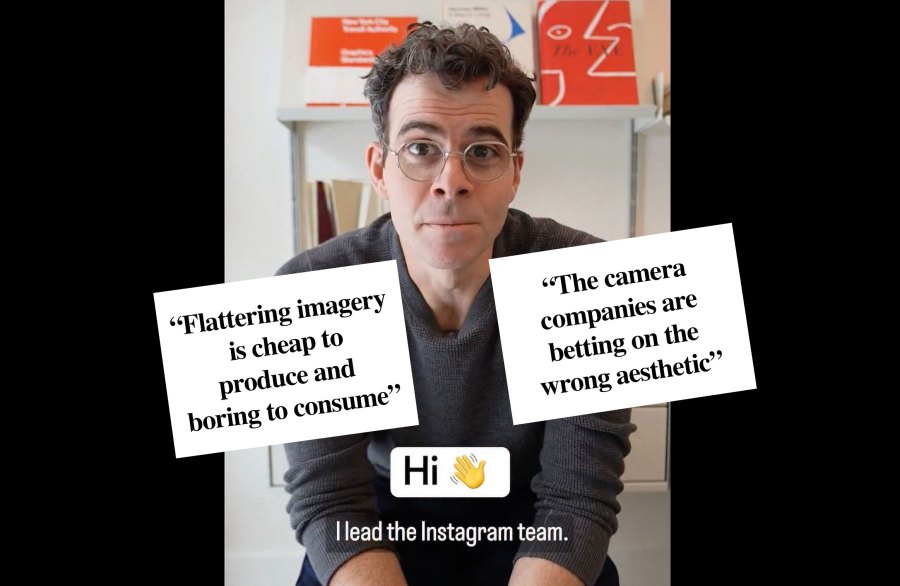
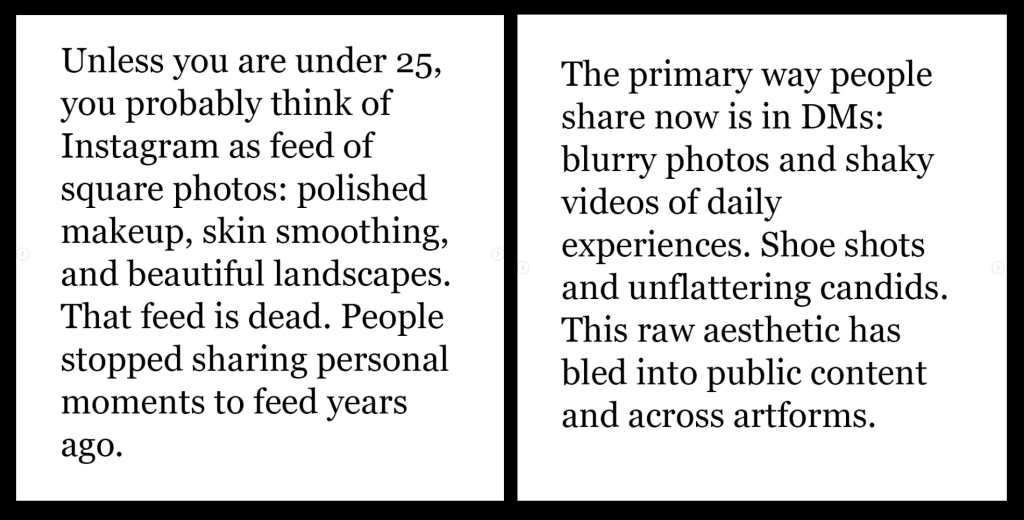
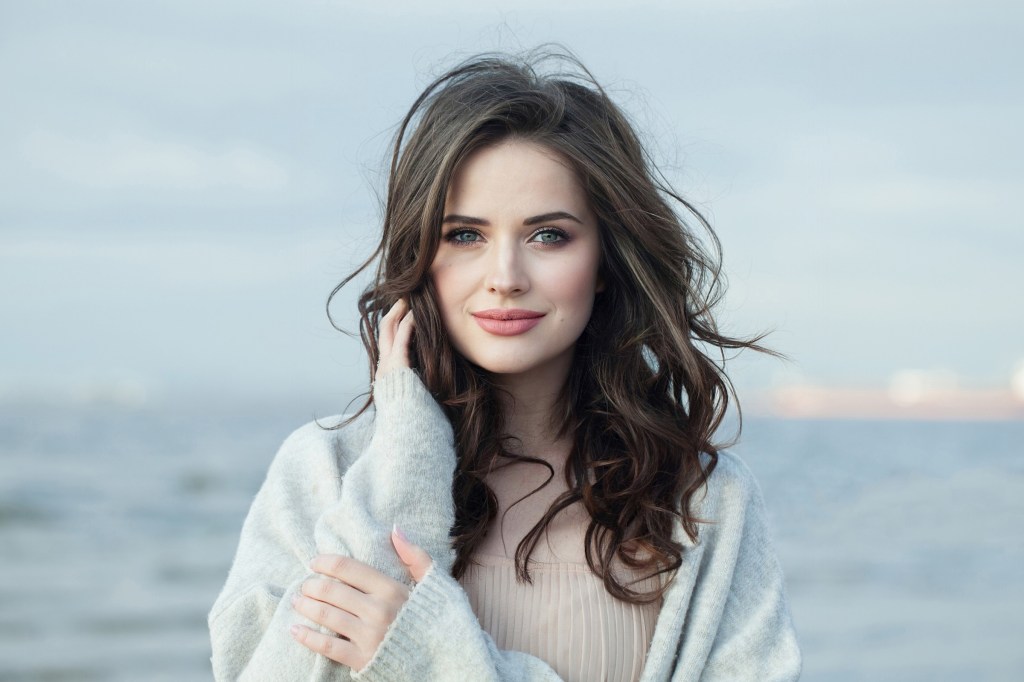
You may have been too busy watching the fireworks on New Years Eve to have noticed the post by Adam Mosseri, head of Instagram, in which he shared his views on the future of photography on his personal channel. The traditional Instagram feed of polished photos and beautiful landscapes is dead, he declares. In a world where AI can generate flawless imagery, traditional photography can’t compete, so photography is now about a more raw and less polished aesthetic: ‘Blurry photos and shaky videos of daily experiences. Shoe shots and unflattering candids.’ In other words, if a picture looks too good (sharp, well composed and exposed) people will think it’s AI.
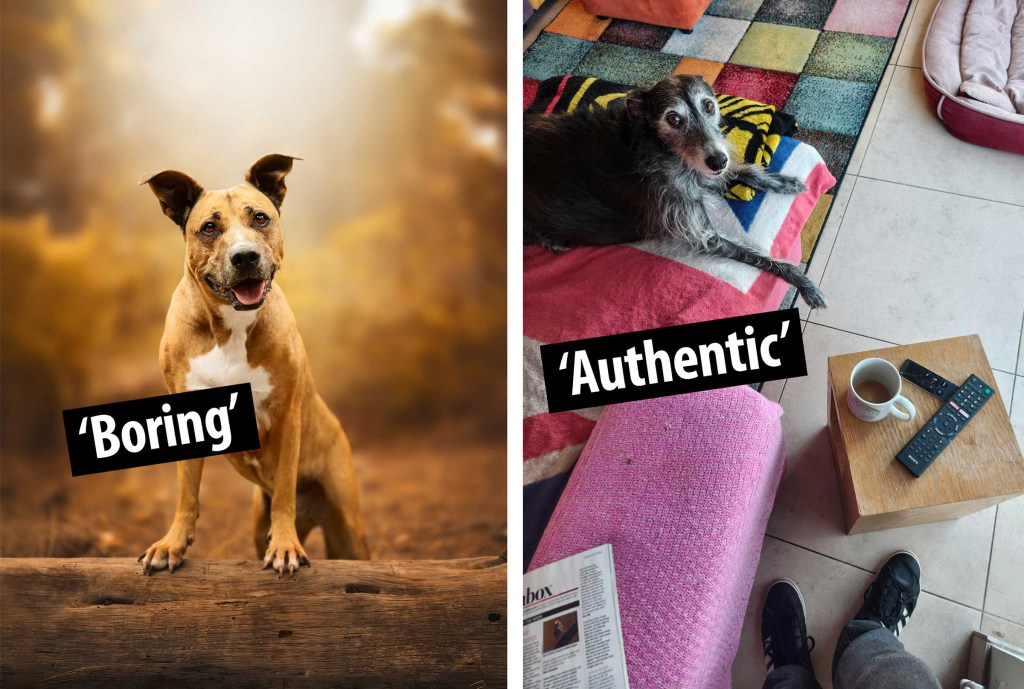
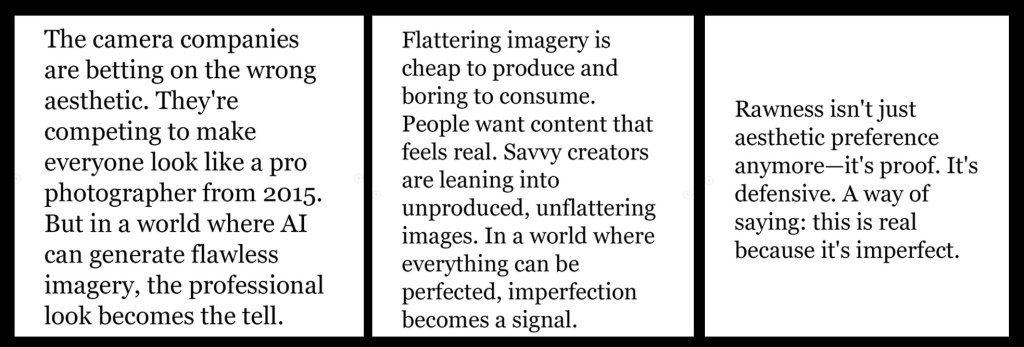
He argues that camera companies are ‘betting on the wrong aesthetic’ in their pursuit of image quality.
‘They’re competing to make everyone look like a pro photographer from 2015,’ he says. ‘But in a world where AI can generate flawless imagery, the professional look becomes the tell.’ I’m not sure what was special about 2015 but he went on to assert that
‘Flattering imagery is cheap to produce and boring to consume. People want content that feels real. Savvy creators are leaning into unproduced, unflattering images. In a world where everything can be perfected, imperfection becomes the signal.’ He adds that ‘rawness isn’t just aesthetic preference anymore, its proof. It’s defensive. A way of saying: this is real because it’s imperfect.’
I wonder where that leaves the craft of photography, and photographers who have strived to perfect their technique? Well Mosseri seems to be saying that mastering the ‘craft’ is old hat.
The Photoshop haters who feel that images should be produced in-camera and not edited to within an inch of their lives on the computer might have some sympathy with his comments about overly perfect images, but Mosseri goes further in eschewing camera craft altogether.
Artful lighting? Shallow depth of field? Slow shutter speeds? No thanks.
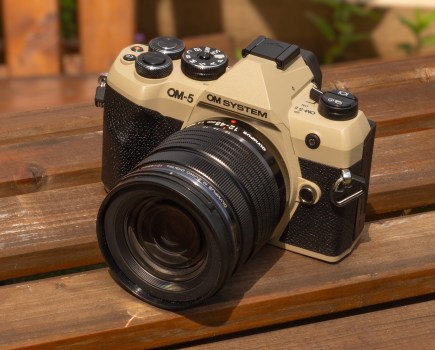
In Mosseri’s world competence and quality are viewed with suspicion, so if you want your work to get noticed you should abandon your expensive mirrorless camera in favour of a single use disposable camera. Or just not bother with bourgeois activities such as focusing or getting the horizon level.
You might say that It’s easy to dismiss the opinions of a single individual as rambling nonsense, but when the individual concerned is in charge of what is still the world’s biggest platform for sharing images he has the power to turn opinion into fact though algorithms, and what they choose to amplify. It bothers me that a man whose background is in software engineering and whose main priority is delivering profit to Meta’s shareholders gets so much of a say in what constitutes good photography.
He has already ruined Instagram for photographers by turning it into a video-first platform that hides the people you follow behind a bombardment of spammy ads and ‘suggested’ content’ posts. Then he has the gall to claim that nobody shares personal photos on the feed any more, they send them as DM’s. Maybe because that’s the only way they can be sure their friends will actually see them.
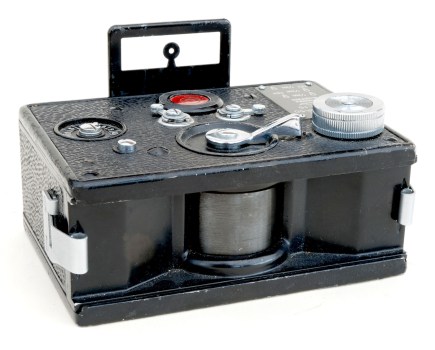
Mosseri might say that he is merely the messenger, and that this is just part of an already existing trend for low-fi photography, personified by the current popularity of analogue cameras and noughties digi-cams, which is a reaction against the clinical perfection of digital images and the growth of AI content. Content that, by the way, Instagram shares more than a little responsibility for enabling in the first place by creating and promoting the very AI tools that make it possible. Either way, it seems that Mosseri sees photography purely as a sub-category of ‘content’ and the only reason for it to exist at all is to enrich Instagram and help Mark Zuckerberg buy another Hawaiian island. But there is a whole world of photography that exists outside of social media.
For the majority of the world the purpose of taking photos is to record their families, friends and important moments for their own private consumption. Mosseri’s vision of the future will have little impact on this – indeed one can argue that this group already follows the ‘raw, unedited’ look. But if Mosseri is correct, and this new aesthetic bleeds into wider society, commercial and wedding pros may find their slick high-quality work eschewed in favour of rough and ready snapshots – which, let’s face it, wedding guests and corporate comms teams can take themselves. Who needs to hire a pro?
Then there are the journalists and documentarians who use a camera to record history, tell stories and shine a light on social issues. AI cannot replace photojournalism but it can fake it. Spotting the real from the fictional will become the challenge but if you follow Mosseri’s logic the solution is to make real photos look as amateurish as possible. It favours ‘citizen journalism’ over professional photojournalism.
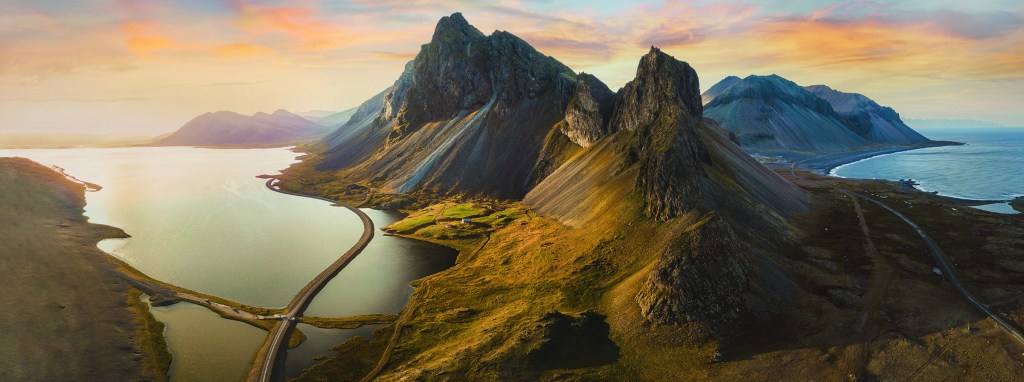
Finally there are the pictorialists, who are the biggest segment of AP’s audience. This seems to be the group that Mosseri most has in his sights. If you spend your leisure time creating beautiful images to share with the world, you may increasingly be wasting it. But it depends on your motive. If you’re trying to build a profile and a reputation, maybe even turn pro one day then yes, good luck with that. But for many photography enthusiasts the joy is in the process – the pleasure of using cameras old and new, of looking through a viewfinder and shutting out the entire world and all its problems while you concentrate solely on creating magic within that tiny rectangle. These users may care slightly less about how many people get to see their results, but they still care.
By now you may have spotted a couple of big flaws in Mosseri’s argument. ChatGPT can now write perfectly good essays and articles that even college professors can struggle to identify as AI. Books written entirely by AI are now increasing in number. If I asked ChatGPT to write me a Jack Reacher novel in the style of Lee Child, set in my hometown and with my mother-in-law as the arch villain, it would probably do a reasonable job that would fool a casual reader. But nobody is suggesting to writers that, in order to “signal authenticity” to readers that they are human, they should start mis-spelling words and using poor grammar and punctuation. That would just be ridiculous. So why should that logic apply to photography?
There is also the obvious point, which Mosseri makes himself, that since AI is merely a copying algorithm that regurgitates what it sees it will eventually start aping this snapshot aesthetic itself, so it will no longer look ‘authentic’ and human. Creators will soon have to find some other visual distinction.
Where I agree with Mosseri is in his admission that Instagram needs to be able to identify and flag AI content so consumers know what they’re looking at, but he admits that social media will soon be so swamped with AI images that ‘it will be more practical to fingerprint real media than fake media.’ But will the public be happy to consume all this synthetic content? Well, the evidence so far suggests they already are. Truth and authenticity will still be a thing but creators will have to work harder to gain the public trust.
Stills photography as a serious pastime has been on the decline since the rise of the content creator, but if Mosseri is right, AI could well be its death knell. If there are not enough people in the world who care about ‘quality photography’ to sustain a global camera industry it will either become a cottage industry producing small volumes of new cameras at very high prices (a ‘Leicafication’, if you will) or will fold altogether. In that doomsday scenario the dedicated band of ‘real’ photographers who remain will have to focus on keeping the pool of existing cameras going for as long as possible, like in some dystopian Mad Max wasteland.
Related reading:
- Camera maintenance: how to clean and protect your camera and equipment
- Opinion: You don’t need the best camera to take good photos
- I want my iPhone to capture reality, not an AI fever dream
- Four features they urgently need to add to cameras next
The views expressed in this column are not necessarily those of Amateur Photographer magazine or Kelsey Media Limited. If you have an opinion you’d like to share on this topic, or any other photography related subject, email: [email protected].
Follow AP on Facebook, Instagram, YouTube and TikTok.