We are very fortunate at AP to be able to view thousands of fantastic images each year. It’s not easy to choose a favourite but here are a few that that stuck with us in 2025 along with images chosen by picture editors – photographs shaped by conflict, crisis and fleeting moments of humanity.
The AP Team’s Choice: Best photographs of 2025
Nigel Atherton, Editor
The coffin of a fishmonger, Ghana, by Regula Tschumi
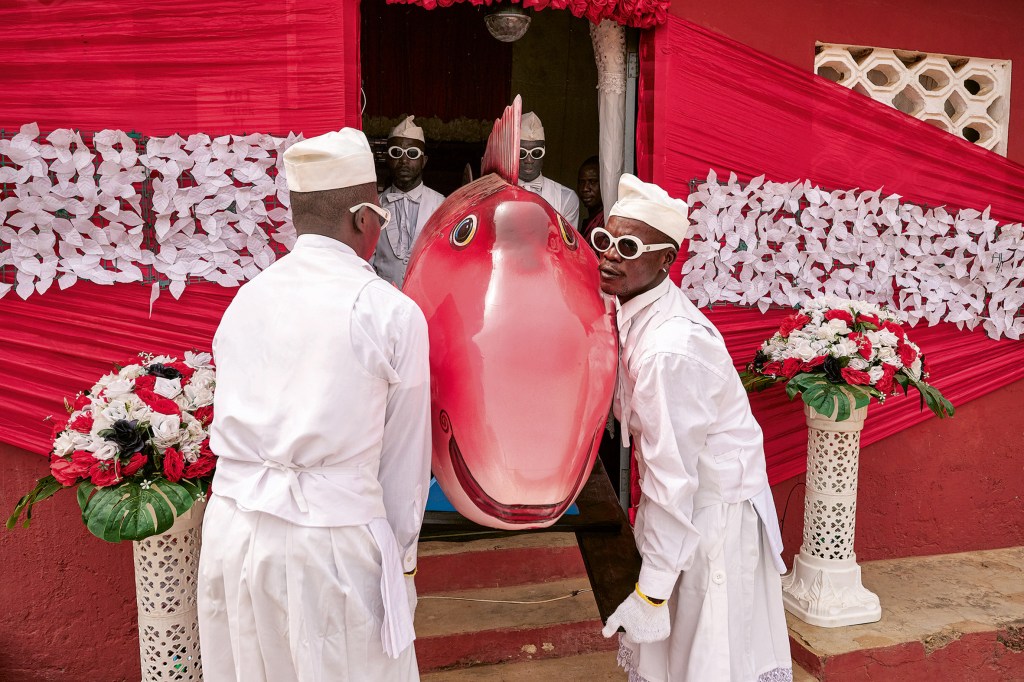
This is not so much my favourite photo of 2025, as a representative of my favourite series of photos. Swiss social anthropologist Regula Tschumi spent two decades photographing Ghana’s fascinating funeral culture – a world I had no idea even existed. Unlike Britain’s traditionally sombre, monochromatic mournings of loss, Ghana’s funerals are a joyful, colourful musical celebration of a life lived. That in itself is not alien to me, as I am married into a Caribbean family, but what is unique are the beautiful custom-made fantasy coffins that are skilfully crafted with love and care to reflect the life or interests of the occupant.
The coffin in this particular photograph (below) was made for a fishmonger but Tschumi also shows us coffins fashioned into a teapot, a crab, a pineapple, a truck, a shoe, an eagle and myriad other objects. They look like they could be props made for a family movie or West End musical. It brings me joy to know that this culture exists in the world, and reminds me why I love to travel. Tschumi’s book, Buried in Style: Artistic Coffins and Funerary Culture in Ghana, from which this image is taken, is my favourite book of 2025.
Andy Westlake, Technical Editor
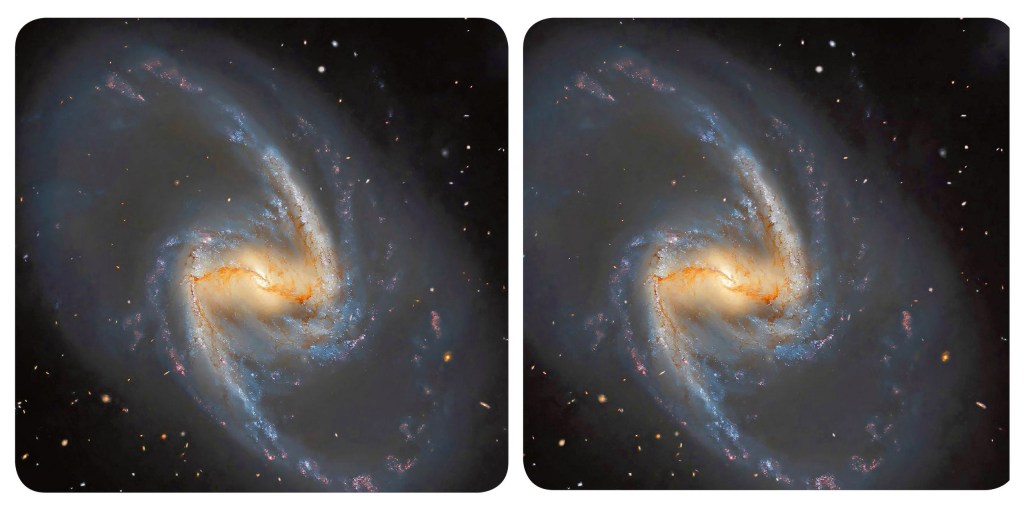
Close-up of the Great Barred Spiral galaxy, NGC 1365 by J-P Metsävainio
I’ve been working for Amateur Photographer for well over a decade now, and it sometimes feels like there’s nothing new to see in photography. But just occasionally, something stops me in my tracks and makes me go ‘wow’. And that is exactly what happened when I attended the launch of the latest book from Sir Brian May’s London Stereoscopic Company.
Finnish astrophotographer extraordinaire J-P Metsävainio has taken wonderful photographs of distant galaxies and, in a stunning technical accomplishment, transformed them into stereo images. For the first time ever, we can see the three-dimensional structure of these galaxies in rich detail. Technically, this requires generating a depth map for every single pixel in the original image using our scientific knowledge of the structure of galaxies, and then transforming it to how it would look if we could see it from a slightly different viewpoint in space. That represents a phenomenal amount of work.
Of all the stunning images in the book, I think this one is my favourite. The left photograph is the original image, and the right one is its stereo companion. If you’re lucky, you may be able to cross your eyes and see a 3-D image spring out from the page. If not, you’ll just have to buy the book – I promise it’s worth it.
Geoff Harris, Deputy Editor
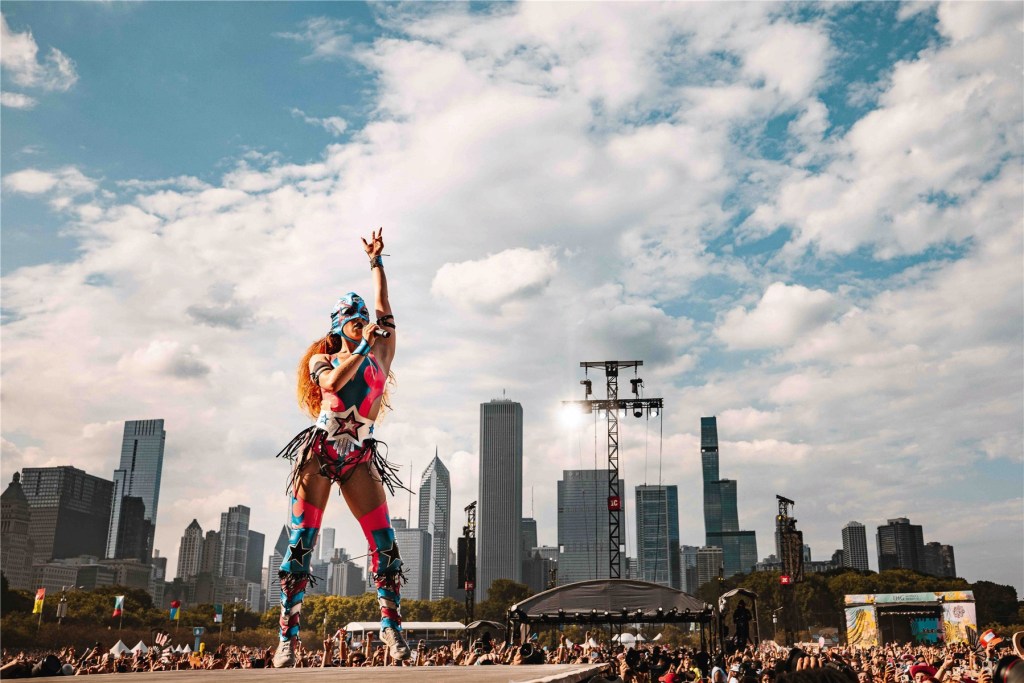
Chappell Roan by Josh Druding
For me, gig photography has been like learning to play the guitar: my results are okay, but I’m never going to hit the big league.
Shooting big gigs is particularly challenging, as you have to work fast, deal with fast-moving subjects and ever-changing lights, and be prepared to elbow other photographers out of the way to get the money shot. So, I’ve got a lot of respect for photographers who capture great gig shots, and Josh Druding’s image of Chappell Roan ticks all the boxes. I love the classic, subject-off-centre composition and dynamism of this very engaging picture, taken at the Lollapalooza festival in Chicago.
The details of Roan’s fabulous outfit are beautifully captured, while the audience’s outstretched hands and Chicago cityscape add strong context. Josh’s image made the shortlist for the Music Moment category in this year’s Abbey Road Music Photography Awards and while he didn’t win, his picture is a definite winner in my book.
Peter Dench, Acting Features Editor and Photojournalist
A waste miner climbs a hill of refuse at Olusosun Landfill in Ikeja, Lagos, after collecting waste freshly dumped from a truck. 1 April 2025, by Oyewole Lawal
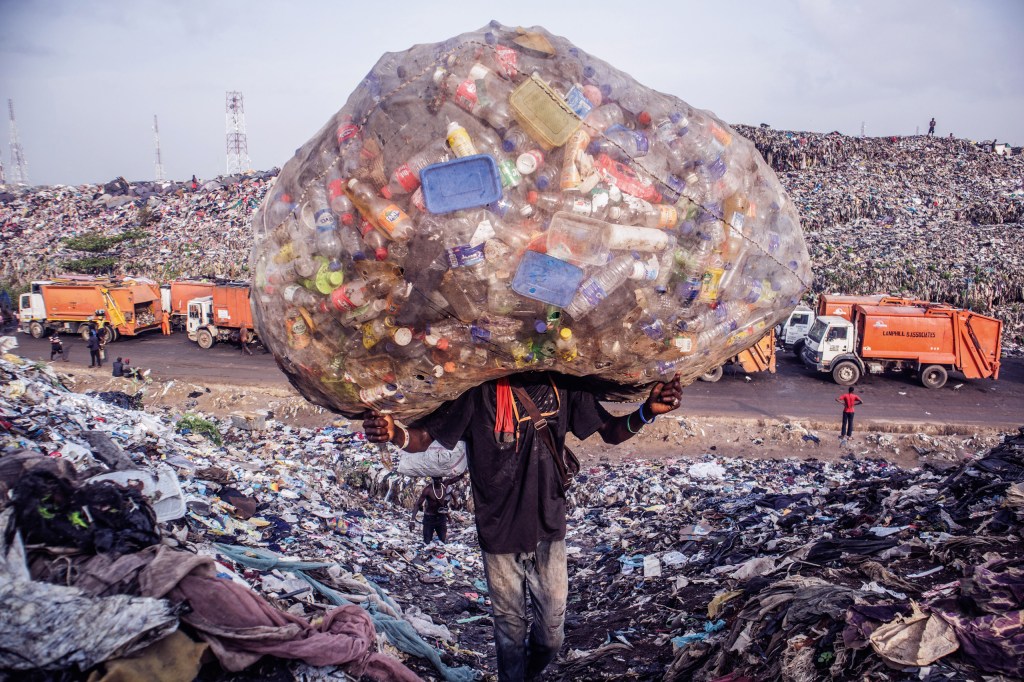
In his powerful series Guardians of Gaia (see AP 1 July), Nigerian photographer Oyewole Lawal documents the waste miners of Lagos – unsung heroes working at Africa’s largest landfill to combat climate change from the ground up.
I see a lot of features in my role at Amateur Photographer and many circle around themes of waste and landfill. This one stood out from the pile.
Many of Oyewole’s images have been made in the Olusosun Landfill in Lagos, the largest in Africa, covering over 40 acres of land and receiving at least 10,000 tons of waste daily. When Lawal’s reportage landed in the inbox it was immediately clear he had a passion for the subject and deep connection with the people he photographed with dignity and purpose.
Oyewole says, ‘To me, they are heroes. Waste miners are often overlooked and heavily stigmatised, but in my view they are the frontline soldiers in our fight against climate change. These are the people who work relentlessly to recover the waste we discard without a second thought – waste that not only pollutes our communities, but also contributes to serious environmental and health crises.’
In 2007 I spent several days documenting the Zabaleen in Cairo’s hellish suburb of Moqqatam, another community of extraordinary recyclers living and working in almost unimaginable conditions. Lawal’s image took me straight back there to the tension, heat, stench, and sheer effort of just standing still and framing a picture.
That Oyewole could compose something so poised – full of colour, texture and information – in that environment is testament to his talent and tenacity, which is why it makes my choice as an image of the year.
Jessica Miller, Deputy Online Editor
Shakul’s Eyes by Marijn Fidder
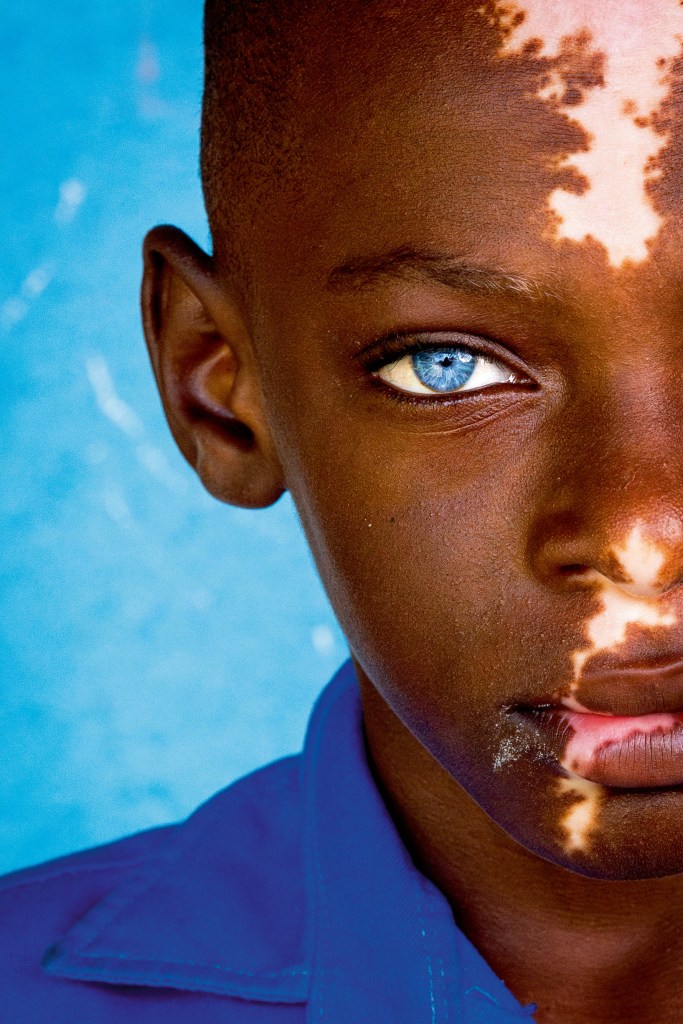
I had the pleasure of judging the 10th Anniversary World Sight Day photography competition by the International Association for the Prevention of Blindness (IAPB) and my favourite photo, ‘Shakul’s Eyes’ by Marijn Fidder, was named the Professional Photo of the Year.
Shakul, 9, was born with Waardenburg syndrome, a rare condition affecting his eyes and hearing, and his bright blue eyes often surprise people in his community.
This photograph stuck with me since I first saw it in the first round of judging. It stands out for its exceptional composition, emotional depth and technical precision. The lighting and focus on the eye and surrounding features are spot on. I love that Marijn has successfully incorporated two other shades of blue within the image, the child’s shirt and the background, to complement and draw attention back to the eye.
Marijn not only demonstrates a high level of technical skill, but also skills in storytelling. I commend her for being able to convey a strong message of identity, resilience and individuality.
Marijn said, ‘Photographing Shakul was a meaningful experience. Knowing the stigma he once faced, made seeing him so full of confidence and surrounded by friends even more powerful. His grandmother says his eyes reveal both the challenges he faces and the special beauty that makes him truly remarkable. The bond between him and his grandmother, and the way his community now welcomes him with warmth and pride, says so much about change and understanding.’
Joshua Waller, Online Editor
Diamond Dust Sky Eye by Jaroslav Fous
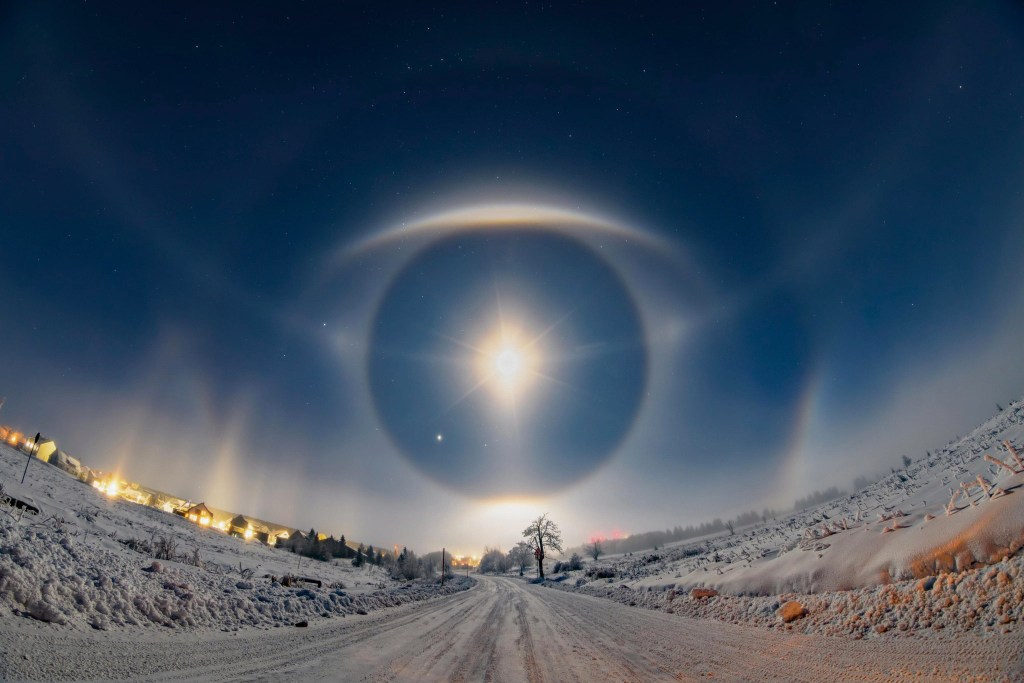
I love when natural events happen as you stare out of your window, or look up at the sun or moon. The double rainbow (what does it mean?) when it rains, the sun-bow effect in the far clouds when the sun and weather are just right, and the moonbow effect when the skies are cold enough, and the moon bright enough. Here we have an incredible halo effect in conditions that must have been incredibly cold, sub-freezing, as temperatures can reach -10°C in Podborany, Czech Republic, at certain times of the year. The moonbow is also known as a moon rainbow or lunar rainbow, and is much fainter than your standard rainbow. But with a long enough exposure you can capture the colour of the bow, although most of the time all we can see is the white halo, and you can just see some of the colour in some of the areas of this image. The additional effects are all the more impressive, as it looks like a giant eye is staring down at us, and perhaps we can imagine where people would think they are seeing God staring back down at them.
Picture Editors’ choices
It’s a tough job illustrating the ever-changing news landscape with photography that will stop a reader in their tracks. Here, we round-up of the best images that picture editors of newspapers and of media outlets have seen in 2025
Jay Davies, Director of Photography, News EMEA (Europe, Middle East and Africa) at Getty Images
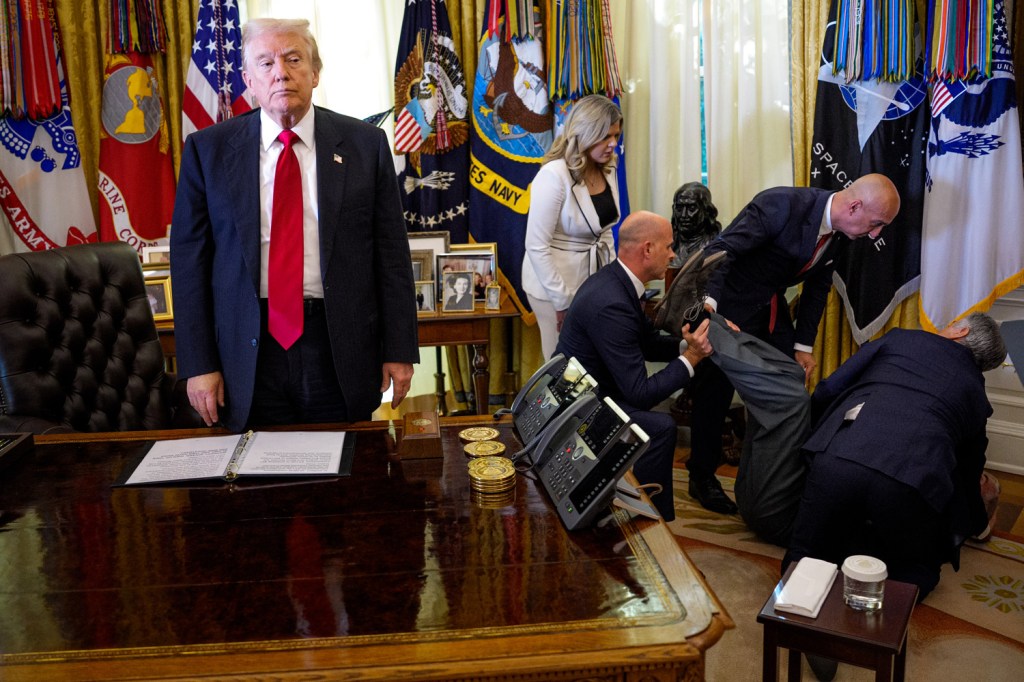
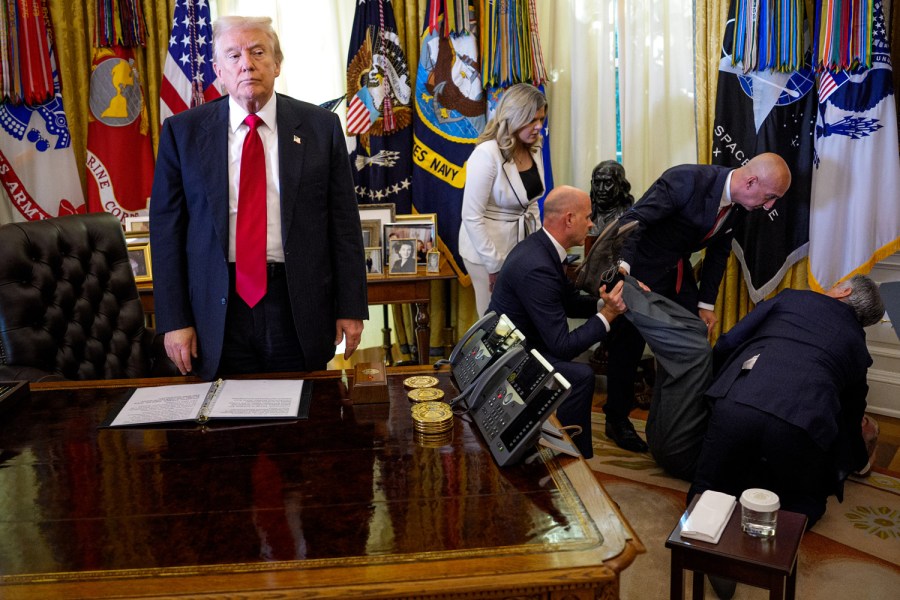
This picture shows U.S. President Donald Trump standing behind the Resolute Desk as others help a man who fainted during an event in the Oval Office on 6 November. The photo, by Andrew Harnik, exemplifies the quick thinking required when a highly controlled event goes off the rails. In footage of the incident, you can see how quickly it all unfolds and how fleeting the opportunity was for Harnik and his fellow photographers to make this picture.
Although Trump remains mostly stationary for several seconds, White House staff and Secret Service try to swiftly usher press from the room, while others walk through the frame, spoiling countless pictures in the process. Through quick reflexes and a little good fortune, Harnik is in the right place to preserve this surreal asymmetry, with Trump stock-still on one side of the frame while, on the other, the scrum hovers over the upturned man. As with most great political images, when a stage-managed event went off-script, a fast-acting photographer seized the revealing moment.
Jim Powell, Associate Picture Editor, Guardian News & Media
When I saw the photograph of Volodymyr Zelenskyy meeting Donald Trump at St Peter’s Basilica before the funeral of Pope Francis in April, I thought at the time that this could be the most significant photograph of the year. The image of the two men sitting alone, deep in conversation at the Vatican, seemed a symbolic moment of hope to end the war in Ukraine, especially coming after February’s disastrous White House summit, when Trump warned the president of Ukraine that he was ‘gambling with world war three’ and told him to return only when he was ‘ready for peace’. As we now know, no peace deal resulted from the Vatican talks, and Russian aggression continues today.
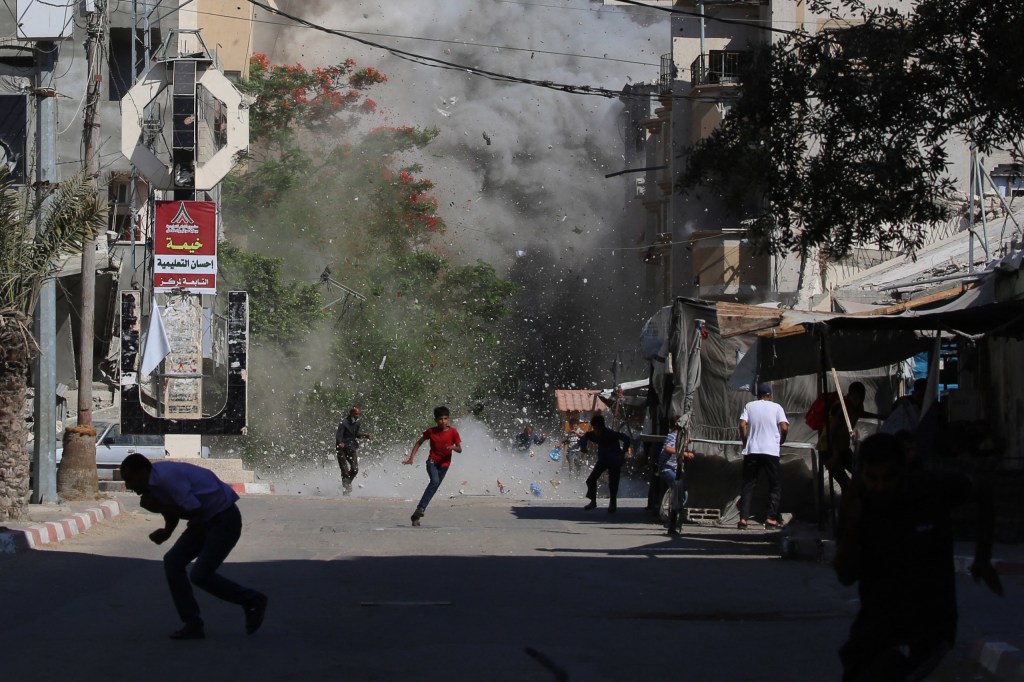
At least a fragile ceasefire has held in Gaza, despite the fact that Israel has been accused of breaking its own agreement at least 100 times since 10 October 2025. And photojournalists in Gaza continue to bravely document the desperate conditions there. This image, taken before the ceasefire on 15 June by Eyad Baba from the Associated Press, epitomises their courage. He photographs Palestinians fleeing for their lives from another Israeli airstrike, this time on the Bureij camp for Palestinian refugees in central Gaza. At least 248 journalists have been killed in Gaza, more than that of any other conflict in modern times. Despite this, writers and photographers continue to expose the horrors, to inform and to hopefully ensure some sort of future accountability.
Cheryl Newman, Photography Editor of the Observer New Review
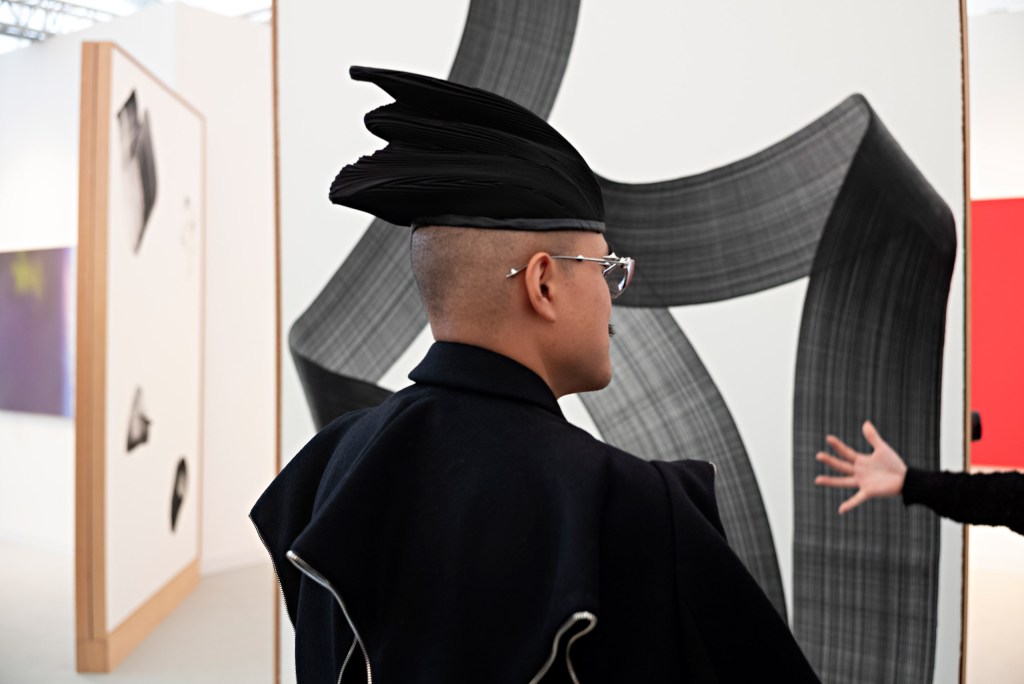
Sometimes a shoot just works. I read the compulsive artworld yarn, All That Glitters, in summer and was delighted when I found that its author Orlando Whitfield would be writing a piece for The Observer New Review on the goings-on during the London Frieze Art Fair. Photographer Matt Stuart spent three days in amongst the gallery spaces observing and documenting all that makes Frieze a great place to people-watch. His sharply observed series took me there, mixing with the stylish, eccentric and the rich. This arresting image made in the Johyun Gallery booth was used for the Review’s cover and is one of my favourites – the unknown subject is immersed in Lee Bae’s artwork.
The lines and shapes dance through the image in a union of form and abstraction. It’s a smart image, beautifully observed by Matt, a moment caught reflecting the subject’s physical relationship within the space described by the camera’s frame. The clean simplicity of the composition, subtle tones of grey through black, a glimpse of red and the tiny hand that invades the right of the frame, add to the surface layers.
Although less about narrative, Matt’s photograph does make me wonder of the subject; who are you, why are you at Frieze, are you rich and where did you get your hat? This image sums up Frieze for me: its eccentric style, the exclusivity of its visitor who is as intriguing as the artwork for sale. This picture creates a visual representation of a moment that both documents and confronts the art world’s mystique.
Russ O’Connell, Picture Editor, The Sunday Times Magazine
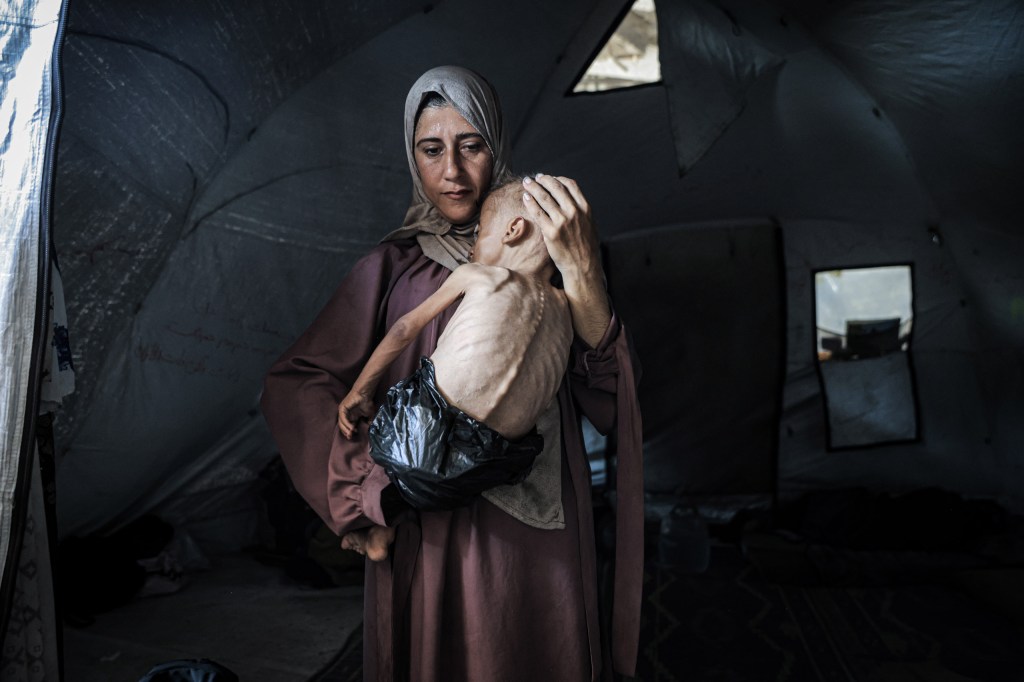
Cradled in his mother’s arms wearing a bin bag as a nappy, the skeletal image of Muhammad Zakariya Ayyoub al-Matouq instantly made headlines surrounding the famine inflicted on the Palestinian people. It was a symbol used by the media at the time of the starvation facing Gaza. Further reports and investigation into the child depicted in the image found that the boy had pre-existing medical issues, and a certain amount of controversy arose around it and the narrative that it was illustrated for – however, his mother had responded that despite pre-existing medical issues he had lost a significant amount of weight owing to the lack of food and aid available to them. It doesn’t detract from the horrors that the population of Gaza faced during the conflict and the image only shows the struggles at face value. You can’t detract from the image’s impact and the effect it had on the consciousness of the world about the famine inflicted as a result of the conflict.
Sean Conway, Senior Picture Desk Editor at Getty Images
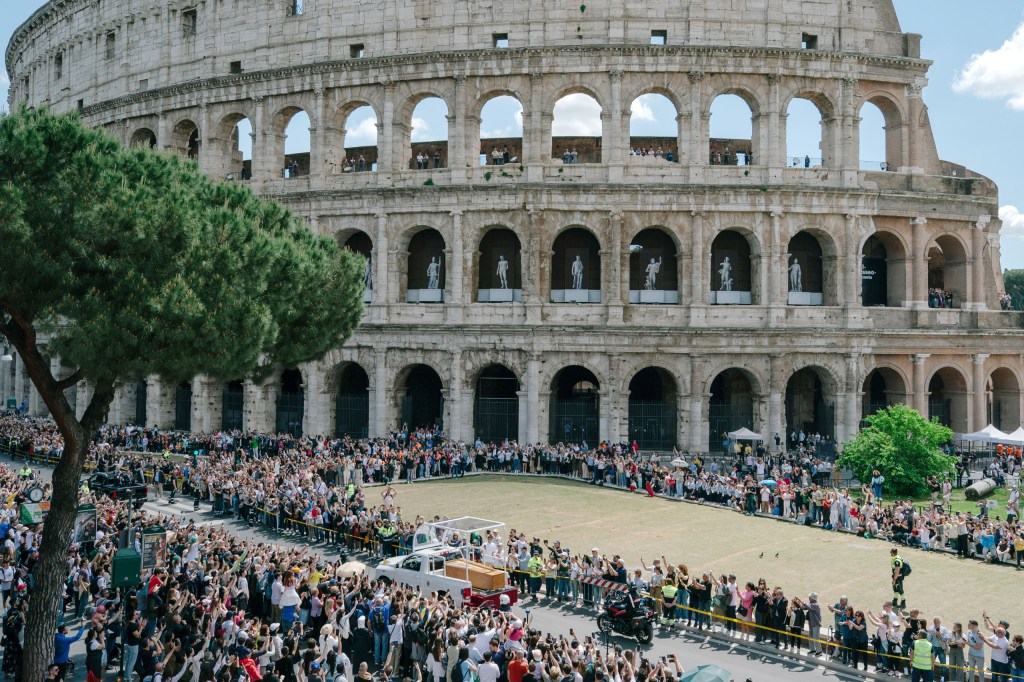
When the route for the late Pope Francis’s funeral procession – from St Peter’s Basilica to the Basilica of Santa Maria Maggiore – was announced, it became clear that it would pass by the Colosseum. This presented one of the most striking photo opportunities: a moment where one of Rome’s most iconic landmarks met one of its most revered figures. Photographer Andrei Pungovschi has composed this frame wide enough to convey the scale of the Colosseum, yet intimate enough to reveal the tourists watching the coffin pass by from the Colosseum along with the ancient statues, subtly linking the solemnity of the moment with Rome’s enduring history.
Krishna Sheth, Director of Photography, The Economist and 1843 magazine
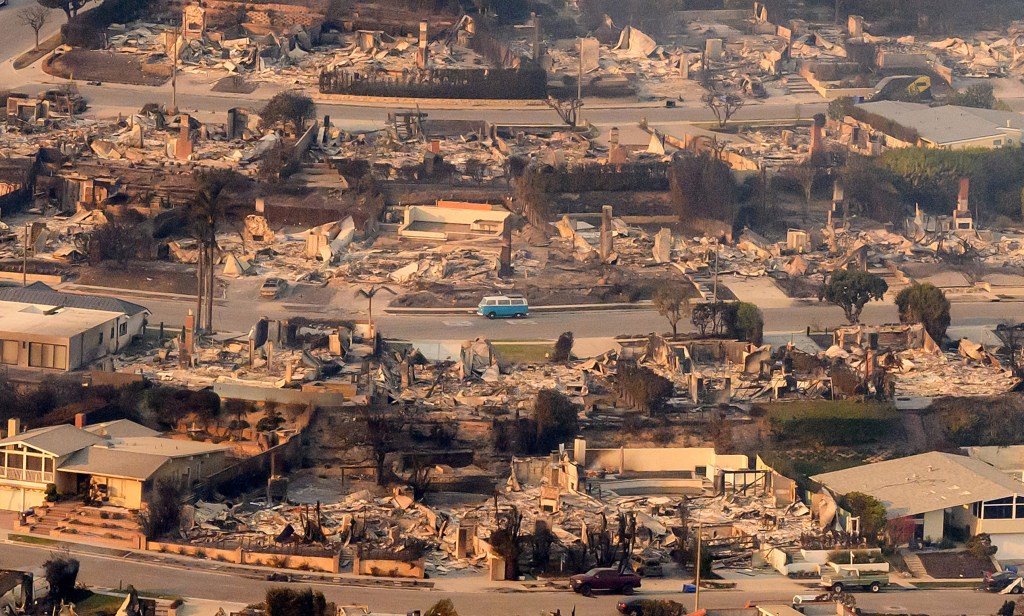
There were so many photographs this year that stopped me in my tracks, especially from places torn apart by war or natural disasters, as well as other global stories. In some ways it gets harder each year, because the events behind them are getting heavier, more relentless. You feel the weight of it.
This year, I also made a deliberate decision not to choose from the stories I commissioned for The Economist or 1843. I wanted to cast the net wider.I keep returning to this image from California fires near the Pacific Palisades neighbourhood of Los Angeles. What stays with me is the stillness. Entire neighbourhoods have been reduced to ash and scattered foundations, yet this one bright blue VW Combi van moves serenely through the devastation. That small, almost cheerful detail only heightens the sense of loss surrounding it. It’s an ordinary moment in an utterly extraordinary landscape, and that contrast is devastating.
What I love about the photograph is that it doesn’t try to dramatise anything. The soft light simply reveals what’s there – the silence, the shock, the fragile traces of lives that used to be there. As someone who spends a lot of time thinking about how we tell stories visually, I’m drawn to images that hold more than one truth at once: resilience and vulnerability, grief and devastation, and the faintest thread of hope. This photograph holds all of that.
Dimitri Beck, Editor-in- Chief & Director of Photography, POLKA magazine/galerie/factory
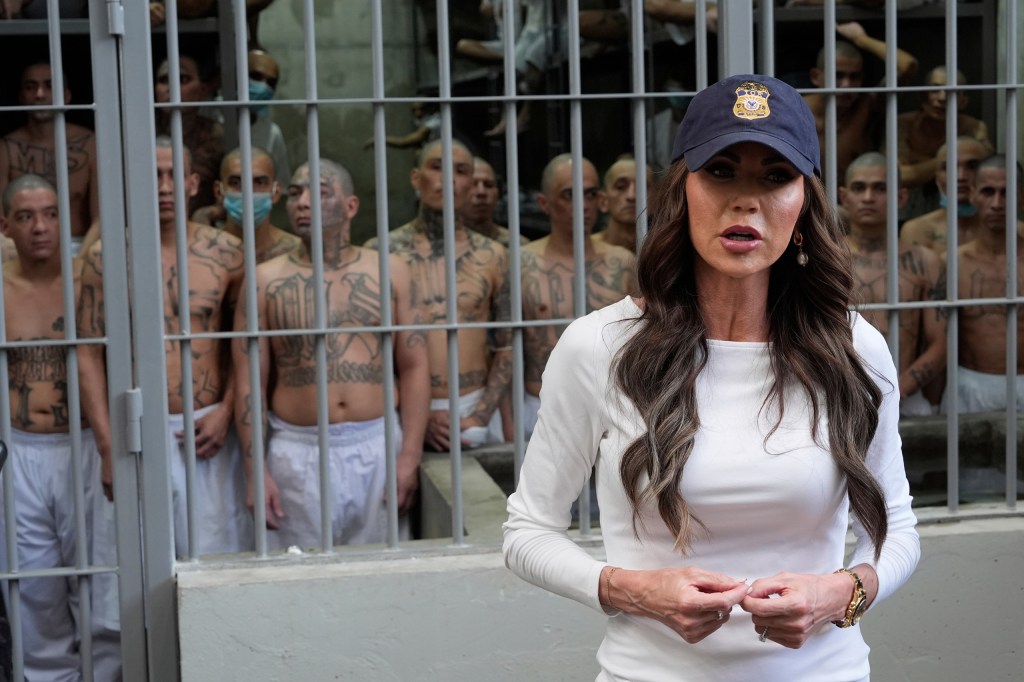
The scene is certainly surprising. In the foreground, a woman with impeccable hair, wearing a pristine white long-sleeved T-shirt and a baseball cap with the patch of the U.S. Immigration and Customs Enforcement agency. Her name is Kristi Noem, and she is the U.S. Secretary of Homeland Security. The image is striking because she is posing casually in a state-of-the-art, high-security prison at the Terrorism Containment Center in Tecoluca, a town an hour’s drive south of the Salvadoran capital. Just behind the minister, locked behind bars, are dozens of prisoners with menacing faces. The cast is intimidating. Men with shaved heads and bare chests, their bodies covered in tattoos, signs of belonging to the Maras, the fearsome gangs of Central America. Except that here, the inmates don’t flinch; they even pose, neatly lined up like soldiers, standing or sitting on their bunks without mattresses. A “Prison Break” vibe, Latino style. These detainees are among the more than 200 suspected members of Venezuelan criminal organisations recently expelled by the Trump administration.
No American dream
With this spectacle, which unfolded on Wednesday, March 26, 2025, under the watchful eye of the cameras, the Secretary of State didn’t mince words: “I want you to know that if you enter our country illegally, these are the consequences you could face.” The show aimed to deter those aspiring to immigrate to the United States. The obscene and Machiavellian staging portrays all migrants as criminals. However, authorities in Caracas and relatives of these migrants maintain that most of them were living without proper documentation in the United States. We remember those migrant caravans with families and children yearning for a better future. But here, the message is clear: no American dream for you.
One detail in the photo didn’t escape the notice of internet users and sparked outrage. A striking, even gaudy, detail on the US Secretary of State’s wrist: a Rolex watch worth over $50,000. An ostentatious accessory that is undeniably in poor taste, given the context and the country she is visiting, El Salvador, one of the poorest in the world. This controversy, however, is unlikely to intimidate or upset Kristi Noem. In Trump’s inner circle, the president’s subjects thrive on their effective communication strategies. They must generate buzz, just like the boss. Mission accomplished.
Sarah Gilbert, Features Photo Editor, Guardian News & Media
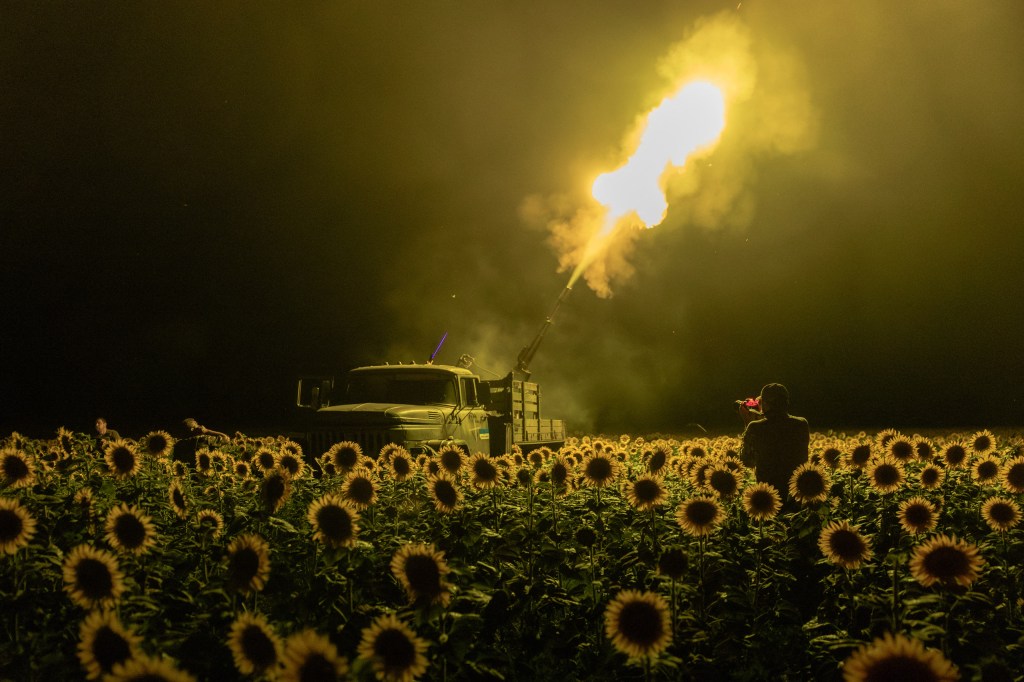
The war in Ukraine has waged for nearly three years, and we are inundated by thousands of images of death and destruction. I like to look beyond the obvious; as a features photo editor I want more than just a reporting of facts. This image of a Ukrainian unit firing on a Russian drone, a form of modern warfare that has inflicted so much damage, taken in July by Roman Pilipey of AFP, is deceptively attractive – golden light and a field of sunflowers. But it draws you in to a world both beautiful and full of horror; drawing on artistic traditions, it almost feels like a Renaissance painting, Biblical in nature. Sunflowers represent the opposite of war: joy, warmth and beauty – a symbol of life. I kept coming back to this photo. It’s a reminder that beauty can be found in the darkest of times, which heightens its intensity. Media vita in morte sumus.
Andy Greenacre, Photography Director Telegraph Magazine
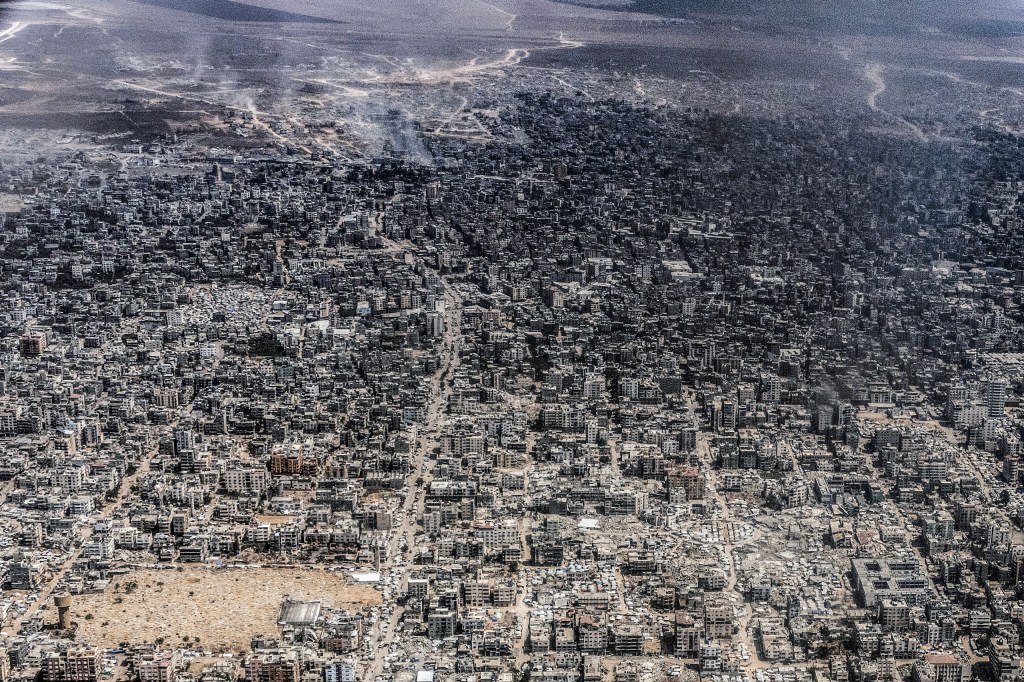
Unsurprisingly the conflict between Israel and Hamas has rarely been out of the news cycle in 2025 with the ever grimmer situation faced by ordinary Palestinians in Gaza Strip getting worse as each month passes by. With international media unable to enter the territory (except escorted on choreographed trips by the IDF), most images have been shot by local photographers on the ground. Their pictures have been harrowing both on a human level, and for depicting the destruction wrought on the infrastructure of the territory.
I could have picked any number of pictures to illustrate the level of destruction the Gaza Strip has suffered, but this photograph of Gaza City, taken by Heidi Levine sums it up for me. Shot from the back of a Jordanian Air Force aid flight for The Washington Post in July, the scale of this aerial photo encapsulates the magnitude of the situation there in one fell swoop. Whilst ground-made photographs give us immediacy, this picture gives a hugely impactful overview from a couple of thousand feet high.
Brooding light
As the eye becomes accustomed to the details in the picture, you can make out the scale of destruction – city blocks reduced to rubble, shells of buildings, blackened by flames, others flattened. And yet this is still an inhabited landscape – clusters of tents everywhere – on roundabouts, lining the sides of roads, on vacant patches of ground. Life inevitably goes on for those caught up in this catastrophe. And for me, the changing light from front to rear accentuates this brooding picture, from what is visible in the foreground, to a background that looks as if that entire area has been consumed by fire.
Interestingly, some media organisations were told that filming Gaza from above was prohibited and doing so could mean delays or cancellations to aid flights. Levine did not receive this instruction before taking these pictures. A couple of days later however, on a subsequent flight, a member of the Jordanian flight crew told her that only the aid drop could be photographed, not Gaza itself. Too late, this and other pictures she shot on that flight are out in the wider domain, testament to the reality of this brutal conflict.
Follow AP on Facebook, Instagram, YouTube and TikTok.