There’s a very good reason why, when booking tickets for the cinema at the last minute, the only seats free are those right at the front of the auditorium. You would not be alone if, on discovering such a state of affairs, you changed your plans to see the film the next night rather than sit with your nose pressed against the screen. I made the mistake of watching Avatar: The Way of Water from the front row, and was quite exhausted by halftime from all the swimming and fighting that was going on around me. I felt as though I was actually in the film. I was so close I couldn’t see the whole screen, so had to watch it again at home to catch up on what had occurred beyond the periphery of my vision. It was a different, and much more relaxing, experience that allowed me to see all that James Cameron decided to put within the frame and how all the elements on show related to one another. The drinks were also a lot cheaper, and the toilets cleaner.

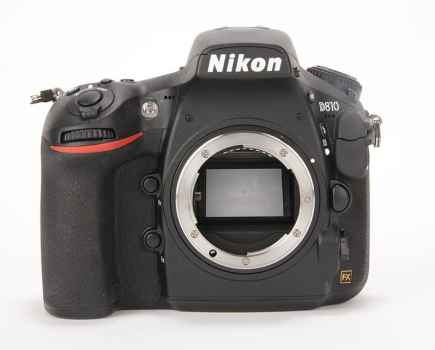
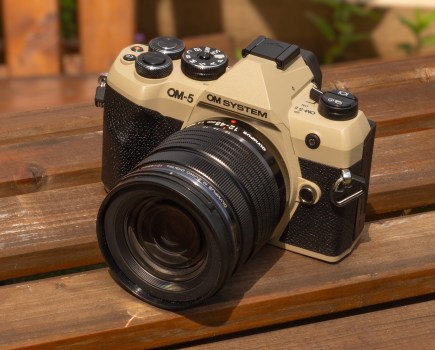
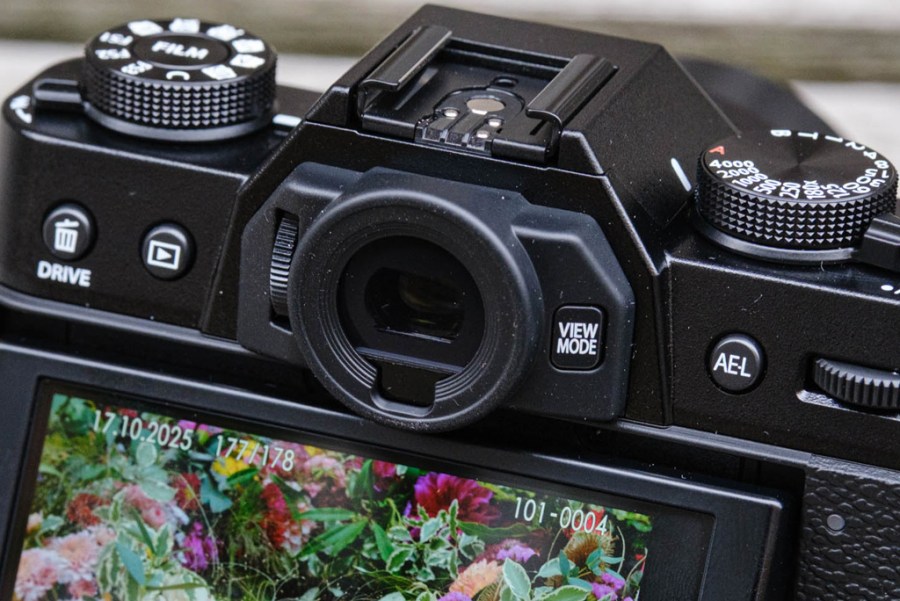
Many, if not most, camera viewfinders present an experience very similar to sitting in one of those clean and unused seats in the Odeon. We are so ‘close’ to the image we can’t really judge our composition without shifting our eye around the screen, relying on the memory of what is in the lower left corner to determine how it will balance with what’s positioned top right. And while we are concentrating on what’s happening in the middle of the frame all sorts of mischief could be going on around the edges without our noticing. Manufacturers try to give us big, magnified, images but then give us a small hole through which to view them – like watching Hull v Wrexham at Wembley through the peephole of a hotel room door.
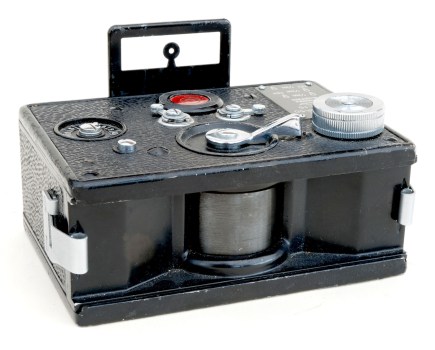
Before I was long into photography I was able to wonder at the easy openness of the waist-level viewfinder of my Lubitel ll Twin Lens Reflex medium format film camera, and then later at the magnificence of the 5x4in ground glass screen of my Cambo monorail camera that was like looking at a finished print (albeit upside down and laterally inverted) of what I was yet to shoot. Peering through the hole of my 35mm film cameras seemed primitive in comparison, but for some time that’s all we had available.
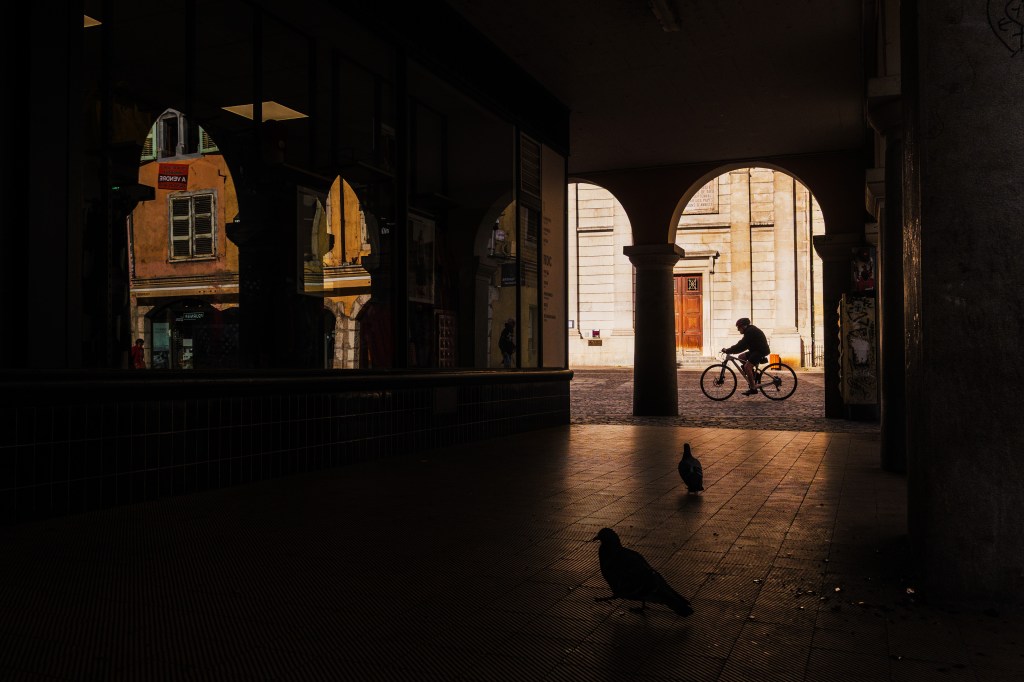
The advent of the digital camera rewound the clock in some respects, giving us a rear screen that could show the image before it was captured, complete with white balance corrections, automatic depth-of-field preview and an idea of how well we were doing with exposure. While we went through a series of stuttering performances we’ve arrived at a place where the rear screen of the camera smoothly and effortlessly delivers a 3-inch rendition of what we are about to shoot in a way that allows us to see the whole scene all at once. It’s miraculous, and invaluable – if you use it.
What is also invaluable is the ability to see the world around us while shooting, instead of just the tiny slice that’s flooding in through the lens. Using the back screen I can see what the camera is about to shoot, but by moving my eyes, or even my head, I can also see left, right, above and below that segment of the scene. If something happens outside the angle of view of the lens I get to see it and decide if I’m going to respond. In street photography particularly, that’s a great thing and critical to the way I shoot. With my eye to the viewfinder I can’t see what’s coming into frame until it has arrived – and often that’s just too late. I don’t need dioptre adjustments for the rear screen to appear sharp, it’s easier to clean and with the help of a hinge it’s viewable from all angles – so I don’t need to lay face-down on the pavement to get a worm’s eye perspective.

I fully appreciate a viewfinder in bright conditions when the rear screen is hampered by reflections, and when a long lens makes holding the camera at arm’s length impractical. A viewfinder is great too for reviewing at leisure what’s already been shot, but the rear screen is so much better for judging composition I can’t imagine a time the viewfinder will become my default choice. I don’t hate viewfinders – far from it – but they really do offer a second-rate experience when compared to the nice big view we get on a decent rear-mounted screen.
Related reading
Follow AP on Facebook, Instagram, YouTube, TikTok, and IRYS.