Twenty years ago, Giles Duley set out to document the consequences of war. Today, the photographer, humanitarian and founder of the Legacy of War Foundation is asking a different question altogether: what should a photograph actually do?
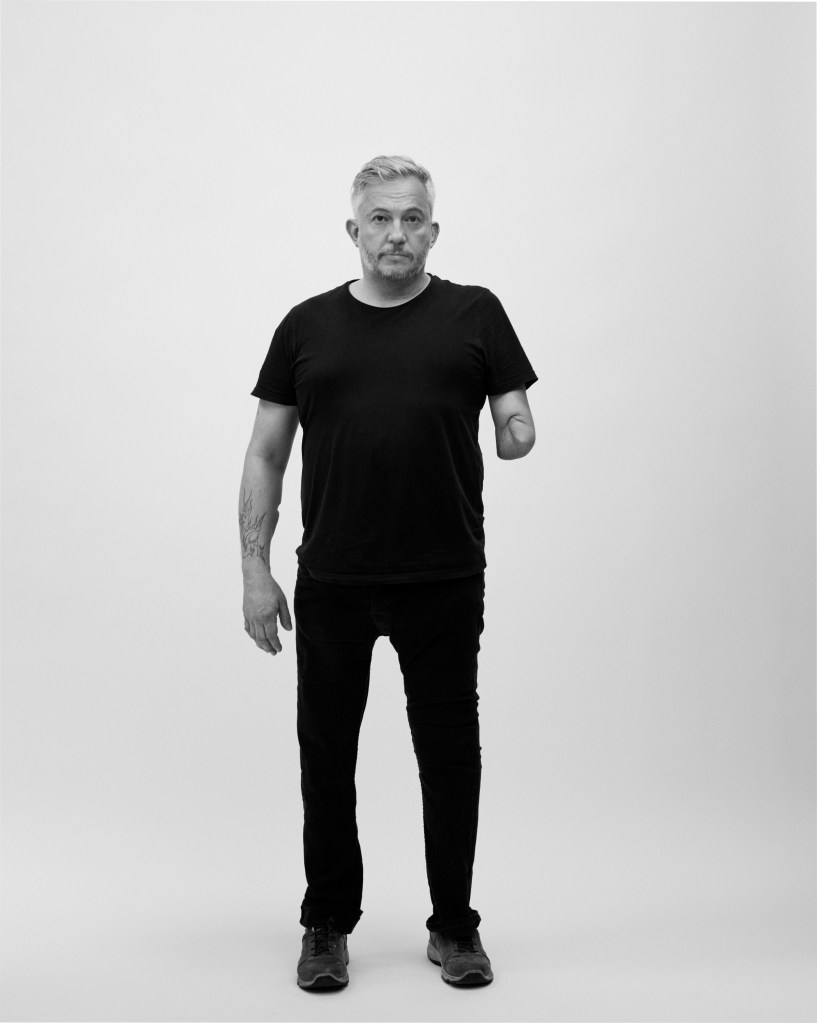
Former music photographer Giles Duley found his calling documenting the human cost of conflict. In February 2011 he lost both legs and his left arm after stepping on an improvised explosive device in Afghanistan while embedded with American soldiers. Less than two years later he returned to work, continuing to photograph communities affected by war while founding the Legacy of War Foundation. He is recipient of this year’s Tipperary International Peace Award.
Photography isn’t the destination
I’m a little surprised when Giles Duley appears on our Zoom call a minute early. Having spent the previous three months travelling between New York, India and Rwanda, you might reasonably expect a level of tardiness. His presence on screen is of someone in the next room. His manner has an easy familiarity. We haven’t met before but we know many of the same people, being of similar age and having occupied neighbouring corners of photography for decades. We even both briefly passed through Bournemouth’s photography course before separating in very different directions.
I know who Giles Duley is and what he’s done but can’t choose just one of the labels routinely attached to him – Photographer. Documentarian. War photographer. Humanitarian. CEO. Storyteller. So I ask, ‘What are you now?’ The answer is revealing. ‘It depends. It’s somewhere between storytelling and running a foundation,’ he says smiling.
Most of the profiles I read of Duley before our meeting understandably begin with that day in Afghanistan. I’ve done the same. It’s an extraordinary narrative. What is arguably more interesting is where that experience has taken him philosophically over physically. The man sat on screen in front of floor to ceiling shelves of books and tin hats is more interested in discussing purpose over survival. ‘When people ask who I work for, the answer is always the person in the photograph,’ he says. This suggests he believes photography has never really been about photography and his answer explains his approach.
Why trust comes before the camera
Rather than relying on editorial commissions like many documentary photographers, Duley has self-funded projects which allows the communities he photographs to remain his primary client, not picture editors or publishers. Some of his most important photographs haven’t even been seen by the public, he tells me. ‘They’ve been used in court cases, in human rights investigations or to convince donors to support communities.’ Impact becomes the measure of a photograph’s success – not awards, algorithms and assignments.
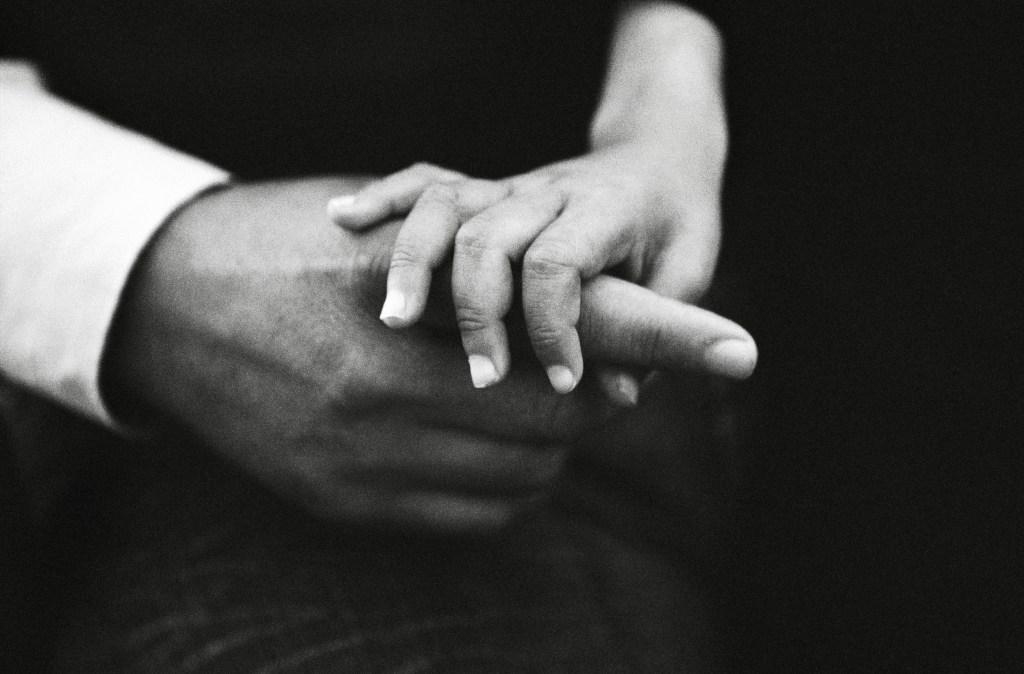
Through his Legacy of War Foundation, his work extends far beyond making pictures. The picture is the beginning rather than the destination – the beginning of conversations that become partnerships that become projects from farms in Rwanda, community initiatives in Lebanon to rehabilitation in Ukraine. The camera often doesn’t come out until well into the journey. I’m increasingly finding out that the modern storyteller talks more about trust over access and it’s a recurring theme running through our conversation. Duley talks about earning the right to be somewhere. ‘The first thing I do is listen,’ he says. Photography has to wait.
Cooking as method
The next thing he might do is cook. His enthusiasm is well documented from his Instagram @one_armed_chef to fronting the six-part documentary series, One Armed Chef, produced by VICE World News in 2022. It follows Duley as he travels to areas affected by conflict and crisis to connect with locals, document their stories and most importantly, share meals. It isn’t a gimmick. It’s his way of slowing photography down, replacing transactions with trust and reminding himself that every subject is a person before they become a picture.
Cooking becomes a methodology. ‘If I had an hour to make your portrait, I’d rather spend fifty-five minutes having a cup of tea and a piece of cake and five minutes making the photograph,’ he says. It’s a simple and surprisingly radical approach. Many photographers are introvert and often use the camera as a shield that gives permission to interact without becoming vulnerable. Duley removes the shield, builds a relationship first, then may shoot a frame. It’s advice born not from theory but repetition.
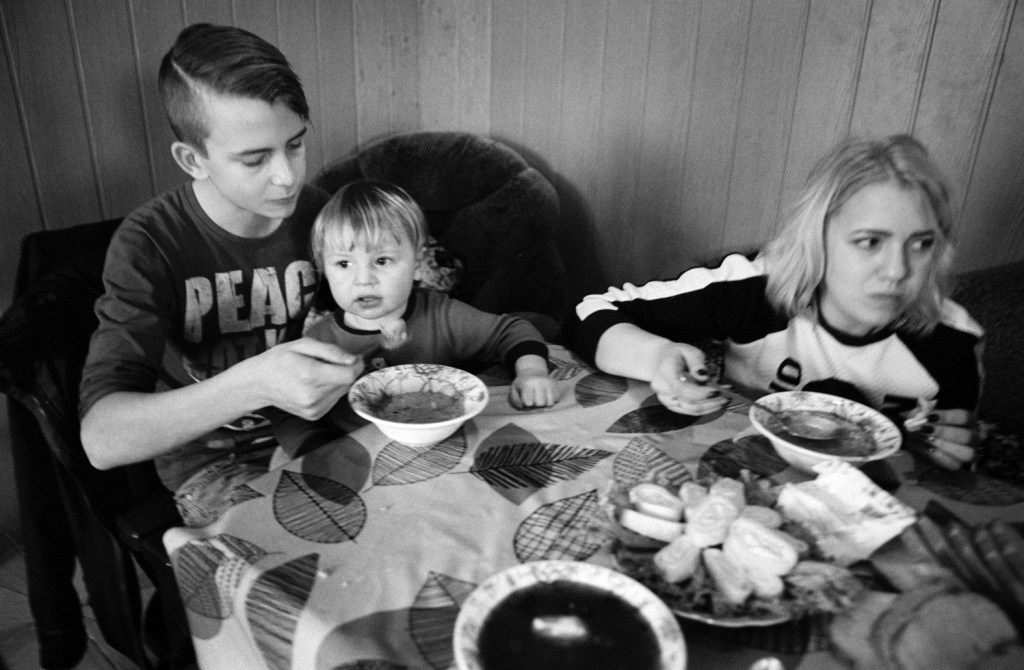
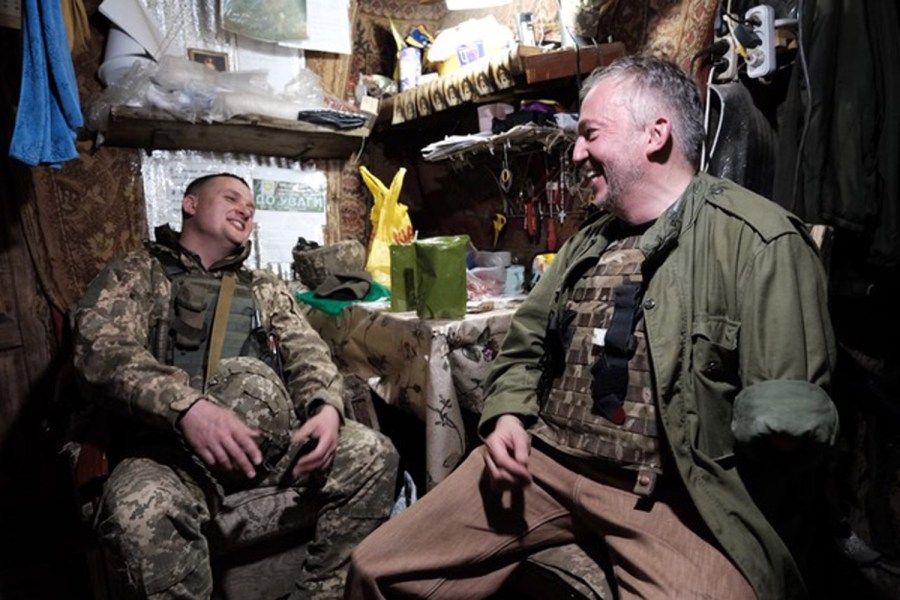
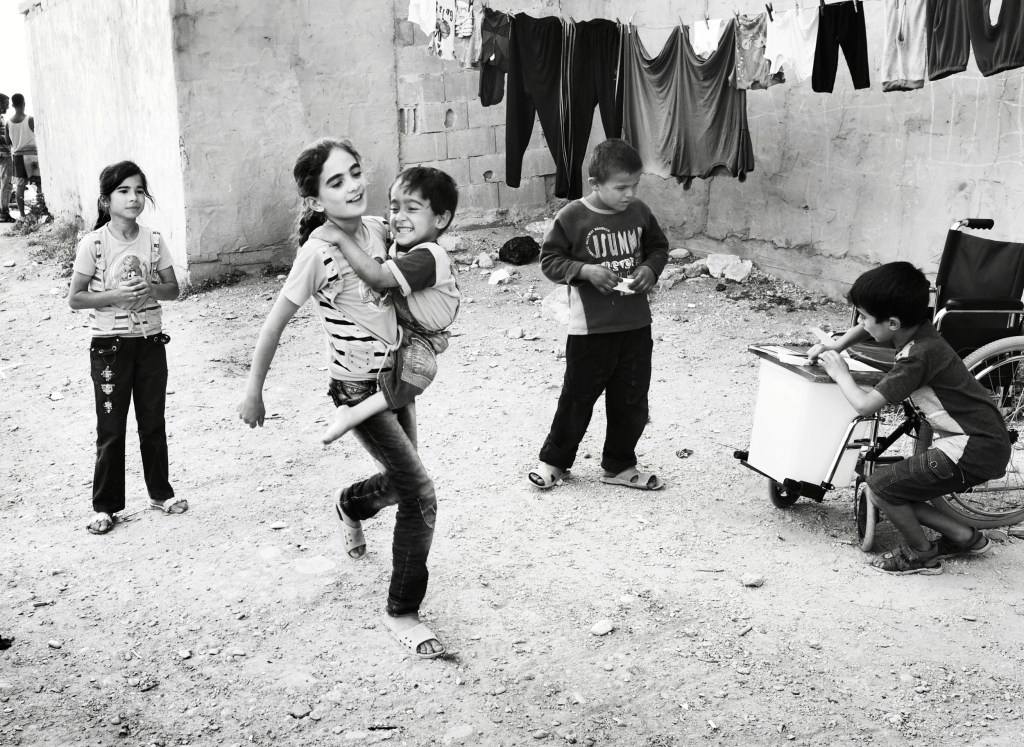
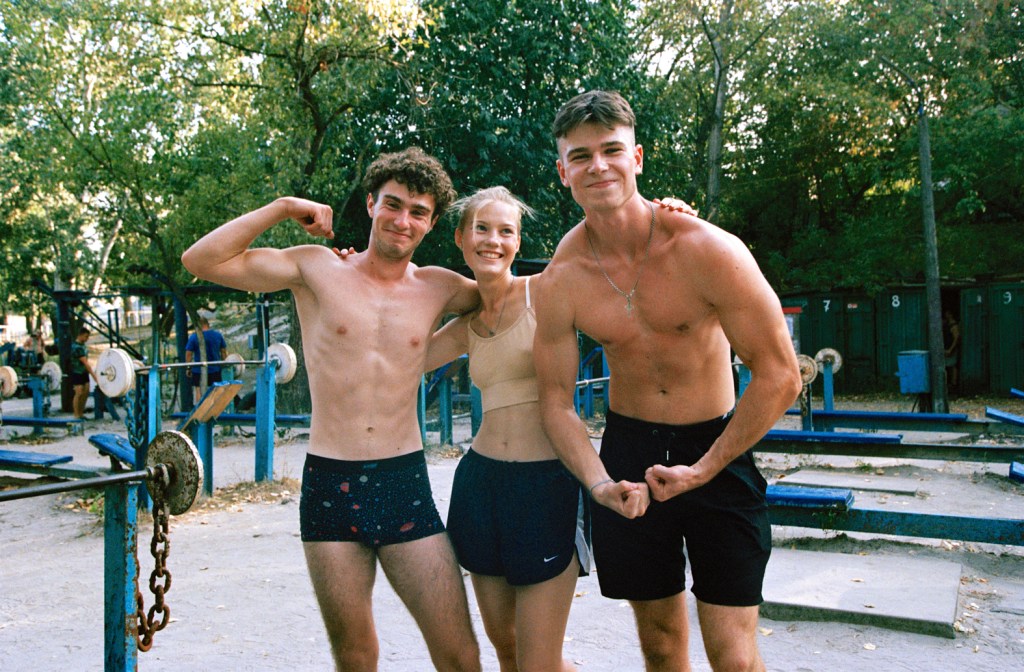
He insists the process should be identical for photographing musicians, celebrities or families living in refugee camps. ‘Why would you photograph somebody differently because they’ve experienced trauma?’ It’s a deceptively powerful question. This approach avoids reducing people to the worst thing that’s ever happened to them. Instead he searches for the ordinary moments, those small domestic rituals that continue in places wrecked by conflict. His images show children playing, families eating, people laughing.
Stories beyond the headlines
Duley has been described as documenting “the banality of life” and a phrase which he seems to embrace. Capturing normality is harder than photographing drama. As an example, he recalls working on the Greek-Macedonian border during the 2015-16 refugee crisis. Hundreds of photographers gathered as tensions escalated and a small group of young men confronted police. Those photographs appeared on the front pages of newspapers around the globe but Duley was somewhere else. Inside a family tent, drinking tea with parents terrified their children might become caught in the violence outside.
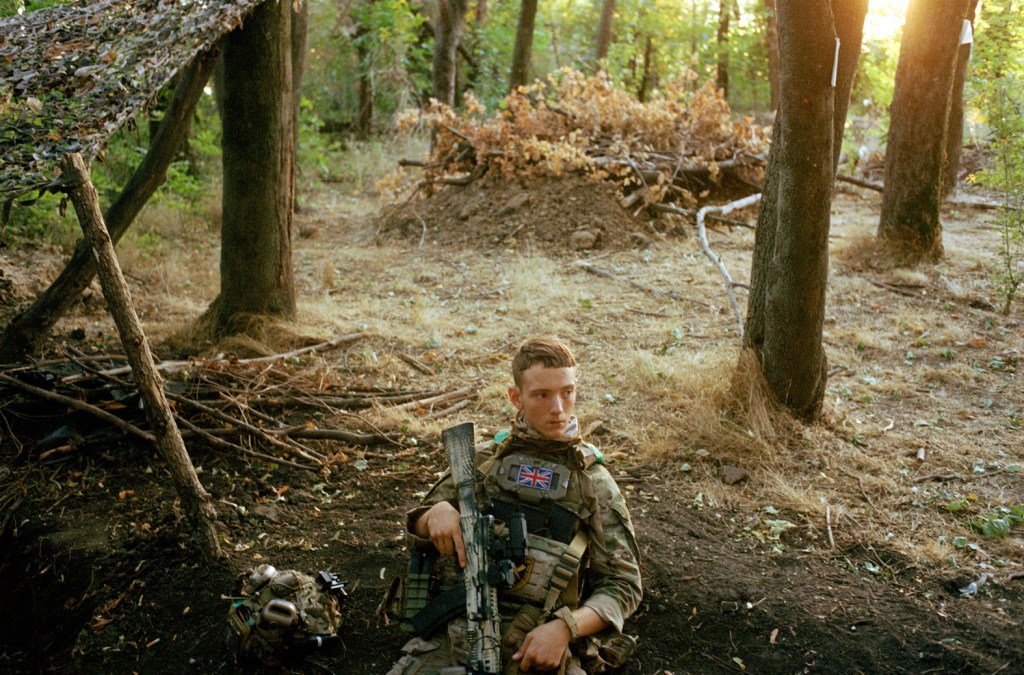
While both scenes happened, Duley believes his experience better represented the thousands of people trapped there. Which triggers a thoughtful observation bordering on heretical. ‘There is no truth in photography.’ He explains that a photograph records a fraction of a second from a single viewpoint and can’t contain everything happening outside the frame. Truth may be impossible but honesty is not. An honest photograph comes from time spent understanding a place, a community and the people within it. In an age when images can circulate faster than context, that distinction feels increasingly important.
Perhaps the most memorable part of our conversation concerns stories themselves. Duley makes an elegant distinction between narrative and story. A narrative he suggests is chronology, like the events of his fateful day in Afghanistan, a story is something deeper. It’s what someone was thinking while those events unfolded. ‘If you walk into a refugee camp and ask someone what happened, they’ll give you a narrative. They won’t give you their story,’ he explains.
Listening to Duley and thinking of the situations in Gaza and Ukraine, it’s difficult not to wonder if photographers are neglecting relationships and obsessing on access? Stories require trust and trust requires time. The camera has become quicker, Duley’s process has become slower. Perhaps that’s why his photographs continue to resonate.
Resilience as gift
Throughout our chat I’ve been trying to avoid using one word I’m not entirely comfortable using because it’s often misunderstood and often applied to Duley’s narrative – resilience. ‘We talk about resilience as though it’s something you can learn. It isn’t,’ he says. It’s a difficult idea but an intriguing one. People aren’t resilient because they attended a seminar or read a self-help book. People are resilient because life left them with no alternative. It’s an informed view from the countless communities he has spent decades documenting. He poignantly describes resilience as ‘life’s gift for suffering.’
The communities Duley has documented have changed him and readily admits to the occasional bout of imposter syndrome, wondering whether success should mean front pages and World Press Photo awards. The thought evaporates when he thinks about Rwanda and a portrait he made of a genocide survivor that eventually helped establish a community farm supporting women rebuilding their lives. ‘I chose a different path,’ he says simply.
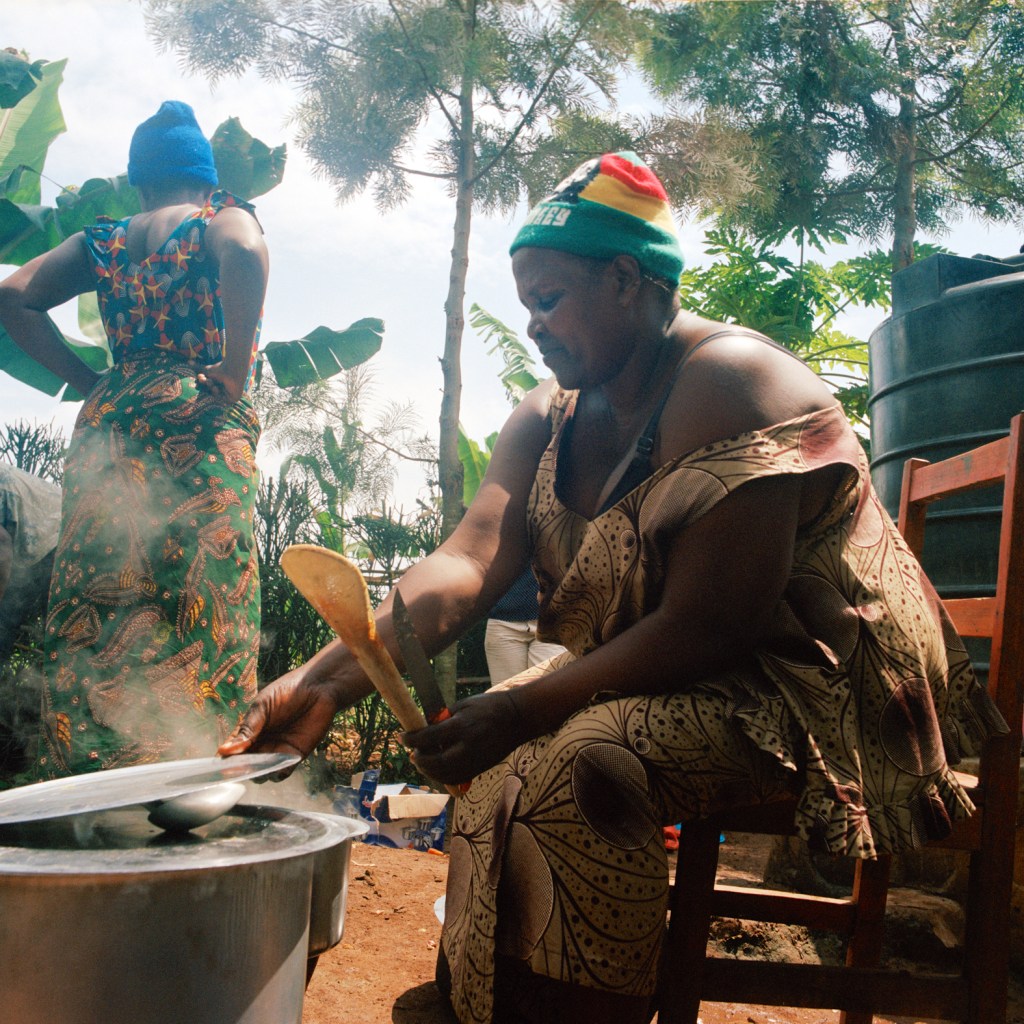
Duley asks ‘what is a photograph for’ over ‘is an image good enough’. It’s a useful lesson any photographer can absorb. Not every photograph will change the world but every photograph should have a purpose. Duley is often asked what keeps him awake at night and the answer isn’t pain, memories of war or his own trauma. ‘It’s the stories people have trusted me with that I haven’t yet found a way to tell.’ Having spent decades redefining documentary photography, that sounds entirely fitting. The cooking pot can be as important as the camera in telling a story.
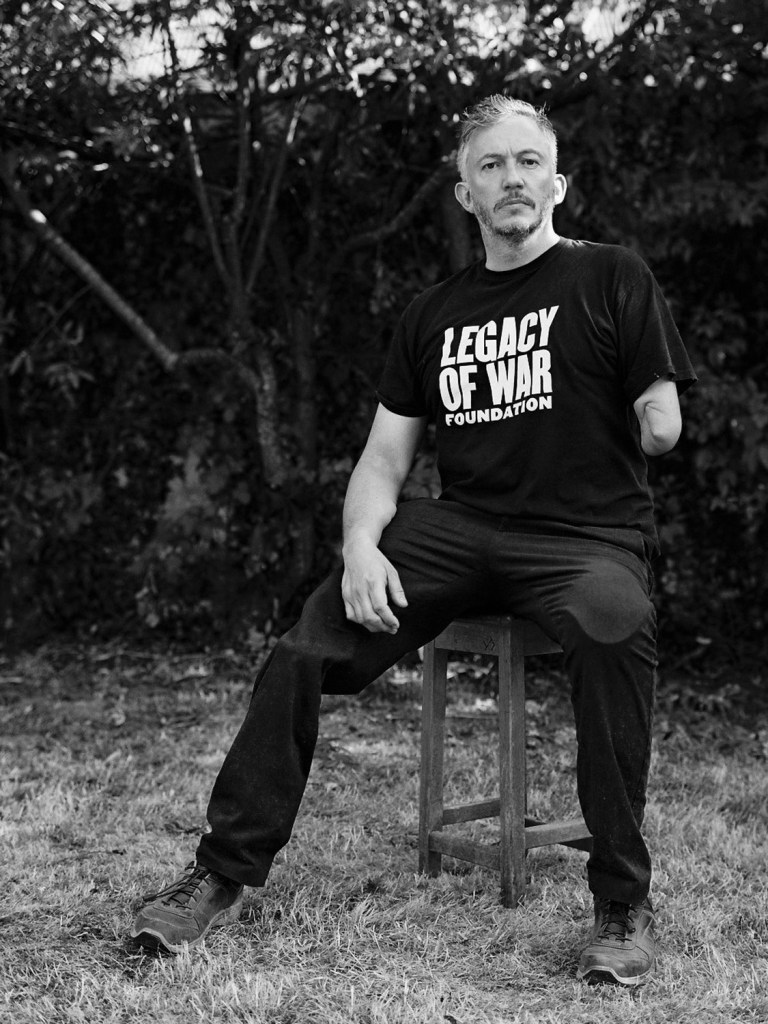
Giles Duley will speak at the Royal Geographical Society’s Photo Summit 2026 at 12.45pm on Friday July 17th : Resilience: focusing on what you can control.
Related reading:
- How my camera saved me from a night in the Russian gulag
- ‘As a woman you must be resilient and persistent’ – the remarkable story of portrait photographer Jillian Edelstein
- Documenting South Sudan floods
Do you want to win some great prizes for your photography? Enter your photos in our International Amateur Photographer of the Year competition. Free entry for photographers aged 13-21.
Follow AP on Facebook, Instagram, YouTube, TikTok and Irys.