When did I last go to a major photo show? After some head-scratching I deduced that it must have been 2008 – a worryingly long time ago. Looking back, that world now seems oddly alien. Smartphones were few and far between, and still a long way from supplanting dedicated cameras for casual snappers. Film itself was still popular, and I’d taken advantage of the show offers to fill my bag with supplies. According to my diary, I paid £2 for 36 exposure rolls of Ilford XP2 Super – and I bought quite a lot. Please stop whimpering at the back…
In 2008 I’d gone to look at the latest DSLR offerings, but today I’m more interested in seeing how the analogue photography market is holding out against the flood-tide of digital technology.
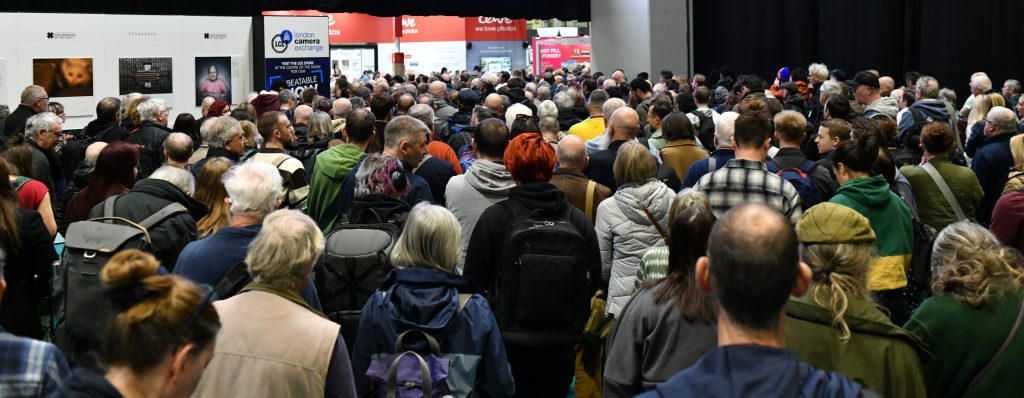
So with this as my historical perspective, and after a seriously good Birmingham breakfast, I presented myself at Hall 5 of the National Exhibition Centre recently just before The Photography Show opened for the day. I had a lot of company. While there were a lot of people who looked like me – male, old, bearded, backpack, sensible shoes – there was a much better balance of folk represented than at previous shows I’ve been to.
New 35mm cameras
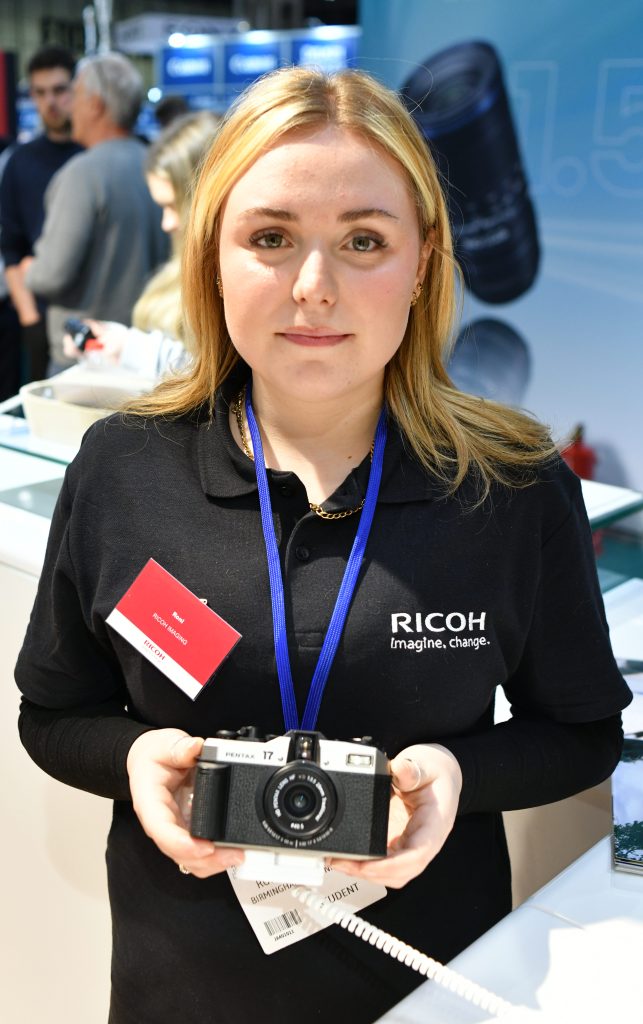
My first call was at the Ricoh Imaging stand, where their half-frame Pentax 17 35mm camera was gathering a lot of interest. I tried it on for size, and found it neat, snug in the hands and a good fit for street photography. The portrait format of the frame seems ideally suited to those young social media folk who are used to this orientation, but for the money – a shade under £500 – I was personally hoping for a bit more sophistication, especially some focussing assistance. Still, it has some interesting creative modes, and will be economical to run at 72 frames per 36 exposure film.
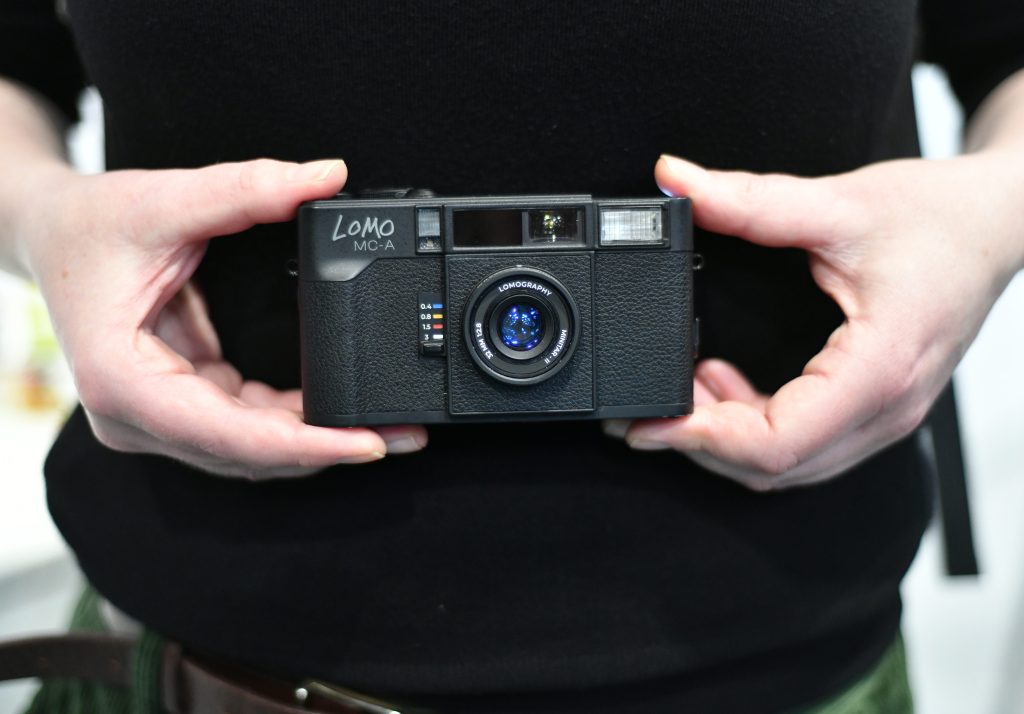
I found an interesting competitor to the Pentax 17 when AP’s own Andy Westlake introduced me to some people from Lomography, who immediately thrust their new 35mm full-frame offering, the Lomo MC-A, into my hands. With a solid and precise build quality plus some cutting edge technology – a LIDAR module for the autofocus – this camera immediately impressed me. Given the good selection of auto and manual functions I can see a role for this as a first film camera that you won’t grow out of quickly. The price is close to the Pentax at £449, but it buys you a lot of versatility.
New directions
New, more specialist, cameras were also on offer, as I found when I stopped to chat with Dave Faulkner of Alfie Cameras.
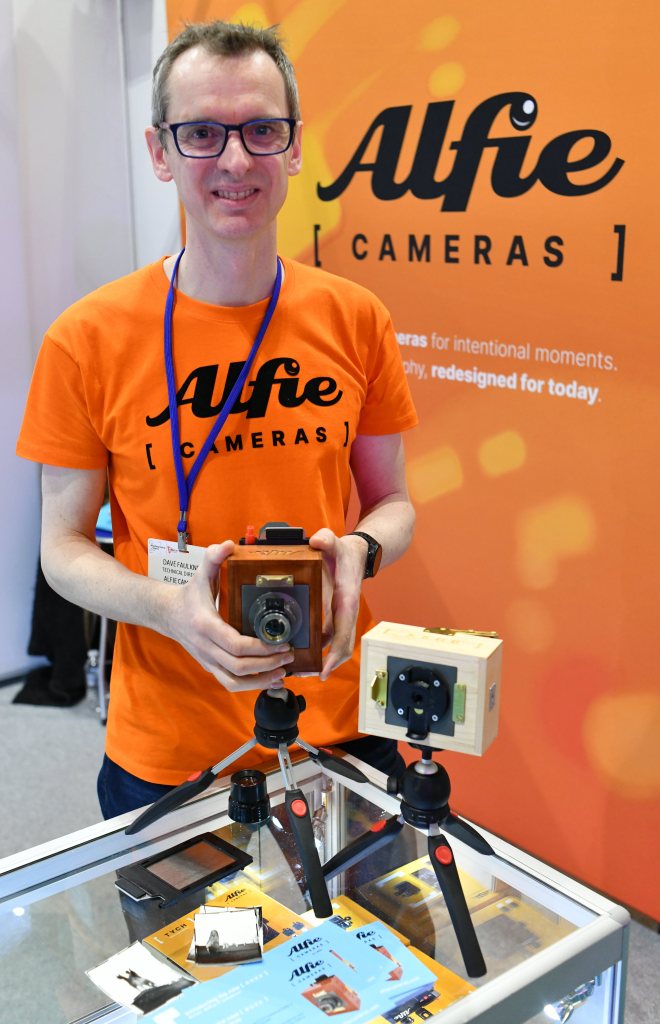
“We’re a UK based camera manufacturer. We developed our first camera, the Alfie TYCH, 3 years ago which we’ve been selling ever since – it’s a half-frame 35mm film camera. Our new camera at the show, the first prototype, is the Alfie BOXX – a very traditional 6x9cm film camera. It has develop-in-the-film-back with wet chemistry and we’re promoting it with a black and white reversal process. So you take your image on black and white film or paper, and develop it in front of your eyes. It’s our own film back that we’ve developed, it’s magnetically connected together so that it’s really easy to put your photographic paper in there. Then we have a syringe port so you can connect a syringe of chemistry to go through your process steps.”
Intriguing stuff, and definitely one to look at more closely. Immediately adjacent to Alfie Cameras, James Lane of Zone Imaging was offering a new, and refreshing, take on film processing.
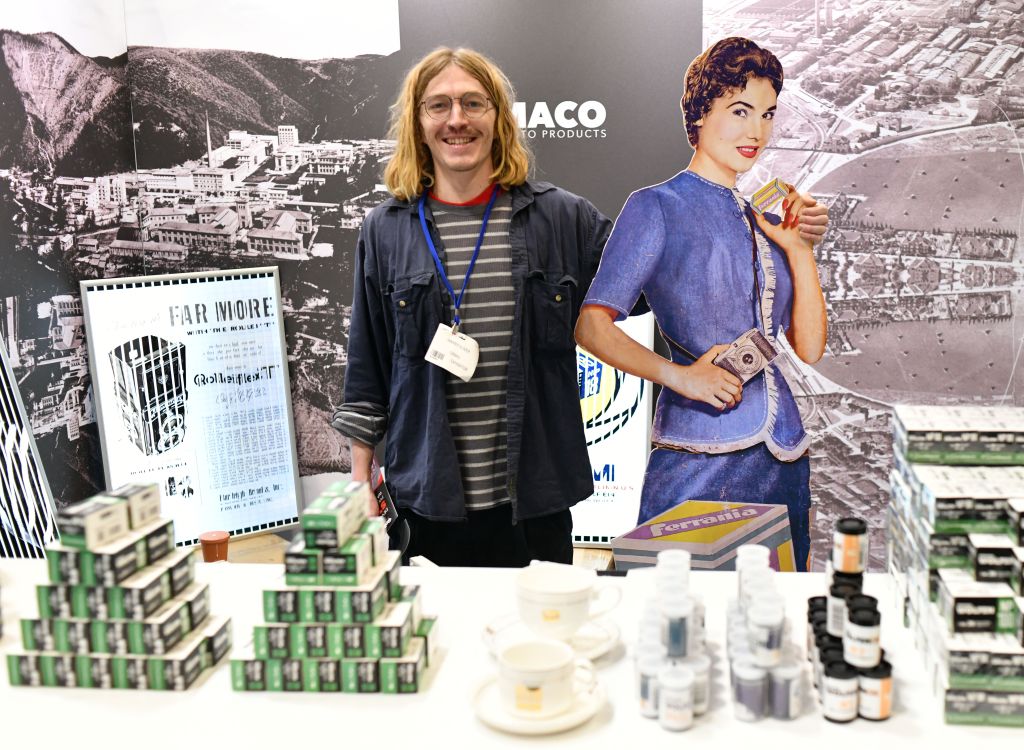
“Our chemicals are environmentally friendly and give very different results than older film developers, and we are actively researching into new chemicals with a dedicated R&D team.
We focus on reliability and consistency so all our liquid products are multi-year shelf life and our flagship developer gives the finest grain and longest tonality than any other developer on the market yet retaining full film speed and high acutance. People tend not to believe this until they try it out!”
I made a mental note to test their offerings when time allows.
Refurbished and second-hand
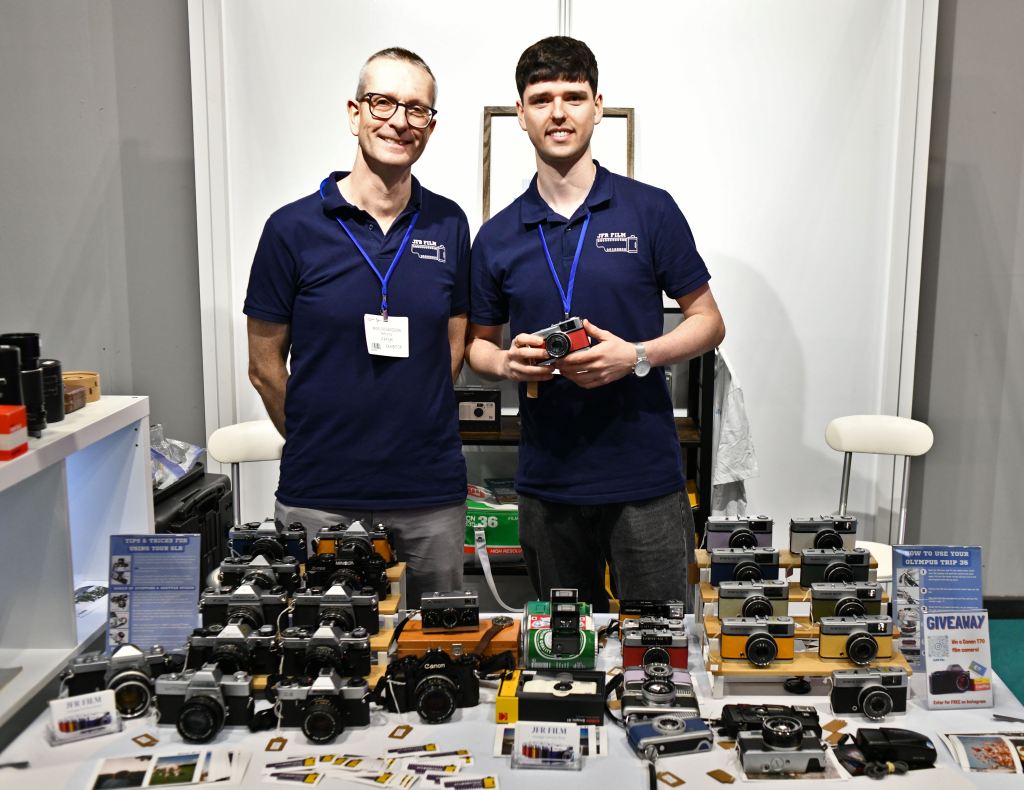
A number of companies had solid displays of second-hand and refurbished film cameras, which were on occasion quite a struggle to get close to – such was the interest from the show-goers. I managed to grab a word with Joshua Richardson of JFR Film about his wares.
“We’re a vintage camera shop specialising in repairing and refurbishing cameras from the 1950s up to the early 2000s”. He had a fine selection of that 1970s classic the original Olympus Trip for sale, nicely updated with coloured leatherette. “They’re our most popular camera. We fully strip them down, repair them and then personalise however you like”. So who buys them? “It’s a real mix, I think. These are really popular with the younger generation, perhaps people who didn’t shoot film initially when they were younger. People seem to love them!”
Finding film
Happily, I was able to find plenty of stands selling film, and while I was replenishing my stocks I enquired how things were going.
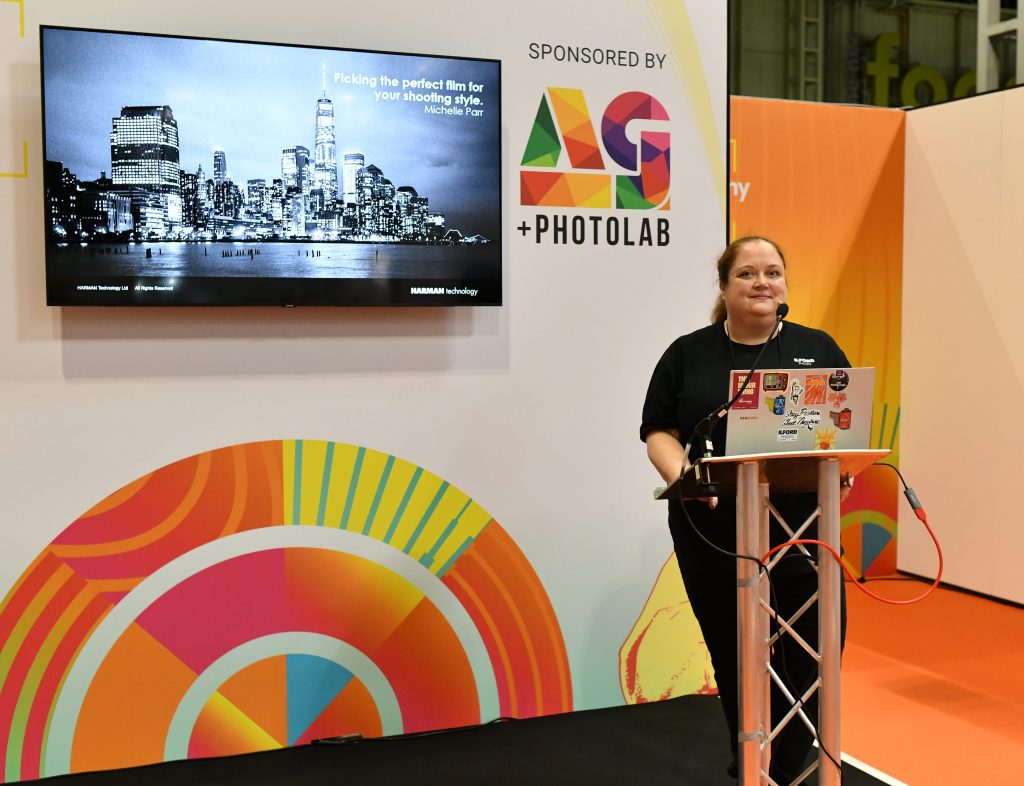
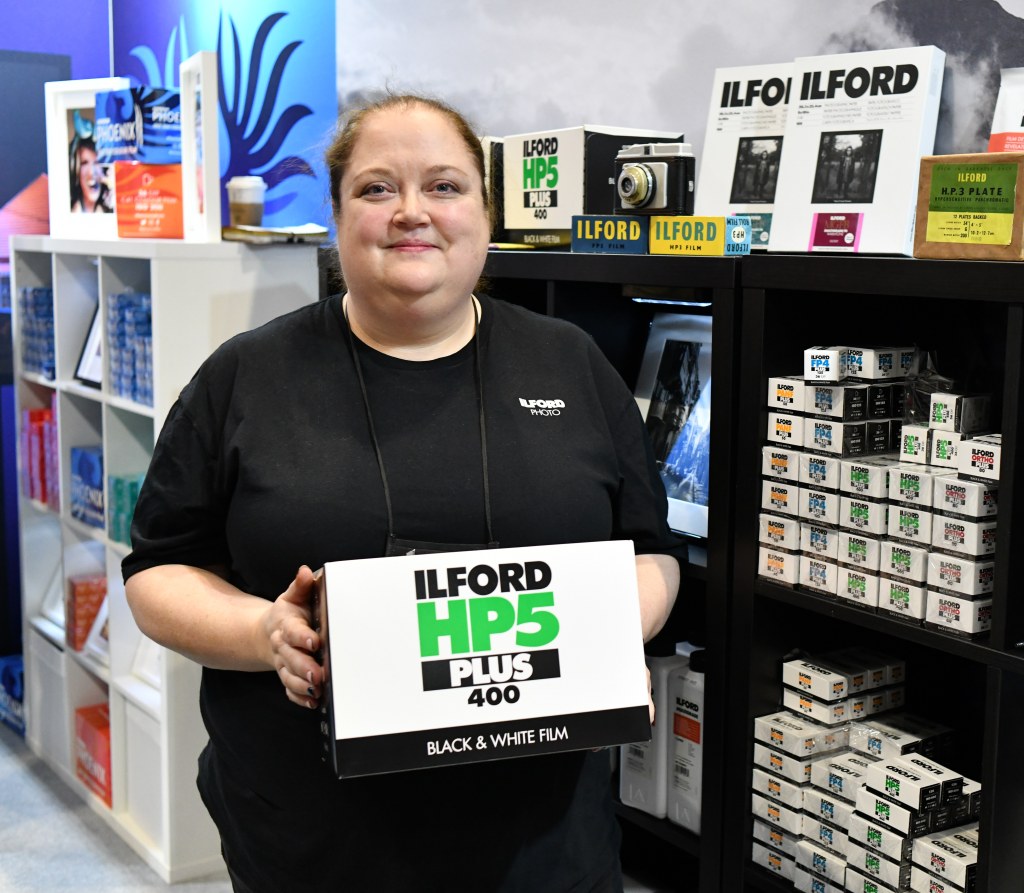
Michelle Parr from Ilford Photo was enthusiastic: “What’s really exciting is the range of people we’re seeing. We see some faces every single year, which is brilliant. But we are seeing students, people who are a bit older, their kids have grown and left home, and they’re coming back to us and setting up darkrooms in what was the kids bedroom! So it’s really exciting.”
“Ilford is known for black and white, and that is something we are always going to do. We launched the Harman colour films in 2023, and last year we brought out four – and there’s definitely more to come. Phoenix was the first new colour film in twenty years, and the community have really got behind the whole colour journey.”
Harry Oliver from Orwo had a similar story. “It’s just amazing to see the interest and people’s engagement with the film world still. I’ve been running the social media for Orwo and people are really getting engaged and talking about them processing themselves and it’s just exciting to see that the craft is still alive”
Processing: Labs and home darkrooms
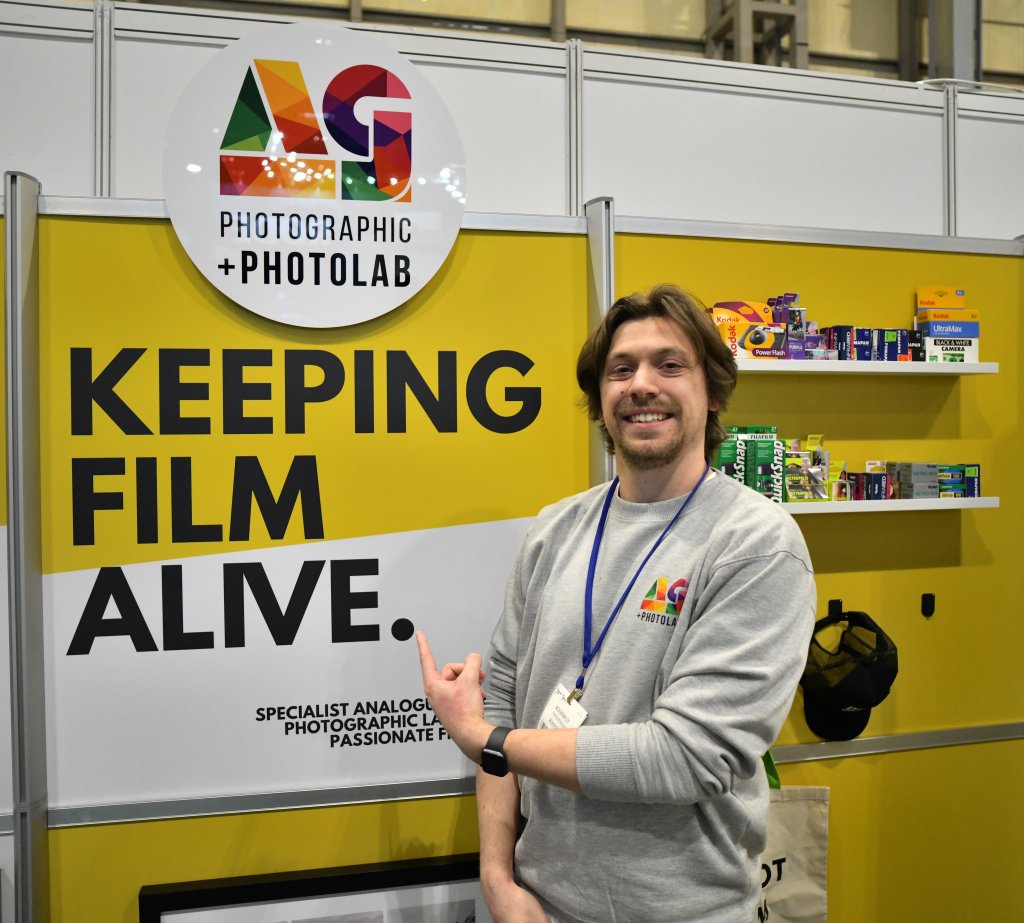
When you shoot film, you need to process it – or have it processed for you. Jack Bramley of Ag Photolab talked to me about his experience at the show. “My first impression is that analogue is booming. I’m really quite taken aback this year by how many people have come to see us and have wanted to try using us as a film processing lab. Especially in the last couple of days, we’ve had a lot of students and young people coming in and saying to us ‘I want to start shooting film’, then asking for advice and a way into it. It’s been really nice. The best story so far this week, there was a lovely lady who came to us and said that we had processed a film for her that she’d found in her great-aunt’s camera. It was fifty years old and it was pictures of her great-aunt at twenty… We processed that film and it made my week!”
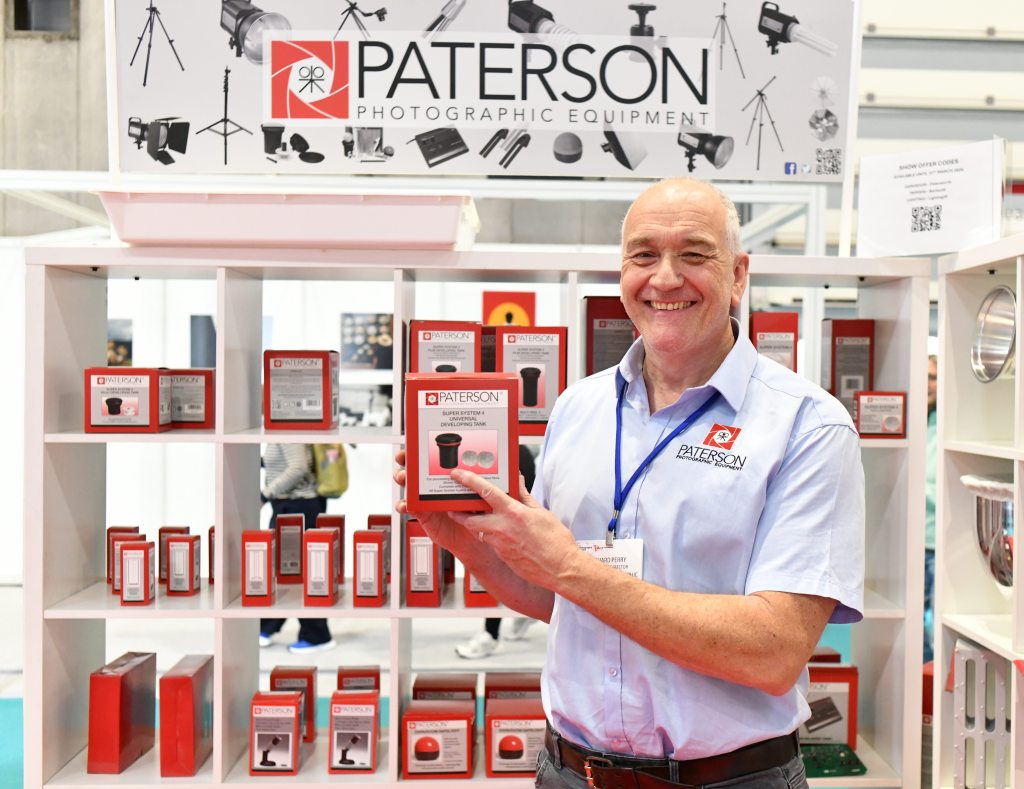
Paterson Photographic, long-term purveyors of traditional darkroom equipment such as enlargers, developing tanks and trays, had a wide range of products on display. I talked to director Richard Perry about the current state of film processing technology.
“Well, up until about ten years ago things were on a serious decline, and then we noticed a younger demographic getting involved. They’d never seen it before, didn’t understand it and wanted to play with it. Schools and colleges asked us to quote for darkrooms to go back in. That started just before Covid, then when Covid came along people were looking for a hobby because they’d got nowhere else to go. Since the pandemic it has plateaued out a little bit, but it has stayed a good 30% higher than it was prior. It’s a nice niche business – we sell worldwide, Australia, Canada, USA, Japan, China even”.
Teaching and demonstrating
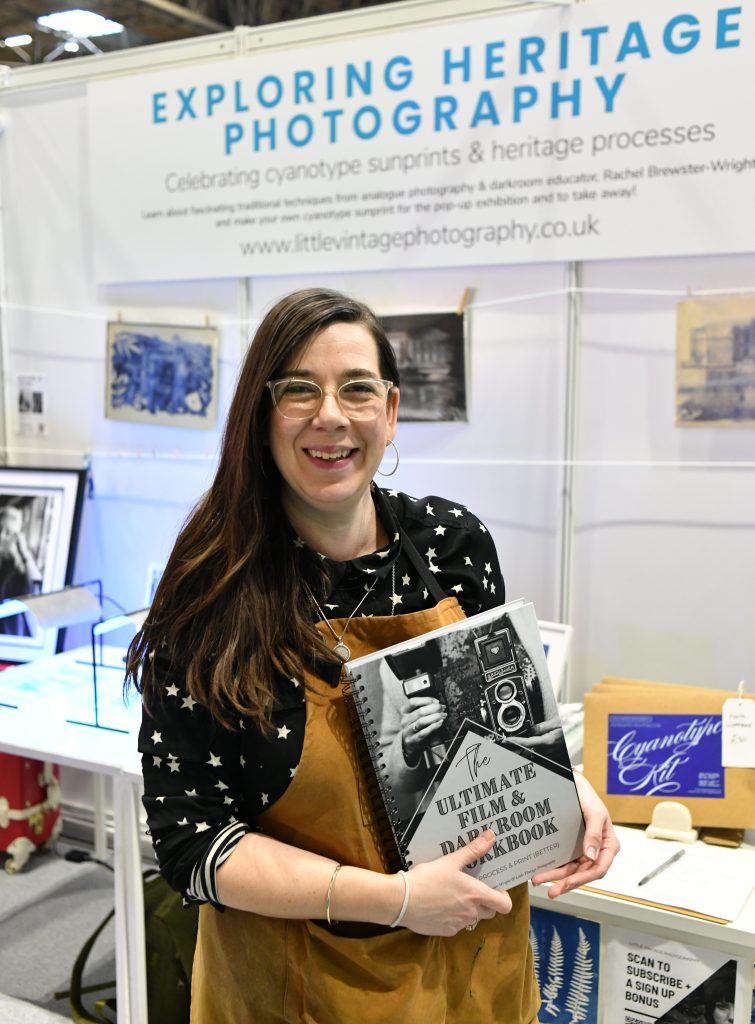
If you are looking for training, Rachel Brewster-Wright of Little Vintage Photography helps folk learn film skills and guide their journey into analogue photography. “I set up my business during the Digital Tsunami, and I’ve always wanted to get back to something tactile, practical, hands-on, craft-based. I set up one of the first female-run darkrooms in the UK, and I’ve basically been teaching people how to shoot with film, how to process by hand, how to print in the darkroom for 12 years now – and its never lost its magic. I’ve only seen it grow, really. I have my darkroom based in Liverpool, but I travel all over the country, all over the world when needed. I create ready-coated cyanotype kits, I work with anything from the mid 1800s through to early 2000s in terms of process, I just absolutely love the magic of darkroom. It’s been incredible, especially since the pandemic when people found a camera at the back of the cupboard and wanted to get back to that offline kind of world.”
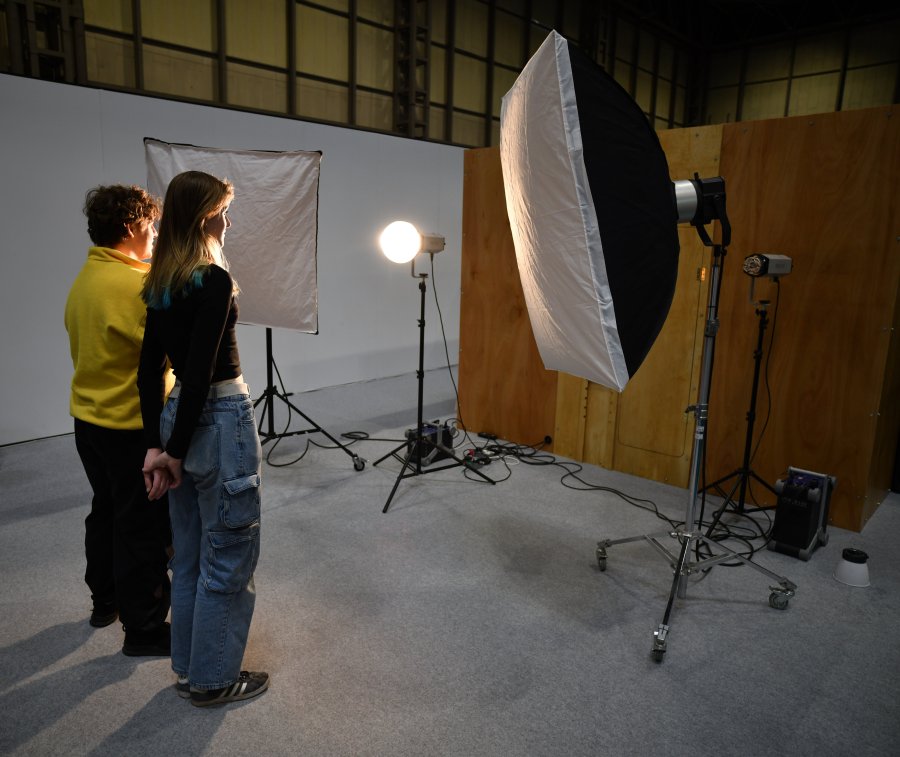
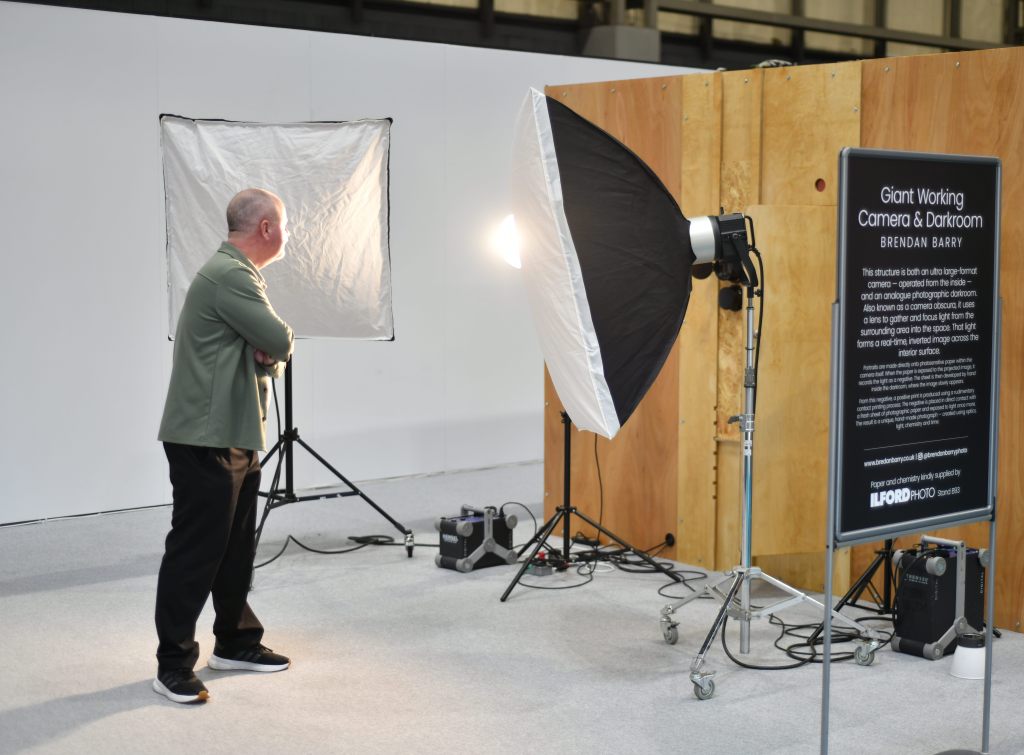
Perhaps the crowning glory of the show was the astonishing, shed sized, walk-in camera obscura and darkroom operated by Brendan Barry. With this monumental camera, a large format Nikkor lens and a set of powerful studio flashes, he captured huge wet-chemistry paper negative portraits of fascinated punters. The line never seemed to get shorter, and he was clearly worked off his feet. It formed a real statement piece, and a great talking point for analogue photography.
Absent friends
Perhaps surprisingly, Leica didn’t have a presence at the show. Nonetheless, I thought it was important to get an impression of the state of analogue photography, and its future, from the company that defines an important part of it. Stefan Daniel, Executive Vice President of Technology and Operations at Leica Camera AG, answered my request for comments. I asked him, after 100 years of Leica 35mm cameras, how do you see the future of film?
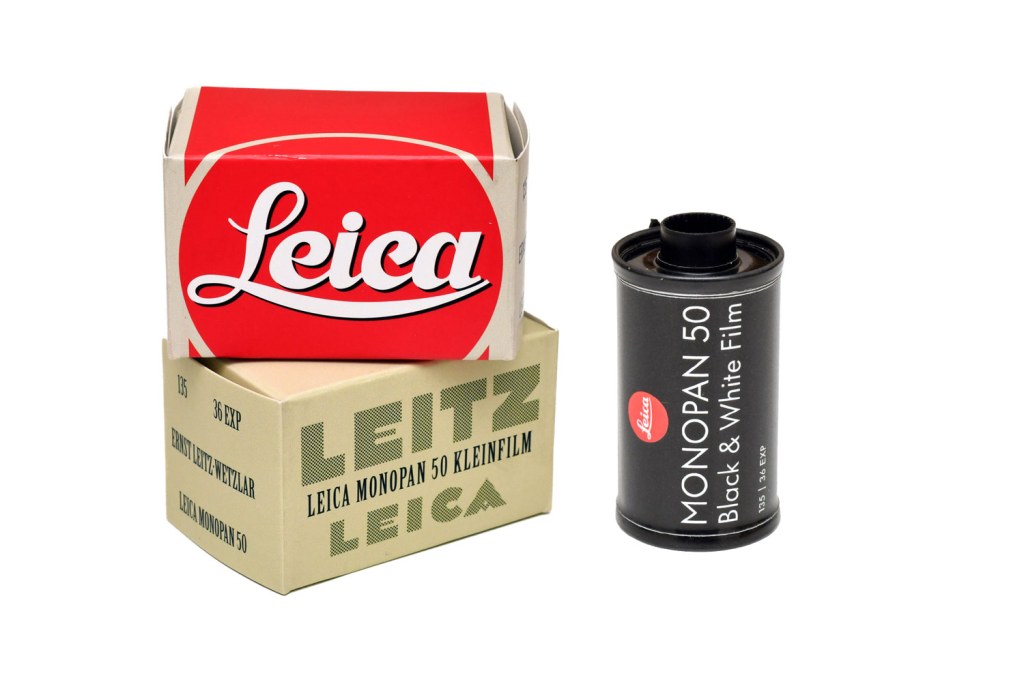
“Film photography remains a niche, but it has evolved significantly in recent years. We see a growing number of photographers – especially younger generations – rediscovering film as a way to slow down and engage more consciously with the image-making process. For Leica, film is part of our DNA, and we are confident it will continue to exist alongside digital as a complementary medium, valued for its authenticity and distinctive aesthetic. The response to Leica Monopan 50 during last year’s centenary celebrations has been extremely encouraging – perhaps even one of the biggest surprises. It clearly demonstrates a strong and growing interest in high-quality black-and-white film. Feedback from photographers worldwide has been consistently positive, both in terms of rendering and overall experience. For us, Monopan 50 was not just a product launch, but a clear statement of commitment to the analogue photography community. We see film as part of a broader ecosystem rather than a one-off initiative.”
Summary
On the train back to town, and the promise of a pie and a pint, I thought back over the comments I’d heard during the day. Certain words and phrases had kept coming up in conversation: Community, collaboration, engagement, craft-based, hands-on, skill, cooperation, ecosystem… All highly positive sentiments that show distinct promise.
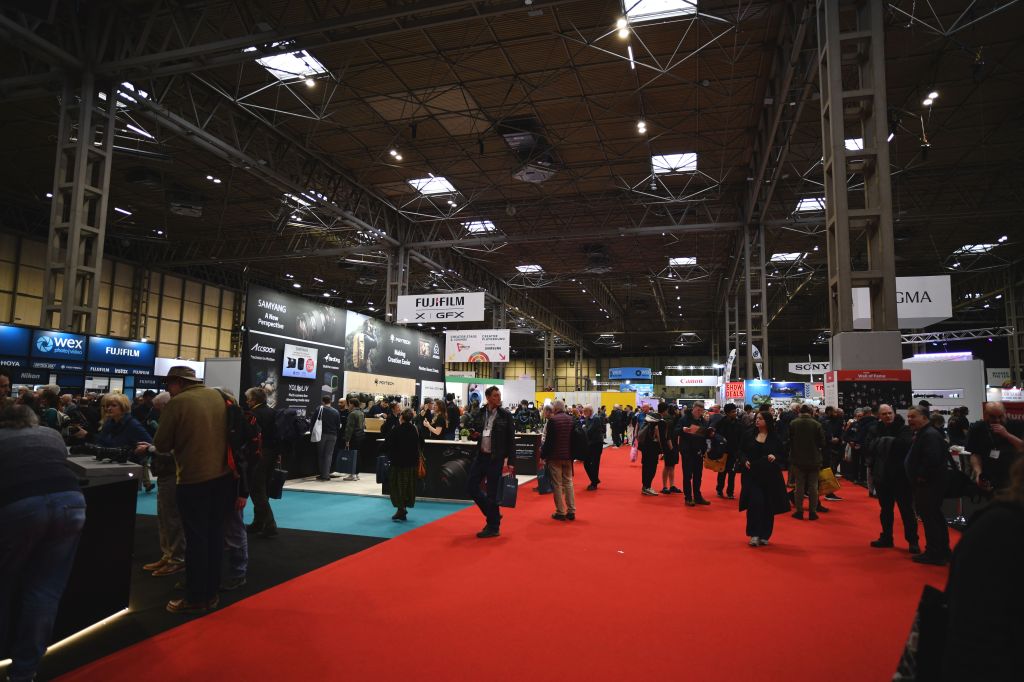
Clearly, there is a strong, enduring interest in analogue photography in the UK, one which is bolstered by a new cohort of film photographers with youth and a wealth of new ideas on their side. I came away vastly encouraged by what I’d seen and heard – and looking forward to the next round of developments in this field. Analogue photography will probably remain a niche market, but is one where the enthusiastic smaller players can make a big difference.
Related reading
Follow AP on Facebook, Instagram, YouTube and TikTok.