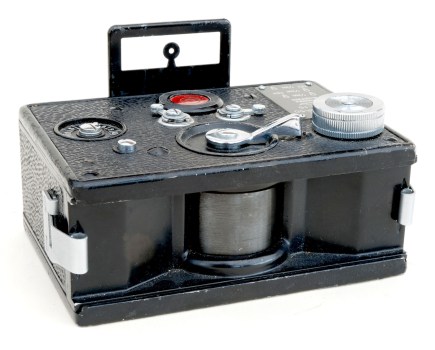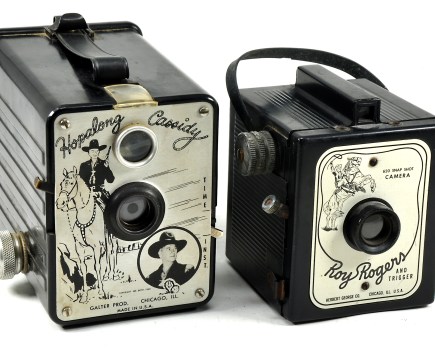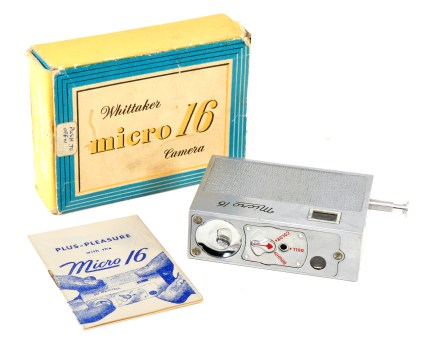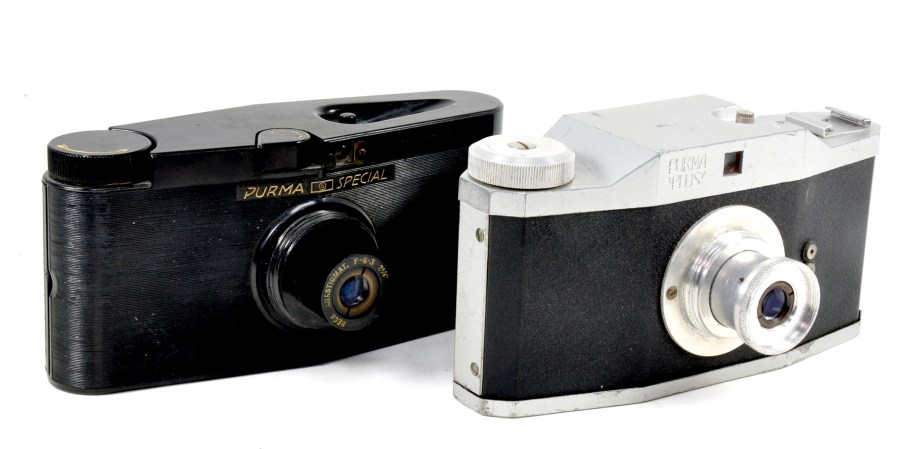
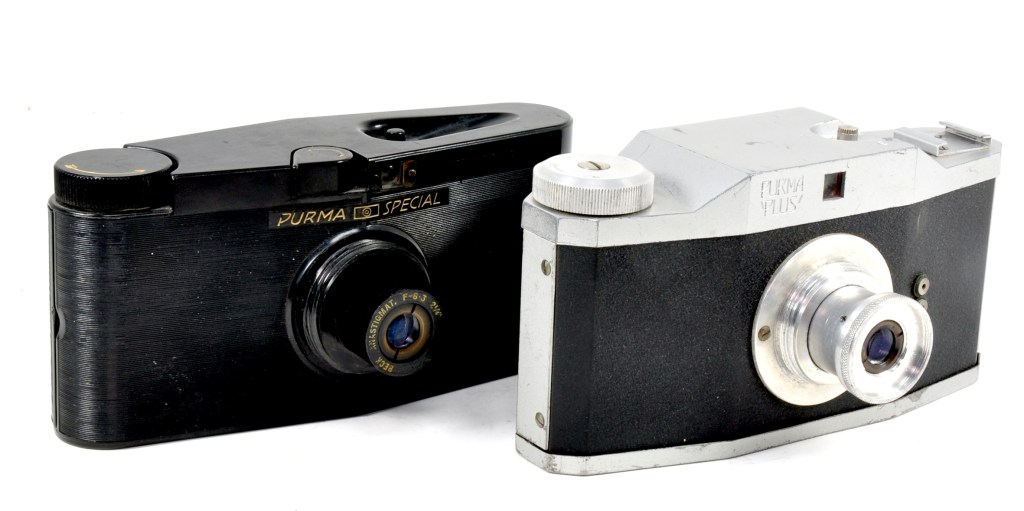
The common practice among camera manufacturers has always been to improve the specifications of their cameras with each new model introduced. Purma did things differently. They started with their best model and followed it with two others featuring more meagre specs.
- Launched: 1936, Price at launch: £1, 15 shillings ($2.33 / £1.75), Guide price now: $200-250 / £150-200
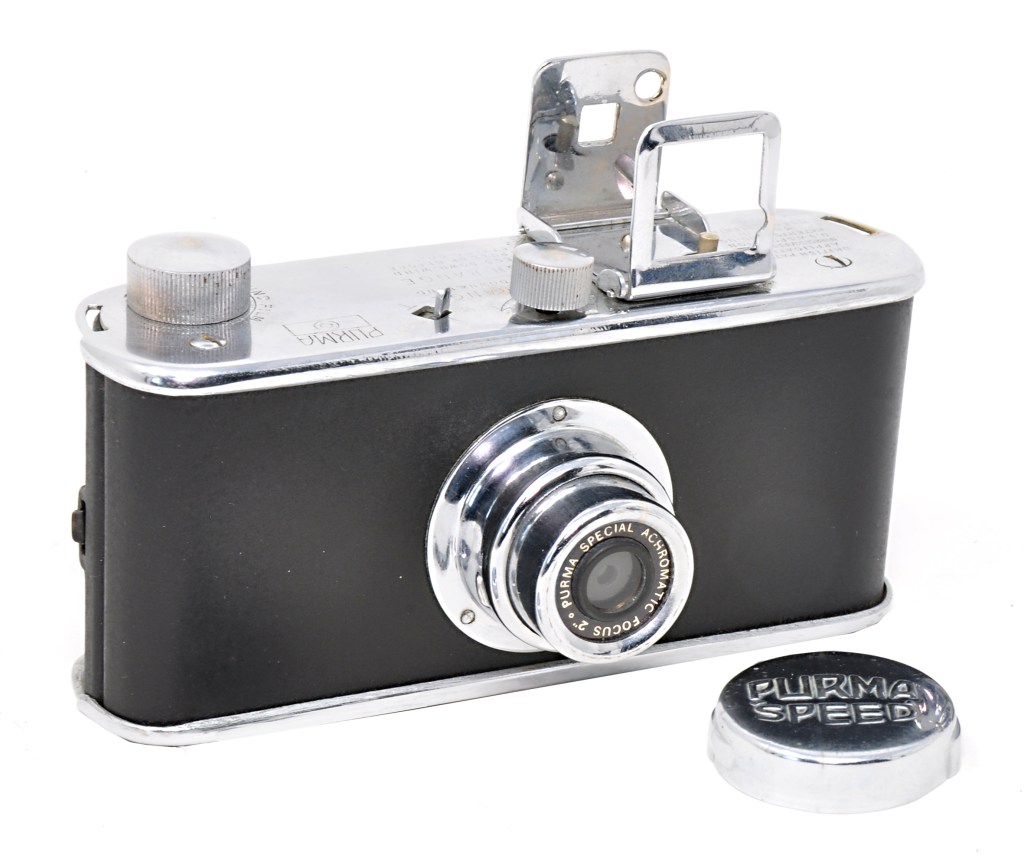
With a body made entirely of metal in black with highly polished chrome, the Purma Speed presents a sleek, streamlined look with minimal controls. The eye-level viewfinder unfolds from the top plate, revealing the shutter release button beneath. There’s a wind knob for the film and another smaller knob, which is essential to the camera’s operation and distinguishes Purma cameras from all others. That’s because it controls the camera’s somewhat weird gravity shutter.
It’s a focal plane shutter, unusual in that it incorporates a weight on one of its blinds. Tension the shutter by turning that knob on the top plate, hold the camera horizontally and the shutter fires at 1/50sec. Turn the camera vertically one way and the weight assists the shutter to move faster to give 1/75sec. Hold it vertically the other way, and the weight restricts the shutter, slowing it down to about 1/25sec.
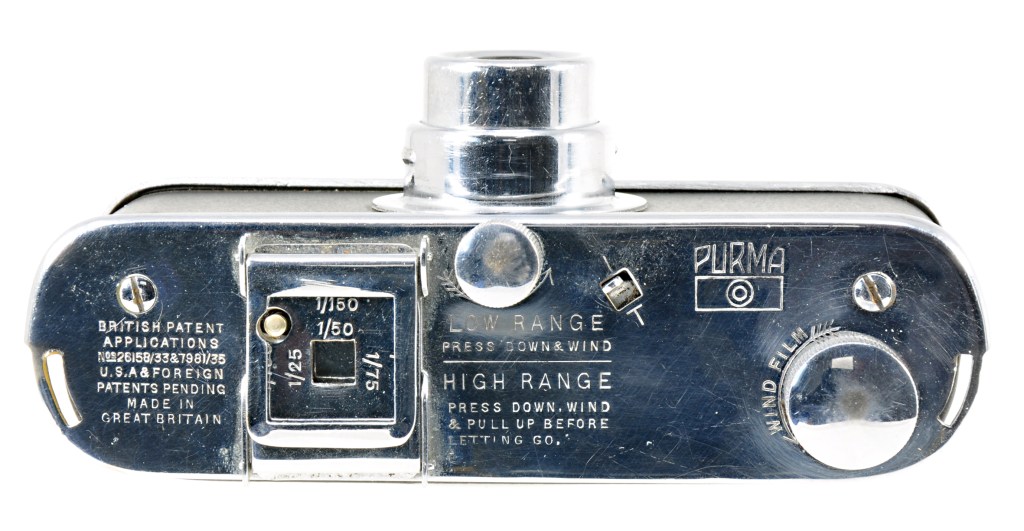
This unusual method of setting shutter speeds continued in the next two cameras that followed. But unlike those, the Purma Speed adds an extra three speeds when the shutter tensioning knob is pushed down as it is turned, then released. This narrows the slit between the shutter blinds, resulting in three new speeds of 1/150sec, 1/200sec and 1/100sec.
The shutter is locked when the lens cap is in place. Removing the cap causes the fixed focus f/6.3 lens to leap forward, ready for action. The Purma takes 127 film, using twin red windows into which film numbers are wound alternately to produce 16 32x32mm square pictures. It was the company’s first camera, the best and also, today, the rarest.
What’s good
- Simple to use
- Innovative design
- Visually attractive.
What’s bad
- No aperture or focus controls
- 127 film difficult to obtain.
Related reading
- Best fixed lens 35mm compact film cameras
- Best 35mm film cameras (all types)
- Classic film cameras: the clever Olympus OM-2N
Follow AP on Facebook, Instagram, YouTube and TikTok.