Amateur Photographer verdict
Sigma’s 35mm F1.4 DG II Art balances portability with top-tier image quality. It is smaller, lighter, and optically improved, delivering excellent sharpness, contrast, and clarity across apertures.- Great resolution across the board
- Smaller and lighter than before
- Nice handling
- Good price for what you get
- 530g is still a substantial weight
- Rubber on hood attracts fluff
Sigma 35mm F1.4 DG II Art at a glance:
- Price: $1059 / £849
- Aperture: f/1.4-16
- Min focus: 28cm
- Filter thread: 67mm
- Weight: 525g
- Lens mount: Leica L or Sony E
- sigmauk.com
My exclusive relationship with the standard lens is coming under some pressure from the number and quality of slightly wider focal lengths that have passed my way in recent times. I thought I’d decided that for full-frame shooting, 50mm was the only way to go for my style of photography. But suddenly I’m questioning the feasibility of allowing the 35mm a greater share of my attention.
I know where it started – filming a drama about PTSD in Ukrainian soldiers, I found a 35mm gave me dominance for the character and a great sense of the environment in the 16:9 aspect ratio, an effect that struck me and which I then tried to replicate in 3:2 stills. Sigma’s 35mm F1.2 DG ll Art lens really made a massive impression on me, and while £1300 is a good price for what you get, this Sigma 35mm F1.4 DG ll Art promises a similar experience at a lower cost of £849 – just without the drama of f/1.2.
I have been rather fixated with wide apertures in the last ten or so years. That’s possibly as a consequence of living the UK where we need all the help we can get with light gathering, but also because I love shallow depth of field. With the chance to take this lens to slightly sunnier climes, though, I decided I’d try to shoot like a normal person and close the aperture a little more often.
Sigma 35mm F1.4 DG II Art – Features
The Sigma 35mm F1.4 DG ll Art lens is the third 35mm Sigma Art lens with a maximum aperture of f/1.4, but the umpteenth 35mm in the company’s 65-year history. Sigma states that this is the best 35mm f/1.4 they have ever produced, which is both a good thing and unsurprising – we wouldn’t expect them to say it isn’t as good as the last one. What makes it better than the last one, however, is a new optical construction, new coatings on the elements and some new ‘glass materials’ in those elements.

The company doesn’t give much away on the specifics of how its engineers have gone about this, but when questioned, Sigma told me modern manufacturing techniques have allowed the designers to do things they couldn’t previously. The spec sheet tells us the 15 elements now include four, instead of two, aspherical elements and two Super Low Dispersion glasses.
Those elements are arranged in 12 groups instead of the 11 groups of the previous model, which might lead us to believe the optical designs are quite similar. However, this new lens is a completely different design inside to the model released in 2021, with only six elements before the stop instead of eight, and that stop being placed significantly forward of the centre of the construction. Three of the four aspherical elements though are behind the stop and both SLD elements are also on the camera side of the aperture.
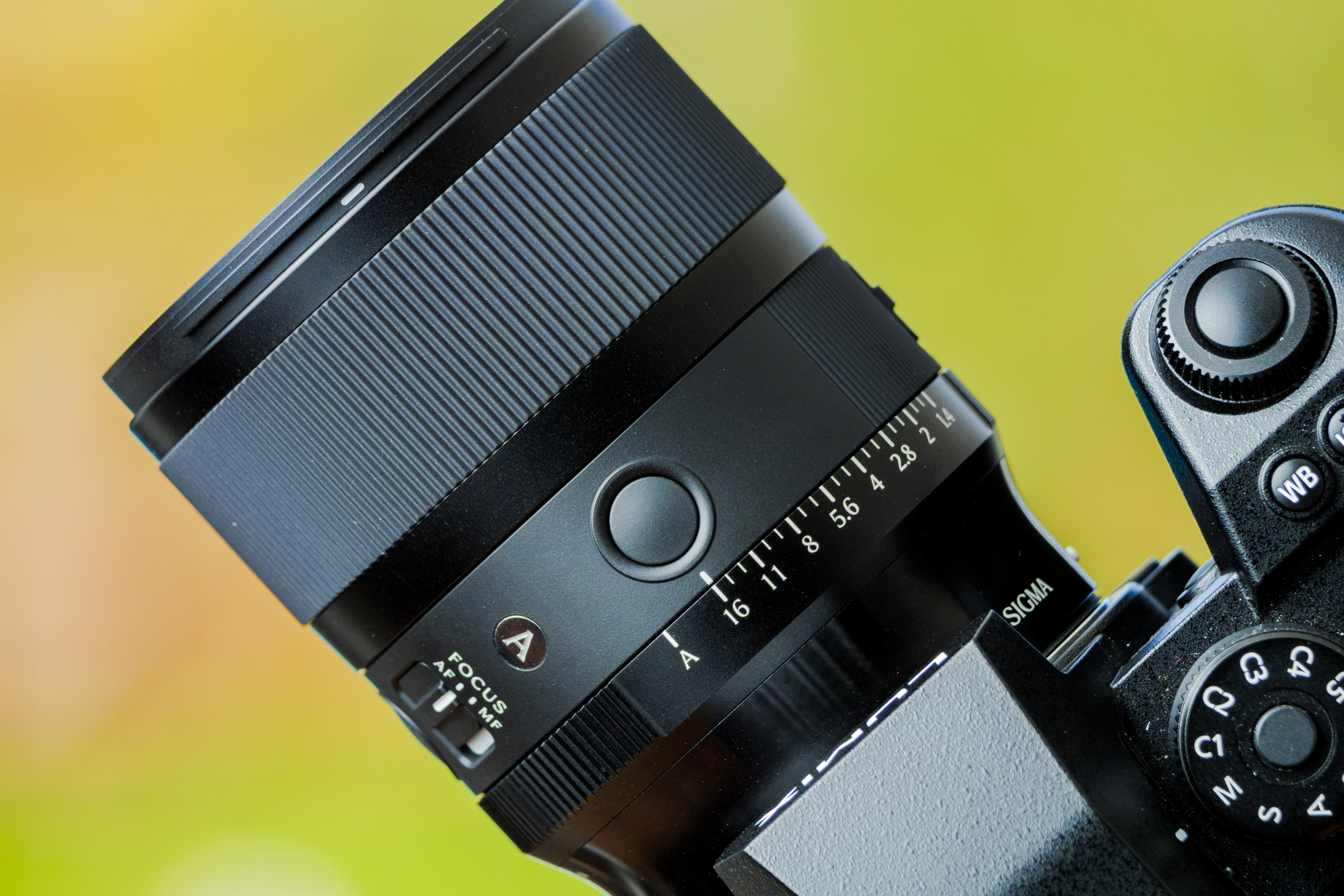
That stop uses 11 rounded blades to create the aperture, and allows us to select holes from f/1.4 to f/16 for the light to pass through. That f/16 minimum aperture may not seem especially small when we are used to apertures of f/22 and f/32, but it has become almost standard for f/1.4 35mm lenses – Canon offers f/22 – and is probably small enough to get all the depth of field we are likely to need while maintaining good detail.
The new coatings Sigma mentions are amorphous rather than nanoporous, so they are structure-less, smooth, glass-like films. These should be harder than nanoporous coatings, and better at reducing flare and ghosting inside a lens as they create less scattering themselves. The effect should be greater contrast and improved clarity. I think this is the first time Sigma has used this Advanced Amorphous Coating (AAC), but Nikon has been using a ‘Meso Amorphous Coating’ on a few of its top end S-line lenses since it introduced the Nikkor Z 400mm f/2.8 TC VR S at the beginning of 2022.

The L Mount unit I had for review measured 73x94mm and weighed 530g, while the alternative Sony E mount version is very slightly longer at 96mm and weighs less at 525g. Both offer a 67mm filter thread that is conveniently within the ‘enthusiast’ bandwidth of readily available, lower-cost filters, of 77mm and below. It comes with a pouch, a hood, and caps for either end. I know packaging isn’t important and has no impact on image quality, but this lens comes in a really very nice box with stylish embossed details. It looks great.
Sigma 35mm F1.4 DG II Art – Build and handling
A change that doesn’t necessarily make this lens better than the previous model, but will certainly make it more convenient to use, is that it is smaller and lighter than the previous Sigma 35mm F1.4 Art lens. Those additional ‘special’ elements in the optical construction, combined with a floating focus system and some miniaturisation in the mechanics of the lens, have allowed the designers to shave 14% from the length of the barrel and 20% off the weight.
As you would expect, this is a very nicely made lens that also looks quite smart with its mixture of gloss and matt paint finishes. We have a broad focus ring that turns smoothly, and a thinner aperture ring that can also turn smoothly when we want it to, or we can make it click every third of a stop.

We have a pair of function buttons on the barrel – 90° apart – for triggering menu items in the camera, as well as a physical AF/MF switch. It is exactly what you’d expect from a Sigma Art lens as the company goes to some lengths to give the series a uniform, immediately familiar, layout.
Not a great fan of lens hoods, I did use this one and found the rubber ring that does indeed make it easier to grip and fit also is sticky enough to pick up dust and debris – which makes it look a bit grubby and difficult to retouch in product pictures – but it does a good job otherwise.
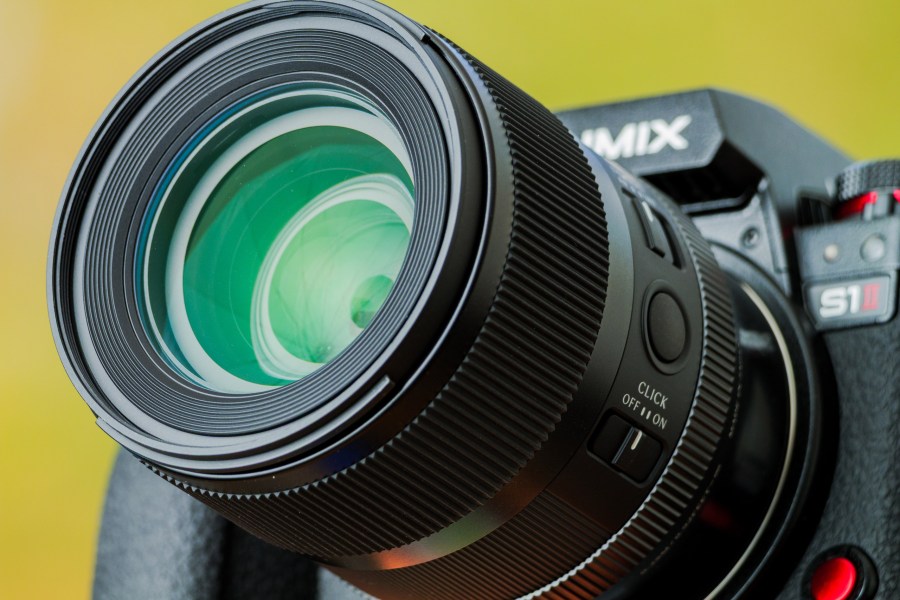
I used the lens on the Lumix S9 as well as the S1 ll and the S1R ll, and inevitably found it was more at home on the larger bodies despite it not being especially long or heavy. It’s just a fraction too big for the S9, so users might be better directed towards the 35mm F2 DG DN from Sigma’s Contemporary range instead. On the larger S bodies though it is very comfortable, well balanced and generally an excellent match.

Sigma 35mm F1.4 DG II Art – Autofocus
I found this lens never noticeably impeded the focusing abilities of any of the cameras on which I used it. It snaps nicely to attention, shifts very quickly and is capable of the tiny adjustments needed when following a moving subject. I used it to track fast moving people in the street in stills and video modes, and asked it to respond quickly to Touch Shutter requests in dramatic action, and found it never to blame for a missed shot. It works very well indeed.
Sigma’s attempts to eliminate focus breathing seem to have been successful in movements at ‘normal’ distances, but I found when tracking an object from a distance a slight, but noticeable, change in the frame occurs suddenly when the focus pulls to a close position.
Sigma 35mm F1.4 DG II Art – Image Quality
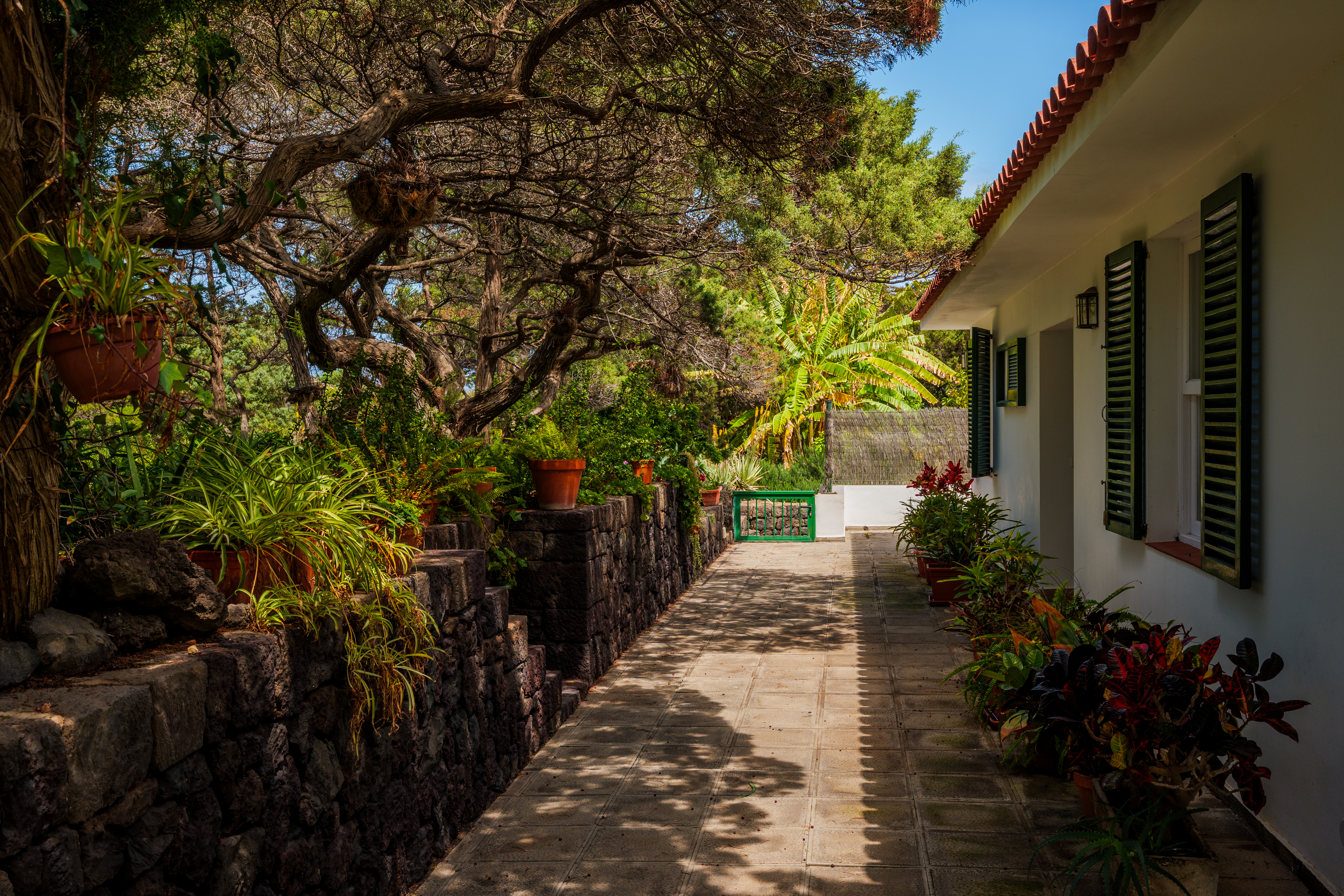
There’s little use in opting for a lower cost lens – lower than the f/1.2 model that is – only to find it isn’t all that sharp. This lens though delivers all the sharpness and detail most of us will need, and does so at two thirds of the price. As well as concentrating on the wider apertures I spent quite a lot of time with this lens at f/16, f/11 and f/10 to see how it will serve those who – like landscapers, interior architects, travel photographers and some street shooters – look for front to back sharpness in scenes with depth.

And, while f/16 may not be the best aperture it is certainly more than good enough, and better than the performance we got from mid-range apertures only ten years ago. One of the reasons we are restricted to f/16 at a smaller end I suspect is to avoid disappointment were f/22 available. However, I found f/16 in a 35mm lens delivers more than enough depth of field for most occasions. At the middle apertures the lens is as exceptionally sharp as its f/1.2 cousin, and at f/1.4 it delivers a performance that means we need never shy away from opening the aperture as wide as it will go.

Sigma’s clever new coatings don’t make this lens immune to flare, but they seem to allow a lot of light to come directly into the lens without the whole image being blasted out of existence. I’m quite a fan of shooting into the sun, and found I could do so with nice effects that are well contained and restrained to a small area of the image. Bright and direct light hanging around just out of frame only occasionally marked my images even with the lens hood off, and the flare marks are hardly noticeable.

Coloured fringing perhaps isn’t as fully avoided as it could be, with some red edges around very high contrast transitions – like tangles of branches against a bright sky or a back-lit window. Even so the occasions this effect is visible are few and we need to look pretty closely to spot it.
Sigma 35mm F1.4 DG II Art – Verdict
The changes Sigma has made to this lens in its mark ll version are really quite significant to both the handling and the performance users can expect. That it is smaller and lighter is a great benefit, but such advantages can be overshadowed when optical characteristics are compromised for those ambitions.

Sigma, though, has managed to reduce the burden of this lens while improving the optical performance at the same time, which is no small achievement. I really enjoyed using the wider apertures in the manner I have become accustomed, but was also very impressed with the resolution, clarity and contrast of the lens when used at its smallest aperture. Okay, that aperture is f/16 and not f/22, but taking away a smaller setting means we won’t stumble into less sharp territory, and we still get enough depth of field for all but the most extreme situations.
Most advice suggests we shouldn’t close an aperture all the way down, just as we used to not open it fully, but times have changed and all aperture settings are game. Those in the middle are best, of course, but the outer reaches give us quality we couldn’t have expected not long ago. If you need f/1.2 go for it, but if you don’t, this Sigma 35mm F1.4 DG ll Art will do all you need, with some money to spare.

Related reading:
- Sigma 40mm f/1.4 DG HSM Art review
- Sigma 85mm F1.4 DG DN Art Review
- Sigma 135mm F1.4 DG Art Review – the bokeh benchmark
Follow AP on Facebook, Instagram, YouTube and TikTok.
Sigma 35mm F1.4 DG II Art – Full Specifications
| Specifications | Sigma 35mm F1.4 DG II Art |
|---|---|
| Filter thread | 67mm |
| Lens elements | 15 |
| Groups | 12 |
| Diaphragm blades | 11 |
| Aperture | f/1.4-16 |
| Minimum focus distance | 28cm |
| Length | 96mm |
| Diameter | 73mm |
| Weight | 525g |
| Lens mount | Leica L or Sony E |
| Included accessories | Lens pouch, lens hood, front and back caps |