Amateur Photographer verdict
Producing tiny, Polaroid-style prints without the sizeable Polaroid I-Type cost, the Go series is shaping up into an Instax killer. This new camera benefits from a better lens and more powerful flash.- New lens/flash combo is great for selfies
- Absolutely tiny and portable
- Images have tons of retro charm
- Highlights blow out in bright sunlight
- No tripod mount
The Polaroid Go Gen 3 wants to be the camera of the summer. That much was extremely obvious from the moment it was announced, with publicity shots all showing this diminutive instant camera being used by young, attractive people on the beach, at festivals, at parties, etc. The target audience was quite obvious.
Well, I may be neither young nor attractive, but I love instant photography and I was hugely excited to try out the Go Gen 3. Polaroid’s Go film is a smaller format than its flagship I-Type film, similar in dimensions to Fujifilm’s stratospherically popular Instax mini film, but sporting that more lo-fi Polaroid look, with muted tones and the distinctive square frame.
The Go Gen 3 is not a major upgrade on the previous Polaroid Go Gen 2 – side by the side, the two cameras look virtually identical. But with a smaller-than-ever body housing a new lens and new flash, the latest version does promise to deliver superior image quality on those tiny, adorable prints – and, crucially, still comes at a similarly tempting two-digit price. Let’s see if it delivers.
Polaroid Go Gen 3: At a glance
- $89.99 / £79.99
- Instant film camera
- Takes Polaroid Go film ($21.99 / £18.99 for a pack of 16 shots)
- Lens focal length: 63.75mm
- Shutter speeds: 1/500sec–1sec (auto only)
- Aperture: f/14.4 and f/32 (auto only)
- Weight: 251.9g
- Dimensions: 106.5 x 83.8 x 64.6 mm
Polaroid Go Gen 3: Features
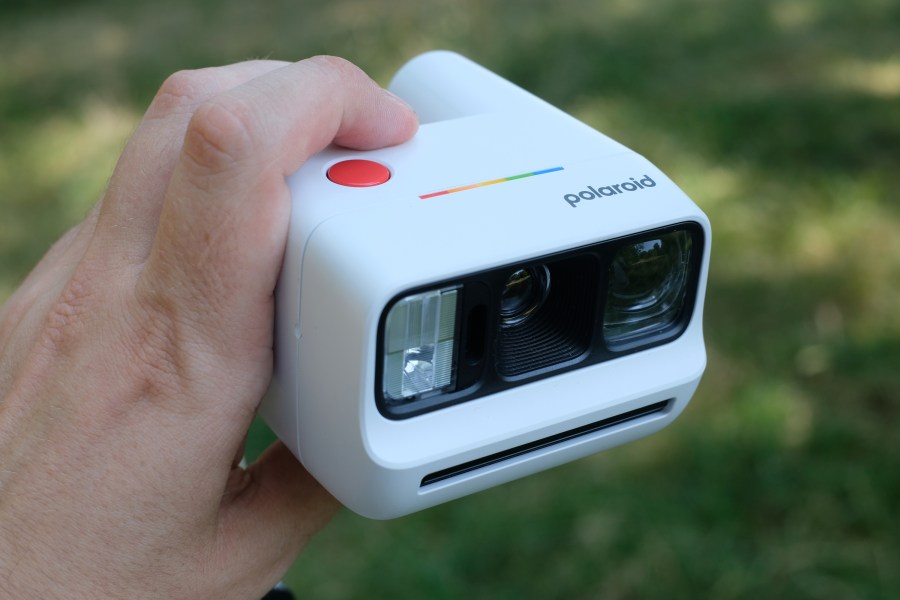
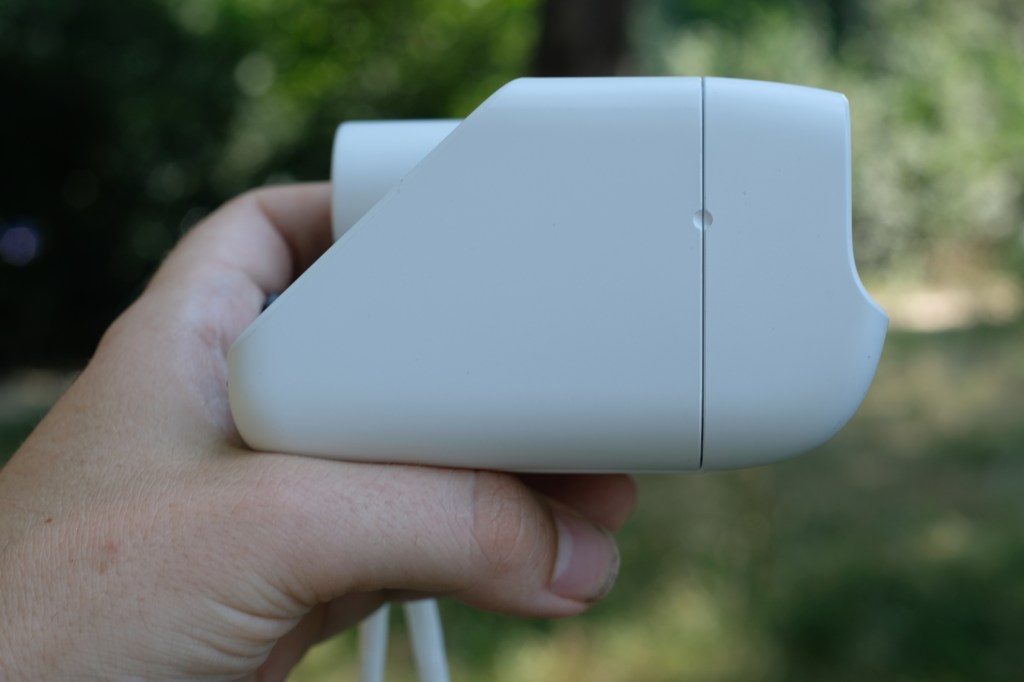
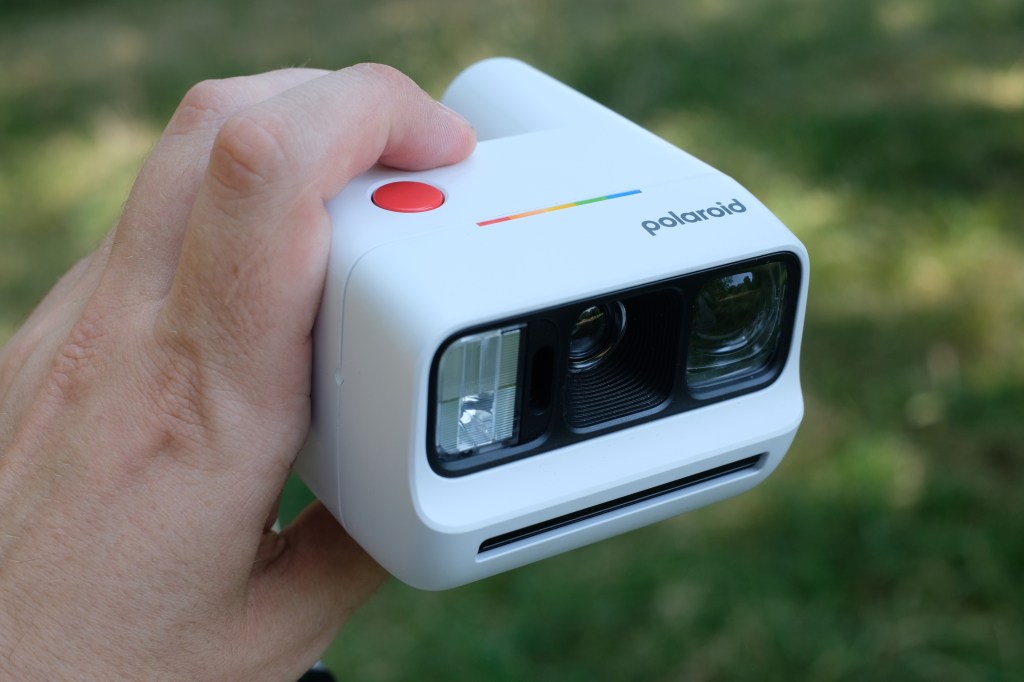
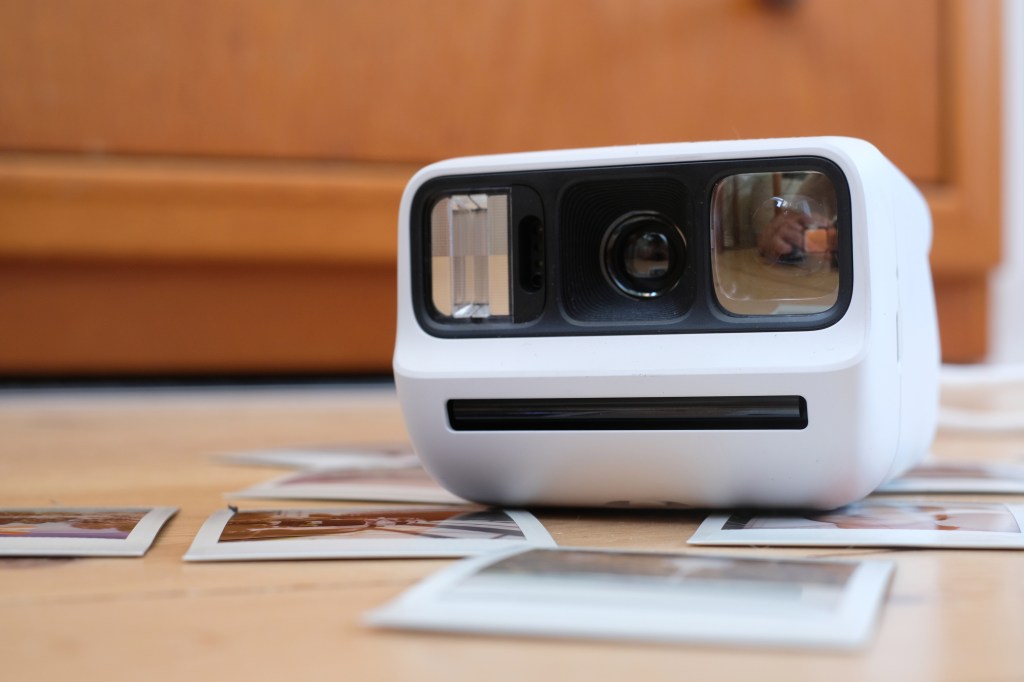
Weighing just 251.9g, the Polaroid Go Gen 3 is – according to the makers – the world’s smallest instant camera, and having held and used it extensively I can confirm that it is indeed a tiny little guy. Hold your palm out flat and you’ll be able to sit it on there without issue. It’s an easy camera to use one-handed, and while it’s a bit too rotund to be considered ‘pocketable’, it’ll slip easily into a small bag.
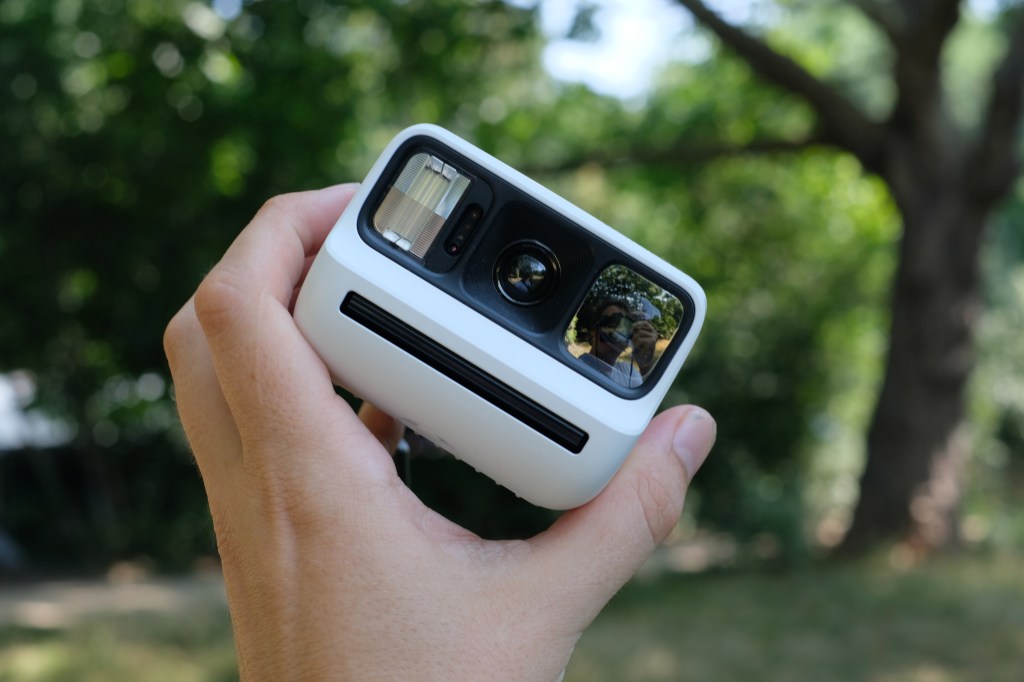
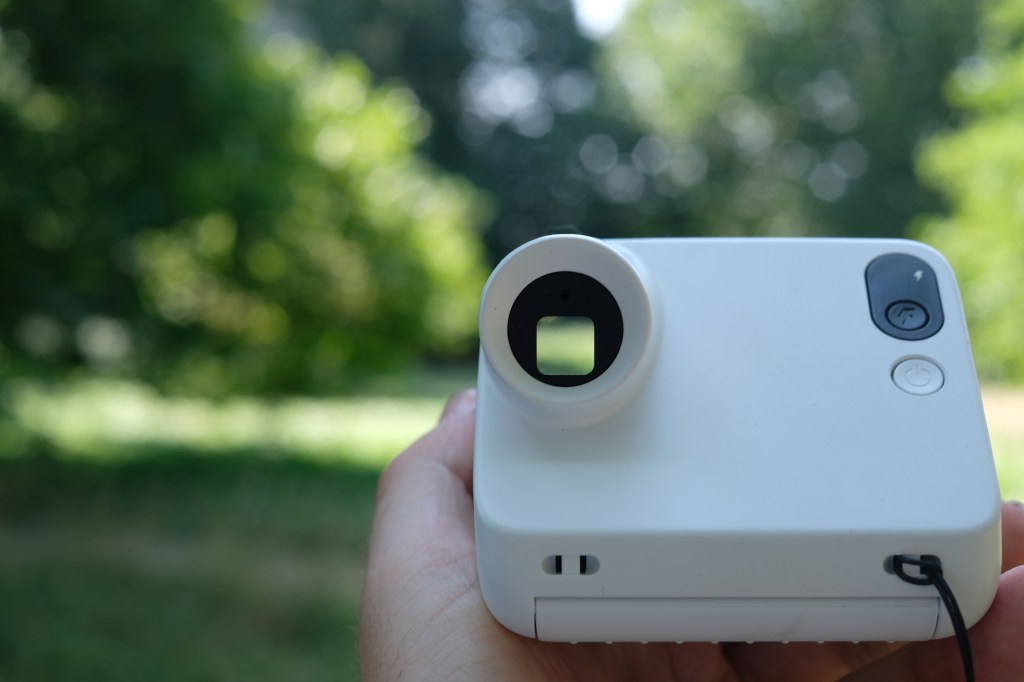
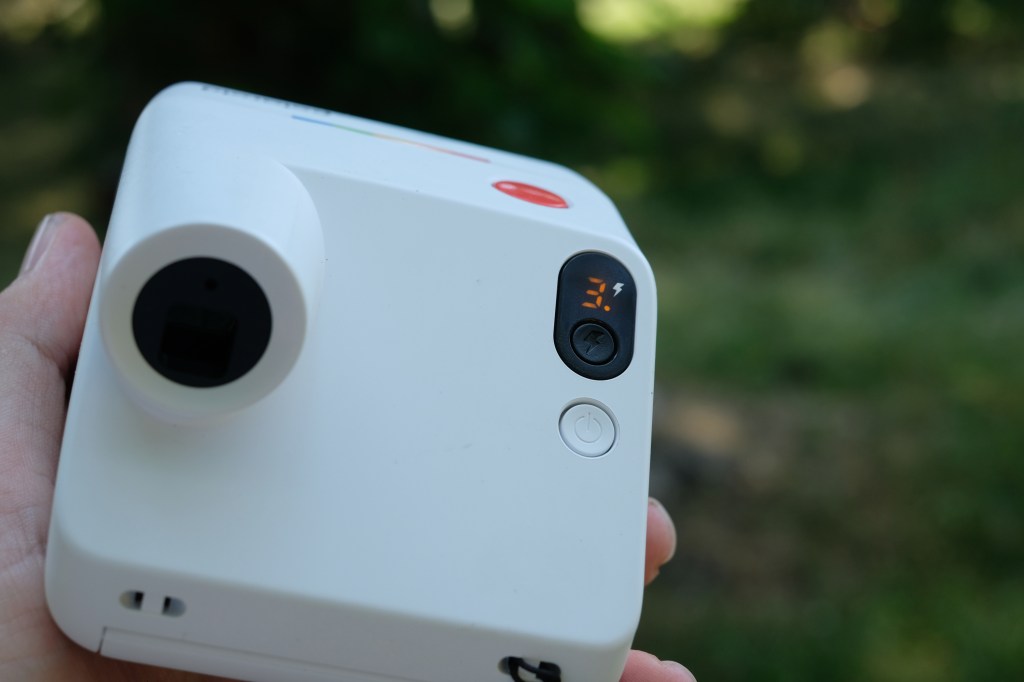
Controls are extremely simple. While some instant cameras like the Polarolid Flip offer sophisticated settings control via the Polaroid app, the Go Gen 3 does not. It has no wireless connectivity and sports just three buttons: power, flash and shutter (the flash button also pulls the double duty of allowing you to activate the double-exposure mode). It’s powered by an internal rechargeable battery that’s topped up via USB-C.
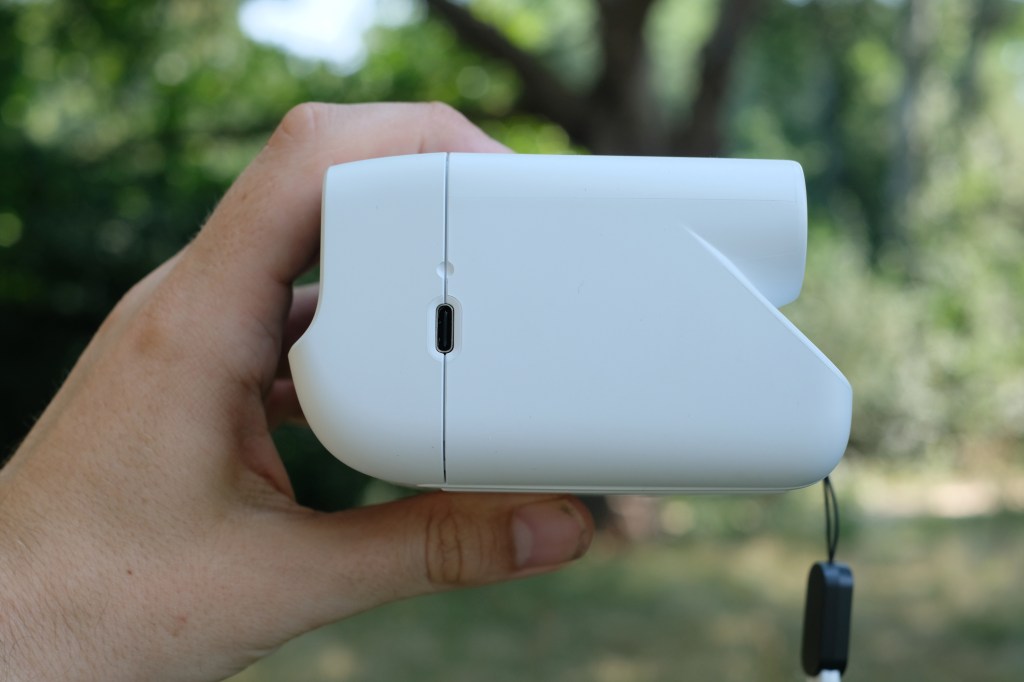
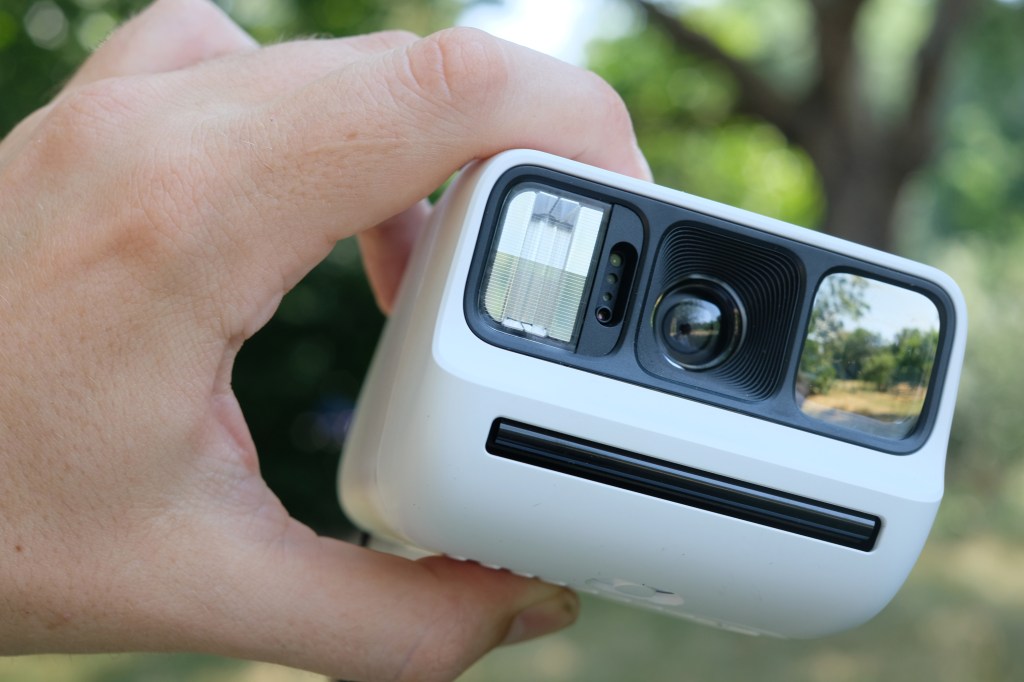
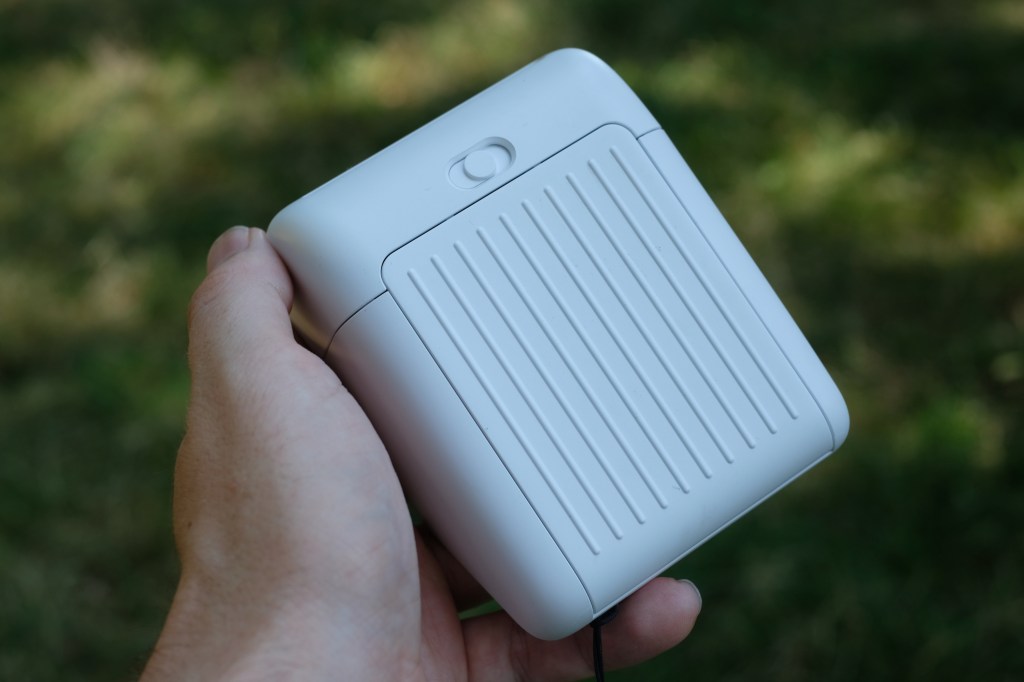
Images are composed using the small but perfectly functional optical viewfinder on the left-hand side – and if you flip the camera around, you’ll notice that the front of this viewfinder also functions as a selfie mirror. Film packs are loaded via the bottom of the camera in a process that is extremely easy and intuitive, and prints are spat out of the front slot post-capture. There’s no tripod mount, but there are lugs for a wrist strap, and said strap is supplied in the box.
The lens is once again a polycarbonate resin fixed-focus optic, as it was on the Go Gen 2. However, Polaroid has tightened up the focal length a little, and it’s now 63.75mm, compared to 51.1mm on the previous version. This narrows your field of view, but brings distant details into sharper focus – though the real impetus is to make selfies and portraits more flattering.
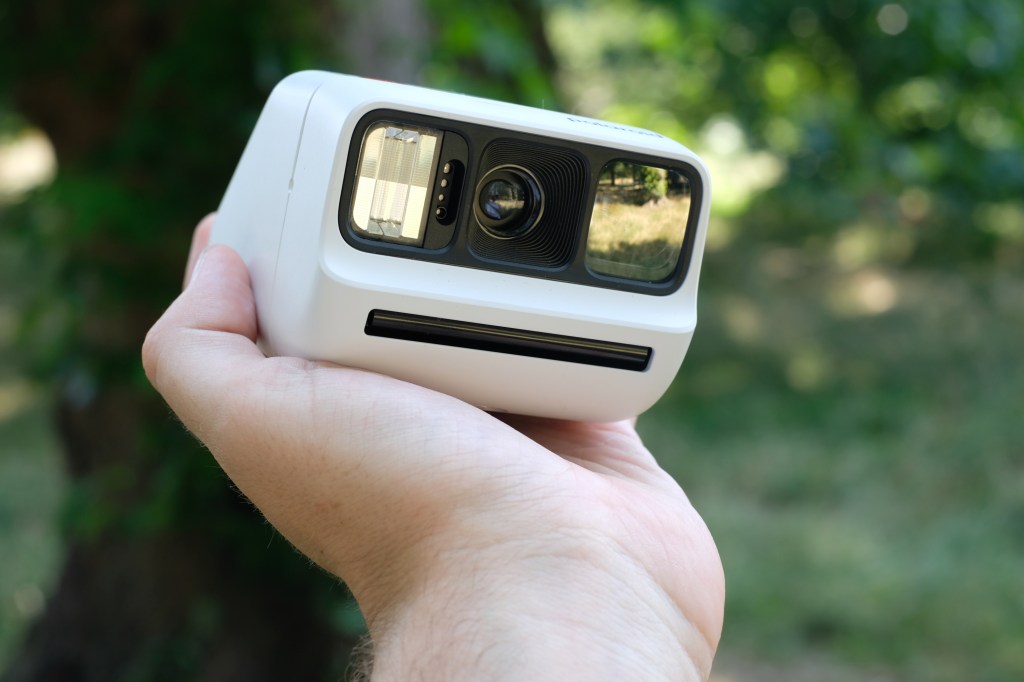
Low light was a problem on the Go Gen 2, even with the flash activated, and Polaroid has accordingly boosted the flash on Go Gen 3 with a bit more oomph. Its exposure settings have also been tweaked; it has a faster maximum shutter speed of 1/500sec (1/300sec on the Go Gen 2) and an aperture range of f/14.4–f/32 (previous f/9–42). The flash is always on by default, meaning if you don’t want it, you have to remember to turn it off every time. For interiors, you pretty much always do want it; exteriors, less so.
Polaroid Go Gen 3: In use
I’ll confess my priors: in the ongoing battle of Instax vs Polaroid, I am in the Polaroid camp. This isn’t that I necessarily think it’s the superior format; I just prefer it. That muted, lo-fi look is much more my speed than the more saturated look you get from Instax. All this is to say, I was probably predisposed to like the Polaroid Go Gen 3, and I did.

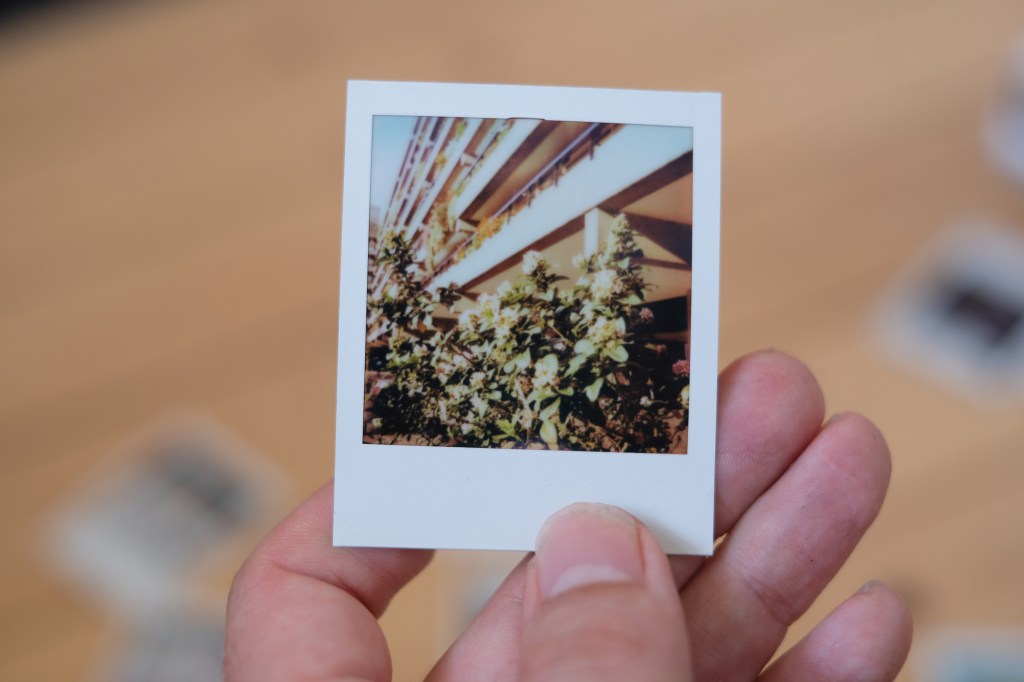
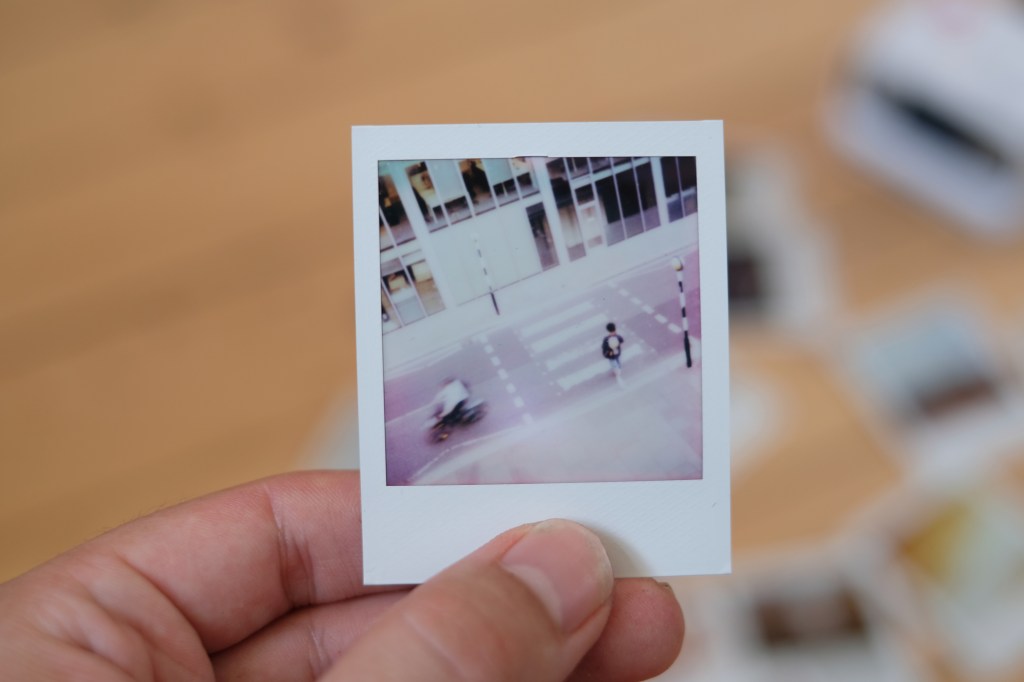
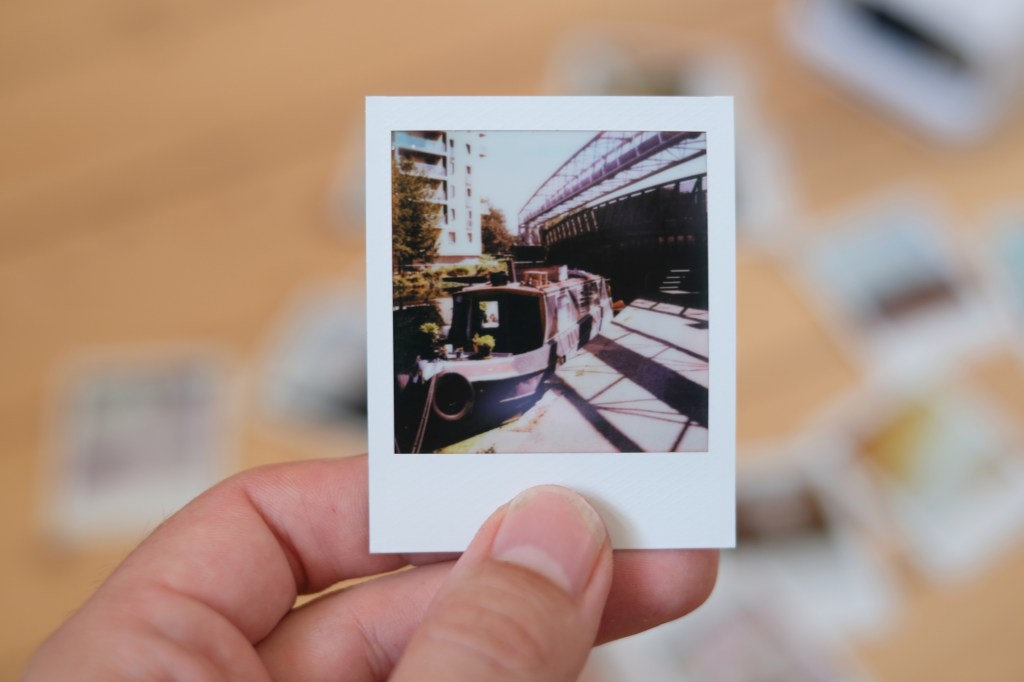
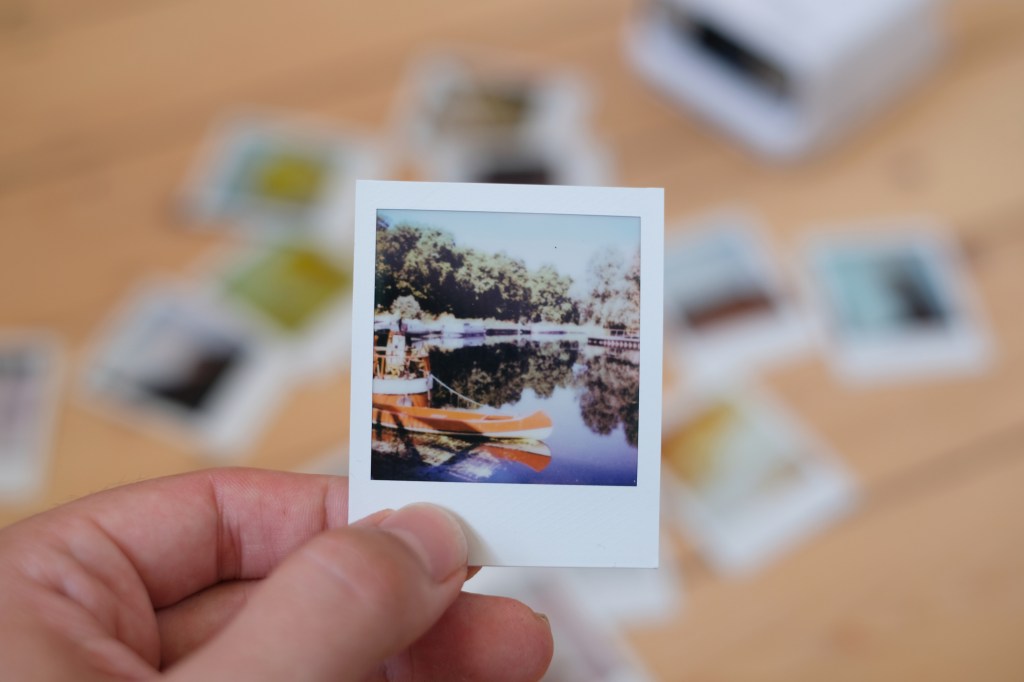
Go film is undeniably tiny, with the actual frame of the image itself measuring just 47mm x 46mm. As such, these little prints inevitably don’t quite have the impact of lovely full-size I-Type film – but all the same, I was still impressed by how much I liked the majority of the shots I captured with the Polaroid Go Gen 3.
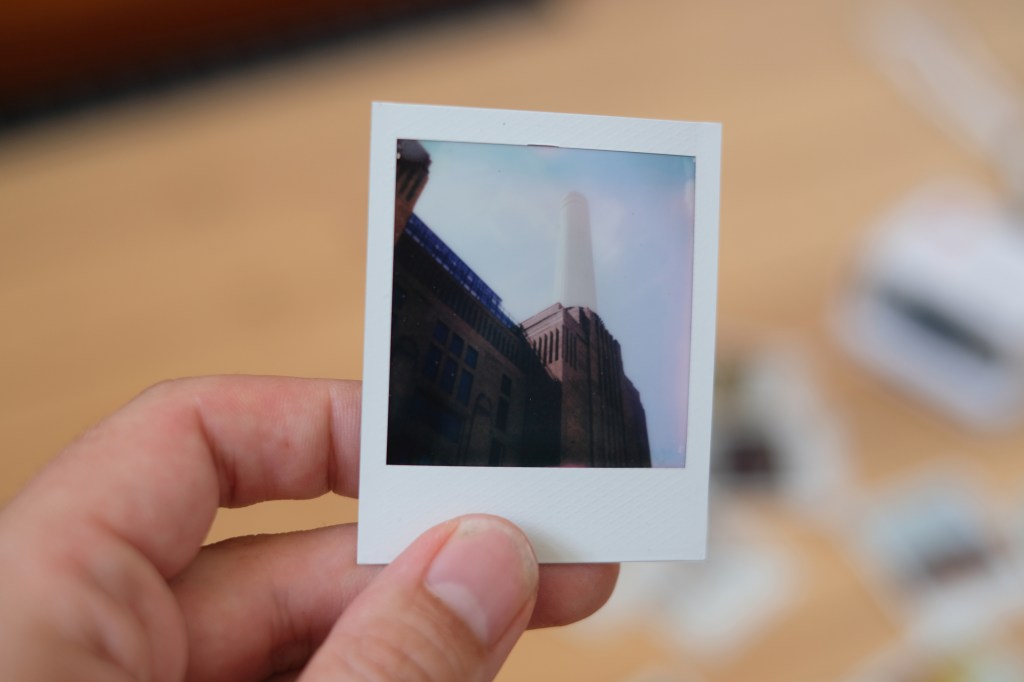
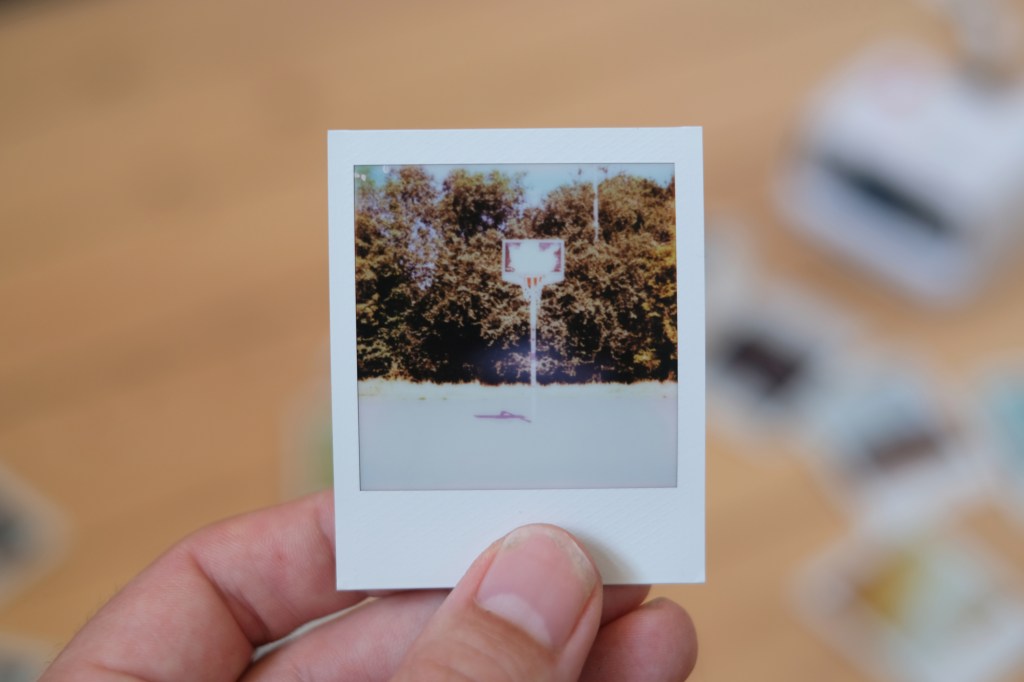
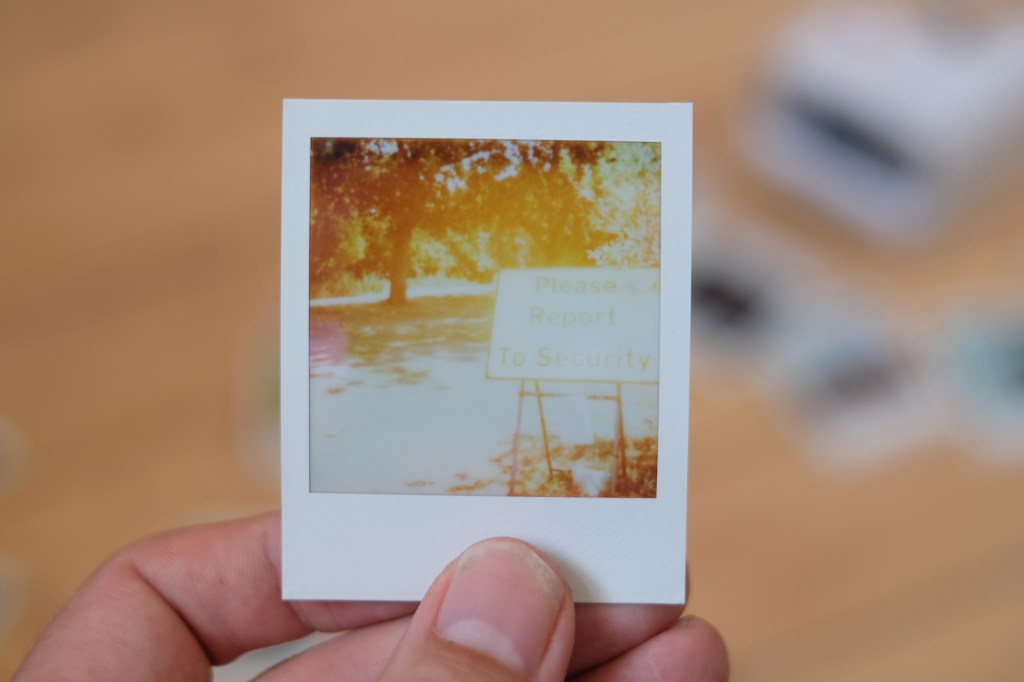
That new lens has delivered on its promise of greater detail, and in the right light, images are wonderfully clear and sharp, with an impressive tonal range considering the small size. Now, ‘in the right light’ is something of a load-bearing statement there, because too much light can be a dangerous thing with the Polaroid Go Gen 3. When the sun is blasting, as it does in summer, it’s very easy for Polaroid Go frames to be bleached by overexposure, even if you remember to turn the flash off.
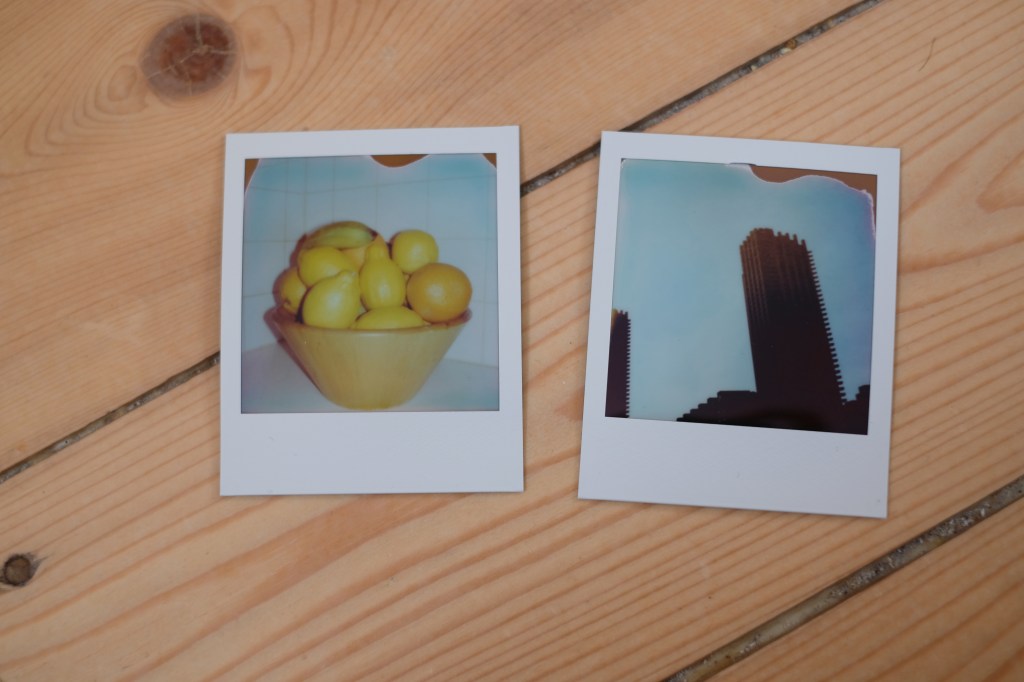
Also, I’ve shot with many Polaroids before, but I experienced something new this time around. It is currently extremely hot in the UK, and while I take care to store my film correctly, some of my Polaroid Go images came out with some pronounced marring that looks to me like heat damage. Possibly from spending some time in my backpack while I was walking between locations. Not completely ruinous, and most of my images were fine, but worth being aware of.
When you need the flash, it acquits itself well, providing a level of illumination that is useful without being overwhelming. I was particularly impressed with how easy it was to get a nice selfie with the Go Gen 3 – the mirror makes for a handy compositional aid, the flash does a good job of filling the shadows, and the new, narrower lens is, if I do say so myself, quite flattering.

The double-exposure mode is… fine. I tend to find that double-exposure modes on instant cameras produce more misses than hits – and misses cost money on instant film – but it’s easy enough to use, and does add a creative string to the bow of a camera that is otherwise extremely simple.

At a price that’s similar to Instax mini, Go film does much to address one of Polaroid’s biggest Achilles’ heels: the wince-inducing price of I-Type film. Paying $21.99 / £18.99 for 16 shots is much easier to swallow than paying $18.99 / £16.99 for just eight – it makes you happier to experiment, more willing to pass your camera around friends and even kids, and less upset when a shot doesn’t come out.

Polaroid Go Gen 3: Our verdict
Waggish types might point out the irony that the self-proclaimed camera of the summer has such a tricky time with hot weather and bright sunlight. But all jokes aside, I think the Polaroid Go deserves to be a big hit among its target audience. Tinier than ever, and available in a selection of vibey colourways, the Polaroid Go is set to capitalise on the current trend for ‘cute’ cameras, such as the Kodak Charmera.
Its cheaper film lowers the stakes compared to full-size Polaroids, giving the user permission to cut loose and have fun. It’s so simple that a child can operate it, but at the same time, it is a camera capable of delivering pleasingly detailed and impactful images, thanks to both the chemical magic of Polaroid film, and the improved lens.
While not perfect, the Polaroid Go Gen 3 is the instant camera I’d recommend to festival-goers and holidaymakers looking for a fun, tactile, analogue way to capture their adventures. I’d pick it over an Instax mini any day of the week.
Related reading:
- I loved using the Polaroid Flip but some lost shots killed the vibe
- Film may be expensive but instant cameras have a magic that is hard to beat
- Fujifilm Instax Link Wide review – bigger, instant handsome prints
Do you want to win some great prizes for your photography? Enter your photos in our International Amateur Photographer of the Year competition. Free entry for photographers aged 13-21.
Follow AP on Facebook, Instagram, YouTube, TikTok and Irys.