Amateur Photographer verdict
A smart little phone with lots to like about it. Three high resolution lenses and a great performing selfie camera. Fun is the order of the day with a variety of shooting and editing modes too- Three high-resolution sensors
- Great portrait mode
- Fun filters
- High-resolution selfie camera with AF
- No wireless charging
- Expensive for mid-range
Despite its name, the Oppo Reno 16 Pro follows on from 2025’s Oppo Reno 13 Pro and is pitched as the company’s mid-tier “everyday” phone, sitting below the incredibly impressive Oppo Find X9 Pro.
With a solid camera setup, including three high resolution sensors, and a simple yet stylish design, it’s designed to appeal to those who want something decent yet more affordable than a flagship model.
From a photography perspective, Oppo is keen to shout about the credentials of this model – suggesting that just because it costs you less than a high-end model, you don’t need to sacrifice image quality… let’s take a look at how that shapes up…
Oppo Reno 16 Pro at a glance:
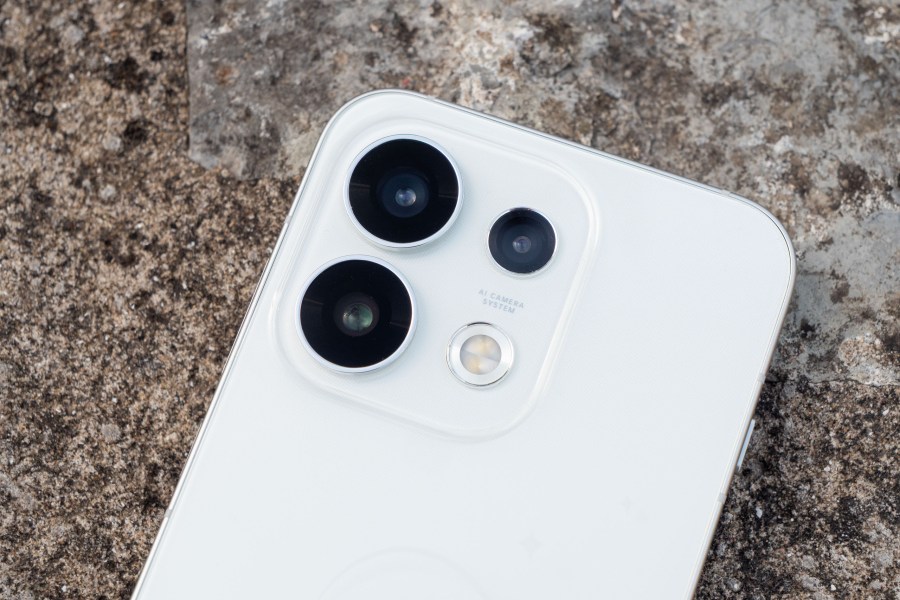
- 3 x rear lenses – 200MP 24mm f/1.8, 50MP 80mm f/2.8, 50MP 16mm f/2.0
- 50MP f/2.0 Selfie camera
- 4K 60fps video
- 6.3-inch AMOLED display, 144Hz
- IP69 water and dust proofing
- 6 years of Android updates
How I review the Oppo Reno 16 Pro
I review smartphones from the perspective of choosing one for its photography and camera performance. I look at what the Oppo Reno 16 Pro offers in terms of the picture and video quality it has, paying particular attention to the promises camera features, as well as photo-editing capabilities. Other specifications, such as the screen and battery life are also considered, but I won’t comment on things like performance for gaming or call-quality.
Oppo Reno 16 Pro: Features
The Reno 16 Pro has a triple-lens setup, which is pretty good going for a mid-range device, most of which usually sport only two lenses. This is the same as the 13 Pro, however the ultrawide lens has seen a significant upgrade and now all three of the lenses are backed by high-resolution sensors.
There’s also been a megapixel jump for the main sensor. We now have a 200MP 24mm f/1.8 equivalent for the 1x lens – up from 50MP before. It is joined by a 50MP 80mm f/2.8 telephoto and a 50MP 16mm f/2.0 ultrawide – that final one is up from 8MP and should make the camera much more usable than before.

At the front of the phone, there’s another high-resolution camera for the selfie unit, being 50MP 18mm f/2.0 – being wide-angle it promises to be good for group portraits.
There’s a range of different shooting and editing tools which have been included – but I’ll go int that a bit more in the “App” section below.
Other useful or interesting features to note include IP69 water and dust proofing, a 6700 mAh battery and 4K video recording at up to 60fps. The battery is worth noting – it should last well at that size, and has 80W fast charging, but there’s no wireless charging which feels like a bit of a strange omission in 2026.
Oppo Reno 16 Pro: Handling & Design
With its 6.3-inch screen, the 16 Pro is smaller than many flagships out there – but I like it for that reason. These huge 6.8/6.9-inch screens that have become popular at the top-end really don’t do it for me. This is a great compromise size in my opinion, it fits neatly in your pocket while still giving enough room for your pictures and videos to look great. It’s 144Hz means it’s nice and smooth, while the 3600 nits peak brightness is pretty decent for a phone in the mid-range too.

The body of the phone is made from “Aerospace-grade” aluminium, which makes it sturdy yet lightweight and its promised to survive drops and bends better than ever. It’s also got a “seamless glass body” thanks to a process called “cold-sculpting” which is supposed to make it look cleaner and smarter around the camera area. Fair enough, it does look pretty smart, in an understated way.
I’ve been using the “Pop White” colourway which also has an interesting floating 3D design on the back. It’s not a sticker, it’s actually created using three layers and millions of tiny lenses to create the effect. The point of it is purely about the aesthetics – it looks fun. Of course if you stick an opaque / coloured case on it, you lose it entirely – so there is that. A simpler “Starlight Black” option is available if you’d prefer to keep things more straightforward.
Oppo Reno 16 Pro: Native Camera App
There’s lots of different modes and settings to explore with the native camera app, but the standard “Photo” option is a good place to start – and indeed it’s the default option when you launch the app.

From here, you can shoot with all three lenses available, as well as zoom to up to 120x digitally. There’s a number of other settings you can adjust in the Photo mode, including Aspect Ratio, switching on/off Auto HDR, the timer and so on. You can also activate Live Photo, as well as switching the flash on/off and adjusting exposure compensation.
In this mode, if you bring the camera close to a subject then macro shooting will automatically activate by switching to the ultrawide lens. Similarly, if light is low, Night mode should automatically activate.
If you want to change the look of your photos, you can add a digital filter to your shots, with some film options such as “Positive Film” and “NC Film” available – it’s worth having a play.

There are some other shooting modes which are worthy of attention. The Portrait mode can be used for shooitng shallow depth of field effects, and there’s other options such as Night, Time-Lapse and High-Res where you can take advantage of the full 200MP of the sensor.
The most fun mode is the “Pop” mode however, where you can recreate the look of a range of different types of camera/film effects, including Instant Film, a Y2K Digicam, Light Leaks and more. Sure, they’re a bit gimmicky, but they’re playful and cute and worth trying out.
It’s interesting perhaps to note that there’s no “Pro” mode anymore – there was one for the Oppo Reno 13 Pro. Maybe it was felt that people using this type of phone no need for it. To be honest, I’m a professional photographer and don’t touch those modes, so they’re probably right. But, if you are someone who feels like they’d miss being able to change certain settings, it’s worth noting. There are lots of third-party apps you can download if you really want this functionality back.

After you’ve taken your shots, there’s a host of editing tools to try. As well as the usual tools like cropping, rotating and so on, there’s an AI editor which you can use – here you can do things like recompose the shot entirely, erase things you don’t want in the scene, unblur something and erase reflections. These work pretty well – sometimes better than others depending on the scene. I prefer a light touch when it comes to editing, but something like the eraser can be a useful tool for tidying up travel shots without adjusting reality too far.
There’s also some more fun elements here to play with – this seems like a phone that really wants to enjoy yourself. Among other things, you can create a “Remix Collage” and “Popout Collage” where you can take elements from your photos and make them pop into different parts of a collage (see the example below).

Oppo Reno 16 Pro: Image Quality and Performance
The Oppo Reno 16 Pro is capable of creating some fantastic images, with lovely bright colours and plenty of detail.
As usual, the best results are found from the 1x lens, but the other lenses also put in a great performance too. The new 50MP ultrawide lens for example is now extremely usable, where the previous version was something I’d have probably recommended you avoid using.
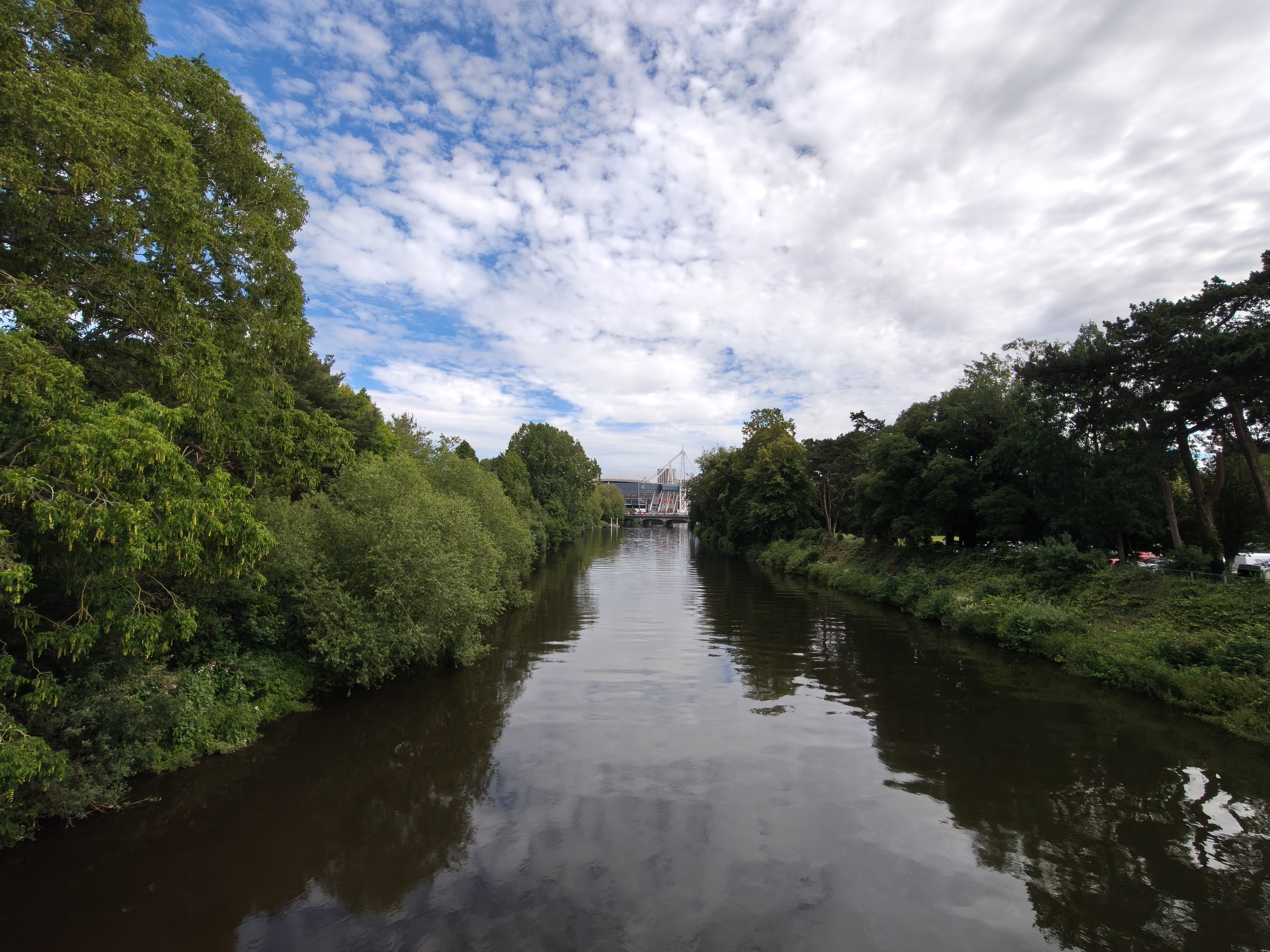






The telephoto zoom is also very good, with great results at the 3.5x setting, and pretty good results at the 7x and 10x digital setting. Beyond that, things do start to get a little bit blurry and with a loss of detail, while the 120x option is – as with pretty much all phones – not something to use with any seriousness.

In low light, the results are OK, but nothing special. The best results here are from the 1x lens, with the ultrawide not performing particularly well at all. If you try to use the telephoto lens, then it will take a crop from the 1x lens if light is particularly low. If night time shooting is something you do a lot of, there are better options out there, but it’s just about passable if it’s not something you intend to do with great frequency.


Macro shooting relies on the ultrawide lens, and while there has been a marked improvement from the previous generation it’s still not an amazing performer – again, if you’re someone that does this kind of thing a lot there are better options out there, but it’s a good general performance.

Portraits are rendered nicely using the portrait mode, with a decent drop off between the main subject and the background.

For selfies, the camera really is very good – if you’re somebody that takes a lot of selfies, this is one of the better options on the market. It’s high resolution and has autofocus. The result is very detailed selfies, and the wide-angle of the lens means you can either get extra people or lots of context in, which is great too.

Oppo Reno 16 Pro: Value for Money
Compared to the previous model, there’s been a bit of a hike in price here. Although it’s currently on a launch offer for £749, the full retail price puts it closer to flagship territory than mid-range.
Now, that’s perhaps understandable for what you get – and it’s still cheaper than something like the iPhone 17 Pro, or Samsung Galaxy S26 Ultra, but it’s no longer what I’d call a “cheap” alternative either.
That said, the cost of everything is rising at the moment, so getting three high-resolution lenses, a great selfie camera, a decent screen and a range of fun shooting and editing modes makes it reasonable value, despite the high price.

There’s also a great battery and decent tough credentials, though personally not having wireless charging is unforgivable (I like to charge my phone overnight on a wireless stand, other people may be less bothered by this, of course).
In terms of competitors at this price point, you’ve got the standard iPhone 17, which only has two lenses, or the Samsung Galaxy S26, which has three but misses other things, such as a macro mode.
Oppo Reno 16 Pro: Verdict
There’s lots of great features to enjoy about the Oppo Reno 16 Pro and it’s a brilliant all-rounder.
As with many phones, it particularly excels in bright light and when using the 1x lens. Colours are bold and there’s lots of detail.
Having three high-resolution rear lenses in a mid-range phone is still relatively rare and if you don’t want to pay a small fortune for a top-tier flagship, this is seriously worth considering. Especially now that the ultrawide lens has been improved by a great deal.
The selfie camera is a standout performer too, and you can see that this is a phone which has been aimed fairly squarely at a younger crowd and those who want to have lots of fun with their phone.

I enjoyed experimenting with the different film / camera simulations, as well as the AI and collage editing tricks, too.
There’s a couple of problems with the phone – this is no longer a cheap alternative to high-end flagships, and while it’s still decent value it’s harder to recommend to those on a budget.
I’m also a bit baffled by the lack of wireless charging. I have mentioned it a few times throughout this review, mainly because it’s such a common feature these days that it’s baffling not to see it. If it’s not something you’d miss then great, but otherwise it’s worth taking note of.
Overall, this is a great little phone and if the price comes down just a touch, I’d recommend it to a wide range of people, especially those who don’t care about sticking with the biggest brands.

Oppo Reno 16 Pro: Full Specifications
| Specifications | Oppo Reno 16 Pro |
|---|---|
| Main, wide-angle camera | 200MP; f/1.8; FOV 84°; 6P lens; AF supported; Supports 2-axis OIS |
| Telephoto camera | 50MP; f/2.8; FOV 30°; 4P lens; AF supported; Supports 2-axis OIS |
| Ultra-wide camera | 50MP; f/2.0; FOV 116°; 6P lens; AF supported |
| Selfie camera | 50MP; f/2.0; FOV 100°; 5P lens; AF supported |
| Video | Up to 4K 60fps |
| Battery | 6000mAh |
| Screen | 6.32-inch,144Hz AMOLED screen, 3600 peak brightness |
| Processor | MediaTek Dimensity 8550 SUPER |
| Storage | 512GB |
| Operating System | ColorOS16 |
| Dimensions | 151 x 72 x 8.3 |
| Weight | 191g(Pop White) 188g(Starlight Black) |
| Dust and water resistance | IP69 |
Related reading:
- There is a reason why I prefer budget smartphones for photography
- OPPO Find X9 Pro review: the top Android alternative to the iPhone?
- OPPO Find X9 Ultra review – For the first time, carrying “just a phone” no longer felt like a compromise
Do you want to win some great prizes for your photography? Enter your photos in our International Amateur Photographer of the Year competition. Free entry for photographers aged 13-21.
Follow AP on Facebook, Instagram, YouTube, TikTok and Irys.