Amateur Photographer verdict
The Godox iT32 is arguably the best small hot-shoe flash unit on the market, thanks to its clever modular design. It’s especially attractive if you use cameras from several different brands.- Modular hot-shoe system is great for those who use multiple camera brands
- Uniquely easy to take the flash off the camera for nicer lighting
- Relatively straightfoward to use
- Both iT32 flash and additional X5 triggers are very affordable
- Easy to accidentally change settings when holding the iT32 in your left hand
- Not very high powered
- Modelling light would be better placed within the flash head
It’s not so long ago that I thought on-camera flash was pretty much dead, rendered obsolete by the high-ISO capabilities of modern cameras and large-aperture primes. Camera makers weren’t producing many new models, and retailers told me they didn’t really sell. But these things go in cycles, and the past couple of years has seen something of a revival, driven by innovative products from third-party makers.
Godox iFlash iT32 at a glance
- From $99 / £86.99 (kit with X5 trigger)
- $79 / £66.99 (flash only)
- Modular hot-shoe flash
- Guide number 18m at ISO 100
- Bounce and swivel head
- 2.4GHz wireless control
- godox.com
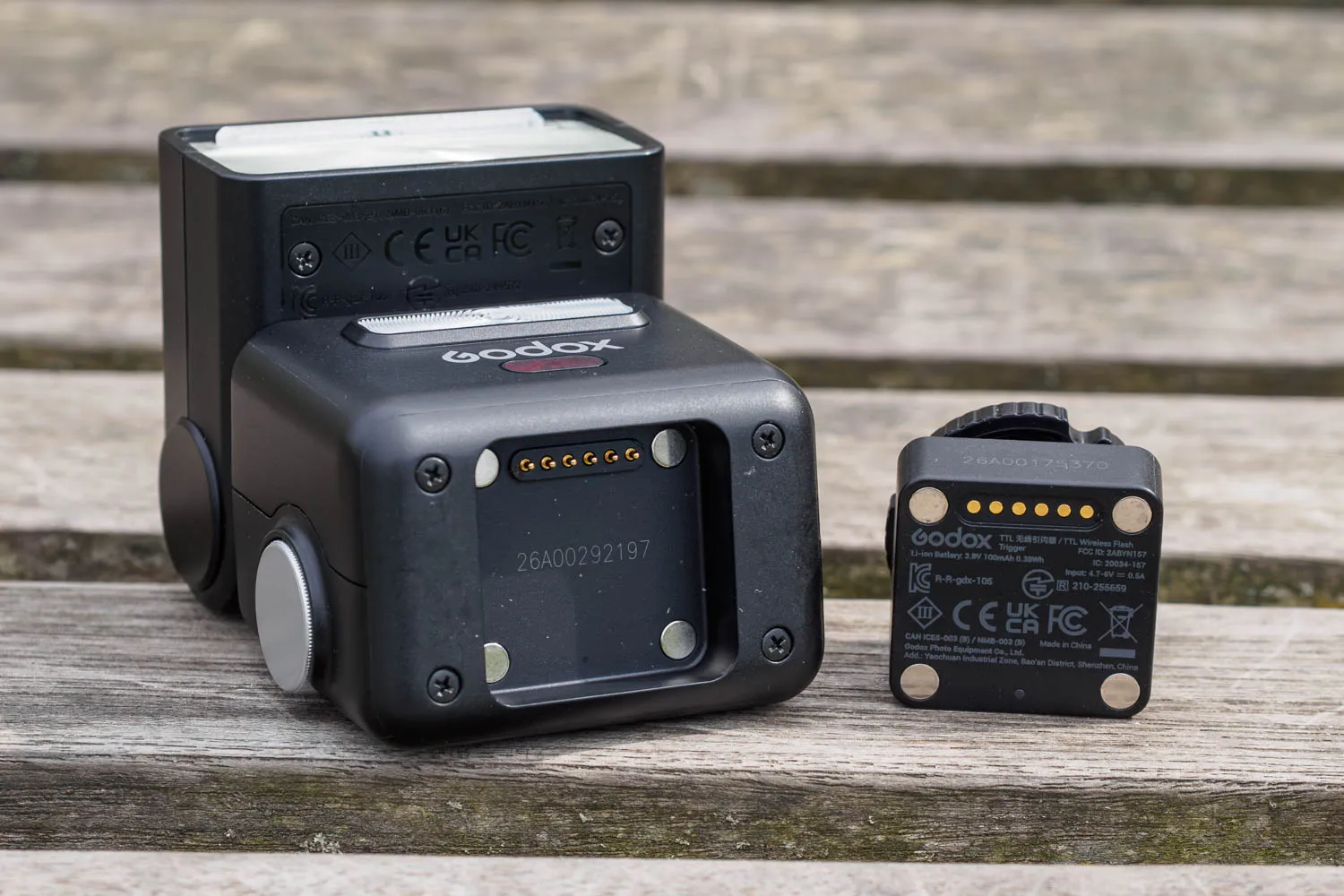
The Godox iFlash iT32 is, without doubt, the most interesting hot-shoe flash I’ve seen for years. It’s a modular system whereby the flash unit clips magnetically onto tiny X5 TTL Wireless Flash Trigger units, which attach to the camera’s hot shoe. These are available for most cameras; Canon, Fujifilm, Leica, Nikon, Sony, and Olympus/OM System/Panasonic.
This design approach brings some obvious advantages. If you use cameras from several different brands, you don’t need to buy a different flash for each; just the requisite X5 triggers. Also, if you’re not a fan of the direct on-camera flash look, you can grab the iT32 from off the X5 and either hold it to one side, or set it up on the supplied stand, to give more flattering lighting. You’ll still get through-the-lens (TTL) flash metering via the built-in wireless system.
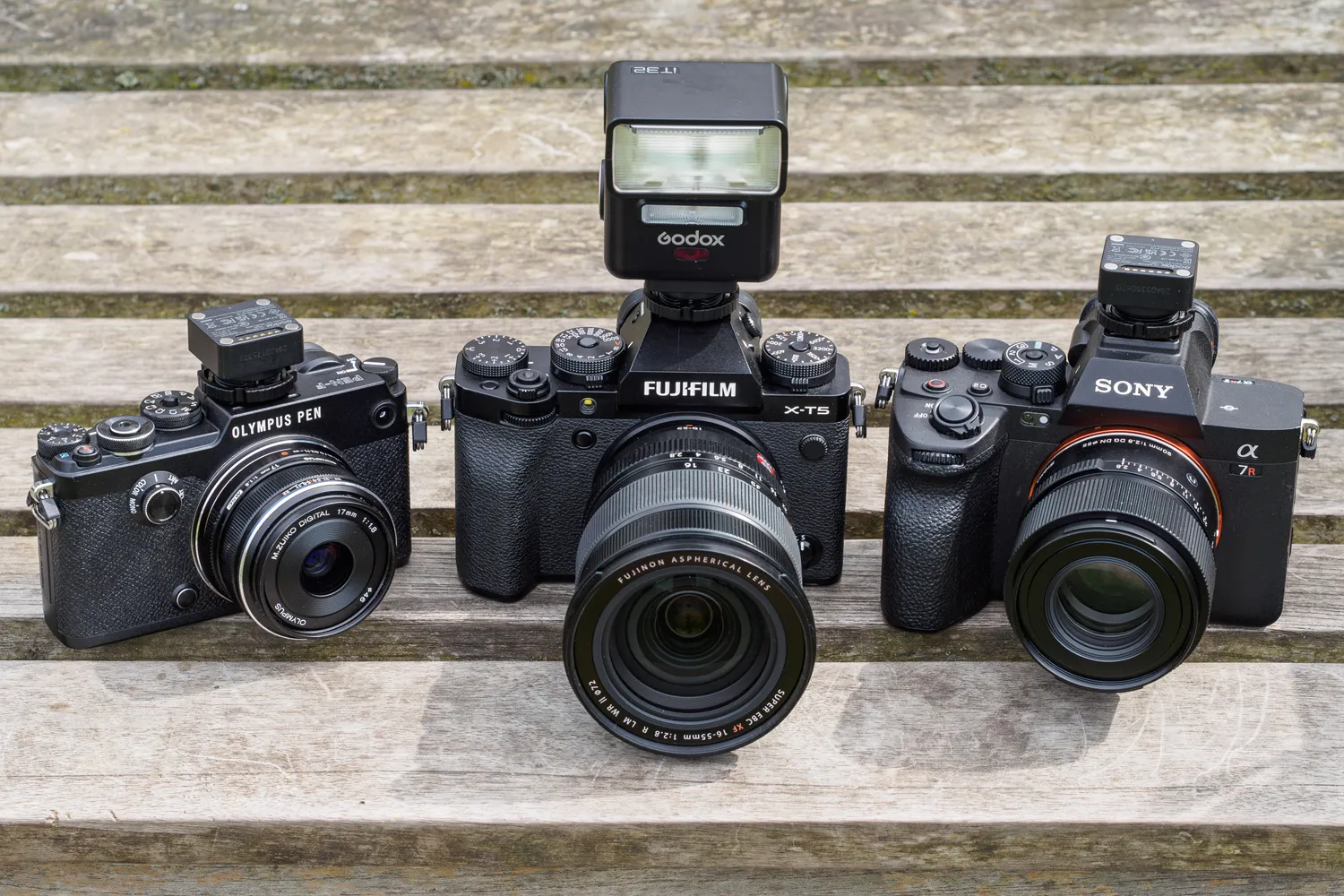
You might expect that you’d have to pay a lot of money for all this cleverness, but that’s not true. The iT32 costs just $99 / £87 complete with a trigger, while additional X5 units are $20-34 / £18 – £30 each. I think that’s something of a bargain – especially when you consider everything else the kit has to offer.
Features
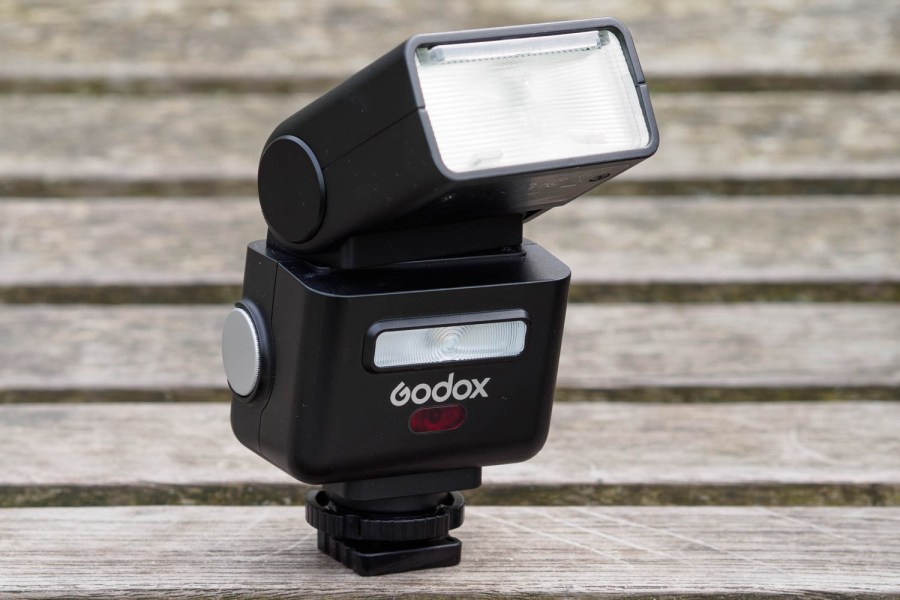
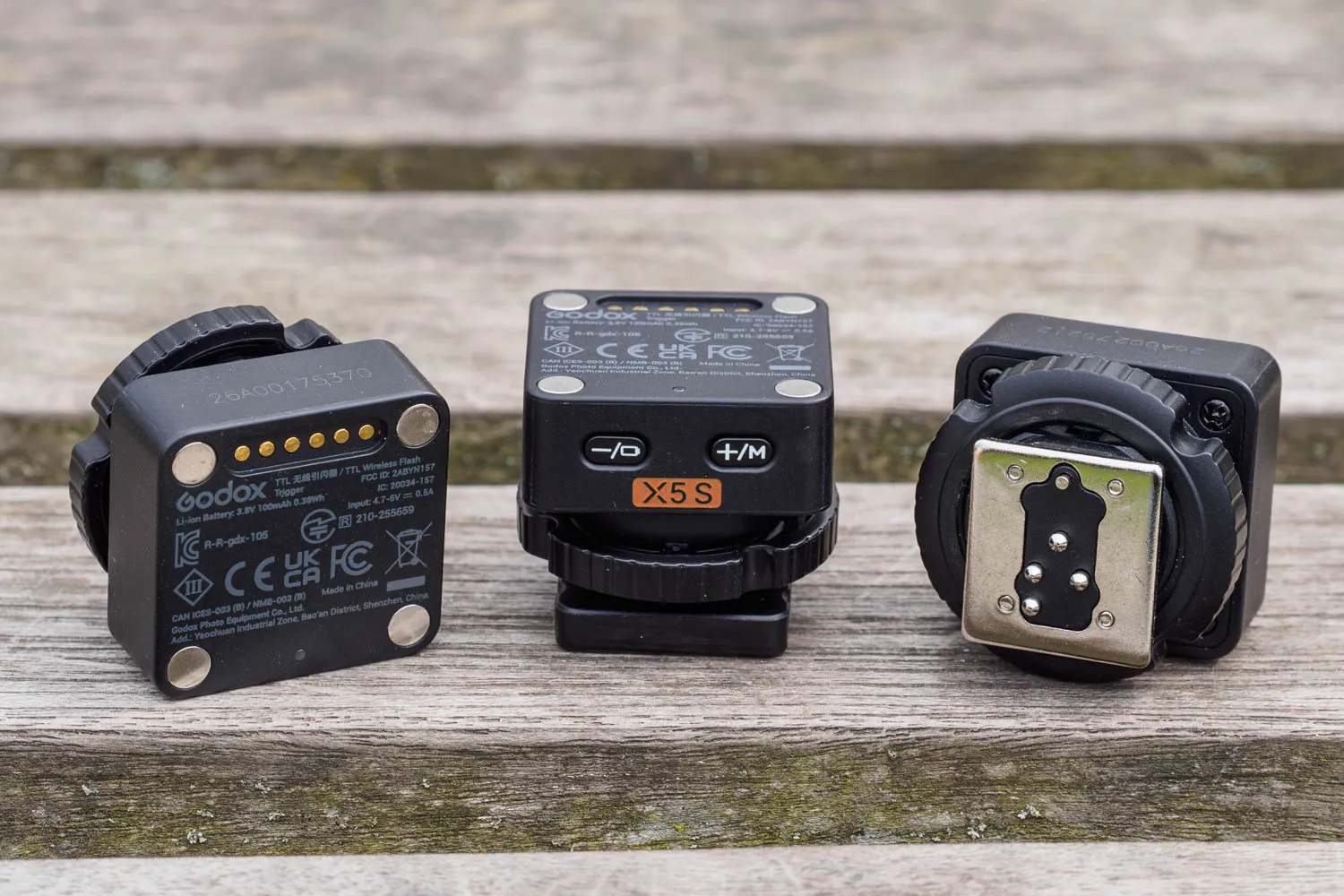
Looking first at the iT32 flash, this is a remarkably compact unit that measures 7cm tall, 6cm wide and 6cm front-to-back, when the flash tube is pointing forwards. Meanwhile, the X5 trigger is about 3cm square and 2.5cm tall. They weigh 169g and 23g respectively, and the entire setup with all accessories comes in at 260g. This means it won’t overwhelm small cameras, and it’s not a burden to carry around either.
The flash head has all the articulation you need. It can tilt upwards by 90° for bouncing off a ceiling, and down slightly for close-up work. It’ll also swivel through 270°, which means you can bounce it when shooting in portrait format, or even when pointing the camera vertically downwards.
One compromise of the small size is that the flash head doesn’t zoom. Godox doesn’t specify an output angle, but I’ve found it covers a 24mm (or equivalent) standard zoom nicely, with just a little darkening of the bottom corners at close range. A flip-out wide panel extends the coverage to 20mm, at least.
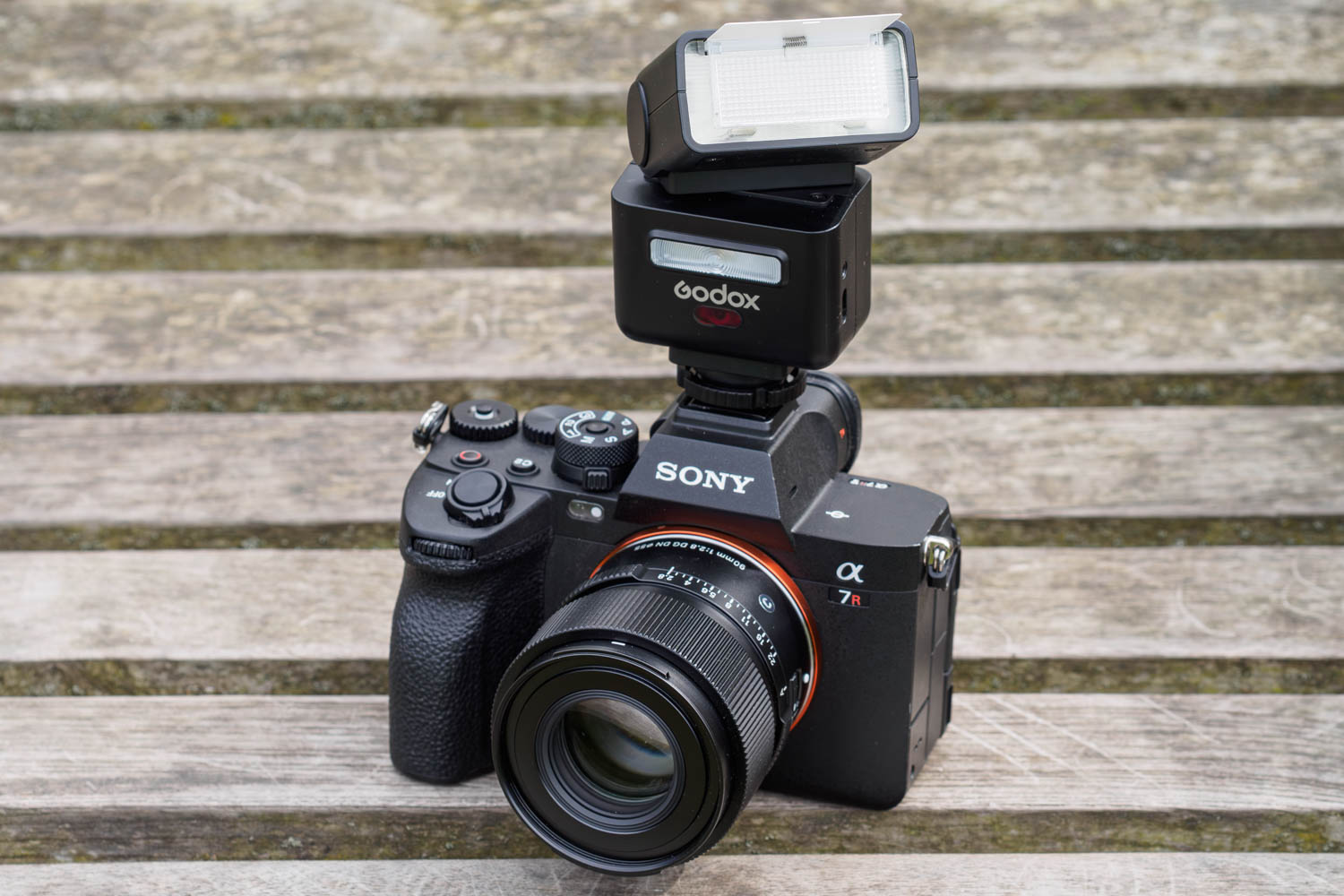
The power output isn’t vast, either, with a guide number of 18m at ISO 100. That means it’s not going to overpower sunlight, but it can give a touch of fill-in for outdoor portraits. When shooting indoors, you can crank up the ISO for longer effective range, which will also let you balance the flash better with the ambient light.
An LED on the main body is designed to be used as a modelling light. It’s rather narrow in angle, though, and not especially bright. But it can still provide a useful indication of how your lighting will look.
There’s a choice of three flash modes. In TTL you can set up to +/-3 EV compensation, while in Manual, it’s possible to turn the power down as far as 1/128 – in both cases in 1/3 stop steps. Multi allows users to select the number of times the flash will fire and the frequency, plus the output power. However this does come with some significant restrictions in terms of output, and if you’re really interested in strobe flash, a more powerful unit would be a better bet.
The iT32 is fully integrated into Godox’s wireless system. It can work either as a receiver or a transmitter, with a specified range up to 20 metres using the X5 as the transmitter. You can control any Godox 2.4GHz flash unit (and certain Neewer ones too) in up to 3 additional groups, regardless of their brand dedication. I had no problem controlling my Fujifilm-dedicated iT30Pro from Sony and Olympus cameras.
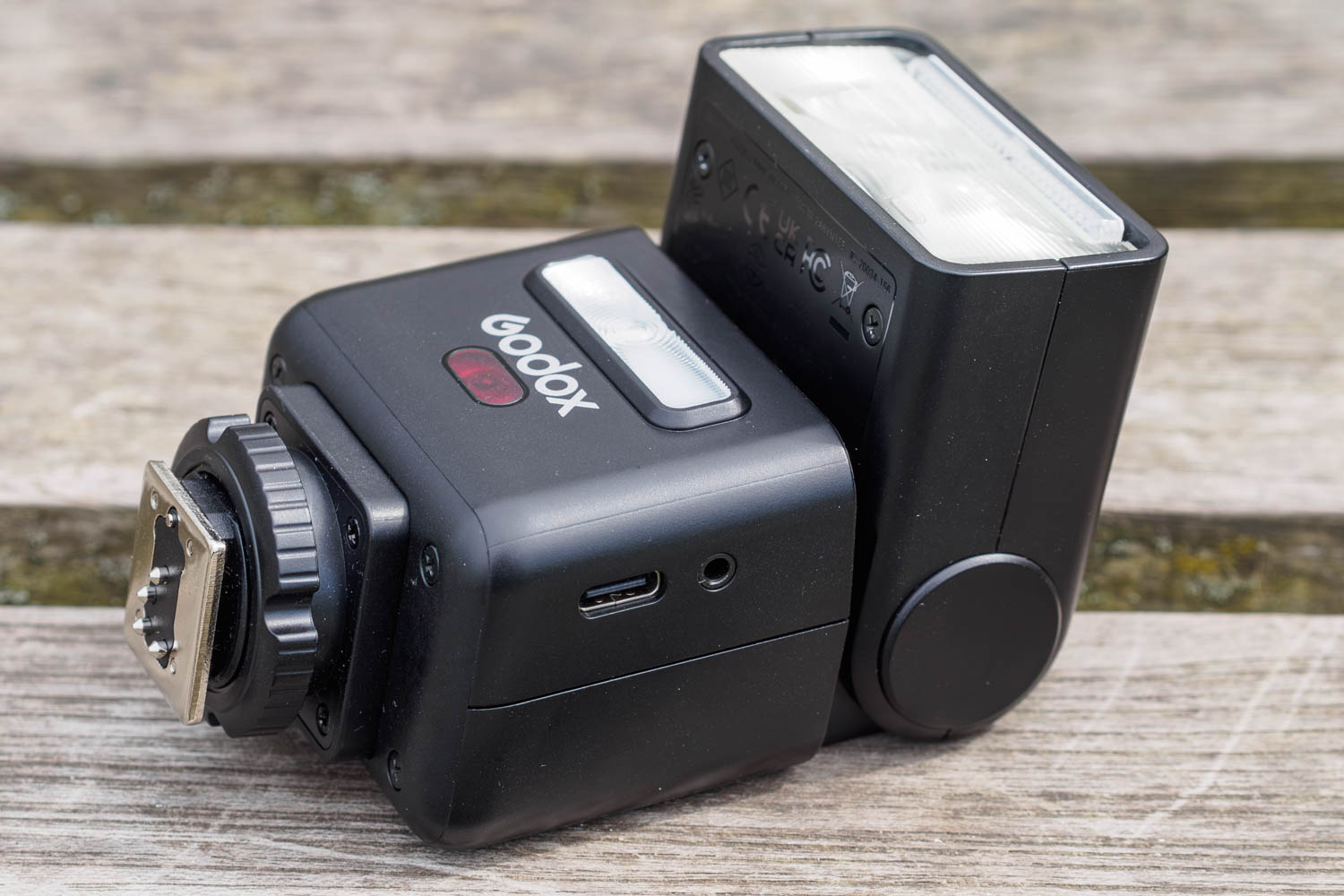
There are a couple more ways of triggering the flash, too. In manual mode, you can set it to work as an optical slave, with the option to ignore a metering pre-flash. There’s also a 2.5mm port, that allows it to be fired via a PC sync connector, as found on a lot of old film cameras.
In addition to the current X5 versions, Godox is promising an X5 Cm trigger which will work on Canon cameras with a multi-function shoe but no central hot-shoe contact, such as the EOS R50 and PowerShot V1. I’d quite like to see an X5 with a central pin only, for use in manual mode on film cameras. It would be even better if Godox could include an auto-flash metering sensor – we can but dream!
Godox iFlash iT32 key features
- Power: An internal battery promises 510 full-power flashes and recharges via USB-C. Each X5 unit has its own battery that’s charged by the iT32.
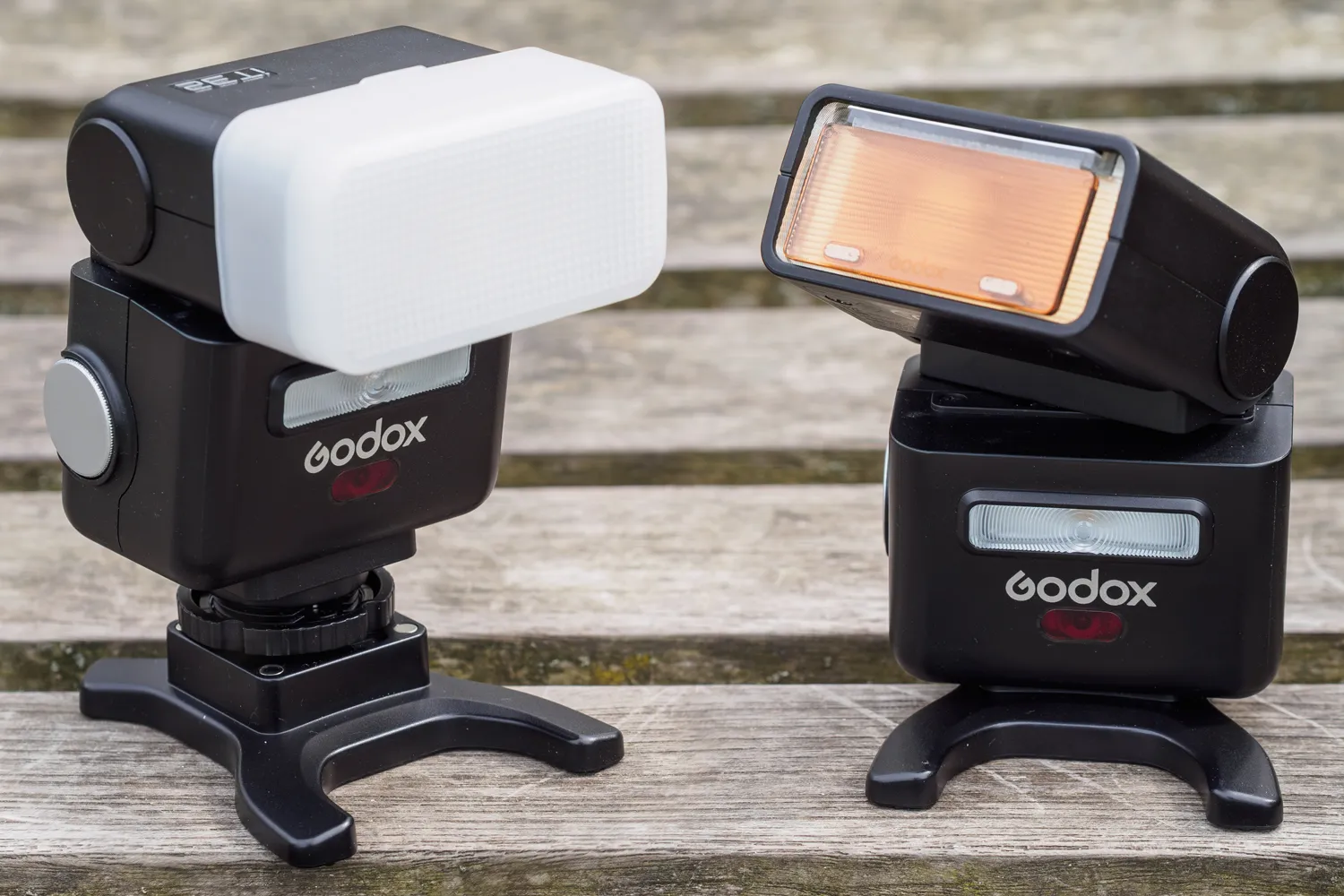
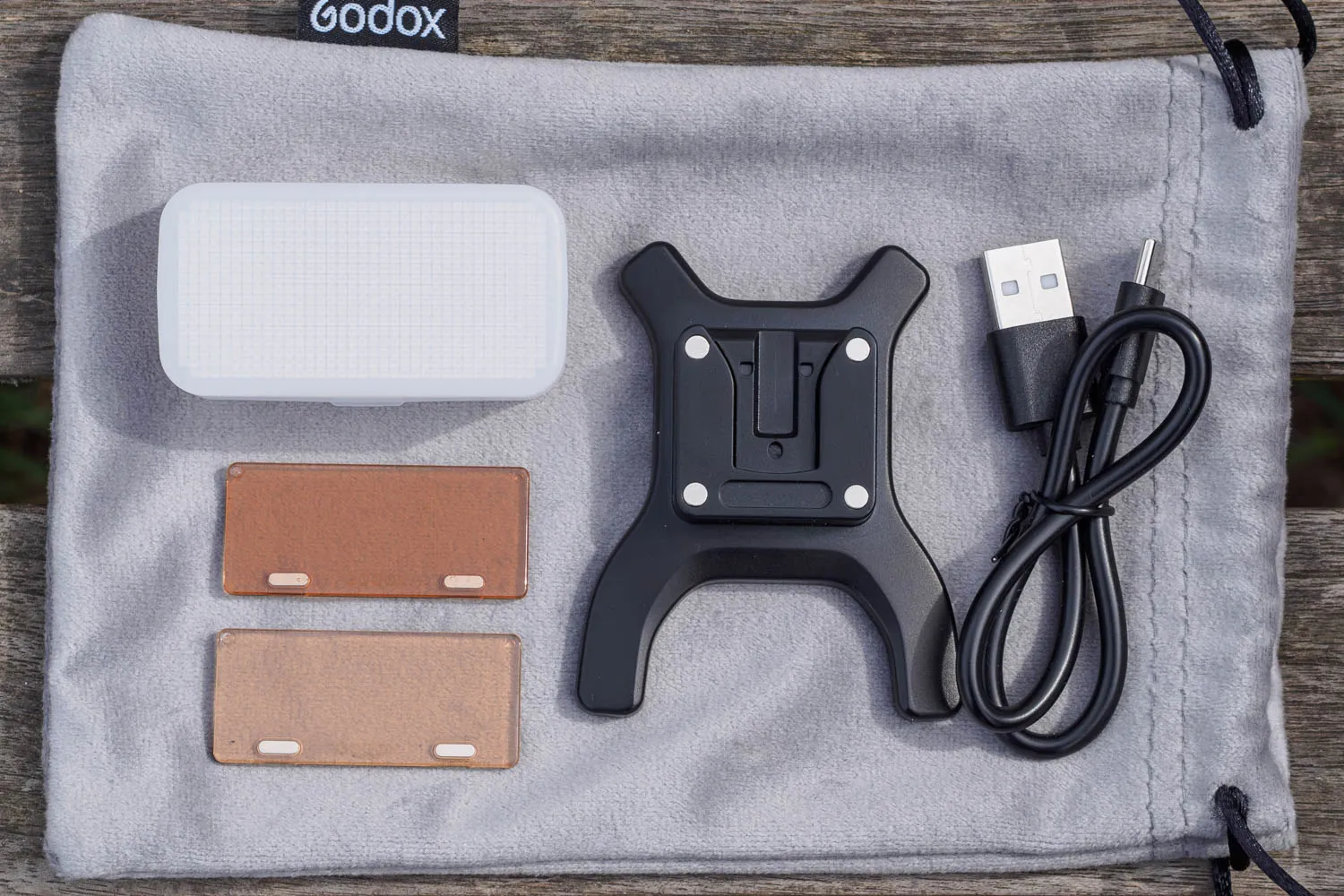
- Flash Stand: The supplied stand clips onto the iT32 magnetically, but also has a shoe for use with the X5.
- Box contents: The iT32 kit includes a charger cable, diffuser, two strengths of magnetic warm-up filter, and a flash stand, plus a basic fabric pouch to carry everything.
Operation
As with Godox’s other recent flashes, the iT32 employs a relatively simple set of controls: three buttons, a dial, and a large colour touchscreen. You can operate most functions either by touch or using the physical controls. But I found it most efficient to use a combination of these methods.
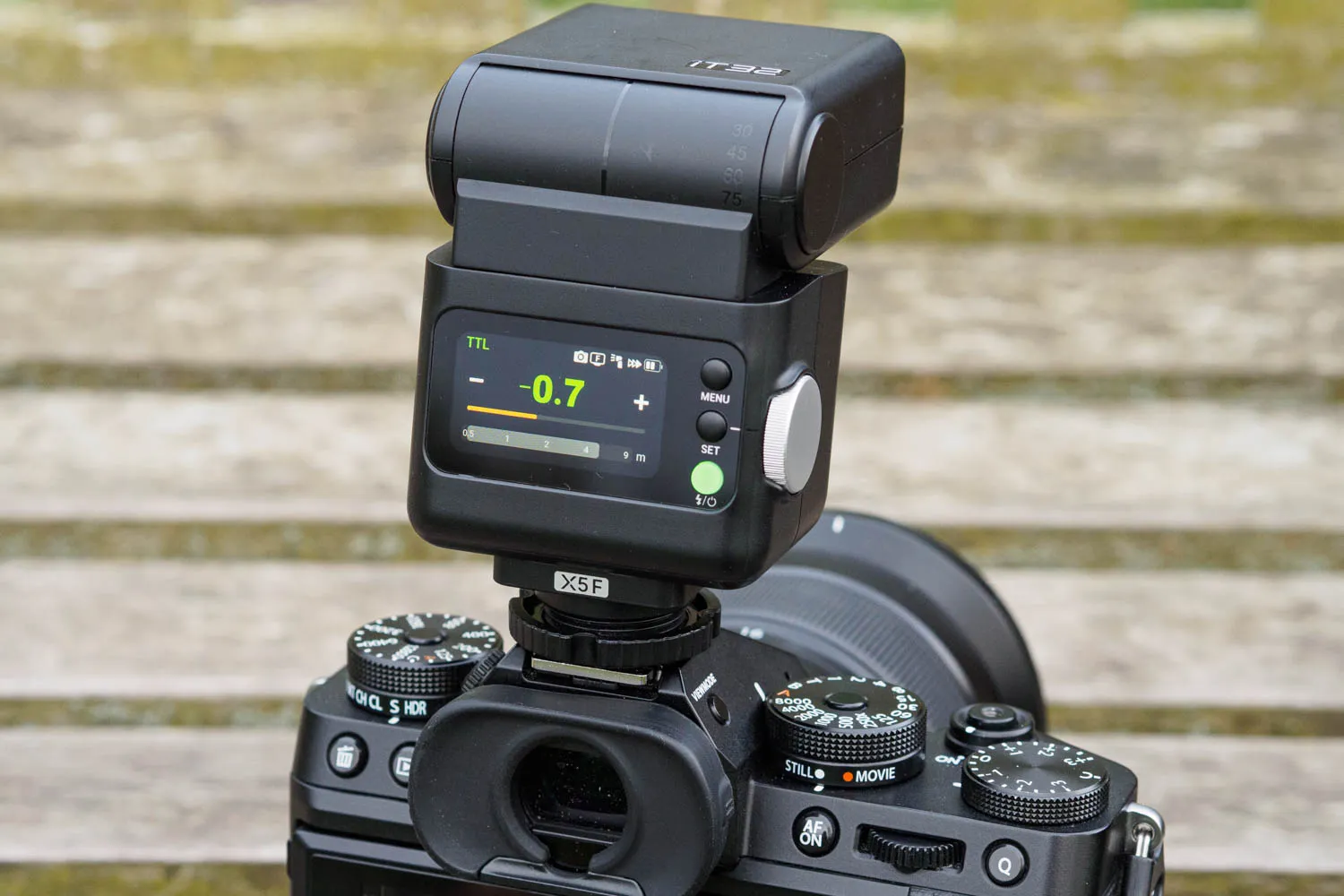
To turn on the flash, first you have to hold down the power button for a second, then either spin the dial, or swipe up on the touchscreen. The advantage here is that you shouldn’t ever turn it on accidentally. A quick press of the button fires a test flash, while holding it down for a second switches the unit off.
Just like on the iT30Pro, one of my favourite features is the onscreen distance scale. In manual mode, this shows the subject distance that will be correctly exposed, while in TTL, it indicates the range of distances that can be covered. This shows you at a glance whether you might need to change settings.
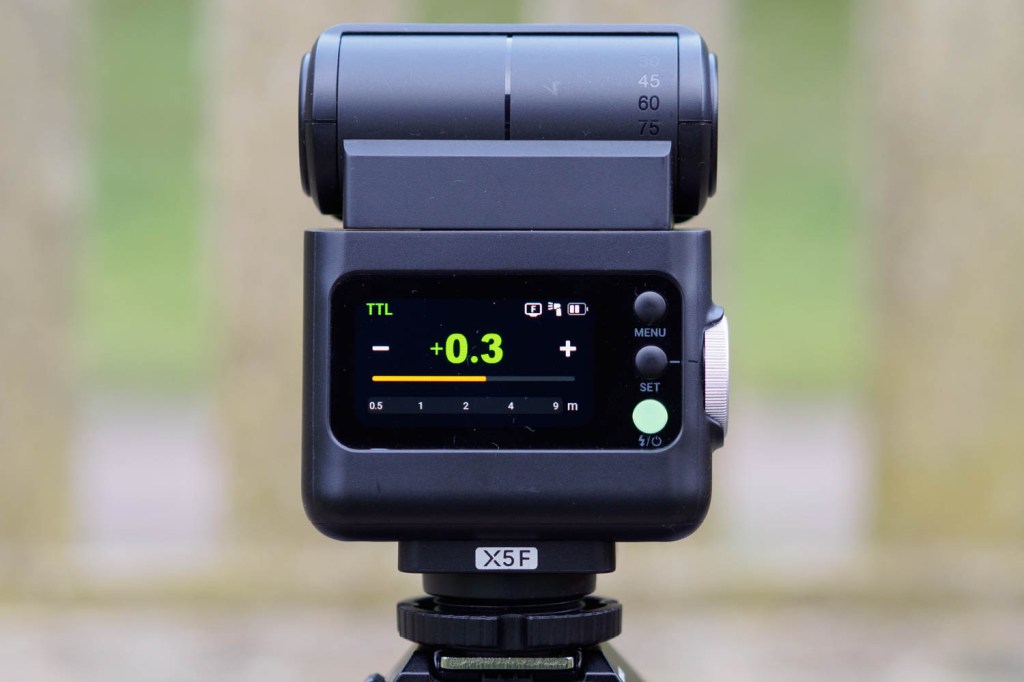
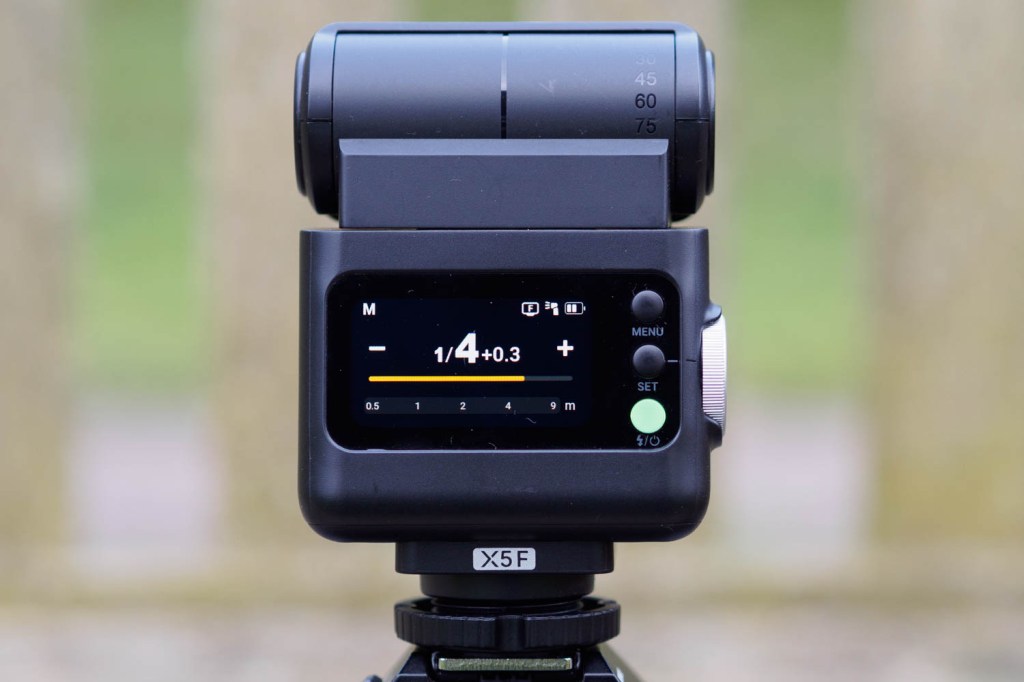
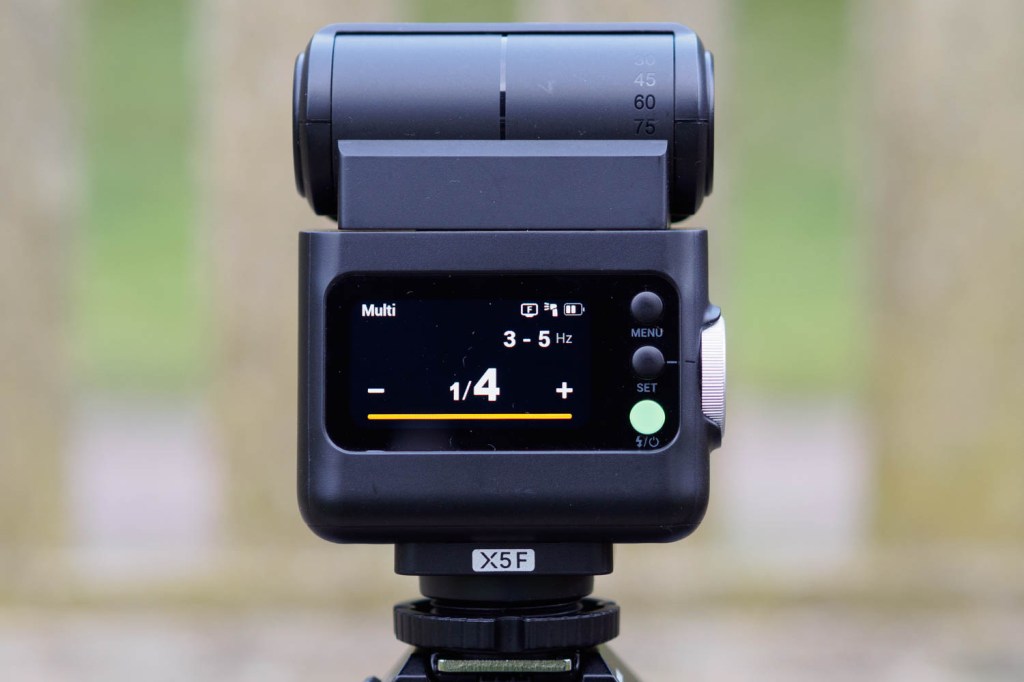
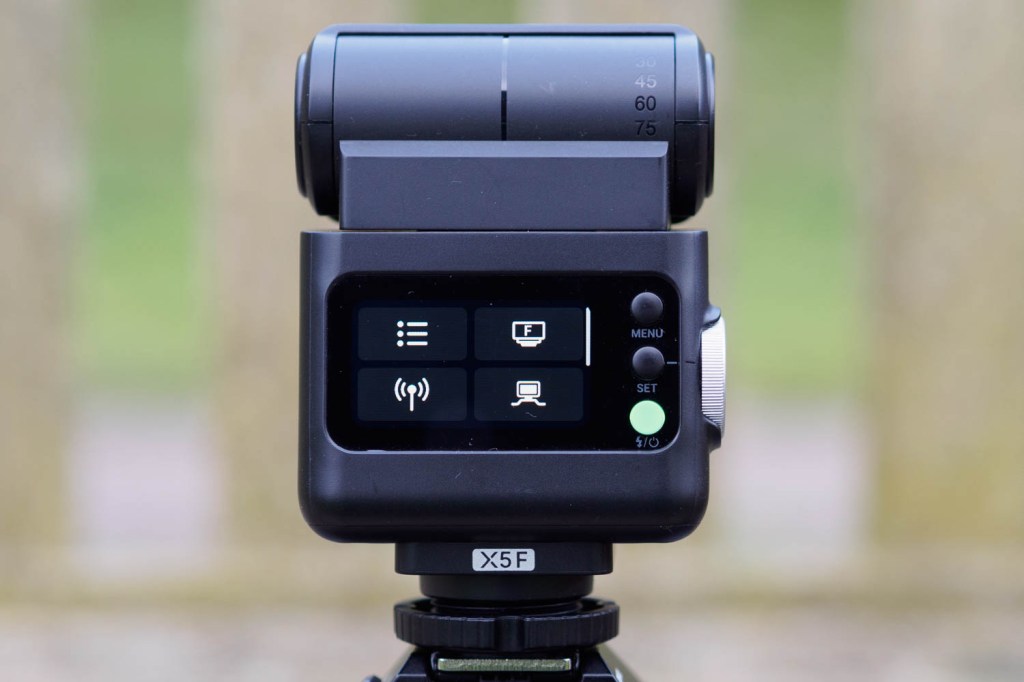
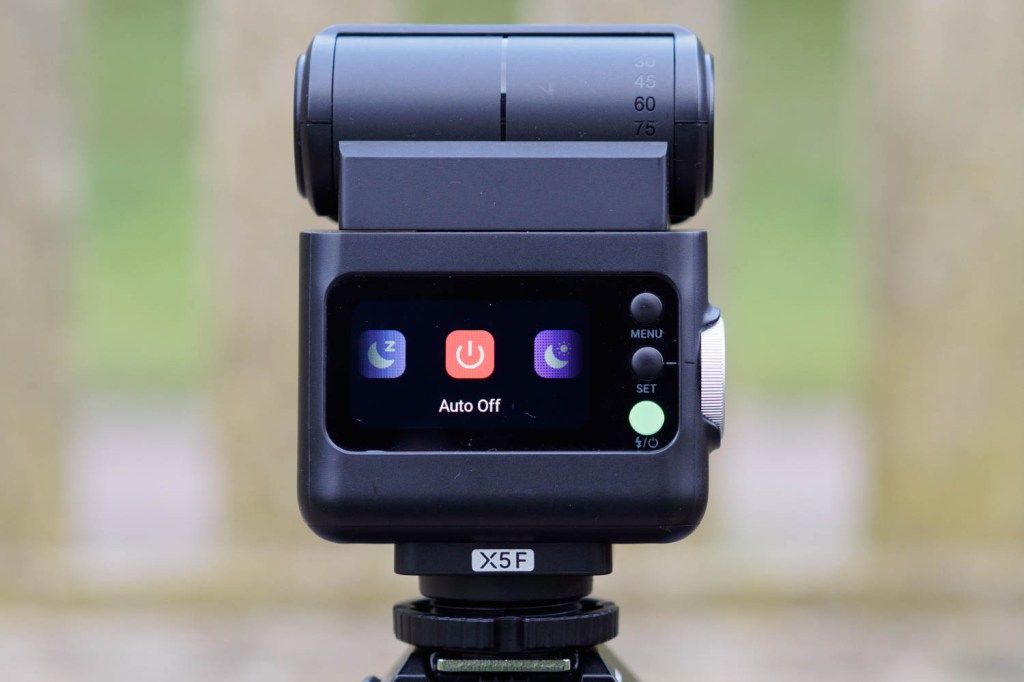
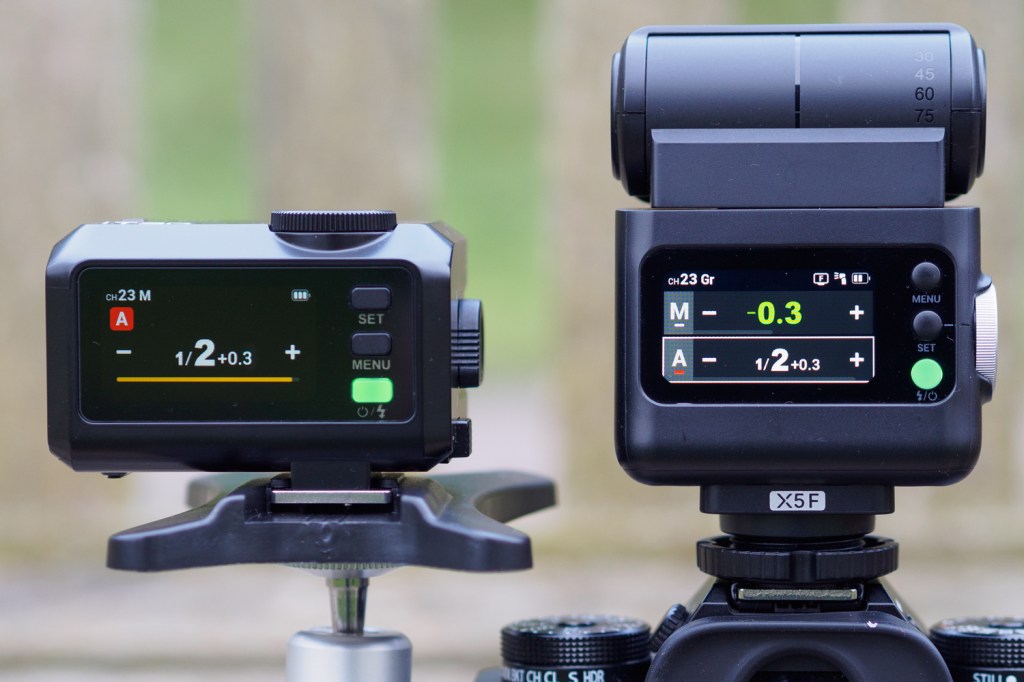
It can take a little while to master the interface at first, as not everything in the menus behaves as you might expect. I’d recommend going through the manual thoroughly with the unit in-hand, to understand how everything works and what the more obscure menu settings mean. It helps if you’ve used another recent Godox product.
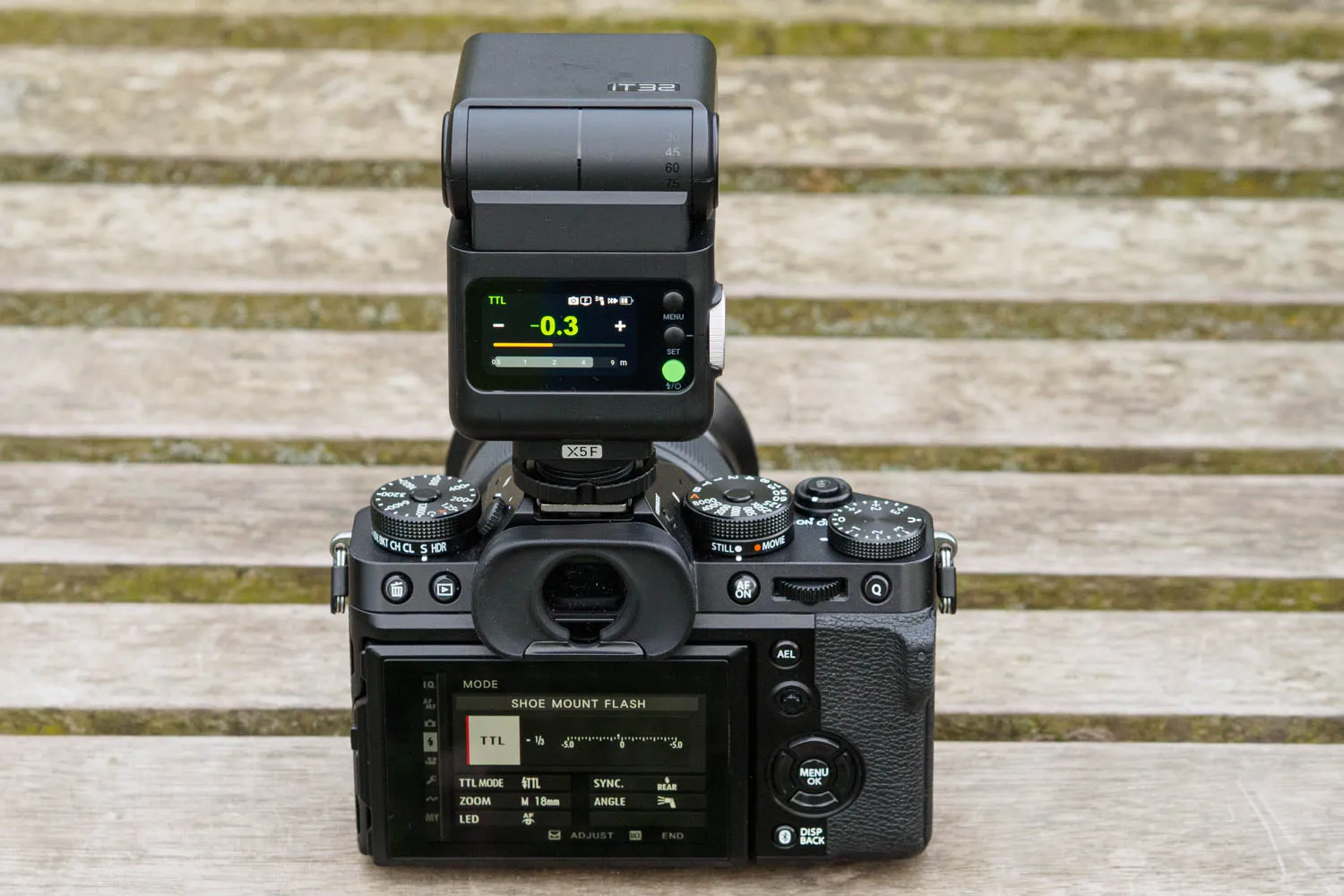
When the iT32 is mounted on your hot shoe, you can also operate it via the camera’s own flash menu. However, the moment you pull it off the X5 and switch to wireless control, in most cases this will no longer work. The only exception is with Canon cameras.
When you use the iT32 wirelessly, you can still adjust its main settings from the camera position, via two tiny buttons on the X5 transmitter. These let you cycle through modes and adjust the output. You just need to position the flash so you can see its screen.
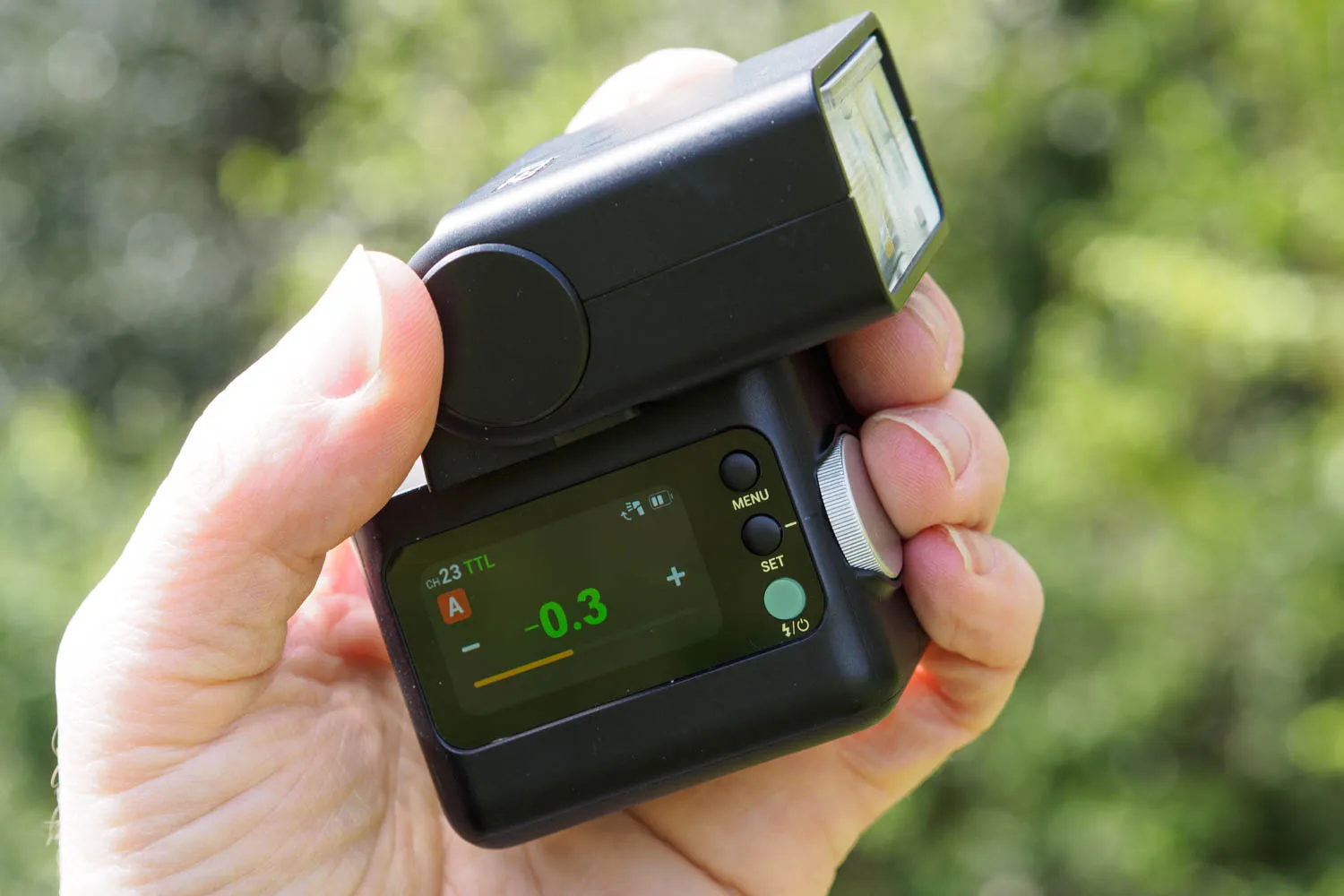
If there’s one real handling drawback, it comes when you grab the unit off the camera and hold it in your left hand. It’s all too easy to inadvertently touch the screen and change the output power, sometimes quite dramatically. I’ve found that the best workaround is to spin the head 90° to the right, which results in a grip that keeps your fingers away from any of the controls.
However, the problem then is that you can’t use the modelling light – it would be better if this were incorporated into the flash head itself. Personally, I’d like to have the option to automatically disable the touchscreen when taking the flash off the X5, so you can’t change settings by touch without first unlocking it.
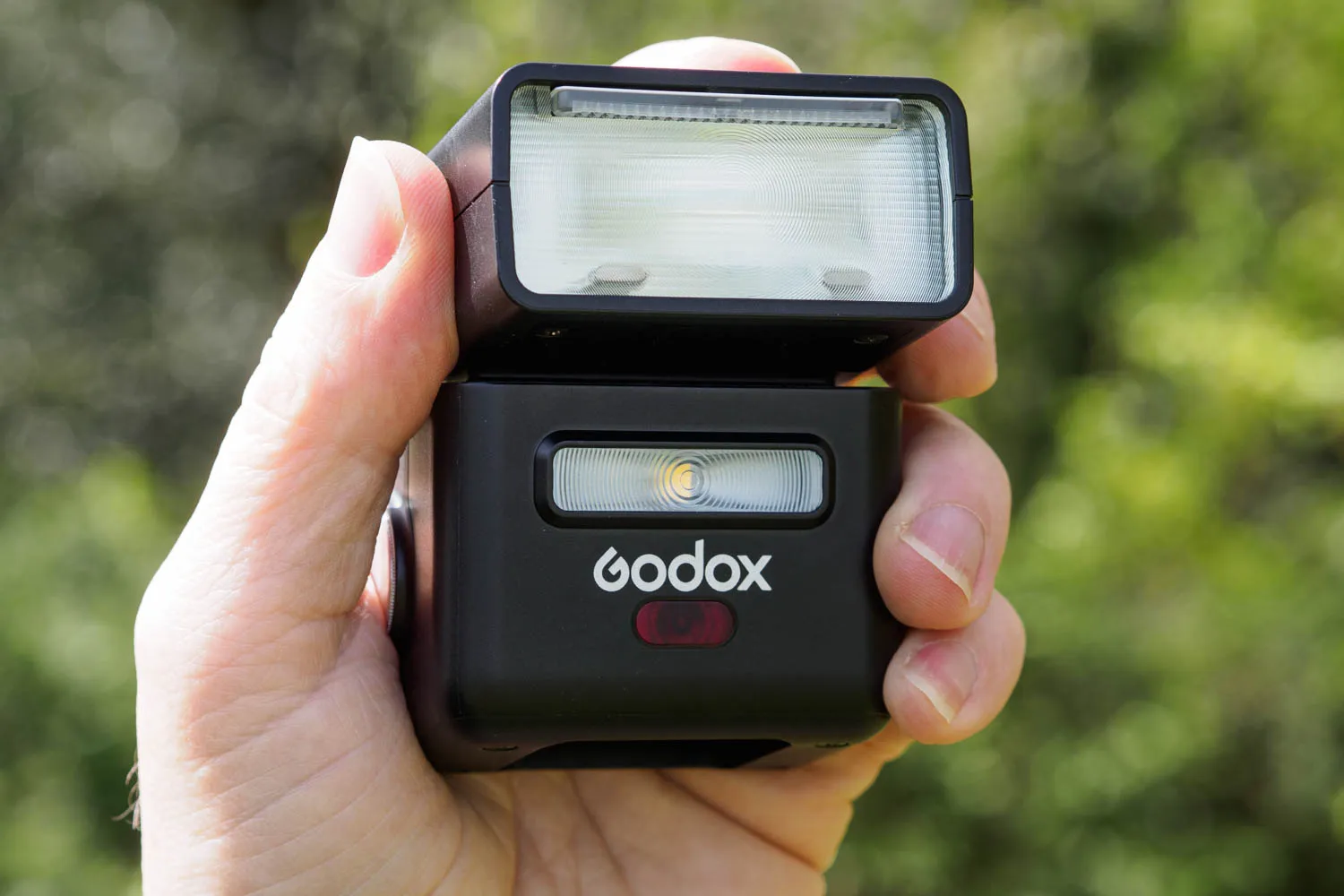
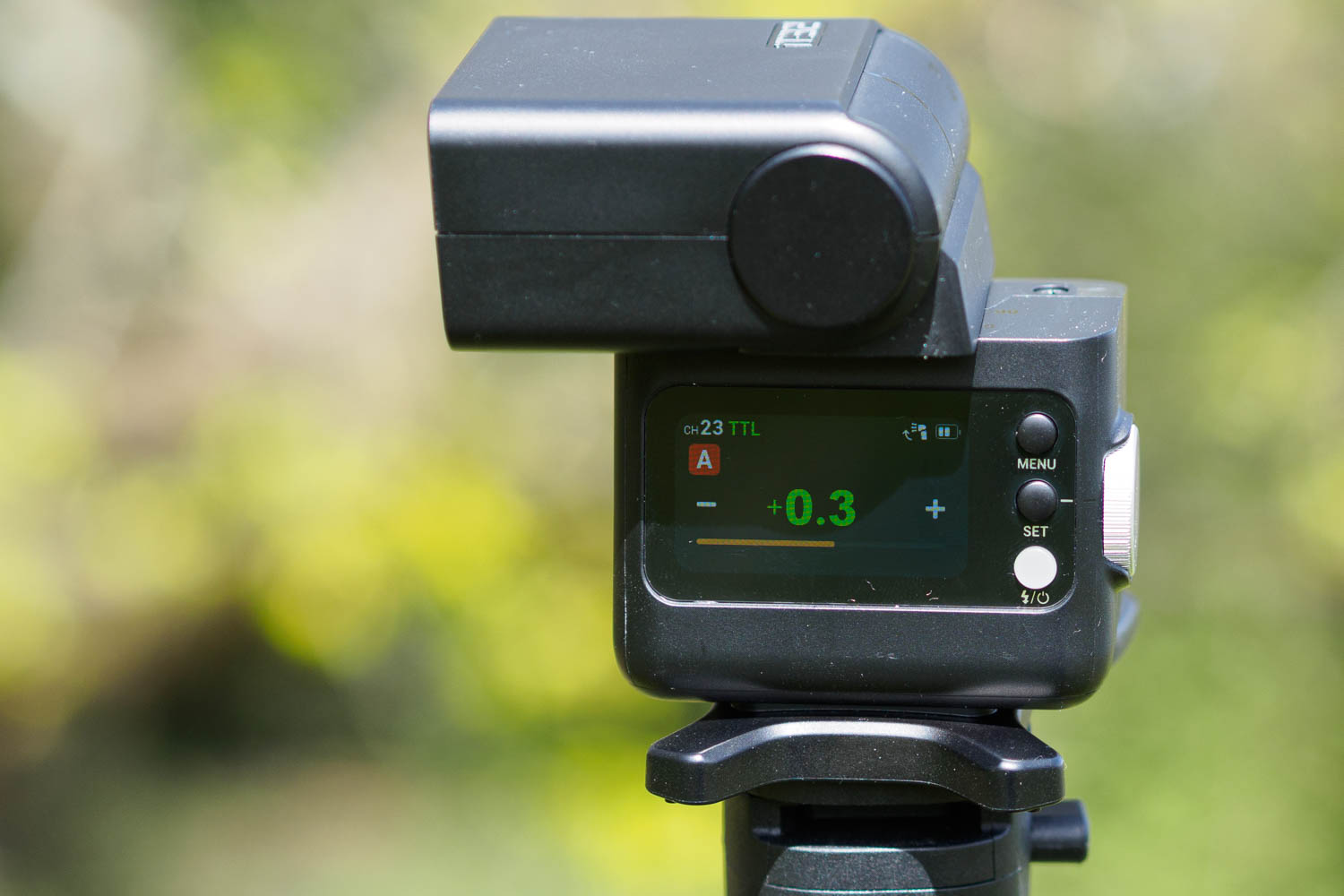
I’ve tested the iT32 on three systems – Fujifilm, OM System, and Sony – and found that in essence, everything works as promised. It gave me consistently well-judged exposures in my test shots, at least within the constraints of its power. You can even hot-swap it from one camera to another without switching the flash off.
Verdict
With the iT32, Godox has brilliantly re-imagined how an on-camera flash unit can work. The modular flash / transmitter design is a stroke of genius, especially if you use cameras of multiple brands. I’m loath to use the phrase “game changer” in a world where it’s often bandied around for trivial feature updates, but really – the Godox iT32 and X5 transmitter system is a game changer.
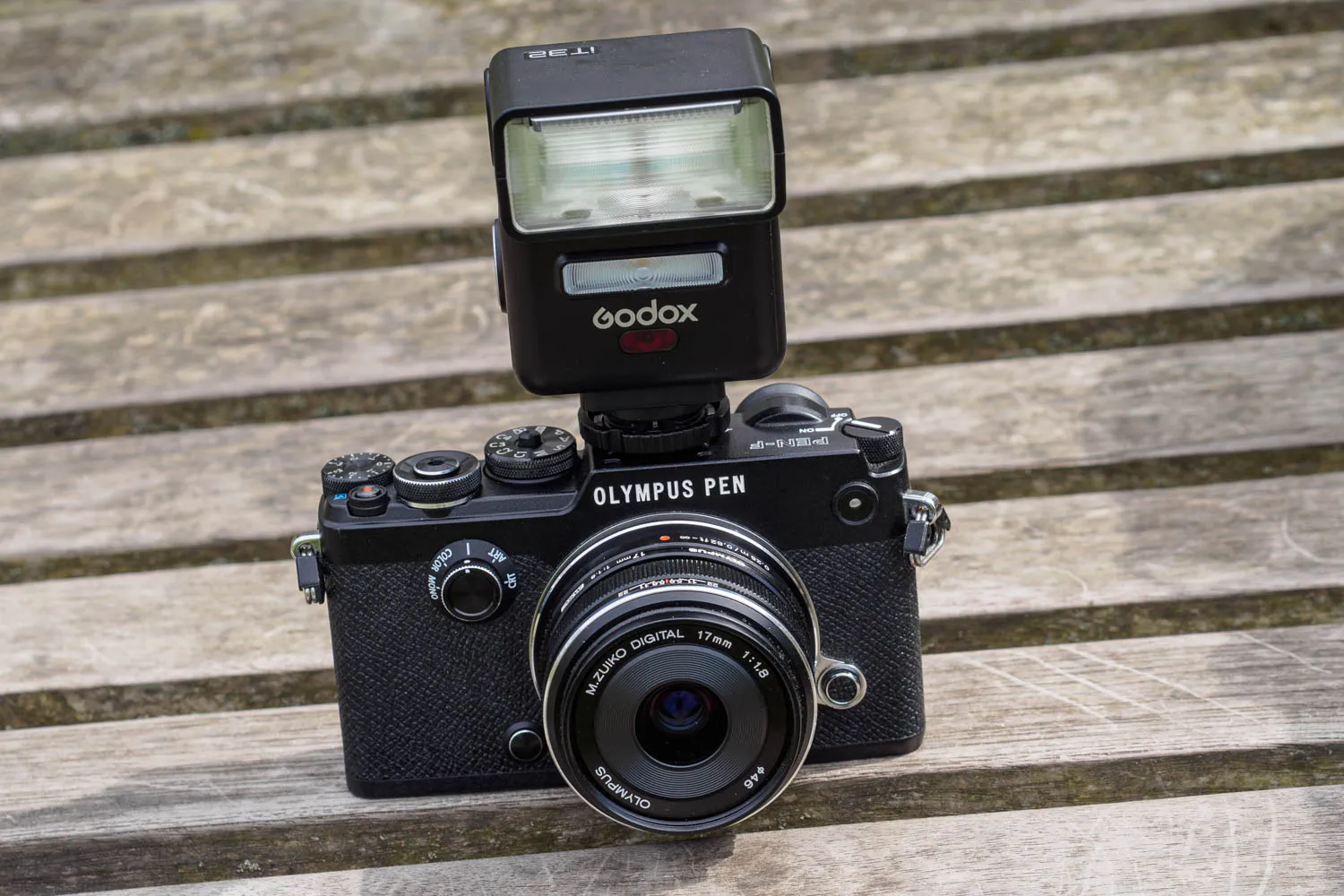
Of course, the relatively limited output power means that this isn’t going to replace large pro flashguns, but that was never the idea anyway. I’d love to see a variant with a zoom head for more power at longer focal lengths, although inevitably it would be larger and more expensive. Just right now, though, if you’d like a small, affordable and versatile flash, the Godox iT32 comes highly recommended.

Related reading:
- Godox iT30Pro review – I’ve tested lots of small camera flashes, and this is the best so far
- Zeniko ZA12 Dual Dial Flash review – clever auto metering for any camera
- Neewer Z3R flash review – reliable power and touchscreen control
Follow AP on Facebook, Instagram, YouTube and TikTok.
Godox iT32 X5 bundle: Canon
Godox iT32 X5 bundle: Fujifilm
Godox iT32 X5 bundle: Nikon
Godox iT32 X5 bundle: Olympus / OM System / Panasonic
Godox iT32 X5 bundle: Sony