We’ve invited three photographers working in black and white photography to share one image they consider among their best. From split-second decisions to carefully crafted compositions, they reveal the thinking, technique and experience behind the shot, offering insight into not just how the image was made, but why it matters.
John Bolloten
John Bolloten is a documentary photographer based in Bradford, UK celebrated for his compelling and unfiltered exploration of social and cultural issues. His work is deeply rooted in capturing the raw realities of marginalised communities, often focusing on themes like addiction, poverty, and urban life.
Instagram @johnbolloten
Tell us about this image. What are we looking at, and why did you choose it?
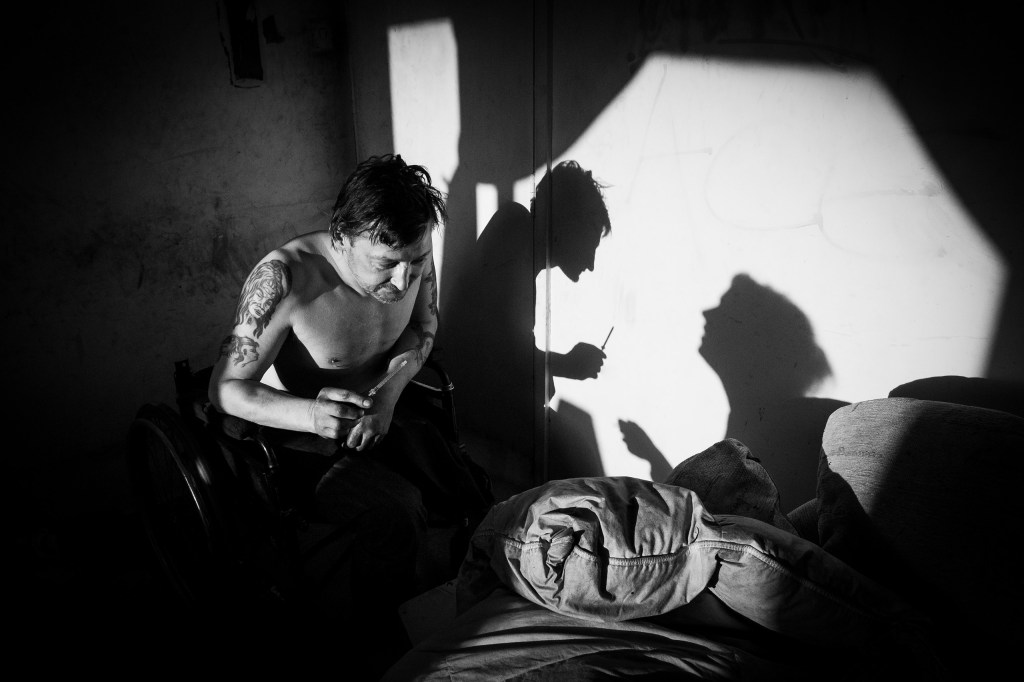
This photograph was taken when I was making a very intimate documentation of the lives of Gary and Maree in 2018. Gary was an amputee and both were in active addiction of both drugs (heroin and crack) and alcohol. It became the cover image of my book Love Story. Both Gary and Maree have since tragically died. I chose this image because it is one of the most powerful photos that I have ever taken and it is the image I get asked about the most. The silhouettes appear to show Gary offering Maree a needle and syringe and her reaching out to take it. That is not the reality though. He is sitting in his wheelchair holding that injecting equipment and she is not in the frame at all
What was happening just before and after this frame?
I am always observant and open to any possibilities that may happen when working. Suddenly I noticed that due to strong sunlight coming through the window, two silhouettes had appeared inside the actual frame it created. I fired off maybe three frames before the scene was gone. I was unaware of what I had actually captured until I got home and looked at it
What were the key creative decisions you made making this photograph?
The photograph was taken extremely quickly so I was working at this moment almost on instinct. I just wanted to get both their shadows in that small frame without overlap.
Can you share the technical details and how they shaped the outcome?
That day had a lot of sun coming in so even though I was shooting in their living room, the lighting conditions were a lot more favourable than what I usually was working with which was either overcast light coming in or whatever light was available. I would have some settings already set on my camera but everything happened so fast that it would have been impossible to think and potentially alter them. However, that wasn’t as issue as everything came out sharp with a good composition.
What was the biggest challenge in making this photograph?
Taking this photo was more about seeing and then having lightning reactions. On a wider level, working closely with people in active addiction for a number of years was extra challenging and had a big impact on my mental health. That cannot be separated from one particular image. That comes from working in-depth for a sustained period of time in an often very difficult environment.
What does this photograph mean to you and what would you like readers to take from it?
This photograph means a lot to me because it became the image that almost defined the whole project even though there are others that are more representative. Now that both Gary and Maree have passed away, there is added poignancy and I am left with happy memories but also sad emotions because of the loss of two people who were very dear to me. For others, it’s a sign that photographic magic can happen out of the blue when you least expect it. You just have to be present physically and mentally and the rewards will come.
Was it luck or judgement?
In photography I don’t believe that there is any such thing as luck. You simply make your own luck. Hours, days, months or years are often spent on one particular body of work. Occasionally something really incredible happens that is not foreseen. Those are “gifts” that come to those who work really hard and often come away with nothing. That’s the nature of the game.
Overall, as [photographer] Boogie once said “the deeper you go, the better pictures you will take”. I absolutely agree with that. Moving away from street level photography towards more deeper and intimate long-form storytelling has been the defining path that my work has taken. I have worked with so many people who have enriched my life and given my photography a lot of purpose. Love Story was an earlier project in my career (2018) but it was the first truly intimate piece of work that I actually did. This gave me so many skills and experience that I was able to take into everything else I did subsequently.
Alys Tomlinson
Alys Tomlinson was born in 1975 and grew up in Brighton, UK. After completing a degree in English Literature, she studied photography at Central Saint Martins and recently completed an MA (Distinction) in Anthropology at SOAS, University of London. Now based in London, Alys is most interested in the relationship between people and place, exploring themes of environment, belonging and identity.
Instagram @alystomlinson
Tell us about this image. What are we looking at, and why did you choose it?
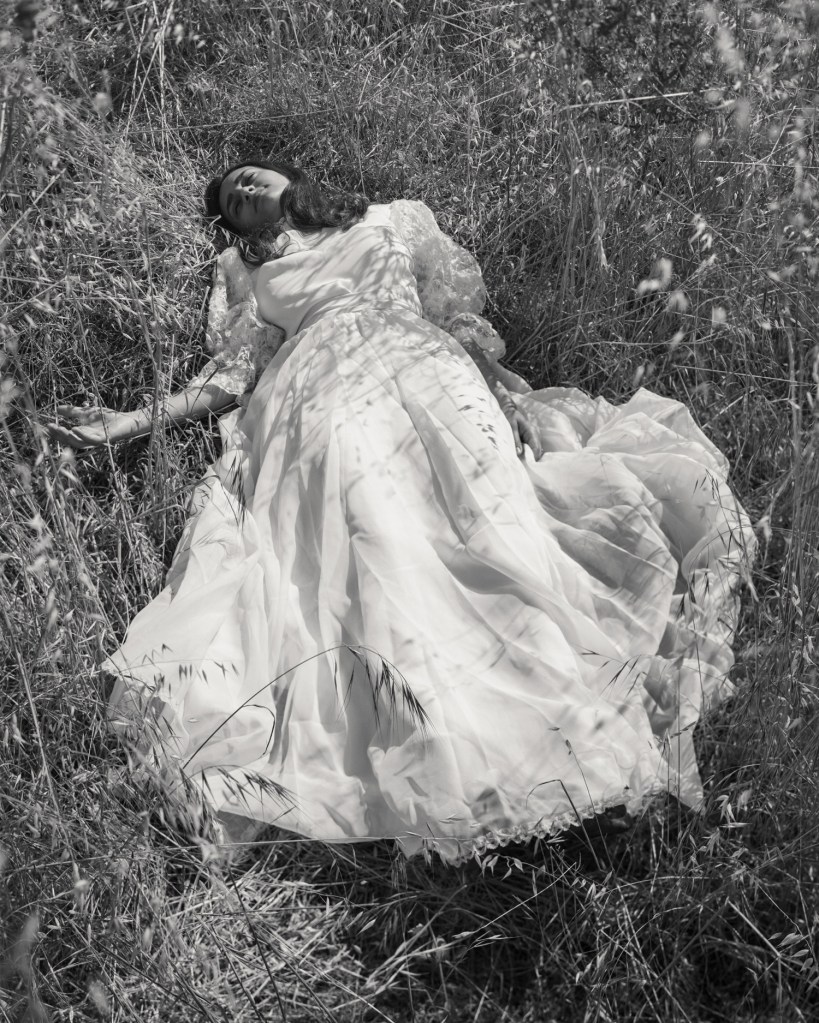
It’s hard to identify a ‘best shot’ when you’re so close to the work, so this is a current favourite from a new series that I’m working on in Naples, Italy about the interpretation of dreams. It’s a departure from some of my previous, more austere portraits. This image is quite playful and imaginative, and I like that it feels optimistic. The shot was set-up in advance, the young woman is a teacher from the city of Naples, and the vintage wedding dress was sourced from a secondhand shop.
What was happening just before and after this frame?
This looks like a moment of calm, but in fact we’d just clambered through a hole in a fence to reach a meadow-like landscape by the sea, on the outskirts of Naples. Taking the shots attracted a bit of attention and people kept walking past afterwards and enthusiastically shouting ‘Auguri’ (congratulations) as they thought that I was photographing a real bride!
What were the key creative decisions you made making this photograph?
I took four shots in total, all on black and white sheet film which was loaded in advance. Two of the images were emulating formal, classic portraits with the ‘bride’ standing and looking directly to camera. When I saw the wild landscape, I thought I’d try something different and more performative, so I asked Chiara if she’d be happy to lie down in the long grass. I adjusted the dress and asked her to move her arm slightly to the side. The open gesture feels like she’s inviting us into her world. Most of my portraits are gently directed but I also respond to the person I’m photographing, so it always feels like a two-way process.
Can you share the technical details and how they shaped the outcome?
This was shot on a Chamonix 5×4 field camera with Kodak T-Max 100 film. I only have one, standard lens which means I don’t dither around on deciding which lens to use. It forces me to move closer or further from my subject. I’ve always used fixed lenses as opposed to zoom lenses. I find that imposing restrictions on the image-making process can be very useful in thinking more deeply about the composition and framing. As large format has tilt and shift movements, I had to tilt the lens slightly to get the face and dress in focus. I like the softness, texture and tonality of film. I’m not sure this image would have the same feel if it was overly sharp or highly processed.
What was the biggest challenge in making this photograph?
It was a very hot day, and I was grappling with my hefty tripod and camera. Going under a heavy, black cloak in 80-degree heat makes me wonder sometimes why I stick with using this format! It’s not an easy camera to work with and each shot takes a while to set-up and adjust. It requires you to be very careful and precise; there’s a rhythm to working this way. It’s all worth it though when I get back the contact sheets and see that an image has worked, and it feels special – it still feels like magic.
What does this photograph mean to you and what would you like readers to take from it?
The photograph is part of a wider project based on the Neapolitan tradition of La Smorfia. The idea of La Smorfia is that anything you dream about can be assigned a number from 1-90 and these numbers are then used to play the Lotto! This image represents number 63 – la sposa (the bride) and was taken on my first trip for the project, after a period of research. The photograph marks a departure in style from previous work, so it’s a bit more experimental in approach. Every encounter I have with the people I photograph is a memorable experience and each one leaves its own, individual mark. I hope that viewers can tap into their own imagination when they look at this image. I would love to think that it transports people to another place and time.
Was it luck or judgement?
I feel that every photograph is a bit of both! You only need 1/60th of a second to get lucky, but it’s about all the components coming together at the same time. That’s the real challenge.
David J Shaw
David J Shaw is a photographer and journalist based in the UK, working both at home and internationally. Shaw works on a range of assignments and long-term projects that explore community, identity and representation. He also conducts investigations and produces reportage on human rights and social issues.
Instagram @davidjshawphoto
Tell us about this image. What are we looking at, and why did you choose it?
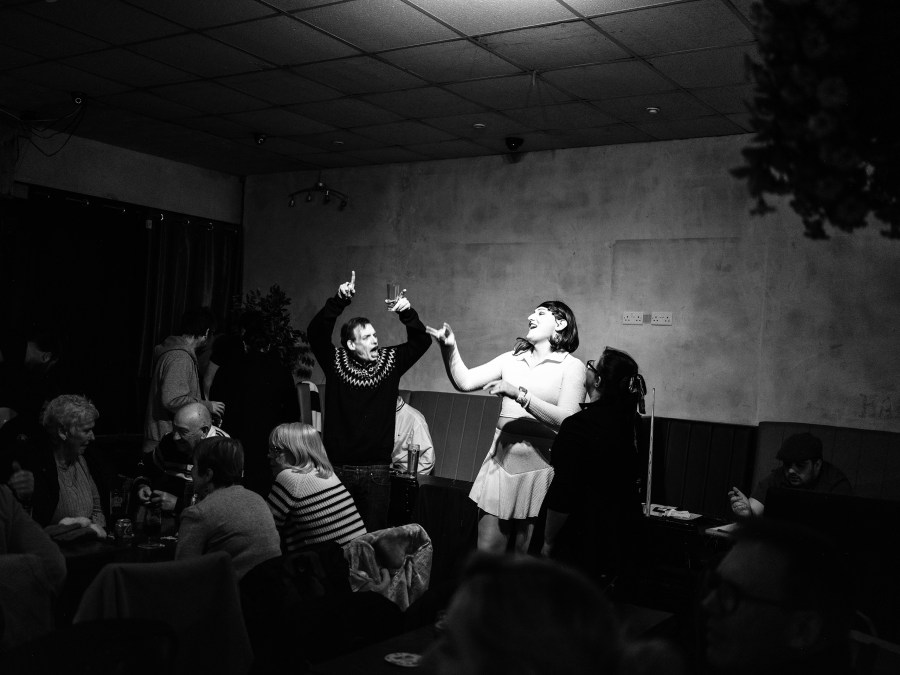
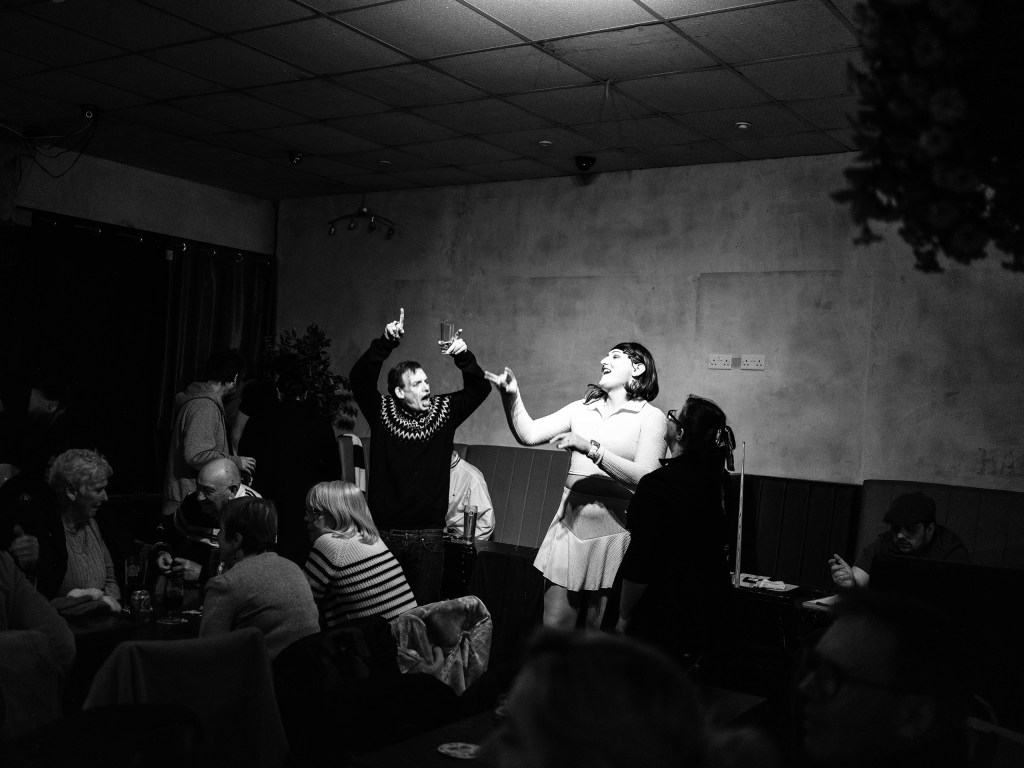
The image shows a scene at a karaoke party at the Broadway Club in Jaywick, Essex. Elika and Suzanne, dancing on the right, are a couple whom I have become friends with. It was the first of many karaoke parties for me in the village. I didn’t realise it then, but it is one of the first images of my long-term project about the village called ‘Jaywick Sands Happy Club’.
I chose it because it perfectly represents part of what I am trying to get across with the project in a single shot. The buzzing atmosphere in a busy pub, full of a close-knit and fun-loving community, was breaking all my pre-conceived ideas about Jaywick, supposedly ‘England’s most deprived place’.
What was happening just before and after this frame?
I had been invited to make photographs at the party by a DJ called Paul, whom I had previously met on the street. As I entered, despite the loud music, the room went quiet. Paul announced my arrival over the speakers: “You’ve just seen Dave walk in. He is a journalist, he is a Charlton fan, but don’t beat him up.”
I spent the rest of the evening chatting to everyone about life in Jaywick, karaoke and photographing the evening’s proceedings – and in that time I captured this image.
What were the key creative decisions you made making this photograph?
Choosing to shoot this project in B/W was a big decision. I had started using B/W for the first time on a previous project about traditional farming in Wales. I chose it then because I wanted to utilise what I perceived to be the most traditional form of narrative photojournalism. I found that shooting in B/W, in a classic photo essay format, meant that I could convey emotion and mood better, but it also meant that this constant aesthetic led to focusing on the story and narrative, which is what the project is all about.
In the karaoke parties, the lighting was dark, so using flash would have been much easier, however I find that the strong hit of light can change my interaction with everyone there, and actually finding available light makes the images more dramatic, such as in this one.
Can you share the technical details and how they shaped the outcome?
I currently shoot on the Fujifilm GFX100S with some prime lenses. It has an amazingly high-detail sensor, and these create huge raw files, so it has made me slow down and be more intentional with my images.
There is also a tiny amount of movement blur in this image, which will have come from the fast dancing vs. a slow shutter speed due to the low light. This is not something I usually try to do, however, I like it here as the movement amplifies the dancing.
What was the biggest challenge in making this photograph?
Entering a new community space like this to take photographs can be challenging in terms of working out how well you are being received and how welcome you are to make these pictures. Lots of people in the room were up for it, some were not, so you have to work this out in a polite and open way.
What does this photograph mean to you and what would you like readers to take from it?
After this image was taken, I became friends with the two women dancing on the right and even went on to photograph their wedding. The evening had been a real lesson in the potential issues surrounding the village’s representation and narrative. Online, Jaywick’s narrative is predominantly negative, with many content creators making videos about deprivation there.
However, I have found a proud and caring culture where DIY community support is prevalent, and this was perfectly represented through this karaoke party. I left the Broadway Club that night with loads of phone numbers and invitations for more photo opportunities, and over a year later, I’m still working in the village.
People are proud of their community in Jaywick, despite what its reputation might be. I aim to show this in my story and in this picture.
Was it luck or judgement?
I am a firm believer that you make your own luck in photography. By being in a place making images, your opportunities for lucky photographs become much higher. I feel lucky to have met the DJ, Paul, a few days previously, who invited me to the party.
This room is dark, but it had this big light on one side. I felt it looked like a theatre stage. I was taking lots of pictures of people in this big light source however, when Elika started dancing in it, that lucky moment happened.
What did this image teach you?
The importance of being open to, and creating the opportunities for, an unplanned experience that leads to stories and projects. This project and image landed on my lap after meeting Paul on the street. However, this meeting would not have happened if I hadn’t simply turned up to have a look around.
What advice would you give someone trying to make a similar shot?
Turn up to where you might be interested in making work. Be open, genuine and honest about what you would like to do and listen to the people with whom you are making pictures, as they will be your best guides to new image ideas.
Related reading:
- Complete guide to black and white photography
- This photographer shot a portrait of every living FIFA World Cup Final goalscorer – see the incredible pictures here
- This photographer just smashed the world record for the famous Cape to Cape Road challenge – you need to see these incredible images
Do you want to win some great prizes for your photography? Enter your photos in our International Amateur Photographer of the Year competition. Free entry for photographers aged 13-21.
Follow AP on Facebook, Instagram, YouTube, TikTok and Irys.