Driving through Morocco earlier this year, John Balsdon found himself in one of the most remarkable natural landscapes he’d ever seen. “The Western Sahara is the most desolate place, but, my God, it’s beautiful, with huge sand dunes and a great expanse of light and dark,” he tells me. “It’s unexplored and enormous and very difficult to get into. But if you can get there for a week, you’d have an astonishing time.”
If it had been a normal trip, the British fine-art photographer, known for his aerial images, may well have spent a week or more exploring the Western Sahara, working with drones or from a plane or helicopter. But this time, against his usual slow, thoughtful approach, he was in a real hurry, as he and his expedition team were attempting to set a new world record for the 20,000-kilometre (12,427 mile) Cape To Cape Road challenge, a car journey from Nordkapp, Norway, in the far north of Europe, all the way down to Cape Agulhas in South Africa, the most southerly point of the African mainland.
British explorer Richard Pape completed the first north-south drive in 1955, travelling for 86 days and 20 hours in an Austin A90 Westminster. A Canadian duo, Garry Sowerby and Ken Langley, improving on his time in 1984, setting a new record of 28 days and 13 hours in a GMC Suburban. (German & Danish Teams attempted faster times in 2015 and 2016 but both teams flew over the Mediterranean, skipping 1,600 miles and four borders, violating record regulations, and neither record attempt was recognised.)
“I’d read Richard Pape’s book Cape Cold To Cape Hot and I thought “Where can you go in the world where it’s the last true adventure, like this?”,” explains Balsdon. “I thought “I’ve got to do it.” I also thought it would give me a ton of inspiration.”
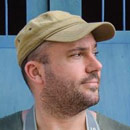
Born in 1969 in Singapore, Balsdon grew up in England. His father was a fridge engineer, his mother a professional wedding photographer and later a cleaning lady, who got him hooked on photography from the age of 13. Later, he hitchhiked across the United States and backpacked through India, south-east Asia and Egypt, always with a camera. But photography got put on hold for his career and family life. “I had to make money, so I became a lawyer. I had three kids. I didn’t come from money at all. My dad was a fridge engineer and my mother was a cleaning lady. I had to make sure they were taken care of. I did finance, energy finance law, big projects across the world: power lines, roads, oil and gas… I worked in 54 countries. I lived in Moscow for ten years. I’ve now come back to what I always did. I’ve gone from being a guy with a backpack, trekking around India, who now gets in a car and is doing the same thing.”
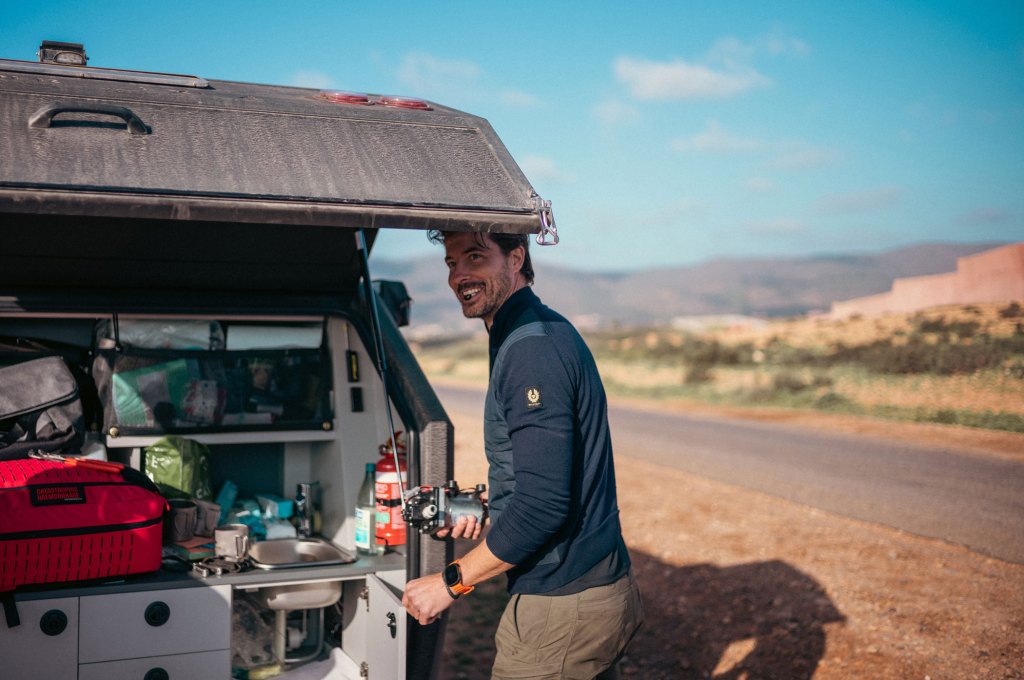
Balsdon kept up with the photography throughout his life. When he finished his legal career at the end of 2024, he wanted “something big” and the Cape To Cape is certainly big. “I’ve always loved travel,” he tells me. “I was always taking photographs for the last decade in remote places. I wanted to do this. I love Africa. I thought it would be an awesome challenge.”
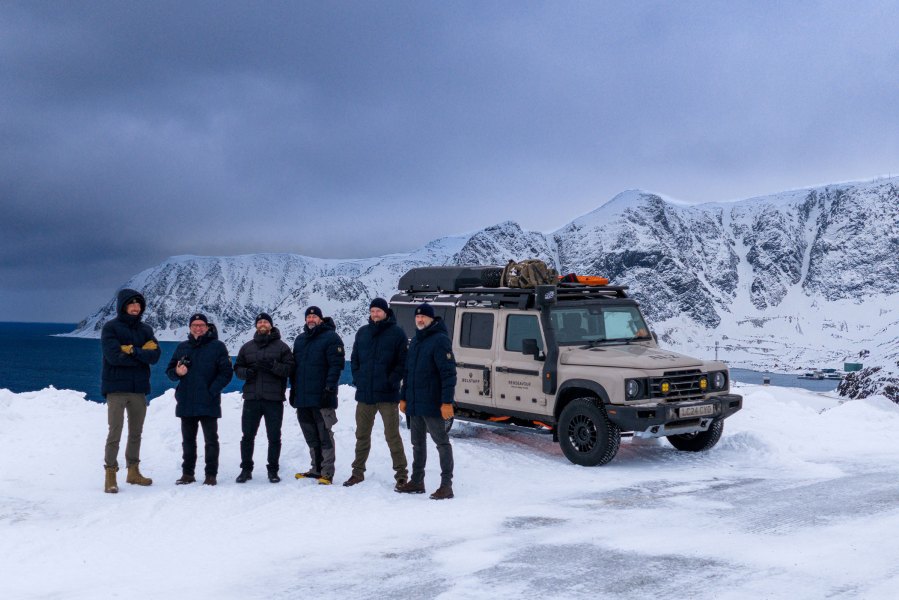
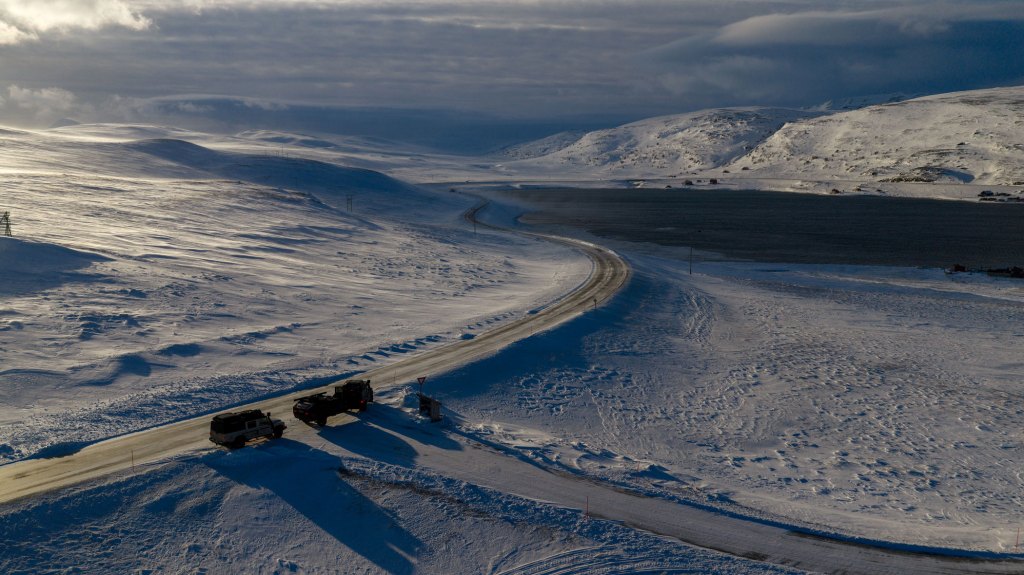
On March 1, 2026, Balsdon’s team, comprising six people in total, including an overlanding specialist, a security manager, an engineer, and filmmaker and photographer Charlie Summers, departed from Nordkapp, driving an INEOS Grenadier Station Wagon and a Grenadier Quartermaster with a Bruder EXP-4 trailer. They were carrying a hefty load of gear, including a DJI Mini 5 Pro drone and a DJI Mavic 4 Pro drone, various Leica and Sony cameras, batteries, chargers, memory cards, a laptop, and a whole range of essentials, from radios, satellite phones and tracking devices to car maintenance kit, food, stove, defibrillator, First Aid kit, solar shower, sleeping bags, clothing, and all kinds of documents (passports, visas, insurance, letters of introduction…).
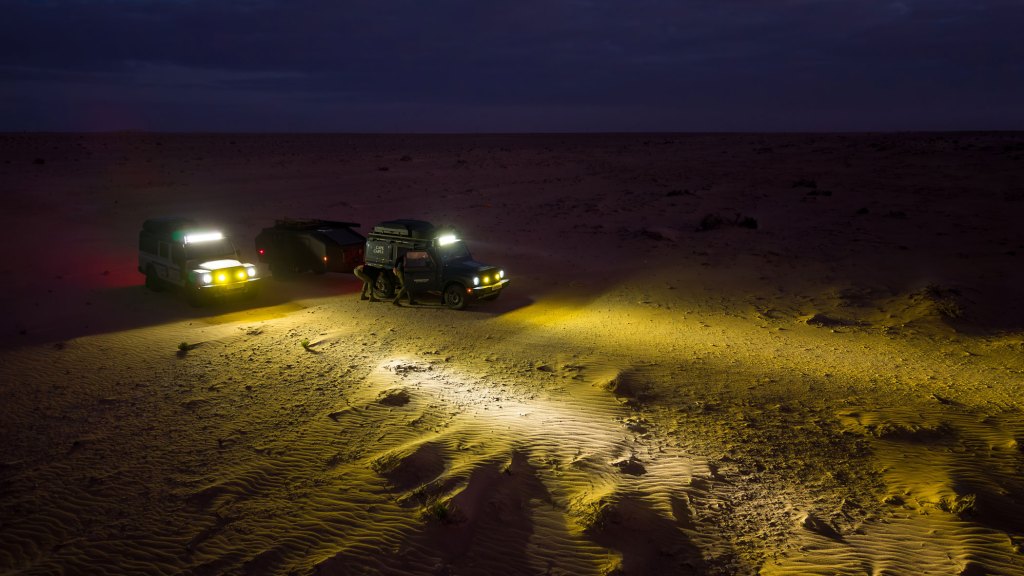
Even before they’d set off, the trip had been a mean feat of admin and organisation. “It was a massive task,” says Balsdon. “I bought the cars and the trailer. The logistics of us, sorting visas across 15 African countries… That was so difficult. There was all the planning. Are we going to get insured? What equipment do we need, what training, what preparation? Then background support, SOS support. It went on and on. It was one of the most complicated things I’ve ever done.”
Their route, spanning two continents, took them from Norway into Finland, Sweden, Denmark, Germany, Holland, Belgium, France, Spain, Morocco, Mauritania, Senegal, Guinea, Ivory Coast, Ghana, Togo, Benin, Nigeria, Cameroon, Republic of Congo, Cabinda, D.R.C., Angola and Namibia, finishing in South Africa. Crossing 25 borders with no flights and no shortcuts, they dealt with vastly different terrain and conditions, including temperatures ranging from -28 to +48 degrees.
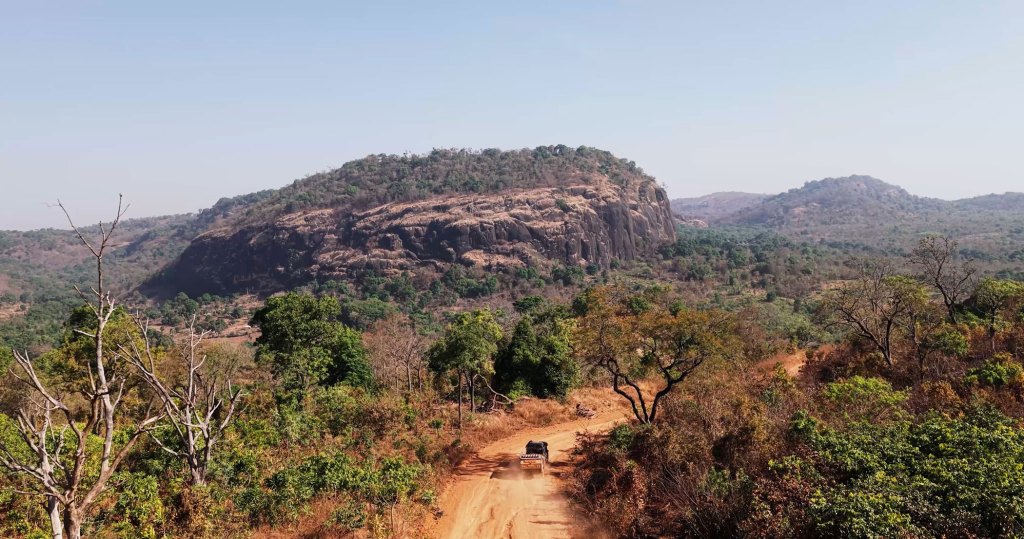
The start provided an early highpoint. “Nordkapp is one of the most beautiful places on Earth, up in the Arctic Circle,” says Balsdon. “There was a thin coating of snow and bright blue skies, and everyone was so optimistic and happy and couldn’t wait to get on with it. That was wonderful.”
Balsdon also enjoyed the hospitality of new acquaintances they met along the way. “In the middle, we stopped in Nigeria. People there made us so welcome, took away our cars, cleaned them up, gave us dinner, replenished all our supplies. That was great.”
“I also lost my passport on the Benin-Nigeria border. I was in Lagos, and I was having to watch the team get ready to go, because I knew I couldn’t go. We were guests of Rendeavour, an entity that owns a private city in Lagos, Alaro City. Their head of security kept looking for the passport. Before I went to bed, at 11 o’clock at night, they said “We found it.” Some kind person in Nigeria had handed it in to the authorities. The head of security drove three hours to get down to the border and drove three hours back with my passport, to give it to me, with 10 minutes to spare, so we could leave at 5am. I’d thought the whole thing was over for me.”
There were other major challenges, including a need to drive at night on poorly lit roads, with difficult conditions and animals often wandering across the way. “You had to be on your toes,” Balsdon says.
Road traffic accidents, at night and in the day, were the Number One risk. But there were other dangerous moments. “When we crossed from the Niger Delta into Cameroon, there was an area that the Foreign Office warns “Do not go there.” It’s called a Red Zone. We had to have an army escort. We had an armoured vehicle ahead of us and one behind us. We were told to drive in their track, just in case they went over an IED (Improvised Explosive Device). We had to do that for 400 kilometres. That was quite punchy.”
“There was also a place called Lubango in Angola,” he goes on, “where we arrived around 8pm, and there was a policeman surrounded by motorcyclists. He clearly decided it wasn’t a good thing for him, so he took out his pistol and started firing live rounds into the air.”
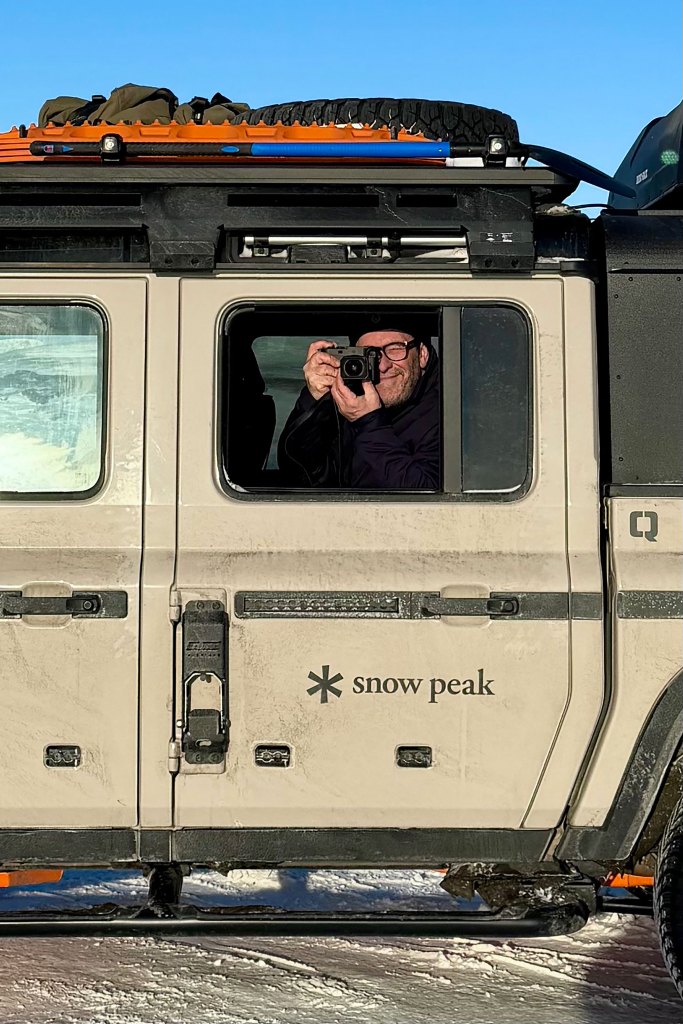
Crossing borders often ate up precious time. “The worst was unquestionably getting into the DRC, going from Brazzaville into Kinshasa,” he says. “That took us nearly 24 hours, to cover 10 kilometres, across the Congo river.”
The sheer demands of the journey also took its toll. On average, they’d need to complete around 715 kilometres per day, but towards the end, running behind, they had to drive 2820 kilometres in just over two days, through Angola, Namibia and finally South Africa. “It was unbelievably tough,” Balsdon recalls.
At times, especially from Nigeria onwards, he was convinced they couldn’t break the record. “In Lubango in Angola, I realised we had about 4000 kilometres left and three-and-a-bit days to do it. I said to myself “This is never going to work”, because we’ve never done a 1000 kilometres per day, even in Europe. That was a very low day, with a pistol shooting, and the team wasn’t talking to each other. It was awful.”
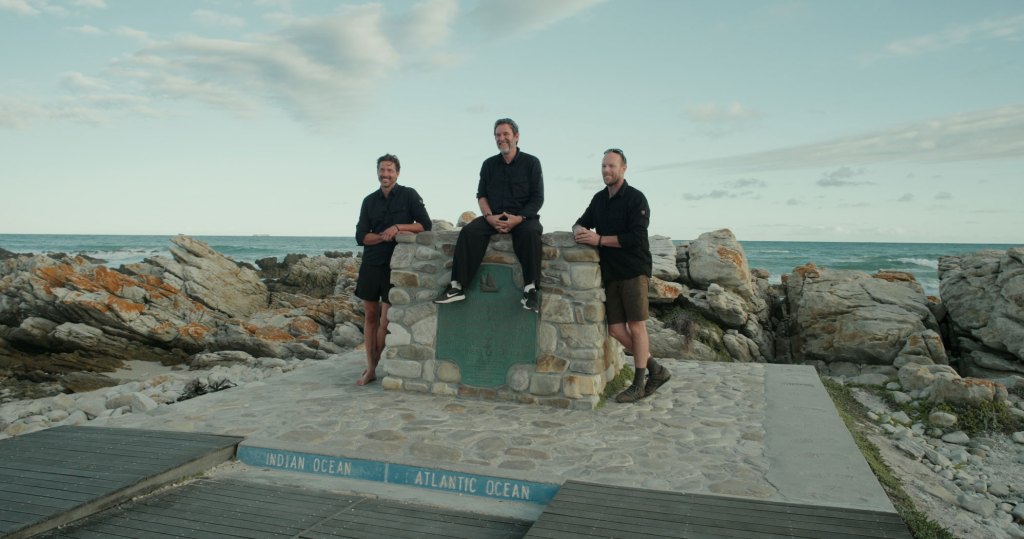
The team did make it, though, arriving into Cape Agulhas on March 29, 2026, setting a new world record for the journey of 28 days and eight hours, beating the 1984 time by four hours and 45 minutes. “That felt fantastic,” Balson tells me. They also became the first team to complete the challenge via West Africa, the first to finish with two vehicles driving as a convoy, and the first to complete the challenge with an expedition trailer.
Balsdon was also the first to fully document the Cape to Cape challenge on film and through photography. A feature-length film is planned. He also hopes to publish a book next year.
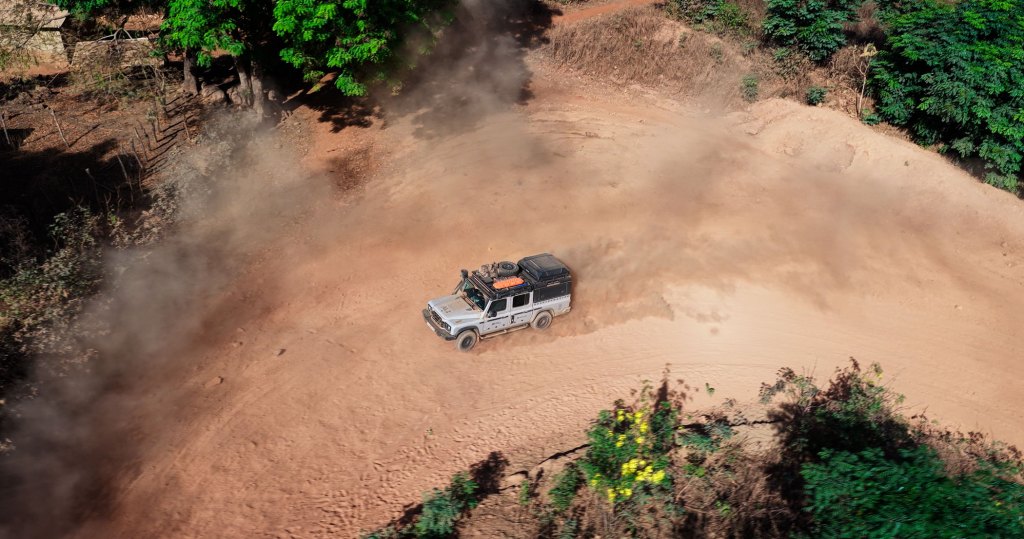
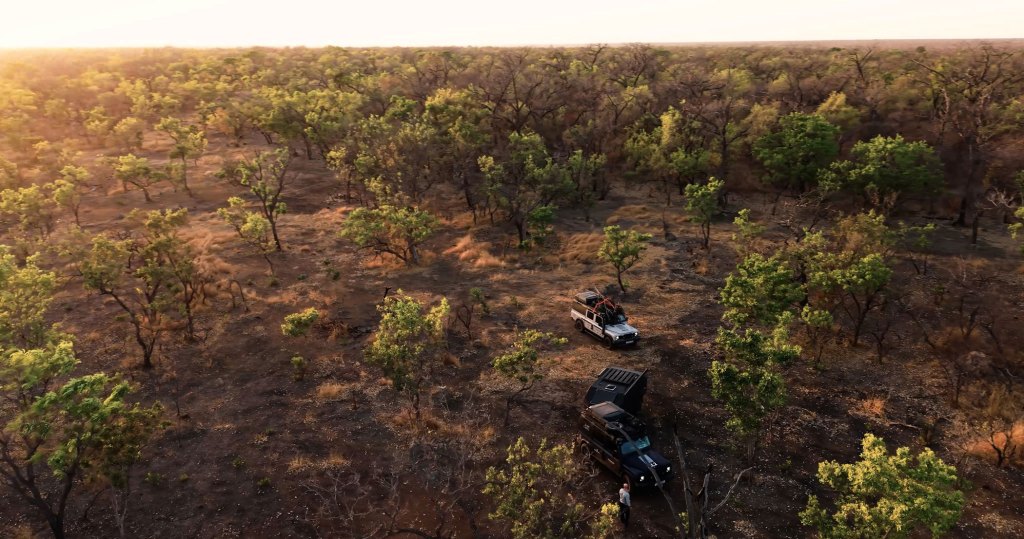
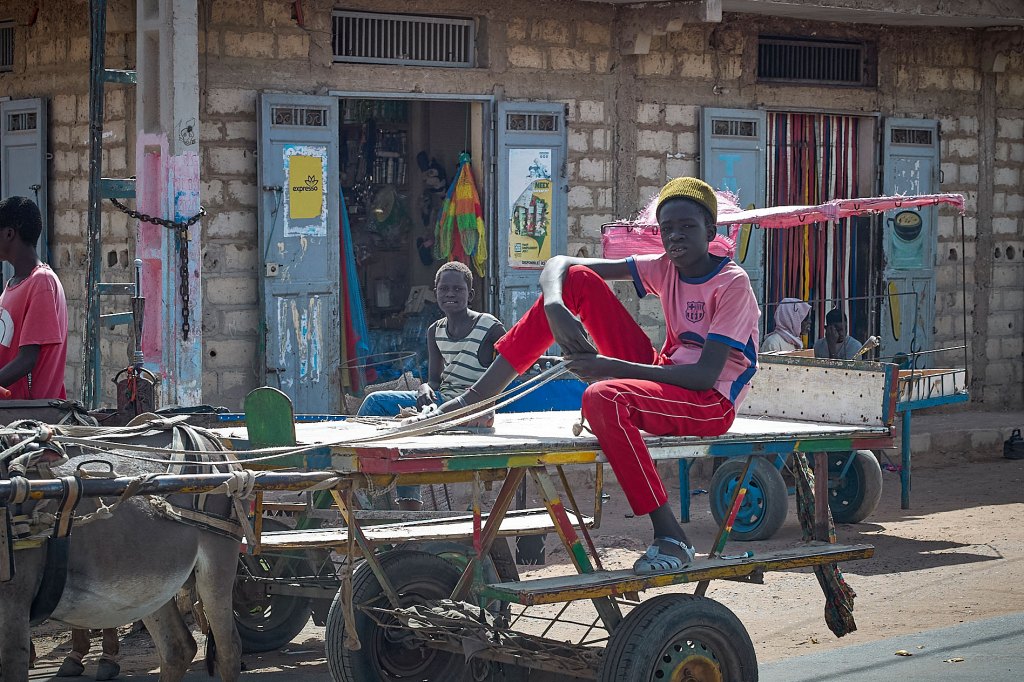
His images from the trip are a mix of street photography and drone images. He picks out a couple of his favourites, from a street photo of “a young man sitting on a cart in Senegal, very relaxed, looking at me, the cart being pulled by a donkey,” to an aerial shot of their vehicle driving “in Guinea, through red fine dust, like talcum powder, billowing out of the back of the cars as they’re trying to grip. It gives you a sense of the greenery and the beauty of this place, and just how tough it was. One of our cars lost its air conditioning, so it was 48 degrees, no air conditioning, windows open and dust everywhere.”
But the constant pressure of racing against the clock throughout the journey actually allowed little time for photography. “It was very frustrating,” Balsdon admits. “But I’d worked out by Mauritania or Senegal that the photography would have to take the back seat. The record had to take precedence over the photography. It was so full-on – meeting with fixers, crossing borders, anticipating problems ahead… I was the only French-speaker, so I had to do all the speaking at the borders. That was difficult.”
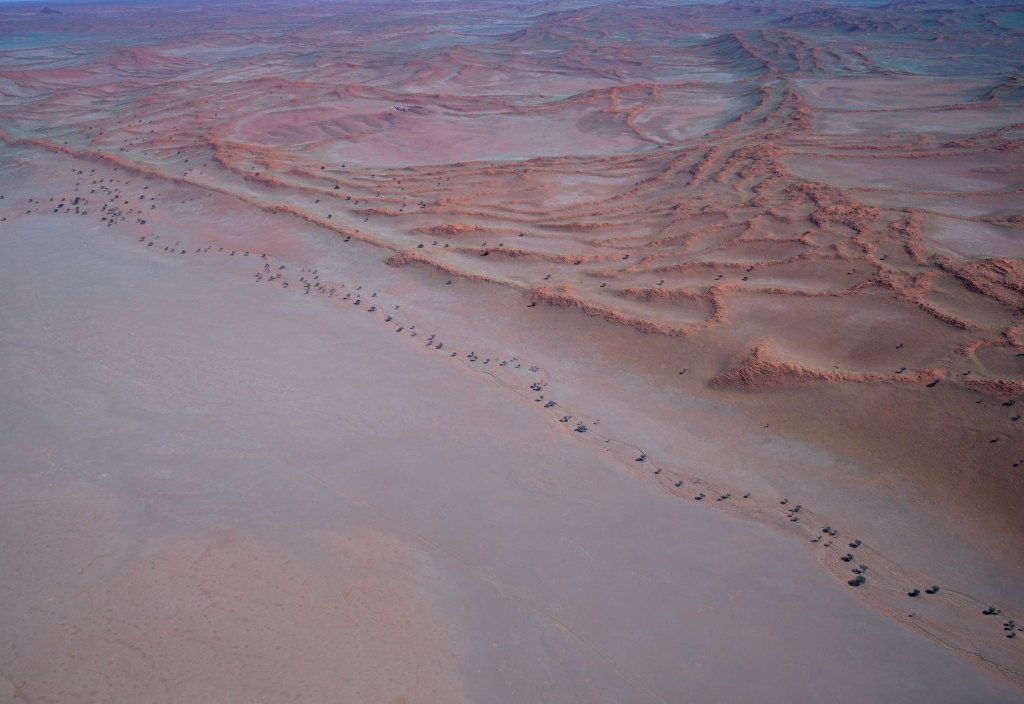
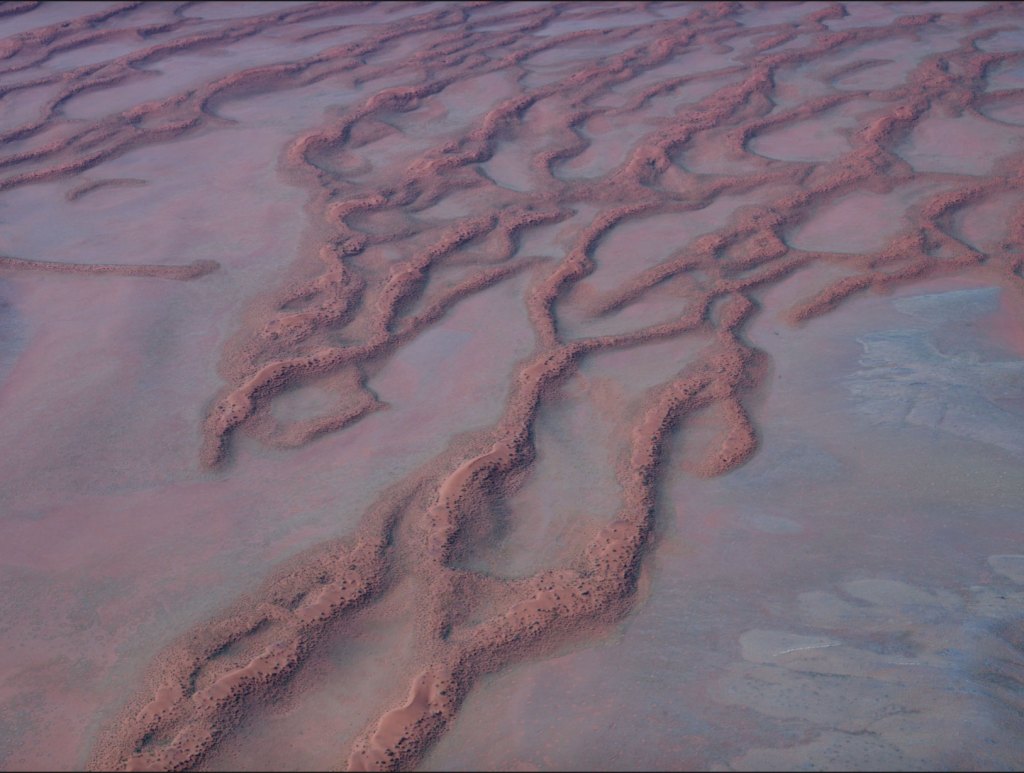
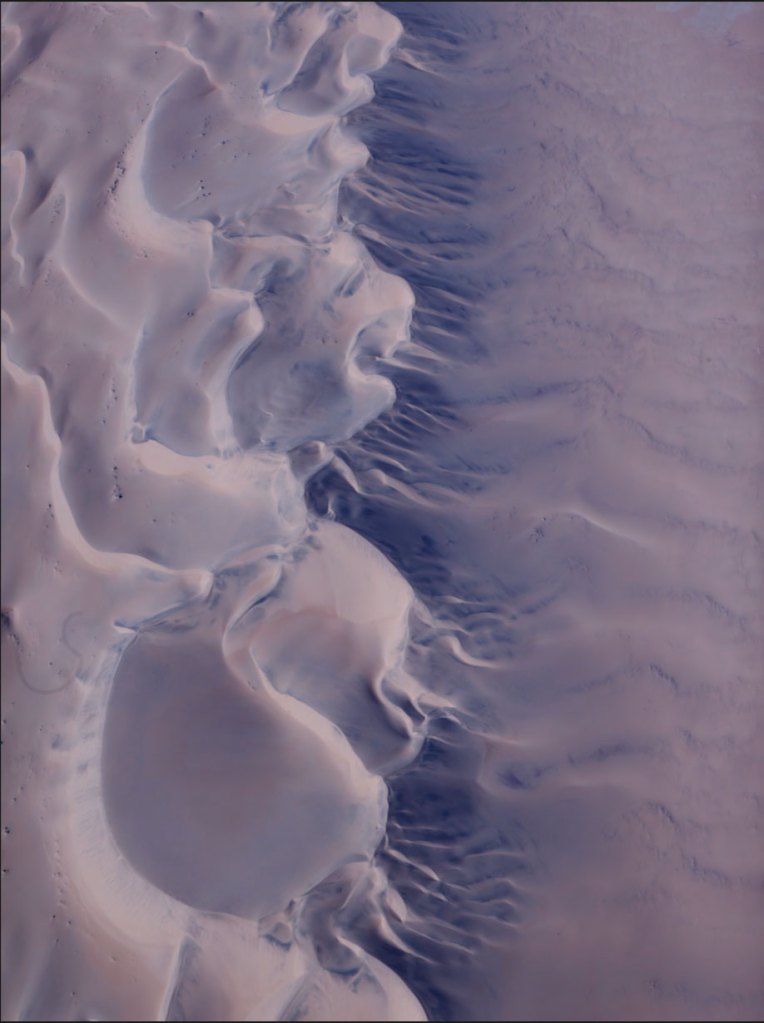
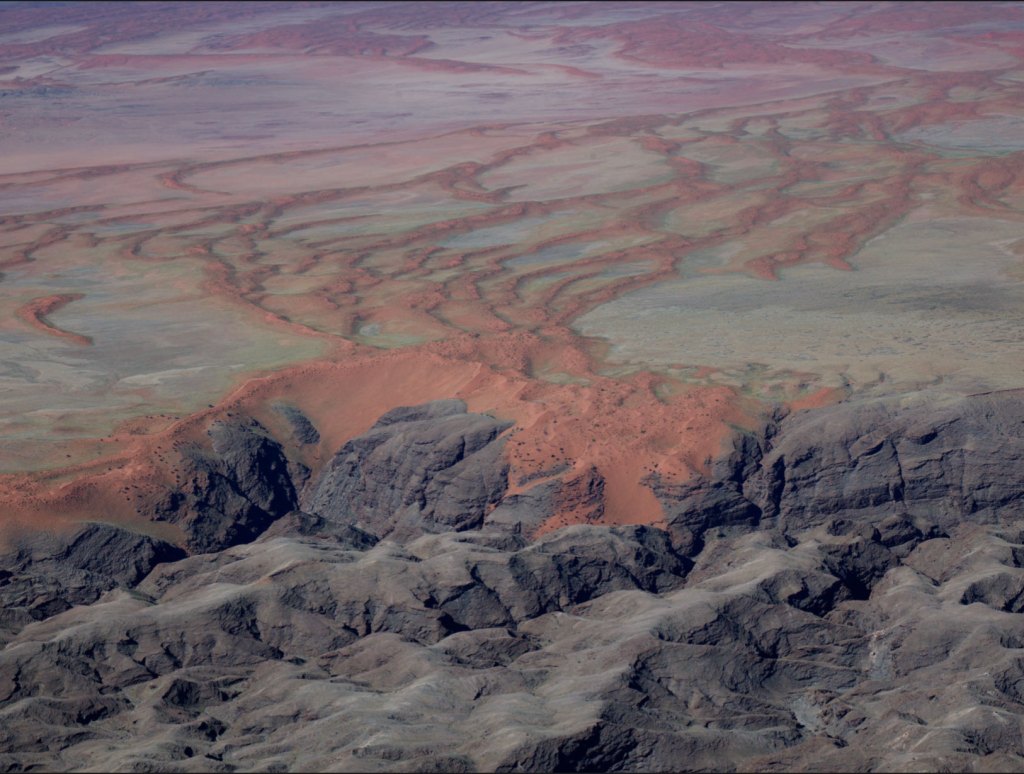
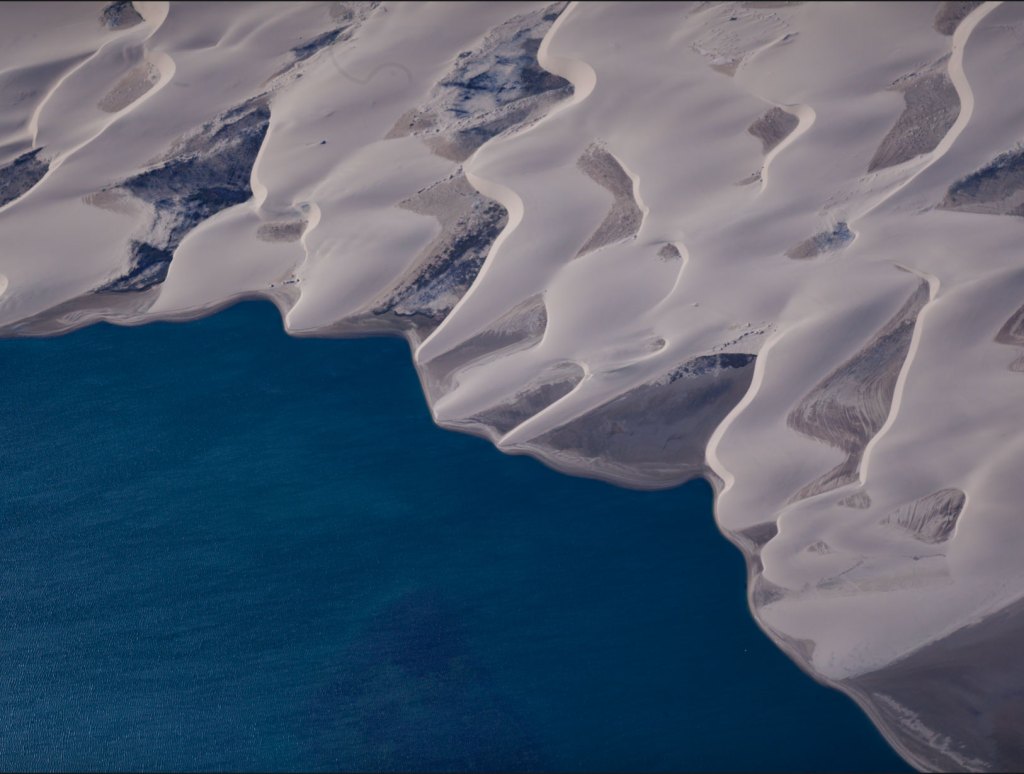
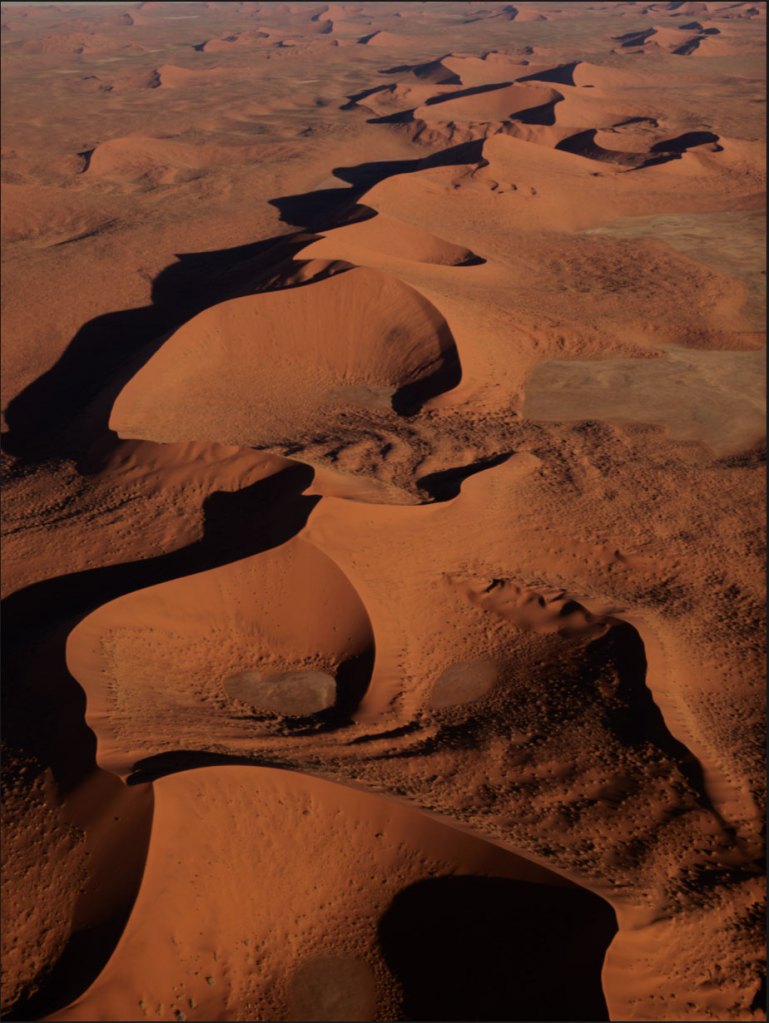
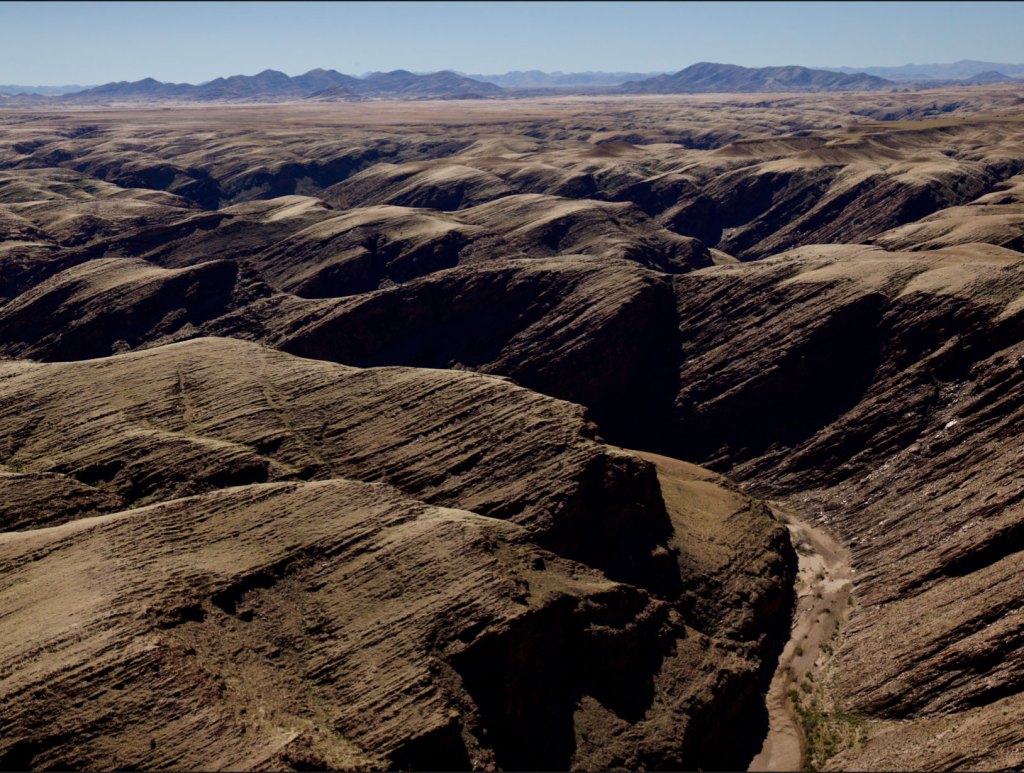
Balsdon particularly enjoys focusing on aerial photography, capturing the wonders of “nature’s paintbrush”, including the “abstraction, incredible patterns, colours and shapes” of landscapes when viewed from above. He’s previously worked in countries such as Iceland and Australia, as well as across Africa. He usually operates according to his Always Look Twice philosophy, which, he explains, is a belief that “you get more out of things if you really study them. With my photos, you can keep looking and looking again, and find another detail: a person, a footprint… But more generally it’s my philosophy in life, which is to just focus on a few good things and you’ll get far more out of it than you would from trying to look at everything.”
The painfully hurried approach of the Cape To Cape journey appears to be the exact opposite of the Always Look Twice philosophy. “In a way, it was,” Balsdon admits. “But the underlying purpose behind it was to give me inspiration to go and do the next five years of photography, and it did that.”
During the Cape To Cape journey, he took reference points for places he wants to return to. With Western Sahara, he’s certain that he’ll return. Congo is another “totally unspoilt place” that he plans to explore more thoroughly. Speaking to me from Cape Town in South Africa, he’s already revisited Namibia to extensively photograph areas he and his team, including the Skeleton Coast and Damaraland, shooting from both a small plane and a helicopter.
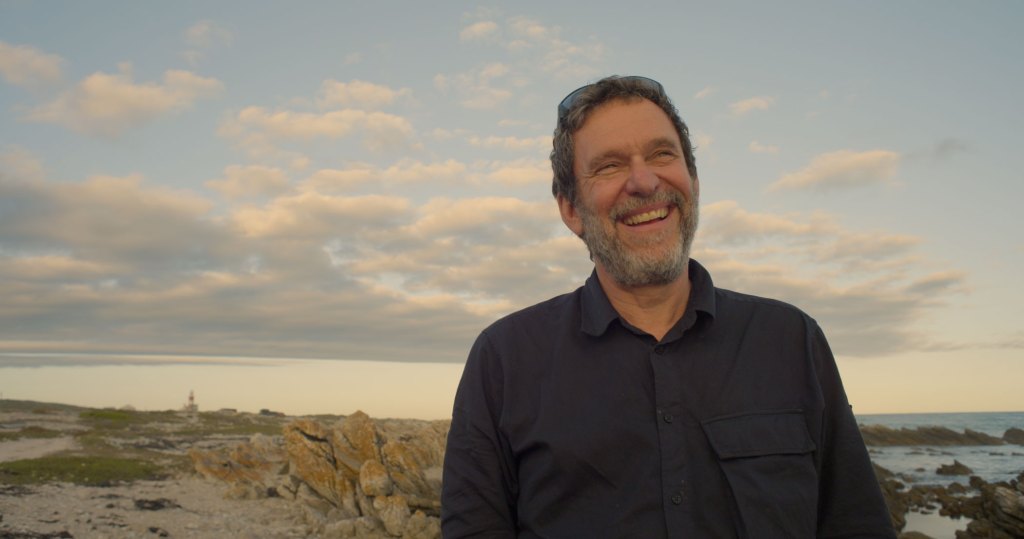
Balsdon has no immediate plans to take on another epic, time-pressured challenge. But there are plenty more adventures to come. “The two cars and trailer that broke the record are now in southern Africa and they’re going to be here for the next few years,” he explains. “I’m going to go to some of the places in the Congo and Botswana. I want to go to Zambia and Zimbabwe. I’ll end up in Kenya and Tanzania, doing what I do.”
He may need a little time to rest and reflect, too. More than the world record, the journey itself has had a profound impact on him. “It’s changed me,” he says. “I’m far more relaxed now. You get to see so much of humanity and you begin to realise that on some levels you’re very fortunate, but then, in places like Guinea, we saw people who were the poorest of the lot and yet they smiled more than anybody else. It’s made me realise that most things that I worry about are First World problems. I’m so grateful for the opportunity to have seen what I’ve seen.”
For more breathtaking images visit John Basildon alwayslooktwice.com
See below for a selection of fantastic images from Namibia, which John visited immediately after finishing the Cape to Cape challenge.
Related reading:
- Aerial photography: reaching new heights with Donn Delson
- What is Fine Art? Photographers explain…
- Fine art architecture photography guide
- Guide to fine art black and white photography
- Guide to fine art landscape photography
Do you want to win some great prizes for your photography? Enter your photos in our International Amateur Photographer of the Year competition. Free entry for photographers aged 13-21.
Follow AP on Facebook, Instagram, YouTube, TikTok and Irys.