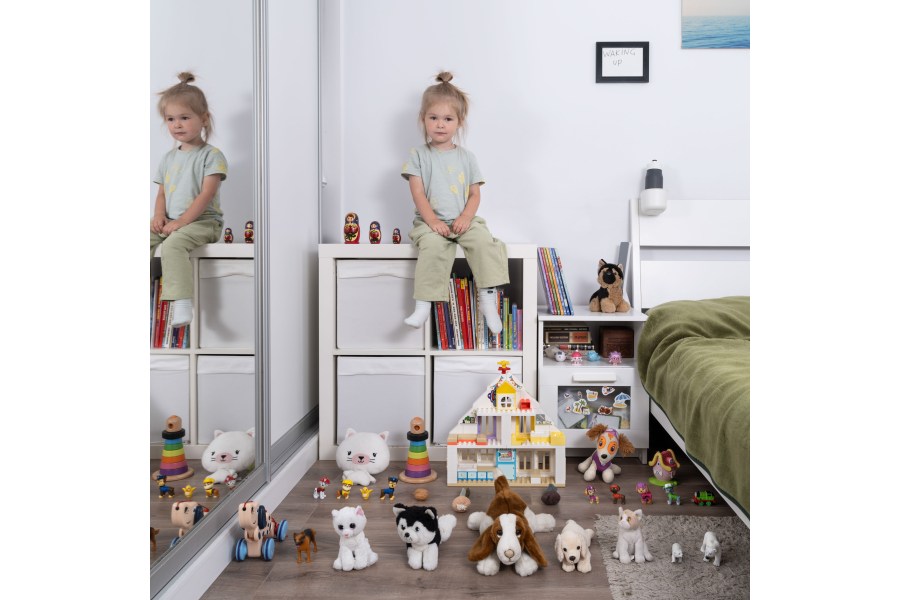
Seventeen years on from taking the project’s first photograph, Italian photographer Gabriel Galimberti’s Toy Stories: Photos of Children from Around the World and Their Favorite Things, is published in a new form, seeking a new audience. The visual exploration of children around the world with their prized toys was originally intended for and consumed by photo enthusiasts. Two revised editions in French and Italian are for children, with rigid pages and tactile durability. It’s not just a shift in design but also intent.
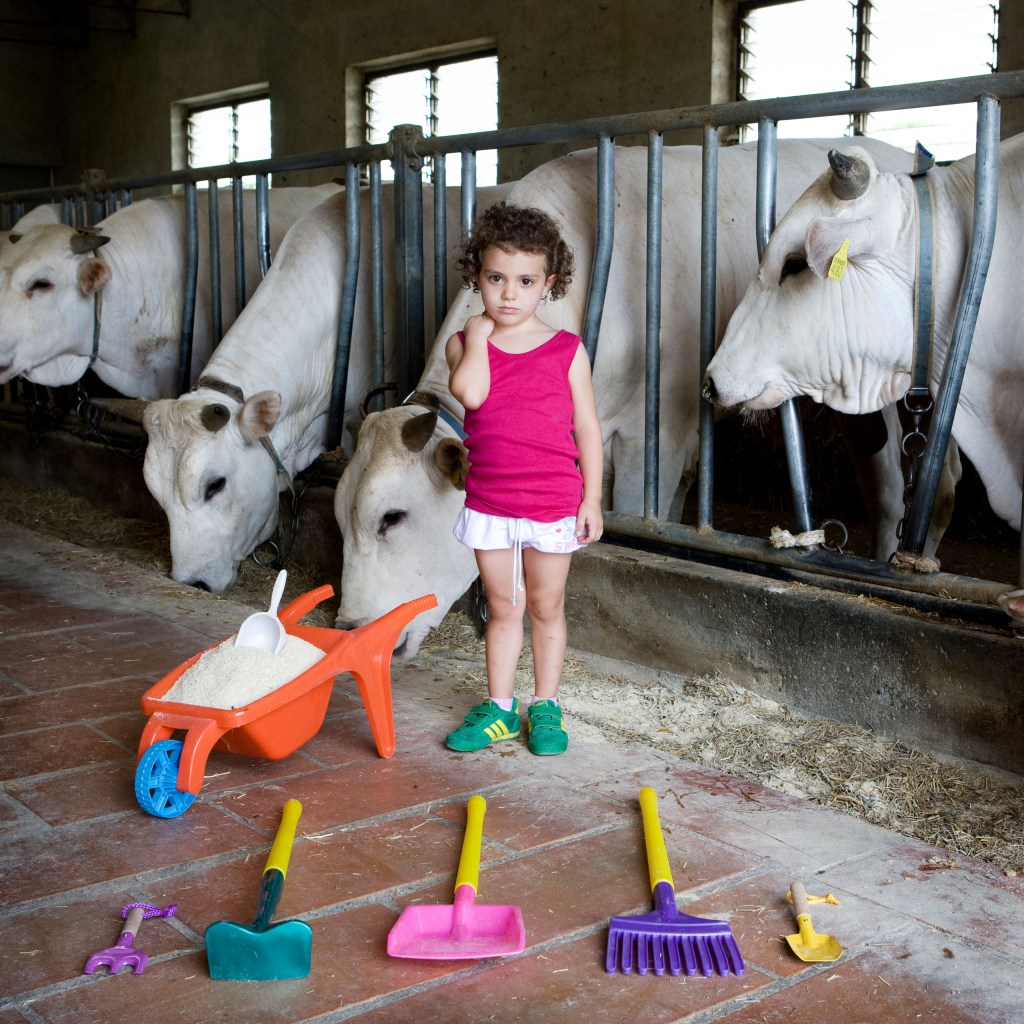
It’s a smart rethinking for a reportage that helped launch Galimberti’s photographic career and like many great projects, it began almost by accident. ‘I took the first picture in 2009. A friend asked me to photograph her daughter. She was playing with her toys, and I liked the scene. There was no plan,’ he tells me via Zoom from Milan, Italy.
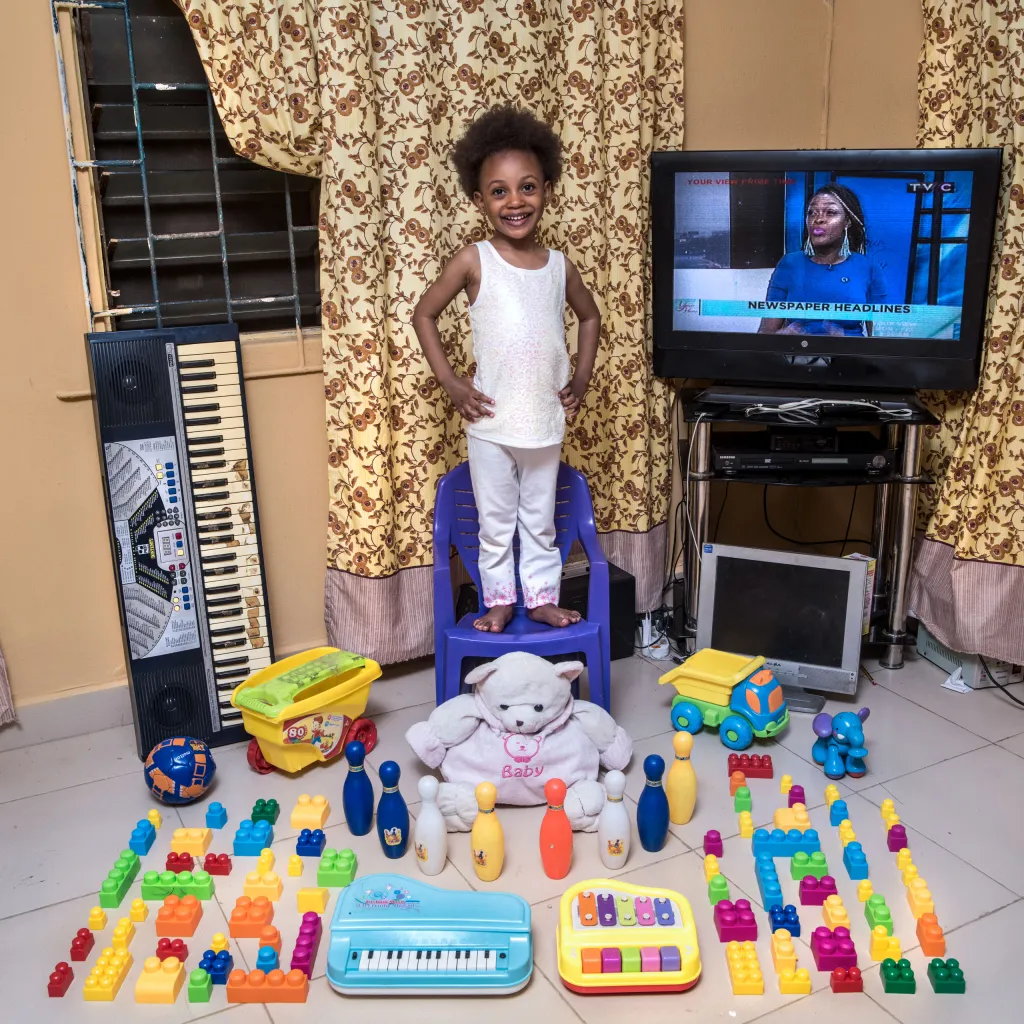
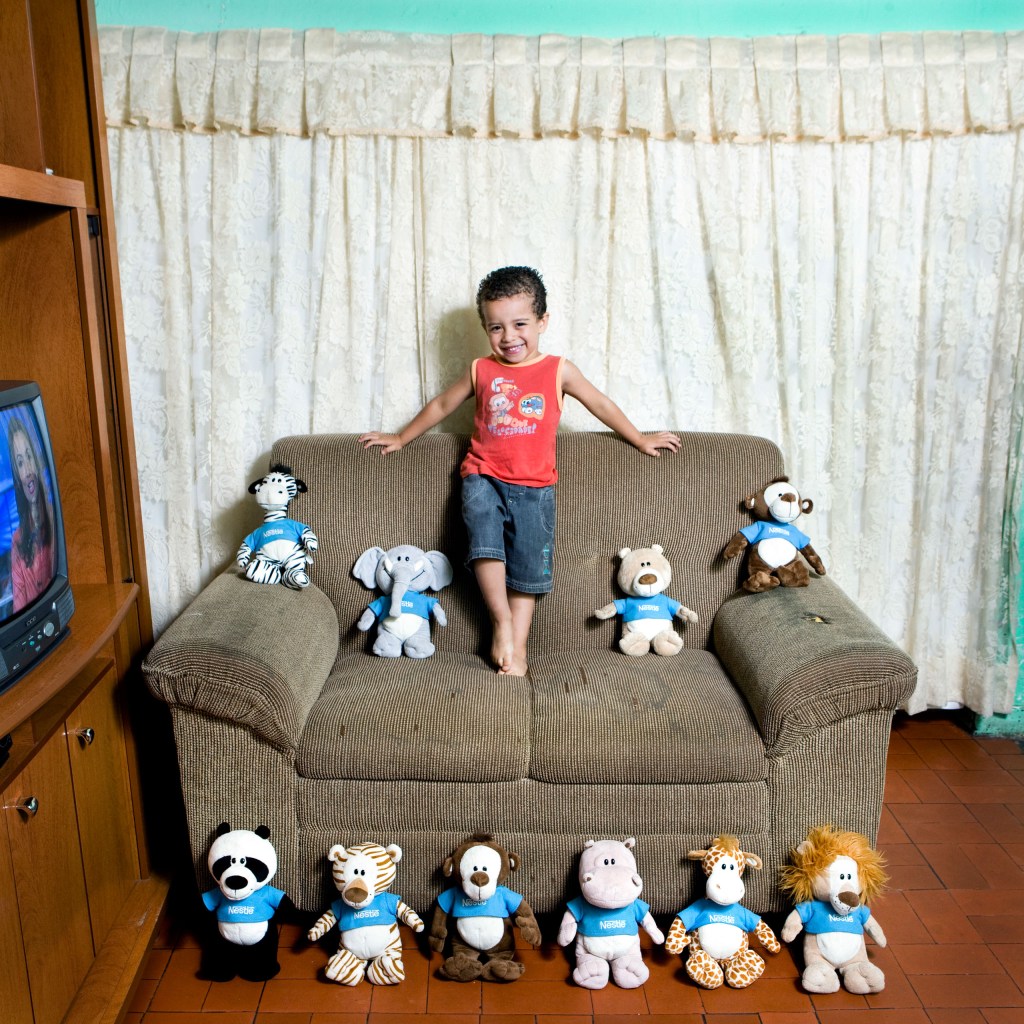
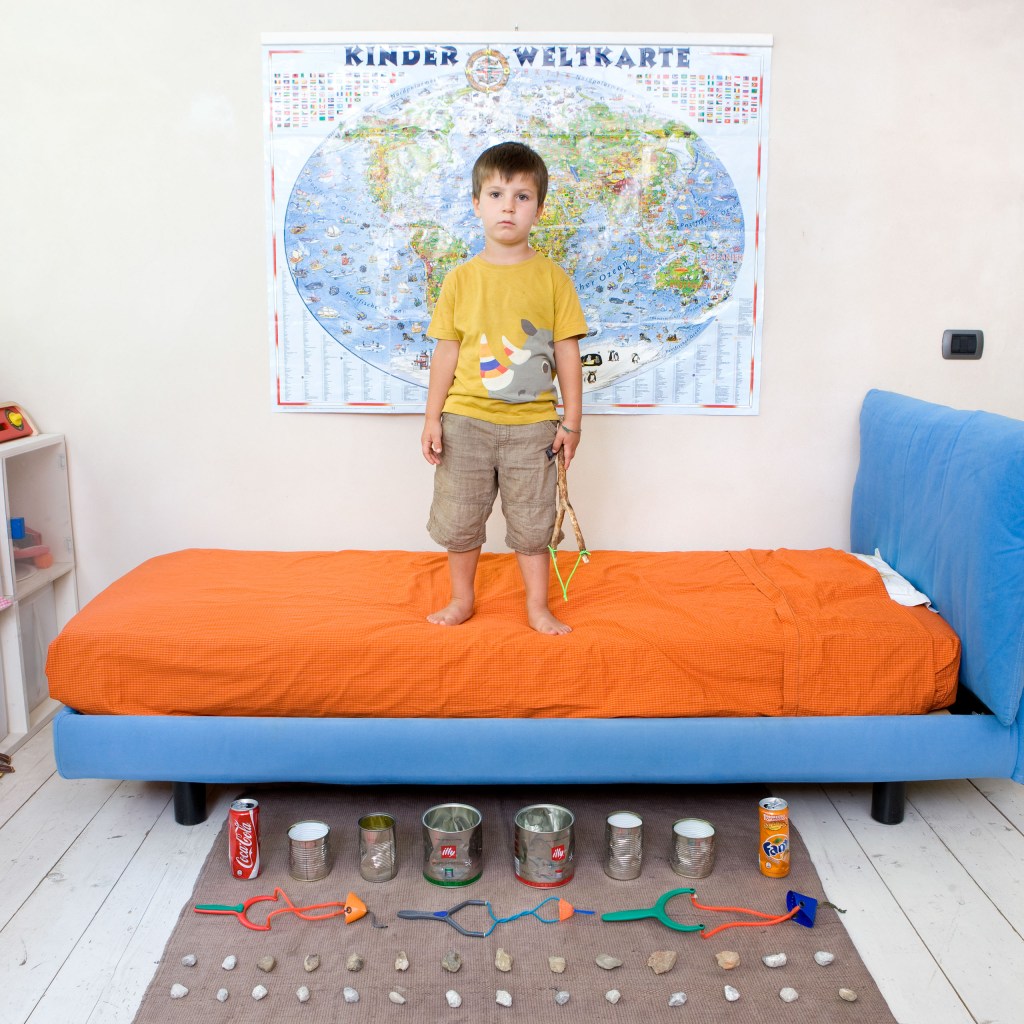
The image of three-year-old Alessia, standing in front of feeding farm cows with her bright plastic toy tools, established a visual formula that has defined much of his subsequent technique – a central figure surrounded by objects that speak volumes about their culture, identity and circumstance. At the time it was simply a constructed moment then recognised as an approach that would consume Galimberti.
Shortly after that portrait of Alessia, Galimberti left on a two-year assignment for Italian magazine D La Republica, not to document children and their toys but for a weekly column on travel and hospitality – visiting over 50 countries to sleep in the homes of people who were hosting him through the website couchsurfing.org. A weekly portrait of the people who hosted him was published alongside their story. The idea of children and their toys stayed and he decided to replicate the same concept in every country visited during the couch surfing world tour. ‘After five or ten pictures, I felt like something was growing. That’s when I understood it could become a project,’ he says.
The appeal and endurance of Toy Stories is in the simplicity and repetition of style yet each portrait is deeply revealing. Strength builds from the tension between neutrality and interpretation. ’I like the idea that people see different things in my photos. It’s a simple story, kids and toys, but you can see differences in wealth, culture, religion. I don’t want to take a position. I prefer to show things as they are, and let people decide,’ he says.
His later projects, most notably The Ameriguns, where adults pose with their arsenal, reflects his neutral approach and structured portraits. It’s at times an uncomfortable comparison but unavoidable and one Galimberti acknowledges. ‘The way many Americans use guns is similar to how kids use toys,’ he admits. His portraits tread a fine line between being observational, a touch provocative but not overly pedantic.
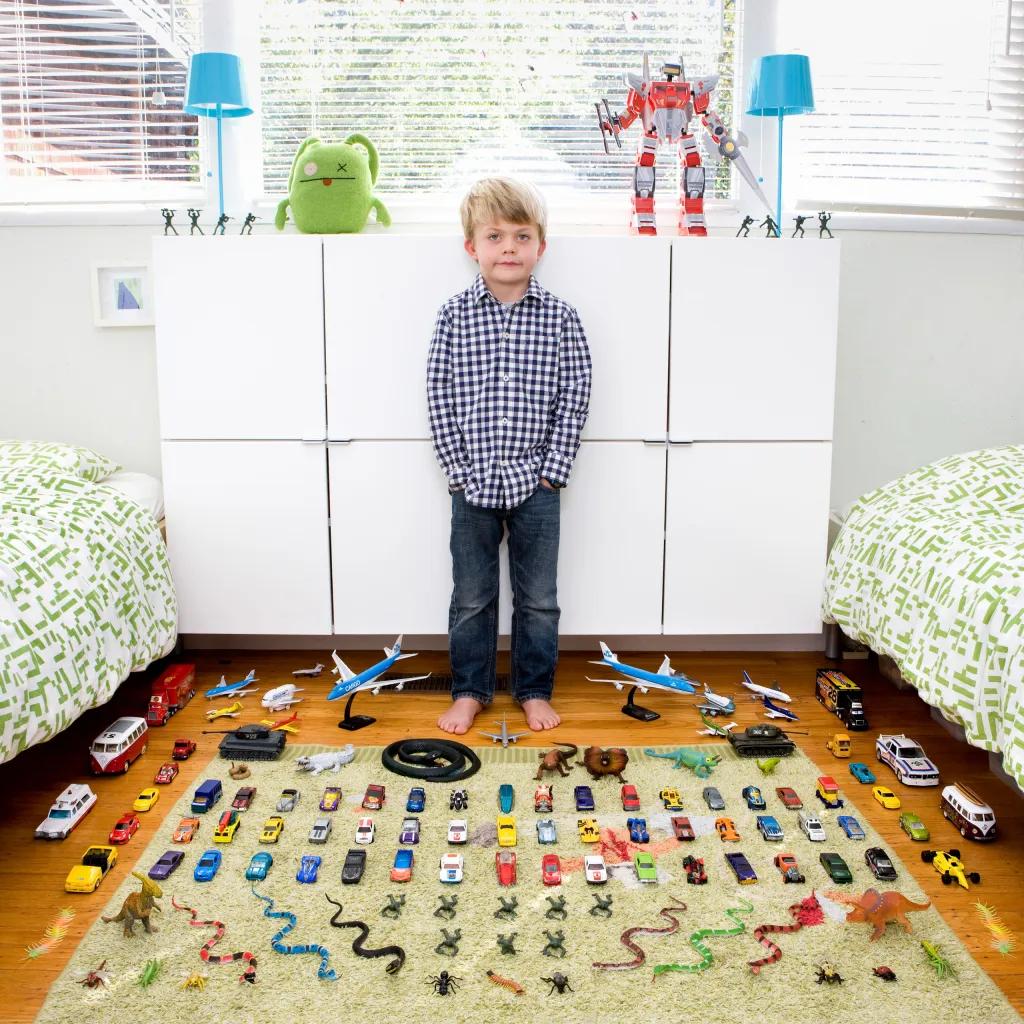
While Galimberti’s projects may begin organically, the results are visually exacting. Every image is highly controlled. Every toy soldier, tin car or cuddly toy is meticulously arranged. ‘My way of photographing is very slow. I don’t take many pictures. I have one idea, and I try to get that one image,’ he says. He starts with two Speedlight flash units adding more if necessary. A Canon EOS1 Mark III DS was followed by a Canon R5. The precision borders on obsessive. He laughs at the suggestion but concedes: ‘Maybe I have a little OCD… but I use it for photography.’ Despite the distinctive clarity and approach of his Toy Stories series, the overall effect feels rooted in reality and provokes debate.
The portraits hinge on a balance between gentle direction and genuine collaboration with the children. He only photographed three to six years old assuming their main focus in life was to play. ‘I never tell them how to play or what to do, I just ask them to show me their toys,’ he notes. It’s a disarmingly simple prompt that shifts control toward the child. For those kids unaccustomed to the camera, this approach builds confidence quickly. The act of selecting and arranging their own belongings becomes a source of pride. This allows the photograph to feel less like a performance and more like an exchange. It didn’t always go smoothly, parents intervening to tidy or remove toys they felt were embarrassing or inappropriate, crying children not wanting their toys to be touched, tired or overly self conscious children. If this happened the pictures tend to feel ‘less honest’ and Galimberti would drop them or just give up.
The first edition of Toy Stories was published in 2014 to great acclaim. Galimberti stepped away from it without abandoning it completely. ‘I realised I had 30 or 40 new portraits. So we decided to make a second edition ten years later.’ The new version includes a significant number of those more recent images and increases the geographical reach of the project to nearer 80 countries. The children in his original photographs are now touching adulthood. He revisited his first subject Alessia photographing her holding the original portrait.
The most significant change lies in how the photographs are presented. The decision to redesign Toy Stories came from the children themselves. ‘When I gave the book to friends, their kids enjoyed it more than the parents. They point at the toys they recognise. They interact with it,’ he says. ‘I felt my original audience would probably not buy the book again. So it made sense to explore a different market,’ he adds. Closer to a board book with its thick, durable pages, it’s designed to be handled, explored and played with rather than treated as a collectable, traditional photobook. The approach has paid off. The French edition, Mes jouets préférés: Par des enfants du monde, has sold out and is being reprinted. It’s an astute example of how reframing an audience can extend the remit of a photo project.
The publishing pivot by Galimberti is a broader reflection of the editorial landscape that once allowed a project like Toy Stories to flourish. A two year commission today would be rare. ‘Fifteen years ago, 80% of my income came from magazines. Now it’s maybe 20%,’ he says candidly. Galimberti has done what he needed to do to survive, adapt and diversify, taking on commercial and corporate work to fund and support his personal projects. The relentless travel of his early career may have become more geographically grounded and he is at peace with assignments closer to home. ‘I was lucky. I travelled a lot, I made projects I loved, and most of them were successful,’ he says simply.
Being lucky is perhaps modest. Galimberti has the knack of recognising a personal, almost throw away idea and refining it into something impactful and lasting. When he was about to embark on his couch surfing odyssey, his grandmother Marisa prepared his favourite ravioli. The care with which she prepared it and the pride she took in her dish, led Gabriele to seek out grandmothers and their signature dishes in the countries he visited. The resulting book, In Her Kitchen: Stories and Recipes from Grandmas Around the World, became a best seller.
Toy Stories could be seen as a lightning-bolt moment, but its evolution and reimagining suggest something more durable. Galimberti’s way of seeing can be applied to different subjects and audiences without losing his core vision. He has adapted his career to the shifting landscape of the photography industry but he has remained true to a distinct challenge – to organise the chaos of the world into a single, compelling frame. One idea, one picture, perfectly placed.
Toy Stories. A World of Toys is published by OTM Company and is available to buy now. RRP €18, ISBN: 9788899901189. Visit shop.cortanaonthemove.com to buy.
Related reading:
- The raw, real and anarchy of family life captured through the lens of photographer Melonie Bennett
- I guarantee these beautiful dog photos will really brighten up your day
- Award winning photos share beautifully intimate moments of pregnancy and motherhood
Follow AP on Facebook, Instagram, YouTube and TikTok.