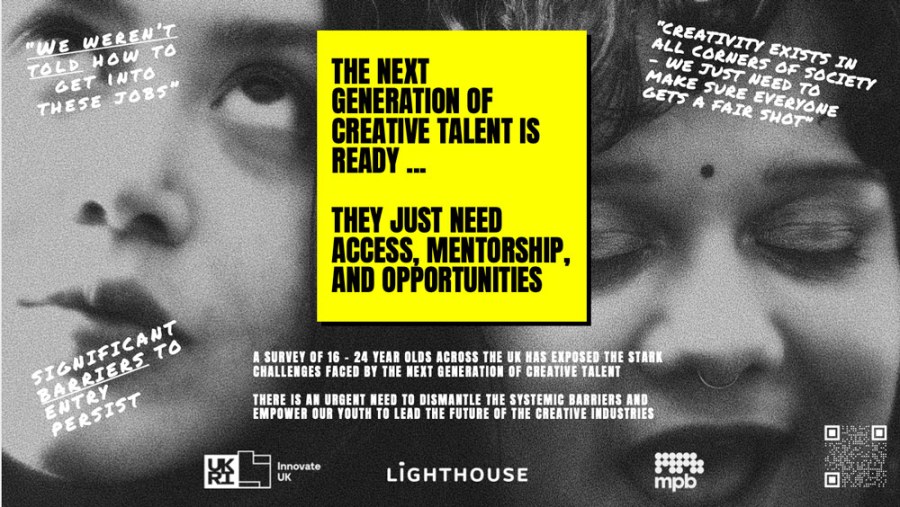
Passion and potential are not enough to break into the creative industries, according to new research from used camera equipment retailer, MPB, and the digital arts charity, Lighthouse.
MPB and Lighthouse surveyed 1,000 16–24 year olds interested in or pursuing careers in the creative industries, and the polling revealed the stark challenges facing the next generation of talent:
- Financial barriers at the forefront: 85% of young people said the cost of equipment has prevented them from exploring a creative career, while seven in 10 (70%) worry about long-term income security.
- Lack of connections and representation: 87% fear a lack of industry contacts will hold them back, with 78% highlighting the shortage of representative role models.
- AI: a threat and an opportunity: More than half (52%) felt AI has reduced their confidence in pursuing a creative career, while 86% are concerned about its impact on jobs and the devaluation of human skills.
- However, many see AI’s potential as a powerful creative tool — if young people are given the chance to shape how it is used.
Despite these challenges, nearly half (44%) of respondents still aspire to turn their creative passion into a profession. However, fewer than one in four (22%) feel confident they can succeed – highlighting the urgent need for more accessible pathways.
Focussing on solutions
Through the long-term collaboration with Lighthouse, MPB will provide access to professional photography and video kit, while Lighthouse delivers mentorship, skills development, and youth leadership opportunities.
Looking ahead, Lighthouse has announced a new UK national initiative – Pathways Not Projects – which will establish youth steering groups within creative and arts organisations across the UK.
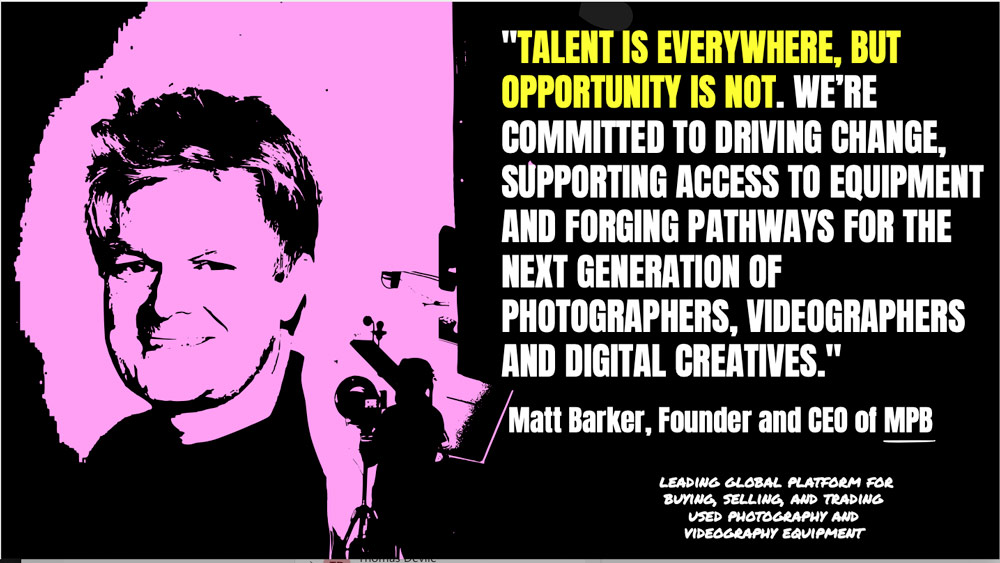
‘The findings lay bare a reality we can’t ignore: young people have the talent and drive, but the system isn’t meeting them halfway,’ MPB CEO Matt Barker told AP.
‘By working with partners like Lighthouse, we’re determined to change that by making creative tools, support and opportunities genuinely accessible. If we invest in this generation now, their potential to shape the future of the UK’s creative industries is extraordinary.’