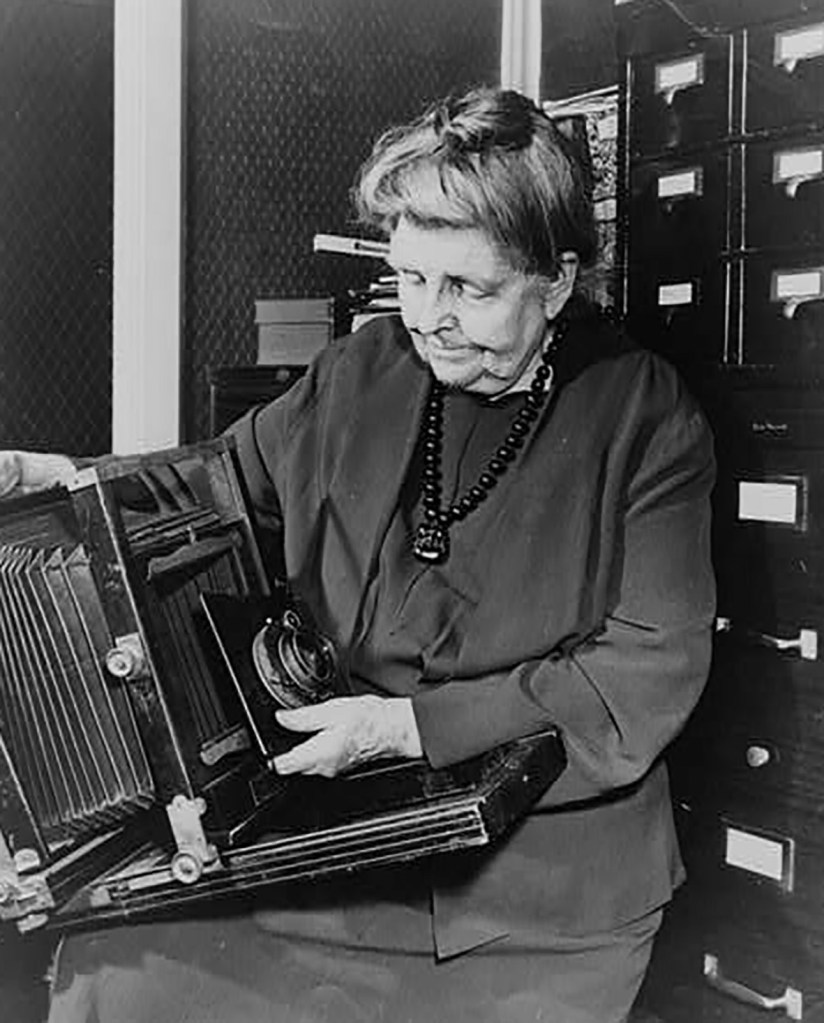
Back in the early days of photography its pursuit was rarely considered a suitable hobby – let alone a career – for women. Ladies of the late 19th century, it was chauvinistically suggested, didn’t need to worry their pretty little heads about the complications of using a camera. As for those nasty, smelly chemicals… well, it was all best left to the men folk. In America, Frances Benjamin Johnston was probably the first woman to seriously challenge that belief.
Johnston was born in West Virginia in 1864 and had two good starts to her career. Her father, Anderson Doniphan Johnston, was a clerk at the US Treasury. Her mother, Frances Antoinette Benjamin, was a well-known congressional journalist. Their wealth allowed their only daughter to study art in Paris. In 1883, she took up studies with the French Académie Julian, known for attracting students from across the world, and rare in allowing women to enrol.
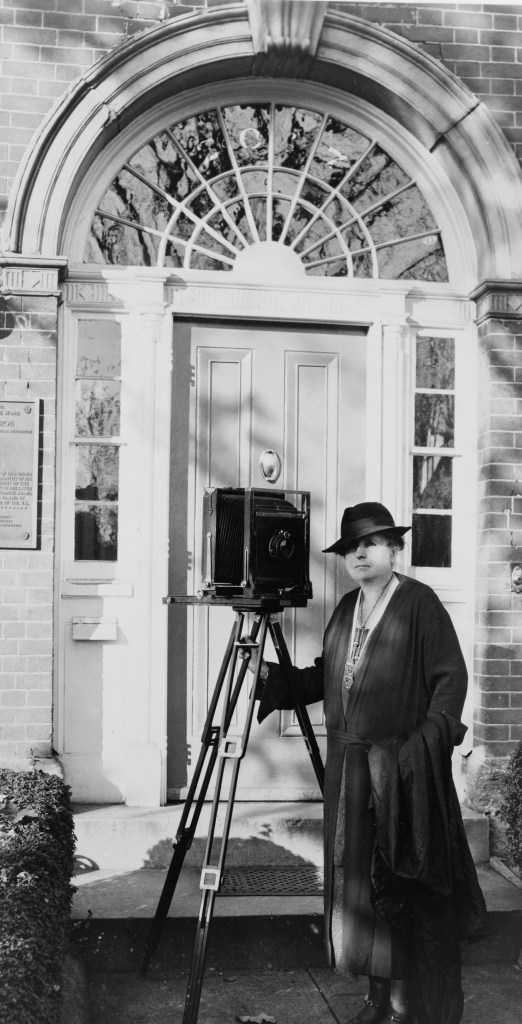
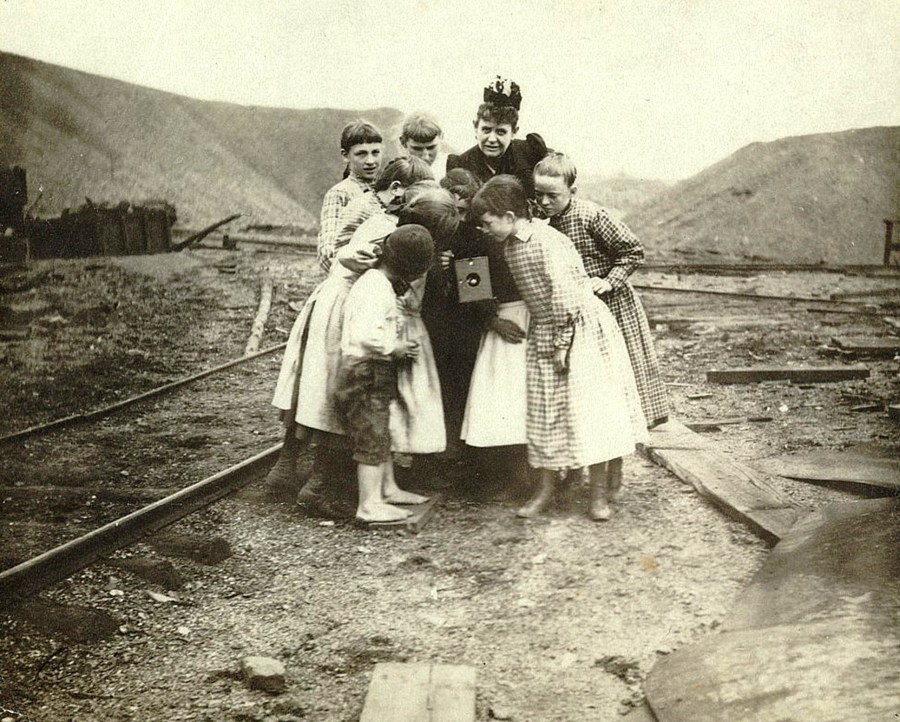
Her second career boost came from George Eastman being a close family friend. Eastman was a businessman, entrepreneur and inventor who, in 1888, produced a camera called The Kodak. It was the first instance of that illustrious name being heard, the first camera to use roll film and its simplicity of use opened up photography to people who might never before have thought of taking photographs. Eastman gave Johnston her first camera.
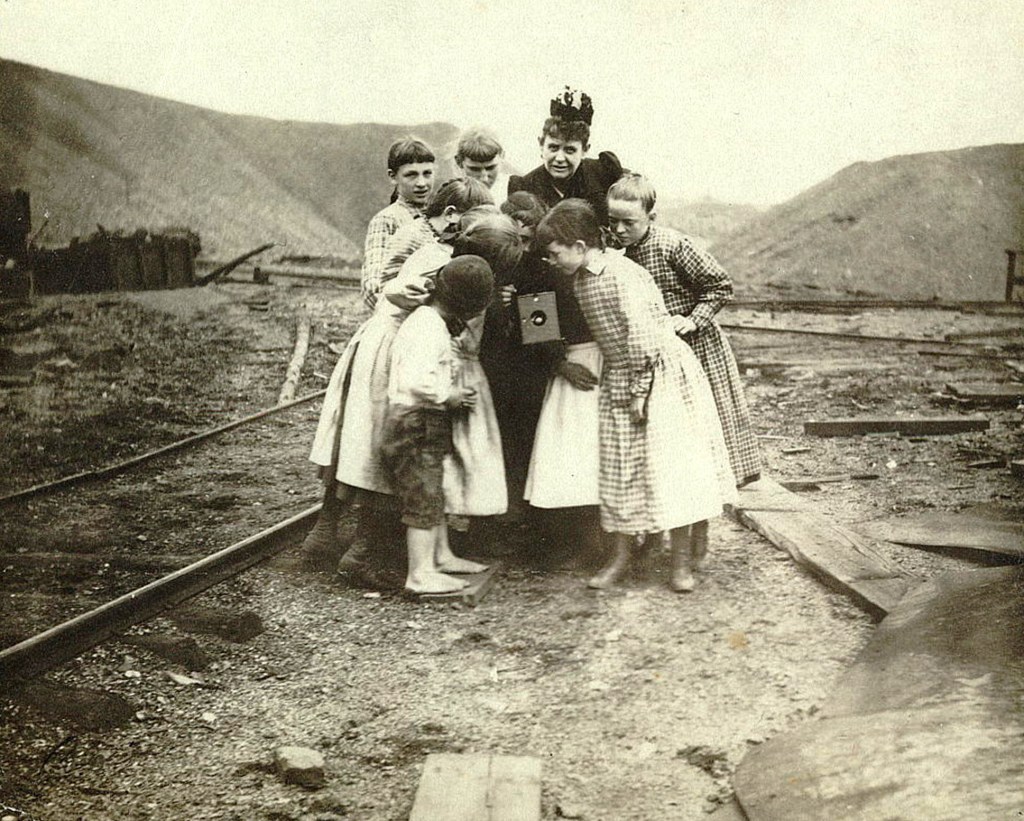
Not content with a simple snapshot model, however, she went on to receive training in photography and darkroom techniques from Thomas Smillie, Director of Photography at the Smithsonian Institution, now the world’s largest museum and research complex.
In her early career, Johnston worked as a reporter and artist for a New York newspaper, but soon saw how photography was transforming illustration work in the press. Her independent photographic career began by taking portraits of family, friends and local figures. Then she took off for Europe, using Smillie’s name to meet prominent photographers of the time. On her return she worked for a while for Eastman Kodak, before opening her own studio in Washington in 1894.
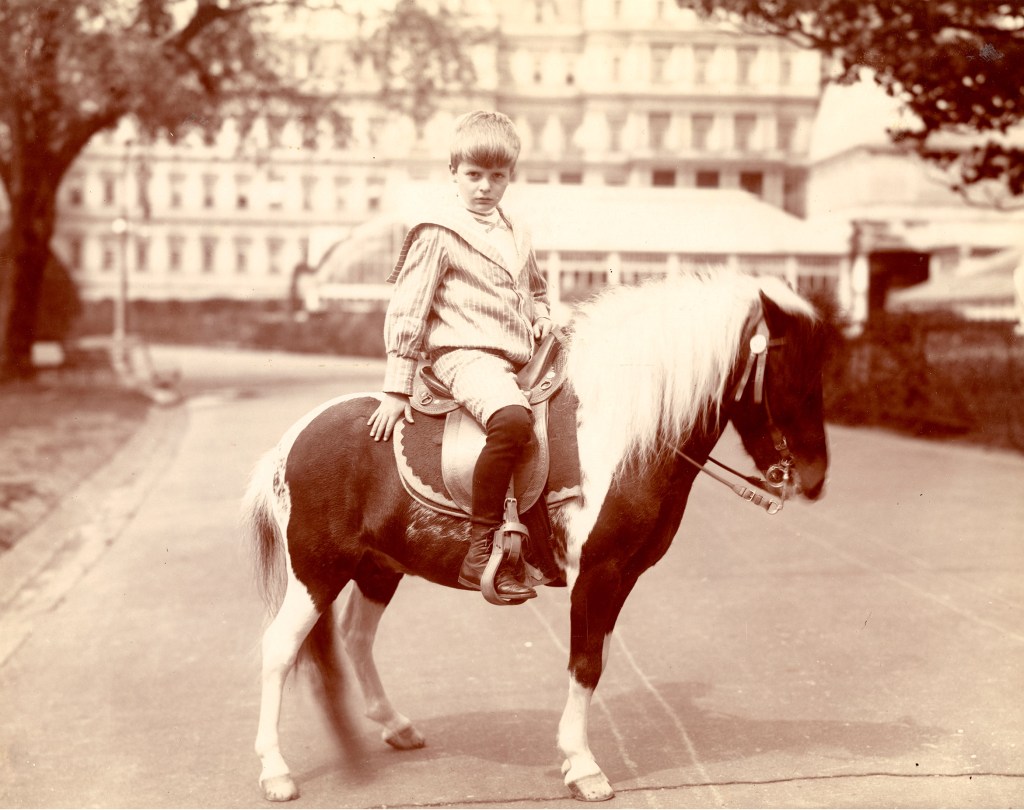
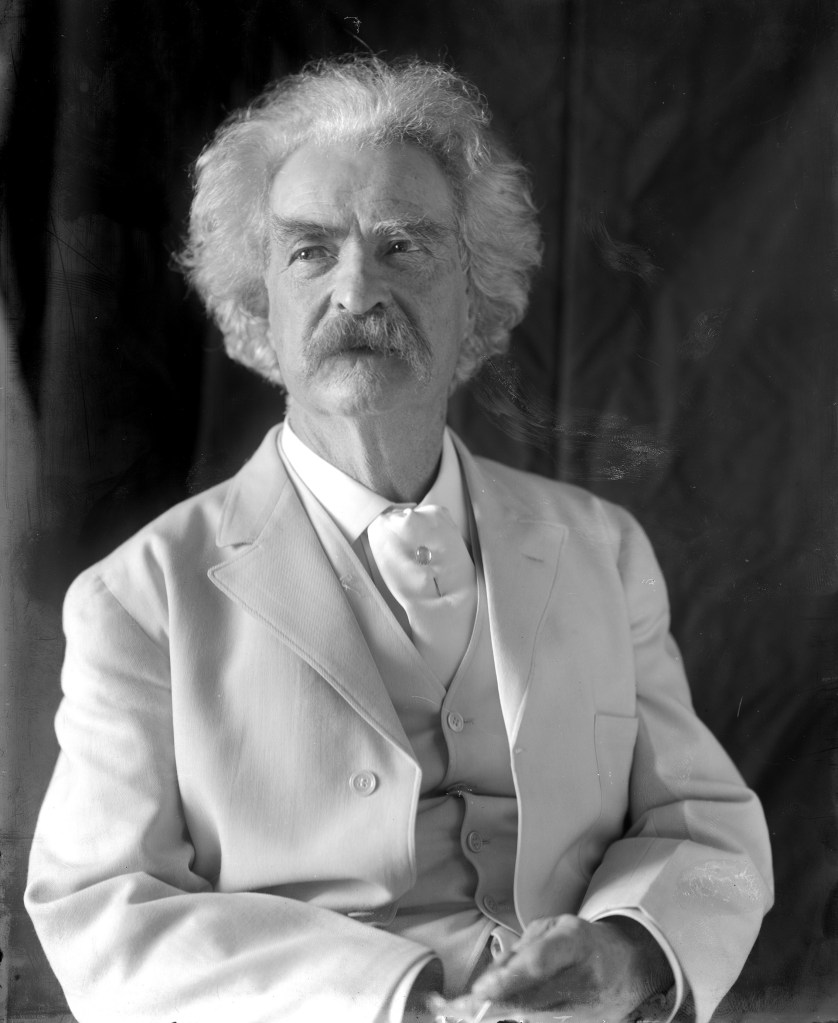
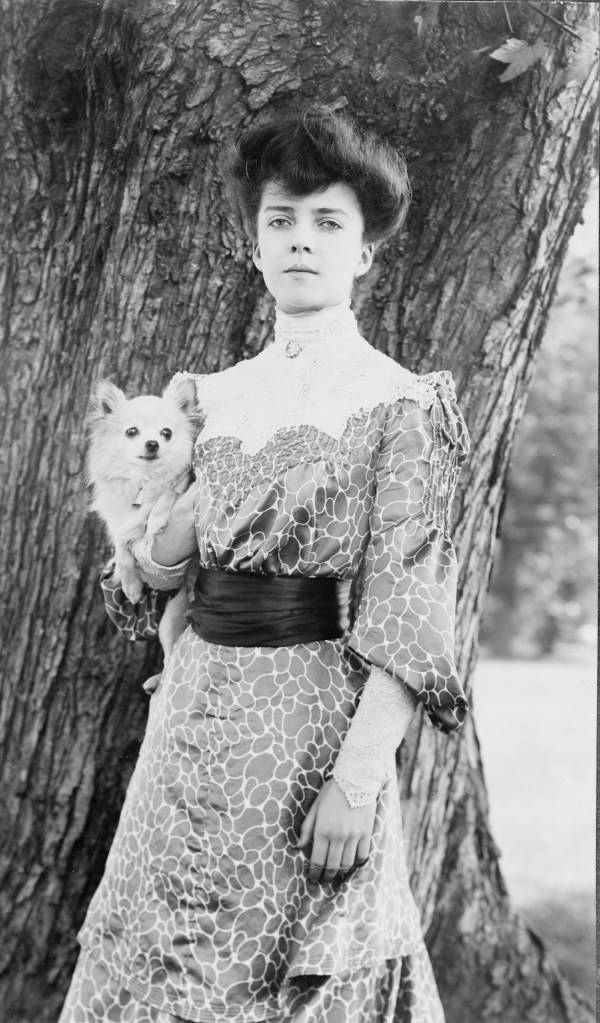
Johnson was the city’s only woman photographer and, helped by contacts made through her mother, she soon became accepted by Washington society, photographing many rich and famous socialites. Tom Sawyer author Mark Twain came to her for a portrait, she photographed the children of President Theodore Roosevelt in the gardens of the White House and was commissioned by magazines to shoot Alice Roosevelt’s wedding portrait. Her work as official White House photographer during the course of many presidential terms earned her the title of ‘Photographer to the American Court.’
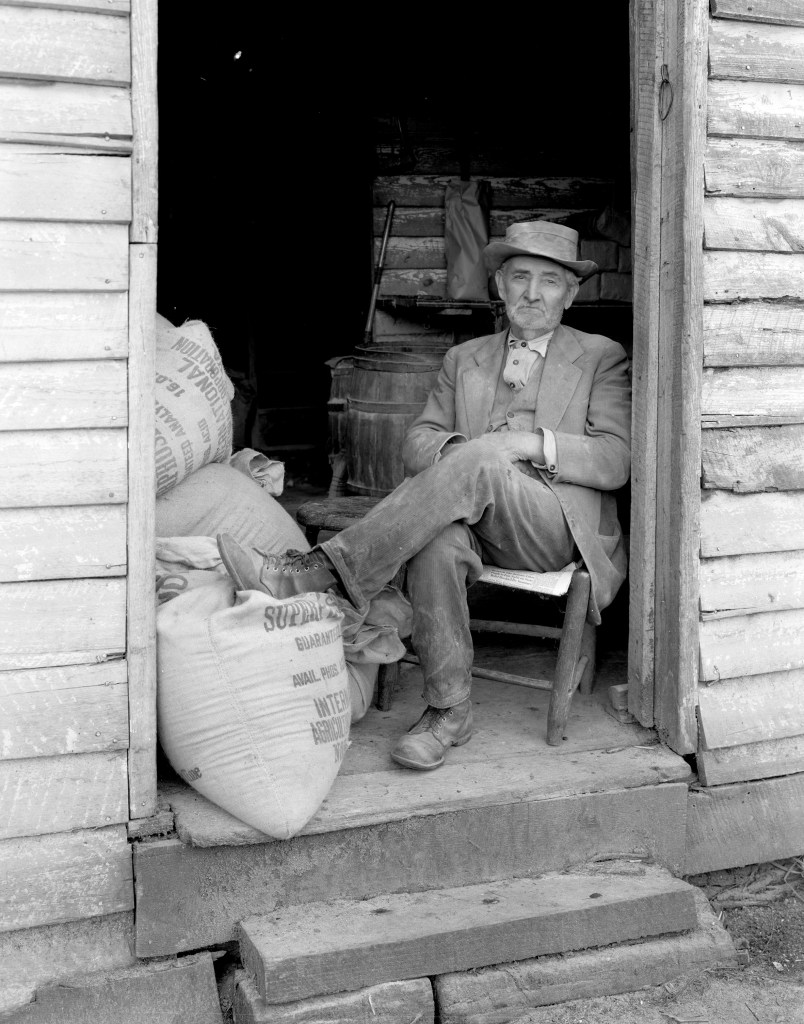
She also took news pictures that included peace treaty signings, world’s fairs and the last portrait of President William McKinley in 1901 just before his assassination. In fact, there was little to which she did not turn her artistic talents. Travelling widely, she photographed iron workers, coal miners, women mill workers in New England, and sailors being tattooed on board their ships, whilst still maintaining her society commissions.
But there was more to Frances Benjamin Johnston than photography for its own sake. She was also a prolific writer and used many of her pictures to illustrate her own articles in popular magazines of the day. Her talents not only as a writer, but also as a public speaker, invariably turned to championing women’s rights, not just in their everyday lives, but also their rights to be photographers. In 1897 she wrote an article in the Ladies’ Home Journal, the long-running American women’s magazine first published in 1883. The article was called What a Woman Can Do With a Camera. Here’s a little of what she told her readers:
In order to solve successfully the problem of making a business profitable, the woman who either must or will earn her own living needs to discover a field of work for which there is a good demand, in which there is not too great competition, and which her individual tastes render in some way congenial.
There are many young women who have had a thorough art-training, whose talents do not lift their work above mediocrity, and so it is made profitless; others who, as amateurs, have dabbled a little in photography, and who would like to turn an agreeable pastime into more serious effort; while still another class might find this line of work pleasant and lucrative, where employment in the more restricted fields of typewriting, stenography, clerking, bookkeeping etc., would prove wearing and uncongenial to them.
Photography as a profession should appeal particularly to women, and in it there are great opportunities for a good-paying business, but only under very well defined conditions. The prime requisites – as summed up in my mind after long experience and thought – are these: The woman who makes photography profitable must have, as to personal qualities, good common sense, unlimited patience to carry her through endless failures, equally unlimited tact, good taste, a quick eye, a talent for detail, and a genius for hard work….
The Ladies’ Home Journal was not the only magazine for which Johnston wrote and took photographs. Her words and pictures regularly appeared in many other popular illustrated magazines, including Cosmopolitan and Harper’s Weekly.
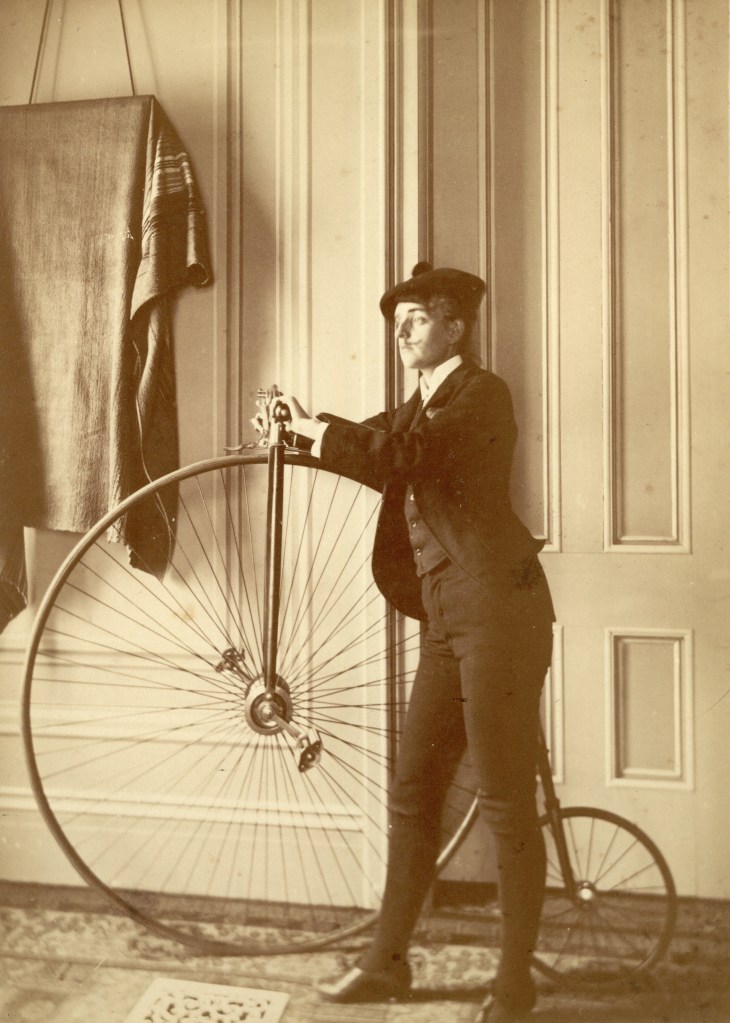
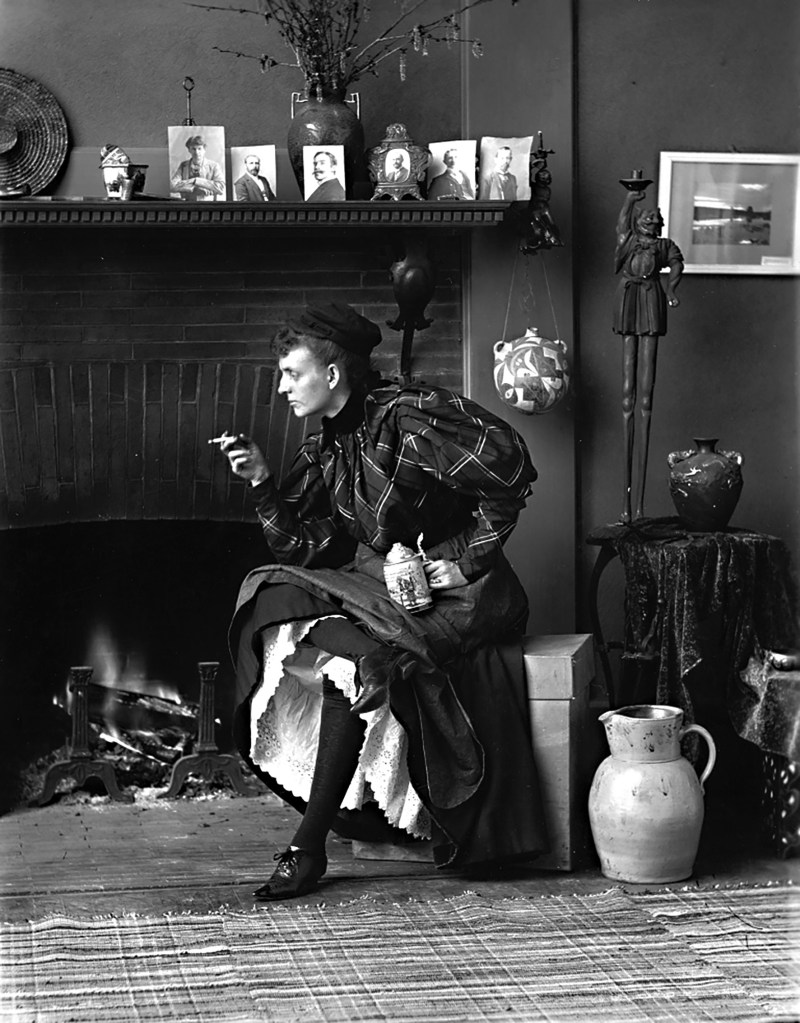
In her quest to champion the rights of liberated women, Johnston often turned the camera on herself. One of her most famous pictures, taken in her Washington studio in 1896, was a self portrait in which she sat in profile before a fireplace, showing her petticoats, a cigarette in one hand and a beer stein in the other. In another of her self portraits she posed dressed in a man’s suit with hat and fake moustache and holding a penny-farthing bicycle. In fact, throughout her life and career, she took a great many self-portraits in which she was seen using various cameras.
To give some idea of her workload, consider the year 1899, in which she spent six weeks photographing schools in Washington; served on the jury of the Philadelphia Salon of Photography; went to Italy to photograph Admiral George Dewey on his return from the Spanish-American War; and was commissioned to photograph African-American students at the Hampton Normal and Agricultural Institute, which produced some of her most memorable work. The following year, she was elected as one of two American women delegates at the International Congress of Photography, held in Paris, where the she displayed around 150 photographs and spoke on behalf of American female photographers.
In the early years of the 20th century, Johnston lived for a while in New York after winning a commission to photograph the New Theatre, designed by Carrère and Hastings, one of the most outstanding architectural firms in the United States. In New York, she also co-owned a studio and lectured on business for women at New York University.
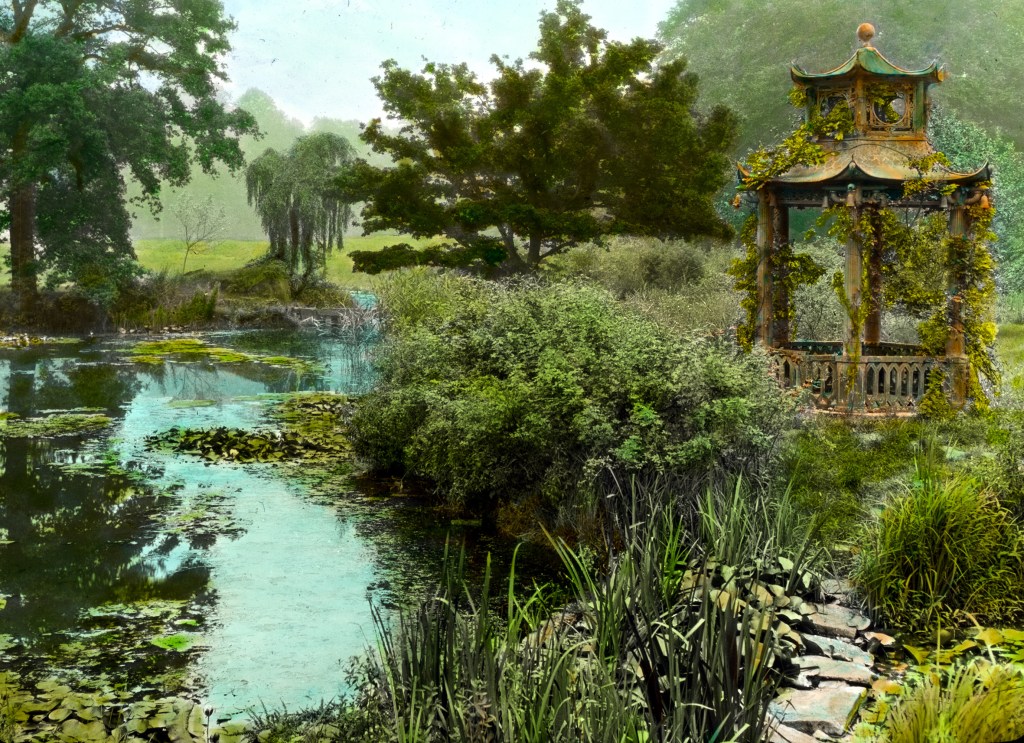
In 1913 The Garden Club of America was formed by 12 gardening clubs eager to promote garden design. Johnston had had previous experience of photographing prestigious gardens, including those at the White House. Now, in partnership with fellow photographer Mattie Edwards Hewitt, she became involved in photographing club members’ gardens. She worked not only in monochrome, but also shooting autochromes. The autochrome process, introduced in 1907, was the first popular method of producing colour images on glass plates coated with microscopic grains of potato starch dyed red, green and blue, then covered with a thin film of panchromatic emulsion.
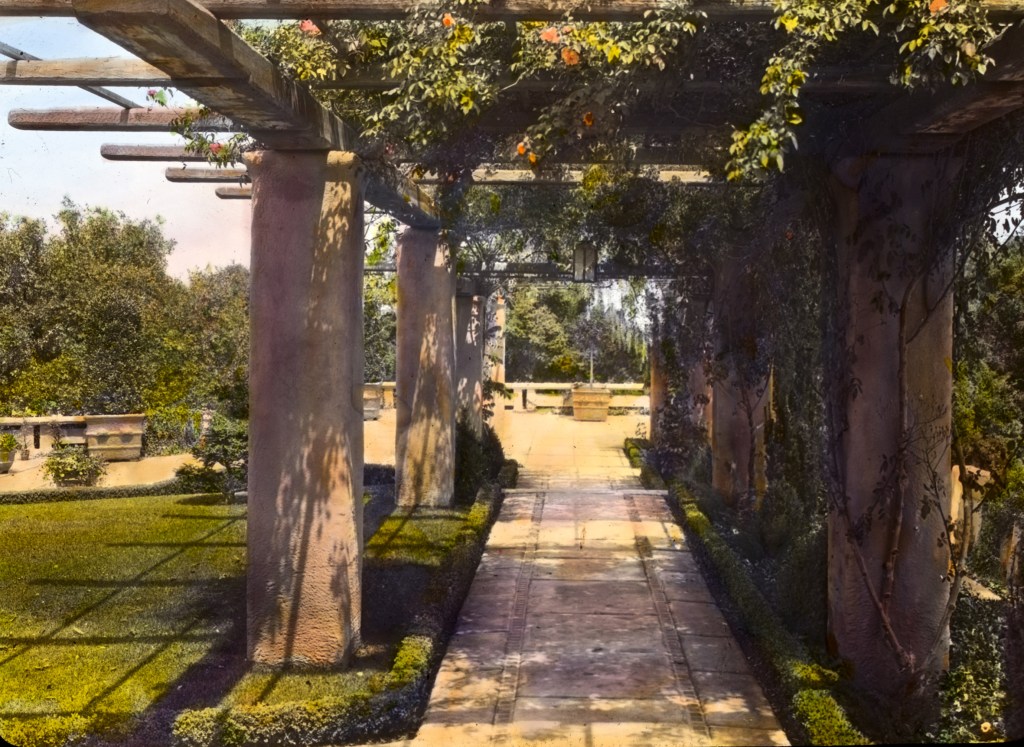
Her pictures were published first in Country Life magazine, then in other prestigious markets that included The Garden Magazine, The House Beautiful, House & Garden and Town & Country. Her published work influenced both professional landscape architects and amateur gardeners. Into the 1920s, Johnston’s association with Hewitt now dissolved, she continued her garden photography alone across America, from New England to California and then on to Europe.
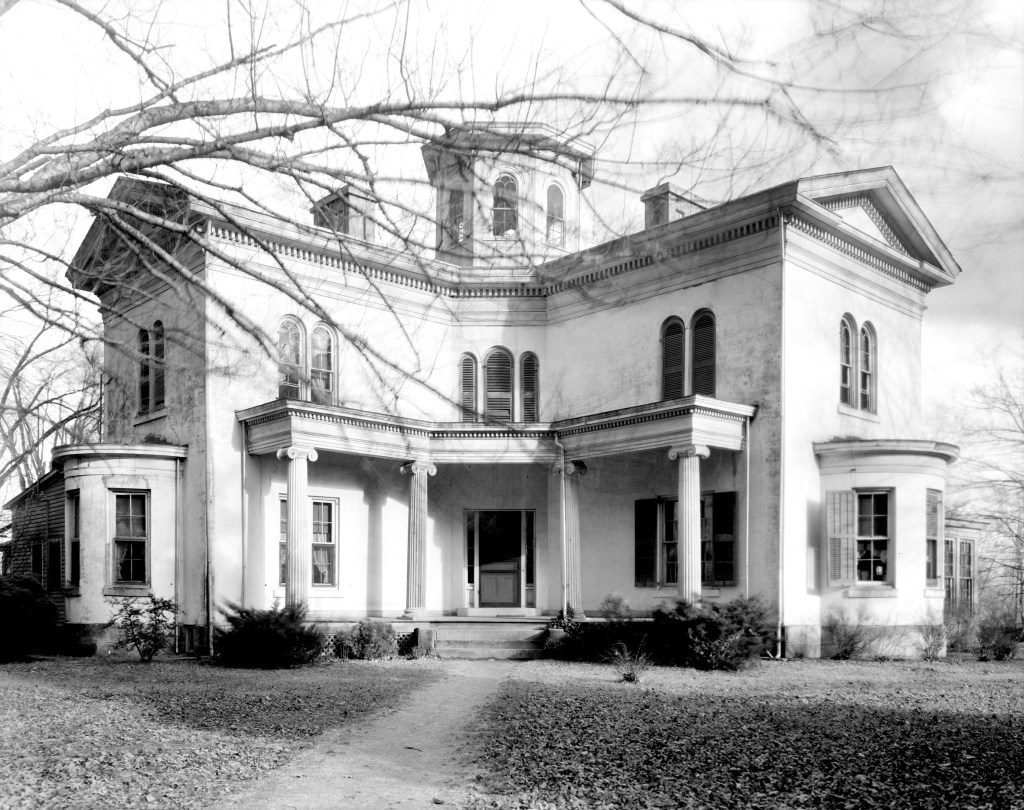
Coupled with her garden photography came an interest in architecture, and she shot pictures of a great many fine buildings, including those falling into disrepair. Her pictures were retained for posterity before the buildings were demolished or redeveloped. A major exhibition of her work displayed nearly 250 photographs, taken in Virginia, contrasting the decaying mansions of the rich with the shacks of poorer people.
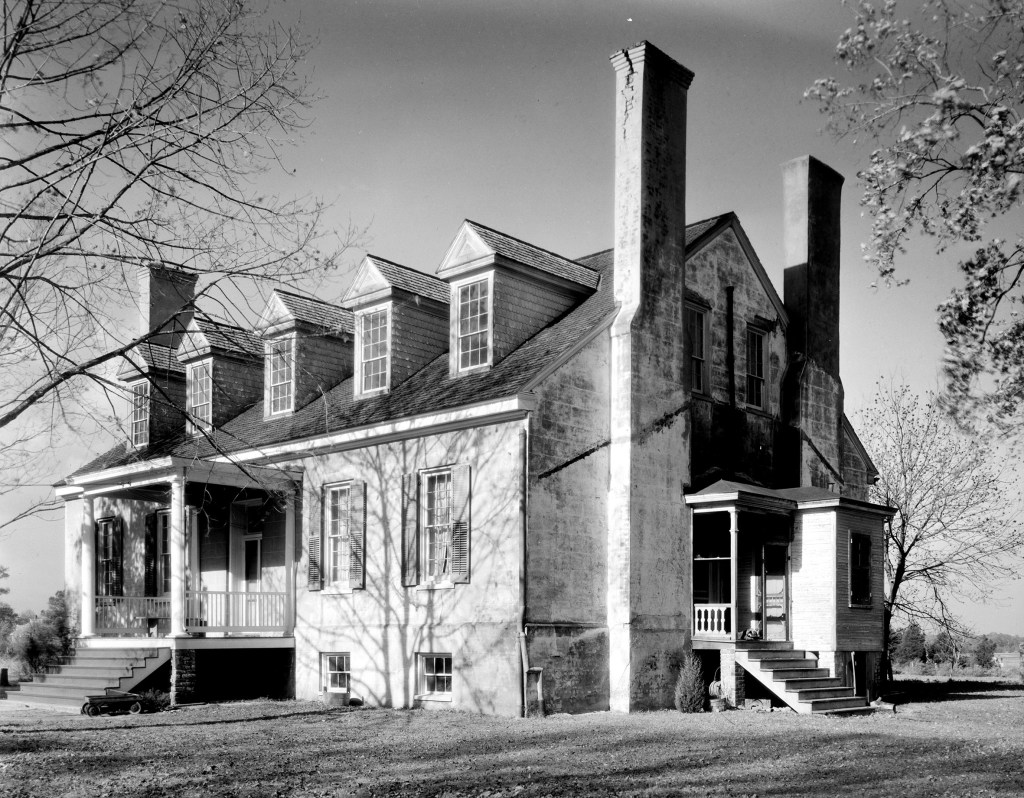
As her love of garden photography evolved into an interest in architecture, the University of Virginia hired her to document architectural history in the State. From there, she moved on to a commission to document the deteriorating plantations of Louisiana. Commissions from eight other states followed, and eventually Johnston was made an honorary member of the American Institute of Architects. Institutions including the Metropolitan Museum of Art, Virginia Museum of Fine Arts and Baltimore Museum of Art purchased her pictures. All this led to Johnston being one of the first contributors to the Pictorial Archives of American Architecture. Her pictures are still used today for research by architects and historians.
World War II forced Johnston to cut down on her love of travelling. When the war ended in 1945, she retired to a home she owned in the French Quarter of New Orleans where, for the first time, she designed and planted her own garden. Two years later, she donated her prints and negatives to the Library of Congress. Today, the Library holds around 20,000 of Johnston’s prints and 3,700 of her plate and film negatives.
Frances Benjamin Johnston – liberated woman and probably America’s first famous female photographer – died at her New Orleans home in 1952 at the age of 88.
Related reading:
- Inside the global journey of the photographer redefining female strength
- UKBFTOG: the success of a group dedicated to black female photographers
- Best western: Photographer Jane Hilton explores the American West
Follow AP on Facebook, Instagram, YouTube, TikTok, and IRYS.