The newest generation of Apple AirTag was announced yesterday, giving rise to a number of pieces suggesting that the devices are useful for keeping tabs on all manner of gear, from bikes to cameras.
With improvements including an enhanced range, better precision and a louder speaker, they’re great for finding your lost stuff – usually for me that means my keys which have been put in a pocket or sneakily hidden in the fridge by one of my kids. Or at least I think it’s them doing it.
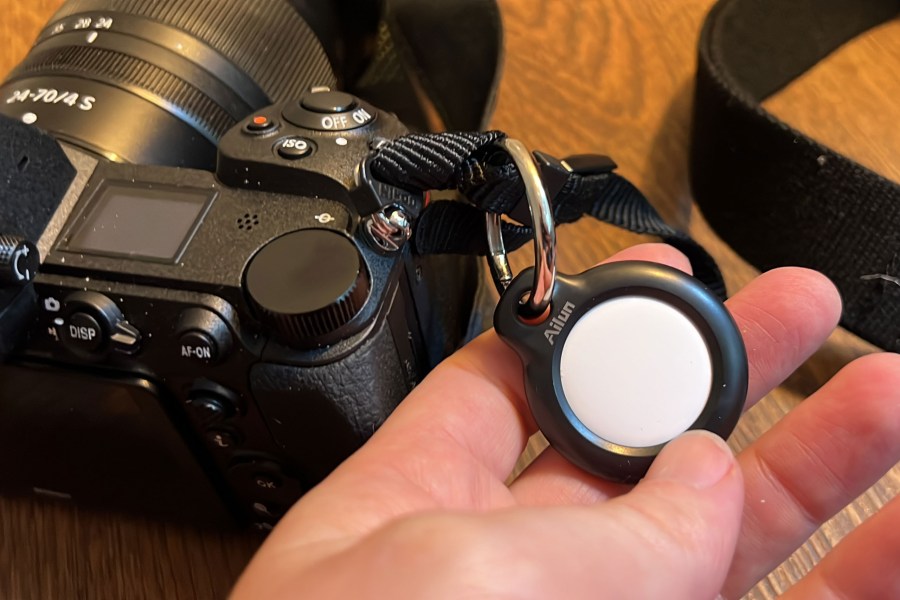
Anyway, I digress – for tech the benefits are also extolled. Simply pop an AirTag in your camera bag and rest easy in the knowledge that if it goes walkabout, you’ll be able to track it no time.
Great in theory – and useful if you’re perhaps a bit of a clutz who has a tendency to leave your precious camera bag on a bus or somewhere else that an honest person might stumble across it.
However, thieves are pretty savvy when it comes to this kind of stuff. All they need to do is scan a stolen bag to find out if there’s an AirTag attached to their ill-gotten gains and throw it away and it’s gone forever.
But, if camera manufacturers could implant this technology directly into cameras, then it might be much more useful, as it wouldn’t be something separate from the device you were trying to track in the first place.
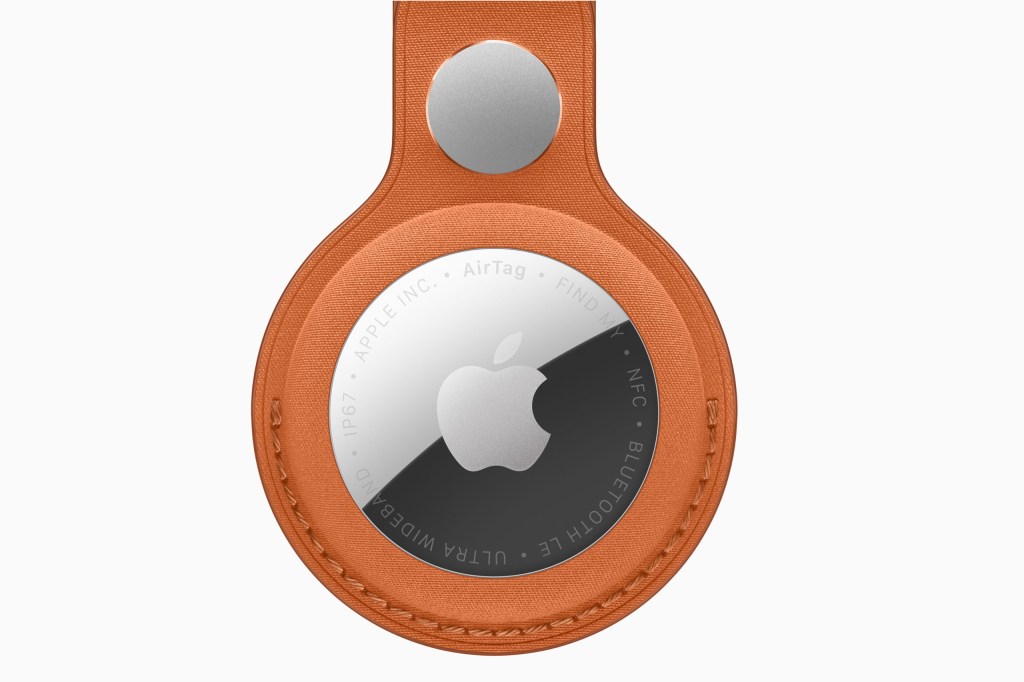
Airtag uses two key technologies. Firstly, Bluetooth LE, that’s constantly broadcasting its presence to nearby iPhones, which tells Find My roughly where the AirTag is. Almost every current camera already has Bluetooth built-in so could do this for “free”. AirTags work so well because there’s a huge network of people using Apple devices, which can all ping together to find your missing goods, even when out of range of your own iPhone.
But could this be something that the camera manufacturers could work together with Apple to bring to cameras? An AirTag only costs about $30, so it’s a fairly cheap accessory you can buy – but something that was implanted directly into your camera would be worth so much more if it gave you that peace of mind.
In an AirTag, Ultra-Wideband communication is used for the precise close-range finding. This isn’t currently in cameras, so if you wanted this functionality, there would be an extra hardware cost. An AirTag 2 only costs about $30, so it’s a fairly cheap accessory you can buy – but something that was implanted directly into your camera would be worth so much more if it gave you that peace of mind. I’m sure users would be willing to pay the price for the reassurance.
But could this be something that the camera manufacturers could work together with Apple to bring to cameras? Some consumer electronics, such as Fitbits, laptops, and headphones are compatible with the Tile device-finder system, which shows it can be done.
Ideally, of course there’d also be something that was compatible with Android users, too. But, Apple is the world’s biggest smartphone manufacturer, with a 20% market share, so it makes sense to start there.
Still, if Samsung could partner with Nikon, Canon or Sony to produce the “unstealable” camera, wouldn’t that be something?
Read more:
Best iPhones for photographers
Follow AP on Facebook, Instagram, YouTube and TikTok.