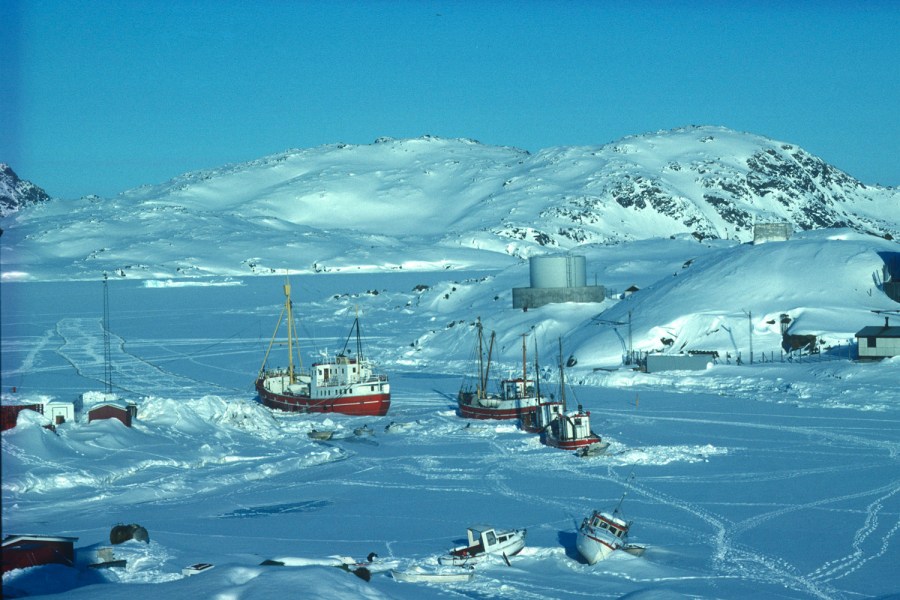
AP readers’ arctic adventure
Back in the summer of 1988, a group of Amateur Photographer readers made landfall in the far south of Greenland. It was probably the first UK-organised photo tour to the world’s largest island. Led by David Oswin Expeditions, a specialist in tours to Iceland, David and I (in my capacity as features editor of Amateur Photographer magazine), had arranged photo tours to Iceland for AP readers the previous year, which proved to be a resounding success. But Greenland was a new frontier. Even David hadn’t been there!
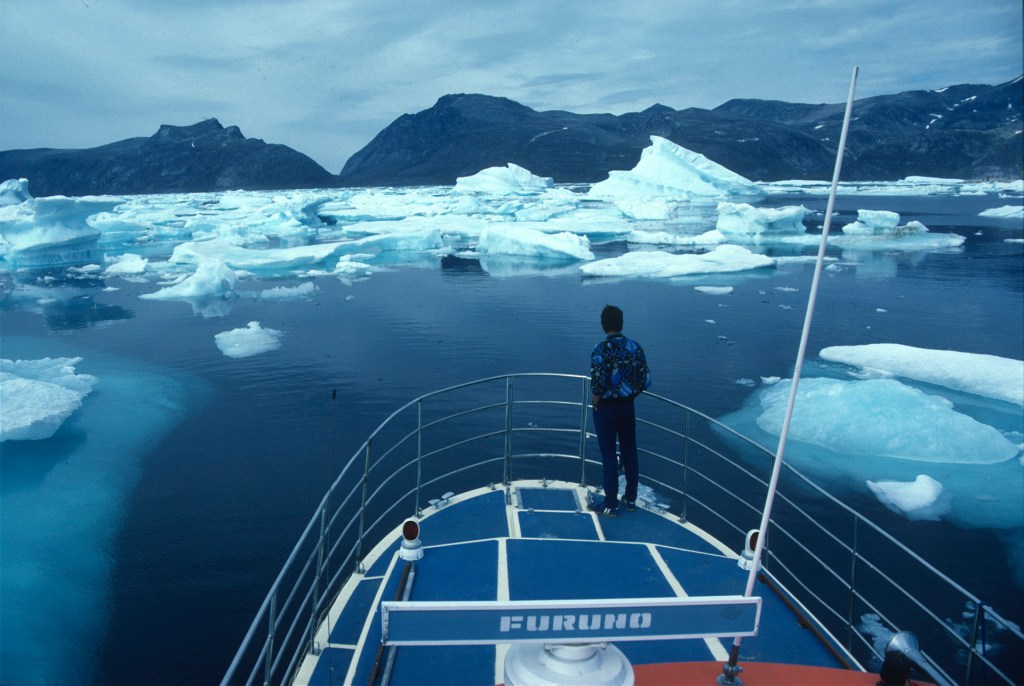
So, on Thursday July 14, 1988, we took off from Keflavik airport, Iceland, and landed two hours later at Narsarsuaq, site of the only airstrip in South Greenland long enough to take passenger jets – it had been built by the Americans during World War II. Joining David and myself were six AP readers, who included a lawyer from Edinburgh, a couple of Dorset hoteliers, a Kent motor mechanic, a doctor from New Zealand and a journalist from the BBC. Meeting us in Narsarsuaq was our Danish guide, Marie Neble of Arctic Adventure, who had the unenviable task of making sure our party of camera-obsessed adventurers were not side-tracked into trying to photograph every iceberg in sight over the next ten days.
Cameras in the land of ice and fjords
On this trip, we explored the ice-strewn fjords where the Vikings had settled 1000 years before. We stayed in the main towns of Narsaq, Qaqortoq and Nanortalik, and visited many small fishing villages in between. As there were no roads connecting these settlements, local transport links were mostly by boat, other times by helicopter. We also went to places where Greenland’s mineral wealth had been mined and abandoned decades before, including the rusting remains of a graphite mine at Amitsoq Island, which had been closed since 1925.
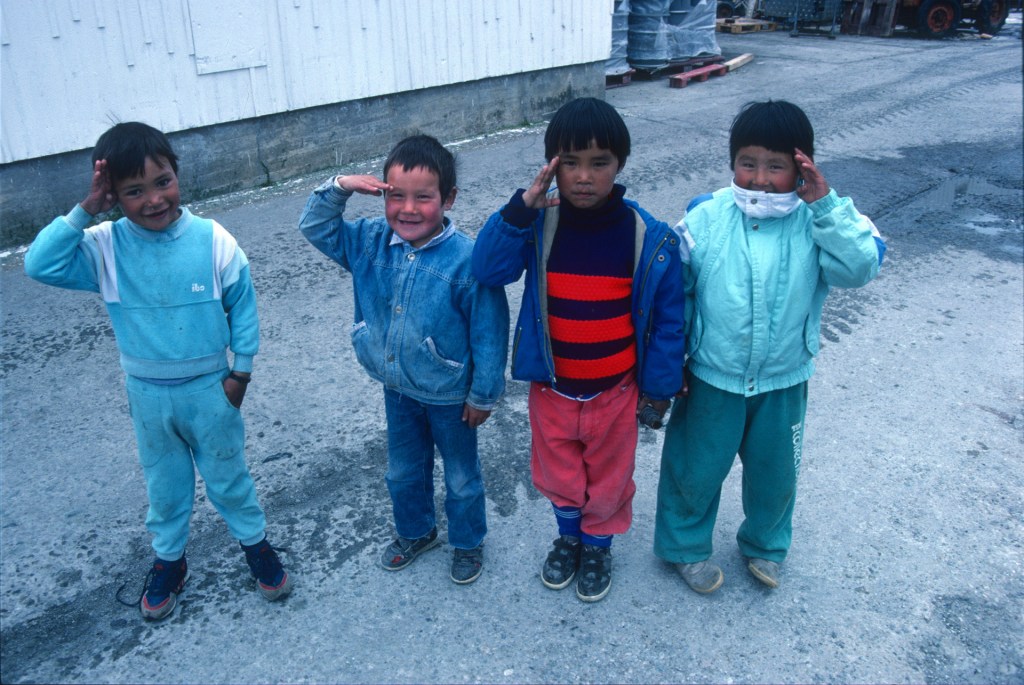
Our arrival at each settlement created considerable interest among the inhabitants as camera-toting tourists were not a common sight in the 1980s. At the fishing port of Alluitsup Paa (known back then as Sydprøven), I wrote in my journal, “I was struck by the number of children playing joyfully in the street. They followed us and laughed, trying to peer into the viewfinders of our cameras, which were slung over our shoulders as we walked.”
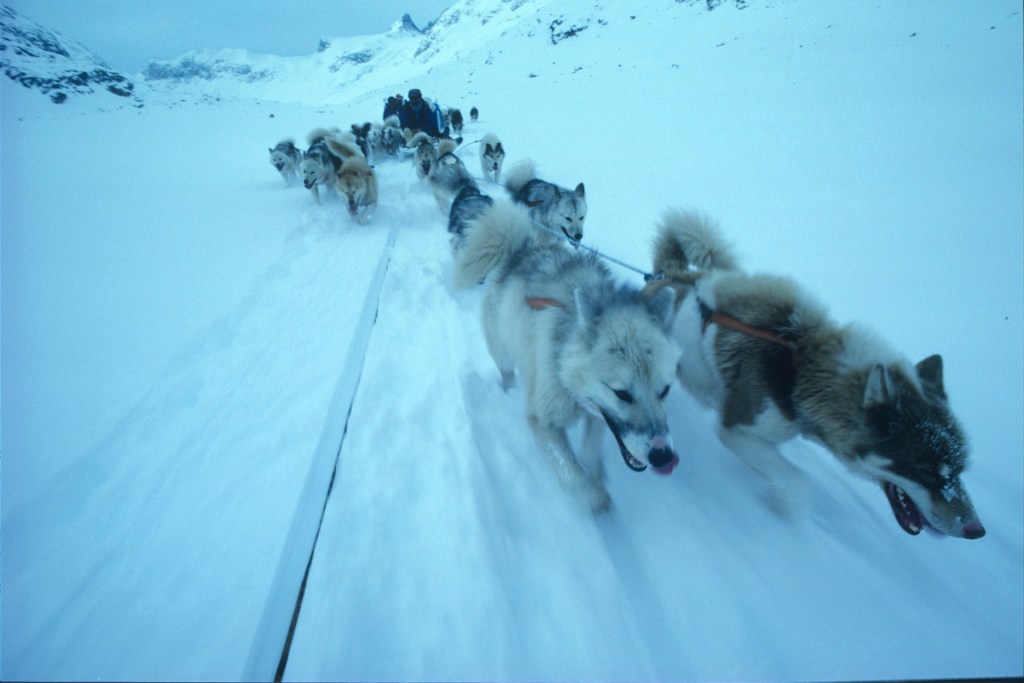
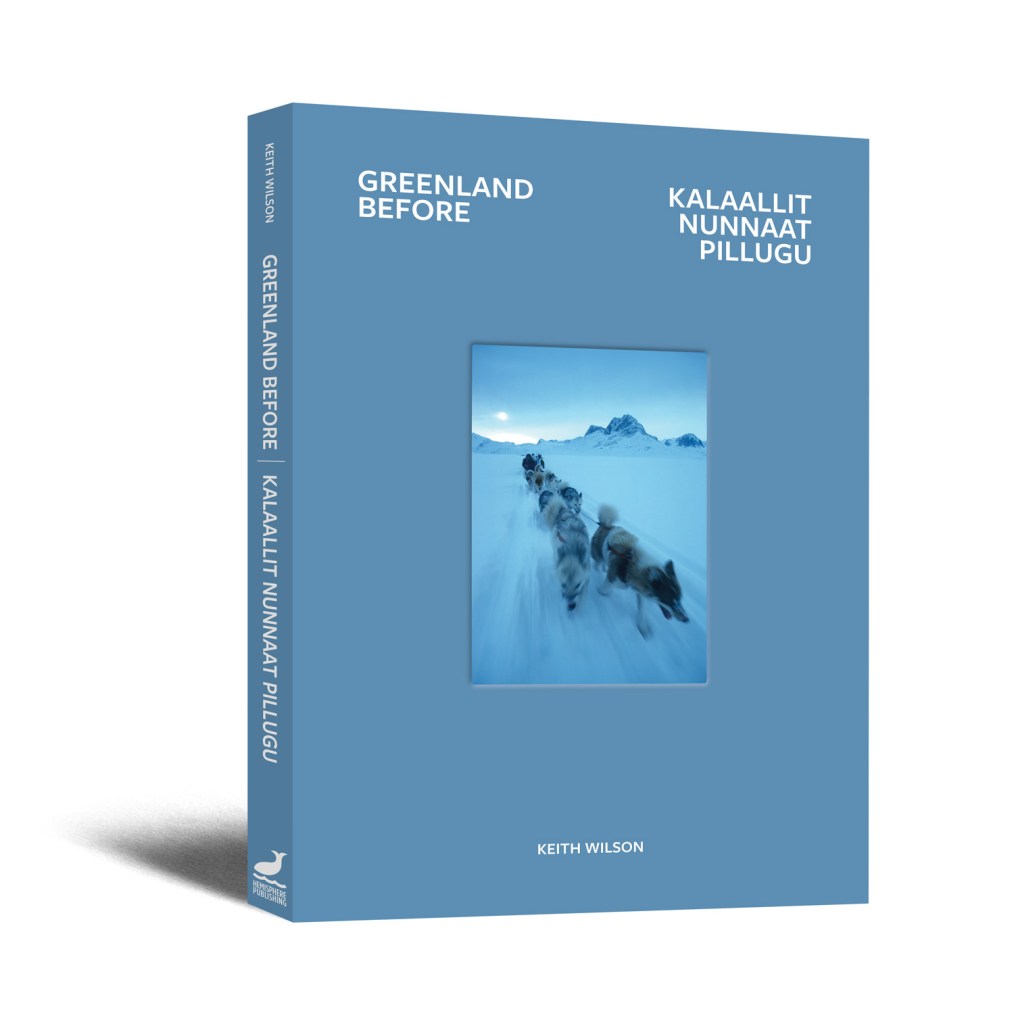
In April of the following year, David and I co-led another AP Greenland photo adventure, this time to Tasiilaq (known then as Angmagssalik). It was the largest town on Greenland’s vast east coast, but in 1989 it had a population of barely 1500. I remember Tasiilaq as a staggeringly beautiful place, surrounded by high mountains, glaciers and sea ice that stretched across the entire bay. Each day we were assigned teams of dog sleds and crossed the frozen bay, passing an enormous iceberg that stood above the white expanse like the bow of a ship.
Among the ice hunters
April may be spring in the UK, but in East Greenland it is still very much winter, and we spent our time dog-sledding across frozen lakes, fjords, and scaling mountain passes, while meeting families along the way. Some were returning from seal hunting trips with their catch tied to the back of the sled. This was a place where people lived a largely subsistence existence, eating dried fish and whale meat, as well as freshly caught seals. On that trip, we were told that there was more ice than usual and therefore more seals, more fish, and more polar bears. We saw the evidence of that with our own eyes in the form of several polar bear skins stretched out to dry on wooden frames. Just a few days before our arrival, the bears had wandered too close to town and were shot by licensed hunters.
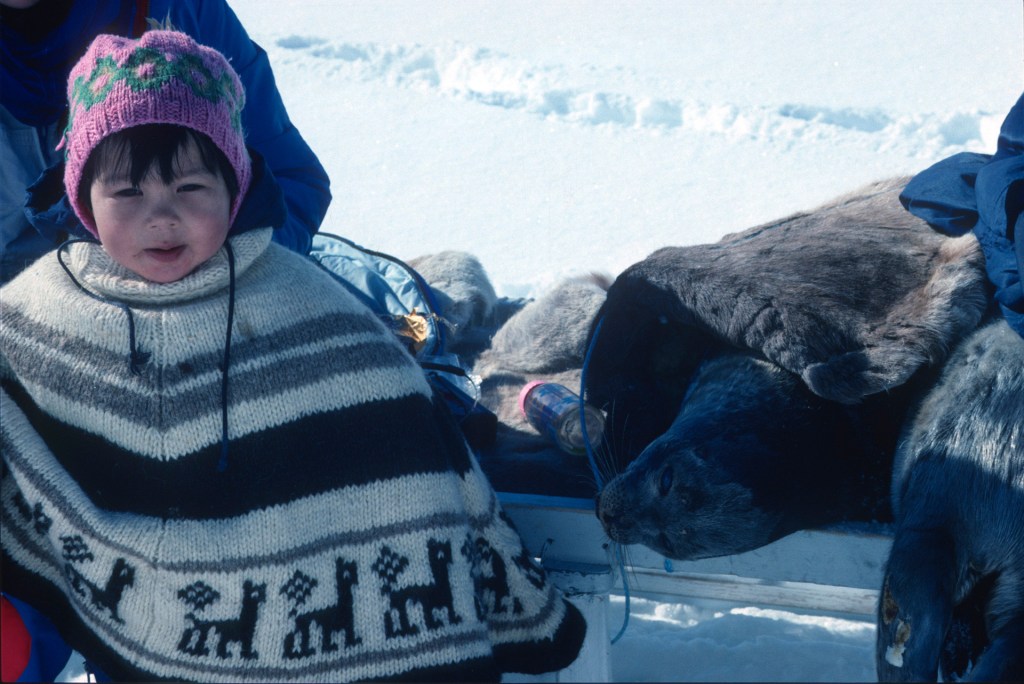
For nearly four decades, my 35mm Kodachrome 64 slides have been safely stored in a filing cabinet. I have often dreamt of editing them for a book or exhibition, so why is it only now that I am finally making the effort to do so? On March 5, 2025, President Trump delivered his State of the Union address to the United States Congress in Washington DC. There, he expressed his intent to annex Greenland, declaring, “I think we’re going to get it. One way or the other, we’re going to get it.”
From filing cabinet to festival stage
On October 25, I played Trump’s words as background to some of my Greenland pictures in front of 750 people attending the 25th GDT International Nature Photography Festival, in Lünen, Germany. I called the presentation GREENLAND BEFORE, and this audience was the first to see these photographs, but why this name? Well, as I said to those sitting in the auditorium, the pictures I took in the late 1980s were of a Greenland before Wi-Fi, before smart phones and social media, before digital photography and AI, before direct flights from the United States (which only started this year), and before some people began to view Greenland as just another piece of real estate.
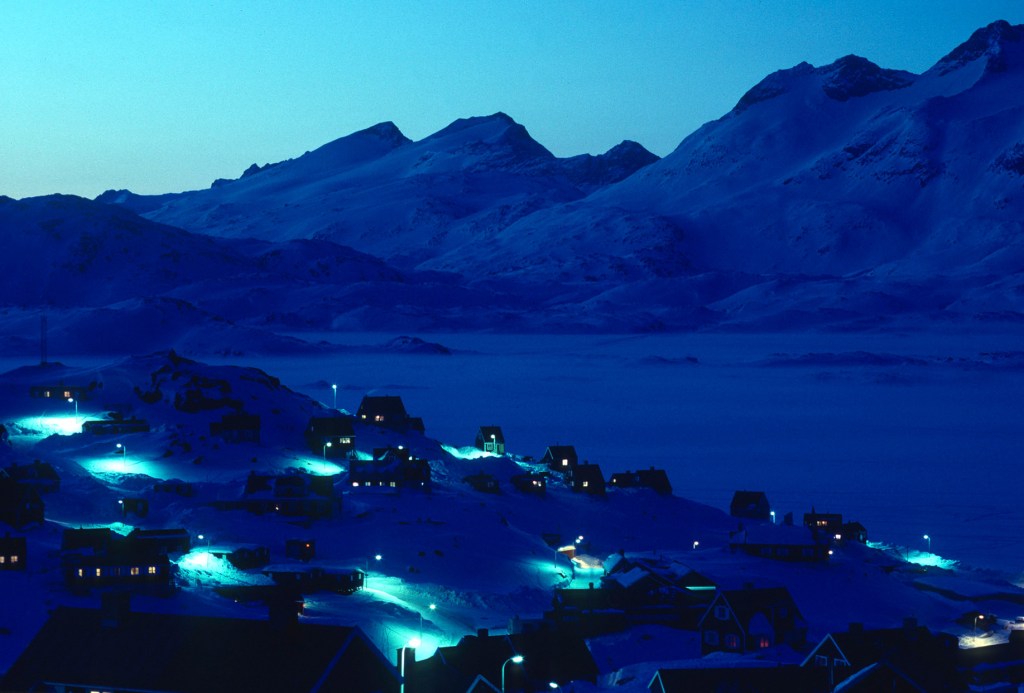
Greenland before mining
Since then, the climate crisis has seen fishing stocks collapse and some of the settlements we visited experience rapid declines in their populations. Others have been abandoned entirely. The climate crisis has led also to the rapid melting of Greenland’s ice sheet and glaciers, enabling the island’s vast mineral wealth to become more accessible for large-scale mining. Today, 37 years after I walked through those rusting ruins on Amitsoq Island, a UK-listed mining company is staking out this location again. It is one of the highest-grade graphite deposits in the world – eight million tons.
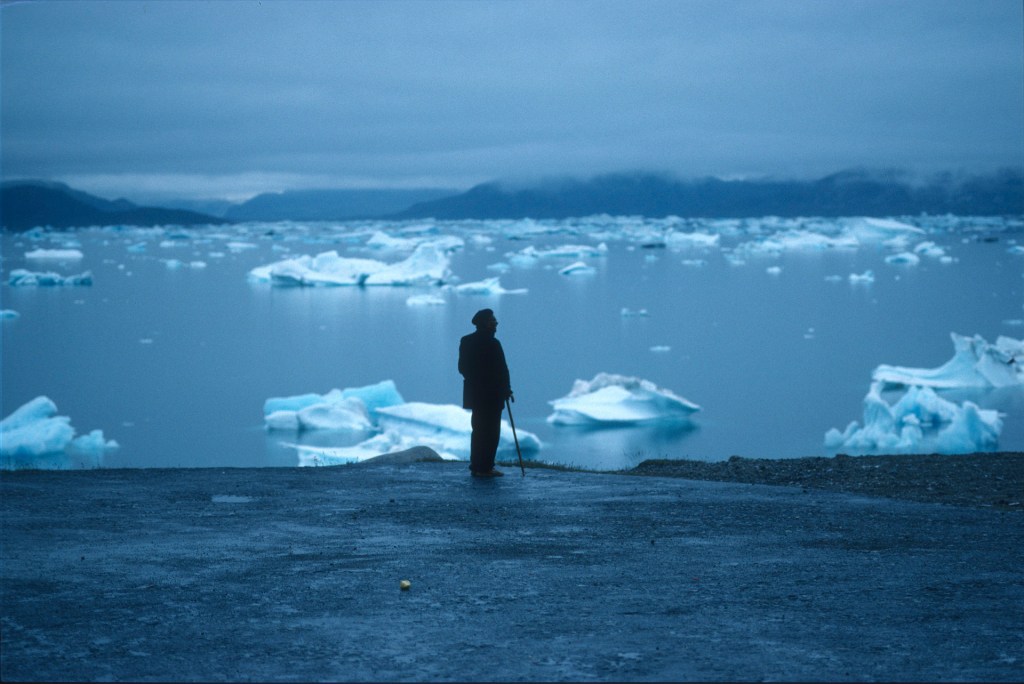
Also attracting attention are the uranium reserves just a few kilometres from Narsaq. Back in 1988, our small group of AP readers traversed a ridge behind this town, photographing waterfalls and enjoying spectacular views across the iceberg-littered Sermilik Fjord. Marie, our guide, informed us that uranium mining was halted here in the 1970s by the Greenland government. It seemed hard then to imagine such a hazardous mineral being intensively mined in such a remote corner of the world, but it could become the new reality within the next few years.
When the ice reveals more than beauty
The climate crisis, industrial scale mining and Trump’s ambitions aren’t the only challenges facing Greenland. With new direct flights from the USA commencing earlier this year and more scheduled flights from Europe, Greenland is having to adapt to the age of mass tourism. It will become an easier destination to travel to and explore than our experience of four decades before. And while my pictures might be from a different era, this is a past not so distant that it cannot be recalled, or still have relevance to where Greenland is now and where it might be going. So that is why I am trying now to get these pictures seen by a wider audience.
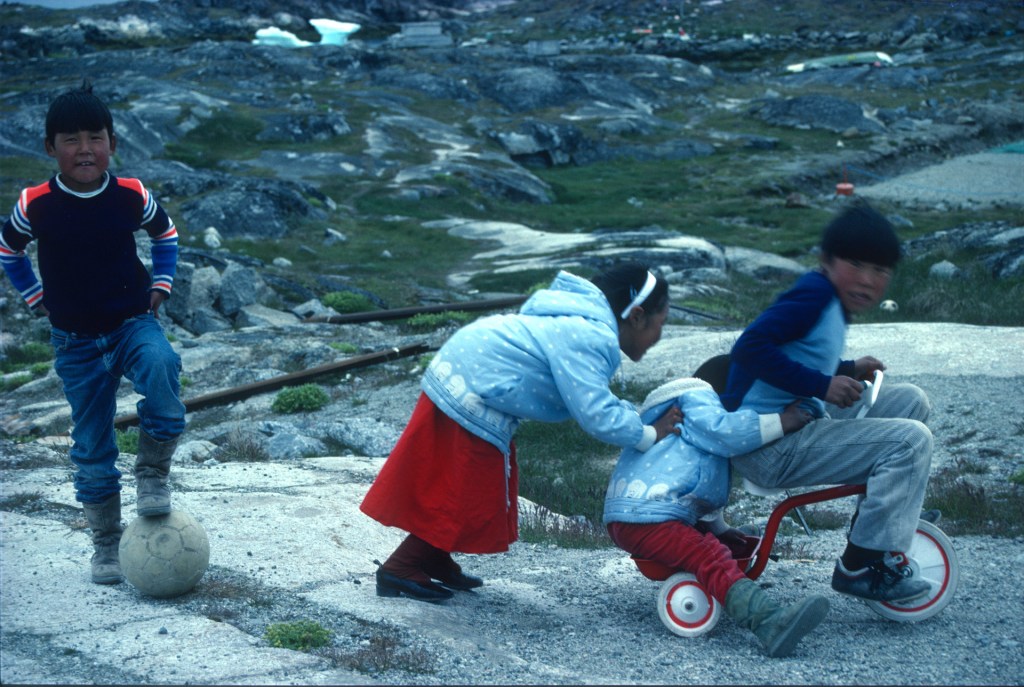
New chapter for a frozen past
GREENLAND BEFORE is the title of a new book featuring about a hundred of my pictures from those AP trips that I hope to publish next year. It will be in English and Greenlandic. To help bring this book to life, I am running a crowdfunding campaign on Kickstarter.
More backers are needed to reach the target. It would be symbolically apt if an adventure that began with a group of AP readers nearly 40 years ago, was made visible to many more with the help of AP’s readers and followers of today.
And, as I told the audience in Germany, “I will send the first copy to the White House, addressed to President Donald J. Trump. With your help, I think he’s going to get it. One way or the other he’s going to get it!”
Follow AP on Facebook, Instagram, YouTube and TikTok.