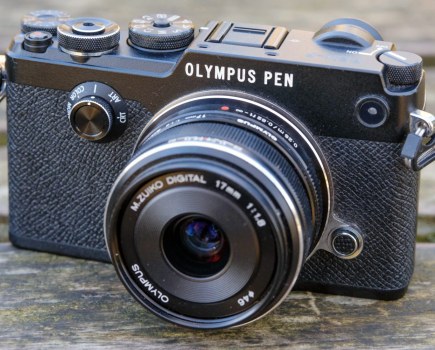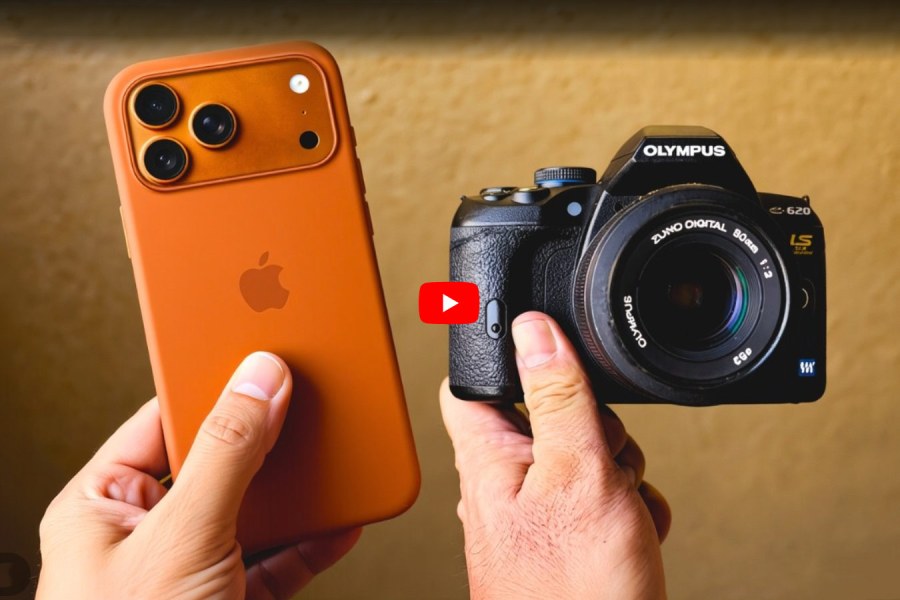
Robin Wong compares an old Olympus DSLR with a new iPhone for portraits, and says the results from the Olympus DSLR with 50mm f/2.0 lens gives better results. What’s interesting is that the Olympus DSLR is a Four Thirds camera, from 2009, so not only is it not a full-frame DSLR, it’s also 17 years old, so really old technology when it comes to noise and image processing. Watch the full video to see why.
Robin Wong goes on to explain how he prefers the viewfinder shooting experience, as well as the handling, buttons and dials, as well as the shutter sound. Another benefit found is in the real bokeh from the Olympus camera, rather than the artificial bokeh (or background blur) generated by modern phones. Robin also says that the portrait photography results from a DSLR look more realistic compared to modern smartphones, due to less image processing.
What do you think? Do you use a phone, mirrorless camera, DSLR, or compact camera for portrait shooting? The latest iPhones and android camera phones all offer portrait modes, with various different effects available, with some, particularly Vivo phones offering advanced bokeh controls designed to give the look of vintage Zeiss lenses.
But can software processing in phones really give the same effect as real background blur? Lots of phones do a really impressive job considering the limitations of the optical hardware, but when they cut around the subject, you can often see the problems in images around the hairline, and there is rarely a smooth transition between what’s in focus, and what’s out of focus.
Related reading
- Best lenses for Bokeh (and beautiful background blur)
- Best cameras for portraits and portrait photography
- Best smartphones for portrait photography
Follow AP on Facebook, Instagram, YouTube and TikTok.