It’s Photo London weekend! For the first time, the fair is held at Olympia. Whilst Somerset House was a fantastic venue, Olympia certainly felt more bright, open, airy and easier to navigate. The exhibitions and work shown had room to breathe – and so did I. Gone are the days of the big tent in the middle of the pavilion and feeling like a sardine. I think I managed to see absolutely everything too.
I noticed a few things on my visit this week, more so than in previous years (likely due to the change in scenery), which prompted some of the points and observations I’m going to make here about visiting exhibitions and seeing photography in a physical space.
The space is still traditional and in line with the set-up of other photo fairs (like Paris Photo), with purpose-built walls as the bare bones inside a large event space. Yet the work itself and how it is presented on those walls is pushing the boundaries of how we think about photography and alternative processes.
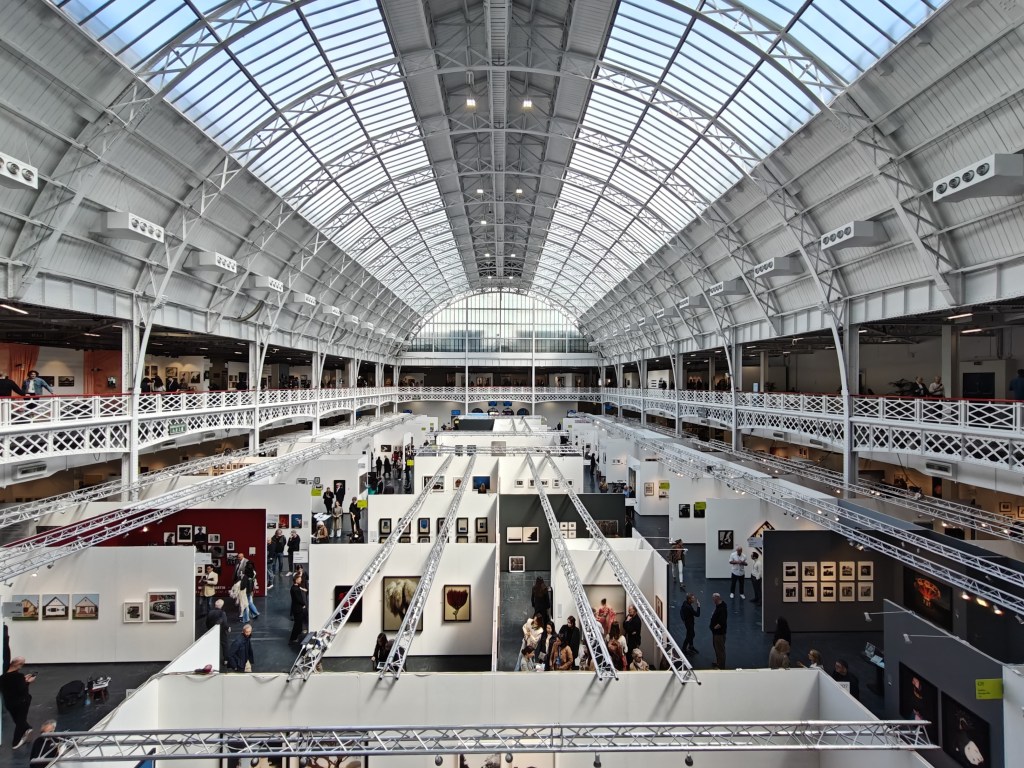
Seeing different kinds of work in one place encourages consideration of what a photograph is or could be, what it means to be a photographer or a photo-based artist, a curator in this field and a viewer of photography.
I paid closer attention to alternative approaches that consider photography beyond the camera and lens set-up and the perfectly mounted and framed print. It was this work that triggered my opinion initially and it brings me back to a notion I feel quite strongly about as someone sharing and digesting photography everyday, and as a curator:
Photographic materiality and the context of viewing matter. In my opinion, they are two of the greatest factors that influence the understanding and reading of a photograph.
!['Searching for Africa in Life [For Koyo Kouoh]' by Alfredo Jaar, (Prix Pictet x Goodman Gallery)](https://amateurphotographer.com/wp-content/uploads/sites/7/2026/05/JM_PhotoLondon_Life.jpg?w=1024)
What do I mean by materiality?
I’ve done quite a lot of research into materiality and photography previously for my postgraduate degree.
In short, materiality refers to the physical properties of photographic images. Such as the type of print, paper (if any) used, the size, borders, framed or unframed, the type of process, colour or black and white, the list goes on. These factors will influence their meaning, interpretation, and significance in both historical and contemporary contexts.
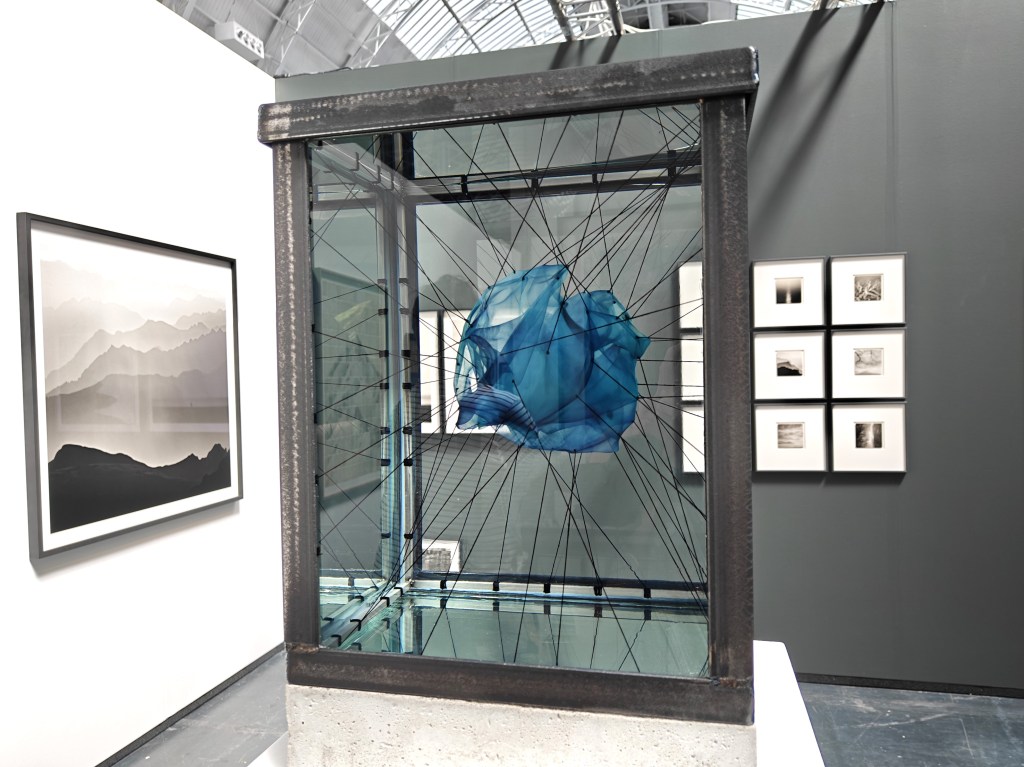
Large scale prints, small contact sized prints, vintage and modern, unframed rugged torn edges, perfectly mounted prints, prints chopped and stuck back together, cyanotype sculptures. You name it, the exhibitors at Photo London shared it all. Just a few of my highlights include:
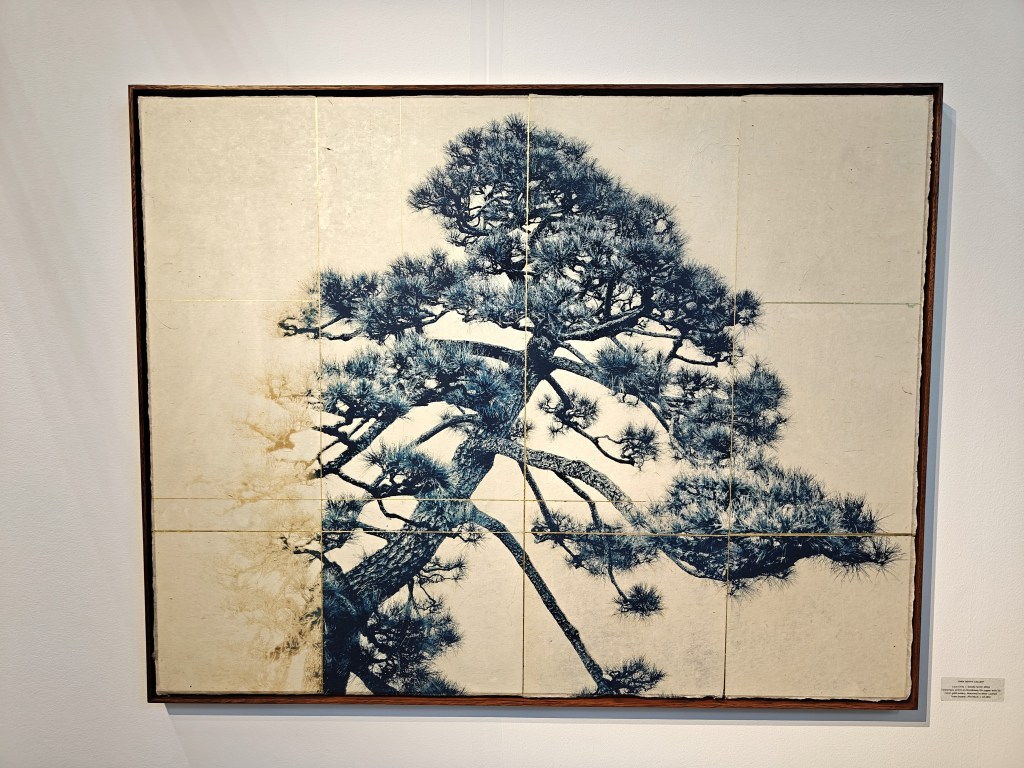
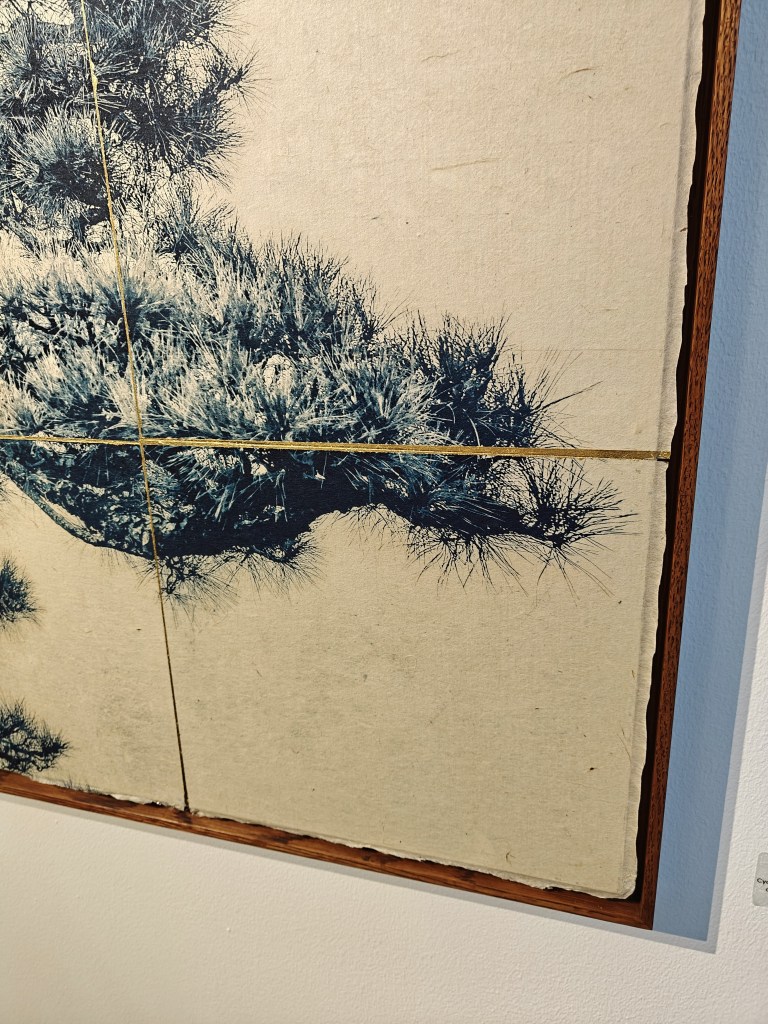
‘Shade no.4’ by Lucas Ortis (Open Doors Gallery), which is a cyanotype print on Hosokawa Shi paper with 23 carat gold joinery. Representative of Kintsugi, the Japanese joinery technique in which broken ceramics are repaired with gold. You can see the paper has been put together, you can see the rough edges of the paper, unconcealed in a frame. The join is part of the final image and a visible presence of the maker’s hand.
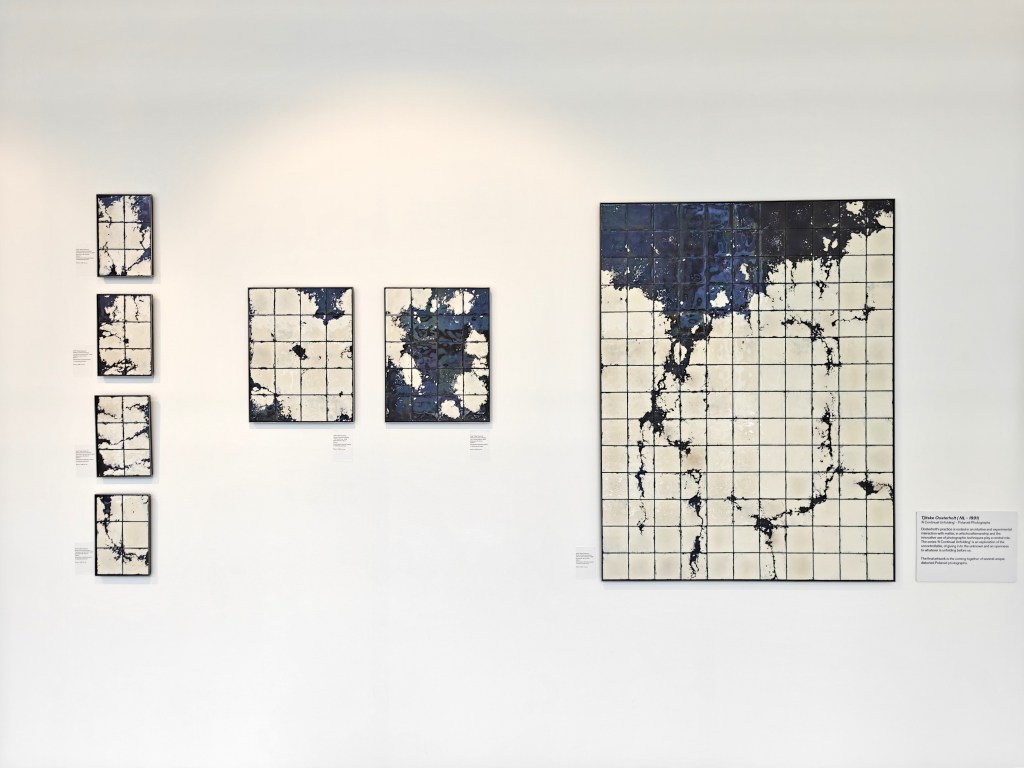
Other photo-based experimental artwork also included ‘A Continual Unfolding’ Tjitske Oosterholt (Contour Gallery). Constructions of several unique Polaroid photographs, every single one distorted in such a way that there is no image left, carefully placed together to create a whole composition.
‘Laws of the Haystack’ by Emile Gostelie (Contour Gallery), a single photographic print cut up into squares and reassembled in a different configuration in its original border. You can see the cuts and lines where they have been put back.
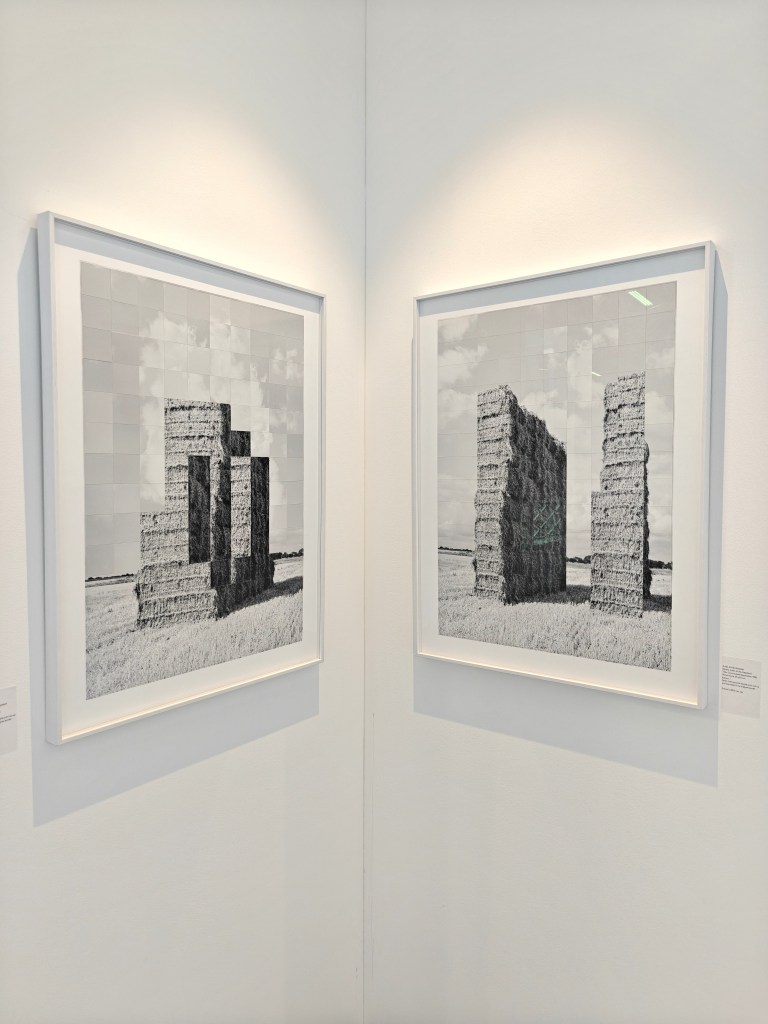
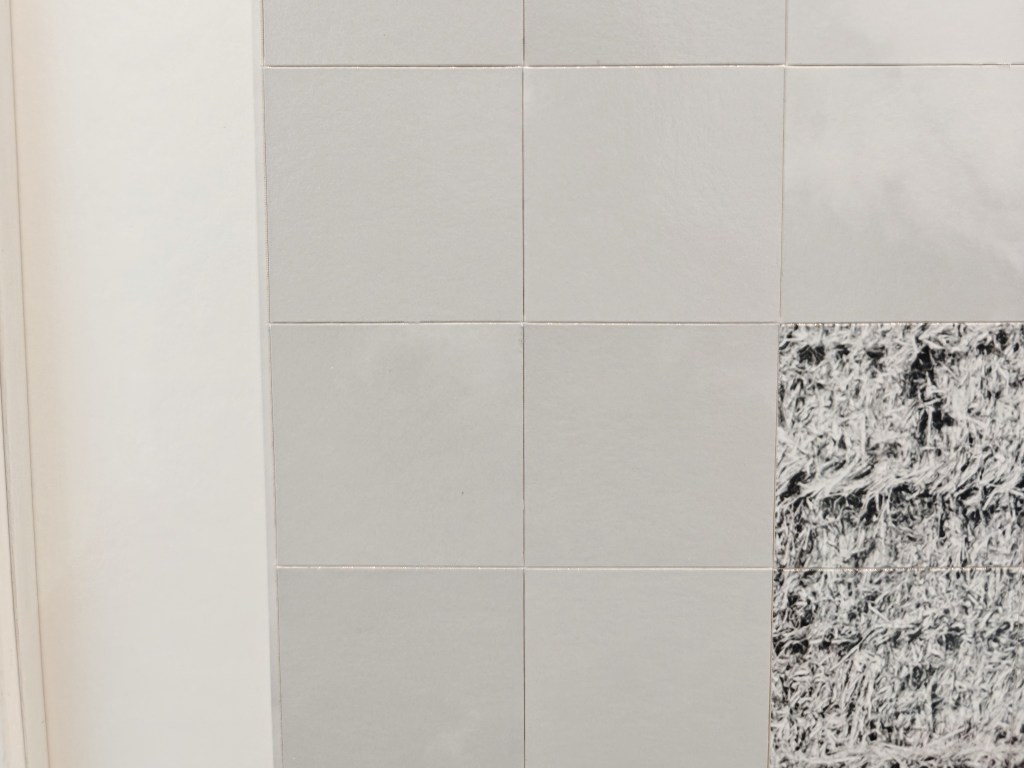
These techniques really stood out for me, as both interesting artistically and in terms of bringing awareness or consideration to how we think about the photographic print as an object.
What about context?
Where and how a photograph is presented. That could be in somewhere such as Olympia, in a dedicated gallery, an outdoor public space, online or in a book.
Despite my thoughts of materiality and context stemming from seeing the photo-art pieces, the same actually applies to more traditional photography:
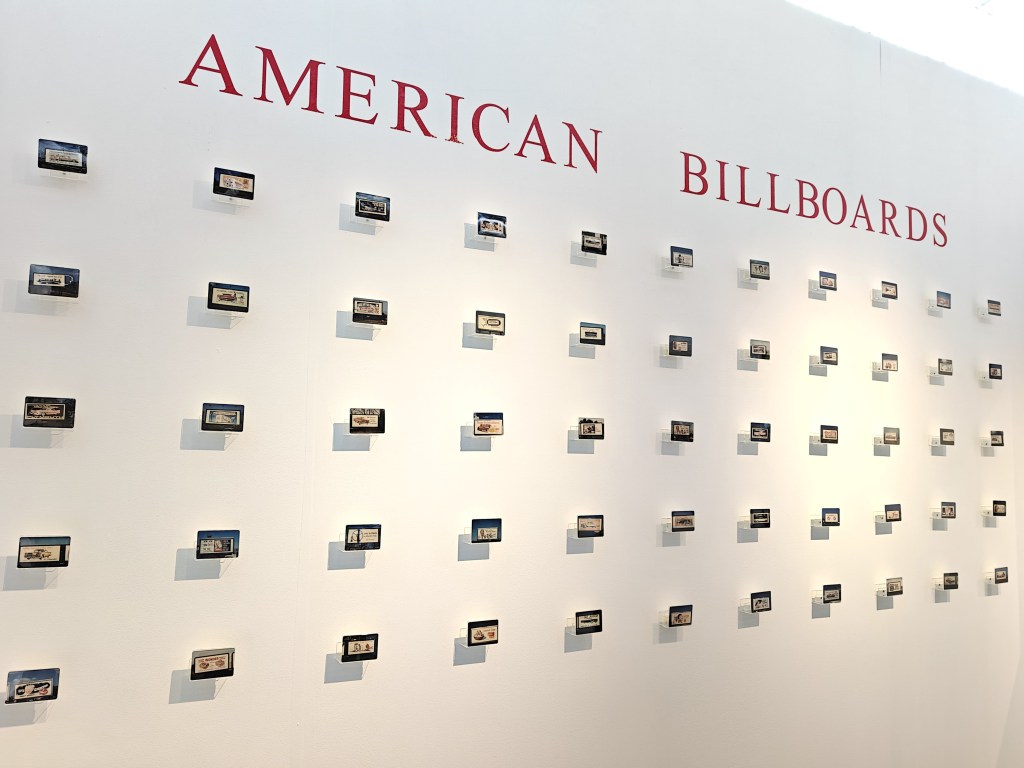
The irony of the tiny American Billboards exhibition, showing 55 tiny 1950s vintage photographs of huge billboards about business card size, originally taken as marketing research by Roland Belgrave and printed using the Ansco Colour Printon Process.
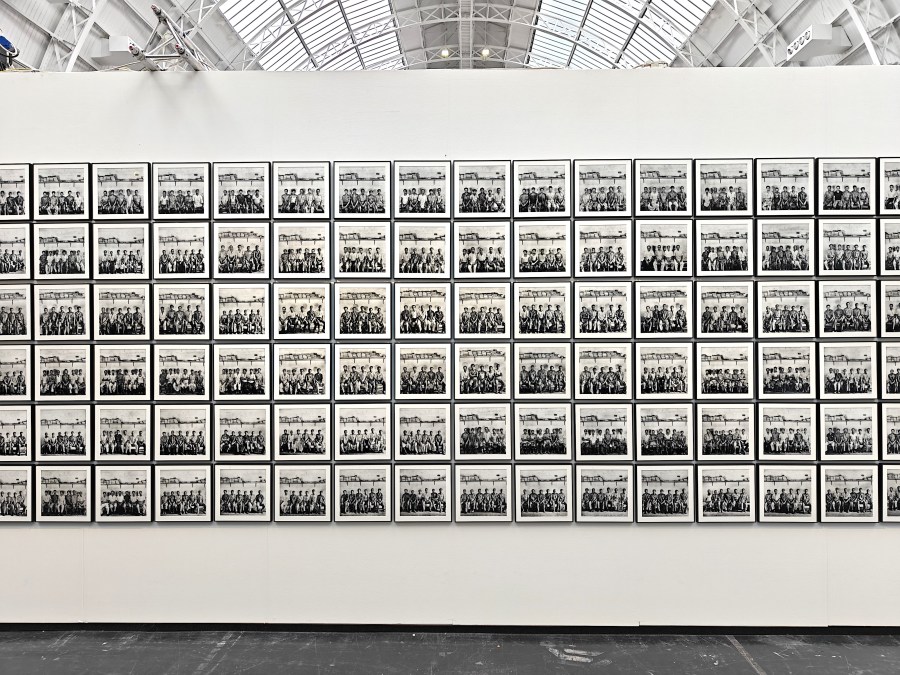
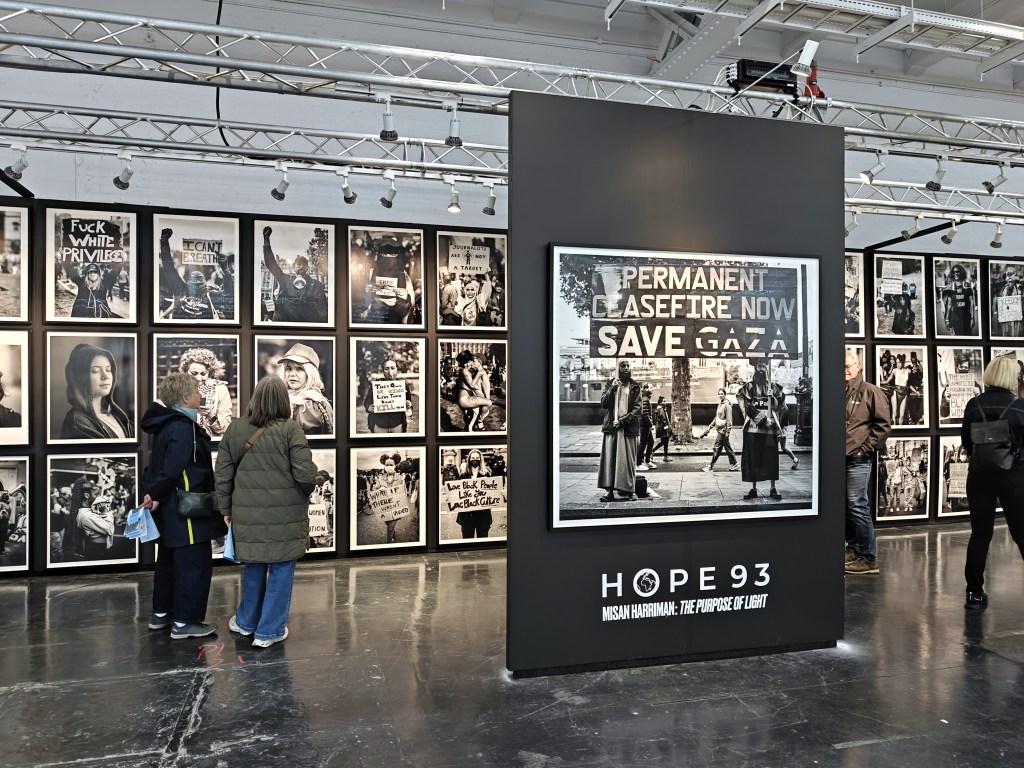
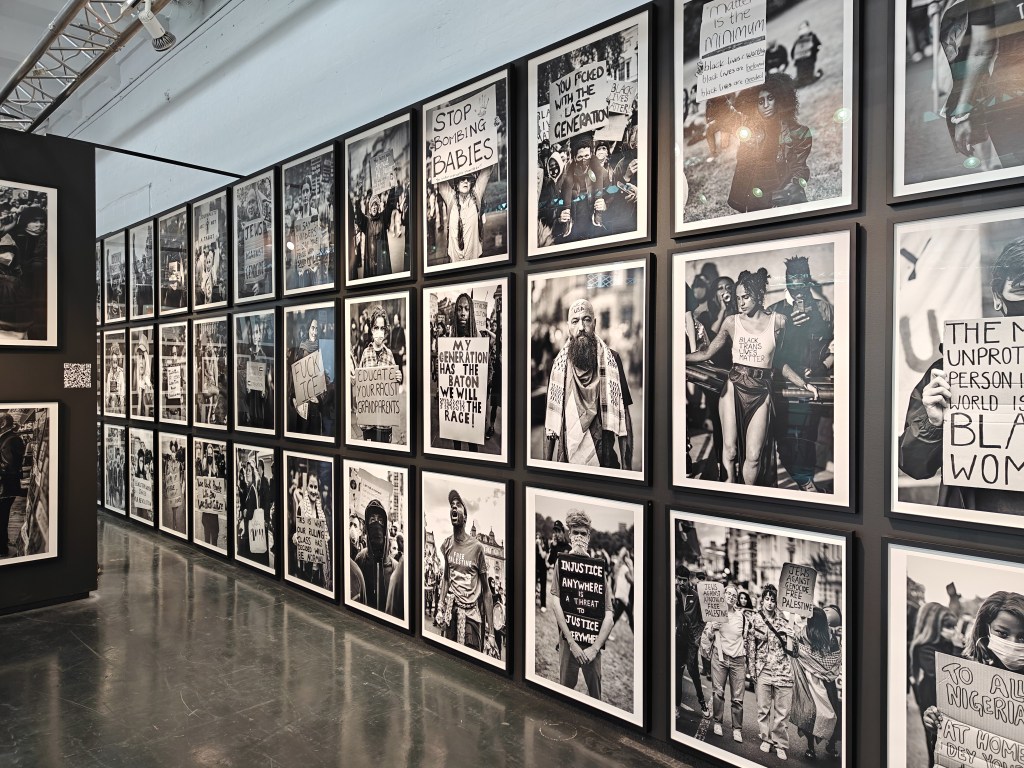
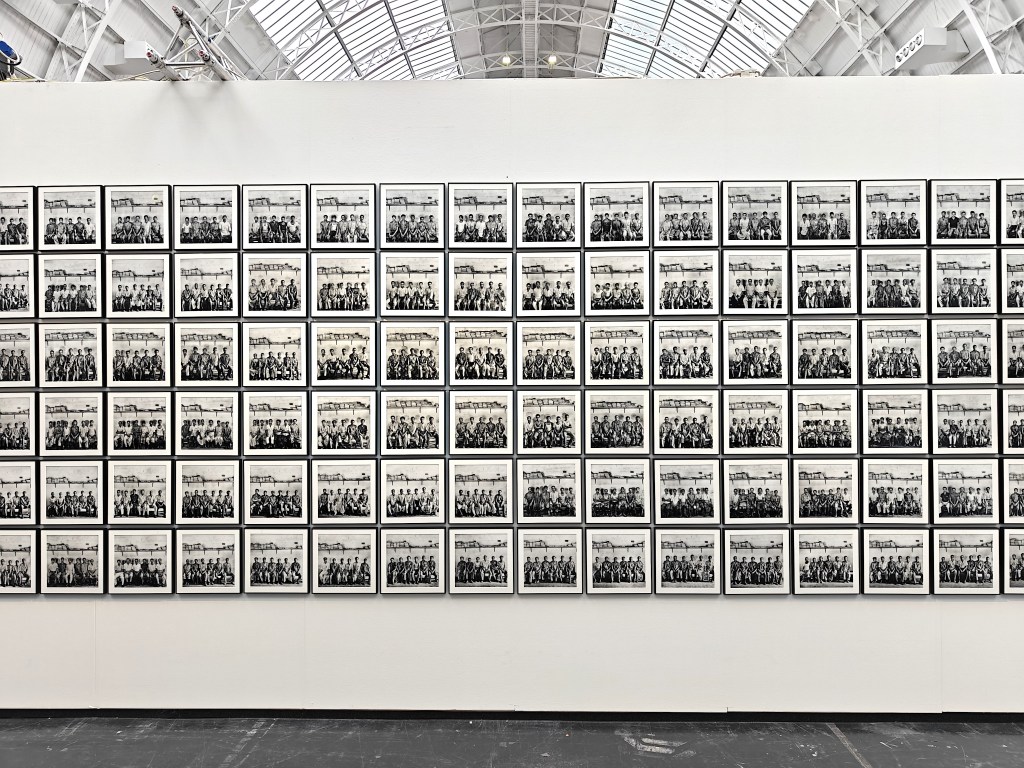
110 large scale prints in the Hope 93, Misan Harrman: The Purpose of Light display, from various Gaza and Black Lives Matter marches and Grenfell Tower vigils. The sheer amount of prints hung close together on the wall actually enhances their impact, with frames to distinguish between each photo.
Edward Burtynsky’s huge landscape prints from his recent Western Australia work that tower over you (Flowers Gallery).
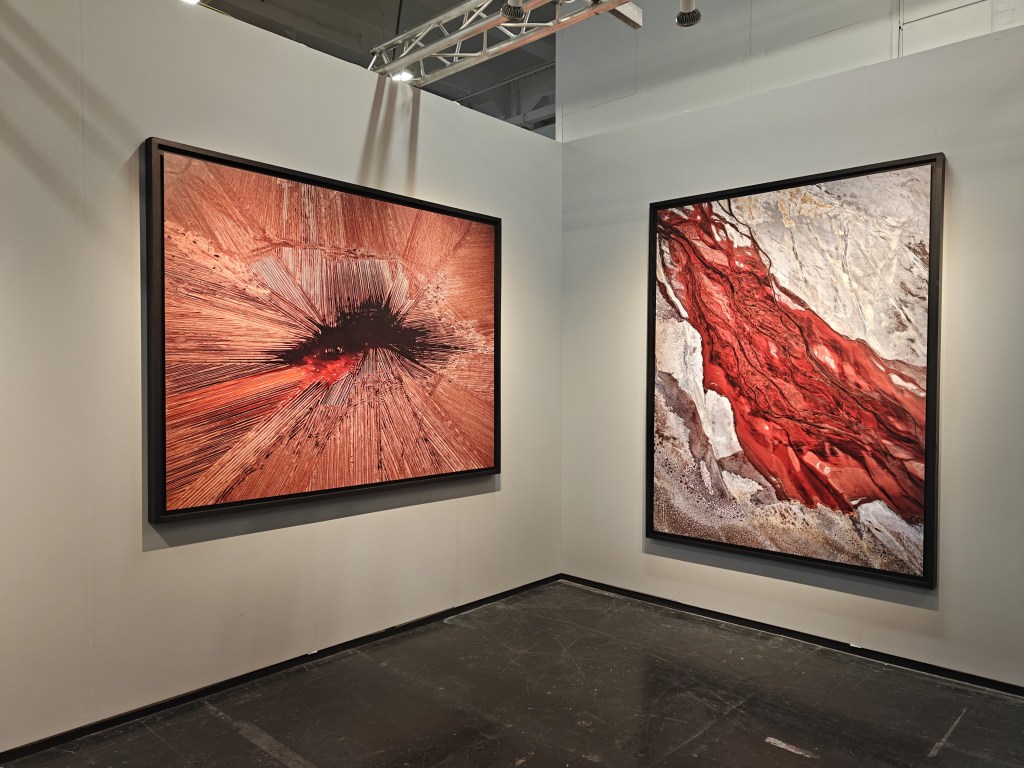
Seeing these pieces of photography, as individual photographs and as a collection, delivers a key narrative in an exhibition space context.
That experience would not be the same online.
That same photograph, shared as low resolution pixels on a screen, comes with a completely different meaning in a new context. It could even make many of the physical properties insignificant – particularly in the cases of Burtynsky and the American Billboards exhibition where their scale matter.
We are also surrounded by many more distractions both in our own personal space from where we are viewing and within the digital space. You could be viewing on a phone or large screen, on the train or at home. Adverts, someone’s dog, the news, all surround the photo you are trying to view. You take less time with it. You don’t see the textures, the size, the craft up close as intended.
The dynamic nature of exhibition events like Photo London is quite interesting and do have some comparisons to the online experience; where you can view a variety of works in one immersion. It’s not every day you see a Bisson Frères c.1862 albumen print next to a 2026 Mount Fuji landscape by Eiji Ohashi. Or a Henri Cartier-Bresson ‘Queen Charlotte’s Ball’ (1959) print next to ‘MTN 621, 2021-2022’ by Doug and Mike Starn, consisting of Ultrachrome K3 Epson ink jet prints, acrylic paint and Scotch tape.
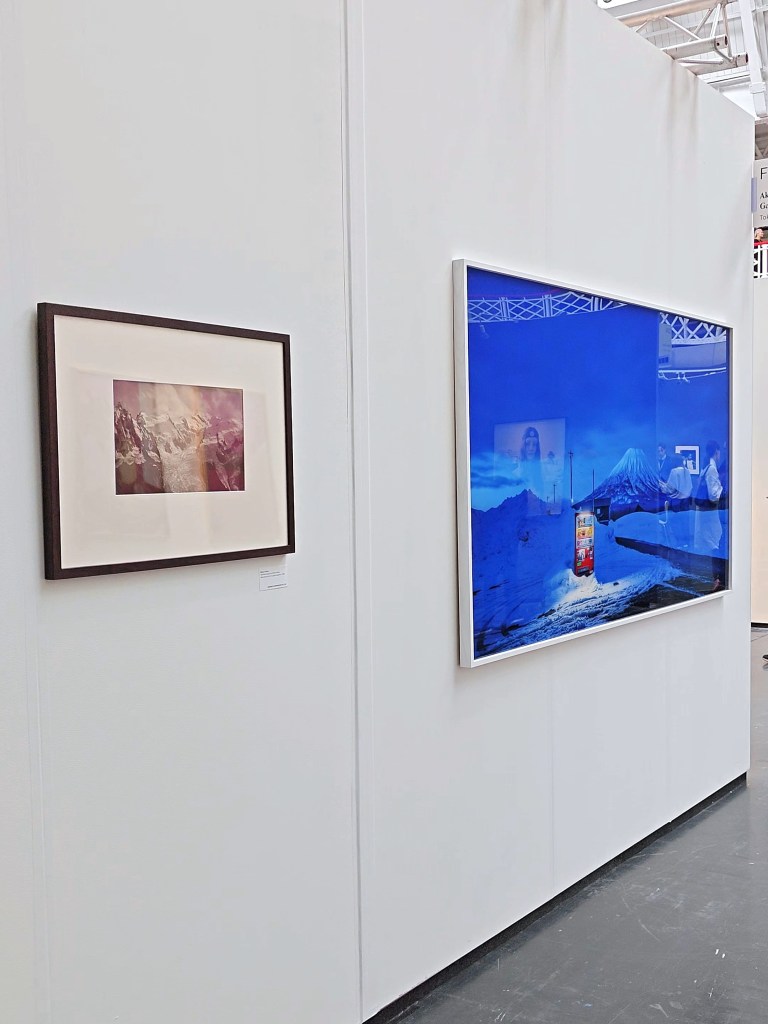
There is, however, a clearer sense of structure and intention. The organisation from the curator of each space helps guide the audience with their viewing without controlling what they should be looking at or hoping for the best through an algorithm. You have the choice to focus on one thing but be in the proximity of similar or completely different artworks; both of which are equally valid experiences.
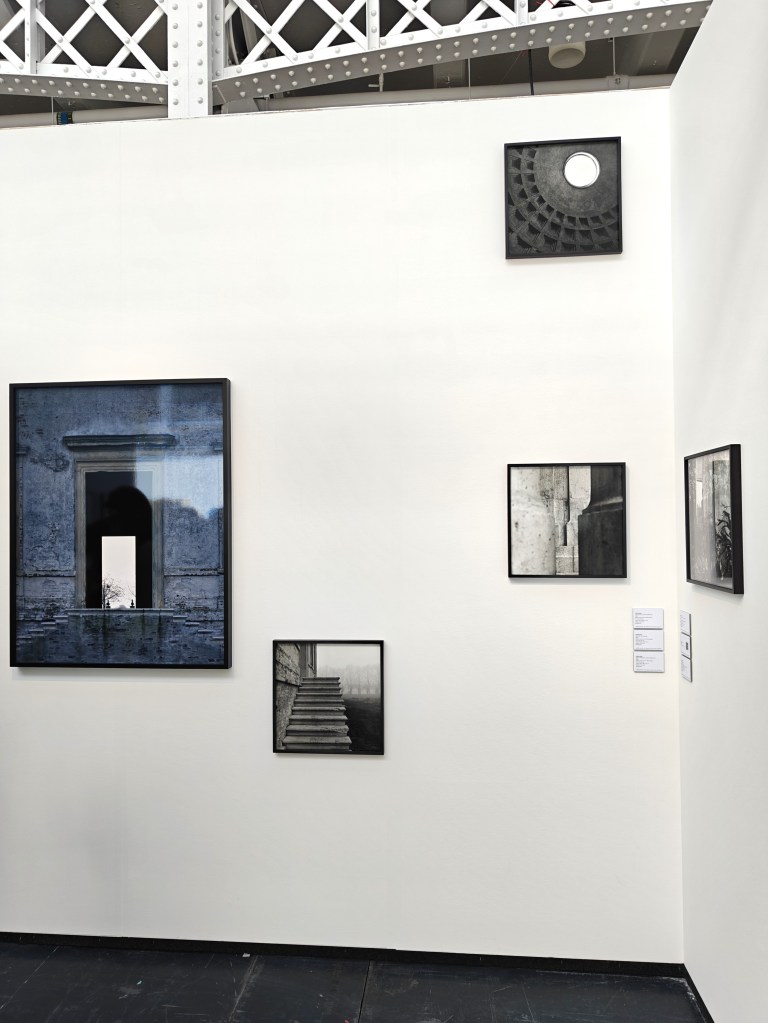
One gallery curator told me they had more space this year to be creative with their approach and how works were displayed, e.g. having an interesting layout rather than one-line of frames, to further the narrative the artist is sharing. And it was true, it worked.
Why should you care?
In a world of easily accessible networked images (e.g. an image that is shared online and exists digitally through code), increased viewing on social media and the rapid influx of AI, the material details and the context of where you are seeing photographs matter more than ever before.
I urge every photographer or anyone interested in photography and art to go see artwork in-person at exhibitions. To look at zines, photo essays and books. They have been carefully crafted and curated in a way to provide a specific experience.
This is something every one of us should also be considering when making work. What is the end result? Are you going to print it? How big? (because size does matter) Where is this intended to go and how do you hope the viewer will read it?
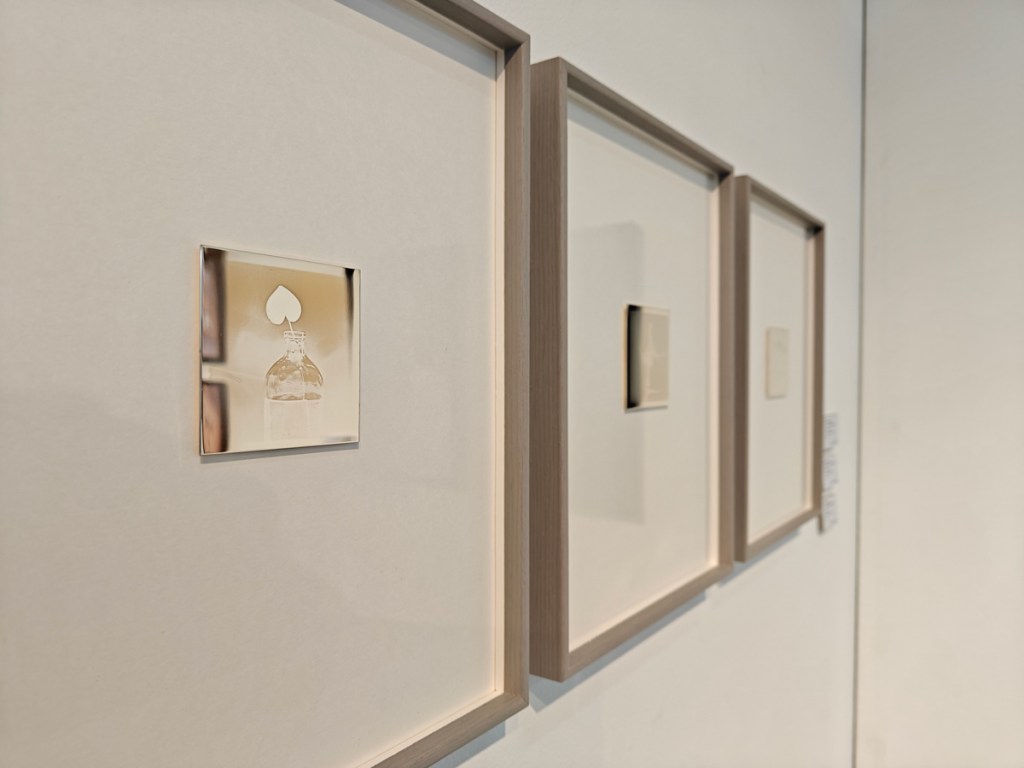
Unless created specifically for an online viewing environment, taking an analogue approach to looking at photography, like visiting exhibitions, is still the best way to fully appreciate a photograph in its entirety. You certainly can’t fully appreciate a reflective daguerrotype plate through a screen.
We’re celebrating 200 years of photography this year and it’s a really interesting space to be working right now with many practitioners preserving its past whilst forging the way of its future. There is onus on the organisers, curators and galleries to deliver experiences that encourage people to venture away from devices and into the real world.
There are plenty of benefits to engaging with photography and art in this way. They can encourage mindfulness, meaningful conversations and critical thinking. It has also been proven to improve your health and wellbeing. That’s pretty special and we should be supporting it.
Related reading:
- Why every photographer should enter a competition (at least once)
- Want a digital detox? There’s only one type of camera left you absolutely must try
- Is this the start of the compact camera renaissance?
The views expressed in this column are not necessarily those of Amateur Photographer magazine or Kelsey Media Limited. If you have an opinion you’d like to share on this topic, or any other photography related subject, email: [email protected]
Follow AP on Facebook, Instagram, YouTube and TikTok.