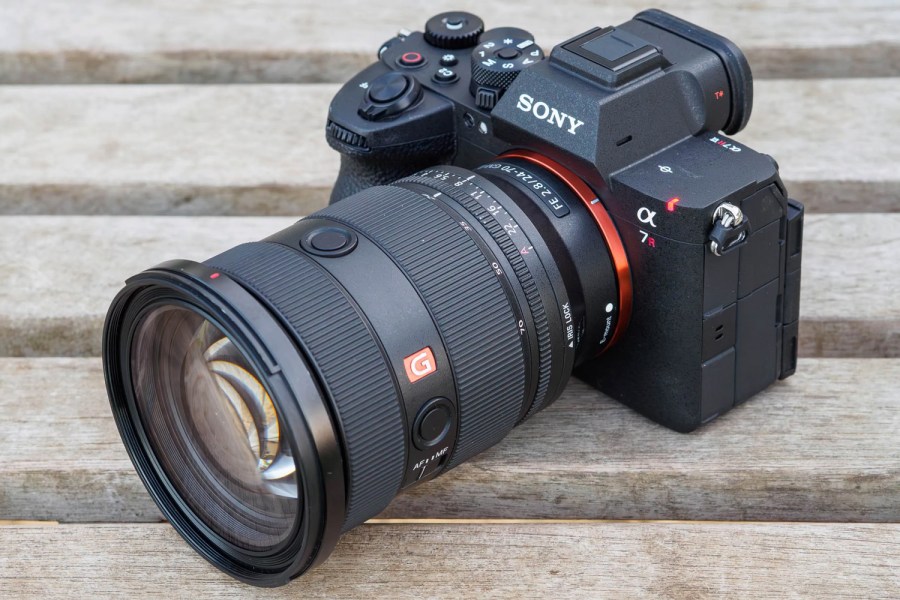
There was a time when cameras were genuinely different. I would set alarms for 6am to watch launch videos before work. Not because anyone was forcing me to, but because the possibility of a new camera felt like news from the future. Mirrorless cameras. Bulk photo editing. Things that seemed faintly impossible.
Before nine o’clock I would have watched four YouTube videos, visited three rumour sites, argued in a forum, and listened to one man speaking directly into a webcam from what appeared to be his spare bedroom.
Back then, cameras had personalities. Some could focus on a human eye whilst others struggled to focus on a person standing perfectly still in broad daylight.
Some could shoot ten frames a second. Others regarded continuous shooting as an optional lifestyle choice.
Metering systems ranged from remarkably intelligent to what can only be described as a loose philosophical interpretation of light.
Buying a camera involved compromise. You gained something and lost something. Every choice felt slightly irrational and deeply personal.
And I loved it.
Sometimes your camera would simply stop functioning because it had encountered the weather.
Today, however, we face a rather awkward reality…
They’re all good – the same, one could argue.
Good in the sense that every camera produced by a major manufacturer is capable of creating work far beyond what most of us will ever ask of it. And yet the conversation has never been more obsessive and void.
The camera industry now feels like a school sports day where four children arrive, all claiming to have invented running.
Forty-one megapixels versus forty-two. Fourteen stops of dynamic range versus fifteen. Twenty frames per second versus thirty.
My personal favourite is the photographer who spends most weekends taking still photographs of birds while expressing genuine disappointment that a camera doesn’t record in Open Gate.
It’s photography’s equivalent of buying a Formula 1 car to drive to Aldi.
The irony is that most photographs are viewed on screens smaller than a paperback book. They’re compressed, cropped, reposted and dropped into a family WhatsApp group where somebody’s dad replies with a thumbs-up emoji.
A remarkable amount of photographic discourse now revolves around image quality that nobody will ever actually see. We discuss 8K footage before uploading it to platforms that compress it with the enthusiasm of a budget airline packing luggage into an overhead compartment.
This isn’t criticism. It’s context.
Photography has always lived somewhere between art and engineering. The difference today is that the engineering side has become almost absurdly competent.
Autofocus is excellent. Sensors are excellent. Video is excellent.
And, as the differences become smaller, the arguments become larger. The uncomfortable reality is that we are no longer comparing good cameras with bad cameras. We are comparing extraordinary cameras with slightly different extraordinary cameras.
And perhaps that’s why the debates have become so intense. When the meaningful differences disappear, we become fascinated by the meaningless ones. But I can’t help feeling we’ve lost something in the process.
I miss the quirks. The flare.
The mistakes.
The strange little imperfections that gave cameras personality.
And while cameras have never been better, I sometimes wonder if photography was a little more interesting when they weren’t.
The views expressed in this column are not necessarily those of Amateur Photographer magazine or Kelsey Media Limited. If you have an opinion you’d like to share on this topic, or any other photography related subject, email: [email protected]
Related reading:
- Modern cameras ruined the joy of taking photos
- Disposable cameras are a surprising comeback success story – I think I know why
- Sales of full-frame mirrorless cameras are flatlining, while compact camera sales continue to grow – what’s going on?
Do you want to win some great prizes for your photography? Enter your photos in our International Amateur Photographer of the Year competition. Free entry for photographers aged 13-21.
Follow AP on Facebook, Instagram, YouTube, TikTok and Irys.