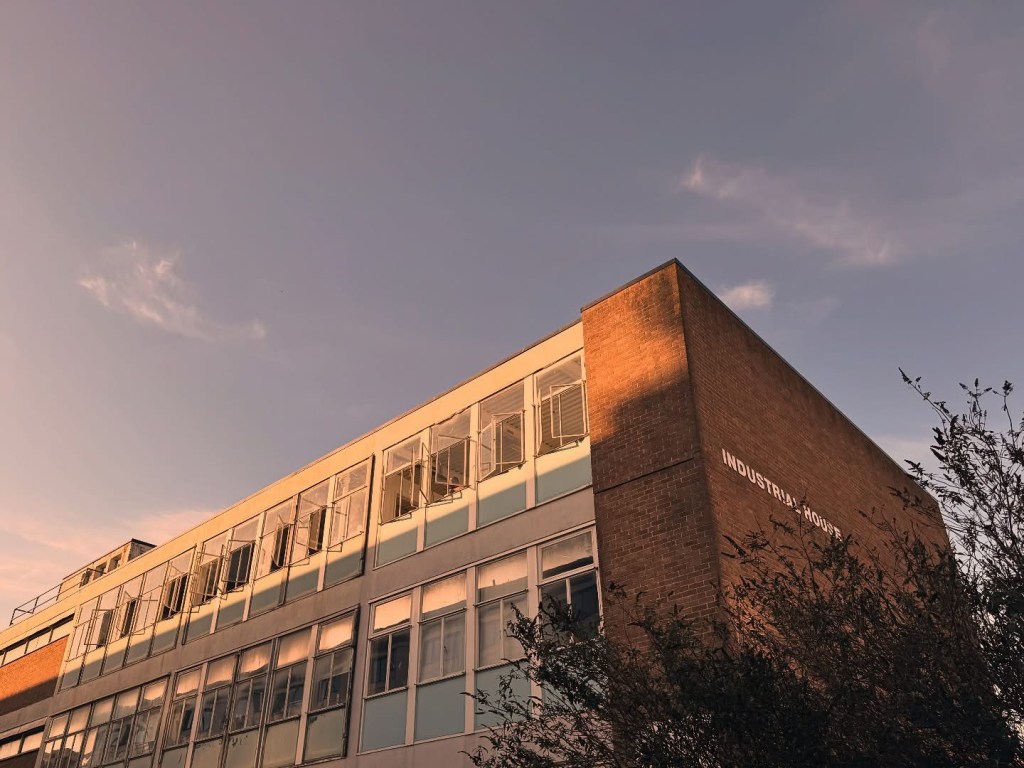
From the outside, no one would guess that one of the 1960s’ industrial buildings next to Hove train station is a buzzing new creative hub. “The building had been pretty much ignored by the council for many years,” explains Simon Roberts, a photographic artist and co-founder of POST in Brighton & Hove. “It’s got single glazing and a tin roof. The lift hardly worked. It’s not a glamourous location. People see a graffiti-covered building… It looks pretty ugly. And then they come in and go “Wow, it’s incredible.” It immediately generates the feeling that you’re in somewhere special.”
POST is a new lens-based visual arts complex in Brighton & Hove, a first-of-it’s-kind centre for the city, catering to the needs of local photographers and video artists. It’s based inside a 3000-square-foot industrial unit, owned by Brighton & Hove City Council, with facilities including photographic studios, a black and white darkroom, an exhibition and events space, hot-desking zones, and a photography book library.
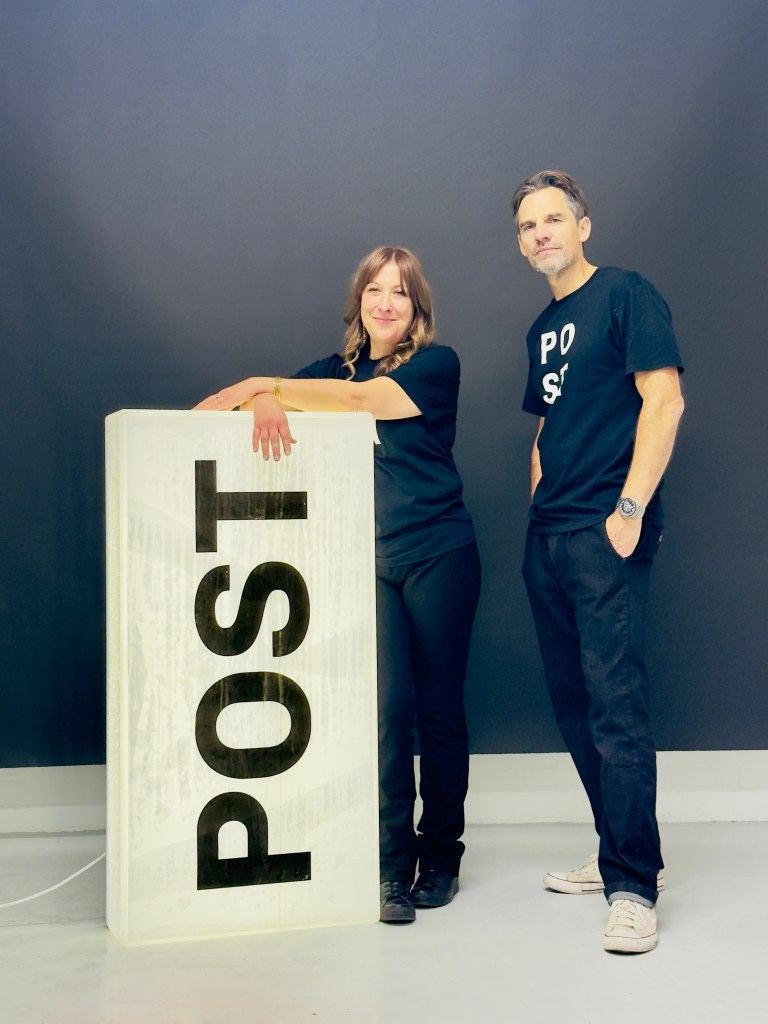
Documentary photographer, curator and social entrepreneur Nina Emett, co-founder of POST, had had an idea for a multi-faceted space dedicated to photographers for around 20 years. In 2025, Roberts and Emett, long-term friends and collaborators, started to thrash out ideas, going on to launch a summer Kickstarter campaign, which exceeded their original £20,000 target, giving them £28,000 with which to get the idea off the ground, with POST opening on January 5, 2026. “It’s been a whirlwind,” Emett tells me. “We had amazing support. People wanted to get behind it, not just our industry contacts, friends and families, but much wider than that. As word spread, we found all kinds of people supporting it. They wanted to see it thrive. There’s a lot of positive will and momentum behind it.”
Roberts already had a studio in the building with a collective called APEC (Art Producing Economic Community), so he knew the building well. During his 16 years there, the top floor was previously occupied by “a business for optics for glasses, alongside a huge fancy dress outfit, a storage unit with costumes for theatres.” But, in 2025, the industrial unit was sitting empty. “When we took on this space, it was just 3000-square-foot of bright pink walls and horrible floors,” he says. “Over the course of two months, an army of volunteers came in to help us with paint cans or scraping the windows. It was a marvellous time where you realised we were creating something that people wanted to be involved in. The story in photography recently has been quite depressed. Here, suddenly, was a better news story around what’s happening in photography.”
POST was created partly to provide a working space for graduates and other young people. “Both universities run media or photography-based courses, and then students are not able to continue their careers in the city, with the cost of living crisis and so on,” says Emett. “Students are moving to other cheaper towns because they didn’t have resources or weren’t able to find or use local facilities.” But, she stresses, the centre isn’t just for young people. “It’s for everybody, all generations.”
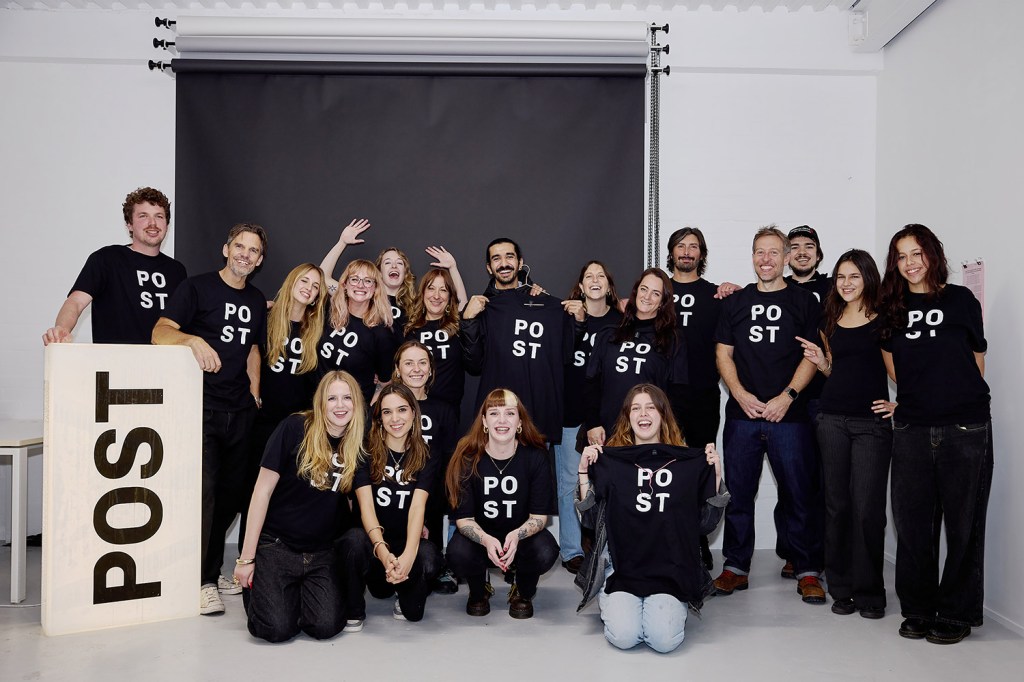
With photography so often a solitary business, POST is designed to bring some collective strength. “People burn out,” Emett explains. “If you’re working alone in the arts sector and it’s not particularly well paid anyway and you don’t have enough support, I don’t know how sustainable that is. So we’re trying to create a model that is more based around community and collaboration, so that people can share resource, knowledge, expertise, and feel more buoyant about their practice and their future.”
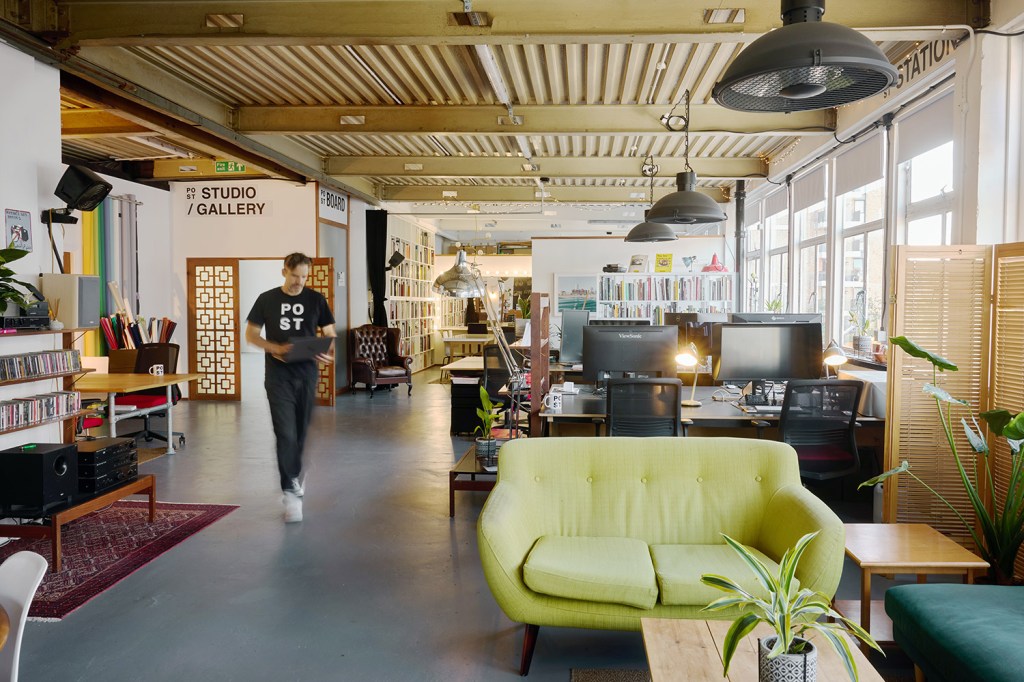
As well as creating an attractive space, with fantastic light and art on the walls, the centre is mostly open-plan. “We don’t want closed-off offices,” says Roberts. “We want to facilitate as much dialogue and collaboration as possible.”
Despite the fact that Brighton & Hove is a thriving cultural city, including a strong photographic scene, Roberts and Emett both saw a gap that urgently needed filling, in terms of a place to bring photographers together, as well as a lack of dedicated exhibition space. “There were no facilities all in one place,” explains Emett. “Everything was very disjointed.”
Both photographers have also witnessed arts-focused businesses or buildings closing across the city. “There’s a lot of demand for property, which rockets up the price for any commercial space or spaces get turned into flats, as so many people want to live here,” Roberts tells me. “We wanted to buck the trend of things closing.”
As well as the cost of living crisis and the cost of renting and maintaining buildings, both also see a precariousness in any project whose existence depends on only one income stream or grant funding, such as Arts Council England. So POST’s model was conceived with multiple income streams, to help with financial sustainability, including studio rental, a multi-tiered membership scheme, hiring of the facilities and events space, and a varied education and events programme. “Arts organisations are often too reliant on one source of funding,” explains Emett. “If you lose your grant-funding, that’s it.” POST doesn’t currently rely on any public funding or assistance, though they might apply for public funding streams in future. They might also consider bringing in investment in future.
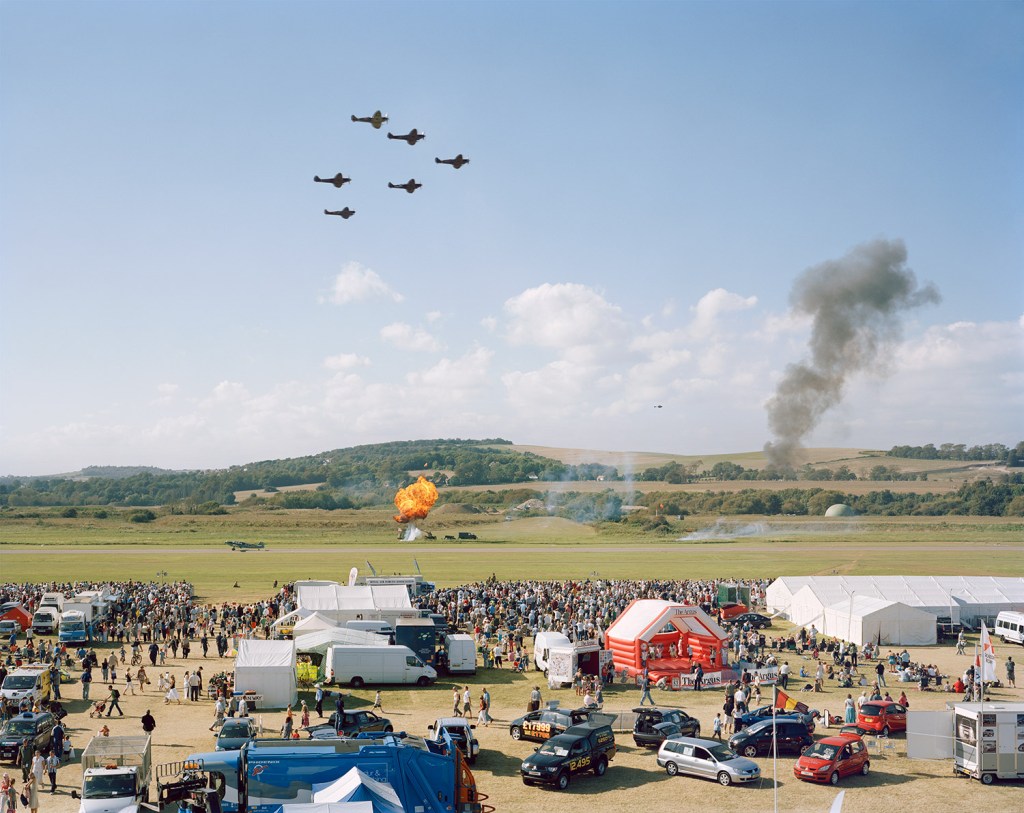
Since opening, POST has hosted photographers, such as Mark Power, Syd Shelton, Jillian Edelstein and James Clifford-Kent, to give artist talks, and held weekend events, including wet-plate collodion workshops and a photobook weekend in collaboration with the Kraszna-Krausz foundation. The national photography organisation, Photoworks, is also based at their offices.
There’s more on the way, including a tenth anniversary celebration of the Marilyn Stafford FotoReportage Award from FotoDocument, a not-for-profit organisation that Emett is Founding Director of, at POST from September 18-20, with an exhibition, talks, panel discussions and workshops, all based around women in documentary photography.
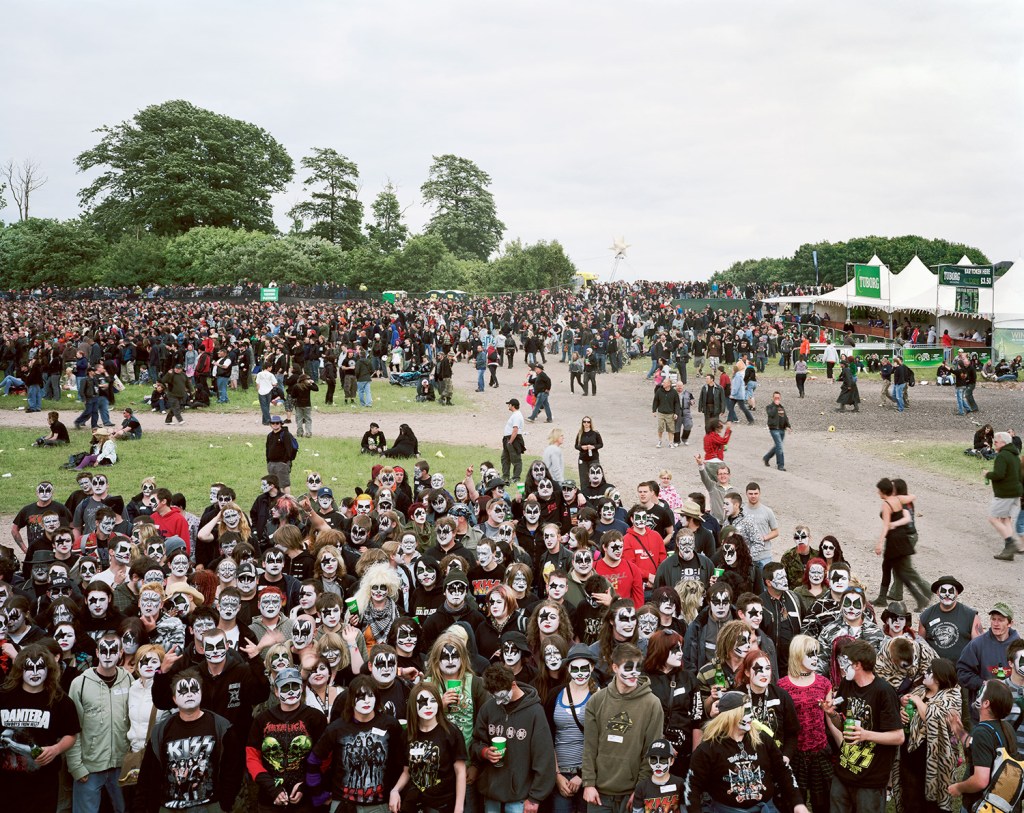
Having let Brighton & Hove’s photographers know about the new centre, POST is also now reaching out more to people working in film. “We’re lens-based, not just photography,” says Emett. “From September, we’re starting a documentary film club: the Brighton & Hove Doc Club. It’s an important new development, as it’ll bring a whole raft of new people to us.”
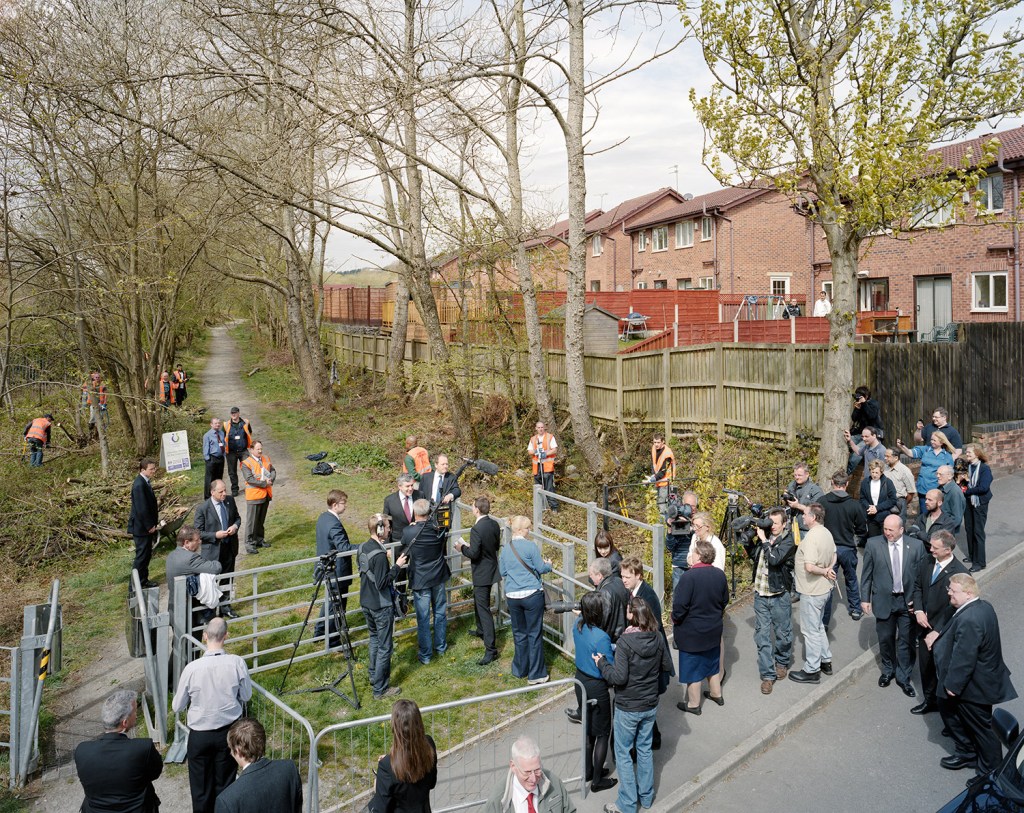
There will be many other new avenues explored, as the fledgling project navigates the future. “You have to be nimble and strategic in your thinking,” says Roberts. “You have to be ready to change. Our initial vision isn’t necessarily the same as we’ll be in two years’ time. We don’t know where the industry will be in two years’ time.”
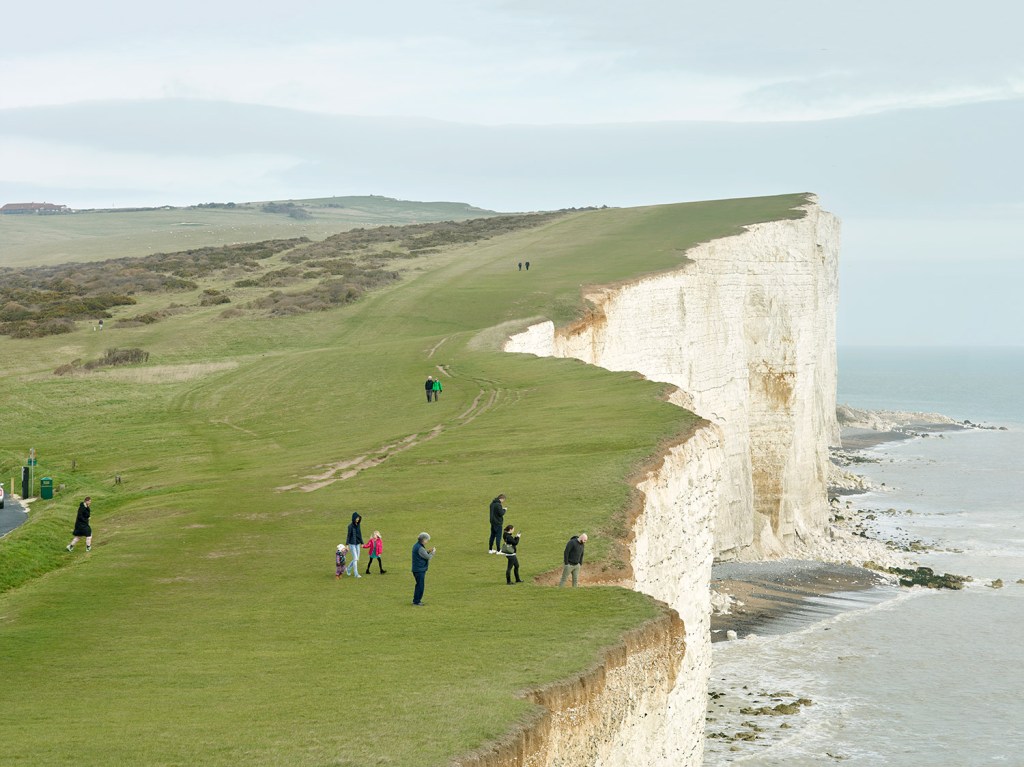
“We’re throwing everything at it and seeing what works,” Emett adds. “Some of it sticks, some doesn’t. We’re thinking all the time about how we can expand audiences, while still staying true to lenses. We’ve got more ideas than we can possibly realise. That’s a good thing.”
See poststudiosbrighton.com and www.instagram.com/post_creatives/
Related reading:
- Best photography exhibitions to see in 2026
- The world’s oldest photography exhibition returns this summer
- Major new Vivian Maier exhibition pairs the iconic street photographer’s work with the poetry of Allen Ginsberg
Follow AP on Facebook, Instagram, YouTube, TikTok and Irys.