Amateur Photographer verdict
The DJI Mic Mini 2 is an appealing wireless microphone system for photographers and creators who want better sound. It’s an accessible and highly practical upgrade from built-in camera microphones- Extremely compact and lightweight
- Excellent battery life and charging case
- Simple setup with flexible connectivity
- Noise reduction has limited impact
- No Lavalier microphone input
- Decorative covers cost extra
Good audio can transform the quality of a video, but many photographers shooting video for the first time are reluctant to carry bulky microphones and tangled cables, and many worry about a complicated setup process. DJI clearly understands that audience, because the DJI Mic Mini 2 is designed to make recording better sound feel almost effortless.
Note that at the time of writing, this product is not available in the USA.
DJI Mic Mini 2 at a glance:
- £89 (two-transmitter kit); £49 (single-transmitter kit)
- 48kHz/24-bit audio recording
- Omnidirectional microphones
- Up to 400m transmission range
- Up to 48-hour battery life with charging case
- Two-level noise cancellation
- Three voice presets: Regular, Rich and Bright
- dji.com
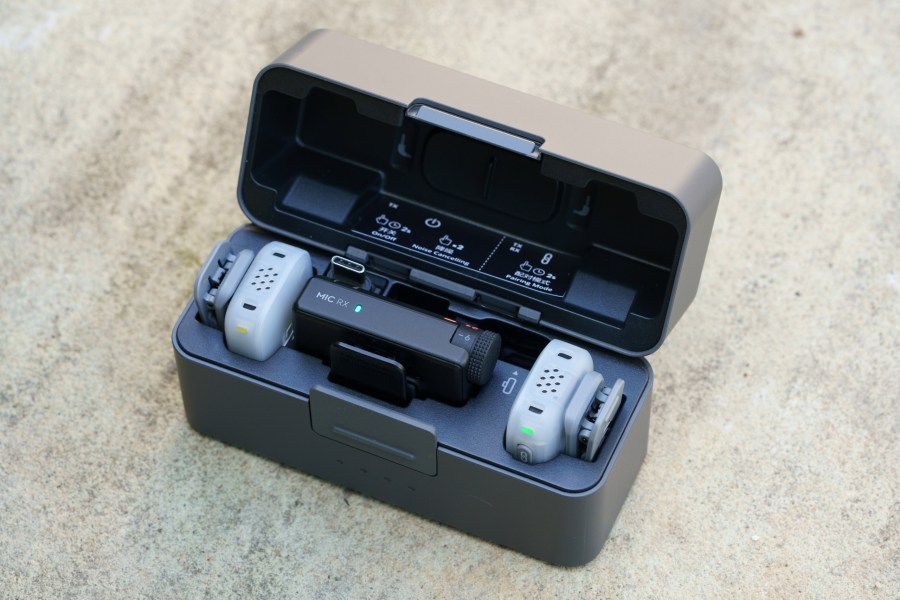
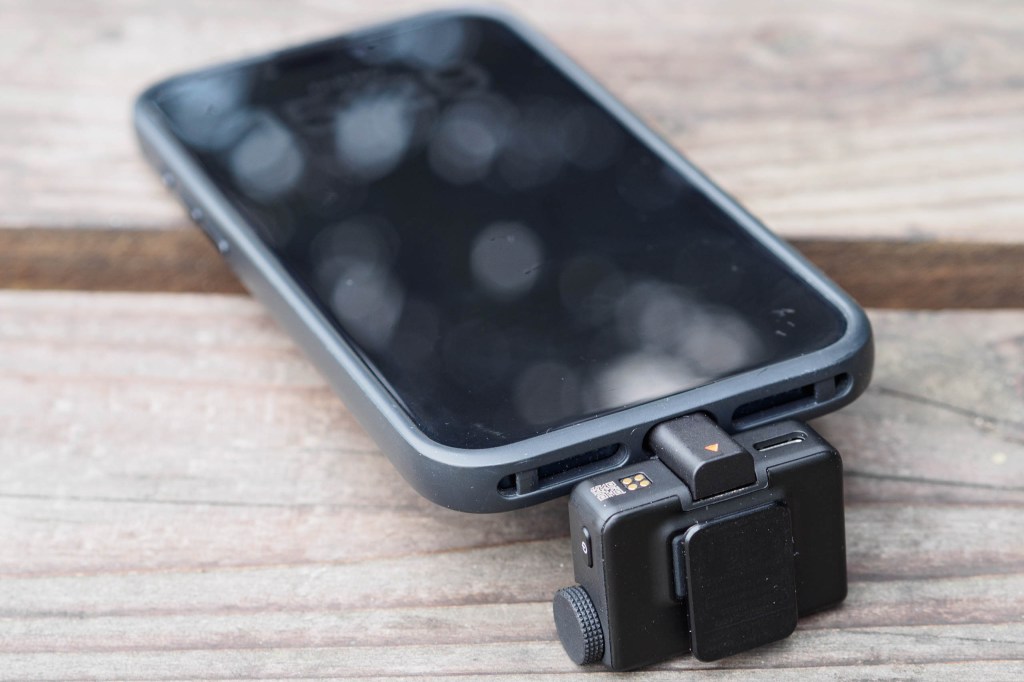
Two different kits are available. The two-transmitter kit costs £89 and includes two tiny omnidirectional transmitters plus a receiver, while the £49 single-transmitter version comes with one transmitter and a mobile receiver designed to connect directly to USB-C smartphones (DJI offers Lightning adapter for older iPhones). Both kits include a charging case and the essential accessories required to get recording quickly.
Ultra-compact design
At first glance, the Mic Mini 2 looks more like a case for wireless earbuds than a serious audio system. Open the lid, however, and there’s a thoughtfully designed kit inside. The transmitters, receiver and accessories all slot neatly into place, charging as they are stored. It feels tidy, practical and genuinely ready to go.
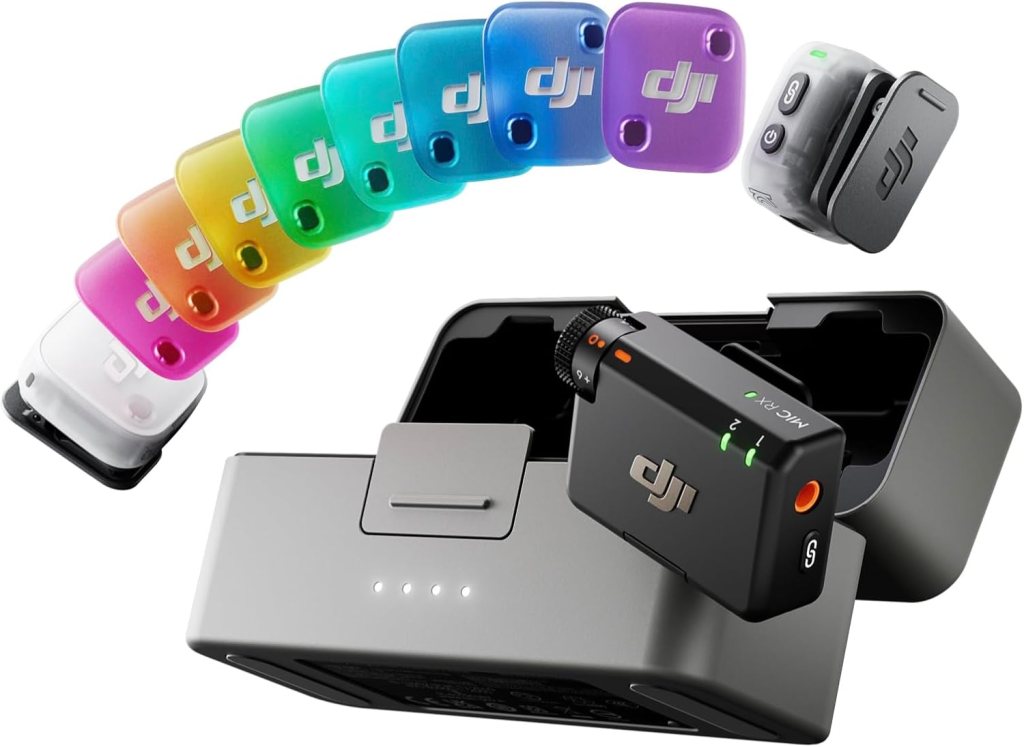
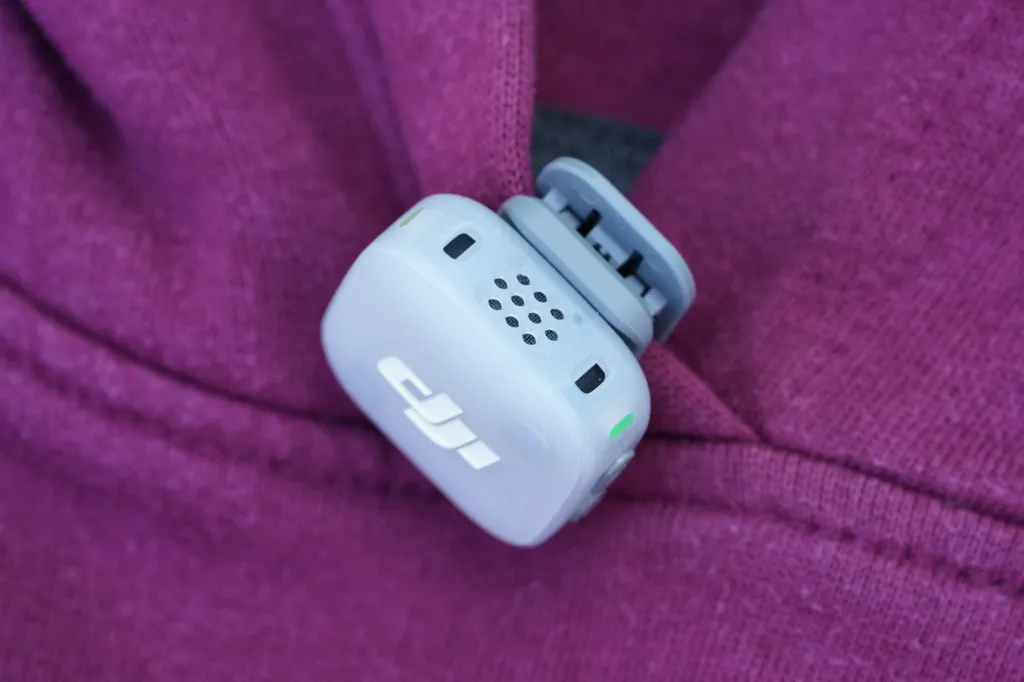
The transmitters themselves weigh approximately 11g each, making them barely noticeable when clipped onto clothing. DJI supplies both a clip and magnetic mounting system, and the magnetic clip can rotate to help position the microphone accurately. That flexibility is useful because microphone placement has a significant impact on sound quality, especially with omnidirectional mics.
One of the more unusual features is DJI’s interchangeable magnetic front covers. Available separately in different colours, they offer the opportunity to match the mic more closely to clothing to make it less conspicuous.
DJI Mic Mini 2 key features:
- Tiny footprint: Each transmitter weighs around 11g, making the Mic Mini 2 easy to wear all day.
- Organised storage: The charging case stores the transmitters, receiver and key accessories neatly together.
- Fast battery top-ups: A five-minute charge delivers around an hour of recording time.
- Flexible mounting: The transmitters can be clipped to clothing or attached using magnets.
- Custom styling: Optional interchangeable magnetic covers help the mic blend into clothing.
Straightforward setup and flexible connectivity
The Mic Mini 2 is refreshingly simple to use. During testing, I paired the receiver with a DJI Pocket 4 and used the two transmitters to record an interview on location. Setup took only moments, which matters when filming on location or when you’re short in time.
The receiver can connect with up to two transmitters simultaneously, making it well suited to interviews or two-person presentations. Green status lights clearly indicate when a connection is active, while audio levels can be monitored via the DJI Mimo app or on compatible devices.
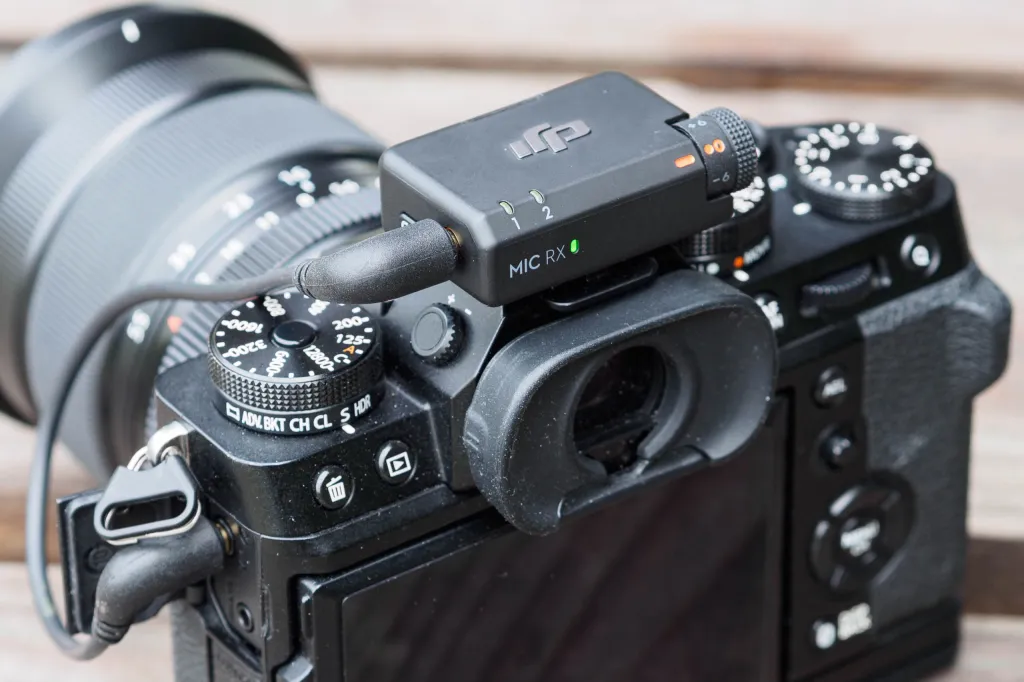
DJI has also done a good job of keeping the system flexible. The receiver features a USB-C connector that slides neatly into the base of the unit and can connect directly to smartphones, tablets and other compatible devices. A 3.5mm port and cable is also available for traditional camera setups.
For owners of Sony cameras, DJI also offers a Mic Series Camera Adapter that mounts directly into the camera’s multi-interface shoe, removing the need for cables altogether. That cleaner setup works well.
Another useful feature is DJI’s OsmoAudio direct connection system. Compatible DJI cameras can connect directly to the transmitters without requiring the receiver, reducing the amount of gear you need to carry.
Battery performance is another strong point. DJI claims up to 11.5 hours from each transmitter and around 10.5 hours from the receiver, with the charging case extending total runtime to approximately 48 hours. In practice, I never found myself worrying about battery life during testing. The quick-charge capability is genuinely useful too, delivering roughly an hour of use from only five minutes of charging.
Sound quality and real-world performance
The Mic Mini 2 records at 48kHz and 24-bit quality, which is more than sufficient for most online content, interviews and social media production. I found the audio quality is consistently clear and natural during testing, with voices sounding clean and well balanced without needing extensive adjustment.
DJI enables three selectable voice presets; Regular, Rich and Bright, allowing you to tailor the sound slightly depending on the speaker or environment. The differences are slightly, but I like the Rich and Regular options best.
These settings, along with the noise reduction controls, are adjusted via the DJI Mimo smartphone app. However, the transmitter needs to be connected to a smartphone to make changes, so it is best to decide how you want the microphones configured before you start shooting and then stick with those settings.
As omnidirectional microphones, the transmitters capture a considerable amount of ambient sound alongside the subject’s voice. In some situations that’s beneficial because it adds atmosphere and context to recordings. However, in busier environments it also means careful positioning becomes important.
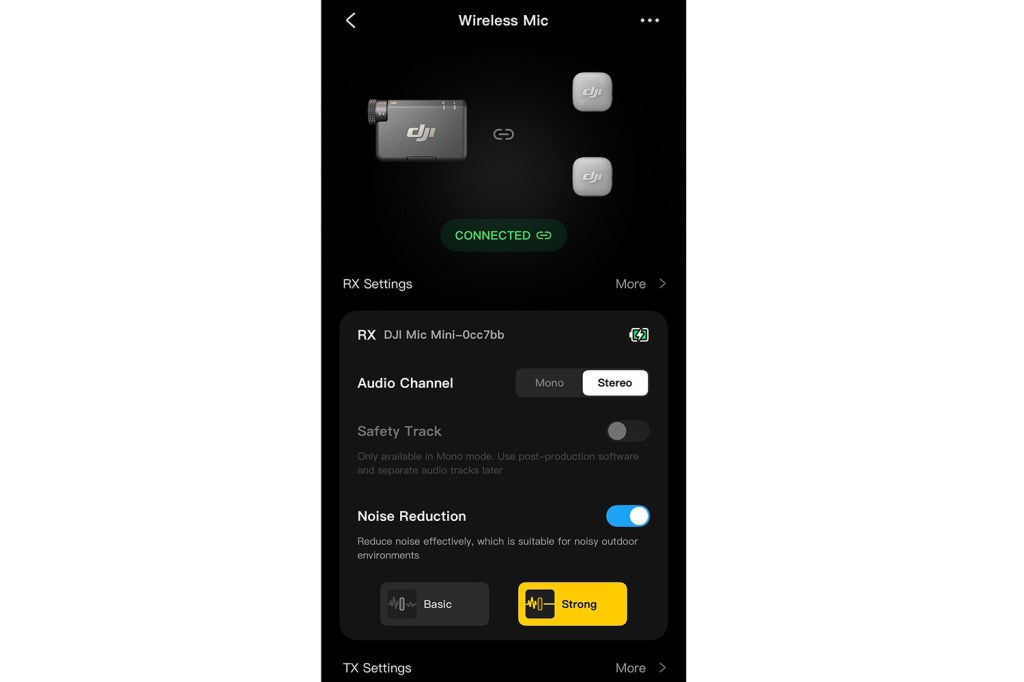
I tested the Mic Mini 2 beside a busy road to evaluate its two-level noise reduction system. The effect is subtle, even at the stronger setting. It places slightly greater emphasis on speech, but background traffic noise remains clearly audible and can occasionally sound a touch processed or distorted. Fortunately, the effect is restrained enough that recordings still sound natural, but users expecting dramatic background suppression may be disappointed.
In reality, positioning the microphone closer to the speaker has a greater impact on audio clarity than switching between the different noise reduction settings. Many creators may prefer to apply more advanced noise reduction later during editing, where even one-click software solutions can often achieve cleaner results.
What the Mic Mini 2 does particularly well is remove some of the barriers that can put photographers off recording better audio in the first place. It is compact, unintimidating and extremely easy to carry everywhere. As someone who often travels light, I found myself appreciating how little space it occupies while still offering noticeably better sound than relying on a camera’s built-in microphone.
DJI Mic Mini 2: Our Verdict
The DJI Mic Mini 2 is an appealing wireless microphone system for photographers and creators who want better sound without introducing complexity into their workflow. Its greatest strengths are its portability, tidy all-in-one storage with charging capability, impressively straightforward operation and an attractive price.
The audio quality is clear and dependable, battery life is excellent and the lightweight design makes the transmitters comfortable to wear for long periods. While the noise reduction system is only mildly effective and there is no lavalier microphone input, those limitations are unlikely to trouble most content creators.
For anyone stepping into video, vlogging or interviews, the Mic Mini 2 feels like an accessible and highly practical upgrade from built-in camera microphones.

Related reading:
- DJI Mic 3 review: some huge updates, but one key feature missing
- Hollyland Lark M2S review: tiny yet high-quality wireless mics
- Hollyland Lark Max 2 review – pro sound without the cables
Follow AP on Facebook, Instagram, YouTube and TikTok.
DJI Mic Mini 2: 2 TX and Standard Rx set
DJI Mic Mini 2: 1 TX and Mobile Rx set