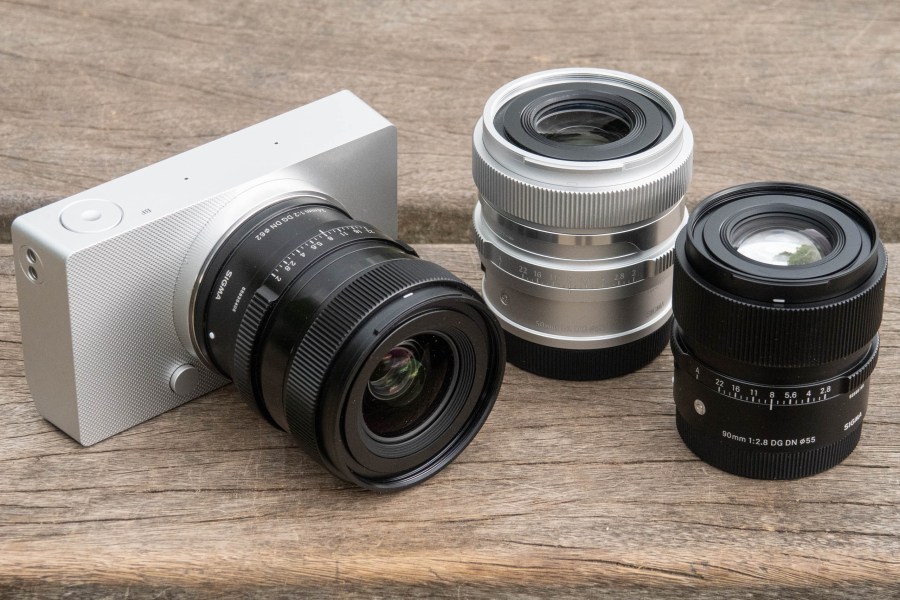
Early this year we saw the launch of the unique Sigma BF full-frame mirrorless camera, with a body sculpted from a single block of aluminium and a strikingly minimalist design. Reviewing it gave me an excuse to try out Sigma’s I-series primes, which match the camera very nicely. And not just use them individually, in the way I normally review lenses, but by using several together as a set. And you know what? They really are very lovely indeed.
These lenses stand slightly apart from Sigma’s other offerings, with aluminium barrels and tactile aperture rings. They even come with beautifully sculpted metal hoods and magnetic front caps. As part of the ‘Contemporary’ range, they’re more affordable than the firm’s top-end ‘Art’ primes, although they can look expensive compared to similar spec lenses from other third-party makers.
The I-series can be sub-divided into two groups. Firstly, there are four very compact lenses with relatively modest apertures: 17mm f/4, 24mm f/3.5, 45mm f/2.8 and 90mm f/2.8. Then there’s a group of larger f/2 lenses: 20mm, 24mm, 35mm, 50mm, and 65mm. I’ve used most of these lenses, either in L-mount on the BF, or in E-mount on the Sony Alpha 7R V.
On the face of it, the f/2 lenses probably look the most immediately appealing, to complement a standard zoom. For example, I could happily use the 20mm f/2 in place of an ultra-wide zoom. I actually really wish Sigma could add a 100mm portrait lens to this group.
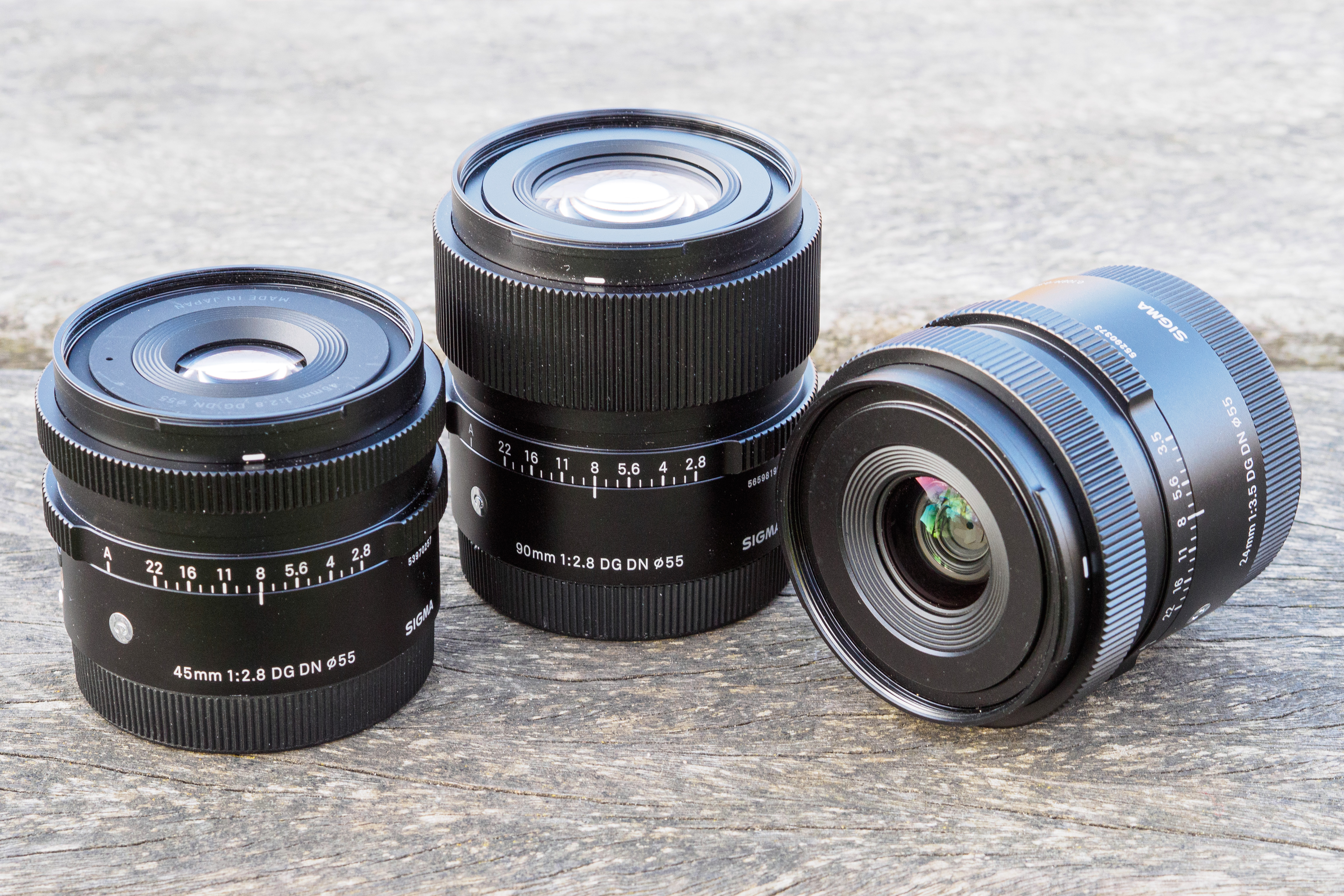
However, I’ve found myself drawn more to the little 24mm, 45mm and 90mm trio. Rationally, they may not appear to make much sense in comparison to something like a 24-105mm f/4 zoom. But they’re really enjoyable to shoot with, and are much less likely to intimidate potential subjects. Being forced to choose between discrete focal lengths forces you to think a little more creatively, too. I could – and indeed did – happily wander around using these three lenses instead of a zoom.
Most importantly, all the lenses deliver good-looking images. They may not quite match the Art primes for cross-frame sharpness wide open, but in return you get attractive out-of-focus areas in a fashion that belies the relatively modest apertures. It’s a reminder that the word bokeh refers to aesthetic quality, and not the size of blur circles.

It’s just a shame these lenses aren’t available in Nikon Z mount – they’d be absolutely perfect for use on the retro-styled Nikon Zf. But if you’re a Sony or L-mount user looking for something a bit different, I’d encourage you to give them a try.
Follow AP on Facebook, Instagram, YouTube and TikTok
Sigma 24mm F3.5 DG DN in E-mount
Sigma 45mm F2.8 DG DN in E-mount
Sigma 90mm F2.8 DG DN in E-mount