Fujifilm has announced the launch of the instax mini Evo Cinema (or mini Evo Cinema for short), a new model in the Instax hybrid instant camera Evo series. It will be available at the end of January, and cost a pretty jaw-dropping $410 in the US, and £329 in the UK.
Evo series hybrid instant cameras allow users to take pictures with viewing the LCD monitor on the back of the camera and then print their favourite images, with the option to add creative effects.
The mini Evo Cinema can capture both still images and videos. It generates a QR code for a recorded video and creates an Instax print together with a still image cut out from the video, allowing users to ‘hand over a video,’ as the company puts it.
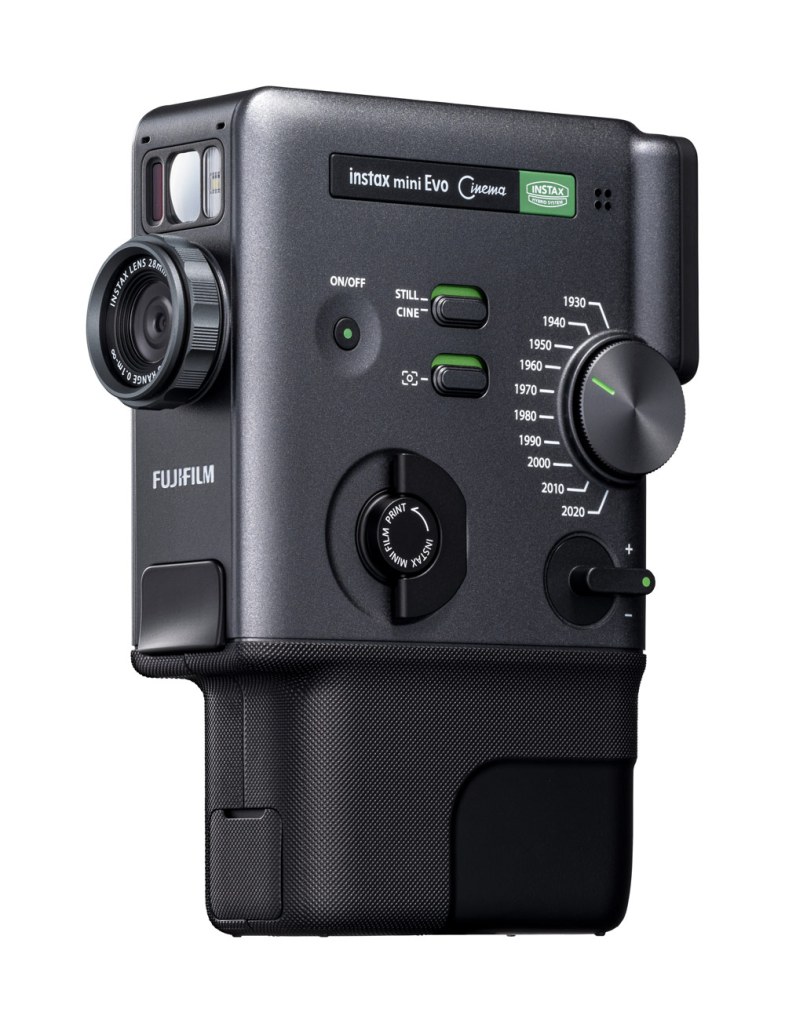
In practice, this mean users can capture videos up to 15 seconds long with simple controls – you press and hold the shutter button to record, release to pause, and shoot multiple cuts.
Recorded videos can be reviewed instantly on the rear monitor, and users can select their favourite scenes to print as Instax prints with a QR code for immediate sharing. By scanning the QR code with a smartphone, the video can be replayed with an Instax frame or downloaded for posting on social media and sharing with friends and family.

Creative effects from different eras
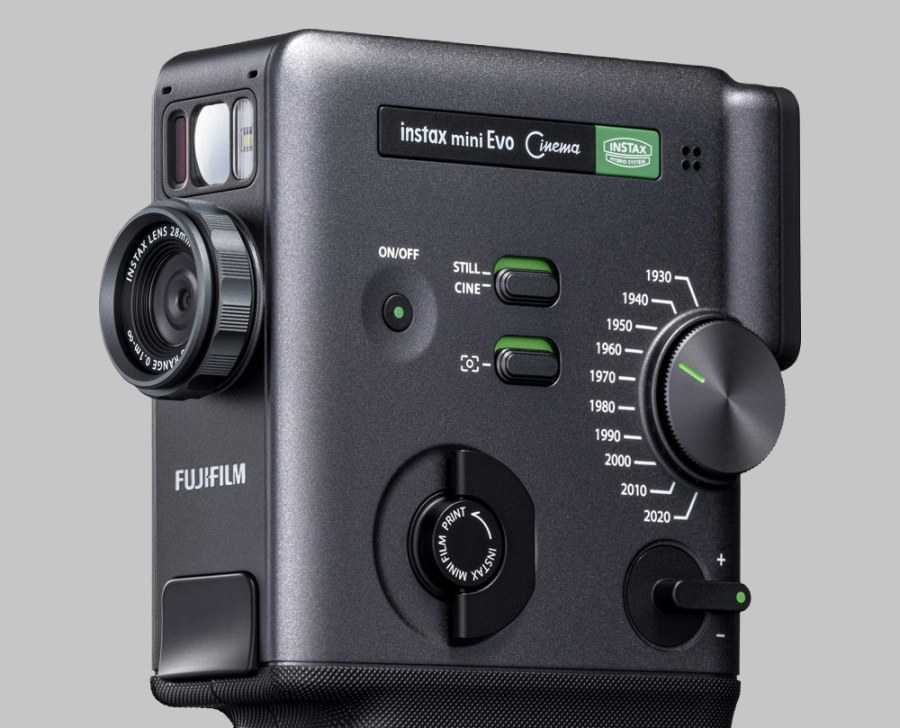
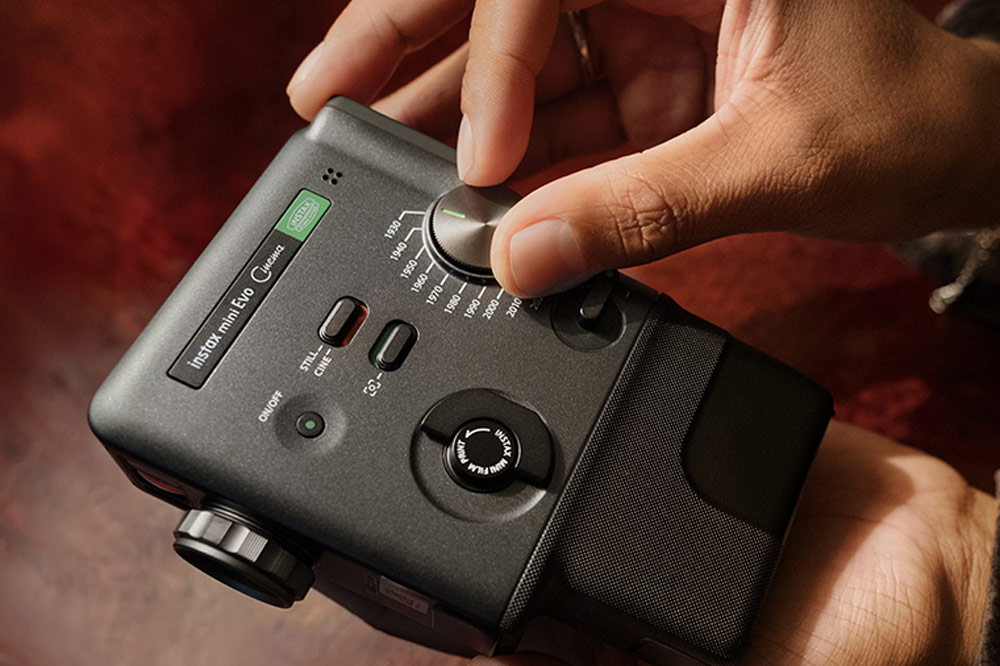
An interesting (or ‘oddball,’ depending on your perspective) new feature is the ‘Eras’ dial. Nothing to do with Taylor Swift, this enables users to add 10 different effects from the past, including ‘1960,’ inspired by 8mm film cameras. Meanwhile, ‘1970’ evokes the texture of colour cathode ray tube (CRT) televisions from the 1970s.
‘In addition to visual textures, each effect incorporates subtle details such as noise and tape flutter to recreate the feel of the era,’ Fujifilm explains. ‘Each effect offers 10 adjustable degree levels, enabling a total of 100 unique expressions.’
Audio is also processed with Eras Dial effects, adding distinctive sound characteristics, while certain effects even play nostalgic sounds – such as the whir of film reel – during shooting.
Get a grip
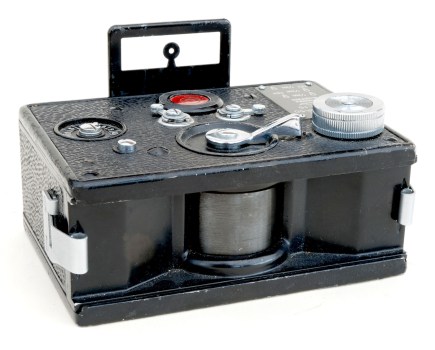
The mini Evo Cinema also features a vertical grip design inspired by Fujifilm’s Fujica Single-8, an 8mm camera introduced back in 1965. Its design and analogue operation enhance the enjoyment of shooting and printing, according to Fujifilm. A print lever is present, too, designed to evoke the feel of winding film by hand.
There is also a dedicated app which enables users to edit videos by combining clips and adding cinematic opening and ending templates. The app features a Direct Print Function that lets users turn any image on their smartphone into an Instax print.
It’s not about the specs
Turning our attention to the camera hardware, this appears to be the same as the Instax Mini Evo stills camera. The lens is marked identically, being a 28mm equivalent f/2 optic with a closest focus of 1m. The sensor is the same tiny 1/5in 5MP chip too, offering 1920 x 2560 resolution for stills. In most of the Era modes, video resolution is just 600 x 800pixels at 30fps, although in the highest quality 2020 position, it’s 1080 x 1440 at 30fps. So don’t for a moment mistake this for a ‘serious’ video camera. The attraction lies entirely in the novelty and fun factor.
Full information about the product can be found here.