Cats can be a challenge to photograph, but with planning and perseverance, you can get lovely images that the whole family will treasure – and you don’t need the latest mirrorless cameras or lots of complicated lighting…
Deborah Richards, a Somerset, UK-based landscape and portrait photographer, loves cats as much as she loves photography. Cat photography has now become an enjoyable creative pastime.
Cat photography is not always easy however, so she shares her tips here for ensuring fabulous images of feline friends. All images: credit Deborah Richards.

Keep calm and carry on (and prepare beforehand)
‘The biggest challenge with cat photography is creating a calm environment in my home studio and staying calm myself! Also, being able to meet with the cat beforehand is really helpful – It can be even more challenging when photographing cats who don’t know you.
So, I do a bit of a background check on a ‘strange’ cat and asked the owners to send me images of them. This enables me to check out the colours of their fur, their markings, eye colour, their personalities and so on.
Then, preparing your studio is key – getting the backdrops, the lighting and the props ready before you start the shoot is essential. Trying to do all the set-up when the cat is already there makes everything so much harder.
Also, while I do use small sofas and stools, I try and minimise anything that the cat can hide behind, particularly with a cat that doesn’t know you.
One cat I was photographing went under a chair and stayed there for 20 minutes! In addition, I put cat snacks and water in the studio to make it a nice environment for the cat, along with their favourite toys (which can act as little distractions).
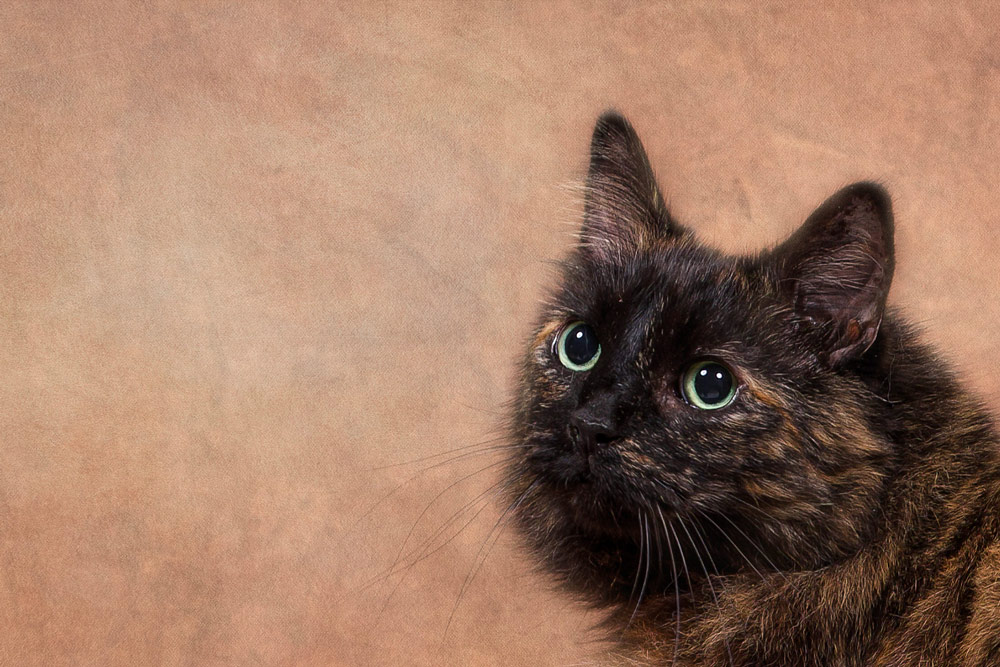
Backdrops and lighting
Every cat is different, so I like to try a range of backdrops. I know you can change the background later at the editing stage, but I like to minimise the work involved in the shoot. Getting the lighting right beforehand is really important, particularly as cats don’t tend to like flashes going off.
Ideally you would use continuous lighting such as an LED. I used off-camera flash with this shoot, but softened the impact with a diffuser.
For the images here, I used Godox Pro lights, set low down and on a low power setting, and mounted on booms. I also used two beauty dishes with diffusers as I was shooting in a small area. A good tip is to turn off any ‘beeps’ on the lighting (or on the camera) as it will needlessly disturb the cat.

I used two cameras and two lenses for this shoot – a 50-140mm and an 18-5mm lens on Fujifilm X-T2 and X-T4 bodies. Both are relatively old bodies but they are still very capable cameras.
This lens choice enables me to zoom in on the cat without disturbing it. The 50-140mm lens on the X-T4 was tripod-mounted, low to the ground. I didn’t use any ambient lighting for these shots, as I like to feel I can control all the lighting myself.
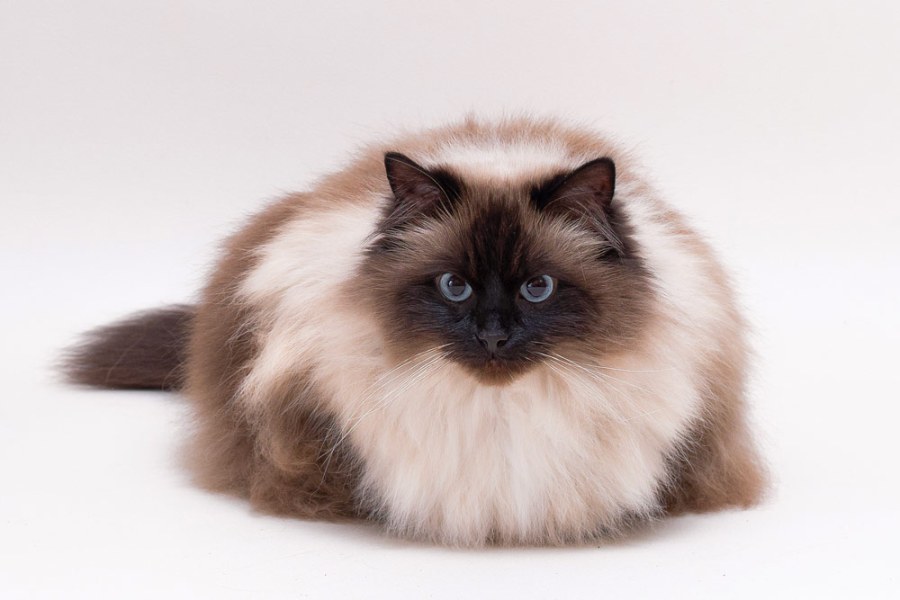
For cat images against a white background, I keep a modelling light on, with the flashes are turned right down. White backgrounds can be very effective, particularly if you have an ‘oriental’ cat with blue eyes
I also bounce the flash so it is also dispersed and use a reflector either side of the cat to bounce light from the floor.
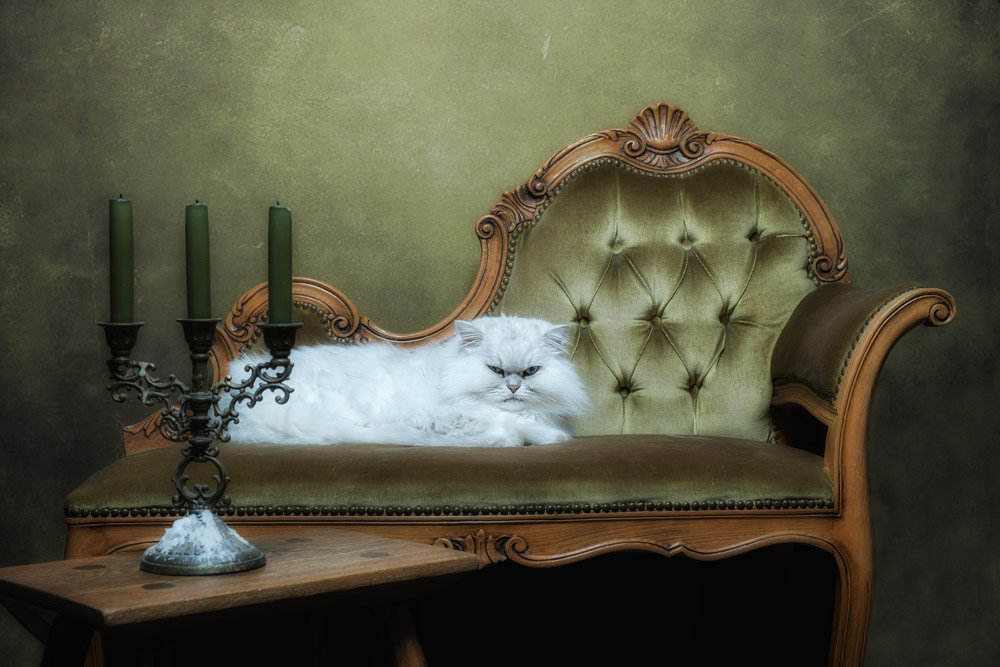
Keep it low
Remember, a cat is a low object. If you are relying on off camera flash, you’re going to get too much light at the top. So it’s really important to use at least one reflector, placed underneath to get the light up under the cat’s chin and illuminate their eyes.
Otherwise, you’re going to get a lot of pictures of cats with very dark eyes. Use reflectors with skill, and you can get a nice catchlight in the cat’s eyes.
Once the cat is calm I ask the owners to move out of the way then I am ready to start the shoot. I use a remote shutter so the cat is unaware that anything is happening. Often the cats lie down and relax, but it depends on the cat. My own cat, a white Persian, is actually harder to work with than cats I have only just met!
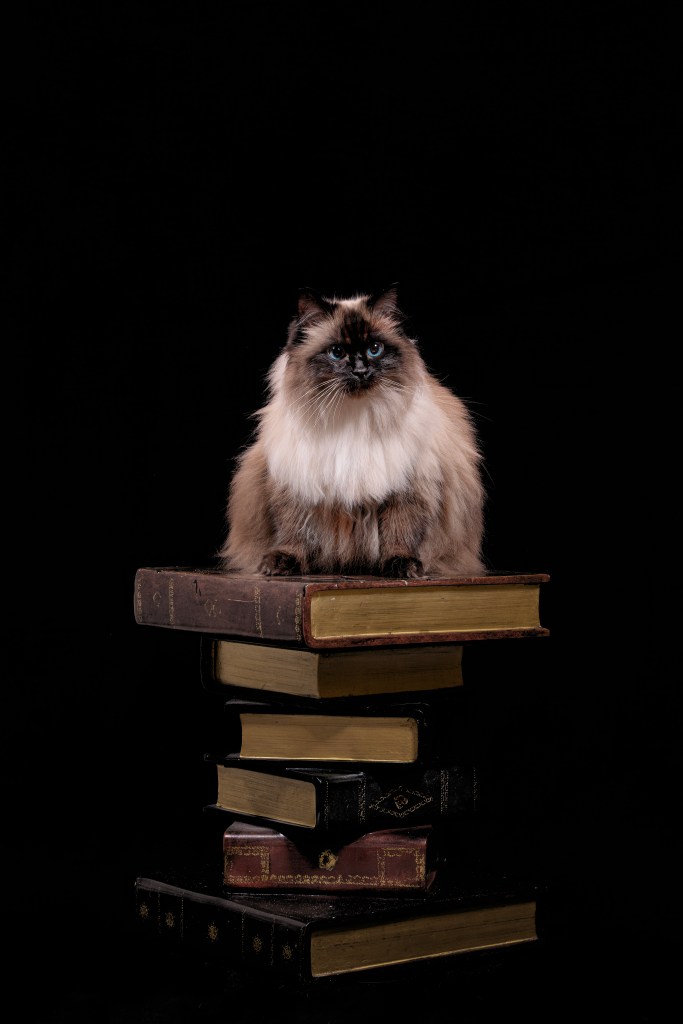
Props, focusing and final tips
For props, I chose ‘cat proof’ ones, such as an old vintage box with sacks, old baskets, stools, etc – anything that you can seat a cat on, and they will feel safe. Cats are naturally inquisitive, so they’ll walk in the room, they’ll sniff, and as they settle, you’re ready for them and you get the shot.
When it comes to focussing, I use a range of approaches. Manual focus is tricky unless the cat is very docile and relaxed. Generally, with a new cat I use AF and a remote shutter release. For some of the shots here, I went just outside my studio, zoomed in and used manual focus when the cat was already settled and wasn’t noticing me.
Beyond the technical side, the most important thing with cat photography is to stay calm and patient, and always put the cat’s welfare first. You don’t want to stress them out or make them anxious. If a shoot is simply not working, you need to accept this, but perseverance usually pays off if you create a calm environment and stay calm yourself.’
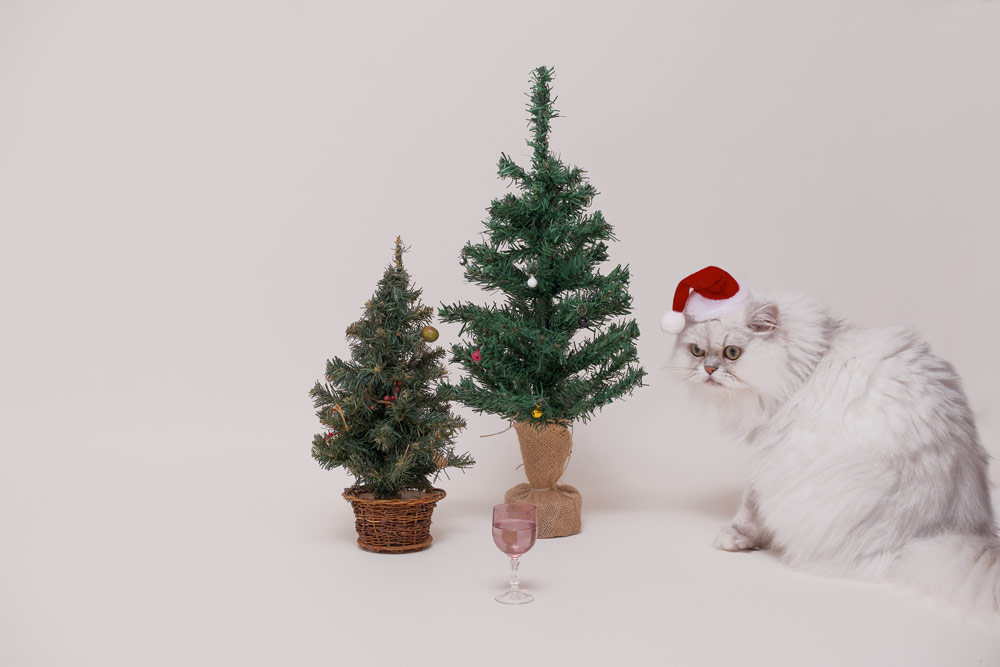
For more of Deborah’s work, see her website and Instagram page.
Further reading
Cat fans will love this photobook of amazing and unusual cats
Follow AP on Facebook, Instagram, YouTube and TikTok.